
Categories:

Health & SafetyTravel
Share This:

Shoreline Safety During the Pandemic

Summer isn’t over yet. But, as you try to fit in as many final beach, lake, and pool days in these last couple of months, do you ever find yourself wondering how safe you actually…

More people are getting vaccinated. Others have recovered from infections, whether or not they had symptoms. The news about increased infections from variants of coronavirus has not produced a parallel increase in hospitalizations if you’re vaccinated. These factors are contributing to a steady increase in TSA airport screenings as travelers return to travel, and many of them are going to the shores.  

An NBC news report said, “If you didn’t know any better, you may think [the San Diego beach crowd earlier this summer] was a scene from before the pandemic – as thousands enjoyed the weekend along the water’s edge free from COVID-19 restrictions.” Hawaii is “flooded with tourists” and local businesses throughout the state are struggling to meet the needs of tourists and locals alike, according to a recent report 

The east coast beach communities are busy, too. “Summer rentals have gone wild on Cape Cod, [Nantucket and Martha’s Vineyard], with most weeks already booked with demand so high people are ‘panic calling’ daily,” according to a report. Trip searches to North Carolina’s Outer Banks more than doubled from early 2019, according to an analysis by Trips To Discover. 

The COVID-19 threat is abating and people are traveling to shorelines everywhere. Is the shoreline a haven from the pandemic? 

According to science, yes. “It’s extremely unlikely for coronavirus to be transmitted by water,” based on a report by the Cleveland Clinic. 

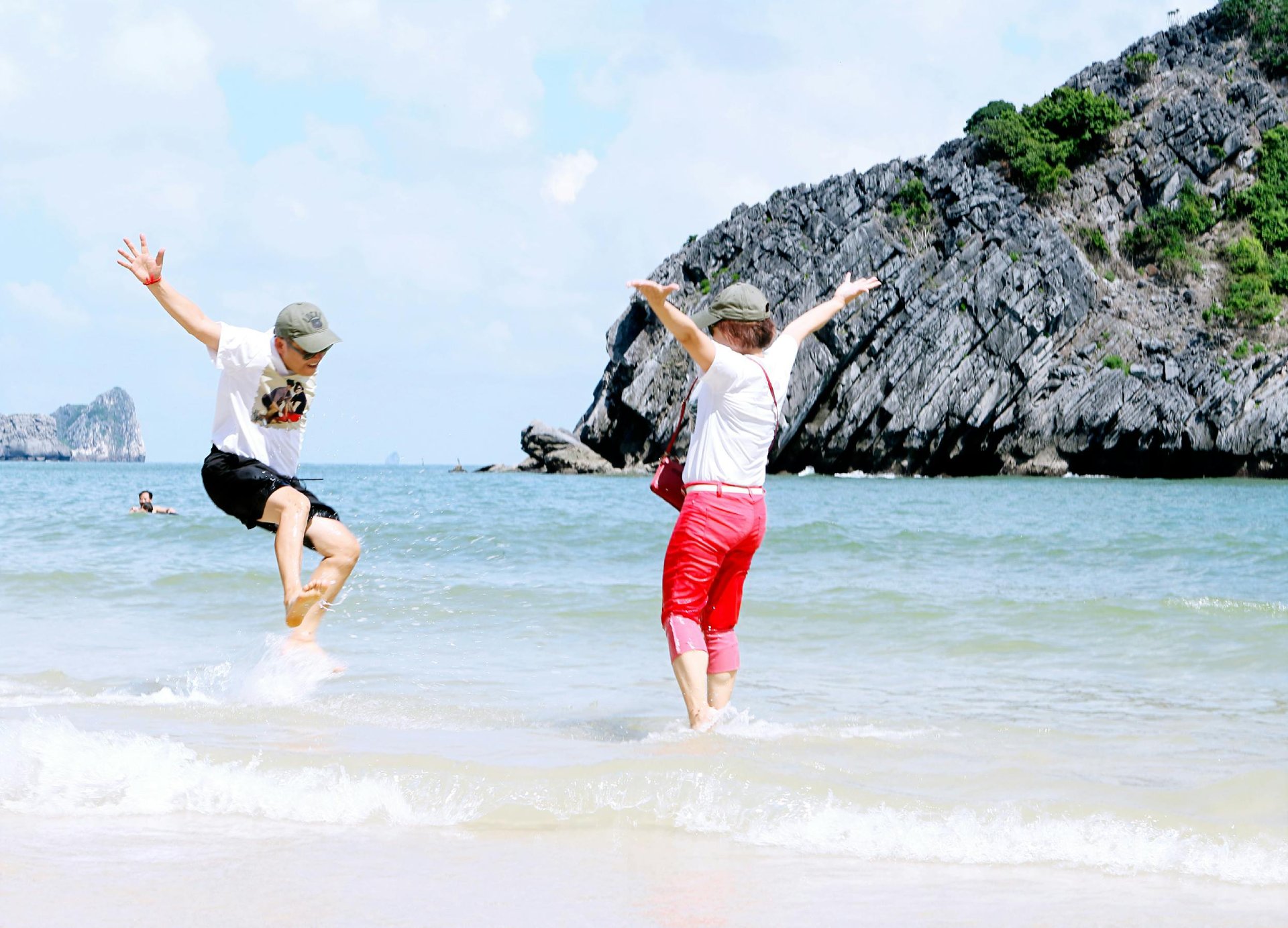
Ocean beaches and lakeshores are wildly popular during the summer and early fall. Swimming, wading, sailing, kayaking, tubing, boating, and all the other types of water sports are favorite activities among travelers to the shoreline. Pools are a common summertime recreational hot spot, too.  

Will You Be Safe from the Virus?  

Your likelihood of exposure, let alone infection, drops considerably when you’re outside. “The context to keep in mind is that the baseline outdoor risk with all of these [coronavirus variants] is extremely low,” said Aaron Richterman, an infectious-disease clinical fellow at the Hospital of the University of Pennsylvania.   

When you’re at the shore or in the water the risk of infection is still extremely low. The virus does not do well in water whether it is seawater, freshwater lakes, or chlorinated pool water, according to Cleveland Clinic staff critical care physician Joseph Khabbaza. The likelihood of spreading coronavirus at a beach, lake, or pool is low because the virus is not passed on by water.  

“The virus doesn’t live very well in just water so it’s not going to live well in chlorinated water. That goes for larger natural bodies of water and saltwater, like at beaches. None of these respiratory viruses have been described to be transmitted in a waterborne fashion,” he said. 

Coronavirus is a disease spread by humans when we breathe, talk, cough, or sneeze. Depending on the size of the crowds, summertime social distancing on the waterfront may be difficult. If you’re on the beach, the lakeshore, or the pool deck and you’ve got plenty of space between you and everyone else then your risk of infection is quite low, even if you’re unmasked.  

“If you’re sitting in a little circle of your family or if it’s just your small social circle and you’re adequately spaced from others, a mask is not necessary for a setting where you’re able to physically distance from others in an outdoor environment,” Khabbaza said. 

Other Risks to Be Aware Of

lake-swing

Safety on the shores of beaches and lakes goes beyond pandemic protocols. The ongoing threats from sunburn, heatstroke, stings from jellyfish and sea urchins, coral cuts, snake bites and swimmer’s itch must be top of mind for travelers. Planning and preparing for these risks can mean the difference between a vacation briefly interrupted and one permanently ruined. 

  • Sunburn is one of the most avoidable, yet common, beach and lake injuries. Smart use of sunblock to protect against UV overexposure can decrease the risk of skin damage and various forms of skin cancer. “Sunblock should be re-applied every 2-3 hours to ensure that the maximum amount of protection is available from the product,” said Scott Mitcham, a Global Rescue senior medical operations specialist and a 25-year veteran paramedic including service in the U.S. Army and the U.S. Coast Guard. 

  • Heatstroke, an avoidable condition that starts with heat exhaustion. Heatstroke requires immediate medical attention. Someone experiencing heatstroke may have a headache, confusion, no sweating, rapid heart rate, nausea, or vomiting and may lose consciousness. “Call emergency services immediately if you suspect someone is suffering from heatstroke. If possible, move the person out of the heat and into an air-conditioned environment. If none is available, provide shade and try to cool them down until emergency service crews arrive,” Mitcham said.  

  • Stings from jellyfish and sea urchins are painful and potentially dangerous. When planning a beach getaway you need to be prepared and know what to do in case of a sting to determine whether medical care or home treatment is sufficient. Generally, jellyfish stings are painful yet short lasting. If a child or infant is stung by a sea urchin or a jellyfish then a trip to an emergency medical facility may be warranted. Infants and children are not tiny adults. They can have severe reactions compared to what an adult may classify as a minor sting.  

  • Cuts from coral can be minor or, depending on the species, dangerous. Coral is common in tropical waters where reefs surround the shore. Snorkelers and scuba divers risk injury from coral by accidentally touching them. Wear appropriate water shoes when enjoying the water since they offer protection from inadvertently stepping on sharp coral. Keep a bottle of fresh water with you in the event that a wound needs to be irrigated.  

  • Lake snakes are largely nonvenomous but the water moccasin is a unique exception as North America’s only venomous water snake. They are found in streams, marshes, swamps, and the shores of ponds and lakes. A bite can be serious or even deadly. If bitten, call for emergency help immediately, move away from the snake’s striking distance, stay calm to prevent the spread of venom, keep the bite site below the level of your heart, clean the wound with soap and water, and cover it with a clean, dry dressing. “Do not attempt to cut into the bite site and suck out the venom. This is extremely dangerous for the bite victim as well as to the rescuer who is attempting to help,” Mitcham said. Call emergency services immediately after a snake bite and move to the shoreline if not already there.  

  • Swimmer’s itch, or cercarial dermatitis, is a rash triggered by an allergic reaction to parasites that nestle into your skin after swimming in freshwater lakes, ponds, and occasionally seawater. It is uncomfortable and usually subsides on its own in a few days. You can control itching with over-the-counter or prescription medications. Refrain from scratching the rash site to prevent skin tears which can lead to infection. Consult with a physician prior to applying any ointments or creams on the skin.  

Whether you’re heading to the beach, a lake, or even a pool, it is a good idea to have a plan in place just in case. “Even if it’s only a day trip, tell someone who is not joining you where you are planning to spend the day and what time they should expect you to return,” Mitcham said. A Global Rescue membership helps with major and minor injuries or illnesses as well as travel advice and services. Membership means you’re one call away from real-time access to paramedics, EMTs and nurses who will help you sort out the dos and don’ts based on your symptoms and circumstances. You’ll have the best information without wasting time, or worse, relying on the hope that you’re doing the right thing. 

Categories:

Health & SafetyTravel
Share This:

Global Rescue Survey: Travel Is Back

What do travelers want? A recent Global Rescue survey of the most experienced travelers in the world found out: non-crowded destinations, modern medical infrastructure, sustainable travel options and longer stay trips.

Global Rescue members, the most experienced travelers in the world, have their fingers on the pulse of the travel industry. 

Case in point: A February 2021 Global Rescue survey found a majority (69%) of respondents expect to go on their next overnight, multi-day domestic trip greater than 100 miles from home and 29% will travel internationally by June 2021.  

A recent Global Rescue survey, which polled more than 1,400 of its current and former members between July 27-31, 2021, found the predictions correct: nearly three-quarters of travelers (72%) have already taken their first multi-day domestic trip of the year and 26% have already taken their first international multi-day trip of the year. 

“Economic recovery and the return of travel and tourism is underway due to climbing COVID-19 vaccination levels and the gradual reduction in government quarantine and testing requirements,” said Dan Richards, CEO of Global Rescue and member of the U.S. Travel and Tourism Advisory Board.  

More Survey Results 

Traveler confidence remains high: in both April 2021 and July 2021, nearly seven-out-of-10 respondents (76%) are “much less” or “less” concerned about travel health and safety.  

When border closings are not an issue, more than half of respondents (52%) said popular or crowded destinations would prevent them from traveling.  

According to Consumer Reports, 15% of travelers encounter a medical problem on their journey. It’s reasonable to assume the pandemic increased this percentage, with more travelers looking for testing facilities or medical centers with COVID-19 capabilities. This trepidation showed in our survey results, with a quarter of survey-takers (24%) reporting insufficient medical facilities in their destination would stop them from making a trip.  

“What’s in: care choosing destination. What’s out: any place that doesn’t have a quality response to COVID-19,” said a respondent from Gig Harbor, Washington. 

“There needs to be predictability when it comes to pandemic protocols related to entering and departing countries,” Richards said. “The regulations change quickly and often, with little advance public notice, and those practices prompt people to delay booking travel. These micro-economic impacts are emblematic of a larger challenge.” 

Responsible Travel 

responsible-travel

No matter the term — sustainable travel, carbon neutral travel or regenerative travel — individuals, families and businesses are looking to travel responsibly and sustainably. The ecotourism industry worldwide was estimated at $181 billion in 2019 and is predicted to reach $333 billion in 2027, according to Statista.com, and 83% of travelers believe sustainable travel is important worldwide.   

Tourism has been a lifeline for many remote communities, with traveler dollars supporting the local economy. The pandemic and its travel restrictions created a tough spot for many destinations. With this in mind, 43% of Global Rescue survey respondents said they would pay a “Pandemic Recovery Fee” to travel to poorer countries suffering from dramatically negative economic impacts caused by COVID-19. Of those willing to pay such a fee:  

  • 17% would pay between $51 to $100 
  • 14% up to $50 
  • 12% between $101 to $250
  • 5% more than $250 

“In the U.S. and Europe, where a substantial portion of the world’s wealth and GDP is generated, we can start traveling again and exporting the economic benefits of tourism to other countries dependent on our travelers. Collaboration among international health and government officials to get vaccines to those locations is smart, but we can also restart our travel with those countries to help them get out of their economic crises,” said Richards. 

What Travelers Want 

Half of respondents said they would travel internationally where possible and a quarter (28%) said they would only travel domestically.  

Additional travel preferences of survey respondents include: 

  • 19% said they would take longer trips 
  • 21% said they would take advantage of discounts, deals and specials 
  • 16% said they would only travel to places with modern health care facilities
  • 10% would take extra trips
  • 8% said they would take less expensive trips. 

There’s a risk to being an early travel adopter, and travelers are doing more pre-travel research and planning, scheduling travel health consultations, and signing up for travel protection memberships.  

“Whether for business, personal or a blend of the two, people want travel intelligence before booking, including border closures, social distancing requirements, check-in procedures and documentation needs,” Richards said. “It’s not about novelty — it’s about trust and safety.” 

Travel safe and smart with a Global Rescue membership, which includes destination reports for 215 countries with up-to-date travel information — medical, security and intelligence data — in one place. It can also help travelers find coronavirus-capable hospitals and testing facilities or provide field rescue from the point of illness or injury to the nearest appropriate hospital, clinic or medical provider. Click here to learn more. 

Categories:

Press Release
Share This:

Business Travel Is Returning

61% of business travelers have taken multi-day domestic trips; video conferencing won’t replace in-person meetings  Lebanon, NH – August 16, 2021 – More than half of business travelers (61%) have already taken their first multi-day…

61% of business travelers have taken multi-day domestic trips; video conferencing won’t replace in-person meetings 

Lebanon, NH – August 16, 2021 – More than half of business travelers (61%) have already taken their first multi-day domestic business trip of the year, according to a Global Rescue survey of the most experienced travelers in the world. “Business travel is returning due to climbing COVID-19 vaccination levels and the gradual reduction in government quarantine and testing requirements. Nevertheless, post-pandemic travel trepidations linger,” said Dan Richards, the CEO of Global Rescue.

International business travel is growing but at a much slower pace. According to the survey, 17% of business travelers have already taken their first multi-day international business trip of the year. A little more than a quarter (27%) expect to do so between now and March 2022. Forty-five percent have no plans for international business travel.

“Never have business leaders been more aware and more concerned about the duty of care they have to their traveling employees,” Richards said. “Today, the risk profile for business travel is different, and business traveler awareness is at its highest levels,” he added.

More than half of survey respondents (54%) who travel for business reported that their company is using, or going to use, a hybrid model of work on- and off-site.

“If the pandemic demonstrated anything about remote working, it is that productive work can be done from almost anywhere – and people are going to take advantage of that,” Richards said.

Most of the business travelers (61%) said that a hybrid work model will not reduce their business travel despite the availability of online conferencing apps like Zoom, Webex by Cisco, and Microsoft Teams.

According to the survey, video conferencing will have a mixed impact on business travelers. Thirty-five percent of business travelers said they expect video conferencing to replace about half of routine business travel in the future. Another 27% said they expect to use video conferencing sparingly and return to routine business travel for in-person business and sales meetings as the pandemic health threat abates.

Sixteen percent said they believe video conferencing will replace most of the business travel for in-person business meetings and sales meetings. More than a fifth (21%) said they don’t use video conferencing in their business. “While video conferencing will likely reduce total business travel volume in the near term there is no substitute for being in the same room with others,” Richards said.

“While the days of traveling long distances for one meeting with one person could be gone forever, people will travel for business at scale into perpetuity.”

Ninety percent of business travelers surveyed said in-person business and sales meetings are “without a doubt” or “generally” more successful than video conferencing. Nine percent said video conferencing was more successful than in-person business and sales meetings.

The biggest concerns about future work-related travel among business travelers are being quarantined (29%), being infected with coronavirus (30%), border closing (23%), poor medical infrastructure at their destinations (10%), and insufficient emergency response by their company to help during a medical or security emergency (6%).

“Mitigating those risks falls to an organization’s chief security officer, travel manager and human resources director, who are accountable for the development and oversight of policies, programs and logistics that protect traveling staff,” Richards said. “Employees turn to them to do everything possible to keep them as safe as possible. CEOs rely on them, too, because they carry a duty of care responsibility to their people, to take care of them and avoid exposing them to any unnecessary or undue risk,” he added.

About the Global Rescue Traveler Survey 

Global Rescue, a leading travel risk and crisis response provider, conducted a survey of more than 1,700 of its current and former members between July 27-31, 2021. The respondents revealed a range of support for travel expectations, behaviors, and safety concerns in anticipation of a return to leisure and business trips domestically and internationally. 

Contact Bill McIntyre at bmcintyre@globalrescue.com or 202.560.1195 (phone/text) for more information.

About Global Rescue

Global Rescue is the world’s leading provider of medical, security, evacuation, and travel risk management services to enterprises, governments, and individuals. Founded in 2004, Global Rescue has exclusive relationships with the Johns Hopkins Emergency Medicine Division of Special Operations and Elite Medical Group. Global Rescue provides best-in-class services that identify, monitor, and respond to client medical and security crises. Global Rescue has provided medical and security support to its clients, including Fortune 500 companies, governments, and academic institutions, during every globally significant crisis of the last decade. For more information, visit www.globalrescue.com.

Categories:

News
Share This:

Survey: 61% of business travelers have taken multi-day trips

Categories:

News
Share This:

Don’t Make These Travel Protection Mistakes During The COVID Surge

Categories:

News
Share This:

Travel is back

Share This:

How to Travel Responsibly and Sustainably

Sustainable travel, carbon neutral travel, regenerative travel. No matter the term, individuals, families and businesses are looking to travel responsibly and sustainably. Global Rescue Safe Travel partners have options for eco-friendly transportation, lodging and destinations. 

Eco-conscious travelers have always taken small steps to protect the environment: skipping the laundry service, bringing a refillable water bottle, and staying at locally owned hotels. 

Leigh Barnes, chief customer officer of Intrepid Travel, noticed an increased demand for sustainable travel before the coronavirus pandemic. “Customers are becoming increasingly savvy and socially conscious consumers, and they expect this from us. In January, North America saw 24% growth year-on-year, with a 43% growth in our tailor-made business with industry partners,” he told Travel Market Report in 2020. 

Post pandemic, eco-friendly travel has grown to a whole new level. The ecotourism industry worldwide was estimated at $181 billion in 2019 and is predicted to reach $333 billion in 2027, according to Statista.com, and 83% of travelers believe sustainable travel is important worldwide.  

The goals have also changed. Sustainable travel — finding a way to make sure trips do not harm the environment in the short or long term — has transformed into regenerative travel: trips that make a difference.  

“Sustainable travel is about not purposefully harming the environment, while regenerative travel is about actively helping the environment. It’s the concept of making travelers guardians of the environment,” said Dan Richards, CEO of Global Rescue. “Volunteering while abroad is a great example.” 

The Carbon Footprint of Tourism 

According to Sustainable Travel International, tourism is responsible for roughly 8% of the world’s carbon emissions. 

It’s not just airplanes contributing to the climate crisis. Tourists generate carbon dioxide by going on boat rides, turning up the air conditioning, and eating imported foods. From transport to lodging to dining and even shopping, tourism depends heavily on fossil fuels. The carbon dioxide emissions from fossil fuels, in turn, trap heat in the atmosphere, causing global warming. 

“Travelers tend to use water, food and energy and generate waste at higher rates than when at home, with a displaced negative burden experienced by some of our most fragile and/or poorest places on the planet,” states a case study written by The Harvard T.H. Chan School of Public Health and the World Travel & Tourism Council (WTTC), a Global Rescue Safe Travel partner. “At the same time, travel and tourism has enormous potential to educate the traveler, increasing social capital and appreciation of diversity, as well as creating meaningful employment.” 

Sustainable travel requires change on many levels. Here’s what destinations, tour operators and travelers are doing to help. 

DESTINATIONS 

Syndey-Australia

Located in the western Pacific, Palau is known for its beaches, blue lagoons and rich marine environment where scuba divers and snorkelers can see barrier reefs, sea life and World War II wrecks. Tourism is the main economy for Palau residents — but getting tourists to the island nation threatens their livelihood as well. A one-way flight from London to Palau generates about 1.8 metric tons of carbon dioxide, contributing, along with other factors, to rising sea levels and intensified tropical weather. 

In 2020, Palau pledged to become a carbon neutral destination, introducing programs to increase local food security, reduce food waste and conserve coastal ecosystems. Visitors are required to sign the Palau Pledge, promising not to damage or exploit the islands’ natural resources or culture during their stay. Palau also banned tour operators from using single-use plastics and adopted a strict national sunscreen standard. 

Cities, including popular tourist destinations, are also striving to be eco-friendly. Sydney, Australia became carbon neutral in 2007 and was the first government in Australia certified as such in 2011. With the goal of making the city as green as possible, Sydney’s leading hotels, event centers, cultural institutions and tourism organizations are working together as part of the Sustainable Destination Partnership to improve the energy, water and waste efficiency of buildings, increase the use of renewable energy, and engage with regulators on environmental policy issues. 

TOUR OPERATORS 

The American Fly Fishing Trade Association (AFFTA) recently recognized Soul Fly Outfitters, a Global Rescue Safe Travel partner, as the Carbon Neutral Guide of the Year 

“As a fly fishing guide, the effects of climate change are very apparent in our coastal communities.  For us in Southern Maine, we’re seeing more and more coastal flooding, and fish stocks are shifting as a result of changing water temps,” said Kyle Schaefer, owner. “As someone that makes their living off of the resource, it’s a duty of mine to reduce the impact I have as much as possible.”  

Determined to become part of the solution, Schaefer’s business went carbon neutral in 2019, making him the first fishing guide to earn this environmental accolade. “We promote proper catch and release tactics, engage in fisheries research and constantly monitor our fishing pressure,” Schaefer said. Soul Fly Lodge in Great Harbour Cay, Bahamas sources local foods, reduces waste and invest in the local people and community.  

Ecotourism caters to travelers looking for an excursion in the natural environment without damaging it or disturbing habitats. Compared to traditional commercial tourism, visitors are introduced into relatively undisturbed areas on a small scale with minimal impact. It’s what the Imiloa Institute, a Global Rescue Safe Travel partner, has been doing for years.  

From using organic cleaning products to a local Costa Rican team, Imiloa “invites retreat leaders and educators to hold workshops and events in parallel with profound, meaningful, sustained community involvement, organic food and untouched secondary jungle on the ocean,” said Jake Sasseville, CEO. “Together and in this pursuit, we can contribute to the individual and social transformation of the planet.”     

TRAVELERS

sustianable-destinations

If you’re looking to travel responsibly and sustainably, there are many options for you. There are also things you can do, on your own, to decrease your carbon footprint on the earth. 

  • Travel off season. Crowds of tourists place additional burden on destinations, so many travelers are reconfiguring trips to avoid peak seasons. 

  • Choose your location wisely. Treehugger’s Best of Green Awards 2021 offers a list of sustainable travel destinations, accommodations and experiences around the globe, and Condé Nast Traveler has a list of 10 sustainable destinations.  

  • Offset carbon emissions. Many airlines, including Alaska Air, allow customers to offset part of the carbon footprint of flights. Other sites, like Gold Standard, offer opportunities to donate to specific projects, such as safe water access in Rwanda.  

  • Stay at a LEED certified or locally owned hotel. According to Yahoo Finance, LEED stands for Leadership in Energy and Environmental Design, and is a universal system to rate buildings on how sustainable they are. If a LEED hotel isn’t available, try selecting a locally owned inn or lodge so your money will stay in the community. 

  • Work with an eco-friendly travel company or tour operator. Interested in a transformational retreat held in an eco-luxury environment with plant-based cuisine? It’s what you’ll find by selecting a travel experience with Imiloa Institute in Costa Rica. 

  • Continue the small steps. Every little action adds up. Continue the sustainable practices you do at home: carry a refillable water bottle, use a reusable bag when possible and conserve energy by turning off lights and air conditioning. Shop locally, choosing family-owned businesses if possible. 

  • Have a travel protection membership. Remote locations may not have the medical infrastructure your unexpected illness or injury needs. A membership provides travelers with a safety net for any trip, so there’s no burden on the local health care infrastructure. This includes pre-trip intelligence, 24/7 medical advisory services, field rescue and medical evacuation services. 

Categories:

News
Share This:

Pandemic protocols that could lead to tourism’s recovery

Share This:

A Young Boy’s Broken Jaw: Rescue to Remote Papua New Guinea

You can bet the Canns did not anticipate their son would need emergency medical evacuation when they built their homeschool schedule for the day. But when the unexpected happened in an extremely remote part of Papua New…

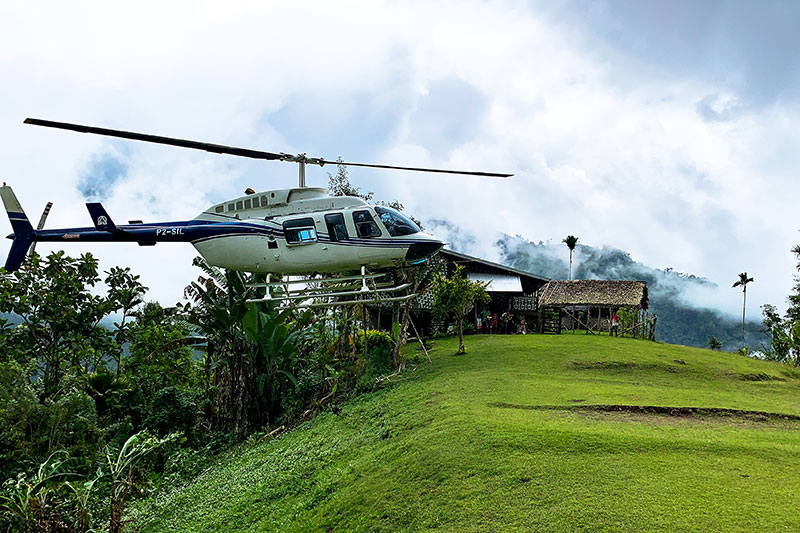
There are no main roads where the Cann family lives for 10 months a year. As teachers and translators for Finisterre Vision, a cooperative ministry effort, they live in a small village in the jungled Finisterre Range along Papua New Guinea’s northeastern coast. It’s remote — roughly a one-and-a-half-day hike, followed by a three- to four-hour dingy ride across the bay to reach the closest city, Madang.

“It’s not an easy place to get to. When we travel, we pretty much do so by helicopter,” says Zach Cann, whose family of four have been Global Rescue members since 2018.

When one son — 9-year-old Jude — required urgent medical care in May 2021 after a bicycle accident near his home, the family needed immediate emergency helicopter transport.

Jude-and-his-brother

A Run-In with a Tree in the Jungle

“We’ve been doing missionary work in this village for seven years, so we have built a home here,” explains Cann. “It was just a normal day: I was working in my home office and the boys had gone outside to ride their bikes during a break from their homeschool lessons. The next thing I know, I’m rushing outside because I hear Jude crying. When I get to the door, I see my wife Cassidy coming up the steps with Jude and she’s holding his chin, which is absolutely gushing blood.”

Jude had hit a tree after losing control of his bike zipping down a nearby grassy hill. But the chin laceration didn’t come from his fall to the ground. It was from a sharp branch on the tree that had recently been cut down by the villagers.

“I’m just thankful it wasn’t a stand of bamboo,” says Cann, alluding to how bamboo’s tensile strength surpasses steel. “He could have been skewered.”

Medical Evacuation to Ukarumpa and Beyond

Within about three hours after making a Skype call to Global Rescue for field rescue, Jude — along with Cassidy and brother, Oliver — were transported via helicopter to a clinic in Ukarumpa in the eastern highlands. That’s about 170 miles as the crow flies from the village.

“That’s considered pretty fast here,” notes Cann. “Especially given that you have to get government permission to fly.” That’s because Global Rescue works closely with local partners who have the necessary logistical know-how and approvals in place to execute a rescue quickly.

After administering stitches and obtaining X-ray images of Jude’s injury, medical staff determined the young boy had a broken jaw requiring a specialist. Unfortunately, the national hospitals don’t offer the level of care that Jude required. Clinic officials suggested Jude be medically transported to an appropriate facility — which would ordinarily be Australia. But Australia’s pandemic-related travel ban prevented the transfer. Fortunately, the Cann family was able to return to the U.S. — their home country — for care.

Global Rescue’s medical team of experts agreed, triggering the operations team to sort out the transport logistics for the family that included chartering a plane to get them from Ukarumpa to Port Moresby and arranging commercial flights from there to Phoenix, Arizona, by way of Los Angeles and Sydney, Australia.

“Looking back, that was a part of the Global Rescue system I really valued,” says Cann. “They took care of the logistics and made the plan to get us home. All we had to do was follow.” Global Rescue also cut through government red tape related to the pandemic when the flight home required a stopover in Sydney. Global Rescue operations team worked with Australian Ministry of Health officials to exempt the Canns from the country’s two-week quarantine requirement, which speeded up the family’s return to the U.S.

arriving-at-the-clinic

Glad to Have Global Rescue’s Travel Protection Services

When all was said and done, the ordeal took seven days, from the initial incident to arrival in Phoenix.

“You might think that sounds like a long time,” says Cann. “But given how remote we were and in a world with COVID-19 and so many constantly changing travel restrictions, the fact that we got back at all, in my mind, is a miracle. We were really thankful to have Global Rescue.”

As luck would have it, Jude’s injured jaw was re-evaluated and did not require surgery.

“He should have needed it, but the way it broke was the most ideal,” says Cann. “There was another bone supporting the break, so Jude just needed natural healing and a month-long diet of soft food.”

Categories:

Health & SafetyTravel
Share This:

Global Rescue Survey Finds Business Travel Is Returning

Experts predict business travel would return by fall, but a recent Global Rescue survey found more than half of business travelers (61%) have already taken their first multi-day domestic business trip. 

Experts predict business travel would return by fall, but a recent Global Rescue survey found more than half of business travelers (61%) have already taken their first multi-day domestic business trip.

“Business travel is returning due to climbing COVID-19 vaccination levels and the gradual reduction in government quarantine and testing requirements. Nevertheless, post-pandemic travel trepidations linger,” said Dan Richards, CEO of Global Rescue.  

International business travel is growing at a much slower pace. According to the survey, which polled more than 1,400 of Global Rescue’s current and former members between July 27-31, 2021, 17% of business travelers have already taken their first multi-day international business trip of the year. A little more than a quarter (27%) expect to do so between now and March 2022. Forty-five percent have no plans for international business travel. 

Why less global business travel? Travel risk management for international travel is complex. Employees have more pre-trip questions; need assistance with paperwork, such as vaccination documentation; and are frequently subjected to fewer flight options, more layovers and an increased chance of cancellation. Employers need travel risk management programs in place from prevention to awareness to response. According to a July poll by the Global Business Travel Association, 69% of respondents believe risk management and duty of care are more important than before the pandemic. 

“Never have business leaders been more aware and more concerned about the duty of care they have to their traveling employees,” Richards said. “Today, the risk profile for business travel is different, and business traveler awareness is at its highest levels.” 

hybrid-work-schedule

Business Travel Included in a Hybrid Work Schedule 

Work-from-home mandates have morphed into a hybrid work model of partial work from home and partial work from office. More than half of survey respondents (54%) who travel for business reported that their company is using, or going to use, a hybrid model of work on- and off-site. 

“If the pandemic demonstrated anything about remote working, it is that productive work can be done from almost anywhere – and people are going to take advantage of that,” Richards said.  

This hybrid work model will not reduce business travel, according to 61% of respondents. Despite the availability of online conferencing apps, 35% of business travelers said they expect video conferencing to replace about half of routine business travel in the future. Another 27% said they expect to use video conferencing sparingly and return to routine business travel for in-person business and sales meetings as the pandemic health threat abates.  

Sixteen percent said they believe video conferencing will replace most of the business travel for in-person business meetings and sales meetings. More than a fifth (21%) said they don’t use video conferencing in their business.  

“While video conferencing will likely reduce total business travel volume in the near term, there is no substitute for being in the same room with others,” Richards said. “While the days of traveling long distances for one meeting with one person could be gone forever, people will travel for business at scale into perpetuity.” 

According to a study by Forbes Insight, people believe they build stronger business relationships during face-to-face meetings, events and conferences. Global Rescue respondents agree: 90% of business travelers surveyed said in-person business and sales meetings are “without a doubt” or “generally” more successful than video conferencing. Technology is convenient, but in-person meetings build trust. 

What Business Travelers Want 

Informed travelers are safer travelers, and employees taking business trips want to know their employer has their back. The survey found the biggest concerns about future work-related travel are:  

  • being quarantined (29%) 
  • being infected with coronavirus (30%) 
  • border closing (23%) 
  • poor medical infrastructure at their destinations (10%) 
  • insufficient emergency response by their company during a medical or security emergency (6%) 

“Mitigating those risks falls to an organization’s chief security officer, travel manager and human resources director, who are accountable for the development and oversight of policies, programs and logistics protecting traveling staff,” Richards said. “Employees turn to them to do everything possible to keep them as safe as possible.”  

Travel risk management programs provide a duty of care responsibility to employees. Key components include prevention, such as intelligence gathering during the trip planning process; awareness, like a tracking program and alert system for travelers; and response, which would include medical assistance and field rescue should an incident occur.  

“All components are necessary to take care of employees and avoid exposing them to any unnecessary or undue risk,” said Richards. 

Global Rescue provides travel risk management consulting services to organizations of all sizes that need to meet duty of care requirements. For more information, click here. 

Categories:

Press Release
Share This:

Travel Is Roaring Back

72% of travelers have already traveled domestically; 26% have traveled internationally  Lebanon, NH – August 5, 2021 – Nearly three-quarters of travelers (72%) have already taken their first multi-day domestic trip of the year and…

72% of travelers have already traveled domestically; 26% have traveled internationally 

Lebanon, NH – August 5, 2021 – Nearly three-quarters of travelers (72%) have already taken their first multi-day domestic trip of the year and 26% have already taken their first international multi-day trip of the year, according to a Global Rescue survey of the most experienced travelers in the world.

“Economic recovery and the return of travel and tourism is underway due to climbing COVID-19 vaccination levels and the gradual reduction in government quarantine and testing requirements,” said Dan Richards, the CEO of Global Rescue and a member of the U.S. Travel and Tourism Advisory Board.

7-out-of-10 survey-takers (76%) are “much less” or “less” concerned about travel health and safety for the last half of 2021 compared to 2020. When border closings are not an issue, more than half of respondents (52%) said popular or crowded destinations would prevent them from traveling. Nearly a quarter of survey-takers (24%) reported that a location having insufficient medical facilities would cause them to stop them from making a trip.

“There needs to be predictability when it comes to pandemic protocols related to entering and departing countries,” Richards said. “The regulations change quickly and often, with little advance public notice, and those practices prompt people to delay booking travel. These micro-economic impacts are emblematic of a larger challenge,” he added.

Forty-three percent of respondents said they would pay a “Pandemic Recovery Fee” to travel to poorer countries suffering from dramatically negative economic impacts caused by COVID-19. Of those willing to pay such a fee, 17% would pay between $51-$100, 14% up to $50, 12% between $101-$250, and 5% more than $250.

“In the U.S. and Europe, where a substantial portion of the world’s wealth and GDP is generated, we can start traveling again and exporting the economic benefits of tourism to other countries dependent on our travelers. Collaboration among international health and government officials to get vaccines to those locations is smart, but we can also restart our travel with those countries to help them get out of their economic crises,” said Richards.

Half of respondents said they would travel internationally where possible and more than a quarter (28%) said they would only travel domestically. Nineteen percent said they would take longer trips and 21% said they would take advantage of discounts, deals and specials. Sixteen percent said they would only travel to places with modern health care facilities while 10% would take extra trips, and 8% said they would take less expensive trips.

About the Global Rescue Traveler Survey 

Global Rescue, a leading travel risk and crisis response provider, conducted a survey of more than 1,400 of its current and former members between July 27-31, 2021. The respondents revealed a range of support for travel expectations, behaviors, and safety concerns in anticipation of a return to leisure and business trips domestically and internationally. 

Contact Bill McIntyre at bmcintyre@globalrescue.com or 202.560.1195 (phone/text) for more information.

About Global Rescue

Global Rescue is the world’s leading provider of medical, security, evacuation and travel risk management services to enterprises, governments and individuals. Founded in 2004, Global Rescue has exclusive relationships with the Johns Hopkins Emergency Medicine Division of Special Operations and Elite Medical Group. Global Rescue provides best-in-class services that identify, monitor and respond to client medical and security crises. Global Rescue has provided medical and security support to its clients, including Fortune 500 companies, governments and academic institutions, during every globally significant crisis of the last decade. For more information, visit www.globalrescue.com.