Article Highlights:

  • France ranks in the global top five dream-trip destinations, blending Parisian icons with countryside, coasts and mountains.
  • Paris anchors most itineraries, with landmarks like the Eiffel tower, Louvre and Notre Dame, plus deep café and gallery culture.
  • Beyond the capital, regions like Bordeaux, Provence, the Riviera and the Alps offer wine, nature, adventure and relaxed village life.
  • France’s cuisine — baguette, pastries, regional dishes — and wine culture, from champagne to bold reds, make every meal part of the trip.
  • Overall risk is moderate, with low health risk but elevated security concerns from petty crime, protests and terrorism that require awareness.


According to the Fall 2025 Global Rescue Traveler Sentiment and Safety Survey, if every traveler could receive one trip as a gift, France ranks in the top five. It’s not hard to see why. Few countries combine iconic landmarks, world-shaping art, legendary food and wine, dramatic mountains and sunlit coastlines quite like France.

From a sunrise stroll along the Seine in Paris with a fresh baguette in hand, to a glass of chilled champagne in the vineyards where it’s made, to hikes in the shadow of Mont Blanc, France can be as soft or as adventurous as you want it to be. For leisure, adventure and business travelers alike, it delivers depth, variety and a sense of style that’s hard to match.


Paris: Starting Point and State of Mind

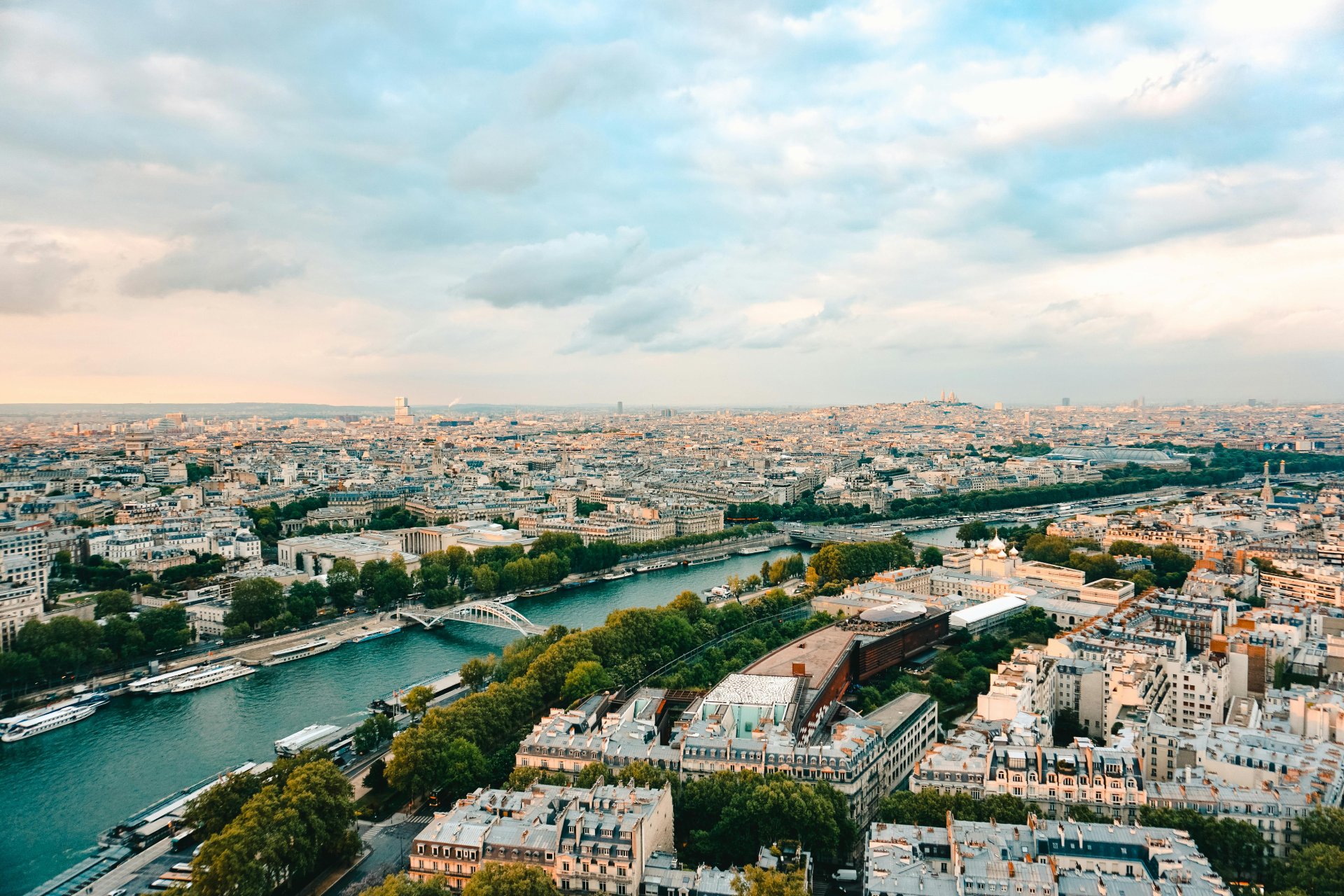
Most journeys to France begin in Paris. Many travelers never get enough of it. The city’s core landmarks are so iconic they almost feel familiar before you see them. Then you round a corner and there it is: the Eiffel Tower rising above the city, the Louvre stretching along the Seine, the battered but beloved Notre Dame Cathedral emerging from scaffolding as restoration continues.

Paris is a city built for walking. Along the way you’ll encounter café terraces, bookstores, market streets and small neighborhood squares where daily life plays out at a pace that invites lingering. Museum lovers can spend days in the Louvre alone, then move to the Musée d’Orsay and the Centre Pompidou for Impressionist, modern and contemporary art.

Business travelers benefit from Paris’s role as a global hub: efficient airports and rail connections, extensive conference venues and a deep bench of hotels. But even the busiest meeting schedule can make room for a pre-dawn walk to a bakery, a quick visit to a museum or an early evening drink along the river.


Beyond Paris: Bordeaux, Provence and the French Riviera

France’s appeal multiplies as soon as you leave the capital. High-speed trains turn ambitious itineraries into comfortable day trips.

To the southwest lies Bordeaux, synonymous with some of the world’s greatest red wines. Here, vineyard visits become sensory masterclasses in soil, weather and aging and the city itself blends grand 18th-century architecture with a lively food scene. Wine tourism in Bordeaux is not just about prestige châteaux; it’s also about small producers, riverside views and regional dishes designed to pair perfectly with what’s in your glass.

Farther south, Provence and the French Riviera offer a different kind of dream trip: lavender fields, hilltop villages, rocky calanques and seaside towns where café tables spill into the sun. For leisure travelers, this is the France of long lunches, rosé wine, market stalls and evening strolls along promenades lined with palm trees. For business travelers attending conferences in Nice or Cannes, it’s also one of the easiest places in Europe to add a restorative weekend.


Mountains, Nature and Adventure

France isn’t only city breaks and vineyards. Its mountains line the country’s borders and its national parks protect some of Europe’s most spectacular scenery.

The French Alps, dominated by Mont Blanc, are a year-round playground. In winter, resorts like Chamonix, Courchevel and Val d’Isère draw skiers and snowboarders from around the world. In summer, the same peaks become a paradise for hikers, climbers, trail runners and cyclists tackling mountain passes made famous by the Tour de France.

To the south, the Pyrenees offer rugged beauty and quieter trails, while the Massif Central and the Vosges deliver volcanic landscapes and forested ridges perfect for road trips and village-hopping. Adventure travelers can choose their own intensity level: from leisurely lakeside strolls and scenic drives to multi-day treks and technical climbs.

Even within easy reach of major cities, nature is never far away. The Loire Valley layers châteaux onto a river landscape of vineyards and bike paths. Brittany and Normandy offer dramatic coastlines, tidal flats and cliffs. France’s diversity means you could start a trip under the Eiffel Tower and end it watching waves crash against wild Atlantic headlands.


Culture, Cuisine and Wine: The French Art of Living

France’s reputation for culture and cuisine lives up to the hype.

In every region, food is a point of pride. Morning starts with a crisp baguette, butter and jam, perhaps a croissant or pain au chocolat. Markets are full of local cheeses, charcuterie and seasonal produce. Classic dishes — coq au vin, boeuf bourguignon, bouillabaisse, crêpes, tarte tatin — still anchor menus, but modern bistros reinterpret them with creative twists.

Wine is woven into the fabric of daily life. Beyond Bordeaux and champagne, there’s Burgundy, the Rhône Valley, Alsace, the Loire and Languedoc-Roussillon. Each region offers tastings, cellar tours and lessons in how geography and tradition shape what ends up in your glass. For many travelers, a trip to France is an extended pairing of food, wine and setting: oysters by the Atlantic with a crisp white or a hearty mountain dish matched with a rich red after a day in the snow.

Culture and philosophy are omnipresent. Café terraces double as debate halls; bookstores are plentiful; film festivals and art events dot the calendar. Even small towns may have impressive museums or galleries. Whether you’re tracing the footsteps of Impressionist painters along the Seine or exploring avant-garde installations in an industrial space, France keeps reminding you of its long-standing role as a global cultural engine.


France for Business and “Bleisure”

As a major economy and political center, France draws business travelers year-round. Paris, Lyon, Marseille, Toulouse and other cities host trade fairs, tech conferences, aerospace events and fashion weeks. Infrastructure is strong: high-speed trains, well-connected airports, reliable public transport and a wide range of accommodations.

Where France really excels is in “bleisure” — blending business trips with leisure time. Wrap a work week in Paris with a weekend in Champagne or Burgundy. Add a couple days in the Alps after a conference in Lyon. Turn a trade show in Cannes into a gateway to the Riviera. Because distances are manageable and transport is efficient, squeezing real travel into a tight schedule is relatively easy.


Risk and Health Overview: Moderate Security, Low Health Risk

While France is a top-tier tourism destination with well-developed infrastructure, its overall risk rating is considered  moderate.

For most visitors, the primary security concerns are familiar ones:

  • Petty crime, especially pickpocketing and bag theft, in crowded areas like metro stations, major squares, tourist attractions and around the Eiffel tower and Louvre.
  • Protests and strikes, which are relatively common and can disrupt transportation, close sites or occasionally turn confrontational.
  • An elevated threat of terrorism, similar to other major European nations, with several attacks in recent years.

Practical precautions — keeping valuables secure, staying alert in crowds, monitoring local news and avoiding demonstrations — will mitigate most risks.

On the health side, travelers benefit from France’s strong healthcare system and high-quality medical facilities. No vaccines are required for entry into France, but staying up to date on routine immunizations (such as MMR, DPT, polio and influenza) is recommended. Many health authorities also emphasize ensuring measles vaccination due to periodic rises in cases worldwide.

Common-sense measures, such as good hand hygiene, safe food and water habits and appropriate insect precautions in affected regions, are usually sufficient to stay healthy. Should problems arise, care is widely available, though non-EU travelers should be prepared to pay out of pocket and rely on travel insurance or evacuation services for major incidents.


The Global Rescue Connection

For all its appeal and strong infrastructure, France is not immune to disruption or emergency. A twisted knee on an Alpine trail, a serious illness in a small village far from a major hospital, a traffic accident on a rural road or getting caught in the wrong place during a protest or security incident can turn a bucket-list trip into a high-stress ordeal.

A Global Rescue membership provides critical support when things go wrong. Members gain access to:

  • Field rescue if they are injured or stranded in challenging locations, whether in mountain terrain or remote countryside.
  • Medical evacuation to the hospital of their choice, not just the nearest facility, ensuring continuity of care and connection to home.
  • 24/7 medical advisory services, with experts who can interpret symptoms, review treatment plans and coordinate with local doctors.
  • Security advisory support to help understand evolving risks from protests, strikes or terrorism and guide decisions about movement and evacuation.

If France is on your travel wish list — whether you imagine sipping champagne under the Eiffel tower, wandering Bordeaux’s vineyards or standing on a snowy ridge near Mont Blanc — pairing your trip with Global Rescue support lets you focus on the magic of travel, knowing expert help is only a call away.