Article Highlights:

  • July hosts the Blue Marlin World Cup and peak marlin tournaments in Hawaii, Bermuda and Cape Verde.
  • Blue water hotspots produce blue marlin, yellowfin tuna, wahoo and Bluefin tuna at prime seasonal weights.
  • The Mediterranean and Balearic Islands offer elite Bluefin tuna action during regulated summer windows.
  • Central America and the Caribbean deliver world-class tarpon fishing alongside billfish opportunities.
  • Remote trophy destinations from Canada to West Africa demand serious safety and evacuation planning.


July occupies a rare position on the international sport fishing calendar. It is a convergence point: warm-water currents stabilize, bait schools concentrate, offshore pelagic species migrate aggressively and tournament circuits reach full throttle. For serious anglers, July is not just another productive month. It is the operational center of global big-game fishing.

From the Atlantic to the Pacific, from the Mediterranean to subarctic Canada, July delivers density: density of fish, density of tournaments and density of opportunity. It is when blue marlin crash teasers in cobalt-blue water, when yellowfin tuna push bait to the surface in foaming chaos and when elite crews compete across time zones in the Blue Marlin World Cup.


The Blue Marlin World Cup and Global Tournament Season

July 4 marks one of the most ambitious single-day fishing tournaments on the planet: the Blue Marlin World Cup. Boats from Bermuda to Hawaii to Cape Verde compete simultaneously, each team chasing a single qualifying blue marlin that could secure a global purse. The format is simple. The execution is not.

Hotspots often include Bermuda’s offshore banks, Kona’s legendary ledges and the volcanic drop-offs of Cape Verde, where monster blue marlin exceeding 1,000 pounds are realistic targets. Bermuda in July is particularly dynamic, producing not only blue marlin but also white marlin, wahoo and yellowfin tuna in the same offshore corridors.

Hawaii’s Kona Coast enters the height of its tournament season in July, including the Skins Marlin Derby and the Hawaiian International Billfish Tournament in late July and early August. The bathymetry here is critical. Deep water lies close to shore, allowing crews to transition from harbor to fishing grounds in minutes. Calm seas and stable weather windows create consistent opportunities for billfish encounters.


Wahoo and Yellowfin Tuna in Peak Form

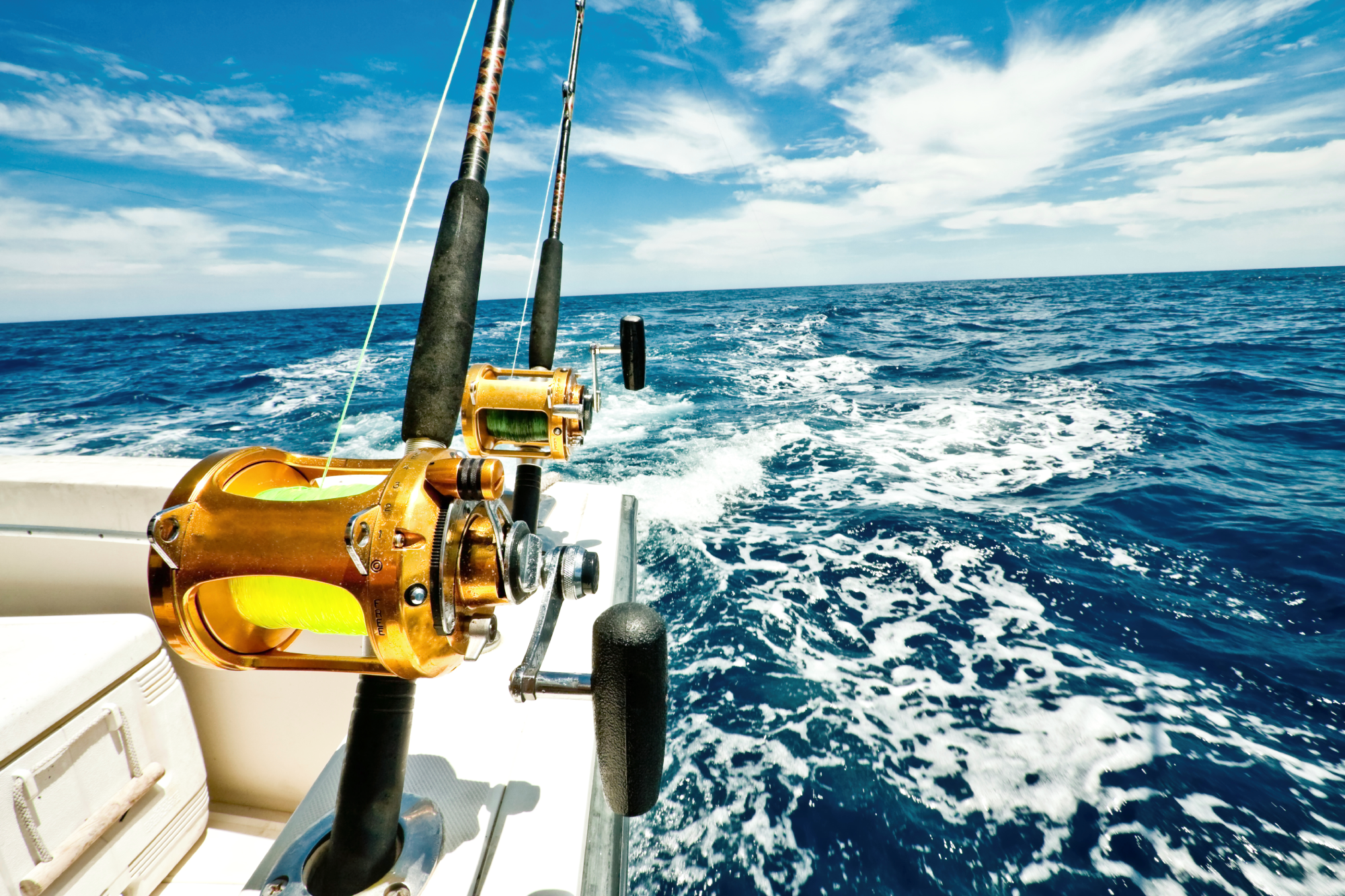
“Blue water” fishing defines July. The term refers to offshore pelagic environments where currents, temperature breaks and underwater structure converge. In these zones, apex predators dominate.

Blue marlin remain the headline species, but wahoo and yellowfin tuna are equally significant. Wahoo thrive in warm currents and are notorious for blistering initial runs. Their speed demands wire leaders and precise drag management. July water temperatures across the Caribbean and Atlantic create ideal feeding conditions.

Yellowfin tuna, often in the 50- to 150-pound class in places like Guatemala, feed aggressively on bait schools pushed toward the surface. Central America becomes a multi-species arena during this period. Guatemala’s Pacific coast is renowned for blue marlin and sailfish, while Costa Rica and Panama offer consistent pelagic action alongside inshore opportunities.

In the Northeast United States, canyon fishing produces yellowfin tuna and, in certain regulated windows, Bluefin tuna. Bluefin tuna represent a different class of combat entirely. Heavier tackle, strict regulatory compliance and quota management define this fishery. In Europe, particularly around the Balearic Islands, summer marks a critical season for Bluefin tuna under tightly controlled frameworks designed to sustain stocks.


The Balearic Islands and the Caribbean

The Balearic Islands off Spain’s eastern coast offer a distinctive July fishery. Here, anglers pursue Bluefin tuna in deep Mediterranean waters where baitfish aggregate along thermal lines. This is highly regulated fishing, often catch-and-release or subject to limited harvest tags. Precision electronics, sonar interpretation and teamwork are essential.

Unlike tropical billfish fisheries, Mediterranean tuna fishing emphasizes endurance and tactical boat handling. Long runs and deep vertical fights test both angler and crew. The environment is visually serene, but operationally intense.

While offshore pelagics dominate headlines, tarpon fishing in July commands equal respect in specific regions. Belize and parts of Mexico produce excellent tarpon opportunities during this period. Tarpon are acrobatic, powerful and unforgiving. Hook-up ratios are notoriously low compared to strikes, making technique paramount.

Inshore Caribbean waters offer a diversified fishery. Anglers may pursue tarpon in the morning, transition offshore for yellowfin tuna or wahoo by midday and target snapper or grouper on reef structures in the afternoon. This diversity is part of July’s appeal. Weather stability expands daily tactical options.


West Africa and the South Pacific

Cape Verde stands among the most consistent destinations for trophy-class blue marlin in July. The confluence of Atlantic currents and underwater volcanic structure creates ideal hunting grounds for large females. Anglers targeting granders — marlin exceeding 1,000 pounds — often circle this destination on their calendars years in advance.

In the South Pacific, Tahiti enters its dry season, offering favorable conditions for blue marlin and yellowfin tuna. Calm seas improve lure presentation and trolling efficiency. Remote logistics, however, require planning. Mechanical reliability, medical preparedness and crew coordination become critical far from major ports.


Freshwater Contrast: Canada’s Trophy Pike Fishing

July is not exclusively saltwater territory. In Canada’s Northwest Territories, Manitoba and northern Ontario, pike fishing peaks during summer months. Trophy northern pike inhabit cold, clear systems where daylight stretches long into the evening.

Unlike offshore pelagic pursuits, pike fishing emphasizes structure — weed beds, drop-offs and submerged timber. Heavy leaders prevent bite-offs and topwater strikes can be explosive. While operational risks differ from offshore big-game fishing, remoteness remains a shared variable. Floatplanes, bush lodges and limited medical infrastructure define many Canadian fisheries.


Is Sport Fishing in July Worth It?

The biodiversity within a single month underscores July’s strategic sport fishing value. But big-game fishing is physically demanding. Heat stress, dehydration, hook injuries, falls on wet decks and repetitive strain injuries are common. More serious scenarios include cardiac episodes, spinal trauma from rough seas and remote-location delays in medical response.

Remote fisheries amplify exposure. Offshore vessels may be hours from port. Tropical heat accelerates dehydration and fatigue. In subarctic Canada, environmental exposure and limited transport infrastructure complicate emergencies.

Preparation in July is not theoretical. It is procedural. Crews carry satellite communications, EPIRBs, medical kits and contingency fuel planning. Professional captains treat safety as parallel to fishing performance.


The Global Rescue Connection

Bella Coola, located in the heart of British Columbia’s Great Bear Rainforest, exemplifies how quickly a fishing trip can pivot from recreation to emergency. During a summer stay at a remote lodge, a 56-year-old U.S. member developed chest pains. He was evacuated by helicopter during a 45-minute transport to a regional hospital.

Global Rescue’s medical operations team monitored the case and coordinated directly with hospital physicians. While the local facility offered advanced capabilities, critical coronary interventions such as angiograms, PCI and open-heart surgery were only available 12 hours away by ground ambulance.

Due to unstable acute coronary syndrome symptoms and limited regional capabilities, Global Rescue physicians arranged fixed-wing air ambulance transport to a center of excellence in Seattle. The member was admitted directly to the catheterization lab in the Interventional Cardiac Recovery Unit, underwent angiography and received definitive treatment.

That sequence — field evacuation, medical oversight, aircraft coordination and direct admission — illustrates the operational difference between local stabilization and comprehensive evacuation.

Whether you are fly fishing in the Seychelles, trolling for blue marlin in Cape Verde, pursuing Bluefin tuna in the Balearic Islands or targeting pike fishing in northern Canada, distance from advanced care is a constant variable.

A Global Rescue membership provides field rescue, medical evacuation to the most appropriate facility, 24/7 medical advisory services and detailed Destination Reports that assess infrastructure, medical capabilities and regional risks before you travel. In environments where WiFi is absent, distances are vast and conditions change quickly, that layer of operational support transforms risk into manageable contingency.

As veteran outfitter Jim Klug advises: travel smart and be prepared. In July’s global arena of big-game sport fishing, preparation is not optional. It is part of the tackle.