Article Highlights:

  • Winter on Mount Everest (December–February) brings –70°C summit temps, hurricane-force winds and unpredictable, ultra-short weather windows.
  • Aconcagua has no real winter season; the safe, staffed window is mid-November to early March. Outside that, services vanish and risks skyrocket.
  • Self-sufficiency is non-negotiable: train for endurance, cold systems, ropework and the whole round trip without assuming helicopter help.
  • Rescue reliance can distort judgment; mountaineering leaders urge ethics of authenticity: Base Camp → summit → Base Camp on foot.
  • Prepare descent plans first: strong fitness, smart turn-around times and disciplined acclimatization are the best “rescue.”


Winter is when big mountains speak plainly. On Mount Everest and Argentina’s Aconcagua, the cold is sharper, the winds meaner, the daylight shorter, and the margin for error basically gone. The winter 2025 season will be no different. If you’re considering either peak, understand this first: success hinges on deep preparation and the old-school ethic of self-sufficiency.

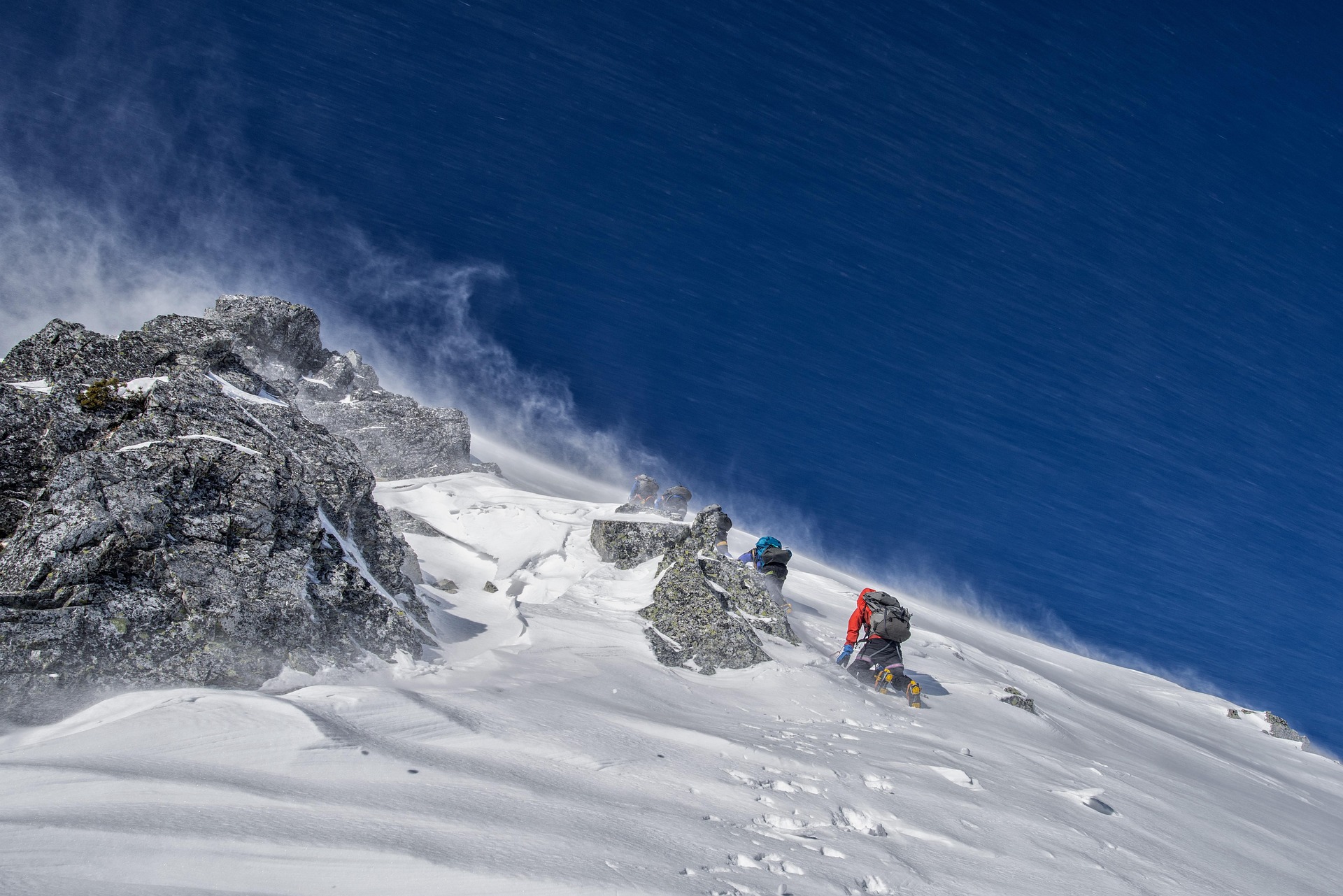
The official winter Mount Everest season spans December through February and it is notorious for brutal cold, hurricane-force winds and vanishingly small summit windows. While thousands have stood on top during spring, only a tiny handful have done so in winter. Expect base camp lows around –30°C (–22°F) and summit temperatures that can plunge to –70°C (–90°F). The polar-fast jet stream often parks over the summit, slamming it with winds exceeding 74 mph (119 km/h). Blizzards shred visibility, new snow buries crevasses and weakens slopes and ten or fewer hours of daylight compress every move.

A “window” in winter is more rumor than forecast. If one opens at all, it’s likely to be late January or early February and may last less than a day. Climbers wait in the deep freeze for weeks, then must switch to summit mode instantly when conditions align. That demands elite conditioning, meticulous acclimatization and logistics that allow rapid movement from Base Camp through the high camps despite long periods of inactivity and cold-induced fatigue. This is winter mountaineering at its most austere: fewer people on the route, far less outside support and higher consequence for every decision.


Trekking, Mountaineering and Climbing All Require Self-Reliance

Winter ascents on Mount Everest aren’t a guided queue with fixed ladders, abundant rescue options and a tidy May forecast. It’s an expedition undertaken by alpinists who can fix lines, break trail, read snow, navigate in ground blizzards and manage hypothermia, frostbite, HAPE and HACE without instant help. Polish climber Krzysztof Wielicki’s pioneering 1980 winter ascent remains a touchstone because it exemplified this mindset: small, tough, self-contained, immune to hype.

The ethics matter because modern access to helicopters can influence judgment. Some climbers on big ranges from the Himalaya to the Karakoram and Hindu Kush have been accused of leaning on evacuation as an exit strategy rather than a last resort. A Utah mountaineering doctor recently pleaded guilty to calling in a false hypothermia report after failing to summit Denali, seeking a helicopter lift instead of descending under his own power. He was banned from Denali for five years and fined $10,000. It’s an extreme case, but it reflects a wider worry voiced as early as 2012 by writer Nick Heil: the presence of rescue helicopters can alter decision-making and nudge some climbers past their limits.


Legendary Lore

Legendary alpinists are blunt. Ed Viesturs notes recent cases where climbers “fake an illness or demand to be flown off just to get home sooner.” He adds, “I’ve always believed climbing a mountain has to be a round trip…If you don’t have the strength, endurance, desire or motivation to descend the entire way from the summit back to basecamp, then perhaps you should rethink your reasons for climbing or your system of training.”

Conrad Anker echoes that “the old-school thing was, you were self-sufficient. If an accident did happen, you would have the wherewithal to extract yourself and your teammates.”

Mount Everest chronicler Alan Arnette warns that telling people “rescue insurance will cover an evacuation” breeds a false sense of security: “High-altitude mountaineering has always had risks. Climbers can mitigate these risks by arriving…well prepared and self-sufficient.”

Gordon Janow of Alpine Ascents adds that turning around early before a medical emergency “is just smart mountaineering.”

Tom Livingstone, writing from his own experience, believes “an ascent must finish with the whole team safely back at Base Camp.” The through-line is simple: your fitness, systems and judgment are your first and best rescues.


Training for Mount Everest’s Winter Brutality

Preparation for a winter Mount Everest attempt is its own expedition. Build a year-long training arc that blends high aerobic capacity, muscular endurance and cold-weather movement skills. Long zone-2 hikes with a load build the engine. Back-to-back days simulate cumulative fatigue. Weighted stair sessions condition legs for steep snow. Add specific strength exercises (hip hinge, single-leg, trunk anti-rotation), then convert to muscular endurance circuits that mimic step-kicking for extended periods.

Technical refreshers — fixed-line efficiency with mitts, descending devices that won’t freeze, anchor cradles — must be automatic. Cold-systems testing is non-negotiable: learn your personal thresholds for hand and foot warmers, test vapor barrier liners, dial nutrition you can tolerate at –30°C and rehearse stove care and fuel budgeting when everything is rimed. Finally, acclimatize progressively on high sub-peaks or by staging a pre-expedition in the 4,500–6,000metersrange so you arrive already adapted for work, not just survival.


Aconcagua Climbing in Winter

Aconcagua’s practical climbing season is from mid-November to early March, when Aconcagua Provincial Park is staffed, routes are serviced and the weather offers the best (relative) chance of success. That doesn’t make Aconcagua easy; it only means the risks are manageable with planning.

At 22,837 feet / 6,961 meters, the highest peak outside the Himalaya/Karakoram is still a true high-altitude climb. Many consider it a gateway to the Seven Summits, but as Ed Viesturs stresses, people often underestimate the endurance required and the compounding effects of altitude. Mountaineering author Jed Williamson calls it an ideal beginner’s high-altitude peak, provided climbers acclimatize well and respect the weather’s volatility. Alan Arnette points out that while not highly technical, crampon walking and ice-axe competence are essential, and last year’s storms reminded teams to be ready for mixed conditions at any time.


Smart Planning and Prep for Aconcagua Assaults

If you’re targeting the legitimate Aconcagua window (mid-November to early March), build a plan around progressive load carries, disciplined acclimatization camps and redundancy in water sourcing and fuel. The Andes can swing from dry, wind-scoured slopes to sudden snow; systems should cover both. Train to hike for 6–10 hours with a 15–20 kg pack, then repeat the next day. Practice camp chores in wind and spindrift, rehearse tent anchoring on rocky ground and refine a nutrition plan you can execute when your appetite wanes.

Most importantly, bring the same self-sufficient mindset you’d need on Mount Everest in winter: the ability to descend under your own power if the forecast turns, the team discipline to turn around early and the humility to save the summit for a better day.


Rescue Realities

In popular spring windows on Everest, helicopter evacuations from Base Camp and occasionally higher altitudes are possible and, in recent years, have become frequent. In winter, flight rules, weather and visibility can ground aircraft for days. On Aconcagua, especially outside the staffed summer season, air support is limited and response times stretch. That’s why serious alpinists frame rescue as contingency, not a plan. As one Global Rescue operations expert put it: “Training, acclimatization and smart decision-making can be the difference between life and death.”

The hard truth stands: getting to the top is optional; getting down is mandatory. Plan your descent before you plan your summit push. Build the fitness and systems to complete the round trip under your own steam, because in winter on Mount Everest — and effectively any time outside Aconcagua’s primary season — you may have no other option.


The Global Rescue Connection

Emergencies at altitude escalate fast. Frostbite, HAPE, HACE and trauma don’t wait for perfect weather or open-air corridors, and in winter, aircraft often can’t fly. That’s why preparedness is the core of safe mountaineering, climbing and trekking, and why the world’s best alpinists insist on self-sufficiency first.

Global Rescue was built to support that ethic with medical advisory, field rescue and complex evacuation coordination when conditions allow. During busy seasons, our teams have managed multi-phase evacuations across the Himalaya and Andes, stabilizing climbers and moving them to definitive care. But we are equally direct with members: rescue is not a strategy. The safest expedition is the one you train for, equip properly and complete under your own power.

For winter 2025 on Mount Everest or any attempt on Aconcagua, arrive fit, acclimatized and disciplined. Carry the skills to fix problems before they become crises, the humility to turn around early and the endurance to descend the whole way back to Base Camp. If the worst happens, we’ll coordinate the best possible response. Until then, the strongest lifeline on any mountain is the preparation you’ve done long before you clip into the rope.