Article Highlights:

  • International travel risk is rising, with 82% of travelers concerned about personal security threats.
  • Civil unrest, natural disasters and weak healthcare systems are the top disruptors of workforce productivity.
  • Traditional corporate travel policies often fail to address real-time, on-the-ground security risks.
  • Proactive security planning directly improves operational continuity and employee performance.
  • Specialized support, including evacuation and intelligence services, fills critical protection gaps.


Global business travel is back. Teams are moving across borders again, projects are accelerating and organizations are expanding their international footprint. But the environment those employees are entering has changed in fundamental ways.

Security today is no longer a background consideration. It is a frontline operational requirement.

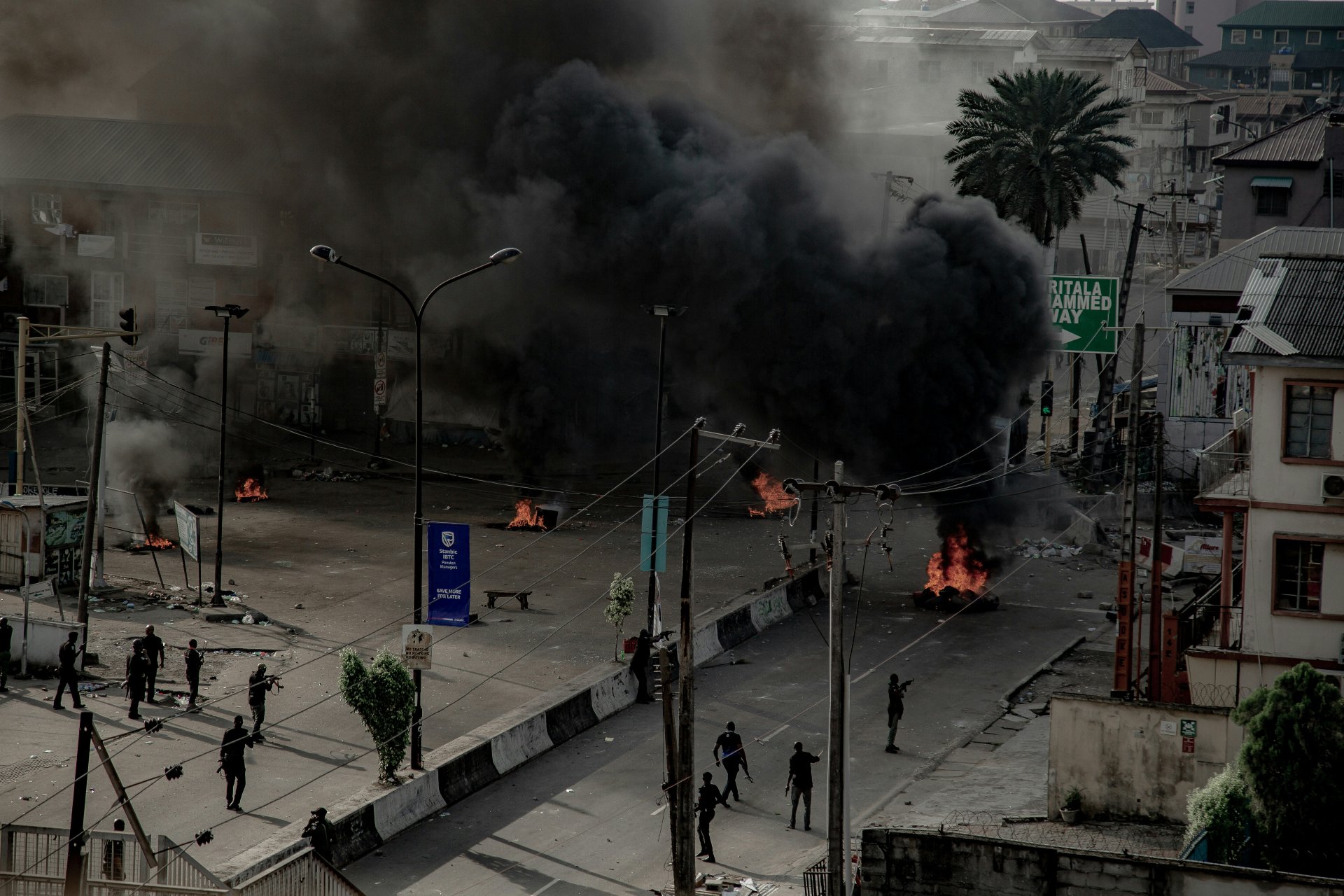
The modern international workforce is navigating a world defined by unpredictability. Civil unrest, violent conflicts and war can emerge without warning. Natural disasters cascade into secondary crises. Healthcare systems vary widely in capability. And in many regions, the margin for error is thinner than ever.

Organizations that fail to recognize this shift often fall into a dangerous assumption: that employees can “power through” risk. They can’t. And expecting them to do so creates vulnerabilities that extend far beyond individual safety. It threatens productivity, continuity and the success of the entire operation.


Your International Workforce Can’t “Power Through” Risk

Business travel has evolved into a more volatile and less forgiving landscape. Employees are now deployed into environments where risks are dynamic, layered and often invisible until they escalate.

Data reinforces this reality. In Global Rescue’s Winter 2026 Traveler Sentiment and Safety Survey, 38% of travelers describe international travel risk as unpredictable, while 36% believe it is more dangerous than before 2020. Only 1% think it is safer. Even more telling, 82% express concern about personal security threats such as crime, kidnapping or extortion.

This is not abstract concern. It reflects lived experience.

For organizations, the implications are clear: security risk is no longer episodic. It is continuous. And it directly impacts performance.

When employees operate in environments where uncertainty is constant, decision-making slows, stress increases and productivity declines. The expectation that they can simply adapt in real time without structured support is not just unrealistic, it is operationally negligent.


Security Risk Is an Operational Problem, Not an HR Checkbox

Many companies still treat travel risk management as a compliance exercise. Policies are written, acknowledgments are signed and the issue is considered addressed.

But risk does not live in documents. It lives in the field.

It appears in blocked roads, sudden curfews, unreliable transport, disrupted communications and rapidly shifting local conditions. It shows up when an employee must decide whether to leave a hotel during a protest, reroute around a strike or seek medical care in an unfamiliar system.

These are operational decisions with real consequences.

When organizations fail to provide real-time intelligence and clear decision frameworks, employees are forced to improvise. That improvisation introduces inconsistency, delays and exposure to avoidable danger.

Security, in this context, becomes a productivity issue. And productivity loss compounds quickly.


The Three Security Threats That Disrupt Global Operations

1. Civil Unrest, Violent Conflicts, War and Security Volatility

Executives often imagine civil unrest, violent conflicts and war as large-scale, visible disruption. In reality, it is often localized, fast-moving and difficult to interpret. A protest may block a critical route. A labor strike may halt transportation. An election may trigger curfews or spontaneous demonstrations. A terrorist attack and lead to violent conflicts, even war. These events rarely provide advance notice.

Business travelers are particularly vulnerable because of their predictability. Fixed routes, repeated schedules and visible behaviors create patterns that can be exploited. The result is operational paralysis. Meetings are canceled. Site visits are delayed. Teams lose momentum. Leadership struggles to make timely decisions without reliable information. In these moments, security is not just about safety. It is about maintaining forward movement.


2. Natural Disasters and Cascading Failures

Natural disasters are rarely isolated incidents. They trigger chain reactions that amplify risk. An earthquake can lead to infrastructure collapse, transportation shutdowns and overwhelmed hospitals. A hurricane can disrupt power, communication and supply chains while increasing opportunistic crime. Wildfires, floods and severe storms create similar ripple effects.

For international teams, these cascading failures create immediate operational breakdowns. Travel plans collapse. Employees become stranded. Communication channels fail. The human factor is just as critical. Employees who feel unsupported during a crisis lose confidence in both leadership and future assignments. This directly impacts retention, morale and long-term deployment capability.


3. Healthcare Gaps and Medical Downtime

While dramatic security events capture attention, most disruptions stem from medical issues. Illness, injury and untreated conditions are the most common causes of lost productivity in international travel. What might be a minor inconvenience in a developed healthcare system can become a major disruption in regions with limited medical infrastructure.

The challenge isn’t simply access, it’s trust.

Can the diagnosis be relied upon? Are medications legitimate? Is the facility equipped to handle complications? What happens if the situation worsens? Medical uncertainty creates delays, inefficiencies and stress. Employees spend valuable time navigating unfamiliar systems instead of performing their roles. Managers divert attention to coordination. Projects lose continuity.

This is where security and health intersect. Both must be addressed as part of a unified protection strategy.


What High-Performing Organizations Do Differently

Organizations that succeed in today’s environment approach security as an operational capability. They do not react to risk. They prepare for it.

  • They begin with granular intelligence. Instead of asking whether a country is “safe,” they analyze specific districts, routes and worksites. They monitor local conditions continuously, not just before departure.
  • They treat movement as logistics. Transportation is vetted. Routes are planned. Contingencies are built in. This reduces exposure and increases reliability.
  • They establish decision thresholds in advance. Employees know when to delay, relocate or escalate. This eliminates hesitation during critical moments.
  • They integrate health into security planning. Pre-travel preparation, access to medical advisory services and clear escalation pathways ensure that minor issues do not become major disruptions.
  • They train employees to operate effectively in unfamiliar environments. Situational awareness, behavioral discipline and basic security practices reduce risk without compromising productivity.

These measures are not excessive. They are essential.

As highlighted across global travel risk strategies, preparation and intelligence consistently outperform reactive measures .


The Role of Specialized Security Support

Even the most prepared organizations cannot eliminate all risk. When situations escalate, the difference between disruption and recovery often comes down to response capability.

Traditional systems, including travel insurance, are largely reactive. They reimburse costs after an incident. They do not manage real-time crises.

Modern security protection requires a different model. It requires access to real-time intelligence, experienced advisors and coordinated response capabilities that operate globally. It requires the ability to extract employees from dangerous situations, navigate complex logistics and ensure continuity of care.

This is where specialized services, such as Global Rescue, play a critical role. They bridge the gap between planning and execution.


The Bottom Line

Global mobility is accelerating, but the environment has fundamentally changed.

Security threats are more dynamic. Infrastructure is less predictable. The consequences of disruption are more immediate and far-reaching.

Organizations that continue to treat security as a secondary concern will struggle to maintain performance in this environment. Those that elevate it to a core operational function will gain a decisive advantage.

The reality is straightforward: Your international workforce cannot power through risk. But with the right intelligence, planning and support, they can operate with confidence, maintain productivity and succeed in even the most challenging environments.

Security is no longer just about protection. It’s s about performance.


The Global Rescue Connection

Even the most sophisticated internal security programs have limits. Risk can be reduced, planned for and managed, but not eliminated. When an incident escalates beyond local capabilities, what matters most is speed, coordination and expertise on the ground.

A Global Rescue membership provides that capability.

Unlike traditional travel insurance, which primarily reimburses costs after an event, Global Rescue operates in real time. Members gain immediate access to a global operations center staffed by experienced medical professionals, paramedics, nurses, physicians and security specialists. When an employee is injured, falls ill or faces a security threat, one call activates a coordinated response.

Global Rescue provides field rescue from the point of incident, whether that’s a remote job site, urban environment or transit corridor. Teams deploy by whatever means necessary, including ground transport, helicopters, fixed-wing aircraft or specialized rescue units, to extract members and move them to safety.

Medical evacuation is not limited to the nearest facility. Members are transported to the most appropriate hospital capable of delivering the required level of care. If local healthcare systems are inadequate, Global Rescue coordinates transfer to a vetted regional center or repatriation to the employee’s home hospital of choice when medically appropriate. This ensures continuity of care and reduces long-term health and operational impact.

In addition to emergency response, members benefit from 24/7 medical advisory services. Employees can consult directly with medical professionals before or during travel for guidance on symptoms, treatment options and local healthcare resources. This reduces uncertainty, prevents unnecessary escalation and keeps minor issues from becoming major disruptions.

Global Rescue also delivers Destination Reports and real-time intelligence that help organizations and travelers understand evolving risks, from civil unrest and crime patterns to infrastructure reliability and medical capacity. This intelligence supports better decision-making before and during travel.

The Security Add-On extends these capabilities into the realm of personal safety and geopolitical risk. Members gain access to security advisory services staffed by former military and special operations professionals who monitor global threats and provide actionable guidance.

If conditions deteriorate, due to civil unrest, political instability, natural disaster or targeted security threats, Global Rescue coordinates security extraction and evacuation to a safe location. This includes route planning, secure transport and on-the-ground support to move employees out of harm’s way quickly and efficiently.

Equally important, the security team provides real-time situational awareness. Employees receive guidance on how to avoid emerging threats, navigate checkpoints, adjust movement patterns and respond to rapidly changing conditions. This proactive support often prevents incidents before they occur.

In a world where global mobility is essential but increasingly complex, Global Rescue transforms uncertainty into a manageable risk. It ensures that when plans fail, infrastructure breaks down or situations escalate, your workforce is never alone and your operations never lose momentum.