Categories:

Health & SafetyTravel
Share This:

Going Off the Grid? How to Prepare for Safe Off-the-Grid Travel

Since COVID-19 has caused us to lean on our devices more than ever, more leisure travelers are indulging in remote getaways with no access to the internet or cell service to force a much-needed break. If you’re one of them, here’s some thoughtful planning prior to traveling…

TL;DR

  • Off-the-grid travel offers a digital detox but requires thorough preparation.
  • Essential preparations include researching location, assessing amenities, and planning activities.
  • Pack a first-aid kit, get a communication device, and create a contingency plan.
  • Consider a Global Rescue membership for added safety.

Craving a digital detox? You’re certainly not the only one…especially after the last year-and-a-half where we have been more tied to our devices than ever. It’s also precisely why remote, off-the-grid vacations are more attractive than ever.

“Anyone can say ‘I’m taking a break for the weekend, and I’m not going to check my phone or work email.’ But how many times do you suddenly find yourself on your phone, tapping or scrolling away? The temptation is constant,” says Allison Fleece, co-founder of WHOA Travel, a female-focused, boutique adventure travel company and Safe Travel Partner.

“When you travel to an off-the-grid, remote location where there’s no internet or cell service, it forces you to take that much-needed break, which is essential to our mental health,” Fleece said.

Some proof: According to a recent survey conducted by VacationRenter, of those who stayed off–the-grid during their remote travels, 81% said they felt noticeably more relaxed and at ease without access to internet or cell service.

How to Go Off-the-Grid with Careful Planning

An off-grid tent in the middle of a jungle

As much as remote travel and digitally disconnecting can be life-improving, it’s equally imperative to do it right.

“The sad majority of the population is woefully unprepared to deal with an emergency in a place where they are inaccessible,” said Jeff Weinstein, a paramedic and a medical operations supervisor for Global Rescue.

“We live in a world where resources are always at our fingertips,” said Adam Bardwell, a former U.S. Army Green Beret, Special Operations Combat Medic, and current Global Rescue medical operations supervisor. “But in a remote setting, the everyday problem is suddenly amplified. Something that is just a minor incident in everyday life can become catastrophic when you’re unreachable.”

And the intentional lack of internet and cell service adds to the risk.

If you’re one of the many considering retreating to an off-the-grid remote destination — whether one hour away from your home or 10, nationally or internationally, for a few days or a few weeks — here are the most essential safety precautions and preparations Global Rescue experts recommend prior to travel.

Research the Location & Consider Your Limitations

“Anytime I’m considering going to a remote area, the first thing I’m doing is a weather and terrain analysis of the location,” Weinstein said. “Can you bring a vehicle right up to the site? Do you have to hike in and what is that hike like? What is the closest city? Closest hospital? What are the roads like?”

Weinstein will use Google maps to pull up satellite images of the location and Gaia GPS Maps to pull up topographic maps of the area, but, if you’re renting a secluded cabin through AirBnB or another travel booking platform, this is all info you should be able to find in the listing or the host should be able to easily answer.

Then, once you’ve gathered that essential info, you need to ask yourself, are you confident and capable that you could handle a worst-case scenario if you were to get stuck there?

“You might find out that it’s going to be heavy rain season in that location. What happens if your vehicle gets stuck at some point?” Weinstein said. “Do you have a winch and do you know how to use it? If not, are you physically fit enough to hike out of there on your own? You need to think of the ‘what ifs’ posed by the particular location and determine if you can handle them.”

Assess the Amenities & Prepare Appropriately

Inside picture of an off-grid cabin

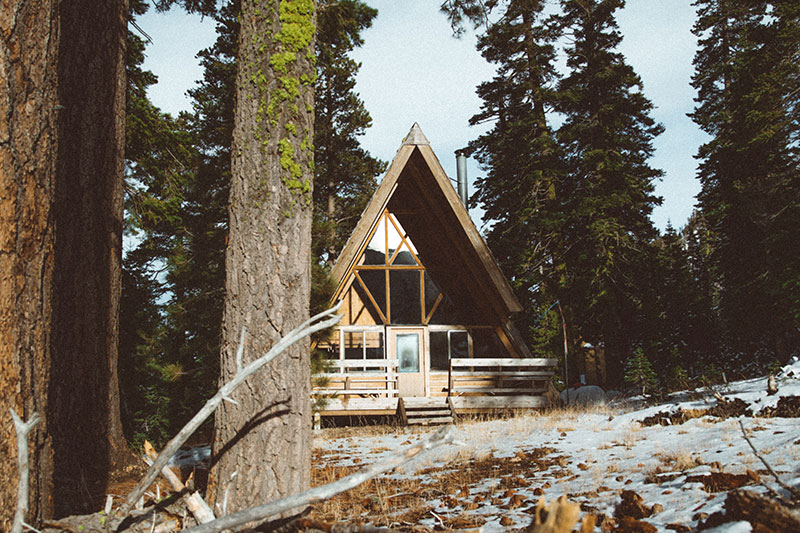
Let’s say you’re heading to a remote cabin in the woods. What is the water source (a well, nearby body of water, collected rainwater) and where is it? A heat source (wood-burning stove, propane gas, solar heating)? Solar lights, kerosene lamps or nothing at all for the evening? What about cookware?

“Take a robust inventory of what the site has and doesn’t have,” Bardwell said. “Then, start making a list of the essentials you need to bring…and what you won’t.”

For example, you wouldn’t want to show up with packages of bottled water, only to find out there’s a perfectly good hand-operated pump for the well on-site. That bottled water just took up space for something else, like more non-perishable food or additional backcountry equipment.

Consider the Activities You’re Going to Be Doing

If you’re ditching your phone and internet, chances are, you’re also looking to spend some time in nature — hiking, swimming, maybe some fishing. If you don’t know the area well, this can be where you run into trouble, so research the local trails (level of difficulty, type of flora and fauna you could run into) as well as bodies of water, so you know what to expect.

“Googling the general area is good, but you should also try to learn from people who have been there already,” Bardwell said. “This is where forums and social media comes in handy. You can raise questions about spots they frequented and what they wish they had known or done to prepare ahead of time.”

Always Pack a First-Aid Kit

While it is impractical to pack for every single situation you could encounter, it is possible to create a small, packable remote travel first aid kit full of highly useful items that takes up little space.

An easy starting point is to purchase an off-the-shelf product. A commercial first aid kit will contain the items you need to treat minor travel illnesses and injuries. Blisters, minor soft tissue injuries (scrapes and cuts), orthopedic injuries (ankle sprains) and stomach ailments are the more frequently encountered issues. Global Rescue has customized its own list of must-have items over the years for packing an everyday, travel-friendly first aid kit.

Get a Satcom When You Are Going Off-Grid

We understand that one of the reasons you may be going off-the-grid is to get away from the constant urge to connect. But as a leading provider of medical and security advisory and evacuation services for travelers, we know that unexpected incidents can crop up, from simple slips and falls to sudden snakebites.

If something happens and you’re out of cell range to call for help, you will need a satellite alternative communication device. There is a variety of options available — from personal locator beacons (PLB) and standalone satellite phones to messaging devices and gadgets that pair with your smartphone to establish satellite communication. Global Rescue strongly recommends opting for a two-way communications device. A one-way emergency signaling device only sends a distress signal, like a whistle or a flare — nothing more.

“While that’s certainly better than nothing, with two-way communication, you can provide additional information, so rescue can organize the most appropriate resources to get to you,” Weinstein said.

Make a Contingency Plan and Share It

a drone shot of a red car travelling on a route in the middle of the jungle.

It isn’t enough to make others aware that you’re going remote — to a cabin in the forest, a campground in the mountains, or any other remote destination.  You need to provide details and put action steps into place — specifically the kind laid out in a five-point contingency plan — in order to speed up rescue response should you not return or get in touch within the appropriate time frame.

Guided by the acronym GOTWA, it’s a brief you create outlining these details: going where (G), others going with you (O), time span you will be gone (T), what to do if you do not return in that timely manner (W) and final actions to take if you do not return (A).

“I type up all these details, then disperse it to my friends and family,” Weinstein said, who in addition to his medical background is also a wilderness expert. “I’ll even stick an abbreviated version on the windshield of my car if I’m going to be hiking out a distance from a remote trailhead.”

If someone comes by, sees an abandoned car and the date specified in the contingency plan has since passed, then you will have another person potentially alerting search and rescue response on your behalf.

Get a Global Rescue Membership

If you’re ever traveling anywhere remote, whether close to home or far away, a Global Rescue travel protection membership is a must. Not only can we pluck you from whatever precarious situation you find yourself unable to get out of on your own — and do so fast — but because, without us, a medical evacuation for illness or injury could cost you a pretty penny. Under our membership, you never see a bill.

Categories:

News
Share This:

How to stay COVID-free on your fall vacation: Plan – and then plan some more

Share This:

Are You Rescue Ready?

The more details rescue operation professionals have, the better they can facilitate the rescue. Without this extra information, your rescue can take much longer or be more complicated, or both. Here’s what you need for a successful…

If you need rescue, then you need a way to communicate your emergency. Whether you’re by yourself or with a group, nearby or far away, rescues begin with a distress call. That means you must have the ability to make an emergency outreach.

Rescue begins with knowing your location and conditions.

“The ability to communicate with the rescue service allows them to ask you specific questions to help them assemble the most capable or efficient resources to get to you including your location, your physical state, weather conditions and more,” said Harding Bush, a former Navy SEAL and associate manager of operations for Global Rescue.

The more details rescue operation professionals have related to your situation, the better they can facilitate the most appropriate supporting rescue assets for you. Without the details then your rescue can take much longer or be more complicated, or both.

For example, identifying the physical state of the individual is vital. Knowing whether you’re alone or with someone who can assist, determining if you can walk, or if you have food, water, suitable clothing or shelter are helpful details. Similarly, sharing the on-the-ground weather and terrain conditions helps tremendously. Our rescue operations team has access to global weather monitoring information and topography maps but gleaning the additional perspective from the individual on the ground is abundantly useful.

“The most reliable way to get help after becoming ill or suffering an injury is through two-way communication. Cell phones do not always have dependable service, and they are often used for many things that could risk its usefulness,” said Bush. 

For example, what would you do if your cell phone battery died because you were busy snapping selfies, live streaming your hike on social media and running a GPS navigational-based trail map application? What if your phone fell out of your pocket and you heard a splash when you were filling your water bottle at the stream?

It happens.

When you need two-way communication capability and your cell phone will not work, a satellite messaging device is your next best choice.

Satellite-phone
Global Rescue recommends using a satellite messaging device capable of communication via satellites to send an email, SMS or SOS message. There are several available devices like the Bivy Stick and Zoleo devices. These devices are easier to use, manage and carry than a satellite phone. They are also significantly less expensive: between $300 and $500 versus $1,500 and up for a satellite phone.

Several companies rent satellite phones. If you have a trip where you may have requirements to make voice communications, renting a satellite phone may be a less costly answer.

“In an emergency, we advise our members to send an e-mail from their communication device to Global Rescue at operations@globalrescue.com,” said Bush.

When Global Rescue receives that email message, it automatically includes a map with the member’s name and their geographic coordinates.

“The message also includes a dialog box permitting direct exchanges between the member and the Global Rescue operations team,” he said. “Since we already have a map with your location, you do not need to include it in the body of your email, which is useful since some devices only allow for 160 characters.”

The most important aspect of using any communications tool, whether it’s a cell phone or satellite device, is understanding how to operate the equipment. During an emergency, there is a good chance you may be scared or injured. This may affect your ability to operate the device efficiently. It is wise to make certain everyone in your group knows how to use the device.

“An emergency is not the time to learn how to use a satellite phone,” Bush said.  

If you’re traveling internationally, keep in mind satellite communication devices are illegal in some countries because satellite communications circumvent the national communications system and they cannot be monitored. These countries include India, China, Iran, Cuba, Nigeria, Bangladesh, Myanmar, Chad, Sudan and North Korea. There are other countries where permitting is required. If you are discovered with a satellite phone or messaging device in these countries, you may be arrested and put in jail. Some countries only ban foreigners from having satellite communication. Be sure to check before you travel.

Categories:

News
Share This:

Bleisure Travel: A Pandemic Silver Lining?

Share This:

Suspicious Activity? See Something, Say Something — and What Exactly to Say

What is suspicious behavior? Examples include unusual items or situations, such as an unattended bag or a vehicle parked in an odd location. Here's how to recognize the signs, then act appropriately to observe, retain…

The U.S. war in Afghanistan has ended after 20 years and experts are debating what it all means for the ongoing war on terrorism. U.S. troops have left. Afghan security forces were no match for Taliban fighters. Prisons have been emptied of Taliban militants.  

Doubts are mounting over Washington’s “ability to stem a resurgence of al Qaeda and other extremists in Afghanistan,” according to half a dozen current and former U.S. officials in a Reuters report. Other authorities are looking to make certain domestic counter-terrorism efforts aren’t overlooked, especially now that the inaugural national strategy for fighting domestic terrorism was published

“The ‘See Something, Say Something’ slogan from the Department of Homeland Security reminds us that we all have a responsibility to report suspicious incidents to help prevent terrorist or criminal activity,” said Harding Bush, a former Navy SEAL and associate manager operations for Global Rescue. 

Outside of “who, what, where, when and why,” this statement is rarely followed with specific instructions on how to effectively report an incident. “As a witness, you should be able to observe, retain and report accurate details of the situation. With a background in military and international security, I’ve mapped out some ways to help you report suspicious activity,” he said. 

Three Types of Incidents

see-something-say-something-bus

Suspicious incidents are usually associated with objects, people, or vehicles — and can include all three. There are specific methods of reporting for each. These methods give you an effective, clear and accurate way of saying something after seeing something. 

1. Objects

A suspicious item or object should be reported as what and where it is. If you aren’t sure of what an object is, describe its characteristics, size, color and material. Describe why you believe it is suspicious and any other immediate details relevant to the object. For example, a good object description would be: “A large red canvas duffle bag against a concrete stanchion on the second level of terminal B parking garage near the north elevators.” 

2. People

To quickly and accurately describe a person’s features, start by describing them as male or female. Describe the color and type of clothing from the waist up and the color and description of clothing from the waist down. Pay close attention to their footwear. A sweater or jacket can be taken off quickly to change appearance but footwear is difficult to change on the fly.  

Bush recommend using “ABCD” as a memory aid. It stands for age, build, color and distinguishing features

  • Bracket their age: 20-25, 30-40, 40-50.  
  • Describe their build: Are they skinny, stocky, athletic or obese? Are they short, average or tall?  
  • What is the color of their skin, ethnicity or race? Be aware that the color of the skin does not indicate nationality or ethnicity; a person from South America could easily be confused with a person from the Middle East, North America, or many other places.
  • Distinguishing features are used to add specific information about the person that could help identify or clarify the suspicious behavior. This could include the language they were speaking, hair color or facial hair, activity at the time, tattoos, items carried, gait and body language.  

Be sure to report what you see, not what you think you see. For example, don’t report a person as “conducting surveillance.” Report they are using binoculars or taking pictures or sitting at the bus station after several busses have arrived and departed.  

3. Vehicles 

You should describe a vehicle’s color, make, model or type, license plate and distinguishing features. An example of this is a white Toyota Prius, Florida license plate 12322W with a broken right rear tail light.  

“You may not have all of the information but include what you saw and what you know. Even partial information helps and can be verified through other reports of the incident,” said Bush, an expert in procedures for high-risk travel, cultural awareness, crisis preparedness, leadership and operational planning.  

Who Needs this Information?

Observed suspicious behavior needs to be avoided, then reported. Leave the area, and report it as soon as you can. Always include the time and location. You may want to write down what you saw to ensure details. Studies show that writing things down improves your memory. 

Your first and easiest option is to contact the police. You could also consider finding a building manager or company security officer closest to the incident. These people have a direct interest in the security and safety of that location and are most likely to be diligent about the report.   

“Keep in mind, suspicious activity does not necessarily mean a terrorist or criminal act is in process. It means you saw something out of the ordinary that may deserve further assessment by law enforcement or other security personnel,” he said. 

Share This:

Will Bleisure Travel Save the Future of Business Travel?

Yes, it will be some time before business travel returns to its pre-pandemic levels. But one thing helping to get it there? The return of bleisure travel, the blending of business and leisure on a trip —…

While the recent Global Rescue survey showed more people have already returned to business travel than initially predicted, the work-related traveler segment is still a ways from fully rebounding — especially with the Delta variant slowing travel volumes during the latter half of this summer.

 “Companies and their employees can’t yet justify a full return to business travel,” said Matt Aubin, associate director of sales at Global Rescue. “Especially as we have managed to get by with video conferencing for the last year and a half.”

Still, business travel is bound to return — even if that means slowly. And as it does, experts are saying bleisure travel — a portmanteau of business and leisure that refers to a growing trend of business travelers tacking leisure days onto a work-related trip — will likely play an important role in getting more and more employees back on the road and in the air again. Here’s why.  

The Importance of Business Travel 

importance-of-business-travel

Virtual meetings simply can’t replace face-to-face meetings. Personal interaction will always be more effective at establishing and maintaining relationships, fostering trust and driving company growth 

“You can’t get to know a prospect, current client or business partner as professionally and personally when you’re not in person,” said Aubin. “In a video chat, there is more opportunity for distraction and multitasking, the meetings themselves can feel rushed, the technology can glitch. While it’s fine for the interim, that’s not how you maintain a strong business relationship that lasts.”  

You also can’t pick up on a person’s body language as effectively — and that will always be essential to establishing presence and nailing a sales pitch.  

“While the days of traveling long distances for one meeting with one person could be gone forever, people will travel for business at scale into perpetuity,” said Dan Richards, CEO of Global Rescue. 

Another reason why business travel is so vital is its impact on our economy: A study from Oxford Economics found $12.50 of additional revenue is generated in the economy for every $1 spent on business travel. It also plays an important role in keeping the cost associated with leisure travel down, something many vacationers are feeling the burn from now.

The Bleisure Travel Bandwagon  

Bleisure travel is hardly a new buzzword, first coined a dozen years ago. But what is new are the traveler profiles behind it.  

Prior to the pandemic, the travel trend was particularly popular with a younger generation as well as those in the tech industry, but according to a recent Financial Times article, it is increasingly becoming mainstream and spreading to “creatives and consultants, and now more corporate types with families.”  

“Because we lost our freedom to vacation during the pandemic, people aren’t reverting to the usual excuses for not taking a trip,” said Allison Fleece, co-founder of WHOA Travel and a Global Rescue Safe Travel Partner. “They are making those trips happen.”  

The advent of a more flexible work environment has allowed them to do so, creating the perfect conditions for a bleisure travel boom. A whopping 89% of people plan to add personal vacation time to their business trips in the next year. 

Steve Hafner, CEO of the travel search company Kayak, agrees, stating he expects business travel to return to normal, pre-COVID-19 levels, just with fewer day trips and more bleisure. “Now you know you can work from anywhere. Why make it a day trip?” he said. “Go more days.” 

The Benefit of Bleisure 

The-benefit-of-bleisure

From the company side of things, bleisure is a way to incentivize employees to travel for work if they are permitted to use it as a way to work in some personal time. “Employees are more willing to travel for business if they are given the opportunity to experience the destination they are traveling to,” wrote Shelcy V. Joseph, a former Forbes contributor.  

An advantage to the employee is that the company will usually pay for the flights if the added days don’t increase total flight costs. Still, don’t think of it as a paid vacation. If the leisure portion of the trip falls on the weekdays, the expectation is that the employee will need to use their vacation days, or work remotely, as well as pay for any additional leisure expenses incurred (meals, transport if traveling to neighboring cities, etc.). That’s why so many traveling employees try to plan their trips to take advantage of weekends or long-holiday weekends. 

Another benefit — as studies have shown — is that bleisure trips make for more productive trips and happier employees. 

“Travel well-being relates to job satisfaction, which means people stay productive and stay longer in their jobs,” said Jeanne Liu of the Global Business Travel Association. “Being able to take your kids or your family, to add some fun elements to a trip, makes that trip much less stressful.”  

As for productivity, traveling for work requires a lot of energy and can be tiring. When you add a few extra days for leisure, it allows employees the chance to process their trip and recharge. 

Not to mention, if you’ve already jumped through the COVID-19 travel hoops then why not add a few extra leisure days to further justify the effort?

Travel Risk Management 

Whether you’re an employer looking to use bleisure travel to incentivize a return to business travel or an employee looking to take advantage of it in future, it’s important to consider how duty of care plays a role. 

Does your company’s specific travel risk management policies remain in place in the event of an emergency when you are indulging in the leisure portion of your trip? If not, naturally, you would be liable for your own travel safety. 

Employers need to make certain your duty of care legal requirements are comprehensively detailed. The pandemic has demonstrated that productive work can be done from almost anywhere and that is leading to people taking advantage of that circumstance. Company leaders like CEOs, chief security officers, travel managers and human resources directors are accountable for the development and oversight of policies, programs and logistics that protect traveling staff. They carry a duty of care responsibility to their people, to take care of them and avoid exposing them to any unnecessary or undue risk.  

As a travel risk and crisis management company, Global Rescue is the only vertically-integrated provider of medical, security, information and communication services that can support an organization’s ability to improve and meet the legal duty of care they have to employees.    

Categories:

Places & Partners
Share This:

Take Your Best Shot: Global Rescue Announces the 2021 Photo Contest  

We admire your resilience, so we made it the theme of our 2021 Photo Contest. Send us your photos of your travels in a pandemic world to win a Global Rescue membership and some awesome…

It’s been a year-plus of extraordinary travel due to the pandemic.  

We’d love to see what you’ve been up to. Global Rescue’s 2021 Photo Contest celebrates your resilient spirit and enduring strength through images of your travels anytime between January 2020 and October 2021. The contest begins October 1 and is open to all: Global Rescue members and nonmembers. 

“Choosing the theme of the Global Rescue 2021 Photo Contest was easy. Everyone was impacted by the pandemic, some more severely than others. What came as no surprise to me and many others is that travelers were, and are, eager to fight back to regain their family vacations, adventure travels and business trips. The flexibility and toughness demonstrated by travelers and the travel and tourism industry can only be defined as resilient. That’s why we selected ‘resilience’ — a word meaning strength, spirit, courage, character, flexibility, hutzpah or determination – as the theme for the 2021 Global Rescue Photo Contest,” said Dan Richards, CEO at Global Rescue.  

There are four photo categories:  

  • Togetherness (socializing with family and friends once again)   
  • Landscape (tropical, metro, nature, architectural, seasonal, etc.)  
  • Outdoor activity (in-action shot of a high-altitude climb, road trip, hike, etc.)  
  • Animal travel companion (furry, feathered or reptilian)  

Global Rescue 2021 Photo Contest

Entries will be accepted until 11:59 p.m. (EST) October 31, 2021. Judging will take place between November 1 and 10, and winners will be announced in November.  

Winners will receive a 7-day or 14-day Global Rescue travel protection membership and an Osprey backpack filled with Global Rescue Safe Travel partner travel gear from our contest sponsors: The Fly Shop, U.S. Ski & Snowboard, Wilderness Medical Society, Luggage Forward, Ed Viesturs and PolarExplorers. 

The grand prize winner will also receive a Helios fly rod outfit from Orvis (value $1,457), a Bivy two-way satellite communication device (value $360), and an annual Global Rescue membership (value $329). 

Entries will be reviewed by our esteemed judges, including:  

  • Chelsea Bakos-Kallgren, Global Rescue’s graphic designer. Previous to her work at Global Rescue, her design talents shaped the brands of Simon Pearce, CBRE Group, National Park Service, Shire Digital and Cloudbank Inc. She’s won numerous awards for design: print, digital and best in show.   
  • Mark Edward Harris, a photographer who has visited and photographed in more than 100 countries. His work has appeared in Vanity Fair, LIFE, Time, Newsweek, Conde Nast Traveler, National Geographic Traveler, Forbes, AFAR, Vogue Brazil, Elle Canada, Esquire Japan, Harper’s Bazaar, Italian GQ, Marie Claire, The New York Times, The Washington Post, The London Times Travel Magazine and The Los Angeles Times Sunday Magazine. 
  • Lydia Schrandt, the senior photo editor and Readers’ Choice production manager for USA TODAY 10Best and serves as the first chair of the Editors Council of the Society of American Travel Writers. Her work has appeared in Travel+, USA Today, San Francisco Chronicle, Huffington Post and others.  
  • Paul Shoul, photographer for GoNomad.com. His work has been published in hundreds of newspapers and magazines around the globe, including The New York Times, Boston Globe, USA Today, The Washington Post, Popular Science and National Geographic Traveler, to name just a few.  
  • Zach and Tara Brose, travel influencers behind the brand The League Collective. The couple has captured and created content across 47 different countries on behalf of The Ritz-Carlton, Marriott Bonvoy, Four Seasons, Turkish Airlines and Waldorf Astoria. 

The Global Rescue photo contest began in 2013. Photo entries spotlight some of the amazing expeditions and journeys Global Rescue members undertake each year.  

“Serving as the world’s leading rescue and evacuation provider for mountaineers, explorers, researchers, adventure, business and leisure travelers since 2004, Global Rescue provides peace of mind as they travel the world,” Richards said.   

Click Here for More Contest Details.

Share This:

Mission Briefs: July & August 2021

The pandemic has altered the way many people and businesses function, but not for Global Rescue personnel, who continue to manage medical, security and travel operations worldwide. Here are highlights from some of our most recent operations.

During the arrival of the coronavirus outbreak and throughout the next year and a half, Global Rescue has answered the needs of travelers at home and abroad without any disruption of service. In a typical 30-day period, Global Rescue executes hundreds of operations in dozens of countries and principalities. Below are highlights from some of our most recent operations in various locations. 

Detached Retina in the Bahamas

When a member started experiencing blurred vision while traveling in the Bahamas, her husband called Global Rescue right away. When Global Rescue operations medical specialists noted the symptoms, they advised the member that the condition would require an evacuation to a facility with an ophthalmologist with a retinal specialty. Since an ophthalmology specialist was not available on the islands, an air evacuation with ground transport to a Miami, Florida hospital was arranged by Global Rescue. Upon arrival in Miami, ophthalmology specialists evaluated the member and diagnosed her with a detached retina of the right eye, and scheduled the recommended surgery. Fast action by Global Rescue likely prevented a more damaging outcome since prolonged retinal detachment can result in permanent vision loss.  

Paragliding Accident in Italy

paragliding-in-Italy

Paragliding is a fast-growing, recreational activity where a pilot sits in a harness below a lightweight, wing-shaped parachute and glides using the aerodynamic forces of the air. The sport is relatively safe with 26 accidents reported for every 100,000 jumps. Unfortunately, for a Bentonville, Arkansas member, his paragliding flight in Bassano del Grappa, Italy led to an ankle injury and a broken foot this summer. His wife called Global Rescue and he was immediately transported to a local hospital for treatment. Upon his release, Global Rescue rescheduled and upgraded return flights to the U.S., making certain medical recommendations for wheelchair provisions and business class seats were followed. 

Thrown From Car in Canada

Remote destinations can be beautiful, awe-inspiring getaways but if you get sick or injured then it can be difficult to get the help you need. When a Global Rescue member was traveling in Somerset Island, an uninhabited island of the Canadian Arctic Archipelago, she was involved in a serious car accident, thrown out of the vehicle, and suffered a possible concussion with a through-and-through laceration of the upper lip. Global Rescue was immediately notified and arranged for medical evacuation when treating physicians realized that needed treatment was beyond the capability of the local medical facility. The member was transported to a higher level of care hospital where doctors diagnosed the member with a fractured left wrist, contusion on her left head and left thigh, and lacerated upper lip. She was treated and released fit to fly with no restrictions note.  

Dangerous Fever in Zimbabwe

Dangerous Fever in Zimbabwe

After days of nursing a fever during an African safari, Global Rescue was contacted by members of the expedition to request a medical evacuation for the Global Rescue member. After retrieving and analyzing all the available medical information about the member, Global Rescue’s medical operations team determined that an immediate medical evacuation was needed for the Michigan (U.S.) resident. After an initial period of hospitalization to stabilize the member, he was admitted for a prolonged period due to this illness requiring multiple surgeries, aggressive antibiotic therapy, and close monitoring in the ICU before being deemed fit to fly back to his home hospital of choice in the U.S.

Long Line Rescue in Pakistan

An avalanche on K2, the second-highest mountain on earth located in the Karakoram Range, struck a climbing party that included a Global Rescue member. The catastrophe trapped the member and another climber on an exposed face with no safe way to climb up or down in the unstable snowpack. Global Rescue was contacted and a long line helicopter rescue was immediately arranged. Both climbers were successfully rescued.  

Chopper Rescue in Wyoming

When you need two-way communication capability, and you’re out of cell phone range, then a satellite messaging device is what you need, especially in an emergency. The ACR Bivy Stick is one such option. It’s a satellite messaging device that pairs with your phone through Bluetooth so you can activate an SOS and reach Global Rescue for help. That’s what a Global Rescue member recently did when her traveling companion fell ill and needed a helicopter medical evacuation. The rescue operation was a success. The member was retrieved and transported to an appropriate nearby medical facility for recovery. 

Frostbite in Pakistan

Broad-Peak-in-Karakoram-Range

Broad Peak is the twelfth highest mountain in the world (26,401 feet/8,047 meters). Located in the Karakoram Range on the border of Pakistan and China, temperatures dip well below freezing and can be a danger to climbers. That’s what happened to a Global Rescue member who needed a helicopter evacuation after getting frostbite on his fingers and toes. The member’s climbing team assisted his descent to a lower altitude where a chopper could initiate the rescue. After being successfully transported to a nearby hospital, he was diagnosed with severe frostbite to his left hand extending to his metacarpals, and severe frostbite extending to the proximal phalanxes of his right hand. 

Bicycle Accident in Germany

Bicycle accidents are down in the U.S. and Germany, but they still happen. Global Rescue received an urgent call about a New Hampshire woman who sustained a fractured pelvis following a serious bicycle accident during a bike tour in Upper Bavaria, Germany. Thankfully, there were no signs of a concussion or head injury, but she could not stand or walk. She was admitted to a local medical care center and discharged several days later. After advising her to use crutches and keep pressure off her right hip, the Global Rescue operations team coordinated the member’s return home and provided the necessary ground transportation in Germany and the U.S. 

Share This:

A Mount Everest Evacuation for “The Cuban Mountaineer”

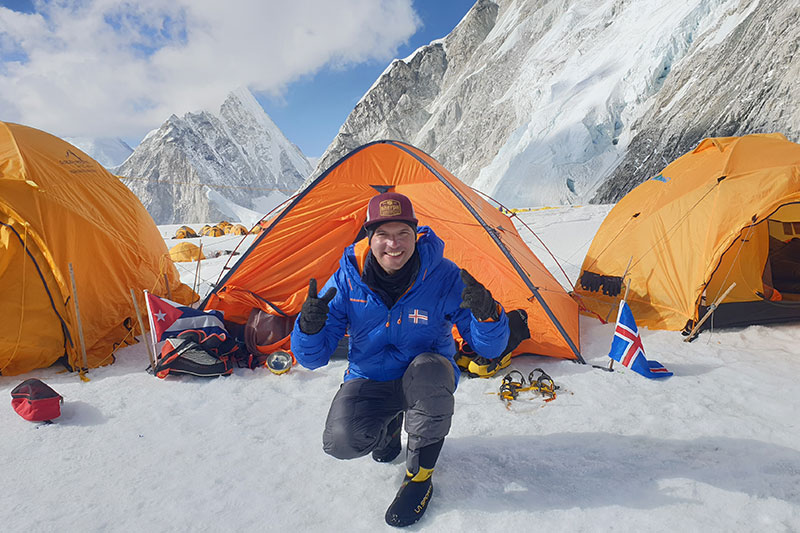
During an attempt to become the first Cuban to summit Mount Everest, Yandy Nuñez Martinez survived a series of life-threatening complications with the help of Global Rescue.

“I had never been this sick in my life. I felt like I was close to death, like my soul was leaving my body. I kept thinking of my wife and my 3-year-old son,” says 33-year-old Yandy Nuñez Martinez, reliving dark thoughts that swirled around his head as he struggled to breathe at Camp 2 on Mount Everest. 

While Nuñez Martinez has summited some of the world’s highest peaks — France’s Mont Blanc (15,780 feet/4,810 meters), Russia’s Elbrus (18,510 feet/5,642 meters), Mexico’s Pico de Orizaba (18,490 feet/5,636 meters) and Argentina’s Aconcagua (22,841 feet/6,962 meters) — at that moment, he was no match for Mount Everest.  

“I felt very alone. Then the Sherpa came to my tent and said ‘Global Rescue is here. It’s time to go.’ I wanted to cry with relief.” 

Climbing on Behalf of Two Countries 

The-Cuban-Mountaineer

Nuñez Martinez had come to Mount Everest Base Camp during the 2021 climbing season with two goals. First, he intended to join the ranks of mountaineers who have successfully ascended the world’s tallest peak. Second, he wanted to make history as the first Cuban to summit the 29,032-foot/8,848- meter mountain. The media commonly refers to him as “The Cuban Mountaineer” as Cubans are a rarity in the sport. 

When he climbs, he carries two flags; the Cuban flag for his native country and the Icelandic flag for the country where he now lives with his family and works as a tour guide, taking fellow adventurers to the island’s famous glaciers. 

“I first fell in love with mountains and climbing in Iceland. I have this country to thank for that.”  

Unfortunately, after reaching Camp 3 at 7,300 meters (nearly 24,000 feet), he was experiencing difficulty breathing, fever and general weakness and had to end his expedition. That’s when he called Global Rescue, triggering the start of his evacuation. 

“The weather was very bad, so it took multiple tries over two days for the helicopter to arrive,” says Nuñez Martinez. “But when it did, I was very thankful.” 

A More than Month-Long Recovery 

Yandy-Nuñez-Martinez-recovery

After being transported to a hospital in Kathmandu on May 21, Nuñez Martinez tested positive for COVID-19 as well as Right Lung Pneumonia. He was treated and released after a week but was readmitted soon after due to muscular pain in his lower limbs.  

At this point, Nuñez Martinez was diagnosed with Deep Vein Thrombosis and Pulmonary Embolism (DVT/PE). DVT occurs when a blood clot forms in a deep vein, usually in the lower leg or thigh; PE occurs when that clot in the leg breaks off and travels through the bloodstream to the lungs, creating a blockage. He needed a higher level of care and was transported to nearby hospital (also in Kathmandu) with advanced capabilities to prevent damage to his lungs, to stop the clot from getting bigger, and preventing new clots from forming.  

After more than two-and-half weeks in the hospital, Nuñez Martinez was diagnosed with Pleural Effusion (an accumulation of fluid around the lungs) at which point he was deemed clinically stable and the drainage could wait until he returned to his home hospital in Iceland. He was deemed fit to fly on July 12 and discharged. He departed Kathmandu on July 17 and arrived in Reykjavik one day later.  

“I was in the hospital for close to 50 days,” he says, tearing up at the memory. “When I saw my son, I was very emotional. I had been four months without him.” 

Global Rescue There Every Step of the Way 

Camp-2-Everest

Nuñez Martinez is quick to point out that it was his first time using Global Rescue, and he doesn’t plan to summit any future mountains without his membership. 

“The level of service was amazing to me,” he says. “Global Rescue was with me in all the moments. Every single day they called me, Monday through Sunday, week after week. They followed my health with me. They made sure every move was the right move.” 

Categories:

News
Share This:

Can you travel safely as Delta circulates?

Share This:

Can You Travel Safely with the Delta Variant?  

With the resurgence of COVID-19 cases, due in part to the delta variant, many travelers are wondering if they need to cancel their travel plans. Here’s what you need to know.

Perhaps you’re planning a late summer getaway to wine country? Maybe your loved ones are heading off to college for a study abroad program? Or possibly your boss decided it’s time to restart domestic, or even international, business travel again? No matter what the reason, people have been traveling at steadily increasing volumes during the late spring and summer, based on TSA’s airport screening data. But the delta variant may be changing that trend. 

“The delta variant of coronavirus is making news headlines. Unfortunately, some of the reporting is uneven and unnecessarily contributing to traveler confusion about whether they should take trips and, if they do, how to minimize risk and travel safely,” said Dan Richards, CEO of Global Rescue and a member of the U.S. Travel and Tourism Advisory Board at the U.S. Department of Commerce. 

A Look at the Delta Data: Vaccination Greatly Reduces the Risk  

The delta variant is twice as contagious as previous strains of the disease. But the available scientific data indicate COVID-19 vaccinated people and those who have been infected and subsequently recovered are far less likely to catch coronavirus in any form, including delta.  

The most recent data indicate that all western approved vaccines – Pfizer, Moderna, Johnson & Johnson, and AstraZeneca – are highly effective at protecting against the worst outcomes of COVID-19, including the delta variant.  

The Pfizer vaccine was 92% effective at fighting the delta variant, but the vaccine’s effectiveness fell to 90%, 85% and 78% after 30, 60 and 90 days, respectively, according to a recent study. In another study researchers found the effectiveness of Moderna’s vaccine against infection from the delta variant was 76%.  

“People who have received the J&J vaccine should be confident they have a high level of protection against hospitalization and severe disease,” says Erika Reategui Schwarz, MD, an infectious disease specialist and assistant professor of medicine and hospital medicine at Icahn School of Medicine at Mount Sinai in New York City and an investigator on the initial J&J clinical trial. 

Researchers are sorting out whether the delta strain produces more severe illness in people compared to the original virus. “Many scientists say they don’t know yet. Early information about the severity of delta included a study from Scotland that showed the delta variant was about twice as likely as [the original COVID-19] to result in hospitalization in unvaccinated individuals, but other data has shown no significant difference,” according to a report by Yale Medicine. 

Continue to Practice the Proper Precautions When Traveling 

masked-travel

Routine pandemic precautions, like masking, social distancing and being outside, are still wise measures to follow when you’re traveling. “We’re actually telling people a lot of the same things we’ve always told them, it’s just that now they’re a bit more willing to listen,” said Catherine Shearer, owner of H+I Adventures and Global Rescue Safe Travel Partner.  

To minimize contracting or spreading the virus during air travel people should continue to mask and physically distance in airport terminals, screening and security areas, at the gates and on the jetway.  

Inflight is different. Passengers cannot socially distance on board a jet, but masking is still required. Travelers should know that the onboard jet air filtration is fast and effective against bacteria and viruses, including COVID-19.  

study revealed the chances of becoming infected with COVID-19 while wearing a mask and flying on a modern, commercial airline is about the same as being struck by lightning: about one chance in half a million. Air filtration and recycling on a jet are fast and effective due to the use of powerful air circulation fans and high-efficiency particulate absorbing (HEPA) filters.  

“The HEPA filters are 99.9% effective or greater in removing particulate contaminants, including viruses like COVID-19, and bacteria and fungi from recirculated air. The air flows from the ceiling to the floor and creates completely new air in the cabin every six minutes,” said Denise Stecconi, a commercial pilot who flies Boeing 737s for Alaska Airlines. 

Do Your Research Prior to Traveling to Any Destination 

When it comes to destinations, domestic or international, travelers should look at hotspot trend data to identify places to avoid, but they should also be aware that viruses mutate.  

“Travelers must remember that coronavirus has a vote since new mutations are possible. Hedge your destination bets by picking outdoor getaway spots where COVID-19 and delta variant trends matter less, like remote camping, horseback riding, ranch or seashore vacations and hiking. Go where you can be outside and away from crowds,” said Kent Webber, senior manager, Intelligence Services at Global Rescue and a former senior intelligence operations officer in the Office of the Under Secretary of Defense for Intelligence at the Pentagon. 

Medical experts, like Amber D’Souza, professor of epidemiology for the Johns Hopkins Bloomberg School of Public Health, agrees delta variant infection rates are getting worse but she adds that “in evaluating now whether to go on trips, if individuals are vaccinated, risk does remain low if you take appropriate precautions. I think it still is okay to consider taking those trips.” 

“Rising vaccination rates, dwindling vaccine-hesitancy, increasing recovery from infections, FDA vaccine approvals, and emerging pharmaceutical development of inoculations for children are all contributing to traveler enthusiasm about the return of travel. But that alone won’t be enough for the global travel and tourism industry to recover from the economic damage caused by the pandemic, especially as the delta variant sparks disruption and confusion,” Richards said.  

International governments must match, even exceed, traveler enthusiasm with institutional commitments to prevent another disease from causing so much damage. Business and government leaders must commit to advancing policies for new technology capable of disease detection.   

Dedicating global resources to prevent the spread of deadly diseases requires international cooperation. Travelers and travel industry leaders can support the creation of a dedicated international task force to track disease outbreaks. “It’s a foundational element to include as part of the travel industry’s ability to minimize the impact of and recovery from future pandemics,” Richards said. 

The pandemic has redefined how we travel, what precautions to take, and the type of protections we need in the current environment. With a Global Rescue travel protection services membership travelers have access to a team of experts including doctors, paramedics, translators, logistics expert, intelligence analysts and security advisors. As importantly, you have peace of mind for your vacation or business travel.