Categories:
NewsMay 21, 2017
Categories:
Missions & Member TestimonialsMay 10, 2017
Sue Pigdon at Poon Hill in Nepal
Global Rescue member Sue Pigdon of Melbourne, Australia, shared about her experience in Nepal after falling ill. Sue is the author of Hot Flushes in High Places, written to encourage people to go to Nepal and help with the country’s healing after the earthquakes. Proceeds from the book’s sale will go toward Sherpa welfare through the Everest Mountaineering Association.
“Recently I returned to Nepal for the second time. In 2012, two friends and I had trekked to Everest Base Camp and then over the Cho-La pass to the beautiful glacier, Gokyo Lakes.
“This second trek was to ‘climb’ Mera Peak, the highest trekking peak in Nepal at 6476m (21,246 ft). We flew into Lukla and from there trekked up the beautiful but quite remote Hinku Valley for 10 days. We arrived in Kare, elevation 5180m, our last stop before setting out for base camp at Mera La, then high camp and the summit. This was quite a challenging trek in its own right – lots of steep up and down through magnificent rain and rhododendron forest, with a light drizzle every now and then just to make the track a little more slippery!
“Kare was to be a ‘rest’ stop. We arrived at lunchtime and in the afternoon got kitted out in our mountain boots, crampons and ice axe. The next day was a ‘training’ day on a slope out the back of Kare, where we got used to our boots – rope technique, jumar and the ice axe arrest, the latter in theory. No ice and snow in sight as yet.
“I was feeling a little tired in the afternoon so just read, had dinner and went to bed. Breakfast was at 7 AM the next day, but I never arrived. I know that I got up during the night at least once, and recall seeing the time as 5:45am and heading back to sleep.
“However the next thing I knew my group were banging on my door, calling out to me. I roused and thought, ‘Oh no! I have slept in’– but I was in much more trouble than that. I tried to get out of bed, but my head was a bit groggy and my body was not responding to my brain. I managed somehow to get dressed and go up to the common room for breakfast, but I was very feeble and unsteady on my feet. One of our group was a nurse and also highly trained in wilderness medicine. My guide, Ang Dawa Sherpa, is also a very highly respected mountain and trekking guide and has been in the business for years. He knows what HACE (High Altitude Cerebral Edema) and HAPE (High Altitude Pulmonary Edema) look like. Duncan and Ang Dawa took a good look at me – had a quick discussion and said, ‘You need to go down. NOW.’
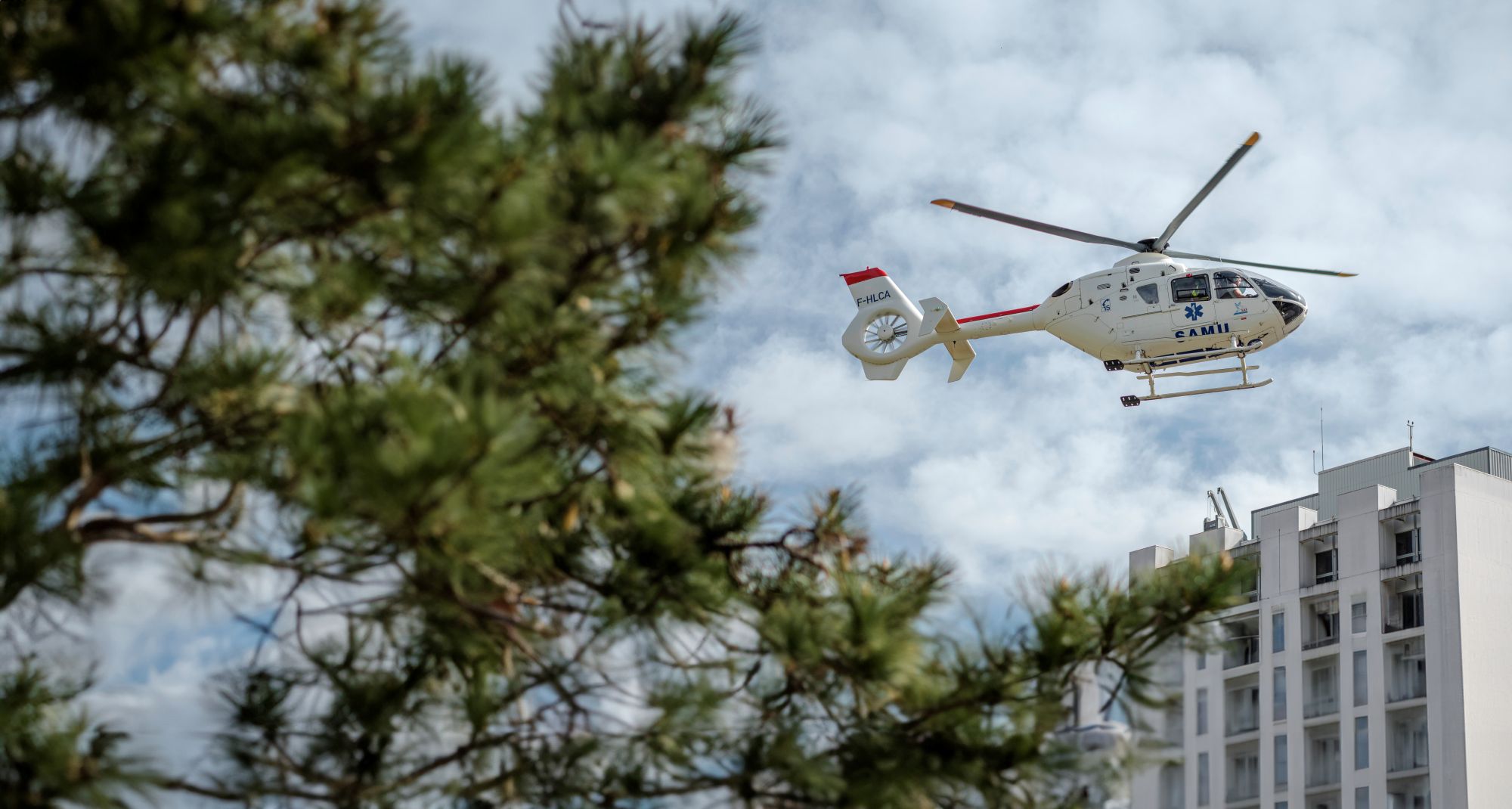
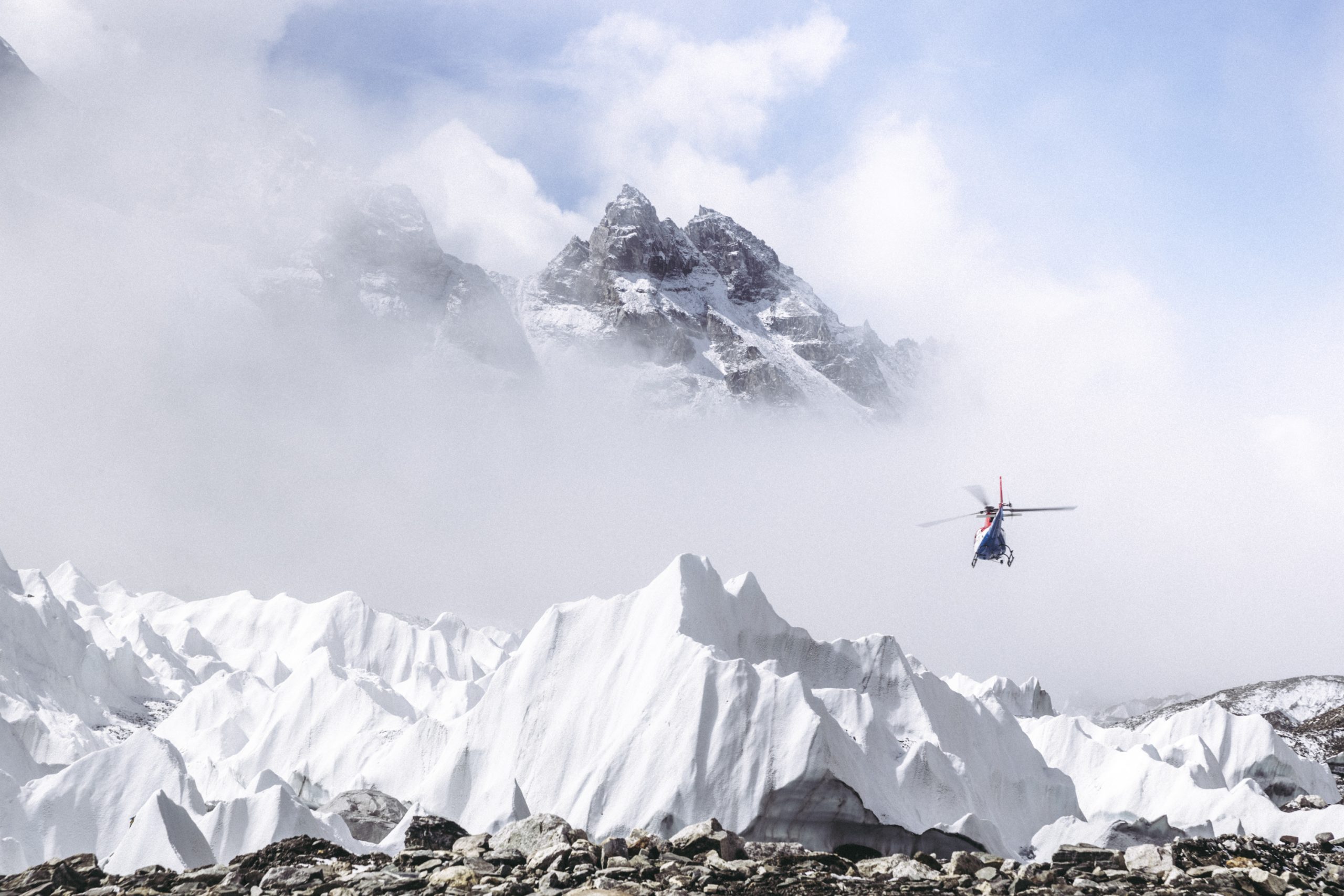
“I was lucid enough to know I was not well at all, and I could feel myself getting more ill as time passed. There was no argument from me. My life was more important than reaching a summit and putting other people at risk. Duncan used his satellite phone to contact Global Rescue. Because we were so remote, we had a little difficulty initially getting through to Global Rescue to request a heli-evacuation to Kathmandu. However, once good contact was established, it was a smooth exercise. From that initial call to the helicopter arriving, was less than three hours! I was fortunate because Kare is basically the last stop for a helicopter to land on a trek to Mera Peak AND the weather, which had been very overcast for days, was quite clear that morning. Clear enough to get a chopper in.
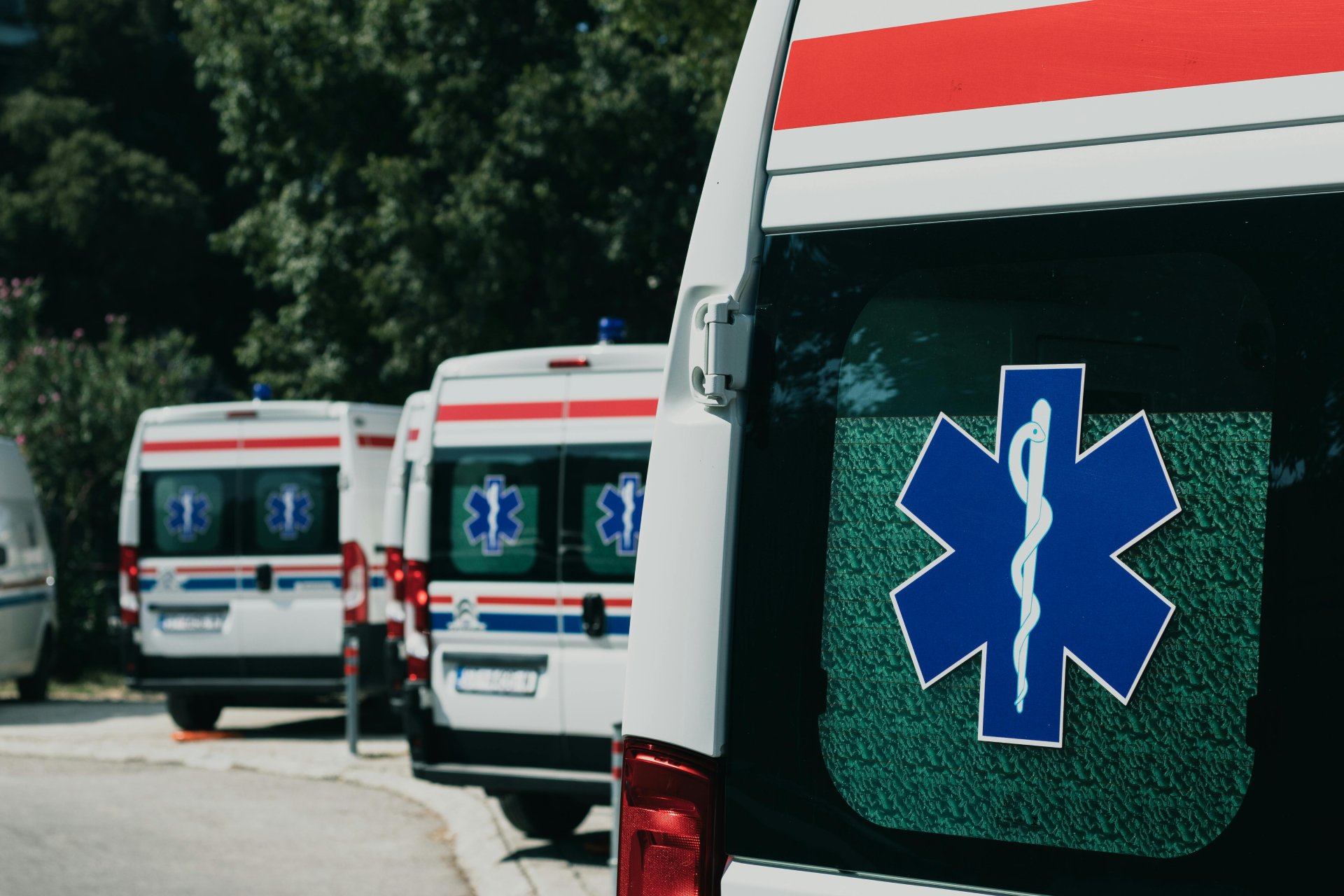
“After the flight, there was an ambulance waiting on the tarmac in Kathmandu to ferry me to a hospital. The diagnosis of HACE was confirmed at the hospital. I also had a roaring temperature and some fluid on the lung – so suspected HAPE too.
“The Global Rescue team were fantastic. They had called the hospital to make sure I had arrived and then relayed that news to my guide and Duncan in Kare. Global Rescue called the hospital again that night to see how I was doing, and called again in the morning. Each time, Global Rescue also called my group in the wilds of Nepal to give them an update. The classic go-between. This reassurance was just wonderful for all of us.
“As my wits slowly returned at the lower altitude, it was very lonely to be in hospital by myself in a strange country. While the hospital staff were great, to know that the Global Rescue team also had my back and were keeping me connected to my group was fantastic.”
“Global Rescue continued to monitor my situation for three days. I was kept in hospital overnight for observation and then had to return the day after for a check-up. By day three it was clear I was on the mend.
“All our group had taken out Global Rescue memberships, as we had on our first trek too. It is such a small outlay for a Global Rescue membership and you never know when you might need it. Prior to the Mera Peak trek, I had been in high altitude – higher than the elevation of Kare — both in Nepal and Peru and had no problems. You never know with high altitude sickness where it will strike, when it will strike and who it will strike.
“I am very grateful to the Global Rescue team for their professional and quick response to my situation. I cannot commend them highly enough. Don’t go on a trek, or any place remote, without Global Rescue!”

Sue Pigdon at Gokyo Lakes
Categories:
NewsMay 4, 2017
Categories:
NewsMay 3, 2017
May 2, 2017
Background
The US Department of State (DoS) issued a new Travel Alert on 1 May warning US citizens of the continued threat of terrorist attacks throughout Europe. According to the message, terrorist organizations like the Islamic State (IS) and al-Qaeda have the ability to both plan and execute attacks within Europe. Further, the message indicates that US citizens should always be alert that terrorist group sympathizers or self-radicalized individuals may conduct attacks with little or no warning. Targets of interest for terrorists include tourist locations, transportation hubs, markets/shopping malls, and local government facilities. The DoS advises that US citizens exercise additional vigilance while visiting these areas, in addition to hotels, clubs, restaurants, places of worship, parks, high-profile events, educational institutions, airports, and other soft targets. Further, the Alert notes that travelers should maintain vigilance in the upcoming summer months during which large crowds may be common.
The Travel Alert is scheduled to expire on 1 September.
Analysis
This is the third time the DoS has issued a Travel Alert for Europe since the beginning of 2016.
- 21 November 2016: The DoS issued a Travel Alert for Europe warning US citizens of the heightened risk of terrorist attacks throughout Europe during the holiday season. That alert expired on 20 February 2017.
- 22 March 2016: The DoS issued a Travel Alert following the coordinated terrorist attacks in Brussels, Belgium that killed 32 people, and attacks in Paris, France on 13 November 2015 that killed 130 people.
- The DoS subsequently updated the Alert in May 2016, warning US citizens that the larger number of tourists visiting Europe during the summer months presented greater targets for potential terrorist attacks in public locations, including major events, tourist sites, restaurants, commercial centers, and transportation.
This most recent Travel Alert cites recent incidents in France, Russia, Sweden, and the United Kingdom as evidence that terrorist groups—like IS, al-Qaeda, and their affiliates—have demonstrated an ability to plan and conduct attacks on the continent. In addition, there have also been terrorism-related incidents and arrests in other countries in Europe that have raised concerns among security officials about the establishment of a trend of terror attacks in many European countries. Of particular concern has been the use of vehicles in ramming attacks. This tactic was used in attacks in Stockholm, Sweden on 7 April; London, United Kingdom on 22 March; Berlin, Germany on 19 December 2016; and in Nice, France on 14 July 2016. Other attacks have involved stabbings, shootings, and explosions.
This Travel Alert does not cite a specific threat or new intelligence that would indicate that an imminent attack is likely. However, it is likely tied to the continuing and persistent threat of terrorism on the European continent that has manifested itself in a variety of small- and large-scale attacks, multiple disrupted plots and arrests, and a demonstrated intent by terrorist groups and their sympathizers for future attacks. Travelers are reminded that the probability of becoming a victim of a terrorist incident is incredibly small. However, visitors to Europe should remain cognizant of the threats that exist, continue to exercise caution when in crowded public areas, and take necessary precautions to minimize or mitigate the risks.
Categories:
Press ReleaseApril 26, 2017
On Sunday, April 23, 2017, an American paramedic supporting the Organization for Security and Cooperation in Europe Special Monitoring Mission to Ukraine (OSCE- SMM), was killed and two others injured after their vehicle hit an explosive device in eastern Ukraine. Paramedic support for the OSCE-SMM is provided by Global Rescue Coöperatief, U.A., a European subsidiary of Global Rescue.
Joseph Stone, 36, of Tucson, Arizona, had been a part of the support team for more than a year.
“We are shocked and saddened by Joseph Stone’s death in this tragic incident. We will be doing everything possible in the coming days to support his family and will work with the OSCE and the Ukrainian and European governments as they conduct their investigations,” said Global Rescue Chief Executive Officer Daniel Richards.
The incident took place at 11:17 a.m. local time near Pryshyb in the Luhansk region. It is the first time in three years that one of the more than 600 SMM members in Ukraine has been killed.
On 21 March 2014, the Permanent Council of OSCE decided to deploy the Special monitoring mission of unarmed civilian observers to Ukraine. The ultimate goal of the SMM is to help Ukraine to reduce tensions and facilitate dialogue between all the sides. Global Rescue Coöperatief has provided medical and associated logistical support to OSCE members since 2015.
With 57 participating States in North America, Europe and Asia, the OSCE is the world’s largest regional security organization. The OSCE works for stability, peace and democracy for more than a billion people, through political dialogue about shared values and through practical work that makes a lasting difference.
Global Rescue is the world’s leading provider of medical, security, evacuation and travel risk management services to enterprises, governments and individuals. Founded in 2004, Global Rescue has exclusive relationships with the Johns Hopkins Emergency Medicine Division of Special Operations and Elite Medical Group. The company provides best-in-class services that identify, monitor and respond to client medical and security crises. Global Rescue has provided medical and security support to its clients, including Fortune 500 companies, governments and academic institutions, during every globally significant crisis of the last decade. For more information, visit www.globalrescue.com.
Categories:
NewsApril 25, 2017
Categories:
NewsApril 23, 2017
Categories:
Missions & Member TestimonialsApril 14, 2017
Having successfully climbed Mount Everest for the second time in 2013, Margaret Watroba set her sights on Dhaulagiri in Nepal. Determined to climb the seventh highest peak in the world, Watroba embarked on an expedition.
Aware of the mountain’s reputation for avalanches, Watroba knew that despite the lack of snow on the first section of the climb, her safety was not guaranteed.
After driving and trekking several days to reach base camp, Margaret and the other climbers settled in and began acclimatizing, their bodies adjusting to the higher altitude and lower temperatures.
On the first climb up a steep part of the mountain, things took a bad turn.
“I was caught in a rock fall and hit on the head,” Watroba said. “I was wearing a helmet. I didn’t lose consciousness but I felt considerable pain. Despite having a headache, I went climbing the next day but was moving very slow. I knew something was not right. I simply didn’t want to admit there was a problem.”
Watroba turned around and reached camp very late. Although extremely tired, she was still hopeful that all would be fine after a good night’s sleep and some pain medication.
Despite getting sleep and taking medicine for the pain, her headache continued as she lost her appetite and continued to become more fatigued.
Watroba realized then that she needed more help than what was available on the mountain.
Unable to pursue the climb at high altitude without endangering herself and her team, she spoke to her leader. Without hesitation, he called Global Rescue. Global Rescue then worked quickly to coordinate a helicopter rescue.
Global Rescue Coordinates Helicopter Rescue at Dhaulagiri
After briefly detailing her symptoms to Global Rescue personnel via her satellite messaging device, Watroba was informed that a helicopter was being dispatched to a lower camp on Dhaulagiri.
“The helicopter picked me up on the mountain and the ambulance was waiting at Kathmandu airport to quickly transport me to the hospital,” she recalled. “It was incredible. Dhaulagiri is a very remote place. We didn’t have internet, only satellite phones and messaging devices to communicate. With Global Rescue, I feel like someone is watching over me, ready to help.”
Watroba witnessed what could happen without such help.
“There was another climber who was also caught in the rockfall and was waiting three days for his provider to pick him up! He couldn’t believe how quickly Global Rescue assessed my condition and responded to my call,” Watroba said.
Watroba also recalled an earlier “very efficient” evacuation in Nepal by Global Rescue.
“After the 2015 earthquake, other climbers and I were picked up from Everest Base Camp. We were met by the Global Rescue personnel at Lukla airport. They were easily recognizable with the Global Rescue logos on their gear. There was chaos – many climbers and trekkers had nowhere to sleep. The weather was bad so the airport was closed. The Global Rescue operations teams on the ground had rooms in the lodge reserved for us in case the planes wouldn’t fly. They rebooked my air ticket. When my husband originally contacted Global Rescue, they said to him, “Mr Watroba, don’t worry we will deliver your wife home.”
Why Watroba Continues to Choose Global Rescue for Medical Evacuation Services
Watroba summed up her experiences with Global Rescue:
“It’s a fantastic, fast, reliable, responsive service. Rescuing people from the Himalaya is a risky and difficult process, not only because of the mountain terrain but due to the continuously changing weather. Global Rescue is the best from what I’ve seen being on 11 expeditions in the Himalaya and Karakoram. Obviously I will not travel without Global Rescue.”
Dhaulagiri, on the right, on the trek to base camp
April 10, 2017
Event Summary
The US Embassy in Moscow released a security message on 7 April recommending that US citizens in Russia exercise increased levels of vigilance and situational awareness. The message warns of the elevated possibility of large-scale demonstrations, personal harassment, and anti-US sentiment. The message further advises that US citizens maintain situational awareness at all times, keep a low profile, and carry a method of communication and proper identification at all times (including a US passport with Russian visa for US citizens).
Analysis
The message cites “recent events” for the heightened state of awareness for US citizens in Russia. The message comes after the US military conducted strikes against military targets in Syria early on 7 April in response to the use of chemical weapons against Syrian civilians. The Russian government denounced the strikes and has indicated that the Russian military would no longer agree to share information with the US government about air operations over Syria. The Russian government has said the US strikes in Syria further damaged relations between the US and Russia. The US government has indicated that the Russian government has some degree of responsibility for the chemical attack in Syria, given their support of the Syrian regime of Bashar al-Assad. These events, which have heightened tensions between the Russian and US governments, could result in expressions of anti-US sentiment in Russia, as warned about in the US Embassy message. Such expressions could be directed at US citizens, organizations, corporations, or diplomatic facilities and may involve a range of actions, to include verbal or physical assaults.
Advice
The US Embassy in Moscow advises that US citizens:
- Maintain situational awareness at all times;
- Keep a low profile and maintain vigilance when walking in public or using public transportation;
- Carry proper identification at all times while in public, including a US passport with current Russian visa;
- Carry a means of communication at all times with emergency contacts.
Additional advice for US citizens in Russia from the Global Rescue Security Operations team:
- Give crowds and demonstrations a wide berth
- Many demonstrations are publicized in advance; check with local news sources and your consulate
- Be wary of attempts at provocation; avoid engaging in political or inciting discussions
- Seek alternate routes
- Share your itinerary and travel plans with as few people as possible; avoid discussing in public places
- Arrange transportation through local colleagues or via your hotel; public transportation has been a historical target for extremists in Russia
- Avoid overtly patriotic displays; these have the tendency to come across as inflammatory and can potentially agitate a distressed crowd
- Keep your travel documents and identification on you at all times; consider carrying a ‘go-bag’ with you, and be prepared to head toward the airport should the security climate suddenly begin to deteriorate
- Carry a means of communication at all times and have a contact plan with your family friends or colleagues
April 7, 2017
At least three people were killed and 15 others injured after a man rammed a vehicle into a crowd of people on a busy street in the center of Sweden’s capital, Stockholm, on 7 April in an apparent terrorist attack. The incident took place just before 15:00 local time on Drottninggatan street between Kungsgatan street and Mäster Samuelsgatan street. After striking pedestrians on Drottninggatan, the vehicle crashed into the Ahlens department store. The Parliament and the subway system in Stockholm were placed on lockdown, and police have urged people stay off the streets. Central Station was also evacuated and all train services were suspended.
Initial reports indicated the suspect was in custody, though authorities then confirmed no suspect was in custody and an extensive manhunt was launched across the city. However, the latest reports indicate that at least one suspect was arrested after the manhunt. It remains unclear at this time whether police are looking for additional suspects. Swedish police are also reportedly questioning at least two people in relation to the incident. Streets across Stockholm have been closed off and the city’s transit system remains on lockdown as the search continues. Reports indicate heavily armed police have been deployed throughout the city.
The situation is still developing and details are continuing to emerge about the number of individuals killed and injured in the attack, and the ongoing police operation in the city.
This attack is the latest incident in a continuing trend of vehicular ramming attacks in Europe. The tactic has also been used in Israel and North America in recent years. This trend follows a call from the terrorist group the Islamic State (IS) for their followers to use vehicles to conduct attacks. Recently, on 22 March, five people were killed and dozens others injured after an assailant rammed a vehicle into a crowd of people near Parliament on Westminster Bridge in London, United Kingdom. The assailant then ran onto the grounds of Parliament and stabbed a police officer with a knife before being shot and killed by police. IS claimed the attacker was one of their soldiers. Earlier, on 19 December 2016, 12 people were killed when a truck drove into a Christmas market in Berlin, Germany in an attack claimed by IS. On 28 November 2016, a student at Ohio State University drove into a crowd of people on a sidewalk on campus before he got out and began stabbing people. Eleven people were injured in the attack, and the assailant was shot and killed by police. IS claimed the assailant was one of their soldiers. On 14 July 2016, 86 people were killed when a truck drove into a crowd of people in Nice, France in an attack also claimed by IS.
As has been demonstrated once again on the streets of a major European city, vehicle ramming attacks are incredibly easy to carry out from a tactical perspective. Authorities in major cities are confronted with the difficult task of balancing accessibility in their cities with the need to put in place defensive mechanisms to prevent or deter similar future attacks. This may require the use of more barriers and roadblocks near high pedestrian traffic areas in urban areas.