Categories:
Missions & Member TestimonialsApril 12, 2016
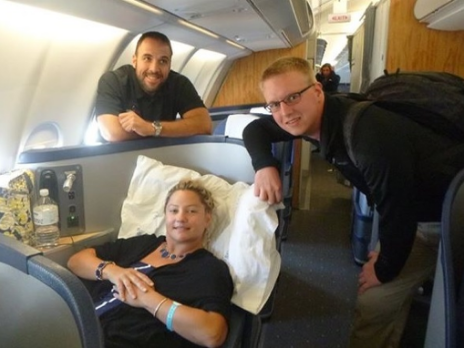
pictured: Julie Cook with Global Rescue Senior Specialist paramedic Justin Romanello (l) and Supervisor Kyle Bertrand (r).
The roads of Italy lead through thousands of years of history, presenting spectacular views and faithfully following the contours of rugged mountain terrain, while providing the ultimate challenge and potential for peril to motorcyclists.
“We knew going on this trip that those were the most dangerous roads to ride on in the world,” recalled Julie Cook. “That’s why we purchased Global Rescue. Thank God we did.”
It was the summer of 2015. Julie and her husband Eric were enjoying a tour through Europe on a new BMW R1200R as part of a small group led by a European motorcycle tour, where Julie is employed. “It’s a nice job perk, having the chance to take a tour that the company runs all over Europe. This year, we were riding through Slovenia, Czech Republic, Germany and Italy,” Julie said.
Then, on one of Italy’s tiny, winding roads, Julie and Eric’s motorcycle adventure took a sharp turn for the worse. Eric was driving and Julie was seated behind. It took only a split-second and suddenly the motorcycle fell off the road and flipped down the mountainside.
“I knew instantly that my leg was broken,” said Julie. “I could feel it and I heard it. I heard it break. I couldn’t move at all. Eric was able to move around – although he was in pain.”
Help on the way
The tour leaders acted swiftly and called for a local ambulance. “Eric pulled his membership card out of his jacket and called Global Rescue,” Julie said. He told them that both he and his wife were being transported to a hospital in Tolmezzo, Italy, for evaluation. “Both Eric and I immediately thought, ‘Thank God we have Global Rescue.’”
Upon initial assessment at the hospital, Julie was diagnosed with a lower right leg fracture. She was admitted to the hospital and scheduled to undergo a surgical repair of her leg the following day.
“It was difficult not being able to speak any Italian,” recalled Julie. “Once we were able to speak with Global Rescue, we knew that they had checked out the hospital and were doing everything possible to take care of us. It was such peace of mind.”
Global Rescue immediately deployed two paramedics to Julie’s bedside.
“I remember Eric saying that Global Rescue would be here soon and would begin to figure out a plan to get us home. Knowing that two Global Rescue people from the States were coming to help us get through this really helped me stay strong.”
When Global Rescue’s paramedics arrived, Julie greeted them with smiles and tears.
“It was a very happy moment,” said Julie. “All of my worries and all of the unknowns disappeared. The Global Rescue team took control of the situation and started making a plan to get me safely and comfortably back home. I will never forget how wonderful they were and how much they did to make my transport comfortable.”
Julie continued, “I felt so much relief once they explained how everything was going to happen, from beginning to end. They were on top of everything, including coordinating with hospital medical staff and sending my medical records to the Global Rescue medical team. When you’re injured, you just can’t deal with everything on your own. There’s no way my husband, who had torn ligaments in his knee, could have dealt with everything that happened.”

Julie with the Global Rescue team in Italy
Distraction by iPad
Boredom set in quickly for Julie with no landline in the hospital room, no international calling plan, no TV in the room and no air conditioning.
“When you’re going through that type of pain and you don’t have any way to distract yourself, it’s very difficult. One of Global Rescue’s paramedics said, ‘I have my iPad and I have some movies on it.’ He lent me his iPad, which was just the nicest thing. I was able to watch movies and take my mind off of everything for a while. If those Global Rescue guys had any way to help, they were there to help. They did everything they possibly could.”
The Global Rescue team accompanied Julie and Eric home. “I was happy to learn that I wasn’t going to have to fly home in a normal seat. They upgraded me to first class,” said Julie.
Back home
Once at home in New York, Julie faced a long recovery following multiple surgeries. She was instructed not to put any weight on her leg for three months.
“I had broken my tibia, my fibula, and I had a rod going down my leg and pins and screws holding it together. I had broken off the right hand side of my knee.”
Although confined to a hospital bed in her living room, Julie maintained a positive outlook. “I’m typically super healthy and active. Nothing gets me down. I’m always on the go and considered the healthy one. We have a wonderful family that keeps me company and brings me coffee. I’m feeling better now that this last surgery is over, knowing that I’m finally on my way to healing and getting better.”
Julie is unsure if another motorcycle trip will be in her future. “My husband probably would go,” she said. “We knew going on this trip that those were the most dangerous roads to ride on in the world. That’s why we purchased Global Rescue. Thank God we did. I’d probably still be in Italy because there was no way we could have afforded to be transported the way we were. We were lucky that we’d asked ourselves beforehand whether coverage was worth it. You just never know what can happen.”
“I cannot imagine how much pain and how many problems we would have had to endure without the help of Global Rescue,” said Julie. “We are so happy with Global Rescue. I will be recommending Global Rescue to all of our motorcycle tour clients.”
Categories:
Missions & Member TestimonialsApril 7, 2016

(Photo courtesy of Veristride)
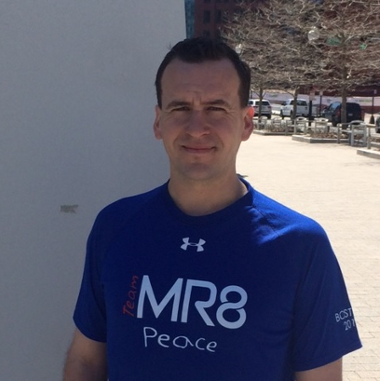
Global Rescue CEO and Founder Dan Richards shared his views on the topic, “Teams Operating on the Edge of Human Performance” during Thin Air Park City in early April. Richards was part of a panel of elite athletes and executives discussing ways to optimize team dynamics and support to enable the full potential of human performance. The session followed opening remarks by Under Armor CEO and Founder Kevin Plank and Fortune Magazine’s Managing Editor Adam Lashinsky.
Joining Richards on the panel were Tiger Shaw, CEO of US Skiing & Snowboard Association; Paul Winsper, Vice President of Performance at Under Armour; Luke Bodensteiner, Executive VP of Athletics for USSA; and Richard LePage, Director of Coaching and Performance at Cirque du Soleil.
With a 2016 theme of “Innovation in Peak Human Performance,” Thin Air Park City gathers groups of inspired people to Park City, Utah, each year to solve business challenges and foster innovation.
Categories:
Missions & Member TestimonialsApril 7, 2016
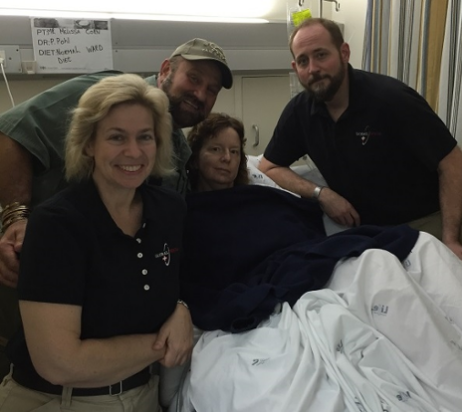
Pictured: Global Rescue Associate Director of Medical Operations Devon Davis, MD (l), Geoffrey Corn, Missy Corn, and Global Rescue Supervisor of Medical Operations Patrick Longcore.
On safari in the Eastern Cape Karoo region of South Africa in January 2016, Global Rescue members Missy and Geoffrey Corn were having the time of their lives. It was their fourth trip to Africa and the couple was looking forward to creating memories of a lifetime. Little did they know that Missy was about to suffer a potentially life-threatening stroke on the first day of their trip, thousands of miles from home.
Global Rescue received a call from the outfitter for the Corns’ trip. The caller urgently stated that Missy was suffering from signs of a stroke — facial drooping, left arm and leg weakness, confusion, and speech difficulty.
With time of the essence, Missy was immediately transported to the hospital via ambulance after an evaluation by a local physician.
Preparing for the worst
Global Rescue Operations personnel immediately contacted the hospital, liaising with Missy’s physician there to discuss treatment. The company deployed one of its physicians and a critical care paramedic to Port Elizabeth to Missy’s bedside to oversee her care and later evaluate her stability for a flight back to a hospital close to home.
Upon arrival at the hospital, Missy underwent radiological studies showing an ischemic stroke and large arterial clot in the right brachial artery. She was admitted to the intensive care unit for care and observation. Subsequent radiology revealed progression to a hemorrhagic stroke but no other new brain injury.
While in South Africa, Global Rescue’s medical personnel helped to obtain Missy’s medical records for Global Rescue doctors to review. Through a consultation with Johns Hopkins Medicine, with which Global Rescue has an exclusive relationship, physicians there agreed with the Global Rescue medical team’s assessment and guidance on continuing medical care.
The Global Rescue team evaluated transport options. Determining Missy’s case to be critical, the team initiated an air ambulance to conduct medical repatriation back to her home hospital.
An unexpected delay
Then, a further complication: radiological studies of Missy’s lungs showed the presence of multiple pulmonary emboli, including the main pulmonary artery. The critical nature of her condition required cancelling the air ambulance evacuation based on the possibility of it proving fatal (the jet had traveled from Europe and was refueling in Namibia at the time the mission was scrubbed). With the presence of new clotting, an anticoagulation medication was needed. Yet, due to the previous discovery of bleeding in Missy’s brain, this medication could potentially cause further bleeding and also prove fatal.
With no other option, anticoagulation was initiated and she was transferred to the ICU for close observation.
After spending the weekend in the ICU and developing no new issues with the medication, Missy was transferred to the general ward. Over the next two weeks, she worked with physical therapy and our deployed personnel as she prepared for her return to the U.S.
Based on improvement in her condition and the physician’s recommendations, Missy was finally determined to be fit to withstand the long flight home after [another week] of rehab and stabilizing care. Global Rescue medical personnel identified a comprehensive stroke center in the Denver area, the closest suitable facility to the Corns’ residence.
Missy was discharged from the hospital to the care of Global Rescue paramedics, who accompanied her from the South African hospital to the facility in Denver, Colorado.

Missy Corn
A personal touch
Missy praised the Global Rescue paramedic who was at her bedside for weeks in South Africa.
“He knew everything that was going on medically with me and would explain it to me,” she said. “When I ended up back in the ICU, he came every day and kept track of me. He talked to my sisters and knew everything about my care and my doctor. When I didn’t know what was going on, he just handled it. Then when my husband left and I was there by myself, it was even more important to have him there.
She continued, “Anything I needed, he got it for me. He smuggled in blueberries because I was losing weight and couldn’t eat the food in the hospital. I broke out in a horrendous rash from the soap they washed me with, and he went and got me little bars of soap so I wouldn’t break out. He held my hand when I needed it.
“He was amazing, all that he did for me. If it weren’t for Global Rescue, I probably wouldn’t be here,” said Missy, emotionally.
Recovering back home
Upon arrival at the Denver hospital, Missy was transferred to the neurological unit for evaluation.
After a successful transport home accompanied by two members of Global Rescue’s transport team, Missy was able to continue her recovery. Following an evaluation in Denver, she was transferred to an inpatient rehabilitation facility in Kansas. In March, she was discharged to her home.
“I’m working therapy five days a week and I can walk without a cane now,” said Missy. “The fine motor skills in my left hand are coming back slowly. It’s not where I need to be yet, but I’m trying to get back into my daily routine.”
Missy is on track for a good recovery. In fact, she and her husband already have plans to return to South Africa in September if she is well enough. Once again, they will head out on safari.
“I tell all my friends and family that if they’re doing any travel, I recommend Global Rescue highly,” said Missy. “We purchased annual Global Rescue memberships this year and it was worth every penny.”
Categories:
NewsApril 6, 2016
Categories:
Health & SafetySecurity & IntelligenceTravelApril 4, 2016
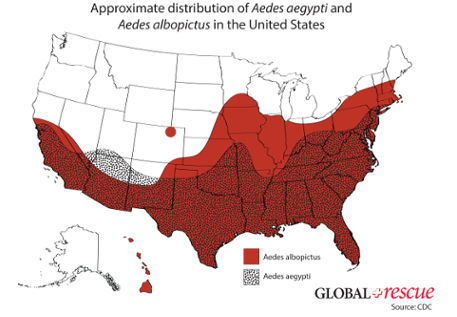
There have been no documented cases of mosquito-borne transmission of Zika virus in the continental U.S. However, cases have been confirmed in people who have traveled to Zika-infected countries or acquired it through sexual transmission. According to the Centers for Disease Control and Prevention (CDC), between January 1, 2015 and March 30, 2016, at least 312 cases of travel-related Zika virus have been confirmed in the U.S., with the highest number of cases reported in Florida (74), New York (46), Texas (27) and California (17).
What areas are more susceptible?
Although it is impossible to predict whether the virus will spread to mosquitoes in the U.S., sporadic small-scale outbreaks of dengue and chikungunya — similar tropical mosquito-borne diseases spread by the Aedesmosquito — have been reported in the past in south Florida and southern Texas. Some cities in the southeastern and eastern coastal regions of the U.S. might be more prone to Zika transmission due to established populations of Aedesmosquitoes. However, in order for local transmission to take place, the Zika virus would need to be introduced by an infected traveler or infected mosquitoes and become sustained in an established population of Aedesmosquitoes.
According to a National Institute of Health (NIH) study, about 200 million citizens — more than 60% of the U.S. population — reside in areas of the U.S. conducive to the spread of Zika virus during summer months due to the presence of Aedes mosquitoes. At least one of the two Zika spreading mosquitoes are found in 38 states from California, southeast to Florida, and northeast to Maine (see map below). The southern and southeastern regions of the U.S. from California along the Gulf Coast and up the eastern coast to Connecticut contain both the Aedes aegypti and the Aedes albopictus mosquitoes.
What conditions make Zika favorable?
Both the Aedes aegypti and the Aedes albopictus species of mosquitoes are known to spread Zika. The two species need warm and relatively stable temperatures to survive and standing water to reproduce.
Meteorological conditions favorable for the Aedes mosquitoes are not present in the U.S. during winter months from December to March, except for south Florida and southern Texas. However, weather conditions become more suitable for Aedes mosquitoes during peak summer months from July to September.
A March 2016 study conducted by the National Center for Atmospheric Research (NCAR) and the University Corporation for Atmospheric Research (UCAR) simulated climate data and other information such as mosquito populations, air travel from Zika-affected countries, and poverty to investigate the likelihood of Zika spreading in 50 U.S. cities.
According to the study, by mid-July meteorological conditions in southeastern cities will be suitable for “high abundance” of the Aedes, eastern cities will be suitable for “moderate to high abundance” and cities in western U.S. are suitable for “low to moderate abundance.” Cities most at risk are Miami, Orlando, Savannah and Charleston. Cities with moderate risk are New York, Philadelphia, and Washington, D.C.
What will help?
Public health experts say any outbreaks are expected to be small and short-lived due to the vastly different conditions from countries experiencing widespread transmission.
Many countries experiencing a rapid spread of Zika are poorer and lack adequate public health response capabilities, limiting their abilities to contain and combat the virus. For instance, in countries where air conditioning is not commonly used and/or screens are not widely used on windows and doors, people are exposed to open air (and mosquitoes) for longer periods of time, allowing the virus to spread more easily.
Conversely, in the U.S., well-built homes, screened windows, air conditioning and access to mosquito preventative products are likely to limit or even prevent the spread of the virus.

What else should I know about Zika virus?
Zika virus is an acute viral illness primarily transmitted through the bite of an infected Aedes species mosquito that has previously fed on a person infected with the Zika virus. Zika can also be transmitted from mother to fetus, through blood transfusion, and through sexual contact.
The most common symptoms of Zika are fever, rash, joint pain and conjunctivitis. However, symptoms are usually mild and only last from several days to a week. About 80% of people infected do not experience symptoms. There is currently neither a vaccine nor a cure.
Prior to 2015, local transmissions of Zika virus had largely been confined to Africa, Southeast Asia and the Pacific Islands. Zika was first discovered in Uganda in 1947 and only 14 cases were confirmed from 1947 to 2007, all of which occurred in West Africa and South Asia. In 2007, the first outbreak was reported in Oceania when more than 185 cases were confirmed in the Yap Islands, an island chain in the Federated States of Micronesia. The virus then appeared in October 2013 in French Polynesia.
In May 2015, an outbreak of the virus began in Brazil and by April 2016, 34 countries and territories in the Americas reported local transmission of the virus. The recent outbreak of Zika has been strongly linked to birth defects, including microcephaly, an abnormal smallness of a newborn’s head associated with incomplete neurological development. The incidence of Zika has also been correlated to an increase in cases of Guillain-Barré syndrome, a syndrome in which the body’s immune system attacks part of the peripheral nervous system, causing paralysis.
In May 2015, the Pan American Health Organization (PAHO) issued an alert regarding the first confirmed Zika virus infection in Brazil and in February 2016, the World Health Organization (WHO) designated the Zika virus as a global public health emergency requiring a coordinated response, placing the disease in the same category of concern as Ebola. It is expected that Zika virus transmission will increase throughout the region increasing the incidence of infection in returning travelers and the possibility of local transmission in the U.S.
To stay up to date on Zika virus developments, contact us at 617-459-4200 or memberservices@globalrescue.com
Categories:
NewsApril 2, 2016
Categories:
NewsApril 1, 2016
Categories:
NewsMarch 28, 2016
Categories:
NewsMarch 28, 2016
March 25, 2016
Background
According to the Travel Alert, terrorist groups are continuing to plan attacks in the near-term in countries across Europe, particularly targeting large sporting events, tourist sites, restaurants, and transportation. The Travel Alert is scheduled to expire on 20 June 2016. In the Travel Alert, the DoS does not advise against travel to Europe, though it encourages all US citizens to exercise caution in the coming months and to avoid crowded public areas.
The DoS Travel Alert was issued following the coordinated terrorist attacks in Brussels, Belgium on 22 March that killed at least 31 people and injured 230 others. At least 11 of the fatalities were caused by two explosions at Brussels Zaventem Airport (BRU), and at least 20 were the result of a third explosion at Maelbeek/Maalbeek metro station, near the headquarters complex of the European Union Commission. The Sunni terror group the Islamic State (IS) has claimed responsibility for the attacks.
Also, on 23 March the Associated Press (AP) reported that IS has trained at least 400 fighters to target Europe in a wave of attacks. The AP cited unnamed European and Iraqi intelligence sources, in addition to a French lawmaker. It remains unclear whether this is directly linked to the DoS alert.
In addition to the latest attack in Brussels, there have been other mass casualty terrorist attacks in Europe in the past 12 years, including:
- 13 November 2015 – Paris, France: 130 people were killed in a series of coordinated attacks across the city, including at the Stade de France, the Bataclan concert hall, and a number of restaurants and cafes. IS claimed responsibility for the attacks.
- 7 January 2015 – Paris, France: 12 people were killed in a series of attacks that began with a shooting at the Charlie Hebdo offices. The terrorist group al Qaeda in the Arabian Peninsula (AQAP) claimed responsibility for the attacks.
- 7 July 2005 – London, United Kingdom: Multiple suicide bombings targeted the London Underground and a bus, killing 52 people and injuring hundreds of others. Al Qaeda claimed responsibility for the attack.
- 11 March 2004 – Madrid, Spain: Coordinated bombings on commuter trains and stations killed 19 people and wounded more than 1,800 people. Al Qaeda claimed responsibility for the attacks.
Assessment
The terrorist threat in Europe differs in some respects to the terrorist threat Americans face at home. As demonstrated with the November 2015 Paris attacks and the latest attacks in Brussels, which both required a degree of planning, terrorist cells have successfully been able to coordinate with one another across borders to plan attacks. These networks can be (and have been) cross-national, further complicating coordination between intelligence and security agencies. In addition, the mass migration from the Middle East to Europe, which has represented the greatest movement of people in Europe since World War II, has continued to present immense security challenges to European governments. In the United States, however, most recent attacks have been “lone wolf” style where one or two individuals become radicalized and carry out less sophisticated attacks without a command structure or larger conspiracy. This is how the attacks in San Bernardino, California transpired in December 2015, as well as the Boston Marathon bombing in April 2013.
While travelers to Europe should take the DoS alert into account while traveling, it should not necessarily deter travel to Europe in the coming months. The threat of terrorism is not new to Europe, which has been dealing with a variety of terrorist organizations for decades. The probability of being affected by a terrorist attack when traveling abroad (and even at home) remains very small, and travelers should not necessarily let this latest threat disrupt future plans. Travelers to Europe should, however, maintain awareness of any possible future or more specific alerts and warnings put out by the government agencies.
Advice
The most important piece of advice for travelers will be to practice patience and account for longer wait times at airports and train stations. In order to reduce these wait times, and reduce the amount of time travelers will spend outside of security, travelers should:
- Arrive early during non-peak times and avoid rush hour.
- Conduct early check-in, if available.
- Only pack enough luggage that can be comfortably carried or rolled. If possible, try to pack carry-on only.
Prior to travelling, always conduct research on your destination. Most governments offer up-to-date travel alerts and restrictions on their foreign office’s website or Twitter feed. Many offer an email alert subscription as well. Register your travel with your embassy’s travel notification program so you will be kept informed of any alerts.
While traveling within a city, consider using taxi or ride sharing services (such as Uber) to reduce exposure to crowds and large gatherings. Always have local currency and an ATM or credit card available. This will allow you to pay for transportation and other needs in the event of an emergency. Also, always have a paper map available to use in the event cellular and/or internet connection is limited and you need to navigate across the city. Ensure your travel companions are using the same map. Local maps are often provided by hotels.
Have a plan to communicate with someone back home, in case of emergency or in the event of a crisis or attack. Cellular networks can become quickly overwhelmed, as was the case in Brussels and Paris immediately following the attacks, so having alternate means of communication is a must.
- A satellite phone is a great option.
- Utilize an internet connection to communicate via email, messaging app, or social media.
- Leave an itinerary and hotel information with someone back home, and communicate any changes to travel plans
- Establish and review a rally point with your travel companions each day (such as your hotel). If you are separated for whatever reason and cannot communicate with one another, meet at that location.
Lastly, if travelers should find themselves in a dangerous situation, remember to move away from the area as quickly and safely as possible. Follow all instructions from emergency personnel, and do not attempt to return to the scene to help or gawk. Remember that your life is not worth recovering luggage or capturing a cellphone video.
Categories:
Missions & Member TestimonialsMarch 25, 2016
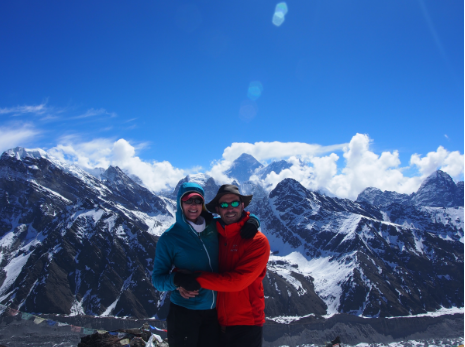
Pictured: Brittany and Noah Myers, on top of Gokyo Ri the day before the 2015 earthquake
After a life-changing journey to Nepal in April 2015, Global Rescue members Brittany Myers and her husband, Noah, will return to Nepal in April to visit the rural fair-trade carpet and cashmere weaving factory they raised money to support after last year’s earthquake.
“My husband and I experienced, firsthand, the beauty and unwavering generosity of the Nepalese people,” said Brittany. “But, tragically, we left behind a country devastated by the earthquakes. While this story is no longer front page news, much of the country is still in need of help. Many organizations have been involved in the efforts to rebuild Nepal, including clean water access, rebuilding homes and schools, and addressing other critical needs. In all our research, we were not able find any that specifically aim to help small business, a crucial component of a sustainable Nepali economy,” she said.
In partnership with a small running studio in New York City, and generous donations from an elite running coach, one of the city’s finest DJs and a handful of local small businesses, the couple organized the Small Business Helping Small Business benefit run in late 2015. They committed 100% of the proceeds to Chinchilamo Handlooms in the Sindhupalchowk District, one of the worst hit areas in Nepal. The factory, which employed up to 200 people in the area, collapsed and many employees had to relocate their families to find work. The money raised will go toward reconstruction efforts and job creation for these local artisans.
“While our benefit was small in scale, we are excited about the great potential there is in connecting a thriving small business to a small business in need in a country in crisis,” said Brittany. “We continue to be in touch with Chinchilamo Handlooms, and are considering ways to expand the Small Business Helping Small Business idea into year two.”
Read our original account of the couple’s 2015 Nepal trip: Honeymooners caught in Nepal earthquake turn to Global Rescue.