Loading...

Share This:

Adventure Cycling Association partners with Global Rescue for Medical Advisory and Evacuation Services

Global Rescue, a worldwide provider of integrated medical, security, intelligence, travel risk management, and crisis response services to enterprises, governments and individuals, today announced it will partner with the Adventure Cycling Association, North America's largest…

Biking is a healthy, environmentally sound, and inherently safe activity practiced by millions of enthusiasts each year. Nonetheless, the National Highway Traffic Safety Administration reported over 48,000 bike injuries across the U.S. in 2013. The total cost, estimated by the National Safety Council, exceeded $4 billion.

Protection for When Things Go Wrong on the Road

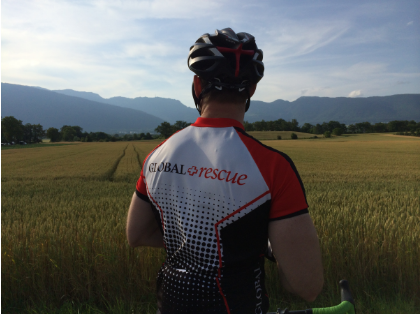
As with any form of cycling, whether it’s a leisurely afternoon ride across the neighborhood, a 412 mile road trip climb up California’s Pacific Coast Highway, or a 2000’ descent through Pennsylvania’s Allegheny Mountains, there exists a level of risk. To help meet that risk, Global Rescue announced a partnership with the Adventure Cycling Association, North America’s largest non-profit membership bicycling organization. Partnering with Global Rescue allows Adventure Cycling members to manage that risk with access to Global Rescue’s medical advisory and medical and security evacuation services.

Bicycle tourists want peace of mind, knowing that there is help if things go wrong on the road,” said Global Rescue CEO Dan Richards. He added, “The Adventure Cycling Association’s focus on inspiring travel by bicycle is exactly the type of organization that aligns with Global Rescue.”

Life-Saving Resource for Adventure Cycling Members

Demonstrating its commitment to Adventure Cycling members’ safety, the Adventure Cycling Association will subsidize a portion of the Global Rescue membership fee for its members. “As Adventure Cycling works to grow bicycle travel in the United States, we strive to provide our members, and the bicycle travel community, with access to the highest quality resources,” said Brian Bonham of the Adventure Cycling Association. He added, “Whether traveling cross country or across town, cyclists all over the world can benefit from the life-saving resources and services that Global Rescue provides.”

The Premier Bicycle-Travel Organization in North America

Established in 1973 as Bikecentennial, the American Cycling Association is the premier bicycle-travel organization in North America, with more than 40 years of experience, and 48,000 members. Providing national support for bicycle travel, implementing an official Bicycle Route System (with more than 50,000 miles of routes), and partnering with national, state, and local organizations to build bicycle tourism are just a few of American Cycling Association’s activities; helping to cultivate public awareness of the health, economic, environmental, and transportation benefits improving cycling infrastructure are among others.

“With its passion for bicycle tourism, the Adventure Cycling Association has been inspiring active lifestyles for 40 years,” said Global Rescue CEO Dan Richards. “We fully support Adventure Cycling and its members in their adventures on the road.”

Global Rescue wants to hear about your cycling passion too. Readers…tell us about a “wheel” adventure that you’ve experienced.


Categories:

Press Release
Share This:

Global Rescue Partners with Adventure Cycling Association

Lebanon, New Hampshire, November 12, 2015 - Global Rescue, a worldwide provider of integrated medical, security, intelligence, travel risk management, and crisis response services to enterprises, governments and individuals, today announced it will partner with…

Lebanon, New Hampshire, November 12, 2015Global Rescue, a worldwide provider of integrated medical, security, intelligence, travel risk management, and crisis response services to enterprises, governments and individuals, today announced it will partner with the Adventure Cycling Association, North America’s largest non-profit membership bicycling association. Global Rescue is the exclusive medical and security evacuation services provider for Adventure Cycling members.

As a nonprofit organization, the Adventure Cycling Association’s mission is to inspire and empower people to travel by bicycle. Established in 1976 as Bikecentennial, Adventure Cycling is the premier bicycle-travel organization in North America with more than 40 years of experience and 48,000 members.

Demonstrating its commitment to Adventure Cycling members’ safety, the organization will subsidize a portion of the Global Rescue membership fee for Adventure Cycling members. With any adventure-based cycling, whether long road trips or multi-day mountain bike trips, there is a level of risk that goes along with the activity. Partnering with Global Rescue allows Adventure Cycling members to manage that risk with access to Global Rescue’s medical advisory and medical and security evacuation services when things go wrong on the road.

“As Adventure Cycling works to grow bicycle travel in the United States, we strive to provide our members, and the bicycle travel community, with access to the highest quality resources,” said Brian Bonham of the Adventure Cycling Association. “Whether traveling cross country or across town, cyclists all over the world can benefit from the life-saving resources and services that Global Rescue provides.”

“With its passion for bicycle tourism, the Adventure Cycling Association has been inspiring active lifestyles for 40 years,” said Global Rescue CEO Dan Richards. “We fully support Adventure Cycling and its members in their adventures on the road.”

About Adventure Cycling Association

As a nonprofit organization, Adventure Cycling Association’s mission is to inspire and empower people to travel by bicycle. Established in 1976 as Bikecentennial, we are the premier bicycle-travel organization in North America with more than 40 years of experience and 48,000 members.

About Global Rescue

Global Rescue is a worldwide provider of integrated medical, security, intelligence, travel risk management and crisis response services to corporations, governments and individuals. Founded in partnership with Johns Hopkins Medicine, Global Rescue’s unique operational model provides best-in-class services that identify, monitor and respond to potential threats. Global Rescue has provided medical and security support to clients during every globally significant crisis of the last decade. Memberships start at $119 and entitle members to rescue and transport services to their home hospital of choice.

For more information, call +1-617-459-4200 or visit www.globalrescue.com.

###

Media Contact:
Ann Shannon
press@globalrescue.com
617-426-6619

Share This:

A life-threatening medical emergency during an anniversary trip to the Great Wall

For their 42nd anniversary, Barbara and Jed Abrams traveled to China for what was supposed to be a trip of a lifetime. Unfortunately, three weeks into the trip, just prior to walking along the Great…

Barbara and Jed Abrams celebrating on the Yangtze

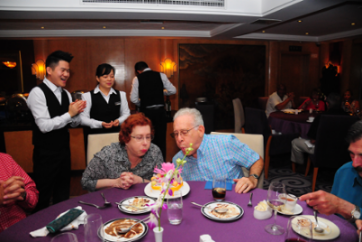
For their 42nd anniversary, Barbara and Jed Abrams traveled to China for what was supposed to be a trip of a lifetime. Unfortunately, three weeks into the trip, just prior to walking along the Great Wall and one day before the end of their trip, Jed Abrams suddenly collapsed. Pale and dizzy, he was rushed for treatment to a local emergency room and then to a hospital in Beijing owned by an American company.

“The emergency room doctor told me that if Jed had gotten on a plane to return home, it was highly unlikely he would make it off the plane alive,” Barbara said.

The Abramses’ tour director immediately reported the event to the couple’s travel insurance carrier. However, Barbara did not receive the prompt response that would have helped her. She was alone in an unfamiliar city, and no one else spoke English except for the doctors, nursing staff and staff at her hotel. Everyone else was speaking a language she didn’t understand, and Barbara felt lost.

“When my husband collapsed without warning at the Great Wall and landed in a hospital where he needed, among other things, four units of blood, I was stranded, alone and frightened more than I had ever been in my life,” said Barbara. “[I was] relying upon Chinese taxi cab drivers to get me to and from the hospital and hotel. The rides were 45 minutes of harrowing in-and-out kamikaze moments tinged with pure terror as we navigated looming buses, cars, motorcycles and weaving pedestrians.”

After waiting two days for her insurance company to help and still no response, Barbara turned to Global Rescue.

Global Rescue immediately launched into action, deploying personnel from its Bangkok Operations Center. “In three hours, Global Rescue had reviewed Jed’s medical file with doctors at Johns Hopkins, assuring me they would take over responsibility for Jed’s care and arrange for his return to the U.S.,” said Barbara. “I wept with relief. Global Rescue did what they said they would.”

Global Rescue deployed a member of their critical care transport team to Beijing to assist the Abramses. Global Rescue also arranged for a van and English-speaking “fixer” for Barbara to get back and forth between the hotel and hospital, ending her series of terrifying cab rides.  


 The couple enjoying a rickshaw ride

“Once Global Rescue arrived at the hospital in Beijing, they took over immediately and made all the arrangements. It was as if the weight of the world had been lifted from my shoulders,” Barbara said.  “As a result, my energies could then be focused solely on my husband’s and my emotional needs.”

A few days later, Jed was stabilized and certified as fit to fly by Global Rescue physicians. Global Rescue arranged for three seats on a flight from Beijing to Seattle, Washington, with a member Global Rescue transport team continuing to monitor Jed’s condition throughout the flight.

When airport security sought to prevent the group from bringing medical equipment onto the plane, Global Rescue’s paramedic stated clearly and firmly that he was Jed’s lifeline, and that he would not have his patient put at risk. Ultimately, security allowed everyone to board the plane with the necessary medical supplies.

“After much back and forth, he prevailed,” Barbara wrote about the incident. “Never once did he raise his voice or telegraph any contentiousness.”

In Seattle, the Abramses boarded their final flight back to Charlotte, North Carolina, where they met with a hospitalist who supervised further testing and treatment at their local hospital’s emergency room. Upon their safe return home, Barbara wrote to thank Global Rescue, praising the responding paramedic. “His quiet resolve and professionalism made it happen.”


Barbara and Jed at Lake Louise in the Canadian Rockies in 2013


Share This:

After a plane crash in Myanmar, the long road to recovery

On Christmas Day 2012, Allan Lokos and his wife, Susanna Weiss, boarded a plane in Myanmar headed to Inle Lake, a popular tourist destination in the heart of the Shan Plateau and home to the…

(Courtesy of Fox News)

On Christmas Day 2012, Allan Lokos and his wife, Susanna Weiss, boarded a plane in Myanmar headed to Inle Lake, a popular tourist destination in the heart of the Shan Plateau and home to the Shwe Indein Pagoda – a white-washed stupa that enshrines a Buddha image and is surrounded by hundreds of ancient stupas.   The couple, who run a meditation center in New York City, were drawn to the region for its many temples and monasteries. 

Their lives changed forever when something went wrong during their approach for landing. The plane crashed short of the runway, broke into pieces and burst into flames.  Miraculously, Allan and Susanna somehow survived the impact and managed to pull themselves out of the wreckage through the fire and debris.  Both were badly injured, Allan critically.  Local rescue teams arrived shortly after the crash and rushed them and other survivors to a nearby clinic.

Susanna suffered broken vertebrae, and feared for Allan’s survival.  “I was told by the doctors that Allan was not going to make it,” she recalled. 


Allan’s injuries were life-threatening. He was in critical condition, with severe burns over 33% of his body including his head, face, neck, and hands. Not surprisingly, his injuries were well beyond the capabilities of the local clinic in rural Myanmar. 

Global Rescue was contacted by the couple’s tour operator and immediately coordinated the dispatch of an aircraft to transport Allan and Susanna to Bangkok, Thailand, for treatment at one of the best hospitals in the region.Global Rescue paramedic personnel deployed from the company’s Bangkok Operations Center met the couple at the hospital, where Allan was admitted to the Intensive Care Unit.

Once the extent of Allan’s injuries became clear, Global Rescue’s medical team consulted with Johns Hopkins Medicine specialists and determined that, given the severity of his burns, a transfer to the top burn center in Asia, located in Singapore, would give Allan the best possible chances in his fight for survival.

What followed was an evacuation by private, medically equipped ICU aircraft while Allan drifted in and out of consciousness.  While his memories of the flight and his admittance to the Singapore burn unit are spotty due to the trauma and treatment, which included several skin graft surgeries, Allan later recalled the comfort of seeing Global Rescue personnel outside his hospital room around the clock.

Global Rescue’s medical team and partners at Johns Hopkins remained in close contact with the Singapore physicians, overseeing Allan’s additional skin graft surgeries.

Knowing that Allan could decline rapidly from the severity of his burns, Susanna faced another extremely difficult choice: whether to move Allan home to the U.S. or keep him in Singapore for long-term treatment. She knew that with burns, in particular, the danger of infection is the biggest risk.  “I’ve kept him alive so far with the choices I’ve made,” Susanna pondered.  She decided to move forward with his transport home.


(Courtesy of Allan Lokos)

Global Rescue transported Allan by ICU equipped air ambulance back to his home country hospital in New York City during a brief window when he was deemed stable enough to survive the journey.  Allan was stable throughout and the aircraft landed in New York without incident.  While their travels had finally had ended, both Allan and Susanna knew a long road to recovery awaited.

Susanna, now fitted with an orthopedic back brace, faced her own troubling medical issues, compounded by the psychological trauma of the crash and the physical toll of dealing with Allan’s care.  “I hardly had a life during that time,” she said. “All I would do is go back and forth to my apartment late at night, kind of fall asleep, and go back early in the morning to the hospital.”  She is still recovering from her injuries.

Two months after being admitted to a hospital in New York, Allan was released. Despite the homecoming, he was despondent. “That’s when you would think that finally things are going to return to some kind of normality, and it was anything but. I remember constantly thinking that I wanted my life back,” said Allan. “It was, for both of us, the most depressing time of our lives.  I came home 25 pounds lighter off of an in-shape frame. I was incredibly weak. I had no use of my hands at that time. There was literally nothing I could do for myself; I was totally dependent.”

Allan is the founder and guiding teacher of The Community Meditation Center in New York City.  He had practiced meditation for many years, studying with such renowned teachers as Thich Nhat Hanh, and ultimately visited Myanmar to enhance his spiritual practice and teaching.

Susanna partially credits Allan’s recuperation during this difficult period to his writing his book, Through the Flames: Overcoming Disaster through Compassion, Patience, and Determination. “Like the trauma therapy saved me, his writing saved him. He’s a teacher at heart, so he felt he would have something to offer.  That was his salvation,” Susanna said.

Allan’s spiritual training was instrumental in his physical and mental recovery. “The mental recovery was more difficult because that’s when things were really awful,” he noted. “On the physical side, literally from the moments right after the crash and then for the next two months, much of the time I was drugged, in shock, and not cognizant at all of things that were happening.  I have memories of very unpleasant procedures but physical pain is temporal. It can be very difficult but then it fades.” He noted, “I never have dealt with questions like ‘why me?’ or ‘why did this happen to me?’ and I think that was and continues to be a major part of why I’ve healed as well as I have.”

Despite their ordeal, Allan and Susanna have no reservations about traveling again. “I don’t think that we should alter our lives because of fear. I think we should be aware of what we’re doing, but I wouldn’t back away from something I wanted to do just out of fear,” said Allan.

Susanna said, “I don’t deny that the crash happened and that it has its effects, but I also don’t want that to determine how I live my life.” 

In fact, Allan and Susanna traveled to Africa in 2015, their first trip outside the United States since the plane crash.  

Susanna concluded: “At a time when I couldn’t handle anything else, there was nothing like the military calm of Global Rescue’s personnel. How could I have handled our evacuation? Even if I weren’t taking care of Allan all the time, I wouldn’t know how to do that. What was done was so competent, so steady.   I am grateful that they were there for us.”  


(Courtesy of Fox News)


Categories:

News
Share This:

Security Management – Security Management highlights Global Rescue in “Travel Safety Goes Global”

Categories:

News
Share This:

CBS Sports Network – Boomer Esiason shows off his Global Rescue card

Share This:

Evaluating your travel risk

Most travelers conduct extensive research before embarking on trips, seeking out the best rates for hotels and airfare, and planning excursions. Travel risk, however, is one factor often overlooked.

Most travelers conduct extensive research before embarking on trips, seeking out the best rates for hotels and airfare, and planning excursions. Travel risk, however, is one factor often overlooked.

When determining travel risk for a particular country, many turn to the website travel.state.gov, maintained by the U.S. Department of State.  The site offers a quick initial snapshot to help evaluate travel to less than favorable areas of the world.  While travel.state.gov is a good resource for travelers, understanding what is meant by the various types of alerts and warnings is essential.  To make a fully informed decision, travelers should also refer to other public and private sources of travel information. (Read about Global Rescue’s GRIDSM travel intelligence system and our new mobile app below.)

Understanding State Dept. Warnings

The Department of State groups information in two major categories, Travel Warnings and Travel Alerts.

Travel Warnings are issued when the State Department wishes to advise travelers to consider very carefully whether they should travel to the country at all. These warnings are issued for reasons including: government instability, civil war, ongoing intense crime or violence, and the frequency of terrorist attacks. While some of these warnings have been in effect for years, we are told the regions are continuously reevaluated.

Travel Alerts are issued for short-term events which may occur or have already occurred. For example, an election season that may trigger strikes, demonstrations or disturbances will be noted. Health events, such as a disease outbreak, also fall into this category. The risk of a probable terrorist attack may lead to the State Department’s assigning a country a Travel Alert.

Travel Warnings and Travel Alerts are valuable initial indicators that countries under consideration by travelers may need additional research prior to travel. When reviewing a Travel Warning or Alert, read carefully and become familiar with key words and phrases to develop a solid working knowledge of the site. Note words and phrases including: recommends, strongly recommends, avoid travel, warns against travel and current security, ongoing security event and situations. These words and phrases are used together in combination to indicate an overall severity of the situation in that particular country.

It is also very important to note how the Department of State advises government workers. When evaluating travel to a less than desirable area, notice how government workers are advised to proceed. If they are advised not to go, or to proceed only if advised or if conducting an official duty, then it is a very clear indicator that travel there as an individual is ill-advised. In most cases when government workers are advised not to travel, it is because it would be very difficult to support them in some type of security situation since the U.S. Embassy in the country is already operating at a diminished capacity due to that situation.

To keep Global Rescue members informed about global events and travel risks, we developed a travel intelligence system called GRID.  A unique online resource, GRID is supported by our intelligence analysts and offers up-to-the-minute information on medical and security events around the world.  Members can read detailed destination reports, including such information as country risk ratings and security risk overviews. Access to GRID is a benefit available to all Global Rescue members.

We also recommend that members download the new Global Rescue app. It puts critical medical, security and other essential travel information at your fingertips. In an emergency, the app puts Global Rescue members in immediate contact with the medical teams and military special operations veterans who staff our global operations centers. The Global Rescue app is designed for iOS (iOS 5 and above), Android (4.4 and above) and BlackBerry (10.2 and above) platforms. The app is now available on the App Store, Google Play, and Blackberry App World.

For more information on the Global Rescue app or our services, call 617-459-4200 or visit www.globalrescue.com.

Stay informed and travel safely!


Categories:

News
Share This:

Huffington Post – Global Rescue CEO featured in “When to Quit – From People Who…

Categories:

News
Share This:

MSN Travel – “The Ultimate Guide to Everest” features expert prep tips from Global Rescue’s…

Categories:

News
Share This:

Cheapflights.com – Global Rescue advice highlighted in “Troubleshooting health issues while traveling”

Share This:

Hunter in remote Cameroon turns to Global Rescue: “Totally great.”

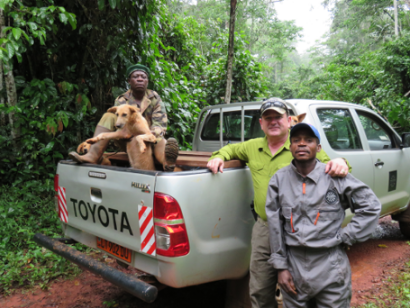
Lieutenant Colonel Rick Steiner is a retired US Army Special Forces commander with 19 years of military experience. For the past 10 years, Steiner has relied on Global Rescue to be his "back up team"…

Lieutenant Colonel Rick Steiner is a retired US Army Special Forces commander with 19 years of military experience. For the past 10 years, Steiner has relied on Global Rescue to be his “back up team” whenever he heads out on his hunting or fishing expeditions. “I’ve been to Afghanistan, Somalia, Uganda, Cameroon, Tanzania, and British Columbia, so having a rescue organization standing behind me that has the capability to come get me anywhere I might be is not a ‘nice to have’ — it’s an absolute necessity,” said Steiner.

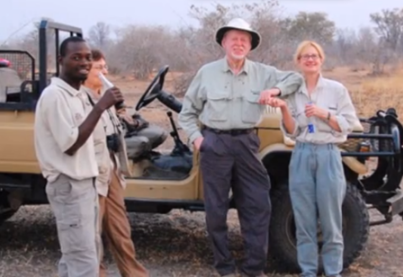
Steiner’s hunts take him to very remote areas. “All of the photos here are taken in the Sangha River area of southeast Cameroon, south of Lobeke National Park,” said Steiner. “On the other side of the river is the Central African Republic. We hunted the entire region as my outfitter there, Faro Lobeke Safaris, has over 500,000 hectares in two hunting blocks.

“The entire area is triple canopy jungle with a few villages and logging camps. There are no paved roads –only logging trails maintained by the logging companies. Local fauna includes lowland gorillas, forest elephant and buffalo, bongo antelope, forest sitatunga, various duikers, leopards, a wide variety of monkeys, chimpanzees, and assorted snakes and insects. Daytime highs in May are around 100 degrees F, with 85% humidity, and it rains about every other night. The local people are baka tribesmen, also known as pygmies,” noted Steiner.

“It’s a very tough place to hunt. I’ve taken just about every species available on two separate hunts there. You can only see 20 yards or less in the jungle, and you’re wet all the time — sweat, rain, or a combination. But it’s incredibly rewarding to hunt the place. Needless to say, there are a lot of hazards — food, water, the gorillas, elephant, buffalo, snakes, car accidents — so it’s very important to be good at personal health management, risk management, and also to have a good medevac plan.”

This past spring, Steiner turned to Global Rescue for assistance when he was feeling feverish while traveling. “I called to get advice on dosages for medicine I was taking. What I got from Global Rescue was a level of follow up and service that approached family practice doctor level of engagement. Totally great.”

Steiner concludes: “Global Rescue is the only service provider of its type that has earned my confidence. I simply won’t go on a hunting or fishing expedition without the peace of mind that comes from having a Global Rescue membership.”  


Categories:

Health & SafetyTravel
Share This:

Chikungunya: What you should know

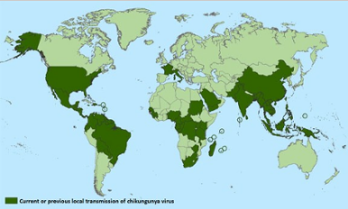
What is chikungunya and can it be prevented?   Chikungunya is a painful but largely non-lethal disease that causes severe joint pain and fever. The disease is often mistaken for dengue fever, which mirrors both…

Centers for Disease Control and Prevention, March 10, 2015 


If you haven’t heard of chikungunya yet, you will soon. The mosquito-transmitted disease chikungunya has made quite a few headlines recently:

–A woman in the U.S. lost vision in one eye after contracting the disease in the Caribbean.

–Mexico reported more than 3,000 cases across 16 states.

–The World Health Organization (WHO) confirmed the first locally acquired case of chikungunya in Spain.

–Nicaragua reported its first death from the disease.

What is chikungunya and can it be prevented?

Chikungunya is a painful but largely non-lethal disease that causes severe joint pain and fever. The disease is often mistaken for dengue fever, which mirrors both its symptoms and geographic distribution. Like dengue, chikungunya is spread by the Aedes family of mosquito. The disease is rarely lethal except in vulnerable populations such as the elderly, young, and immunocompromised.

For someone bitten by an infected mosquito, symptoms typically start within 4-8 days. Older patients can also be misdiagnosed as having arthritis due to joint pain being the most prominent symptom. Most patients will feel better within a week of symptoms starting.  While most people recover fully from the virus, some do have lasting joint pain for months or even years after infection. 

Chikungunya originated in East Africa and has spread throughout the continent and to South and Southeast Asia. In the past year, the virus has spread rapidly throughout the Caribbean and into Latin America. Isolated cases of the virus have also been reported in Europe and North America after travelers returned from endemic areas. In recent months, there has been an uptick in cases in southern states, including Florida. As of February 2015, there were at least 1.24 million cases of chikungunya in the Americas.[1]

While progress is being made, there is currently no vaccine or cure for chikungunya. Treatments for the disease focus on decreasing symptoms with fluids and anti-inflammatories such as ibuprofen or acetaminophen to reduce fever and pain.

The best way to prevent infection? Avoid mosquito bites altogether, sincemosquitoes are the primary means of transmission.

To help avoid mosquito bites:

–Make sure that any open doors or windows have fully intact screens.
–Use bug spray. When going outside, wear bug repellent such as DEET or Permethrin.
–Wear long sleeves and pants to make it difficult for mosquitoes to bite you.
–Reduce the breeding grounds of mosquitoes in and near your home by getting rid of any standing water in areas like pools, gutters, or flower pots.
–If you become infected, continue to avoid contact with mosquitoes to reduce the spread of the disease.

While the headlines about chikungunya will likely continue, following these precautionary steps can help ensure that you don’t become infected.

For more information, review the CDC Fact Sheet. Contact Global Rescue Operations with any questions at 617-459-4200 or operations@globalrescue.com.


[1] From MedPage Today