Loading...

Share This:

Honeymooners caught in Nepal earthquake turn to Global Rescue

Brittany Myers and her husband, Noah, of New York City had just embarked on what was to be the trip of a lifetime.  Married earlier this year, they delayed their honeymoon with plans to take a longer…

Brittany and Noah Myers, on top of Gokyo Ri the day before the Nepal earthquake

Brittany Myers and her husband, Noah, of New York City had just embarked on what was to be the trip of a lifetime.  Married earlier this year, they delayed their honeymoon with plans to take a longer trip. Both are avid climbers and trekkers, so the ideal honeymoon destination was Nepal, where neither had been.

In late April 2015, when they had finally begun their trip, they were deep in the Gokyo Valley when the unthinkable happened. A 7.8 magnitude earthquake shook Nepal. Brittany and Noah were without a guide, intending to trek through Nepal completely on their own. Global Rescue provided much-needed support in the aftermath of the earthquake.

“When the wind blows in the Himalayas, it makes a lot of noise, so at first it didn’t really seem like anything,” Brittany said, reflecting on her experience. “It became loud very quickly and suddenly everyone was panicked.” Fortunately for Brittany and Noah, the earthquake was not particularly damaging where they were. They were unharmed. However, it had become difficult to gather accurate information about which parts of the country were affected, and other equally pressing concerns.

Immediately after the earthquake, rumors swirled. Without access to credible information, Brittany and Noah struggled with what to do next. The couple decided to retreat from the Gokyo Valley, and head to the more densely populated Khumbu Valley, where it would be more likely to find other trekkers and climbers with information. After a two-day walk, they arrived Dingboche, where there was the only working landline and satellite wifi service through the entire Everest region. Here they were finally able to reach home.  Brittany reached her parents to let them know that she was okay. Brittany’s mother took it one step further. Remembering that her daughter was a member of the American Alpine Club, and that the AAC offered its members Global Rescue services, Brittany’s mother called Global Rescue to let them know her daughter’s location.

Global Rescue established communication with Brittany and provided timely and reliable information regarding the status of Lukla airport, among other updates. This information helped Brittany and Noah reach a decision about whether or not it was better to get out of the country as fast as possible, or to wait until the backlog at the airport had cleared. “We decided to extend our stay mostly because Lukla was in really bad shape,” said Brittany. “We extended our time and luckily, when we arrived in Lukla, it was relatively calm and we were able to leave easily.”

“The information from Global Rescue was essential. More than that, however, was the peace of mind Global Rescue provided when a medical issue arose.” In the last few days of the trip, Brittany became very sick. “It was the most awful I ever remember feeling,” Brittany recalled. “A Global Rescue team member who was communicating with me said there were paramedics in Lukla. I strangely felt much better the next morning and didn’t need the paramedics, but it was really helpful to know that I could reach out to them if I needed to.”

Despite their interrupted honeymoon in Nepal, Brittany has no reservations about returning in the near future. The couple is already planning their next trip for April 2016, one year after the earthquake. Back in the U.S., Brittany remains involved with the Nepal humanitarian effort. While in Nepal, she and her husband made contact with other trekkers and climbers who had already started to help with relief. Brittany and Noah assisted while there and continue to spread the word about aid donations and keeping the needs of Nepal in the spotlight.

Asked about Global Rescue membership for future travels, Brittany responded:  “Absolutely. It was great to know that your team had more information than my family, and if I’d had major issues, your services would have been a great help too.  Global Rescue was really on top of it and helped to calm my mind.” 


Trekkers en route to Thame to meet with locals and coordinate delivery of roofing materials. Landslides are visible on side of the river.


Share This:

When an emergency strikes in remote Northern Australia: “Global Rescue’s paramedic was incredible”

When Don and Marte Muelrath decided to book a fishing trip off the coast of Northwestern Australia, they knew they were headed to a beautiful but remote environment. The marine wildlife and fishing in this part…

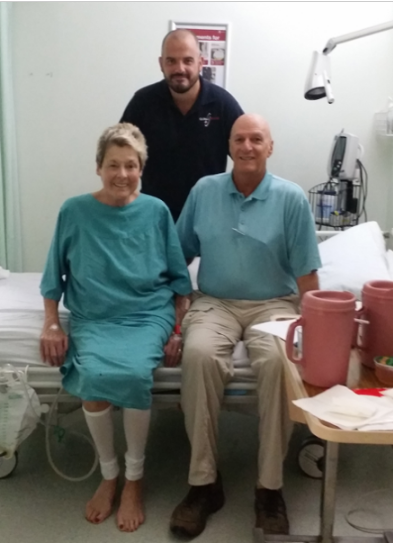
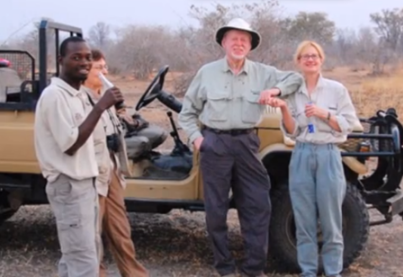
Marte Muelrath, Global Rescue Senior Specialist Paramedic Andrew Fraser (center) and Don Muelrath

When Don and Marte Muelrath decided to book a fishing trip off the coast of Northwestern Australia, they knew they were headed to a beautiful but remote environment.  After flying from the U.S. to Perth, the Muelraths boarded an aircraft that flew them to the tiny town of Exmouth, located on a narrow spit of land that juts out into the Indian Ocean.

The marine wildlife and fishing in this part of the world are outstanding and both Don and Marte were looking forward to an enjoyable trip.

Unfortunately, it wasn’t meant to be.  While en route to Australia, Marte began to experience belly pain that got progressively worse.  They arrived in Exmouth in the evening after nearly a full day of travel and Marte’s discomfort had worsened to the point where they sought a referral to the nearest clinic to have her examined by a doctor.

As soon as they arrived at the small hospital and had access to communications, Don contacted Global Rescue for help. 

“Not sure what is happening or what to do,” Don wrote. “We are about 22 hours of flight time from home. We live in Napa, California, and fly into San Francisco.”

As is often the case, local resources were limited. Marte had X-rays and an ultrasound but no MRI was available. The local physician diagnosed a potentially serious abdominal condition, but admitted that his diagnosis and ability to provide treatment were constrained by the lack of equipment.  As this was occurring, Marte’s pain continued to worsen.

After receiving contact from Don, Global Rescue Medical Operations personnel, supported by Johns Hopkins Medicine, engaged immediately with the attending physician. It was obvious that Marte required further imaging, diagnostics and treatment beyond what the small hospital could offer. 

After reviewing the records received from the hospital, Global Rescue’s medical team deployed a private, medically equipped aircraft to immediately transport Marte from Exmouth to Perth, where a medical center of excellence could provide further testing and treatment.  Senior Specialist Paramedic Andrew Fraser was also deployed from Global Rescue’s Bangkok Operations Center to ensure that the best possible care was delivered and that information was being transmitted in a timely manner.

At the hospital in Perth, Marte’s diagnosis was confirmed and she was provided with the lifesaving treatment she needed.

“Global Rescue’s paramedic was incredible,” commented Don. “His knowledge, level of attention, and ability to get things done made our unfortunate experience ‘endurable.’  He was with us daily for the eight days my wife was recovering in an Australian hospital.”

Marte was stable enough to travel after a little more than a week in the hospital.  Once she was ready to be discharged, Global Rescue’s Senior Specialist accompanied the Muelraths as they departed on the flight home. Upon arrival in Napa, California, Marte was admitted to a local hospital for further treatment.

Don, a fishing travel agent who runs Fly Fishing Adventures, noted that he is telling his clients about Global Rescue. “I’ve added the following to all our invoices for fishing trips: ‘Global Rescue has provided a very meaningful and beneficial service for us both personally as well as for many clients and we strongly recommend their evacuation services.’”

“We had heard a lot of good things about Global Rescue, but our personal experiences with you were more than we could have wished for!”


Share This:

MERS-CoV: Update

Last year, we posted a warning about MERS-CoV, or Middle East Respiratory Syndrome Coronavirus. This year, the list of countries affected by MERS has expanded significantly. Before heading to regions affected by MERS, review risks,…

Last year, we posted a warning about MERS-CoV, or Middle East Respiratory Syndrome Coronavirus. This year, the list of countries affected by MERS has expanded significantly to include South Korea and China. As of June 12, 126 confirmed cases have been reported in South Korea, with 13 deaths. Approximately 3,680 other people are in quarantine in Korea and being monitored after contact with MERS-CoV patients.

According to data from the WHO on 11 June, 1,227 laboratory-confirmed cases of MERS-CoV have been reported worldwide, including at least 449 deaths, since September 2012. Thus far, MERS is most prevalent in Saudi Arabia, which has recorded over 1000 cases and 450 deaths. Meanwhile, the UAE has recorded 75 MERS-CoV cases, five of which were diagnosed in 2015. The UAE has the third largest number of cases in the world after Saudi Arabia and South Korea.

Before heading to regions affected by MERS, review risks, prevention and treatment.

Transmission:

The primary source of transmission is from infected animals to people working closely with the animals, with limited human-to-human transmission.  Camels are suspected to be the main animal source of infection but this has yet to be confirmed by health authorities and investigations regarding the source are ongoing.  The incubation period is 2-14 days.

Who is at risk:

–Older individuals (>65 years of age)
–Individuals with chronic diseases (e.g. heart disease, kidney disease, respiratory disease, nervous system disorders, diabetes)
–Individuals with immunodeficiency (congenital or acquired)
–Patients with malignancy
–Patients with a terminal illness
–Pregnant women
— Children

Signs and symptoms:

–Fever
–Cough
–Shortness of breath
–May have gastrointestinal symptoms such as diarrhea, nausea or vomiting.

It should be noted that not all infected individuals will exhibit symptoms. Those who have traveled to affected regions should be cautious, regardless of their activities or outward symptoms.

Treatment:

There is no specific treatment for MERS-CoV infection.  The current treatment regimen involves supportive care to alleviate symptoms and provide support to vital organ functions.

Prevention:

  1. Observe good personal hygiene at all times.
    2.Practice frequent hand-washing (before handling food or eating, after going to the toilet or when hands are soiled). Use alcohol-based hand sanitizer if soap and water are not available.
    3.    Avoid close contact with persons suffering from acute respiratory infections.
    4.    Cover your nose and mouth with a tissue when you cough or sneeze, then throw the tissue in the trash.
    5. Avoid touching your eyes, nose and mouth with unwashed hands.
    6. Get vaccinated against influenza and meningitis. While there is NOvaccination against MERS-CoV, vaccinations against influenza and pneumococcal infection can help prevent these common infections that have symptoms similar to MERS-CoV.
    9. If you are traveling to the affected regions and have pre-existing chronic conditions, consult your doctor prior to your travels for medical travel advice.
    10. Should you become unwell with fever and cough during or after your recent travel (within two weeks) to affected regions, wear a mask and seek medical attention immediately.

See additional recommendations and guidance on CDC’s MERS website:http://www.cdc.gov/coronavirus/mers/hcp.html

Contact Global Rescue Operations at 617-459-4200 or operations@globalrescue.com with questions regarding MERS.


Categories:

News
Share This:

Trip Advisor – TripAdvisor’s Wendy Perrin highlights Global Rescue’s advice on emergency medical care in…

Share This:

Parents’ lawsuit of youth tour groups highlights importance of “duty of care”

As students travel abroad in increasing numbers, academic institutions are struggling to develop the strategies and resources needed to address developing risks. Last month, the Los Angeles Times reported that two Jewish groups were sued by…

(Photo credit: Centers for Disease Control and Prevention) 

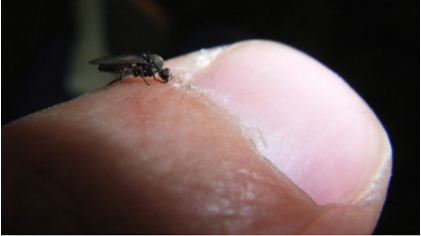
As students travel abroad in increasing numbers, academic institutions are struggling to develop the strategies and resources needed to address developing risks.  Last month, the Los Angeles Times reported that two Jewish groups were sued by the parents of four Los Angeles high school students after their children contracted Leishmaniasis, a disease that causes painful skin ulcers. The parents state that the trip leaders took no precautions to protect or inform the students of the possibility of contracting the disease despite having “previous problems” with sand flies on past trips. The parents state that the school failed in its “duty of care” obligations to the students. Duty of care is a legal concept that requires organizations such as tour operators and academic institutions to disclose the risks of travel to travelers and provide suitable medical and security resources as necessary.

Another more severe example occurred in 2007 when a teenager on a school trip to China contracted an insect-borne illness while hiking. The illness permanently damaged the teenager’s fine motor skills and ability to speak. A court case later awarded the teenager $41.7 million because the school failed its duty to disclose potential hazards and duty of care once the illness occurred. Trip leaders did not warn the students that they would be in an area with insect-borne diseases, took no steps to reduce the likelihood of contracting the disease, and failed to recognize and treat the disease once it started. If a proper risk management system had been in place, all three failures could have been avoided.

Tour operators and academic institutions around the world must develop plans to keep their travelers and students safe. The U.S., U.K. and EU have all developed legal frameworks that require organizations to have risk assessment and crisis management plans in place. These duty of care laws can have severe consequences for organizations that do not have proper protocols. Many organizations have developed uncoordinated solutions that look good on paper, but fail to provide sufficient support to their travelers in times of crisis.

We developed the Global Rescue Travel Risk and Crisis Management (TRCM) program specifically to help tour operators and academic institutions fulfill their duty of care obligations. Our TRCM program provides critical pre-planning and assistance, ensuring the highest likelihood of preventing emergencies and having positive outcomes in an emergency.  With Global Rescue’s TRCM program, tour operators and academic institutions can be proactive and prepare for potential threats to travelers rather than just react to an emergency and face the consequences.

To learn more about the Global Rescue Travel Risk and Crisis Management Program, contact us at memberservices@globalrescue.com or 617-459-4200.


Categories:

News
Share This:

The Wall Street Journal – The Wall Street Journal profiles Global Rescue in “How to…

Share This:

“Never in a thousand years did it ever occur to me that I would be…

Walking through the Tsitsingombe River Valley in Zimbabwe four years ago, Global Rescue member Angie Heister had no idea that her life was about to change dramatically. Angie and her husband were 10 days into…

Angie Heister and her husband, Robert

In Part I of Angie Heister’s story, she described the horrific attack by a Cape buffalo in Zimbabwe four years ago. Global Rescue conducted a medical evacuation and deployed our paramedics to her bedside.

In Part II, Angie is back home in Dallas after Global Rescue evacuated her from Johannesburg. She shares her struggles with transitioning to her new life, along with the satisfaction of mentoring others and of traveling again.

Part II

Coming home

We were back in Dallas on the way to Baylor and the Global Rescue paramedic told the driver to slow down on the turns since I didn’t have good balance.  He was watching out for things like that. He took the best care ever, ever, ever.”

After approximately six weeks in rehab, Angie was discharged to go home in August 2011.

“The first six months were pure hell,” said Angie. “You have to learn to take care of your bladder and your bowels, and trying to transfer and not fall, just so much. We had to have our bathroom remodeled because I couldn’t get in the shower. I had hired a caregiver to stay with me.  At first I had to have 24- hour support, so it was the caregiver, my daughter, and my husband. Gradually I got stronger and started with two hours all by myself. It was May 2012 before we let the caregiver go and I was truly ok just to be by myself in the house.

“To put it in perspective, I was a software consultant before the accident.  I traveled a lot. I was executive platinum and traveled 100,000 flight miles a year. I was at home two weekends a month usually.  I went from that lifestyle to a complete shut-in except for weekends. It was a shock. It just turned my life upside down.”

Looking ahead

Four years after that fateful day, Angie maintains a positive outlook on life, despite remaining paralyzed from the accident.  Her determination brought her to where she is today, enjoying traveling and her independence while helping others cope with the transition to life in a wheelchair.

“I took classes so I could drive again in October 2012, and bought a van that is modified with a ramp and hand controls. It was months before I dared to get on the highway. It was like learning to drive again but I was terrified.  Now I drive to a lot of places every day by myself, even the highway. It’s no big deal but it really took a long time to get back to that. Now I’m perfectly good: I go places by myself all the time. If my husband is out of town, I’m ok in the house by myself, even during the night.

Importance of mentoring

“I had incredible support early on. There was a lady named Lynn I had worked with and when I was lying in the hospital in Africa, I remembered her coming to work in a wheelchair. There wasn’t anything special about it.  To me, she’s superwoman. She has been in a wheelchair for 30 years and is so strong and independent. She won a silver medal on horseback at the Paralympics in Australia. Lynn would come over and show me things. For example, I was having trouble getting up a little one-inch step from the garage into the house. Now it’s no big deal, but at the time I didn’t have the balance or the strength, so she showed me a different way to do it. She told me that there were things like this they’ll never show you in rehab. You’re only going to learn this from other people in chairs. She was so right.

“I’m actually mentoring some ladies now. Statistically, people who end up with spinal cord injuries are usually young males between 15 and 30 years old, basically risk takers. A 50-year-old grandmother is not your usual spinal cord injury patient. So, occasionally when they have ladies who have gone through some car wrecks or other accidents, (Baylor) has called me. I try to help these ladies and tell them that when I came home from the hospital, I couldn’t do such-and-such either, but I do it all the time now. I try to give them that encouragement and tell them to keep working at it.

“Lynn told me it would take two years to adjust, but I think it’s more like three. Most days now it’s no big deal, but occasionally I have a bad day or something happens that I can’t do and it’s so frustrating. The whole family has adjusted. They say it’s not just the individual who goes through this; it’s your whole family because everybody has to adjust. It took a long time to get there and it took a lot of work and a lot of support from family.

Traveling again

“We’ve started traveling,” continued Angie. “It took about a year but we’ve gone to Los Angeles several times to see family. My husband and I took a vacation and traveled to New England in September. We’ve been to Vegas a few times, and to Florida and North Carolina.  We travel a lot so that’s good.

“During one of our trips, we spent an evening with one of the Global Rescue paramedics who deployed to help us.  It was wonderful to see him. What does this tell you about the people at Global Rescue when, so many years later, we’re still staying in touch?”

Angie’s advice

“As I look back, I’m so thankful that we had a Global Rescue membership before we traveled,” said Angie. “My husband had been to Africa twice before and had had such a wonderful time. He loved it and wanted to share that with me. I was going with him on this trip. I’m the non-adventurous type and I insisted that we get it. He had seen Global Rescue at one of the safari conventions and was familiar with it so we bought the memberships.  It never occurred to me I would be the one who would need it. I was always thinking, ‘It’s going to be my husband. What if something happens in the middle of the hunt or if he gets hurt by an animal?’ Never in a thousand years did it ever occur to me that I would be the one that needed the help from Global Rescue. I’m guessing it would have cost somewhere between $100,000 and $300,000 to get me home had we not been Global Rescue members.

“Any time my friends are traveling anywhere, I tell them they must get a Global Rescue membership.   People don’t understand that travel insurance is so different than having Global Rescue personnel come to you and personally take care of you and bring you home. I can’t imagine my husband being able to get me home alone and having no one else to help me make the flight home. It’s just not the same when you’re in that kind of situation. You really need what Global Rescue provides. You need somebody there who has access to resources and experience and knows what to do, because you’re just lost and in shock and you just don’t know what’s going on. You’re so short sighted, just trying to get through the next day. You think, am I going to be breathing again tomorrow? You’re not in any kind of shape to be making arrangements to fly home.”

Angie’s advice for travelers:

–If you’re traveling to an area that’s not very well developed, do some research to get an idea of what hospitals and services are in the area. Is it like the U.S. where you get treated and then pay or do you have to pay before they admit you?

–Check whether your health insurance works in places you are traveling to and determine if you should purchase a special health insurance policy.

–Carry a satellite phone and extra batteries.

–Have a Global Rescue membership.

“I’m one of your best salespeople,” said Angie. “Anytime anyone is traveling, I tell them, ‘You’ve got to get Global Rescue.’ I can’t even imagine what would have happened had we not had Global Rescue. I would have ended up in Zambia in a less-than-stellar hospital. I might not even have lived had I not gotten to a tier-one trauma center. I would have gotten an infection in that wound. The fact that I never got an infection is a miracle and I know it’s because I got to a good hospital. As you probably know, I think very highly of Global Rescue.”


Share This:

“It was four seconds from the time I saw the animal until it gored me.”…

Walking through the Tsitsingombe River Valley in Zimbabwe four years ago, Global Rescue member Angie Heister had no idea that her life was about to change dramatically. Angie and her husband were 10 days into…

   Angie Heister and her husband, Robert


Part I

Walking through the Tsitsingombe River Valley in Zimbabwe four years ago, Global Rescue member Angie Heister had no idea that her life was about to change dramatically. Angie and her husband were 10 days into their trip.

“Our guide was shooting birds to cook for us for lunch,” said Angie. “We’d already finished the dangerous game hunting and were in an area where we believed there weren’t any buffalo.  We were going down a dirt road with the grass about 8 feet tall around us.  With the direction of the wind and the noise we’d been making, that buffalo really should not have been there. He should have gone. Animals will usually run away when they see you but this animal didn’t. He waited for us. You never know what’s in the mind of a wild animal, but I often wonder if maybe he was injured and didn’t want to move, and we got too close and scared him. It was a loud sound, almost like a roar. I yelled ‘lion’ and took off running before I saw the animal.”

The male Cape buffalo emerged from behind a ziziphus bush and came rushing toward Angie and her husband. The bull first hit Angie’s husband, knocking him over. Angie was next.

“It was about four seconds from the time I saw the animal until it gored me. It just happened so fast,” she said. “The horn gored me, and I was thrown. What I didn’t know at the time was that it dislocated my spine. The animal had knocked my husband unconscious. The next thing I know, I’m lying on the ground. I’d heard stories about these animals and how mean they are, so I was trying to cover my head with my arms because I was expecting the animal to come back. That’s the reputation they have.  It’s a miracle that the animal did not come back. He kept going.


“I realized I couldn’t move my legs but I wasn’t really processing what that meant,” Angie continued. “I didn’t realize that I was bleeding.  The professional hunter came over to assess the situation. He and the guide realized I couldn’t walk, but didn’t realize how much I was bleeding. I knew was having trouble breathing, and it was all I could do to say, ‘I can’t breathe. I can’t breathe!’  We didn’t know it at the time but my ribs were broken and my lungs had collapsed.”

Angie was losing blood quickly, with a gaping wound on her left side. Their guide attempted to stanch her bleeding before bringing her to the nearest suitable landing area for a helicopter. He called Global Rescue.

A helicopter arrived within an hour and transported Angie to a facility in Victoria Falls. In the emergency room, she was stabilized and her injuries were assessed. She had no sensation in her lower extremities and had lost a life-threatening amount of blood.

Global Rescue physicians consulted with Angie’s attending physician and recommended that Angie be transported immediately to South Africa. Global Rescue performed a medical evacuation, bringing Angie via a medically equipped jet to a world-class trauma center in Johannesburg.

“Luckily it was decided that Global Rescue could take me to Johannesburg, which was a fantastic thing,” noted Angie. “It was a tier one health center — a fantastic hospital with great medical care. Later, I did some research which confirmed it was a really great hospital. But at the time, all you know is that you’re in a country that you didn’t plan to go to, you’re in a hospital, you can’t move your legs, and you can’t feel your legs. You just don’t even have any idea what’s ahead.”

In Johannesburg, Angie was evaluated by neuro and trauma surgeons. In the meantime, Global Rescue dispatched the first of three paramedics to oversee her care. After a thorough review of Angie’s condition with specialists from Johns Hopkins medicine, the physicians determined that she required emergency surgery to fuse the vertebrae in her spine. The buffalo attack left her spinal cord severely bruised and her lower extremities would remain paralyzed for an unknown period of time.

“The trauma surgeon cleaned out the wound and tried to determine the extent of my injuries while trying to keep me alive,” said Angie. “The doctor later told me that the wound was big enough to fit his wrist and forearm through, and that he could see my bowels and the bottom of my lungs.  It really is unbelievable that the horn didn’t hit an artery and I didn’t bleed to death. They said my spinal cord was dislocated and they needed to do surgery, but it would probably be two weeks before I was stable enough for that surgery. They put rods in my spine, and the doctors told me the area was very bruised and swollen.

“Global Rescue sent over their first paramedic to assess my situation,” Angie continued. “My husband was still in shock. Family had asked if they should come over but he told them no because he still didn’t know what was going on. He said several times that it was a tremendous help to have Global Rescue’s paramedic there to sit down and explain to him all the different things that were happening to me, and to say ‘we’re checking everything that they’re doing and what they’re doing is the right thing.’ You just can’t imagine the feeling when you’re that far away from home and in shock. You just can’t process what happened. Having Global Rescue there was an incredibly important thing.

“Global Rescue sent a second paramedic who took charge of gathering all of the medical tests and coordinating with the doctors there to validate that I was getting the right treatment.  Before the accident, I was a health nut.  I worked out four or five days a week, running and lifting weights.  I was in reasonably good shape. After the accident, I had trouble even holding a fork.”

As rehab progressed, the Global Rescue team worked closely with Angie on her options for rehabilitation back in Dallas.

“Global Rescue started the conversation about where to take me when I got home,” said Angie.  “I didn’t know anything about rehab centers, yet it looked like I would have to go to one. At this point, I didn’t realize that I would be paralyzed for the rest of my life, you know? My thinking was, I had the surgery and the doctor said I’ve got to give it six months. I thought I would start working on learning how to live like that, just in case. I wasn’t going to wait six months before trying anything. But it hadn’t set in mentally that this was going to be the new world.

“We were looking at rehab places in the suburbs of Dallas Metroplex.  Now I laugh when I drive around and see all these little places because most of them are guaranteed to get you back on the football field really fast. They’re all geared toward a high school sports injury. I didn’t realize what a specialized rehab it is for spinal cord injury.  Global Rescue had been recommending Baylor as the best one.  As I look back, so much of the advice we received from Global Rescue was so critical because at the time, we just didn’t know anything.

“At the same time, Global Rescue began to discuss how we would be getting back home. There were countless logistics that Global Rescue handled that we would never have considered – what type of aircraft, ideal countries in which to refuel, and on and on.  The medical oversight by Global Rescue was fantastic. The Global Rescue paramedic suggested that I do more rehab before I traveled. At the time, I thought he’d lost his mind. Now looking back, I can see that he was 100% right.

“Having the Global Rescue team look at my situation and say, ‘In this many weeks you should be so much stronger and then you should be able to do this’ – well, it was just imperative. I don’t quite have the words to explain how important it was having Global Rescue help us figure out where we were going to be in a day or a week or a few weeks, because we were just lost.

“After I was moved to the rehab unit of the Johannesburg hospital, I was learning how to transfer from the bed into my wheelchair or from the wheelchair into another seat. It’s a very hard thing to learn. A few days before we were scheduled to travel, Global Rescue’s third paramedic arrived. He was wonderful.  I can’t even imagine had it been just my husband and me trying to get home. There’s no way physically we could have done it.”

Global Rescue evacuated Angie back home to Dallas.

(Part II to follow)


Share This:

After “Walking the Nile”: Q&A with Explorer Levison Wood

Global Rescue member Levison Wood is a British explorer, writer and photographer who recently finished walking the entire length of the Nile River, the first person ever to do so. During his journey, Wood succeeded…

(Photo courtesy of Levison Wood)

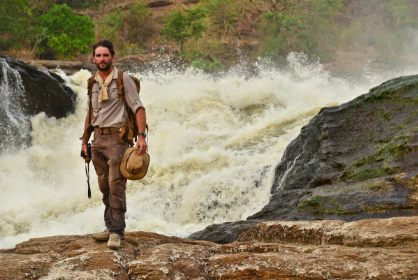
Global Rescue member Levison Wood is a British explorer, writer and photographer who recently finished walking the entire length of the Nile River, the first person ever to do so. During his journey, Wood succeeded in raising funds for charities including the Tusk Trust and the Soldiers’ Charity.

Wood served as an Officer in the British Parachute Regiment, where he was deployed to Afghanistan in 2008. Since then, Wood has combined his passion for writing, photography and adventure. His work has been featured in a variety of media, including National Geographic and the BBC. His Nile journey was filmed and broadcast on Channel 4 in the UK and Animal Planet.

Global Rescue interviewed Wood back in 2013 before he embarked on his expedition, and recently had the opportunity to speak with him about his incredible Nile adventure and his plans for the future.

From the many months of your Nile journey, is there one highlight that stays with you more than any other?

There were some real highlights and some real lows. You may have heard about the tragic death of Matthew Power. That’s obviously an enormous tragedy that happened during the expedition. Of course, there were some incredible times as well. Looking back at the journey, it’s definitely positive. What will stay with me the most is the ascent of humanity, the fact that wherever I went, I was generally looked after very well. People were in incredibly hospitable, kind and generous.

Any close calls for you?

Yes, there were certainly times in international parks where I had some very close calls with wildlife. I was chased by a hippo and snapped at by a crocodile, those sorts of things. There were a couple of occasions in the desert where we were very close to running out of water. That’s all part of accepting the risk of an expedition of this nature.

How did you prepare for a journey like this?

I spent three years planning, so I really did my homework. There weren’t any surprises except for how mentally tough it was. Physically I was prepared, and physically I was ok because I had done my training. Africa has such a bad rep in some respects that all you hear about is the war and poverty and all those things. In fact, what I came away with was really incredible stories of entrepreneurs and the fact that people aren’t completely reliant on aid and can actually get along in life and are generally pretty happy.

How does it feel to come home after walking the Nile?
It’s definitely a welcome relief. It’s good to get back and, I wouldn’t say relax, but it’s good to be in one place for a while. I’ve been back since September, so it’s been a few months and I think that’s needed in this line of work. To make a success of exploration as a career, you have to be ready to give talks, write books, and speak with media. That’s six months doing your job and six months doing all the work behind the scenes.


 (Photo courtesy of Levison Wood)

You were inspired at a very young age. Now you are inspiring a new generation of young explorers. Do you receive letters or emails from young people asking about your trip?

Yes, it’s really cool to be able to inspire the next generation. I’ve done many events at various schools and colleges. It’s really great when you get messages of support from people that you’ve inspired. Two people I’ve never met sent me messages saying, ‘Lev, I was fighting cancer and watching your journey really inspired me to carry on.’ When you read things like that, it makes it all worthwhile.

What’s next?

Actually, I have my next journey planned out. I’m going away again this June on the next big expedition. I’m afraid I’m sworn to secrecy at this stage. It’s going to be about four months, so a bit shorter but equally interesting and equally challenging.


Categories:

Press Release
Share This:

Global Rescue Partners with The Explorers Club

Boston, Mass., May 5, 2015 – Global Rescue, a crisis response firm providing the finest medical, security, evacuation, intelligence, and travel risk management services to enterprises, governments, associations and individuals, today announced its partnership with…

Boston, Mass., May 5, 2015 – Global Rescue, a crisis response firm providing the finest medical, security, evacuation, intelligence, and travel risk management services to enterprises, governments, associations and individuals, today announced its partnership with The Explorers Club, the historic world center for exploration founded in 1904 to promote the scientific exploration of land, sea, air, and space by supporting research and education in the physical, natural and biological sciences.

Under terms of the partnership, Global Rescue becomes the official provider of evacuation and travel intelligence services to The Explorers Club and its members. The Explorers Club members benefit from Global Rescue’s signature Field Rescue, evacuation and medical advisory services, including medical support from Global Rescue critical care paramedics and physicians; medical referrals to local medical providers and hospitals, including more than 200 medical Centers of Excellence; and travel assistance, including legal referrals and assistance with lost passports and travel documents.

“Over the past decade, Global Rescue has demonstrated its life-saving services time and again under challenging conditions,” said Will Roseman, Executive Director of The Explorers Club. ”With Global Rescue services behind them, our members can pursue their goals with confidence.”

“Over the last century, The Explorers Club’s members have led many of our most important missions of scientific discovery. These have included reaching the top of Mount Everest, reaching the lowest point in the oceans, reaching both poles and landing on the moon,” said Dan Richards, Global Rescue CEO and founder. “We are proud to be able to play a part in the future of scientific exploration and to support the ongoing mission of The Explorers Club and its members wherever they might need us.”

About The Explorers Club

The Explorers Club is an international multidisciplinary professional society dedicated to the advancement of field research and the ideal that it is vital to preserve the instinct to explore. Since its inception in 1904, the Club has served as a meeting point and unifying force for explorers and scientists worldwide.

Founded in New York City in 1904, The Explorers Club promotes the scientific exploration of land, sea, air, and space by supporting research and education in the physical, natural and biological sciences. The Club’s members have been responsible for an illustrious series of famous firsts: first to the North Pole, first to the South Pole, first to the summit of Mount Everest, first to the deepest point in the ocean, first to the surface of the moon—all accomplished by members of The Explorers Club.

About Global Rescue

Global Rescue is a worldwide provider of integrated medical, security, intelligence, travel risk management and crisis response services to corporations, governments and individuals. Founded in partnership with Johns Hopkins Medicine, Global Rescue’s unique operational model provides best-in-class services that identify, monitor and respond to potential threats. Global Rescue has provided medical and security support to clients during every globally significant crisis of the last decade. Memberships start at $119 and entitle members to rescue and transport services to their home hospital of choice.

For more information, call +1-617-459-4200 or visit www.globalrescue.com.

Categories:

News
Share This:

VICE Sports – Everest climbers in need turn to Global Rescue.