Categories:

Press Release
Share This:

Travelers Want Alcohol Control in the Air, Not Drink Limits

(Lebanon, NH – November 17, 2025) – Concern about excessive alcohol consumption during travel remains strong, with a majority of travelers (57%) saying airlines and airport bars should exercise more control over alcohol service, according…

(Lebanon, NH – November 17, 2025) – Concern about excessive alcohol consumption during travel remains strong, with a majority of travelers (57%) saying airlines and airport bars should exercise more control over alcohol service, according to the latest Global Rescue Traveler Sentiment and Safety Survey. Women were slightly more supportive of tighter controls than men (59% vs. 56%). Nearly six in ten US respondents (58%) also favored greater regulation — slightly higher than the 55% of non-US travelers — underscoring sustained public support for a more proactive industry role in managing passenger behavior.

The survey revealed a growing trust by travelers in trained staff to manage consumption on a case-by-case basis. The survey found that 61% of travelers believe alcohol consumption should be left to the discretion of bartenders, flight attendants or the individual traveler—up from 53% in December 2024. While support for stricter enforcement has risen, support for strict drink limits has softened. In December 2024, nearly a fifth (19%) said alcohol service should be capped at no more than one drink every 30 minutes, and 17% favored a one-drink-per-hour limit. By 2025, fewer respondents advocate for fixed drink limits.

The vast majority of travelers (84%) agreed that flight attendants and bartenders should have firm authority to refuse service when necessary, underscoring broad trust in frontline personnel to balance hospitality with safety. Travel industry leaders and frontline crews continue to call for practical safeguards, including proposals to restrict alcohol availability both in airports and in-flight.

Currently, no major US airline enforces a set numerical limit on in-flight alcohol consumption. Federal regulations require that all alcohol be served by the airline—passengers may not drink their own—and authorize crew members to deny service to anyone who appears intoxicated.

Policies vary by carrier and class of service, and flight attendants are empowered to halt service at their discretion. Airlines including American, Delta, United, Southwest, JetBlue and Alaska all prohibit self-provided alcohol but do not publish drink limits. Some stricter proposals have emerged, with flight attendant unions and advocacy groups calling for a two-drink limit in economy cabins due to rising incidents of unruly behavior linked to excessive drinking.

“Travelers clearly want airlines to take a stronger hand in managing alcohol service,” said Dan Richards, CEO of The Global Rescue Companies and member of the US Travel and Tourism Advisory Board at the US Department of Commerce. “Giving crews the discretion and support to make responsible decisions benefits everyone onboard—passengers and staff alike.”

###

Media Contact: Bill McIntyre | Email: bmcintyre@globalrescue.com | Phone: +1 202.560.1195

About the Global Rescue Traveler Sentiment and Safety Survey

Global Rescue, the leading travel risk and crisis response provider, surveyed more than 1,500 current and former members between October 7–13, 2025. The respondents revealed a variety of behaviors, attitudes and preferences regarding current and future travel.

About Global Rescue

Global Rescue is the world’s leading provider of medical, security, evacuation and travel risk management services to enterprises, governments and individuals. Founded in 2004, Global Rescue has exclusive relationships with the Johns Hopkins Emergency Medicine Division of Special Operations and Elite Medical Group. Global Rescue provides best-in-class services that identify, monitor and respond to client medical and security crises. Global Rescue has provided medical and security support to its clients, including Fortune 500 companies, governments and academic institutions, during every globally significant crisis of the last two decades. For more information, visit www.globalrescue.com.

Categories:

Travel
Share This:

Hunter Hurdles from Hunting Permits, Hunting License Rules and Trophy Export Obstacles

Manage the permits, firearm regulations, trophy rules and laws of international hunting.

Article Highlights:

  • Hunting abroad requires permits, licenses and tags unique to each destination.
  • Firearm import rules vary widely, with South Africa among the most lenient and Australia among the most restrictive.
  • Trophy exports involve complex CITES and ESA compliance, as well as country-specific regulations.
  • Wildlife regulations dictate species, weapons, quotas and even outfitter use.
  • Proof of documentation and border compliance are as necessary as the hunt itself.


International hunting adventures offer unmatched thrills. Whether you’re stalking moose in Sweden, tracking Himalayan tahr in New Zealand or pursuing black bear in Canada, transporting hunting gear and trophies across borders requires meticulous planning, legal awareness and logistical precision. The process can feel more daunting than the hunt itself, and mistakes can turn a dream trip into a bureaucratic nightmare. From acquiring hunting permits to securing export papers, every step matters.

Before hunters even consider travel logistics, the first hurdle is securing the necessary permits and visas. Every country has its own set of rules governing who can hunt, what species may be pursued and under what conditions.


Hunting License and Hunting Tag Procurement

Beyond the standard entry visa, international hunters must often secure a hunting license issued by a wildlife authority or outfitter. These licenses are typically paired with specific hunting tags that designate species, quotas and regions. In established safari destinations such as South Africa and Namibia, the process is relatively streamlined. Outfitters provide direct support, guiding hunters through the application process and ensuring licenses match the targeted species.

In contrast, more restrictive or politically sensitive regions present enormous obstacles. India, for example, has effectively banned hunting altogether, making legal access impossible. Countries with tight restrictions often require multiple layers of approval, government oversight and even ministry-level sign-off.

The lesson is clear: never assume a tourist visa grants hunting privileges. Without the proper license and tags, hunters risk fines, confiscation of equipment and even criminal charges. Seasoned outfitters stress the importance of applying months in advance, verifying the species list and carrying copies of all documents at every checkpoint.


Firearm Import

Bringing firearms abroad introduces a new layer of complexity. Countries want to know what weapon you’re carrying, why and for how long. Temporary import permits are the norm, tied directly to an itinerary and serial numbers of rifles.

South Africa provides a good example with its SAPS 520 temporary import permit. Hunters who pre-complete this form and arrive with serial numbers, licenses and outfitter invitations in hand typically clear customs quickly. Namibia offers a similarly smooth path.

By contrast, New Zealand and Australia impose strict multi-tiered requirements. New Zealand requires a visitor’s firearms license and a separate import permit, while Australia layers federal laws with individual state rules. Pre-clearance is essential, and hunters often face detailed safety checks, licensing tests and biosecurity reviews. These destinations rank among the toughest globally for firearm imports.

For hunters traveling to countries with restrictive rules, renting firearms locally is often the more practical option. Outfitters maintain quality rifles suited to local game and terrain, and this route avoids the stress of customs hurdles. Still, those who prefer their personal rifles must allow months for paperwork.


Exporting Trophies

The end of the hunt doesn’t mean the paperwork is over. Exporting trophies is one of the most complex and frustrating steps hunters face. Regulations differ not only by country but also by species, particularly when international wildlife treaties such as CITES (Convention on International Trade in Endangered Species) or the US ESA (Endangered Species Act) are applicable.

If a species is CITES-listed, hunters must obtain export permits from the country of origin and import authorization from the country of destination. For US hunters, this can mean filing Form 3-200-20 with the US Fish and Wildlife Service for Appendix I or ESA-listed species. Hunters should also expect to encounter trophy inspection points, veterinary clearances and associated fees.

The European Union has debated and, in some cases, enacted tighter trophy import rules, adding further uncertainty. Airlines may impose their own restrictions on transporting animal products, requiring advanced booking and documentation. Delays are common and hunters are advised to build extra time into their schedules for processing.

The best strategy is to work with an experienced outfitter who coordinates with certified taxidermists and shipping agents. Without expert support, even legal trophies can languish in customs warehouses.


Hunting and Wildlife Regulations

Every hunting destination comes with its own dense rulebook governing seasons, quotas and weapon restrictions. These regulations are designed to conserve wildlife populations, but they often frustrate international hunters.

Permissible weapon types, calibers and minimum energy thresholds vary by country and species. For example, some countries require minimum .375 caliber rifles for dangerous game, while others allow smaller calibers for plains game. Bowhunting and black powder weapons may be treated differently, even within the same jurisdiction.

Outfitters are usually required for foreign hunters, ensuring compliance with local rules. In some cases, government observers may even accompany hunts. Wildlife authorities publish annual circulars detailing regulations, but these can be confusing for outsiders. Aligning your license and hunting tags with the right species and unit is essential, as mismatches can void your hunt entirely.

Adding to the challenge, a species legally harvested in one country may still face export restrictions if listed under CITES or ESA. For instance, you might lawfully hunt a leopard in Africa only to face an import ban back home. Hunters must verify the legality of both local and international regulations before pursuing any species.


Proof of Documentation

Paperwork is not just a nuisance, it’s your passport to the hunt. Countries routinely deny entry to travelers with expired documents or insufficient validity. Many destinations require passports that are valid for at least six months beyond the travel dates and contain multiple blank pages for stamps and permits.

Hunters should also carry multiple copies of hunting invitations, firearm serial number lists, licenses and tags. Customs officials may request proof at various points, and having backup copies can prevent costly delays.

Regions like the Schengen Area in Europe frequently update entry requirements and electronic travel authorizations (ETAs). Hunters must verify the requirements well in advance of departure to avoid surprises at the airport.

For risk management, outfitters recommend preparing a “hunt folder” with printed and digital copies of all essential documents. Losing even a single permit in transit can jeopardize an entire hunt.


Easiest vs. Toughest Destinations

When comparing destinations, some countries clearly stand out as easier or harder for hunters.

South Africa and Namibia are nations with established hunting infrastructure, streamlined firearm imports and supportive outfitters who guide clients through the process. Australia and New Zealand both impose layered firearm and biosecurity rules, requiring extensive pre-clearance. India stands apart as hunting is largely prohibited altogether.


The Global Rescue Connection

Every hunter knows that preparation doesn’t eliminate risk. Past Global Rescue missions highlight the realities hunters face when the unexpected occurs. From altitude sickness on Mount Kilimanjaro to medical evacuations out of the Karakoram, Global Rescue has been the safety net for countless adventurers.

For hunters, the stakes are just as high. Illness in a remote camp, an injury from a misstep or complications at a border crossing can all spiral out of control. Global Rescue provides immediate medical evacuation, field rescue and expert advisory support, whether it’s securing emergency transport, interpreting local laws or coordinating hospitalization.

One member, for example, got sick during a safari in Africa and required urgent evacuation. Global Rescue’s medical operations team stepped in, coordinating stabilization, multiple surgeries and follow-up care until the member was fit to return home. This is just one of many instances where their expertise transformed a crisis into a recovery.

In addition to medical and rescue services, Global Rescue membership also provides support in locating qualified legal representation if local laws or regulations create complications. For international hunters navigating permits, firearms or trophy exports, this resource can be invaluable when circumstances demand expert guidance.

A Global Rescue membership is more than just insurance; it’s a lifeline. For hunters venturing into foreign lands with firearms, permits and trophies, having 24/7 access to expert support means the hunt remains what it should be: a once-in-a-lifetime adventure, not a logistical or legal nightmare.

Categories:

Travel
Share This:

Why You Can’t Visit South America Without Travel Health Insurance

How to stay protected and compliant while traveling in the continent.

Article Highlights:

  • Argentina requires proof of valid health insurance covering medical, hospitalization and evacuation.
  • Ecuador’s Galápagos Islands demand proof of travel health insurance upon entry.
  • Insurance requirements help protect fragile healthcare systems and ensure visitor safety.
  • Evacuation protection is critical due to South America’s remote trekking and island regions.
  • Global Rescue membership ensures world-class evacuation and medical support beyond traditional insurance.


South America has long been a magnet for adventurous travelers, whether trekking Patagonia, exploring the Amazon rainforest, cycling Bolivia’s Death Road or snorkeling among the wildlife-rich Galápagos Islands.

“South America is my backyard. I’ve been exploring every corner of this incredible continent for more than 40 years. The mix of people, cultures, food, geography, history and wildlife is truly astounding,” said Sergio Ballivian, owner, Sergio Photo Tours. “Bolivia, in particular, is raw, untrammeled and breathtakingly beautiful. But once you’re off the grid, there’s little infrastructure. That’s why I recommend comprehensive emergency evacuation protection from Global Rescue. When you’re in the middle of nowhere, that peace of mind is essential.”

But before you set foot on the continent, you’ll need to pay attention to an increasingly common requirement: mandatory travel health insurance.

Several South American nations now require proof of medical insurance, evacuation protection and repatriation coverage before granting entry. Even in countries where it’s not legally mandated, savvy travelers recognize that South America’s vast distances, rugged terrain, and limited hospital infrastructure make travel health insurance with evacuation coverage essential.


Argentina: Mandatory Health Insurance

As of July 2025, Argentina requires all non-resident foreign travelers to carry valid travel medical insurance. The policy must cover:

  • Medical emergencies and hospitalization
  • Repatriation of remains
  • Medical transfer or evacuation if needed

Travelers must present proof of insurance at official entry points, such as airports and land borders. This marks a shift from Argentina’s earlier relaxation of COVID-era restrictions, highlighting the government’s desire to protect both travelers and local healthcare systems.

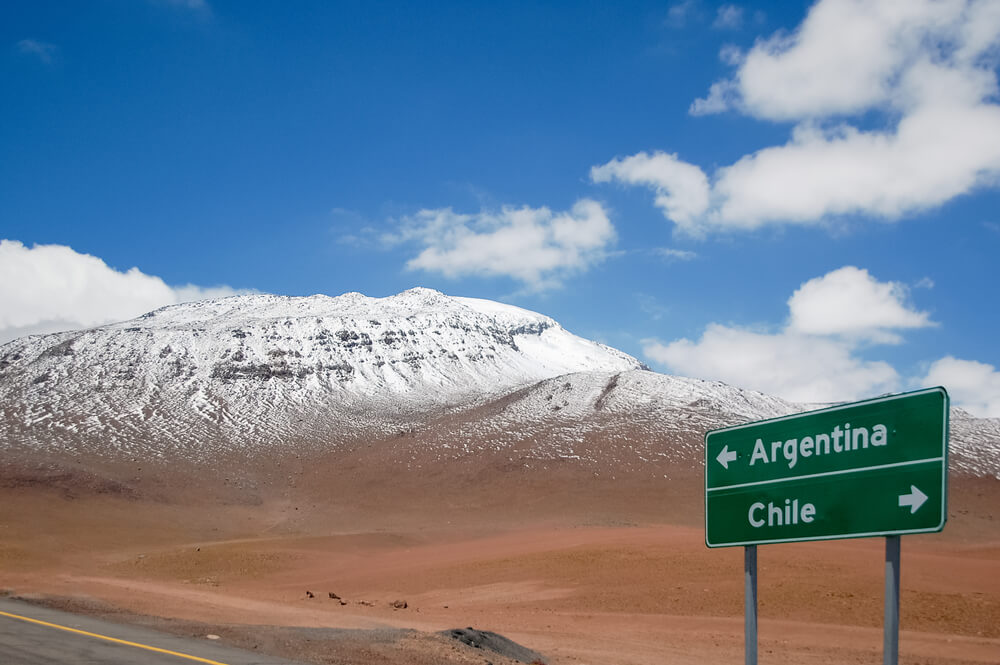
For those trekking in Patagonia or venturing to remote areas like Tierra del Fuego, evacuation coverage is particularly vital. The cost of transporting a patient by air ambulance to Buenos Aires — or even to neighboring Chile — can run into the tens of thousands of dollars.


Ecuador: Galápagos Islands Rule

While Ecuador’s mainland does not mandate travel insurance for all visitors, entry to the Galápagos Islands comes with a special condition: proof of valid travel health insurance.

The Galápagos are one of the world’s most pristine and remote ecosystems. Medical facilities on the islands are limited, and serious cases often require evacuation to mainland Ecuador — or even international transfer for specialized care.

This requirement ensures that tourists can receive necessary treatment without burdening the fragile healthcare infrastructure of the islands. For travelers, it underscores the importance of evacuation protection when visiting isolated destinations.

How Is It Enforced?

Argentina requires travelers to present proof of health insurance, often checked at border control, with a particular focus on COVID-19 coverage. In Ecuador, proof of health insurance is required for entry to the Galápagos Islands and is enforced by park authorities.


Why South America Requires Health Insurance

Both Argentina and Ecuador’s Galápagos mandate travel health insurance for the same reasons seen in other continents:

  • Protecting travelers – Ensuring visitors can afford emergency care.
  • Protecting healthcare systems – Preventing unpaid medical bills.
  • Facilitating evacuations – Guaranteeing resources are available for air or sea transfers.

Given South America’s geography, these rules are especially important. From the Andes Mountains to Amazon riverboats, emergencies often occur far from advanced hospitals.


Risks That Make Insurance Essential in South America

Even beyond the mandated countries, South America presents unique risks that make medical and evacuation protection a must:

  • High-altitude trekking – Popular in Peru, Bolivia and Chile, altitude sickness can require urgent evacuation.
  • Adventure activities – From rafting to climbing, accidents happen.
  • Wildlife exposure – Insects and animals in the Amazon pose medical risks.
  • Remote locations – Long distances between rural areas and major hospitals.

Without proper coverage, a traveler could face six-figure evacuation bills.


Traveler Mistakes To Avoid

  • Thinking insurance isn’t enforced – In Argentina, officials may deny entry without proof.
  • Skipping evacuation protection – Critical in remote trekking zones and the Galápagos.
  • Buying policies with exclusions – Some insurers exclude high-risk adventure sports.
  • Not carrying proof – Printed or digital copies of insurance documents are essential.


How To Choose the Right Travel Health Insurance for South America

Travelers should secure a policy that includes:

  • Medical coverage (hospitalization, surgery, outpatient care).
  • Emergency evacuation protection (particularly for remote trekking and islands).
  • Repatriation of remains (often required by governments).
  • Adventure sports coverage (important for trekking, climbing, and diving).
  • 24/7 assistance services for logistical support.


Beyond Argentina & Ecuador: Why Insurance Matters Across the Continent

Even in South American countries without official mandates — such as Brazil, Chile or Peru — insurance is vital. Imagine breaking an ankle while hiking Machu Picchu or falling ill deep in the Amazon. Local treatment might be possible, but evacuation to a major hospital in Lima — or even abroad — could easily exceed $75,000–$100,000.

In short, South America’s natural wonders are breathtaking, but they also highlight the need for reliable medical and evacuation protection.


The Global Rescue Connection

While traditional travel health insurance satisfies government requirements in countries like Argentina and Ecuador, its protections often stop short when evacuation is needed. Most policies cover medical costs but leave travelers on their own to arrange rescue or transport in a crisis.

A Global Rescue membership bridges that gap with field rescue, air evacuations and crisis response services. Whether you’re stranded on a Galápagos Island, suffering altitude sickness in Peru or trekking in Patagonia, Global Rescue can coordinate and execute an evacuation to advanced care, or even back home.

With South America tightening its entry rules, including Argentina’s new mandatory medical insurance, the smartest plan is clear: pair traditional health coverage for compliance with a Global Rescue membership for evacuation and advisory support. Together, they deliver full protection and the freedom to embrace one of the world’s most adventurous continents with confidence.

Categories:

Press Release
Share This:

Winners Announced in the 2025 Global Rescue Photo and Video Contest

(Lebanon, NH – November 12, 2025) – The winners of the 2025 Global Rescue Photo and Video Contest have been announced, celebrating the creativity, courage and curiosity of travelers who see the world through a…

(Lebanon, NH – November 12, 2025) – The winners of the 2025 Global Rescue Photo and Video Contest have been announced, celebrating the creativity, courage and curiosity of travelers who see the world through a bold lens. This year’s theme, Travel Boldly, inspired photographers and filmmakers worldwide to share images and stories that reflect the heart of exploration — from remote landscapes and candid family moments to the rhythm of travel itself.

“Each entry told a story — not just of a place, but of perspective,” said Michael Holmes, Global Rescue’s head of marketing. “The photos and videos submitted this year reveal how travelers are embracing the world with open eyes and open hearts, finding beauty in movement, connection and adventure.”

Nearly $10,000 in prizes were awarded across four categories — In The Wild, Accidentally Perfect (Family/Friends), Between Here and There, and Life In Motion (Video). The contest was judged by a distinguished panel of globally recognized travel journalists, photographers and creative professionals including: Ben Horton, Jen Murphy, Arnie Weissmann, Berne Broudy, Geoffrey Morrison, Chelsea Bakos-Kallgren and Allie Savage.

In The Wild

Winner: Crossing on the Algae River by Muhammad Amdad-Hossain

“The colors in the shot are beautiful. I love the composition and how the photo captures the movement of the water and seaweed — the aerial angle gives a fresh dimension,” said Jen Murphy, who writes for The New York Times, Outside and Conde Nast Traveler.

“I love the unique angle that this is taken from, and the various patterns,” added Ben Horton, a National Geographic photographer and director.

Runner-Up: Antarctica by Bryce Hill

“Stark, moody, beautifully composed and incredible light,” said Berne Broudy, whose work appears in Outside and National Geographic Adventure.

“An incredible sense of scale. Wonderful desolation,” said Geoffrey Morrison, travel writer and photographer for CNET and The New York Times.

Accidentally Perfect (Family/Friends)

Winner: Breaking Away by Barry Crosthwaite

“With an almost deceptive simplicity, this photo is very strong. Its off-center composition is nonetheless a study in balance: the age differences of the subjects, the nun’s black and white habit versus the colorful background. The little girl’s arm forms a graceful arc to complement the arches behind her,” said Arnie Weissmann, editor-in-chief of Travel Weekly.

Runner-Up: Joy of Childhood by Muhammad Amdad-Hossain

“The photo is pure joy, not dampened in the least by its muted colors. Wonderful “accidental” composition,” said Arnie Weissmann.

“People soup! I like the authenticity of the ‘human-ness’ of it — a candid moment showing group fun, great colors and balance,” said Allie Savage, Global Rescue’s award-winning video editor.

Between Here and There

Winner: Let’s Move On by Cristina Corti

“I love the collection of people you see working together,” said Chelsea Bakos-Kallgren, Graphic Design Lead at Guidehouse and former Head of Design at Global Rescue.

“This photo captures the idea of ‘here and there’ beautifully. Even when faced with bus problems, the travelers and locals come together — it’s a wonderful story of community and perseverance,” said Savage.

Runner-Up: Passing Ancient Villages by Edward Dieppe

“I like the dichotomy of the rural locals and the Westerner on the bike and how the locals aren’t even glancing his way. That mix of cultures tells a larger story of travel,” said Murphy.

Life In Motion (Video)

Winner: Peru Mountaineering by Usman Raj

“It’s a really cool perspective in a really cool place,” said Horton.

“Great use of a variety of cameras to show a varied and gorgeous landscape,” added Morrison.

Runner-Up: Uyuni, Bolivia by Timothy Parrant

“Stunning footage,” said Broudy.

“This video opens in a gorgeous otherworldly setting, then transitions to the lush Amazon — giving the viewer a more serene perspective of an extreme sport,” said Bakos-Kallgren.

“The diversity of vision among the winners shows that travel storytelling is alive and thriving,” said Murphy. “Every frame — photo or video — brought us closer to the essence of what it means to explore boldly.”

Complete contest details and all winning entries can be viewed at https://www.globalrescue.com/lp/photo-contest-2025/.

Contact: Bill McIntyre | bmcintyre@globalrescue.com | +1 (202) 560-1195 (phone/text)

About Global Rescue

The Global Rescue Companies are the world’s leading provider of medical, security, evacuation and travel risk management services to enterprises, governments and individuals. Founded in 2004, Global Rescue has exclusive relationships with the Johns Hopkins Emergency Medicine Division of Special Operations and Elite Medical Group. Global Rescue provides best-in-class services that identify, monitor and respond to client medical and security crises. The company has provided medical and security support to its clients, including Fortune 500 companies, governments and academic institutions, during every globally significant crisis of the last two decades. For more information, visit www.globalrescue.com.

Categories:

Travel
Share This:

2025 Photo and Video Contest Winners Revealed

Global Rescue’s 2025 Photo and Video Contest celebrates bold travelers capturing adventure, beauty and human connection worldwide.

Travel Boldly, the theme of this year’s Global Rescue Photo and Video Contest, invited travelers to look beyond the postcard moment and capture what it truly means to explore. From the icy wilderness of Antarctica to the warmth of childhood joy, the winning entries reveal the power of perspective and the unbreakable human connection that drives adventure.

Every traveler carries a story, and every photograph holds a heartbeat. This year, Global Rescue’s annual Photo and Video Contest brought together a global community of explorers — trekkers, mountaineers, families, and filmmakers — who submitted thousands of entries from every corner of the world.

The 2025 contest theme, Travel Boldly, resonated deeply with participants navigating an ever-changing travel landscape. After years of uncertainty, travelers have rediscovered their confidence, venturing farther, reaching higher and seeing the world through lenses that capture both wonder and resilience.

“Each entry told a story, not just of a place, but of perspective,” said Michael Holmes, Global Rescue’s Head of Marketing. “The photos and videos submitted this year reveal how travelers are embracing the world with open eyes and open hearts, finding beauty in movement, connection and adventure.”


Video and Photo Contest Honoring Vision, Creativity and Courage

With nearly $10,000 in prizes and a distinguished panel of judges representing National Geographic, The New York Times, Outside and Travel Weekly, the contest celebrated excellence in visual storytelling across four categories:

In The Wild

Accidentally Perfect

Between Here and There

Life In Motion (Video)

Each category invited entrants to interpret “Travel Boldly” in their own way — from the stillness of an untouched landscape to the chaos of a perfect candid moment.

“The diversity of vision among the winners shows that travel storytelling is alive and thriving,” said contest judge Jen Murphy, an award-winning freelance journalist covering adventure travel for The New York Times, Outside and Conde Nast Traveler. “Every frame, photo or video, brought us closer to the essence of what it means to explore boldly.”


In The Wild: The Power of Perspective

In The Wild is the category designed to highlight nature’s untamed beauty and the human impulse to explore it.

Passing Ancient Villages by Edward Dieppe

Winner: Crossing on the Algae River by Muhammad Amdad-Hossain
Judges were captivated by the image’s color, balance and movement.

“The colors in the shot are beautiful,” said Murphy. “I love the composition and how the photo captures the movement of the water and seaweed. The aerial angle gives a fresh dimension.”

National Geographic photographer Ben Horton praised its unique perspective: “I love the angle this is taken from, and the various patterns.”

Antarctica by Bryce Hill

Runner-Up: Antarctica by Bryce Hill
“Stark, moody, beautifully composed and incredible light,” said Berne Broudy, an outdoor journalist, photographer and filmmaker whose work appears in Outside, Popular Science and National Geographic Adventure. Geoffrey Morrison, a travel writer and photographer for CNET, Wirecutter and The New York Times, added “An incredible sense of scale. Wonderful desolation.”


Accidentally Perfect: The Poetry of Real Life

The Accidentally Perfect category celebrates the unscripted beauty of human moments; those fleeting seconds of laughter, contrast or connection that can never be staged.

Breaking Away by Barry Crosthwaite

Winner: Breaking Away by Barry Crosthwaite
“With an almost deceptive simplicity, this photo is very strong,” said Arnie Weissmann, editor-in-chief of Travel Weekly. “Its off-center composition is a study in balance: the age differences of the subjects, the nun’s black and white habit versus the colorful background. The little girl’s arm forms a graceful arc to complement the arches behind her.”

Joy of Childhood by Muhammad Amdad-Hossain

Runner-Up: Joy of Childhood by Muhammad Amdad-Hossain
“The photo is pure joy, not dampened in the least by its muted colors. Wonderful ‘accidental’ composition,” said Weissmann.

Allie Savage, Global Rescue’s award-winning video editor, added: “People soup! I like the authenticity. A candid moment showing group fun, great colors and balance.”


Between Here and There: The Journey, Not Just the Destination

Few things define travel better than the moments between destinations: the bus breakdowns, border crossings and quiet stretches of road where stories unfold.

Let’s Move On by Cristina Corti

Winner: Let’s Move On by Cristina Corti
“I love the collection of people you see working together,” said Chelsea Bakos-Kallgren, a designer and contest judge. “Even when faced with bus problems, the travelers and locals come together. It’s a wonderful story of community and perseverance.”

Passing Ancient Villages by Edward Dieppe

Runner-Up: Passing Ancient Villages by Edward Dieppe
“I like the dichotomy of the rural locals and the Westerner on the bike and how the locals aren’t even glancing his way,” said Murphy. “That mix of cultures tells a larger story of travel.”

Life In Motion: The Art of Adventure Filmmaking

The Life In Motion category celebrated the dynamism of video storytelling: movement, emotion and the rhythm of adventure.


Winner: Peru Mountaineering by Oz Syla
“It’s a really cool perspective in a really cool place,” said Horton, the acclaimed photographer for National Geographic and the Sports Illustrated Swimsuit Edition. Morrison added, “Great use of a variety of cameras to show a varied and gorgeous landscape.”


Runner-Up: Uyuni, Bolivia by Timothy Parrant
“Stunning footage,” said Broudy. Bakos-Kallgren praised its emotional tone: “This video opens in a gorgeous otherworldly setting, then transitions to the lush Amazon, giving the viewer a more serene perspective of an extreme sport.”


The Global Language of Exploration

Across all categories, one theme stood out: travel is more than the pursuit of beauty. It’s a practice of empathy, curiosity and courage.

“Photography and video have always been powerful ways to bridge cultural divides,” said Joseph Lambert, Global Rescue’s design manager and visual strategist. “What we see in these entries is a world of travelers who are not only adventurous but also deeply connected — to people, to place and to purpose.”

That philosophy echoes Global Rescue’s own mission: enabling travelers to explore confidently, knowing that medical and security support are always within reach. Whether summiting peaks, traversing deserts or documenting family adventures abroad, members can focus on the trip, knowing help is only a call away.


Celebrating Storytellers Who Travel Boldly

The 2025 Global Rescue Photo and Video Contest winners embody what it means to “Travel Boldly” — to explore with intention, to embrace uncertainty and to see the world not as observers, but as participants.

Each image and video is a reminder that adventure doesn’t always happen at the edge of the world. Sometimes, it’s found in the kindness of strangers, the shimmer of light on water or the laughter shared in a faraway market.


The Global Rescue Connection

Bold travel requires confidence, and confidence comes from preparation. Whether you’re trekking through the Himalayas, photographing wildlife in the Serengeti or filming your next great adventure in the Andes, knowing that expert medical and security support is available 24/7 makes all the difference.

Our memberships provide:

  • Field rescue in the event of illness or injury, even from remote or high-altitude locations.
  • Medical evacuation and transport to your home hospital of choice.
  • Medical and security advisory services, anytime, anywhere.
  • Global risk management support for travelers, expeditions, and enterprises.

Adventure is unpredictable. But with Global Rescue, you can travel boldly, and return safely.

Categories:

Travel
Share This:

Mount Everest and Aconcagua Winter Mountaineering: Self-Reliant Summits

Know the risks, smart training and why rescues aren't a strategy.

Article Highlights:

  • Winter on Mount Everest (December–February) brings –70°C summit temps, hurricane-force winds and unpredictable, ultra-short weather windows.
  • Aconcagua has no real winter season; the safe, staffed window is mid-November to early March. Outside that, services vanish and risks skyrocket.
  • Self-sufficiency is non-negotiable: train for endurance, cold systems, ropework and the whole round trip without assuming helicopter help.
  • Rescue reliance can distort judgment; mountaineering leaders urge ethics of authenticity: Base Camp → summit → Base Camp on foot.
  • Prepare descent plans first: strong fitness, smart turn-around times and disciplined acclimatization are the best “rescue.”


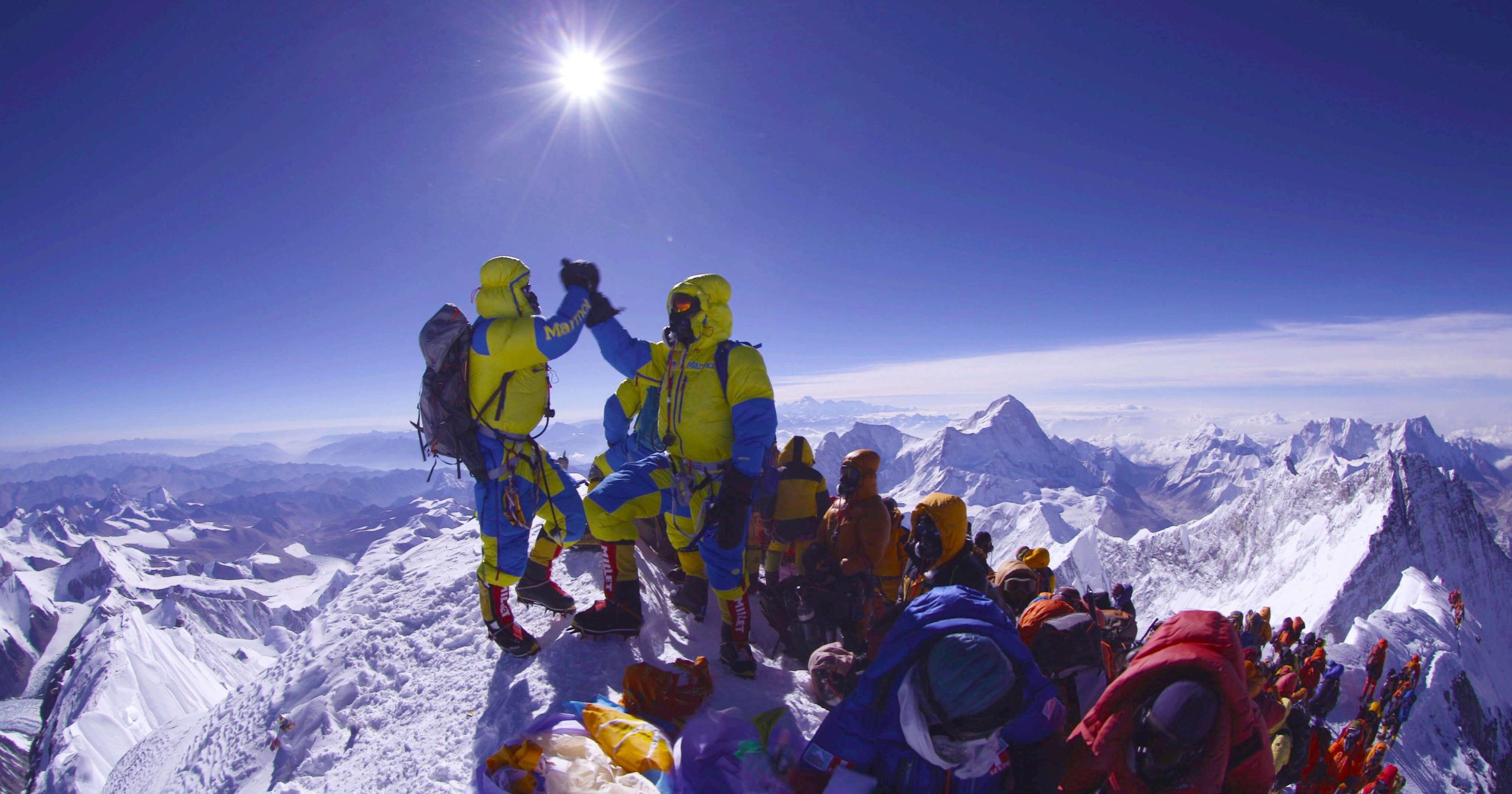
Winter is when big mountains speak plainly. On Mount Everest and Argentina’s Aconcagua, the cold is sharper, the winds meaner, the daylight shorter, and the margin for error basically gone. The winter 2025 season will be no different. If you’re considering either peak, understand this first: success hinges on deep preparation and the old-school ethic of self-sufficiency.

The official winter Mount Everest season spans December through February and it is notorious for brutal cold, hurricane-force winds and vanishingly small summit windows. While thousands have stood on top during spring, only a tiny handful have done so in winter. Expect base camp lows around –30°C (–22°F) and summit temperatures that can plunge to –70°C (–90°F). The polar-fast jet stream often parks over the summit, slamming it with winds exceeding 74 mph (119 km/h). Blizzards shred visibility, new snow buries crevasses and weakens slopes and ten or fewer hours of daylight compress every move.

A “window” in winter is more rumor than forecast. If one opens at all, it’s likely to be late January or early February and may last less than a day. Climbers wait in the deep freeze for weeks, then must switch to summit mode instantly when conditions align. That demands elite conditioning, meticulous acclimatization and logistics that allow rapid movement from Base Camp through the high camps despite long periods of inactivity and cold-induced fatigue. This is winter mountaineering at its most austere: fewer people on the route, far less outside support and higher consequence for every decision.


Trekking, Mountaineering and Climbing All Require Self-Reliance

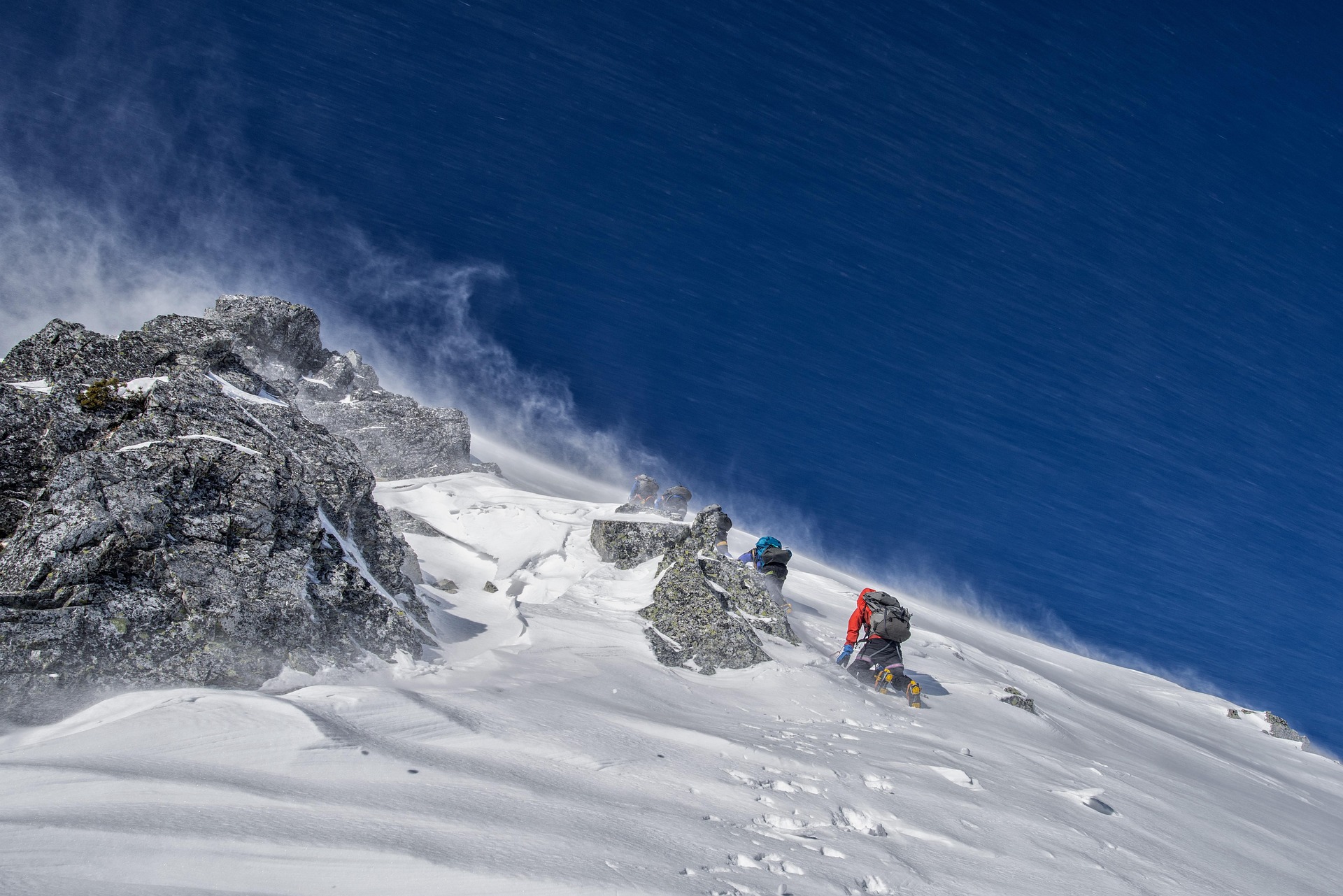
Winter ascents on Mount Everest aren’t a guided queue with fixed ladders, abundant rescue options and a tidy May forecast. It’s an expedition undertaken by alpinists who can fix lines, break trail, read snow, navigate in ground blizzards and manage hypothermia, frostbite, HAPE and HACE without instant help. Polish climber Krzysztof Wielicki’s pioneering 1980 winter ascent remains a touchstone because it exemplified this mindset: small, tough, self-contained, immune to hype.

The ethics matter because modern access to helicopters can influence judgment. Some climbers on big ranges from the Himalaya to the Karakoram and Hindu Kush have been accused of leaning on evacuation as an exit strategy rather than a last resort. A Utah mountaineering doctor recently pleaded guilty to calling in a false hypothermia report after failing to summit Denali, seeking a helicopter lift instead of descending under his own power. He was banned from Denali for five years and fined $10,000. It’s an extreme case, but it reflects a wider worry voiced as early as 2012 by writer Nick Heil: the presence of rescue helicopters can alter decision-making and nudge some climbers past their limits.


Legendary Lore

Legendary alpinists are blunt. Ed Viesturs notes recent cases where climbers “fake an illness or demand to be flown off just to get home sooner.” He adds, “I’ve always believed climbing a mountain has to be a round trip…If you don’t have the strength, endurance, desire or motivation to descend the entire way from the summit back to basecamp, then perhaps you should rethink your reasons for climbing or your system of training.”

Conrad Anker echoes that “the old-school thing was, you were self-sufficient. If an accident did happen, you would have the wherewithal to extract yourself and your teammates.”

Mount Everest chronicler Alan Arnette warns that telling people “rescue insurance will cover an evacuation” breeds a false sense of security: “High-altitude mountaineering has always had risks. Climbers can mitigate these risks by arriving…well prepared and self-sufficient.”

Gordon Janow of Alpine Ascents adds that turning around early before a medical emergency “is just smart mountaineering.”

Tom Livingstone, writing from his own experience, believes “an ascent must finish with the whole team safely back at Base Camp.” The through-line is simple: your fitness, systems and judgment are your first and best rescues.


Training for Mount Everest’s Winter Brutality

Preparation for a winter Mount Everest attempt is its own expedition. Build a year-long training arc that blends high aerobic capacity, muscular endurance and cold-weather movement skills. Long zone-2 hikes with a load build the engine. Back-to-back days simulate cumulative fatigue. Weighted stair sessions condition legs for steep snow. Add specific strength exercises (hip hinge, single-leg, trunk anti-rotation), then convert to muscular endurance circuits that mimic step-kicking for extended periods.

Technical refreshers — fixed-line efficiency with mitts, descending devices that won’t freeze, anchor cradles — must be automatic. Cold-systems testing is non-negotiable: learn your personal thresholds for hand and foot warmers, test vapor barrier liners, dial nutrition you can tolerate at –30°C and rehearse stove care and fuel budgeting when everything is rimed. Finally, acclimatize progressively on high sub-peaks or by staging a pre-expedition in the 4,500–6,000metersrange so you arrive already adapted for work, not just survival.


Aconcagua Climbing in Winter

Aconcagua’s practical climbing season is from mid-November to early March, when Aconcagua Provincial Park is staffed, routes are serviced and the weather offers the best (relative) chance of success. That doesn’t make Aconcagua easy; it only means the risks are manageable with planning.

At 22,837 feet / 6,961 meters, the highest peak outside the Himalaya/Karakoram is still a true high-altitude climb. Many consider it a gateway to the Seven Summits, but as Ed Viesturs stresses, people often underestimate the endurance required and the compounding effects of altitude. Mountaineering author Jed Williamson calls it an ideal beginner’s high-altitude peak, provided climbers acclimatize well and respect the weather’s volatility. Alan Arnette points out that while not highly technical, crampon walking and ice-axe competence are essential, and last year’s storms reminded teams to be ready for mixed conditions at any time.


Smart Planning and Prep for Aconcagua Assaults

If you’re targeting the legitimate Aconcagua window (mid-November to early March), build a plan around progressive load carries, disciplined acclimatization camps and redundancy in water sourcing and fuel. The Andes can swing from dry, wind-scoured slopes to sudden snow; systems should cover both. Train to hike for 6–10 hours with a 15–20 kg pack, then repeat the next day. Practice camp chores in wind and spindrift, rehearse tent anchoring on rocky ground and refine a nutrition plan you can execute when your appetite wanes.

Most importantly, bring the same self-sufficient mindset you’d need on Mount Everest in winter: the ability to descend under your own power if the forecast turns, the team discipline to turn around early and the humility to save the summit for a better day.


Rescue Realities

In popular spring windows on Everest, helicopter evacuations from Base Camp and occasionally higher altitudes are possible and, in recent years, have become frequent. In winter, flight rules, weather and visibility can ground aircraft for days. On Aconcagua, especially outside the staffed summer season, air support is limited and response times stretch. That’s why serious alpinists frame rescue as contingency, not a plan. As one Global Rescue operations expert put it: “Training, acclimatization and smart decision-making can be the difference between life and death.”

The hard truth stands: getting to the top is optional; getting down is mandatory. Plan your descent before you plan your summit push. Build the fitness and systems to complete the round trip under your own steam, because in winter on Mount Everest — and effectively any time outside Aconcagua’s primary season — you may have no other option.


The Global Rescue Connection

Emergencies at altitude escalate fast. Frostbite, HAPE, HACE and trauma don’t wait for perfect weather or open-air corridors, and in winter, aircraft often can’t fly. That’s why preparedness is the core of safe mountaineering, climbing and trekking, and why the world’s best alpinists insist on self-sufficiency first.

Global Rescue was built to support that ethic with medical advisory, field rescue and complex evacuation coordination when conditions allow. During busy seasons, our teams have managed multi-phase evacuations across the Himalaya and Andes, stabilizing climbers and moving them to definitive care. But we are equally direct with members: rescue is not a strategy. The safest expedition is the one you train for, equip properly and complete under your own power.

For winter 2025 on Mount Everest or any attempt on Aconcagua, arrive fit, acclimatized and disciplined. Carry the skills to fix problems before they become crises, the humility to turn around early and the endurance to descend the whole way back to Base Camp. If the worst happens, we’ll coordinate the best possible response. Until then, the strongest lifeline on any mountain is the preparation you’ve done long before you clip into the rope.

Share This:

Best Places to See African Wildlife in Tanzania, Kenya, Botswana and Namibia

Four countries. Endless encounters. Here are the places to go for wildlife viewing.

Article Highlights:

  • Witness the Great Migration in Serengeti (Tanzania) and Masai Mara (Kenya)
  • Spot the Big Five in Kruger (South Africa) and Ngorongoro Crater (Tanzania)
  • Explore the watery wilderness of the Okavango Delta, Botswana
  • Discover desert-adapted wildlife in Namibia’s Etosha National Park
  • See Africa’s largest elephant herds in Chobe National Park, Botswana


Africa is the world’s greatest stage for wildlife. Its vast savannas, deserts, deltas and craters host the most spectacular animal encounters on the planet, from the thunder of wildebeest hooves during the Great Migration to the silent stalk of a leopard in the tall grass. Whether your dream is to see the Big Five up close, watch elephants cross a river at sunset or trek through jungles in search of gorillas, Africa offers some of the richest wildlife experiences anywhere.

Here are the best places to see wildlife in Africa and why they should be on every safari-goer’s list.


Serengeti National Park, Tanzania

The Serengeti is the epitome of African safari landscapes: endless golden plains dotted with acacia trees, lions lounging in the shade and wildebeest herds stretching to the horizon.

It is most famous for hosting the Great Migration, when nearly two million wildebeest, zebras and gazelles make a year-long circuit through Tanzania and Kenya in search of fresh grazing. Crossing crocodile-infested rivers and dodging predators along the way, this migration is one of the greatest natural spectacles on Earth.

For much of the year, the action is centered in the Serengeti, making it the ultimate destination for travelers wanting to witness this iconic event.


Masai Mara, Kenya

North of the Serengeti lies Kenya’s Masai Mara, the second half of the Great Migration’s cycle. Each July to October, the herds surge into the Mara, where dramatic river crossings play out. Watching wildebeest plunge into the Mara River as crocodiles wait in ambush is an unforgettable, and humbling, sight.

The Mara is also renowned for its predator populations, particularly lions, cheetahs and leopards, making it one of the best places in Africa for seeing big cats.


Kruger National Park, South Africa

For travelers hoping to see Africa’s legendary Big Five—lion, leopard, elephant, rhino and buffalo—Kruger National Park in South Africa is a prime choice.

Covering nearly 7,600 square miles, Kruger offers incredible biodiversity and some of the continent’s best wildlife infrastructure. Visitors can opt for guided drives, self-drive safaris or exclusive stays in adjacent private reserves, such as Sabi Sands and MalaMala, where sightings of leopards are almost guaranteed.

Kruger is also one of the most accessible and affordable safari destinations, making it ideal for first-time visitors to Africa.


Ngorongoro Crater, Tanzania

A UNESCO World Heritage site, Ngorongoro Crater is often described as a “natural zoo.” This massive volcanic caldera, 12 miles wide and 2,000 feet deep, is home to an astonishing amount of wildlife within its walls.

From black rhinos grazing the grasslands to prides of lions stalking prey in the open plains, Ngorongoro offers one of the best chances to see the Big Five in a single day. Its dramatic landscapes add to the experience, making it a top destination in Tanzania.


Okavango Delta, Botswana

Few safari destinations feel as wild and remote as the Okavango Delta. This UNESCO World Heritage site is a seasonal floodplain that turns the Kalahari Desert into a watery wilderness teeming with wildlife.

Here, travelers can spot elephants wading through rivers, hippos submerged in lagoons and rare African wild dogs on the hunt. Safari activities are as unique as the ecosystem itself, with mokoro (dugout canoe) rides offering an intimate way to explore the waterways.

The Okavango is also where Global Rescue assisted a young member who developed worsening dehydration and vomiting while at a remote camp. After initial treatment failed, she was evacuated by helicopter to a hospital in Maun. Diagnosed with acute gastritis, she recovered quickly and returned home to the United States, a reminder that even in paradise, emergencies can happen.


Etosha National Park, Namibia

Namibia’s Etosha National Park stands out for its stark beauty and the desert-adapted wildlife it supports. At its heart is a vast salt pan so large it can be seen from space. During the dry season, animals gather around Etosha’s waterholes, offering unparalleled opportunities for photography.

Travelers can spot elephants, lions, giraffes and the endangered black rhino. The park’s unique setting provides a safari experience very different from the grasslands of East Africa.


Chobe National Park, Botswana

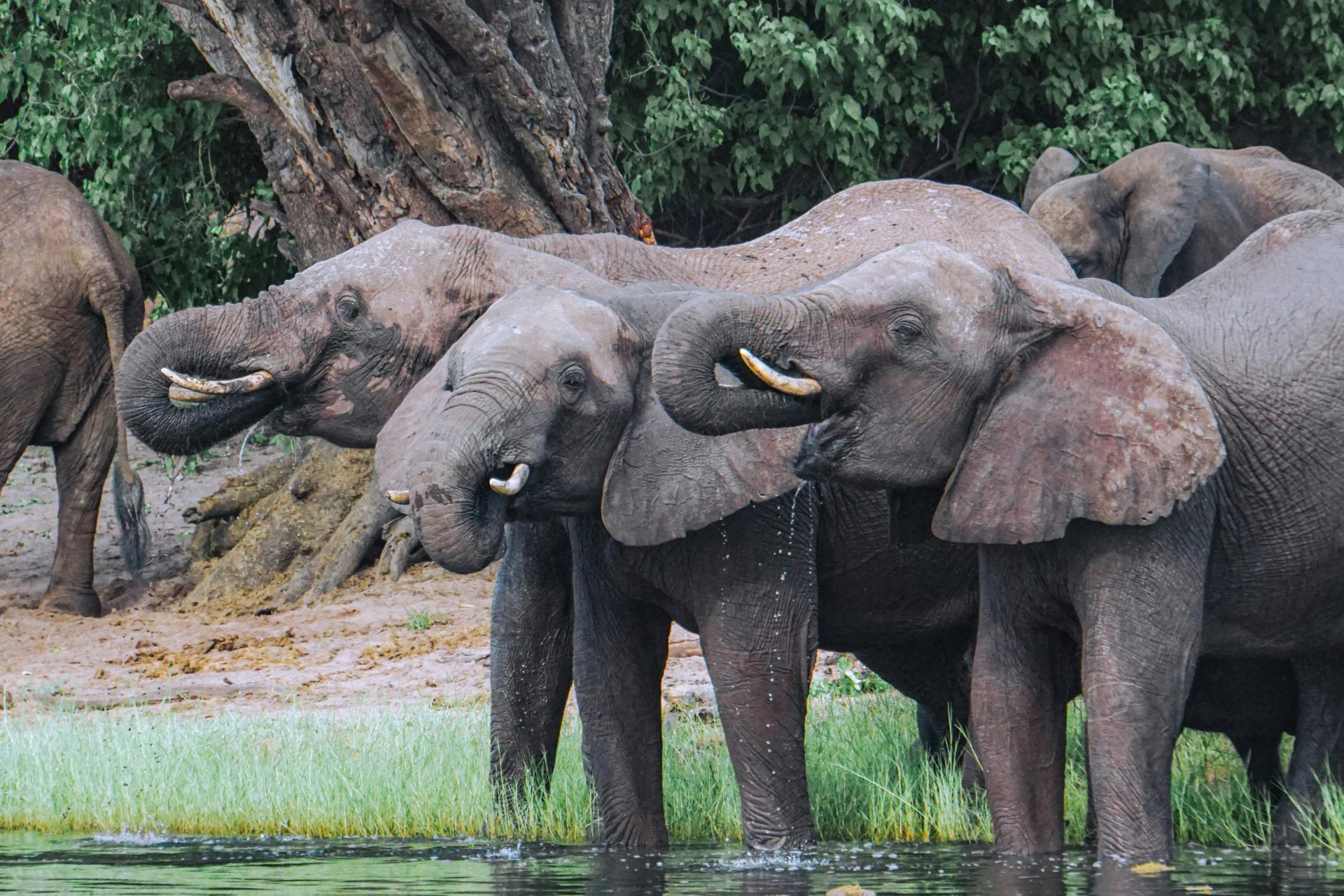
If elephants are at the top of your wish list, Chobe National Park delivers. It is home to Africa’s largest elephant population, with herds often numbering in the hundreds.

Sunset boat cruises on the Chobe River are particularly rewarding, as elephants, hippos and crocodiles gather along the banks, creating some of Africa’s most iconic safari scenes.


Gorilla Trekking in Uganda

While most people picture open savannas when they think of African wildlife, some of the continent’s most profound encounters happen in the dense mountain forests. Bwindi Impenetrable National Park in Uganda is one of the last remaining strongholds of the endangered mountain gorilla.

Here, travelers trek deep into the misty jungle, guided by trackers who follow signs such as broken branches, dung or distant chestbeats to locate gorilla families. The hike itself can be challenging. Steep slopes, thick vegetation and humidity test your stamina. But the reward is extraordinary.

After hours of trekking, the moment arrives: a silverback gorilla emerges from the undergrowth, his massive presence both intimidating and gentle. For one precious hour, you watch as mothers groom their young, juveniles play and the silverback keeps a watchful eye. Unlike a game drive, this is an intimate, face-to-face experience that underscores the deep connections humans share with primates.

Permits are strictly controlled to protect the gorillas, but those who are lucky enough to go describe it as a life-changing highlight of African wildlife travel.


Kasanka National Park, Zambia – The Bat Migration

Africa’s wildlife isn’t just about the land’s biggest animals. At Kasanka National Park in Zambia, the skies tell their own story. Each year between late October and December, this little-known park hosts the world’s largest mammal migration: the arrival of over 10 million straw-colored fruit bats.

At dusk, the bats pour out of the park’s swamp forest in black clouds that stretch across the horizon, filling the sky with the sound of wings. Unlike the precision of the Great Migration’s wildebeest herds, this event feels chaotic, primal and overwhelming. It’s not dangerous for humans (the bats feed on fruit, not blood) but the sheer scale is awe-inspiring.

The bat migration also attracts a ripple effect of predators. Martial eagles swoop overhead, crocodiles lurk in the waterways below and hyenas and leopards prowl the forest edge, capitalizing on weakened or grounded bats. For wildlife photographers and adventurous travelers, Kasanka offers a surreal spectacle unlike anywhere else in Africa.


Wildlife and Risk in Africa

For all its majesty, Africa’s wilderness carries risks. Safari-goers should be aware that encounters with wildlife can sometimes turn dangerous.

In South Africa, a Global Rescue member learned this the hard way when a leopard attacked, biting through his leg and splintering his femur. Despite immediate surgery, infection set in. Global Rescue evacuated him by medical aircraft to Johannesburg, where limb-saving surgery was performed. Abraham later praised the service, saying, “One phone call was all it took. They simply took over.”

In Zimbabwe’s Mosi-oa-Tunya National Park, American visitors Daniel and Laura Core had their own brush with danger when a giraffe attacked, knocking Daniel onto rocks and nearly trampling Laura. With only basic care available, Global Rescue physicians remotely guided their treatment, ensuring Daniel’s injuries were manageable and not life-threatening.

These stories highlight the reality of wildlife travel: while the experiences are awe-inspiring, they require careful preparation and a safety net in case the unexpected occurs.


The Global Rescue Connection

Every safari destination in Africa delivers unforgettable wildlife encounters, but also the possibility of sudden emergencies in remote areas. From evacuating a teenager in Botswana’s Okavango Delta to rushing a leopard attack victim to top-tier care in Johannesburg and guiding an American couple through the aftermath of a giraffe encounter in Zimbabwe, Global Rescue has proven that help is always within reach.

Traveling into Africa’s wild places means venturing beyond the safety nets of modern infrastructure. Global Rescue provides the critical link back to advanced medical care and expert guidance when it matters most. A Global Rescue membership is more than peace of mind; it’s the assurance that wherever the adventure takes you, from the Serengeti plains to Namibia’s salt pans, you’ll never face the unexpected alone.

Categories:

Business TravelTravel
Share This:

From FAA Reductions to Storm Delays: How to Handle an Unexpected Overnight at the Airport

A few tips and tricks to survive an unplanned overnight at the airport.

Article Highlights:

  • Flight disruptions can happen anytime due to FAA restrictions, air traffic controller shortages, weather or mechanical issues.
  • Preparation is power: pack essentials like snacks, chargers, a wrap and a sleep mask in your carry-on.
  • 48% of travelers stay the course during disruptions, proving resilience is part of modern travel.
  • Know your airport’s options: lounges, pods and quiet zones can make a big difference.
  • Stay connected with the My Global Rescue App for alerts, assistance and peace of mind wherever you are.


No matter how carefully you plan, flight disruptions can strike anytime. Bad weather, mechanical issues, volcanic ash, wildfires or even FAA-mandated air traffic reductions can ground flights for hours or overnight.

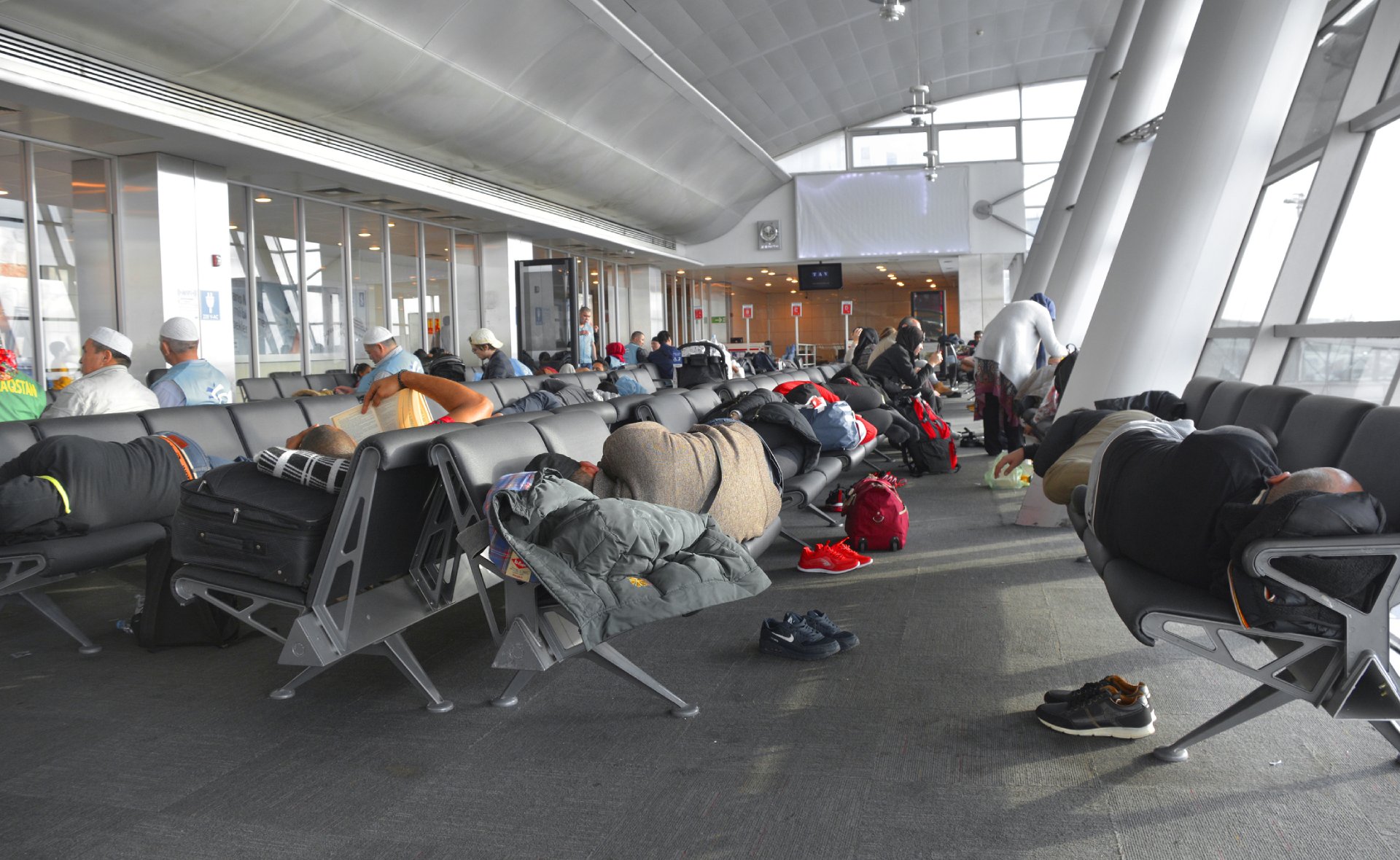
While travel demand keeps rising, air traffic controller shortages and system slowdowns occasionally force the Federal Aviation Administration (FAA) to limit flight operations in major US hubs to maintain safety and manage congestion. When that happens — or when a major storm hits — travelers can find themselves spending the night where they least expect it: the airport terminal.

Flight disruptions may be unavoidable, but misery isn’t. With a few smart strategies, you can turn a long airport night from exhausting to manageable. Whether your flight is grounded by weather, a technical delay or FAA airspace restrictions, these Global Rescue expert tips can help you stay safe, rested and in control.


Reconnaissance and Preparation

During a long delay at Charles de Gaulle Airport in Paris, a traveler discovered that renting a sleeping pod made a significant difference. The private, quiet space provided a comfortable place to rest while still keeping track of flight updates, a smart option for anyone facing an extended layover. Before your next trip, consider these quick preps to avoid chaos if you’re stranded overnight:

  • Find out if your airport has sleep pods or microhotels. Airports like London Heathrow (YotelAir), Munich (NapCabs), Helsinki (GoSleep) and select US airports with Minute Suites offer private rest spaces.
  • Grab food and water early. Stores and restaurants close earlier than you think, especially when staff are reduced during overnight operations or travel slowdowns.
  • Keep your devices charged. Locate outlets early and pack a power bank. When FAA system delays ripple through the schedule, rebooking and updates often depend on your phone.
  • Protect your valuables. “I use my daypack as a pillow and keep my passport and money in a waist pouch,” said Ed Viesturs, Global Rescue Mountain Advisory Council member. “If you sleep, set an alarm so you don’t oversleep or miss updates.”


Avoid Boredom (and Frustration)

A long night at the airport can feel endless, especially if air traffic controller shortages or weather issues back up departures across the country. Keep your spirits up with a little planning.

“I relied on Spotify Premium to get unlimited music and podcasts when stuck at Logan,” said Rett Carpenter, Global Rescue enterprise sales manager.

  • Download entertainment before your trip. Apps like Oodles (free books and audiobooks), Netflix and Spotify can help pass the time offline.
  • Make new friends. Chatting with fellow stranded passengers can help you stay positive and swap useful information.
  • Move your body. Stretch, walk laps or find a quiet corner for yoga. Staying active keeps circulation flowing and your mood lifted.


Rest and Recharge

“If buying a lounge day pass isn’t an option, find a quiet but not isolated place to rest,” said Charles McCarthy, Global Rescue marketing manager. “I once slept in Atlanta’s international terminal — far calmer than the domestic gates.”

Here’s how to rest smart:

  • Aim for relaxation, not deep sleep. Even short naps will refresh you.
  • Bring your own comfort tools. A sleep mask, noise-canceling headphones and inflatable pillow go a long way.
  • Stay warm. Pack a wrap, scarf or light jacket. It doubles as a blanket and hides valuables in pockets.
  • Dress for rest. Carry a change of soft, loose clothing so your body recognizes it’s time to unwind.
  • Solo travelers: Rest in visible areas, stay alert and keep one headphone out, as Global Rescue social media manager Josie Daigle recommends.


Why These Tips Matter More Than Ever

Flight disruptions aren’t rare; they’re part of modern travel.

While FAA traffic flow limits or air traffic controller shortages may come and go depending on staffing and seasonal demand, their effects are similar to those of major storms, equipment failures or airspace closures: cascading delays, missed connections and full hotels near major airports.

Even a 10% flight reduction at key hubs like Chicago, Atlanta or New York can create ripple effects nationwide. A minor delay at one airport can strand hundreds of travelers elsewhere. That’s why being ready for an unexpected overnight layover isn’t just smart, it’s essential.

“I once got stuck in an airport overnight and froze in the terminal,” said Dianette Wells, a longtime Global Rescue member and world traveler. “Now, I always pack a wrap because it’s lightweight, travels well and doubles as a blanket or pillow.”


Stay Informed With the My Global Rescue App

When delays strike — whether due to FAA slowdowns, air traffic control constraints, weather or mechanical issues — information is everything. The My Global Rescue App provides real-time travel alerts, destination advisories and direct communication with Global Rescue’s operations team if you face a medical or security emergency while traveling.

Inside the app, tap your destination’s report and review the “Events” section for current updates, including FAA operational changes or local travel restrictions.


The Global Rescue Connection

When travel disruptions become more than just inconvenient — or when you face a medical or security emergency abroad — a Global Rescue membership provides confidence that help is only a call away.

Members have access to field rescue, medical evacuation and global advisory services, supported by Johns Hopkins Emergency Medicine and Elite Medical Group. From an airport delay to a field evacuation, Global Rescue helps travelers stay safe, informed and connected anywhere in the world.

Categories:

Press Release
Share This:

Global Travelers Divided on US Policy Impact

(Lebanon, NH – November 10, 2025) – Global travelers are split on how US international policies and political tensions are shaping travel plans, with non-US respondents more likely than Americans to change destinations or cancel…

(Lebanon, NH – November 10, 2025) – Global travelers are split on how US international policies and political tensions are shaping travel plans, with non-US respondents more likely than Americans to change destinations or cancel trips altogether, according to the latest Global Rescue Traveler Sentiment and Safety Survey.

Nearly one in four non-US travelers (23%) said US international policy announcements have already changed their travel plans for the remainder of the year—more than double the rate of American respondents (10%). By contrast, most US travelers (78%) said their plans remain unchanged.

“Travelers outside the United States are clearly more reactive to US international policies than Americans themselves,” said Dan Richards, CEO of The Global Rescue Companies and a member of the US Travel and Tourism Advisory Board at the US Department of Commerce. “For many international travelers, geopolitical decisions and perceived instability are meaningful factors in whether, where and how they travel.”

When asked how their plans have changed, 22% of non-US respondents said they are altering which countries or cities they visit, compared to just 12% of Americans. Women were also more likely than men to report making changes, with 16% of women considering adjustments versus 10% of men.

The perception gap extends beyond travel plans. Nearly two-thirds of women (65%) believe Americans will be viewed more negatively abroad over the next year, compared to 59% of men. A majority of both US and non-US respondents shared that sentiment, though it was strongest among US travelers themselves (61%), indicating growing concern about international perceptions.

Despite these concerns, most travelers say their overall likelihood to travel has not changed significantly—roughly 63% reported being “neither more nor less likely” to travel due to recent US policies. However, international travelers were notably more cautious, with nearly 14% saying they are “much less likely” to travel, compared to just 2% of Americans.

Civil unrest within US cities also weighs heavily on international travelers. Fewer than 30% of non-US respondents said their US travel plans remain unchanged, while nearly one in five (18%) said they have postponed or canceled trips altogether. Among Americans, by contrast, nearly 70% said protests and unrest have had no impact on their travel decisions.

“Perceptions of safety and political stability are deeply personal and can differ sharply across borders,” Richards said. “For international travelers, US domestic unrest and global policy shifts appear to have a more direct effect on confidence and behavior than they do for Americans themselves.”

###

For more information, contact: Bill McIntyre | Email: bmcintyre@globalrescue.com | Phone: +1 202.560.1195

About the Global Rescue Traveler Sentiment and Safety Survey

Global Rescue, the leading travel risk and crisis response provider, surveyed more than 1,500 current and former members between October 7–13, 2025. The respondents revealed a variety of behaviors, attitudes and preferences regarding current and future travel.

About Global Rescue

Global Rescue is the world’s leading provider of medical, security, evacuation and travel risk management services to enterprises, governments and individuals. Founded in 2004, Global Rescue has exclusive relationships with the Johns Hopkins Emergency Medicine Division of Special Operations and Elite Medical Group. Global Rescue provides best-in-class services that identify, monitor and respond to client medical and security crises. The organization has supported Fortune 500 companies, governments and academic institutions during every globally significant crisis of the last two decades. For more information, visit www.globalrescue.com.

Categories:

News
Share This:

“Holiday Travel Safety: Here’s What Could Go Wrong And How You Can Avoid It”

Categories:

News
Share This:

T-Mobile announces free offer for Verizon and AT&T customers

Categories:

Travel
Share This:

Overpacking and Why Travelers Still Haven’t Learned To Lighten the Load

Discover smart packing tips, hacks and the best way to pack a suitcase.

Article Highlights:

  • Global Rescue surveys show overpacking remains the most common travel mistake year after year.
  • Nearly one in three travelers (32%) admits they overpack, a figure unchanged for years despite travel trends evolving.
  • Experts say anxiety, attachment to home, and fear of being unprepared fuel overpacking habits.
  • Overpacking creates stress: heavier bags, airline fees, delays and more to manage during travel.
  • The best way to pack a suitcase is intentionally: balance essentials, use packing hacks and avoid bulky or unnecessary items.


Travelers today may log more miles and cross more borders than ever before, but one simple mistake continues to weigh them down, literally. Overpacking, the age-old habit of stuffing bags with too much “just in case” gear, remains the most common blunder made by even the world’s most seasoned explorers.

According to the Global Rescue Traveler Sentiment and Safety Survey, overpacking consistently tops the list of traveler mistakes. Nearly one in three respondents (32%) admitted last year that they brought too much luggage. Those numbers mirror past results: 35% in September 2024, January 2024 and February 2023, revealing a stubborn habit that persists.

“Overpacking is the single most consistent mistake we see, year after year. It’s a habit that adds stress and weight to a trip, when the real goal of travel should be freedom and discovery,” said Dan Richards, CEO of The Global Rescue Companies and a member of the U.S. Travel and Tourism Advisory Board at the U.S. Department of Commerce.


Overpacking and the Psychology Driving It

Psychologists and travel experts suggest that the persistence of overpacking has more to do with psychology than logistics. Anxiety, attachment and past experiences all play a role.

“Travelers often pack for their fears instead of their needs, and that’s why overpacking remains so persistent,” said Harding Bush, a former Navy SEAL and Global Rescue’s associate director of security operations.

Fear of forgetting something essential, attachment to comforts from home and unpredictability — like sudden weather changes or unexpected events — often lead travelers to pack more than they realistically need.

Ironically, the attempt to reduce stress often has the opposite effect. Heavy luggage becomes a burden in transit, added bags mean higher airline fees and managing too many items increases frustration.

“The irony is that overpacking, meant to reduce anxiety, often creates the very stress travelers are trying to avoid,” said Kelli Poole, Global Rescue sales manager and avid traveler.


Underpacking: The Flip Side of the Coin

While overpacking may be the most common mistake, underpacking can be equally disruptive. Forgetting a key item, such as medication, weather-appropriate clothing or a critical electronic device, can derail even the best-laid travel plans.

The best way forward is balance. Travelers should prioritize intentional packing, focusing on versatile items, carefully considering their destination and allowing room only for the “just in case” extras that genuinely add value.


Packing Tips for Travel

Packing for international or domestic travel doesn’t have to be daunting. By following basic packing hacks and efficient strategies, travelers can lighten their load and avoid the stress of both overpacking and underpacking.

  • Create a packing list tailored to your destination and activities to avoid both forgetting essentials and adding unnecessary items.
  • Research your destination: Weather, culture and itinerary all shape what you genuinely need.
  • Limit your wardrobe: Stick to a color palette and opt for versatile pieces that you can mix and match.
  • Think duration: For short trips, aim for carry-on only. For longer trips, plan carefully to stay within airline baggage limits.
  • Pack efficiently: Use cubes, compression bags or rolling techniques to maximize space.

One of the best ways to avoid overpacking is by knowing what not to bring.

  • Bulky footwear—stick to one or two versatile pairs.
  • Multiple electronics—your smartphone covers most functions.
  • Expensive valuables—leave jewelry and irreplaceable items at home.
  • Full-size toiletries—opt for travel sizes or rely on hotel amenities.
  • Niche gadgets—skip the portable iron and bring wrinkle-free clothes instead.


Best Way To Pack a Suitcase

Want the best way to pack a suitcase? Adopt these clever packing space-savers:

  • Collapsible water bottle: Saves space and money at airports.
  • Fill shoes with small items: Store socks, chargers or accessories inside footwear.
  • Wear bulky items on the plane: Jackets and heavy shoes don’t need to take up space.
  • Pack a pashmina: Works as a blanket, cover-up or accessory.
  • Lightweight backpack: Great for day trips or souvenirs.
  • DIY Travel First-Aid Kit: Compact, Essential and Space-Saving.
  • Ziplock bags: Keep electronics dry and toiletries secure.
  • Layer clothing: Neutral pieces allow versatile outfit combinations.
  • Plan for laundry: Wash clothes instead of packing for every day.
  • Leave space for souvenirs: Build flexibility into your luggage plan.


The Global Rescue Connection

Travel is about freedom, discovery, and safety, not being weighed down by excess baggage. Packing smart not only reduces stress but enhances the trip itself. By focusing on versatility, organization and practicality, you can transform the packing process into a stress-free ritual that supports your adventure rather than hinders it.

And while you refine your packing hacks, remember to include one item that takes up no space in your suitcase: a Global Rescue membership. It provides peace of mind with emergency field rescue, medical advisory, traveler assistance, destination reports, real-time alerts, evacuation transport and, for certain memberships, virtual healthcare and security services.

With the My Global Rescue Mobile App, you can access everything from virtual doctor visits to GPS tracking of loved ones, right from your smartphone. Packing efficiently is about preparation. And nothing prepares you for the unexpected better than Global Rescue.