Loading...

Share This:

Alpinist Ian Welsted Thanks Global Rescue after Helicopter Evacuation in the Himalayas

Noted alpinist Ian Welsted and climbing partner Jason Kruk had spent six weeks in a base camp at 5,400 meters on the south face of Nuptse. On the first day of hiking they had descended…

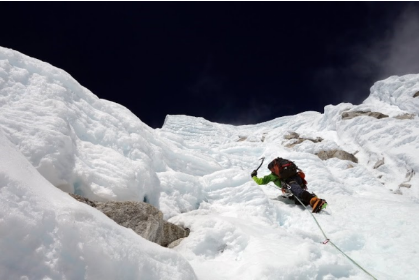
Ian Welsted climbing snow at 6,000 meters during his first attempt.

Noted alpinist Ian Welsted embarked on his first trip to Nepal in September 2014 to tackle the challenge of climbing the south face of Nuptse. 

It is “one of the truly legendary big walls of the Himalayan mountains,” Welsted later described it in his Alpinist magazine account.


 Jason Kruk at the team’s high point of 6,500 meters on their second attempt, looking up at the 7,750 meter west summit of Nuptse.

Welsted and climbing partner Jason Kruk had spent six weeks in a base camp at 5,400 meters on the south face of Nuptse. Following an attempt to climb to approximately 6,500 meters on the mountain, the pair realized that they would not be able to succeed in climbing it. They descended, headed to the nearest town and rested there for a couple of days.  Their plan was to walk to Lukla, two or three days away, on a well-beaten trekking trail. 

On the first day of hiking, as they had descended to about 3,800 meters, Welsted suddenly lost consciousness. After several minutes, he regained consciousness but he was experiencing headaches, weakness and nausea.

“Jason phoned Global Rescue,” Welsted said.


A Medical Evacuation to Kathmandu

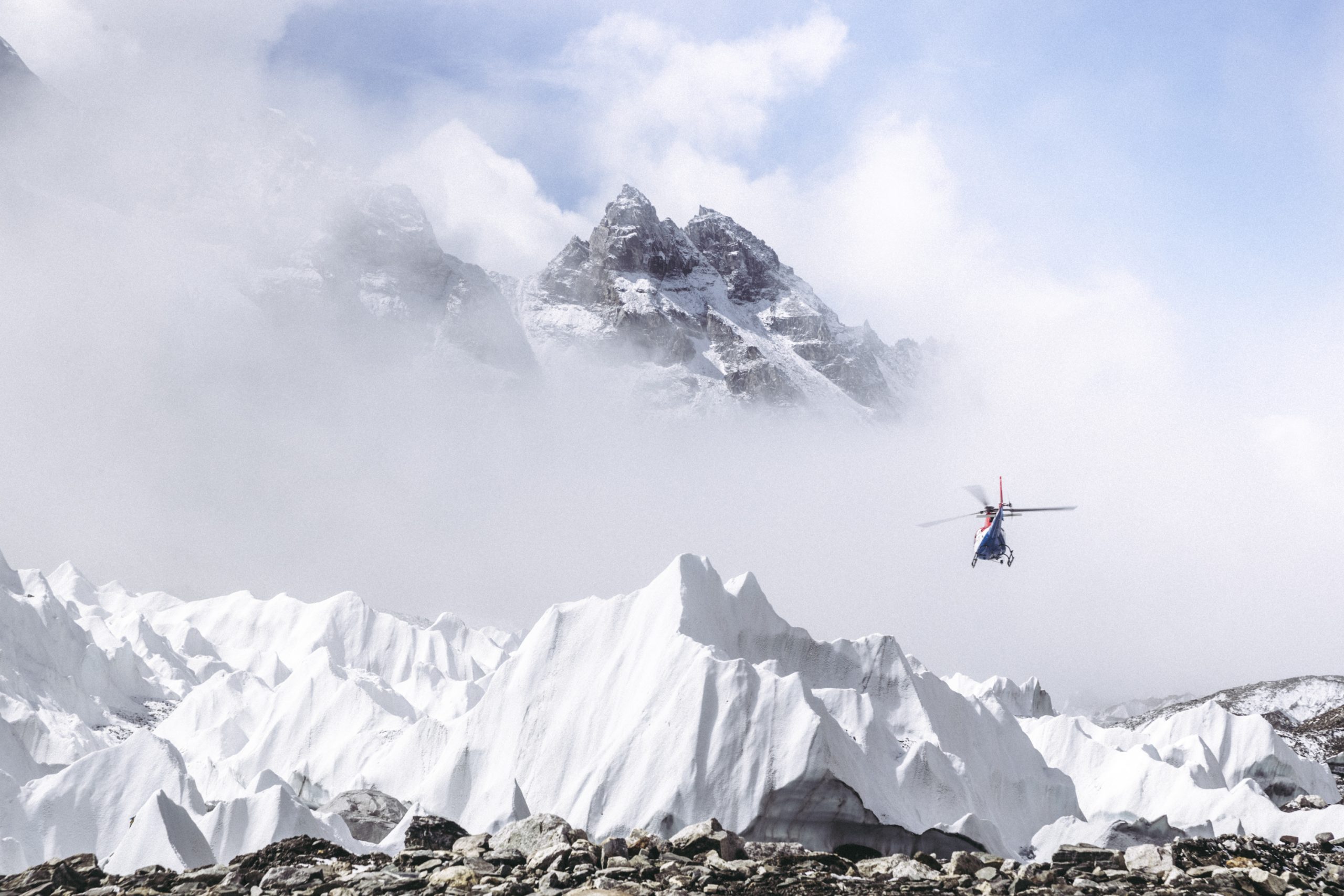
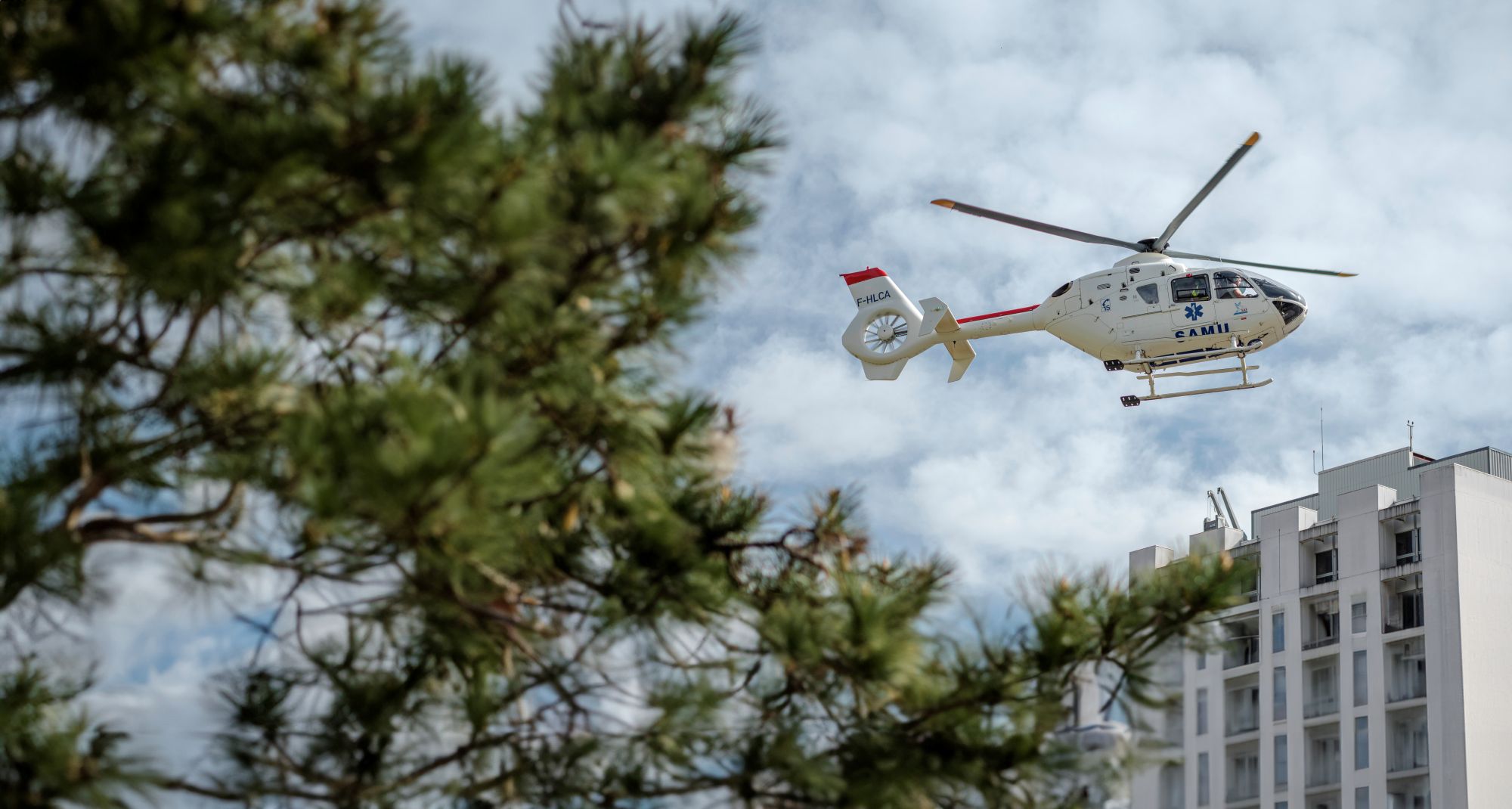
The Global Rescue operations team spoke with the guide accompanying the team and immediately arranged a helicopter evacuation to Kathmandu. Upon landing, Welsted was transported by ambulance to a hospital.

At the Kathmandu hospital, Welsted underwent a battery of tests, including an EEG, a CT scan and an MRI.

Welsted confirmed that while he had been taking good care of himself, he had never previously spent such a long period of time at such high altitude. Looking back, Welsted believes he passed out due to fatigue, stress, or some combination of the two.

“With Nuptse, you’ve got a base camp of 5,400 meters, which is certainly quite high. To climb at that altitude, you have to acclimate and we went for quite a long time,” he said. “Spending six weeks at 5,400 meters is the longest I’ve been at that high altitude for sure.”


 Jason Kruk getting ready for the day in a lightweight tent at about 6,000 meters with the famous Ama Dablam peeking out from behind.

The Global Rescue team worked closely with Welsted’s doctor until Welsted was ready to be discharged.


Global Rescue’s Medical Evacuation Services for Mountaineering Trips

“One of the Global Rescue operations staff called me while I was still in the hospital and set everything in motion,” Welsted said. “Our tickets were changed so that I could fly home earlier.  I thought Global Rescue services were great.”

Welsted advised Global Rescue once he had safely returned to Vancouver, offering his sincere gratitude, and noting that he would be renewing his membership.

“Global Rescue covered all of my needs, more than to my expectations,” Welsted said. “I was heli-evacuated quickly and efficiently and then transported to the top hospital in Kathmandu. Upon discharge, Global Rescue took care of changing my return date to Canada, which was very helpful as I was in no great condition to deal with tracking down airline details.”

Without Global Rescue coverage, I would be out of pocket for the helicopter evacuation, which I am told would have cost upward of $5,000. I was on a mountaineering trip which already had a considerable bill attached, so I was very glad to have the Global Rescue coverage.

I’ve shopped around quite a bit for example, the British Mountaineering Council has some kind of rescue insurance but Global Rescue seems to be the best way of doing things that I’ve found.”

Welsted, an American Alpine Club member who had previously traveled to Pakistan on three occasions, also recalled how he first learned about Global Rescue.

“Steve Swenson, who was president of the American Alpine Club, was the one who introduced the idea of Global Rescue to us and I joined the AAC to get a discount on the membership,” Welsted said. “I know Global Rescue had rescued Steve about two years ago in India. So, for climbers, Global Rescue definitely seems like it works really well.”

Welsted concluded, “I definitely will not go on a similar trip without Global Rescue in the future. After this experience, I will continue to recommend Global Rescue to all of my climbing partners and friends going on mountaineering trips overseas.”

Global Rescue memberships include personalized advisory services, 24/7/365 emergency assistance and evacuation services at no additional cost to you. To learn more about membership benefits, click here.

 Jason Kruk low on the mountain at approximately 5,500 meters with Ama Dablam behind.

Categories:

News
Share This:

Security Magazine – Global Rescue CEO Dan Richards shares advice on safe international travel for…

Categories:

News
Share This:

Monocle – Global Rescue named in Monocle’s Top 50 Travel Awards

Share This:

A close call for Unbranded

In spring of 2013, four graduates from Texas A&M University were beginning the trip of their dreams: riding 3,000 miles from the Mexican border to the Canadian border on horseback, using only wild mustangs.  Global…

In spring of 2013, four graduates from Texas A&M University were beginning the trip of their dreams: riding 3,000 miles from the Mexican border to the Canadian border on horseback, using only wild mustangs.  Global Rescue is pleased to have supported Ben Masters, Thomas Glover, Jonny Fitzsimons, and Ben Thamer throughout their adventure and upcoming documentary,Unbranded.  In anticipation of the documentary’s release in winter 2015, Global Rescue spoke with Phill Baribeau, the director of Unbranded, for a glimpse into the making of the documentary.

Surprisingly, Baribeau had almost no experience with horses when he joined the project. He learned to ride well enough to travel 10 to 12 hours and 20 miles a day, with limited breaks for the horses.  Masters, the leader of the Unbranded team, previously had completed a similar 2,000 mile trip in 2010. “He always wanted to do another trip, something bigger, and do it all with mustangs just because they’re built for mountain travel and they live out here,” said Baribeau. “Ben also wanted to show the public by doing a film how incredible these horses can be if you train them right.”

Baribeau and his filmmaking partner could not bring an entire crew, so they almost exclusively split the filming between themselves and collected more than 450 hours of footage over the journey’s five-month duration.  “We were not filming all day every day, but definitely when it was scenic. At the same time, with horses you never know when something’s going to happen so you have to be ready at all times,” Baribeau said.


Baribeau learned the readiness lesson the hard way on his “worst day of the trip.” A few days into the journey and feeling overconfident, he was caught off guard.  “We got off our horses to walk down a path, and I was talking to my buddy behind me, another guy filming. I walked right into the back of this horse and didn’t even see it coming. He kicked me in the thigh.  I went down and I thought I broke my femur. I actually considered calling Global Rescue.”

Instead, after realizing that the bone was not broken but was just a bad hematoma, Baribeau took a few weeks off to recover before rejoining the expedition.  However, the pain inflicted by the wild mustang could not ruin Baribeau’s memorable Unbranded experience, which included riding through the Grand Canyon and “across the Colorado River on a suspension bridge, and then Glacier National Park to end the trip.” 


While wrapping up post-production, Masters will meet with Baribeau and bring along four of the horses from the journey. “We’re definitely going back to this spot below Yellowstone called the Thoroughfare. We’ll probably spend a week back there just camping and fishing. I’m glad he has horses so we can still get out.”  For his part, Baribeau is excited to relive the trip — without cameras, for a change.


Unbranded director Phill Baribeau


Categories:

News
Share This:

Main Street – How to stay safe in an age of terror: Main Street interviews…

Categories:

Health & SafetyTravel
Share This:

5 Tips for Staying Healthy and Safe during Holiday Travels

As many people prepare to travel this holiday season, Global Rescue offers these tips to help reduce the medical and security risks associated with traveling this season, particularly for those traveling abroad.

As many people prepare to travel this holiday season, Global Rescue offers these tips to help reduce the medical and security risks associated with traveling this season, particularly for those traveling abroad.

1. Have the ability to call for help, know how to call for help, and know where you would want to go for help.  Outside of the U.S., dialing “911” does not work. Have a way to call for help: a local cell phone or SAT phone. Consider bringing an extra battery or portable charger for your phone or, if you have a smart phone, buying a battery phone case (such as Mophie) that will extend your phone’s battery life to avoid being caught with no way to communicate in an emergency. Know how to dial that number based on international calling configurations, and what number to call for emergency medical services.

2. Know your health insurance policy and service coverage. Know in advance whether your plan covers medical bills if you are hospitalized while traveling internationally. Do you have medical evacuation coverage for emergency medical transportation, and trip cancellation insurance in case you miss your flight due to a medical emergency?  In any case, be sure to have a backup plan to pay for emergency care if needed in the event that the medical facility you visit will not work with your health insurance provider.

3. Bring your own pharmacy. Travel with basic over-the-counter medications and a small first aid kit, because there is no guarantee that you’ll find a pharmacy around the corner. Pain relievers, medications to control a fever, antacids, allergy medicine, antibiotic ointment, eye drops, decongestants, cold medicine, and yeast infection treatments are just a few items we take for granted that can be obtained easily at drug stores at home. Bring any necessary travel medications with you, such as malaria prophylaxis and traveler’s diarrhea treatment.  Do not assume you will be able to source these medications in other countries.  Any medications purchased abroad may not be subject to the same manufacturing standards and quality control you expect at home. If you take a prescription medication, be sure to bring double the amount that you need in case travel plans are delayed.  

4. Be familiar with health and security concerns relevant to the location.
There are general health advisories, health and security risk assessments and food and water safety precautions specific to different regions. Your travel medical provider should be able to review any individual health concerns specific to you and your medical history and your itinerary.  Be sure you have the necessary information to prevent health and safety risks associated with your particular travel itinerary. Global Rescue members have access to GRID, our online intelligence platform, for detailed destination reports and up-to-the-minute information on global medical and security events.

5. Never travel without a Global Rescue membership. Medical and security emergencies can threaten your life at the worst possible time, when you’re away from home, far from friends, family and support.  Global Rescue medical membership includes medical evacuations from anywhere in the world to your choice of home-country hospital, any time you are more than 160 miles from home and need hospitalization. Global Rescue excels at Field Rescues for medical emergencies requiring hospitalization in the event you are in a remote location and cannot get to a hospital on your own. Membership includes 24/7 medical advice and support from world class physicians at Johns Hopkins Medicine. By upgrading to include security, members protect themselves from non-medical emergencies.  If Global Rescue determines that a member is in danger of imminent grievous bodily harm, we provide security and transport services, up to $100,000, from their location to the member’s home country.  We strongly recommend a security upgrade whenever there is risk of natural disaster, civil unrest, terrorism, or war.


Share This:

Mother and son, both ill in India while traveling, turn to Global Rescue

Every year, journalist Victoria Lautman travels to India for a few months.  During one trip, accompanied by her 19-year-old son, Victoria and her son both became ill with separate and pressing illnesses that required support…

Every year, journalist Victoria Lautman travels to India for a few months.  During one trip, accompanied by her 19-year-old son, Victoria and her son both became ill with separate and pressing illnesses that required support from Global Rescue. 

“It was my son’s first time to India. He had been there two weeks, and it was a pretty packed two weeks,” explained Lautman. “He was sniffling a lot and it got worse and worse. I was running around trying to treat it myself, getting cold medicine from Indian pharmacies. Looking back, that’s when I should have called Global Rescue.  The day we had to take a six-hour drive, he said, ‘Mom, I really think I need to see a doctor.’ So just before we got into the car, I called Global Rescue.”

Lautman continued, “The Global Rescue team provided me with a great deal of information, including instructions to reach an emergency room and the identity of an emergency medical technician.”

Lautman’s son was diagnosed with a sinus infection. He was prescribed multiple medications, including a “miraculous inhaler” that helped him breathe instantaneously. 

Unfortunately, soon after her son’s recovery, Lautman caught a virus. Again, she called Global Rescue for medical advice. “Tests were ordered but showed nothing,” she said.  “After a week, I was fully recovered and recommending Global Rescue to friends.”

“As a parent traveling pretty much anywhere abroad with a child, whether they’re a baby or 50 years old, to have absolutely no idea what to do to help them, particularly in a place like India, is daunting,” said Lautman. “You want to make sure you’re going to the right places because there are a lot of choices. In the first minute that I made contact with Global Rescue, it was literally like a giant boulder was taken off my shoulders.”


Share This:

FAQ Part 2: “How do I contact Global Rescue in an emergency abroad?”

We would like to share more of your frequently asked questions along with our responses. Do you have a question about Global Rescue membership? Add it in the Comments below.

We would like to share more of your frequently asked questions along with our responses. Do you have a question about Global Rescue membership? Add it in the Comments below.

Q: How do I know which membership plan is going to work for me? Do I need a 365 day plan to be covered all year?

A: The price of an annual membership is determined by the duration of a single trip abroad. For example if you purchase the “up to 45 days per trip” annual membership, then the duration of any one trip cannot exceed 45 days.  However, you may take as many trips as you like during the year that are less than 45 days in duration.  If your travel will exceed 45 days, there are additional membership plans available.  Or if you are going on a short trip, memberships are available for as short as 7, 14, or 30 days.

Q: How do I contact Global Rescue in an emergency abroad?

A: In case of emergency, members should contact our Operations Centers at +1-617-459-4200, or email operations@globalrescue.com.

Global Rescue strongly recommends two-way communication capabilities in order to successfully perform an evacuation. We always recommend traveling to remote locations with a satellite phone and extra batteries. Not only do satellite phones enable two-way communication, but we can often track the member’s coordinates through his or her phone.

Q:  Do I need to submit an itinerary or my medical history before I travel?

A:  Submitting your travel plans to Global Rescue is not required; however, in the event of an emergency, it can be very helpful if you send them to us prior to travel. 


Share This:

Q&A with U.S. Ski Team athlete Sophie Caldwell

U.S Ski Team athlete and Global Rescue member Sophie Caldwell had a breakthrough season in 2014. She placed sixth in the Sochi Olympics Freestyle sprint (the only U.S. female ever to make the top six…

U.S Ski Team athlete and Global Rescue member Sophie Caldwell had a breakthrough season in 2014. She placed sixth in the Sochi Olympics Freestyle sprint (the only U.S. female ever to make the top six at the Olympic Games in cross country skiing) and recorded her first individual World Cup Podium (only the second female to achieve that). Global Rescue caught up with Sophie before she headed out on her upcoming ski racing season:

What are one or two things that you are currently focusing on in training?

My main focus for the summer has been working on leg strength. I’ve done a lot of running, no pole, and one pole skating. I was recovering from an elbow injury and wanted to work on improving my skating this summer, and I think one pole skating can be very good for leg strength and technique. I’ve also been trying to do a lot of core strength and leg strength in the gym. 

What is your plan for early season racing post-injury?

My follow-up appointment is coming up, so I think a lot of when I begin to race will depend on what the doctor says. I’m currently planning on heading over to Europe with the rest of the team, but I plan on sitting out the first races in Finland and focusing on getting some on-snow training. Hopefully I will be using both poles and can start racing in Lillehammer in early December. 

What are you most looking forward to this upcoming season?

I’m really looking forward to World Championships in Falun this year. It’s always fun to race in Scandinavia because of the ski culture there. Cross country skiing is huge over there, so fans get pretty excited when the races come back home. I’m also looking forward to exploring some new venues that I haven’t been to yet!

What are your goals for this season?

It’s tough to make a lot of concrete goals right now because I really don’t know what to expect after my injuries this summer. I’d like to begin the season with no expectations and just be happy to be back racing again. I’d love to get back to being comfortable qualifying in sprints and become more consistent in the rounds. I would also like to improve on my distance racing this year. I’ve accepted that it will take some time to build back my upper body strength, but I think I can get it back with some work! Patience will be key this winter, but I’m feeling fit and strong (at least my legs are). 

What do you find is the biggest challenge when traveling all winter long?

The biggest challenge for me is being away from my family and home for so long. Luckily, my family will be coming over to Europe for Christmas, so I won’t have to go too long without seeing them. Traveling to a new place each weekend is really exciting, but sometimes all I want to do is be home in my own bed. There are a lot of tricks we’ve picked up that make hotel rooms seem homier and just make travel in general easier. For example, I usually bring a photo album from home and a stuffed animal. Having a supportive team of great friends makes life on the road a lot more enjoyable. 

How do you prepare for international ski trips?

Packing for an international ski trip really isn’t very different than packing for a domestic ski trip. We only have one suitcase and we’re still primarily skiing, so my suitcase looks about the same. When I know I’m going to be gone for a long time, I usually throw in some extra staples like peanut butter and candiesthat I miss from home and know I will appreciate after being on the road for a while. 

It’s reassuring to know that wherever I am in the world, I’ll always have the protection and support of Global Rescue. There are a lot of things we need to adjust to when traveling to Europe for the winter and having Global Rescue, a medical and security service we’re familiar with, adds a level of comfort that is sometimes difficult to come by.

What is the best strategy for packing skis for flight travel?

Down jackets! I take my biggest jackets and wrap them around my skis for extra padding. I also tape my skis together because they don’t break as easily that way.


Categories:

News
Share This:

Fortune – Global Rescue highlighted in Fortune Magazine article: “The Great Escape Business”

Categories:

Press Release
Share This:

Global Rescue Provides Sponsorship Support to Hope For The Warriors®

Boston, Mass. – Global Rescue, a worldwide provider of integrated medical, security, intelligence, travel risk management and crisis response services to corporations, governments and individuals, has announced its sponsorship support for Hope For The Warriors.…

Boston, Mass. – Global Rescue, a worldwide provider of integrated medical, security, intelligence, travel risk management and crisis response services to corporations, governments and individuals, has announced its sponsorship support for Hope For The Warriors. Dedicated to enhancing the quality of life for post 9/11 service members, their families, and families of the fallen who have sustained physical and psychological wounds in the line of duty, Hope For The Warriors focuses on restoring a sense of self, restoring the family unit, and restoring hope for service members and military families.

Global Rescue’s sponsorship includes support for Hope For The Warriors’ Got Heart, Give Hope® Celebrations, which honor the courage of our wounded service members, their families, and the families of the fallen, focusing on hope they inspire through their remarkable stories of recovery and achievement.

About Global Rescue

Global Rescue is a worldwide provider of integrated medical, security, intelligence, travel risk management and crisis response services to corporations, governments and individuals. Founded in partnership with Johns Hopkins Medicine, Global Rescue’s unique operational model provides best-in-class services that identify, monitor and respond to potential threats. Global Rescue has provided medical and security support to clients during every globally significant crisis of the last decade. Memberships start at $119 and entitle members to rescue and transport services to their home hospital of choice.

For more information, call +1-617-459-4200 or visit www.globalrescue.com.

Categories:

Press Release
Share This:

Global Rescue CEO Daniel Richards Presents Best Practices in Integrated Travel Risk Management at ASIS…

Boston, Mass., and ASIS 2014 Singapore, Booth #19 – Crisis response firm Global Rescue CEO and founder Daniel L. Richards will share his expertise on integrated travel risk management at the ASIS 8th Asia-Pacific Security…

Boston, Mass., and ASIS 2014 Singapore, Booth #19 – Crisis response firm Global Rescue CEO and founder Daniel L. Richards will share his expertise on integrated travel risk management at the ASIS 8th Asia-Pacific Security Forum & Exhibition, set for December 7-9, 2014, in Singapore. Global Rescue provides the highest quality medical, security, intelligence, travel risk management and crisis response services for governments, corporations and individuals.

Richards will present “In Harm’s Way: Building Successfully Integrated Travel Risk Management, Crisis Response and Evacuation Capabilities” on December 9. He will share best practices employed by organizations that have successfully implemented travel risk management and integrated crisis response programs. The session will address the importance of preplanning, situational awareness, and elements of successful evacuations, drawing on over a decade of experience and the thousands of operations performed by Global Rescue in emergency medical and security situations around the world.

ASIS attendees are invited to visit Global Rescue at booth #19, where the Global Rescue team will highlight the company’s GRID(SM) travel risk and crisis management product. With GRID, organizations benefit from a centralized platform to communicate with and track traveling employees while staying informed about developing crises with real-time global event alerts. Global Rescue’s mobile app provides employees with ready access to detailed destination reports and global event alerts. All of these capabilities are completely integrated with Global Rescue’s crisis management and response services.

To learn more about Global Rescue and its integrated travel risk and crisis management solutions, visit www.globalrescue.com or call 617-459-4200.

About ASIS International
ASIS International is the preeminent organization for security professionals, with more than 38,000 members worldwide. Founded in 1955, ASIS is dedicated to increasing the effectiveness and productivity of security professionals by developing educational programs and materials that address broad security interests. ASIS also advocates the role and value of the security management profession to business, the media, government entities, and the public.

About Global Rescue
Global Rescue is a worldwide provider of integrated medical, security, intelligence, travel risk management and crisis response services to corporations, governments and individuals. Founded in partnership with Johns Hopkins Medicine, Global Rescue’s unique operational model provides best-in-class services that identify, monitor and respond to potential threats. Global Rescue has provided medical and security support to clients during every globally significant crisis of the last decade. Memberships start at $119 and entitle members to rescue and transport services to their home hospital of choice.

For more information, call +1-617-459-4200 or visit www.globalrescue.com.