Categories:
NewsAugust 21, 2014
Categories:
Health & SafetyAugust 11, 2014

With the spread of the Ebola virus in West Africa, many organizations are seeking guidance on how to best protect their employees in the region. The majority of questions have been about the risk of travelling into the affected and nearby countries: Is it safe to travel? Should there be suspension of employee travel to certain countries? If so, for how long?
Three alternatives exist for travel policy as current choices for organizations doing business in the geography impacted by Ebola. Global Rescue recommends evaluation of the best course of action for your organization.
Option #1: No restrictions on travel
This choice assumes your employees can aggressively and consistently adhere to the recommended avoidance and protection practices recommended by the WHO and the Centers for Disease Control and Prevention (CDC). It also assumes your employees will monitor alerts and other travel warnings in their region, and they will be able to take action to adjust their travel and movement as needed to minimize further risk.
There are indeed many organizations and corporations which are currently employing this strategy (within the affected areas), particularly if their work is mission-critical, and unable to be interrupted.
Risks to consider with this option:
- Travel may become limited or restricted further, i.e., employees may not be able to move out of the country when they need or want to.
- Limited access to safe and adequate health care in local or nearby facilities. There is no way to guarantee that a facility will not have Ebola cases in house. Transmission within the hospital setting is a real concern in the affected areas.
Option #2: Restriction of travel to business critical
The second option is a curtailment of travel to business critical trips only. The CDC has recommended against all non-essential travel to Liberia, Sierra Leone and Guinea. This strategy prohibits nonessential travel to these areas, as well as recommends strong consideration for removing personnel currently in these areas.
An organization’s management would need to be able to define what activities and projects are “business critical.” Does your business require on-the-ground presence? Can the activity be deferred until the outbreak is over?
Global Rescue has a number of clients that are adopting this strategy for the three affected areas as well as Nigeria.
Option #3: Banning travel
The highest level of protection for employees is a complete ban on corporate travel to one or more of the affected countries. This approach also includes consideration of facility shutdown and potential removal of all employees currently in the named country.
While providing the highest level of protection against possible exposure to the Ebola virus, this option severely limits an organization’s ability to continue business-as-usual in these areas, and may require shifts in project timelines and resource allocation. This kind of restriction can be disruptive, but is sometimes chosen in high-risk situations.
There are a number of corporations and/or organizations that have adopted this strategy in response to the current Ebola outbreak, despite the disruption to business activity. For example, the Peace Corps has temporarily removed its volunteers from Liberia, Sierra Leone and Guinea.
Only an organization’s management can decide what is their best approach given the risks to their employees. Global Rescue is available to provide guidance, information, training and support to our members regarding travel to West Africa and other countries of concern. Contact us for assistance developing your corporate travel advisory policy and additional recommendations on employee education and pre-travel procedures.
Categories:
Missions & Member TestimonialsAugust 8, 2014
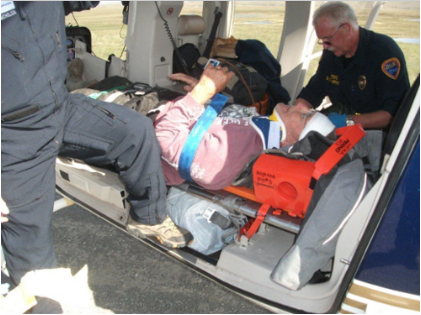
After a fall during a motorcycle trip in Alaska, Global Rescue member Mike Sonderby shared a detailed account of his rescue together with dramatic photos of his medical evacuation by Global Rescue:
“On a motorcycle trip in Alaska between Coldfoot and Deadhorse on the Dalton Highway, one afternoon I lost control of my bike due to unforeseen loose gravel in the roadway. The bike took me off the roadway and flipped me off. My back and foot were injured to the point where the EMTs immobilized me and I was helicoptered to Deadhorse (Prudhoe Bay) for a medical evaluation.
“Due to my injuries, I was put on a medevac jet plane and immediately flown to Anchorage, Alaska, where I was admitted to Providence Health Services Hospital. Further evaluation determined that I had broken my T6 vertebrae and four ribs. My left foot had also suffered a gash and required stitches.
“Two days later, surgery was performed on my broken vertebrae, with titanium rods fused to vertebrae T4 to T8, stabilizing T6. After surgery, my pain level was quite high. Global Rescue spoke with me about getting to my home in Lewes, Delaware, with the doctors estimating that I would be ready to travel within a few days. Global Rescue found a first class seat for me to Philadelphia. I left the hospital early one evening and was at my door step the following day at noon. The Global Rescue team made all of the arrangements for wheelchair attendants at the airports, including a plane change in Chicago. Global Rescue coordinated limousine service from the hospital to the Anchorage airport and from the Philadelphia airport to my home in Delaware approximately two hours away. The trip was relatively quick by reason of the efficient routing, and all wheelchair and limousine service was executed without flaw. Prior to my departure and upon my arrival at home, Global Rescue was in contact with me.
“I was completely satisfied with Global Rescue’s level of service in handling all of the logistics around my trip from Anchorage to my home. In the future, I will buy Global Rescue coverage for my trips, particularly those that are adventures and in remote areas of the world. It was a great buy!”

Categories:
NewsAugust 2, 2014
Categories:
Health & SafetyTravelJuly 31, 2014

The Ebola virus started its rampage in 2014. The World Health Organization (WHO) declared an international public health emergency in August as deaths were reported daily in three African countries: Sierra Leone, Liberia and Guinea. In October, Global Rescue had air assets in Africa ready to perform air ambulance evacuations. According to BBC News, the total number of reported cases for this first outbreak: 28,367.
In August 2018, the second Ebola epidemic hit the Democratic Republic of the Congo. On July 17, 2019, WHO declared the Ebola outbreak a public health emergency of international concern. The epidemic lasted until 2002, but emergency response and prevention efforts have contributed to an overall decline in reported cases and fatalities. In 2021, there have been outbreaks in the Democratic Republic of the Congo and Guinea.
Does today’s traveler need to worry about an Ebola outbreak? Probably not: there are currently no travel health notices for Ebola.
But it’s not unusual to encounter a medical problem on a trip. This worry shaped travel for people before the pandemic — and certainly had an effect on travel during the pandemic. In fact, our travel survey found 24% of respondents would not make a trip if the destination had insufficient medical facilities.
So if Ebola is on your mind, Global Rescue advises travelers to remain vigilant, offering these safety tips for travel to countries with a risk of Ebola.
Avoid travel
Don’t go if you don’t have to. Adhere to the Centers for Disease Control and Prevention (CDC) and U.S. Department of State warnings against non-essential travel to affected West African countries.
Avoid contact
The risk of infection for travelers is low. Transmission requires direct contact with blood, secretions, organs or other body fluids of infected living or dead persons, all of which are unlikely exposures for the average traveler.
Wash your hands
Strict personal hygiene, including frequent hand washing, should be followed while traveling in endemic areas.
Sign up for health alerts
Global Rescue’s intelligence team monitors global news all day, every day, and publishes health and security information in destination reports, free to members. Type in your destination and you’ll find an overview of health, safety and security risks for that location. For additional Ebola-specific information, a great resource is the World Health Organization health emergencies bulletin.
Take care in remote environments
Education has slowed the progress of the Ebola virus in towns and cities, but preventative measures are still making their way to remote areas where outbreaks are occurring. Reports of new cases may be delayed, because some rural provinces are only accessible by motorbike over rough topography and bad roads.
Report any symptoms to health officials immediately
Symptoms include fever, weakness, muscle pain, headache and sore throat. This is followed by vomiting, diarrhea, rash and, in some cases, bleeding. These symptoms must be combined with possible exposure to Ebola within 21 days of the onset of symptoms.
Seek medical attention if you have stayed in areas where Ebola has been reported and you are feeling sick. The doctor will test you, isolate you, and notify the public health authorities.
Avoid animals, too
Infection by the Ebola virus is by contact with blood or body fluids of an infected person or animal, or by contact with contaminated objects. Global Rescue advises avoiding contact with wild animals (bats), with raw or undercooked meat (bushmeat), and raw meat of an unknown source. Bushmeat, considered a delicacy in West Africa and the only source of protein in rural areas, may include antelope, wild goat, buffalo, deer, chimpanzees and fruit bats.
Choose your hospital wisely
Hospitals in West Africa may not have the proper staff, equipment, training or resources to treat Ebola patients. During an outbreak, a hospital may be one of the most dangerous places to be. The World Health Organization continues to work with at risk locations, such as the Democratic Republic of the Congo, to fight Ebola and other public health problems such as outbreaks of measles and cholera, the COVID-19 pandemic and a weak health system.
Chances are the virus will not spread if the Ebola patient is in an isolation unit equipped with advanced infrastructure, laboratory capabilities and trained staff.
If you have a medical emergency while traveling in a country with reported Ebola outbreaks, Global Rescue can provide members with advice on health care facilities suitable for your needs.
Global Rescue travel members can access 24/7/365 advisory services staffed by critical care paramedics, nurses and physicians. If you are a traveling Global Rescue member and have questions, symptoms or concerns about your health, call Global Rescue immediately at (617) 459-4200. Click here to learn more about a travel services protection membership.
Categories:
Missions & Member TestimonialsJuly 30, 2014
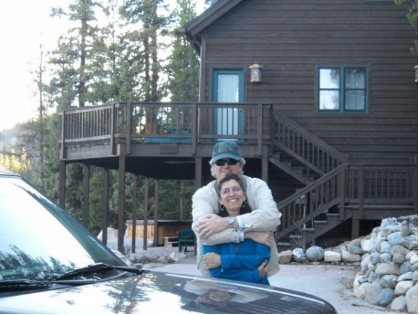
For the first time in their extensive travels, Lorne and Mary Liechty purchased a Global Rescue membership. For the first time, they needed it. On only his second day in Zimbabwe, Lorne found himself with an eye irritant that felt as if someone had stuck a needle in his eye. Four hours from the nearest medical facility, Mary turned to Global Rescue.
“We were trying as hard as we could to do what we knew to do,” Mary explained. She had attempted to flush the piece of debris out twice after Lorne complained that it felt as if it were poking into his cornea. “We talked to his personal ophthalmologist and then to his specialist. He has macular degeneration, and the specialist assured us it had nothing to do with the MD, and that it was likely something foreign in his eye. He said, ‘put the drops in, if it hurts don’t keep using them.’ So, we put one drop in and it was extremely painful, excruciatingly painful, so we didn’t put anymore in,” Mary said. In the midst of these attempts to ease Lorne’s pain, Mary called Global Rescue.
“I hadn’t even remembered to call you until I prayed and I just really felt like that was my answer for that moment, to be able to be at ease with what we were doing,” Mary continued. She spoke with several Global Rescue operations personnel over the course of multiple calls using a satellite phone from their remote location amidst connectivity issues.
The next morning, when Lorne’s condition had not improved as they had hoped, Mary packed up all their belongings in case they needed to be evacuated, and drove to Bulawayo to see an optometrist and an ophthalmologist. “The doctor put some kind of dye in Lorne’s eye. Everything that was damaged showed up red in his eye. It was more than a third, I would say close to half of his entire cornea that had been injured,” Mary said. “It was pretty amazing to me how much damage a little speck of nothing could do.”
Next a nurse at the facility professionally flushed Lorne’s eye. “Immediately he felt better,” said Mary. “He sat up and opened his eyes without pain for the first time in 24 hours.”
Mary theorized that the foreign object was a small piece of thatch from their cabin roof. Once the situation was resolved, the couple stayed over in Bulawayo for the night before returning for the remaining seven days of their trip without further incident.
Praising the affordability of Global Rescue membership, she continued, “I saw it as a good financial investment in my peace of mind for this particular trip. I told my husband it was very nice to have someone I could turn to when I was completely at my wit’s end, someone to share the unknown with.”
Mary continued, “More than anything else, I think Global Rescue gave me an opportunity to feel that there was an ‘out’ for this – that there was a way to handle our problems and not feel like I was on my own there in the middle of Africa, four hours from the closest doctor. Talking with Global Rescue gave me the confidence and assurance that, even if I am handling this on my own, I am not alone.”
Categories:
NewsJuly 25, 2014
Categories:
Missions & Member TestimonialsJuly 23, 2014
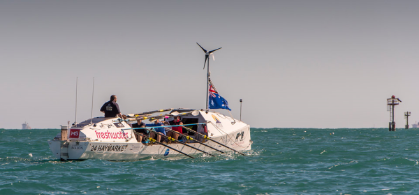
The Avalon’s departure from Geraldton in Western Australia on June 11, 2014 (Photo courtesy of Ocean Row Events)
Following Global Rescue’s successful rescue last week of a rower in the middle of the Indian Ocean, Ocean Row Events managing director and ocean rower Leven Brown shared his gratitude:
“I would thoroughly recommend Global Rescue to all seafarers. We had a crew member with severe burns during a rowing expedition and we were literally in the middle of the Indian Ocean. Global Rescue not only gave us medical advice which helped us manage these burns but also arranged a quick and efficient evacuation for the crew member. If you are going anywhere adventurous and it carries risk, Global Rescue is the essential partner as it is for us.” Leven Brown, Ocean Rower, Managing Director – Ocean Row Events

Avalon crew member Shane Usher (in light blue) with crew of the Nordic River (Photo courtesy of LPGC “Nordic River” “K” Line Ship Management Co., Ltd. [Tokyo, Japan])
Categories:
NewsJuly 17, 2014
Categories:
Missions & Member TestimonialsJuly 16, 2014
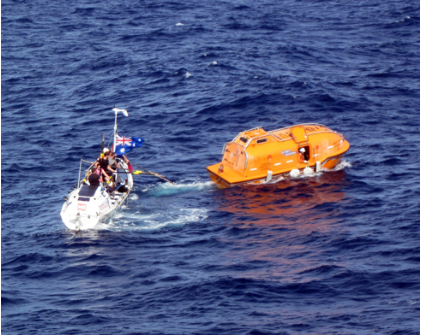
Nordic River launch boat (R) evacuates injured rower from Avalon rowboat (L) during Indian Ocean rescue led by Global Rescue on July 11. (Courtesy: LPGC ”Nordic River” “K”Line Ship Management Co., Ltd. [Tokyo, Japan])
Global Rescue has coordinated the rescue of a rower from the middle of the Indian Ocean after he sustained severe burns.
Ocean Row Events (ORE) crew member Shane Usher was successfully evacuated to the 590-foot K Line bulk carrier Nordic River on the morning of July 11. Earlier in the week, Usher had accidentally scalded himself while preparing food on the ORE rowboat, Avalon.
Global Rescue’s medical team confirmed that Usher’s burns were significant enough that an evacuation was necessary to secure proper treatment. The six-man and one woman Avalon crew was rowing non-stop across the Indian Ocean, having departed Geraldton, Australia, on June 11.
Global Rescue led the rescue and coordinated with the Australian Maritime Safety Authority (AMSA) and the Australian Rescue Coordination Centre to identify a vessel in the vicinity of the Avalon. Global Rescue led the operation from its operations centers in Massachusetts, New Hampshire and Thailand.
The Nordic River responded to the request to go to the aid of the rowboat. The carrier reached the Avalon successfully and transferred Usher by launching a rescue boat. The challenging operation, which was conducted in the open ocean, lasted nearly two hours.

K Line carrier (Courtesy: LPGC “Nordic River” “K” Line Ship Management Co., Ltd. [Tokyo, Japan])
Once Usher was on board the Nordic River, Global Rescue’s medical team managed the treatment of his burns, liaising with the Nordic River’s crew to oversee his care. The ship is expected to reach Australia on July 18.
The current Ocean Row Events mission is to row from Western Australia to Durban, South Africa, through nearly 5,000 miles of open ocean. The Avalon sustained only minor damage after the rescue and is en route to Africa.

Ocean Row Events’ Avalon in the Indian Ocean (Courtesy: LPGC “Nordic River” “K” Line Ship Management Co., Ltd. [Tokyo, Japan])
Categories:
Press ReleaseJuly 16, 2014
Boston, Mass., – Global Rescue, a crisis response firm providing medical, security, evacuation, and travel risk management services to corporations, governments and individuals, has coordinated the rescue of a rower from the middle of the Indian Ocean after he sustained severe burns.
Ocean Row Events (ORE) crew member Shane Usher was successfully evacuated to the 590-foot K Line bulk carrier Nordic River on the morning of July 11. Earlier in the week, Usher had accidentally scalded himself while preparing food on the ORE rowboat, Avalon.
Global Rescue’s medical team confirmed that Usher’s burns were significant enough that an evacuation was necessary to secure proper treatment. The six-man and one woman Avalon crew was rowing non-stop across the Indian Ocean, having departed Geraldton, Australia, on June 11.
Global Rescue led the rescue and coordinated with the Australian Maritime Safety Authority (AMSA) and the Australian Rescue Coordination Centre to identify a vessel in the vicinity of the Avalon. Global Rescue led the operation from its operations centers in Massachusetts, New Hampshire and Thailand.
The Nordic River responded to the request to go to the aid of the rowboat. The carrier reached the Avalon successfully and transferred Usher by launching a rescue boat. The challenging operation, which was conducted in the open ocean, lasted nearly two hours.
Once Usher was on board the Nordic River, Global Rescue’s medical team managed the treatment of his burns, liaising with the Nordic River’s crew to oversee his care. The ship is expected to reach Australia on July 18. The current Ocean Row Events mission is to row from Western Australia to Durban, South Africa, through nearly 5,000 miles of open ocean. The Avalon sustained only minor damage after the rescue and is en route to Africa.
About Global Rescue
Global Rescue is a worldwide provider of integrated medical, security, intelligence, travel risk management and crisis response services to corporations, governments and individuals. Founded in partnership with Johns Hopkins Medicine, Global Rescue’s unique operational model provides best-in-class services that identify, monitor and respond to potential threats. Global Rescue has provided medical and security support to clients during every globally significant crisis of the last decade. Memberships start at $119 and entitle members to rescue and transport services to their home hospital of choice.
For more information, call +1-617-459-4200 or visit www.globalrescue.com.