Loading...

Categories:

Press Release
Share This:

Global Rescue Executives to Share Crisis Management Expertise at Global Business Travel Association (GBTA) Conference

Boston, Mass., – Executives from Global Rescue, the leading provider of integrated medical, security, travel risk management and crisis response services for corporations and individuals, will demonstrate the company’s next generation travel risk product, GRID,…

Boston, Mass., – Executives from Global Rescue, the leading provider of integrated medical, security, travel risk management and crisis response services for corporations and individuals, will demonstrate the company’s next generation travel risk product, GRID, at this year’s Global Business Travel Association conference. The event runs July 28-30, 2014, at the Los Angeles Convention Center.

Global Rescue will offer GBTA attendees a preview of significant new features in GRID’s latest software release. Using GRID, employers can track employees traveling overseas, receive real-time alerts for global events, communicate with employees, and monitor their assets’ locations — all in one place. These capabilities are fully integrated with Global Rescue’s crisis management and response services.

The GBTA conference will highlight recent trends and industry insights for business travel professionals who operate throughout the world. Collectively, GBTA’s 5,000-plus members manage over $340 billion of global business travel and meetings expenditures annually.

GBTA attendees are invited to visit the Global Rescue team at booth #853. To learn more about Global Rescue and GRID, visit www.globalrescue.com or call 617-459-4200.

About Global Rescue

Global Rescue is a worldwide provider of integrated medical, security, intelligence, travel risk management and crisis response services to corporations, governments and individuals. Founded in partnership with Johns Hopkins Medicine, Global Rescue’s unique operational model provides best-in-class services that identify, monitor and respond to potential threats. Global Rescue has provided medical and security support to clients during every globally significant crisis of the last decade. Memberships start at $119 and entitle members to rescue and transport services to their home hospital of choice.

For more information, call +1-617-459-4200 or visit www.globalrescue.com.

Share This:

Global Rescue’s GRID(SM), a new travel intelligence system, keeps members informed with up-to-the minute info.…

In an unpredictable world, it’s essential for travelers to be constantly aware of world events and potential threats to your health and safety.  To help Global Rescue members stay informed, we developed a new travel…

In an unpredictable world, it’s essential for travelers to be constantly aware of world events and potential threats to your health and safety.  To help Global Rescue members stay informed, we developed a new travel intelligence system called GRID.  It’s a unique online resource, supported by teams of Global Rescue intelligence analysts, that provides detailed destination reports and up-to-the-minute information on medical and security events around the world. The best part is that access to GRID is a benefit available to all Global Rescue members.

To use GRID, Global Rescue members simply log in to the Global Rescue site (www.globalrescue.com) and click the “Country Intelligence Reports” tab. (If you need your password, give us a call at 617-459-4200.)

Here’s the complete list of important travel information GRID offers:

Destinations – Detailed reports on countries of interest around the world.

Events – Up-to-the-minute information on global events.

Country Risk Rating – Risk ratings on a scale from low to extreme.

Security assessment – Security risk overviews and advice for staying safe.

Health assessment – Health risks, travel health advice and required immunizations.

Entry and exit requirements – Visa information and import and export restrictions.

Important numbers – Country code, emergency numbers, and embassy contact information.

Stay informed and travel safely!


Share This:

Global Rescue performs medical evacuation from Ecuador after member’s heart attack

Every winter, 71-year-old Leslie Erickson takes a month-long trip to a new and exotic location.  This February, Leslie was scheduled to escape the cold of Omaha, Nebraska, in favor of Ecuador for his annual vacation. …

Global Rescue paramedic (left) with Leslie Erickson

Every winter, 71-year-old Leslie Erickson takes a month-long trip to a new and exotic location.  This February, Leslie was scheduled to escape the cold of Omaha, Nebraska, in favor of Ecuador for his annual vacation.  However, unexpected health issues led to the use of his Global Rescue membership.  “I never thought I’d need it,” Leslie said. “They did so many good things I can’t even think of them all.  I get tears in my eyes.”

Within the first few days of Leslie’s trip, he began experiencing fatigue, difficulty breathing and nausea. He visited a local physician who recommended he go to Hospital Metropolitano in Quito, Ecuador.  The treating physician found that Leslie was, in fact, dangerously close to entering a diabetic coma as he arrived at the hospital. Leslie was treated immediately with insulin and intravenous fluids in the intensive care unit.  During his stay, he was examined by a cardiologist who determined that Leslie was also having his first heart attack, the first ailment he had suffered in 25 years. 

While undergoing treatment via surgery and medication, Leslie was alone in a place where language barriers prevented anyone from explaining what was happening to him, let alone from caring for him throughout the symptoms and fears associated with his condition. Those feelings abated when Global Rescue, after learning of his situation, immediately deployed a paramedic to Leslie’s bedside.

“He made me feel very comfortable and had a good sense of humor,” Leslie reflected. 

Global Rescue’s paramedic stayed with Leslie in Ecuador until he was sufficiently stable to travel back to Nebraska for treatment at his home hospital of choice, the University of Nebraska Medical Center.  While Leslie was hospitalized, the paramedic was instrumental in explaining details of the treatment and care plan.  He coordinated discharge with the treating team to ensure that all was in order – medications and full medical records to pass to the admitting hospital, for example – prior to discharge. Additionally, Global Rescue worked with the airlines to ensure that services were available during the trip home, and coordinated with customs and immigration both in Ecuador and the U.S. upon departure and arrival.

“He was a godsend,” Leslie recalled.  “When he left, I was very sad.  It felt like I left my best friend.”

Leslie continues on the road to recovery from his ordeal abroad.  While he does not yet have future travel plans, Leslie is eager to take off to some distant location, his health permitting. He confidently states, “If I can, I will.” 


Categories:

Health & SafetyTravel
Share This:

What to Pack in a First-Aid Kit

Global Rescue travelers have learned many useful skills during their adventures. Despite the obvious utility of those skills though, an equally important skill, is knowing what to pack in an everyday, travel-friendly first-aid kit.

Global Rescue travelers have learned many useful skills during their adventures. From appreciating cream and sugar yet being able to drink black coffee, to knowing how to sew a button or mend a pair of pants, the list is plentiful. Despite the obvious utility of those skills though, another equally important skill, is knowing what to pack in an everyday, travel-friendly first-aid kit.

All destinations have inherent differences just as each individual traveler has his or her own unique differences. Evaluate your own personal needs and the parameters of your travel to find the items or build the kit that best suits you.

An easy starting point is to look for a commercial off-the-shelf product. There are several high-quality kits out there that cover trips of different duration and are designed for the needs of the solo traveler up through the expedition group.

The alternative to a commercial product is to build your own.

Global Rescue has customized its own list of must-have items over the years, always including commonly needed items plus a few medicines. When possible, it’s best to try to use only items that serve more than one purpose, including medications.

While it is impractical to pack for every single contingency, it is possible to create a small, packable kit full of highly useful items that takes up very little space in your backpack. Most travel emergencies do not require a combat medic-style kit – quite the opposite. Blisters, minor soft tissue injuries (scrapes and cuts), orthopedic injuries (ankle sprains) and stomach ailments are some of the more frequently encountered issues that can all be addressed with a well-stocked kit.

The following is a list of items we recommend for every trip, whether you’re going to Switzerland or Nigeria. The list is also designed as a personal kit for individual use, as a majority of the items can be carried in a small zippered pouch.

  • Tweezers – fine point hard to find a reason NOT to have tweezers
  • Tick remover – yes, a single-use item but very handy if needed and it’s nearly paper thin
  • Alcohol pads – eight is a good amount
  • Band-Aids – about a dozen
  • Blister pads – We suggest the Band-Aid Advanced Healing brand, which works great and stays in place. Carry a few of the regular and finger/toe variety
  • Gauze pads a few small 2 or 3-inch pads
  • Super glue – for minor skin tears it’s not ideal, but works in a pinch and is also good for getting a few more miles out of your shoes
  • Cravats – Carry two standard size triangular bandages. There is very little you can’t splint or bandage with two well-placed cravats.  Too many other uses to list.
  • Ibuprofen 400mg – pain reliever, inflammation, minor fever reducer
  • Ondansetron 8mg ODT – anti-emetic, these dissolve on your tongue, great for nausea and vomiting
  • Cipro 500mg – gold standard for traveler’s diarrhea, unless you’re in Southeast Asia
  • Doxycycline 100mg – malaria prophylaxis, tick-borne disease, skin infections, a good multipurpose antibiotic
  • Pepto Bismol – chewable tablets, many indications
  • Antihistamine – a non-drowsy type like Zyrtec or Claritin, used for hives, itching, watery eyes, rash, runny nose, and sneezing due to allergies or the common cold. Secondary uses for motion sickness, anxiety, or as a sleep aid
  • Sewing kit – TSA approved for carry-on if needles and scissors are under four inches
  • Chapstick, with SPF – sunscreen for your lips, nose, ears and also useful on zippers or even hot spots
  • Iodine tabs – clean, treated water is a must
  • Emergency headlamp – small in size
  • Duct tape – wrap about a meter around the outside of the kit
  • Consider an Epi-Pen – especially if you or a member of your group have potentially life-threatening allergies

For trips to a more remote setting, you might augment this kit with other items, namely more medications and bandaging materials.

Prior to any trip, it is recommended that you consult with your physician to determine which medications are right for you. This can be done in conjunction with a visit to a travel clinic for vaccines and other destination specific advice.

Despite the fact that many countries require medicines to be transported in their original packaging, several travelers take it upon themselves to repack the items to better fit in their luggage. Many of us are guilty of this but keep in mind that medicine not in the original packaging, especially prescription medications, run a greater risk of being confiscated.

It should be noted that a first-aid kit is not a substitute for proper first-aid training. Everyone has the potential to benefit from some type of first-aid training.

Wilderness First-Aid (WFA) or the more in-depth Wilderness First Responder (WFR – pronounced woofer) are excellent options for travelers. These courses focus on providing care in austere locations with little support and finite resources. Improvising and using common on-hand items is highly stressed all the while adhering to sound medical principles. Check local outfitters and clubs for a course offering near you.

Whether you’re seeking advice or immediate medical or security assistance, Global Rescue operations centers are staffed 24/7/365 to assist our members. Click here to contact us about the benefits of membership.

Share This:

Global Rescue prepares travelers for key threats at Brazil 2014 FIFA World Cup

With concerns rising in regard to the threat of crime, riots and violence toward foreign travelers at the upcoming FIFA World Cup in Brazil, Global Rescue medical and security personnel have developed a thorough review…

With concerns rising in regard to the threat of crime, riots and violence toward foreign travelers at the upcoming FIFA World Cup in Brazil, Global Rescue medical and security personnel have developed a thorough review of key health and safety threats to those attending FIFA.

Global Rescue is offering medical advisory, intelligence, travel risk management and medical and security evacuation services to corporate clients and individual travelers. With Global Rescue’s proprietary GRIDTM travel intelligence system, Global Rescue members can access detailed destination reports including real-time alerts for FIFA-related and other global events.

Global Rescue excels at providing critical support during major international sporting events.  We supported members at the Sochi Winter Olympics earlier this year, with confirmed threats and a recent history of terrorist attacks in the surrounding region. Global Rescue also provided medical and security support to members for the 2006 Turin Olympics and 2012 London Summer Olympics.

One of the largest international sports events ever hosted, the FIFA World Cup will be played over a month beginning June 12 at multiple sites throughout Brazil. The series of matches and related events is expected to attract over half a million foreign spectators and up to three million Brazilian spectators. While the country has been host to several major events—including sporting events—in the past, Brazil still faces a number of security concerns. Petty crime runs rampant throughout the country, and especially in large cities.  Violent crimes, including murders, burglaries, and carjackings, are common. 

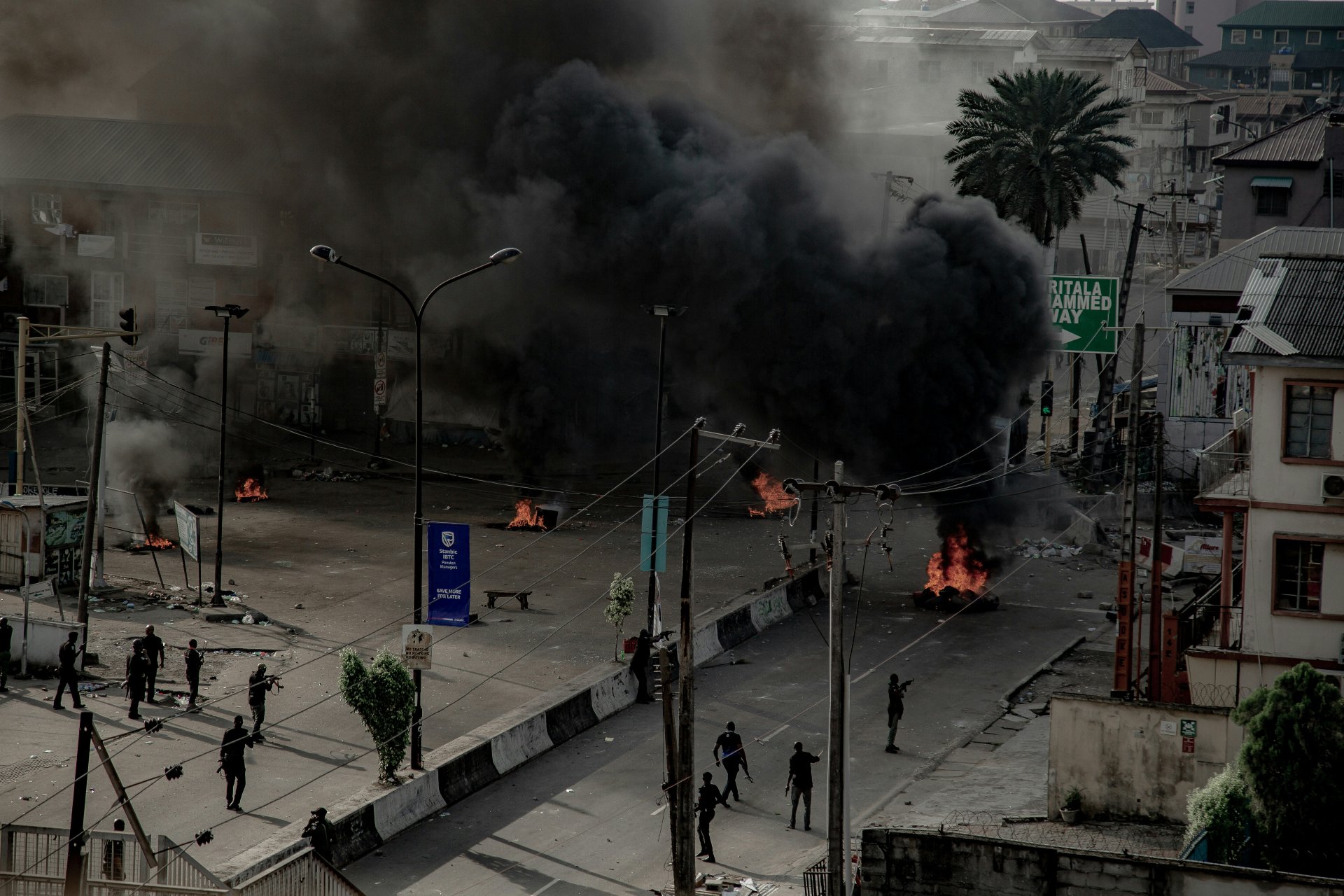
While there is a low threat of indigenous or international terrorism in Brazil, civil unrest including protests against the 2014 FIFA World Cup have taken place in several host cities, including Rio de Janeiro and Sao Paulo, and have resulted in clashes between protesters and police. While public support for the ongoing protests has dropped since they began in mid-2013, the possibility of further protests or violence cannot be discounted, especially once the matches begin. Disruptive and sometimes violent strikes have also occurred in the lead-up to the World Cup, including by police forces.

Given the potential medical and security issues travelers may face, Global Rescue advises FIFA attendees to bring satellite phones to ensure communication capabilities in the event of an emergency.

Global Rescue advises travelers to stay alert to personal security at all times.There is a high rate of crime in Brazil.  Armed robberies—of homes, businesses, banks, and even hotels—are common, especially in larger metropolises. Muggings and pickpocketing occur frequently, especially in tourist areas such as hotels, bars, beaches, transportation centers, and nightclubs, as well as in favelas.

Travelers should avoid withdrawing large amounts of cash at night or when it can be observed by potential attackers. When possible, use ATM machines in accepted hotels, banks, or businesses. Tourists should be on the alert for “express kidnappings,” in which a person walking alone is grabbed from the street, brought to an ATM, and made to withdraw all the money from their account. 

Regarding transportation, the safest way of getting around is by privately hired or corporate vehicle.  Although not as safe as a corporate vehicle, radio taxis are often preferable to taking public transportation. Radio taxis are known to be reliable and safe, while ordinary taxis are often fronts for scams, robberies, or assaults.  Travel by personal car can be dangerous due to frequent carjackings, poor quality of road infrastructure, poor local driving practices, and a lack of enforced traffic laws.


Share This:

Global Rescue provides a U.S. medical consultation: “It was a great comfort.”

When Mike Uboldi purchased a Global Rescue membership for his wife and himself, he was doing so in preparation for his many international trips. Despite his experiences in Spain, Argentina, and Africa, among other places, Mike…

When Mike Uboldi purchased a Global Rescue membership for his wife and himself, he was doing so in preparation for his many international trips. Despite his experiences in Spain, Argentina, and Africa, among other places, Mike never needed to call Global Rescue while he was overseas. He made the call to Global Rescue when his wife was diagnosed with acute diverticulitis while in the United States.

Mary Uboldi was admitted to St. Mark’s Hospital in Salt Lake City, Utah. “My experience was extremely favorable. It was more of a medical consultation because she did not require medical transport,” Mike stated.  “The Global Rescue team was fantastic — very, very helpful and very willing to engage at any moment. They certainly gave me every indication that Global Rescue would arrange to have Mary transported back to Reno if her condition worsened, but that fortunately never occurred.”

“Your folks at Global Rescue were great,” Mike continued.  “They contacted me every single day for a status report and offered to provide oversight if I needed it.”  After a brief stay in St. Mark’s, Mary was discharged and the couple was able to return home.  Mary is well on her way to a full recovery.

Mike was so impressed with how Global Rescue handled his case that he has recommended it to his son, another international traveler.  “In any event, it was a great comfort,” explained Mike. “Global Rescue is a very good service. Little did I know that I might need to utilize it here in the States, let alone just 500 or 600 miles from home.”


Share This:

Q&A with Lebanese explorer and Global Rescue member Maxime Chaya

Lebanese explorer and Global Rescue member Maxime Chaya is considered a national hero for his long career of adventures, providing inspiration to Lebanese youth to dream big and reach their goals. Chaya spoke with us about…

Lebanese explorer and Global Rescue member Maxime Chaya is considered a national hero for his long career of adventures, providing inspiration to Lebanese youth to dream big and reach their goals. In 2006, he was the first Lebanese to climb Mount Everest, followed by skiing to both Poles. Chaya and two teammates set a new world speed record last summer for rowing across the Indian Ocean in under 58 days. Through Expedition RIO (short for Rowing the Indian Ocean), they became the first team of three to successfully row any ocean.

“I’m so happy we didn’t have to make use of Global Rescue’s services,” said Maxime. “At one point, it was a serious option.”

Chaya spoke with us about his record-breaking trip and the forces which shaped his adventurous spirit.

How did you first become involved in rowing? 

I rowed for my university, the London School of Economics, on an eight man team. That was back in my early twenties. The first time I heard about ocean rowing was in 2008 while I was training before a North Pole trek.  It was at a training camp at Loch Tay in Scotland and there was a group of British athletes who were also training, only to row the Atlantic. The idea of ocean rowing was planted in my head back then. 

What do you love about it?

It’s really just the adventure. And that can be anything — just embarking on a new adventure is a great feeling.  I haven’t really recovered from my last adventure and here I am already thinking about a new one.  There comes a time when, if you don’t have an adventure to carry out or a ‘summit to climb,’ so to speak, then you feel that life is empty. For me, coming from Lebanon and with my ancestors being the Phoenicians who first roamed the seas several thousand years ago, that must have attracted me towards the ocean, and I suppose sooner or later, ocean rowing was inevitably going to figure on my agenda.

What was the greatest moment of the RIO trip?

Undoubtedly August 5th, the day we hit land.  We were tired and I had lost about 12 kilograms of body weight.  Our chart plotter hadn’t been working and it was no longer communicating with the autopilot. We had been steering somewhat manually and the last day it had to be completely manual. There were coral reefs, it was pitch dark, and my teammates were so exhausted they wanted to kill me, their skipper at the helm.  I had to steer against the wind at one point when we made the final approach towards Cap Malheureux in Mauritius.  Several boats had run aground at that spot and it reminded me of how many before us had failed, so close to the goal. When we reached land, I congratulated my teammates, then jumped overboard and hugged my daughter, girlfriend, niece and sister. I then tried to take the Yellowbrick [which was clocking our journey] a few yards inland so that the Ocean Rowing Society could stop the time and grant us the speed record. Trying to walk fast, I fell a few times. After two months at sea, without standing up too often, I had to learn to walk again.

You are involved not only in rowing but in climbing and skiing. How do you commit to so many different and impressive accomplishments?  

What drives me is setting a goal that is seemingly impossible and working hard to achieve it.  Success against all odds gives me — and many others, I think — a great sense of satisfaction. This is especially so when there are naysayers. When I decided to climb the Seven Summits, I wanted to prove to myself that I could have fulfilled my dream of becoming a professional athlete had I not come from a country at war.  Whether it be climbing, skiing, biking or rowing, I enjoy laying out a plan and carrying it out in order to stand on that particular summit. 

Which is your favorite record to hold?

As for choosing one accomplishment, it’s like having kids — it’s hard to say which one you like more.  Everest is Everest and the North Pole is the North Pole. However, the Indian Ocean success was like a gift from heaven, being able to finish so well and so quickly.  My favorite, though, is to inspire the youth of Lebanon to pull out the athlete, the artist, the scientist, the poet, or whatever it is that resides within them. I hope that, if they see me succeed, they will realize that they too can fulfill their dreams and stand on the summit of their chosen ‘Everest.’

How do you feel about being considered a national hero?  Do you, in part, do all that you do for your country?

I never thought my actions would lead to [being considered a hero] but now that the youth see me in that light, I need to act that way, whether I am or not.  Nothing is easy, but nothing is impossible.  A lot of our youth use the ongoing turmoil in my country [Lebanon] and region, as an excuse to be lazy.  I try to inspire them to be the best they can be no matter what is going on around them.

Do you have any other big adventure plans for the future?

As I said earlier, though I’m still recovering from my last adventure, I am beginning to plan out my next one, but a lot of it is still unsure.  I don’t want to reveal anything just yet. For sure, I will purchase a Global Rescue membership, and like with any coverage bought, I hope I will never have to use it.


Share This:

After an accident in Burundi, Global Rescue medical consultation helps missionary nurse recover locally

Global Rescue member Casey Conaway recently wrote to thank the Global Rescue team after a close call in Burundi, Africa.  When a car accident caused several injuries, Casey turned to Global Rescue as her primary…

Casey Conaway at the source of the Nile in Burundi

Global Rescue member Casey Conaway recently wrote to thank the Global Rescue team after a close call in Burundi, Africa.  When a car accident caused several injuries, Casey turned to Global Rescue as her primary source of medical consultation.

Casey wrote:

“I am a missionary nurse in Burundi, a small country in East Central Africa. As one of the poorest countries in the world, Burundi is completely void of modern healthcare.  What is available could be described as primitive and limited.  Very basic healthcare at best is available in the capital city of Bujumbura. 

“On April 17, 2013, I was traveling with my teammates in a Land Cruiser in a remote part of the country.  We hydroplaned on a wet road and slammed into a concrete pillar and many tree stumps.  I was thrown from the back seat to the front seat. (Seat belts in back seats are not required here by law and many vehicles do not even have them).  I hit my head on the roof of the cabin, rammed my belly into the front seat bench, and somehow hurt my elbow.  My friends arranged careful transport to the capital city where I saw a doctor and got an X-ray of my arm, an ultrasound of my belly, and the diagnosis of a concussion. 

“A few days passed and I wasn’t sure that my arm was not broken, as reported by the local doctor.  I phoned Global Rescue for a consultation.   Because cell phone and internet signals can be problematic here, Global Rescue was patient with me and very helpful in securing a line of communication.  My call was received by a well-trained critical care professional who assessed my situation and injuries and provided some calm and reassurance.  The Global Rescue team decided that my X-rays needed to be emailed to them, and advised me on the technical how-tos for emailing a clear picture. I was told to expect a reply in 24 hours, and that was indeed the case.  My reply was in my inbox by morning.  My accident did not require medical evacuation, however, Global Rescue followed my recovery and provided stand-by assistance.  My regret in working with Global Rescue was that I did not utilize their services earlier. (I phoned three days after my accident). 

“Global Rescue should not be thought of as only an evacuation option, but also as an organization that can help you stay in the field and recover with resources available locally.  I would describe my experience with Global Rescue as professional, practical, and peaceful.  An accident in the developing world can be traumatic on a whole different level.  Global Rescue understands this and knows how to help.”


Categories:

News
Share This:

Washington Post – Global Rescue critical care paramedics coached John All through the night

Categories:

News
Share This:

Outside Magazine – Global Rescue highlighted for role in rescuing John All

Categories:

News
Share This:

The Himalayan Times – Global Rescue recognized for John All evacuation