Loading...

Share This:

“Thanks for being there”: Global Rescue Assists Climber in Bolivia

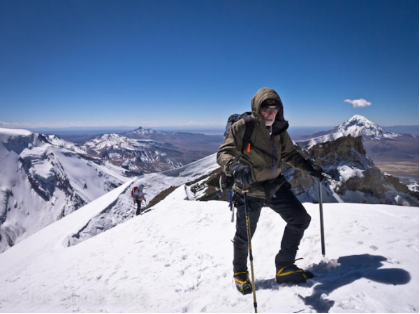
While climbing in Bolivia earlier this year, Global Rescue member James Kesterson suffered a painful toothache.

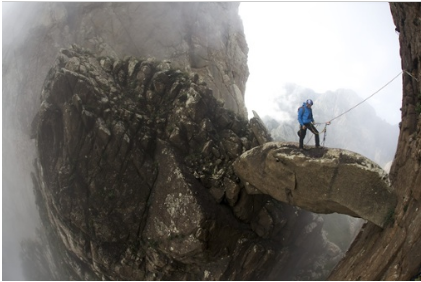
Photo courtesy of Joe Stock

While climbing in Bolivia earlier this year, Global Rescue member James Kesterson suffered a painful toothache. Kesterson, a frequent traveler on expeditions with Stock Alpine, was concerned with how much worse the pain might get at a higher altitude, not to mention putting his team in jeopardy.

He recounts his experience and shares his thanks with Global Rescue:

“We had been in Bolivia climbing for about 10 days when I developed a toothache.  It was the first time in my life that I experienced that much pain. A doctor who was with us prescribed lots of ibuprofen but said that I probably should take an antibiotic.  We had some antibiotics with us but he was unsure of which to give me. We called Global Rescue.

“We were at 14,000 feet planning to head up to 21,000 feet.  Global Rescue doctors directed me to take neither antibiotic that we had since both were for stomach illness. Instead, Global Rescue directed me to get some penicillin. They assured me that, if I could tolerate the pain with the ibuprofen, I should be fine at a higher altitude.  No penicillin could be located where we were so we climbed on, doing well on our trip, although the ibuprofen seemed to make me very tired.

“Upon returning home, my dentist told me that something had upset my root canal and that amoxicillin should take care of it.  Of course, that’s basically the same advice that Global Rescue gave me.  It seems to have worked. I completed my prescription last week and have no pain now.

“Global Rescue did a great job at the time and in the follow up after I returned home.  By the way, one of my climbing friends had a small skiing accident last winter and Global Rescue was very responsive with his sprained wrist.

“I am very pleased with Global Rescue’s service. Thanks for being there.”


Share This:

Adventure photos galore: “In the Spirit of Adventure” Photo Contest inspires wave of submissions

Here’s a sampling of entries we’ve received to date:

“Overwhelming” describes the response to our “In the Spirit of Adventure” Photo Contest. Do you have a photo that epitomizes the spirit of adventure? Send it our way along with a one-sentence caption by November 15, 2013. See prize details here.

Here’s a sampling of entries we’ve received to date. Enjoy!


Share This:

Q&A with “Walking the Nile” explorer Levison Wood

This year, British explorer Levison Wood will be the first to attempt to walk the entire length of the River Nile.

This year, British explorer Levison Wood will be the first to attempt to walk the entire length of the River Nile. Global Rescue is supporting the epic journey by Wood, who is also founder of expedition company Secret Compass. We spoke with Lev to learn more about what motivated him to undertake such a fascinating challenge.

How did you decide to undertake this journey?

I’ve always been passionate about Africa and have spent a lot of time there, especially in East Africa. In 2010, I drove the length of Africa and followed the course of the Nile in a 4×4. After some research I discovered that no one had ever completed the journey by foot. I wanted the biggest challenge of my life and found it.

Were you always interested in travel of this nature?

I have been travelling roughly since I left home at the age of 18. After university I hitchhiked overland from the U.K. to India and when I joined the army I took great pleasure in organizing challenging expeditions for my soldiers. It was a natural progression to lead expeditions professionally. 

What are your biggest concerns for the trip?

Safety is clearly an issue. There are dangers from the terrain, the environment, the wildlife and the people. But the biggest concern is simply being in remote areas for such an extended period of time.

Do you have advice for others considering such adventurous travels?

Make sure you know what you are doing. Build a reliable team and think about what can go wrong. But remember there is never a perfect solution; sometimes you just have to get on with it and see what happens.

Have you had any “close calls” in your prior travels during which a Global Rescue membership (for medical or security evacuation) would have been useful?

Quite a few, ranging from team members getting really ill on expeditions — I had a guy get malaria in the jungle of Sierra Leone once — to some tricky political situations. I’ve been held at gunpoint more times than I can remember. On one of my first travels I got stuck in Nepal in the middle of a coup d’etat. My passport was confiscated and I had to spend a week hiding in the hills whilst the country went into anarchy. Fortunately though I’ve not been seriously Ill or injured myself, despite a couple of very close calls involving road accidents in both Afghanistan and Sudan. Global rescue coverage would certainly have been helpful then if the worst had happened.

Once Walking the Nile is completed, are there other journeys you have on your list to accomplish?

The world is a big place and I’ll never stop travelling and exploring. I still want to visit Papua New Guinea, and much of South America is on my watch list.


Categories:

Health & SafetyTravel
Share This:

The Facts About Altitude Sickness – Being Prepared Can Save Your Life

With trekking season in full swing, Global Rescue members heading to the peaks should be prepared with the facts about altitude sickness. Global Rescue's Dr. Eric Johnson answers some of the most frequently asked questions…

With trekking season in full swing, Global Rescue members heading to the peaks should be prepared with the facts about altitude sickness.

Global Rescue’s Dr. Eric Johnson, a globally recognized expert on high-altitude medicine who has spent decades practicing high altitude medicine, answers some of the most frequently asked questions about the types of altitude sickness, their symptoms and treatment.

What Is Altitude Sickness?

Traveling to altitude, typically higher than 8,000 feet, can sometimes cause health problems. This group of problems is called “altitude sickness” and there are three main types. The symptoms differ depending on the type of altitude sickness you have.

Acute mountain sickness (AMS): This is the most common type and causes symptoms similar to those caused by an alcohol hangover, usually within a day or so of arriving at altitude. Acute mountain sickness can happen within a day of traveling or climbing to a very high altitude (typically above 8,000 feet).

Symptoms can include:

  • Headache
  • Feeling tired
  • Feeling lightheaded
  • Having no appetite
  • Trouble sleeping
  • Nausea, sometimes with vomiting

High altitude cerebral edema (also called “HACE”): This is less common but more serious than acute mountain sickness. It involves swelling of the brain and usually involves symptoms of AMS but with worsened brain symptoms (commonly an inability to walk in a coordinated fashion).

The symptoms of HACE (swelling of the brain) usually start one to three days at a high altitude.

They include:

  • Extreme tiredness and weakness
  • Trouble walking normally
  • Confusion and irritability
  • Acting drunk

High altitude pulmonary edema (also called “HAPE”): This is also less common and more serious than acute mountain sickness. It involves fluid build-up in the lungs.

The symptoms of HAPE (fluid in the lungs) usually start two to four days after traveling or climbing to a high altitude. They include:

  • Coughing
  • Feeling breathless, with worsening exercise tolerance
  • Trouble walking uphill

What Should Climbers do If They Experience Symptoms of Altitude Sickness?

Treatment depends on which type of altitude sickness you have. If you have mild symptoms of acute mountain sickness, rest and stay where you are until you feel better. Do not travel or climb to a higher altitude until you feel better and all symptoms resolve. Moving to a lower altitude can also help if symptoms do not go away in a day or two.

For a headache, you can take medicines such as aspirin, acetaminophen or ibuprofen.

There are also prescription medicines that should only be used under the guidance of a physician. These medicines can help treat the symptoms of acute mountain sickness. These include:

  • Acetazolamide can help prevent and treat acute mountain sickness.
  • Dexamethasone can help keep the symptoms of acute mountain sickness from getting worse and it can help prevent swelling of the brain. It is intended for short-term use (a few days) and, if used, descend immediately.

The most important treatment for HACE or HAPE is to descend to a lower altitude immediately.

If you have HACE or HAPE and cannot descend to a lower altitude, you might be put inside a special inflatable bag called a portable hyperbaric chamber. Once you are zipped inside this bag, a doctor or nurse will fill it up with air that is similar to the air at lower altitudes. A doctor or nurse might also give you oxygen to breathe.

Should You See a Doctor or Nurse?

If you have severe symptoms after traveling or climbing to a high altitude, get medical attention immediately. Waiting for treatment could cause serious health problems, or even death.

Can Altitude Sickness Be Prevented?

The best way to prevent altitude sickness is to avoid moving quickly to a higher altitude. Going slowly gives your body time to adjust.

If you are traveling to a very high altitude, plan to stretch your trip out over several days. If you are hiking or climbing, don’t do difficult physical activities for the first few days and avoid alcohol and sleeping pills.

When hiking, go to a higher altitude during the day and then go back down to a slightly lower altitude each night to sleep.

If you have had altitude sickness before, your doctor might give you a medicine to keep you from getting it again.

Whether you’re seeking advice or immediate medical assistance, Global Rescue operations centers are staffed 24/7/365 to assist our members. Click here to contact us about the benefits of membership.

Categories:

News
Share This:

Playboy – Global Rescue Highlighted in Playboy Magazine– “Essential Card for the Modern Man”

Share This:

MOTIV Fishing Captures Adventure Around the World

No one films epic fishing adventures quite like MOTIV Fishing. MOTIV, an independent media production company, develops progressive fly fishing films and adventure travel series broadcasts for outdoor television. We recently caught up with teammate and…

Global Rescue- MOTIV Fishing from Global Rescue on Vimeo.


No one films epic fishing adventures quite like MOTIV Fishing. MOTIV, an independent media production company, develops progressive fly fishing films and adventure travel series broadcasts for outdoor television.  For the Costa Geofish series, the “trout bums” travel the world in search of fishing adventure, living a lifestyle of which many people can only dream.  We recently caught up with teammate and Global Rescue member Thad Robison for a peek into the passion that fuels these angling addicts.

When you’re out on the road, what is the one item you never go without (besides your Global Rescue card, of course)?

Besides all the necessary fishing gear, rods, reels, flies, Costa sunglasses, and so on, the one item I’m always looking to be sure is stowed with our gear is our Global Satellite Phone. In my opinion, it’s the single most important piece of “safety” equipment we carry on our expeditions. We travel so far off the grid away from civilization that if, God forbid, we ever do have a serious medical emergency, it is our lifeline to contact Global Rescue when we are in the middle of nowhere.

On your adventures, is there a time you’ve come close to using your Global Rescue membership?

So far we have been fortunate and haven’t had a major medical emergency, knock on wood. Jay Johnson (fellow “trout bum”) contracted leishmaniasis, a flesh eating parasite, in Belize but it wasn’t until after we returned home that he found out.  There have been a couple of instances where I thought we may need to make the Global Rescue call. Most recently, we were in Ecuador on a remote expedition in the upper Amazon.  Chris Owens (fellow “trout bum”) injured his lower back. He’ll say it’s from hacking through the jungle with a machete to get our boat up the river, but I personally think it became injured when he leapt 12 feet down the boat trying to get away from a tarantula that dropped out of the trees into his lap. Regardless, by the time we reached our camp his lower spine had seized up and he couldn’t even crawl out of the boat. I thought for sure we’d need to get him airlifted from the jungle.  Not as exciting as a blow dart to the throat from a native tribe, but it was still a concern to say the least. Were it not for the fact that we were watching huge arapima break the surface 100 yards away from camp, I think Chris may have said it’s time to make the call to Global Rescue.

What are the best pieces of advice that you can share with other adventurers?

Try to immerse yourself in the local culture as best you can. Eat their food, drink their local brews, buy items from the local vendors, and visit the local sites, not just the ones in the tourist guides.  Your trip will be more rewarding memorable and fulfilling by interacting and getting to know the local people. You may also find yourself getting taken to some of the “secret” locations that they wouldn’t share with an uptight tourist. One of my best memories was from one of my worst experiences of drinking way too much yak milk vodka with the locals one cold night in Mongolia. Finally, always remember you are a guest in their country.

What inspired you to convert your truck to run on vegetable oil?

Our driving route from Portland, Oregon, to Ushuaia, Argentina, will be close to 20,000 miles. It only made sense that we try to reduce our carbon footprint on the expedition. It has been tough, though. Biofuel companies have really put the lockdown on recycled oil in the States, and a lot of restaurants in Central and South America never rotate their oil, so it really takes some time and research to find it out on the road. It has literally become an obsession now at this point to try and find the golden sticky fuel that keeps the beast driving down the road!

If you could fish in one last place, where would you choose?

Hands down for me it would be Panama. You have the Pacific and the Atlantic (Caribbean Sea) on both sides of you within a 90 mile coast-to-coast stretch! Nowhere else in the world do you have that kind of diversity so close to you. Every single saltwater species is at your fingertips in that country and it doesn’t get near the fishing pressure as other Central American countries.

If you could choose one person to go fishing with, who would it be?

My son. He is 16 now and he’s a laser beam with a fly line. Nothing beats fishing with your boy.


Share This:

Global Rescue kicks off “In the Spirit of Adventure” photo contest

What does “adventure” mean to you? Now’s your chance to show us – with your best photo that conveys the spirit of adventure. Today marks the launch of our “In the Spirit of Adventure” Photo…

What does “adventure” mean to you? Now’s your chance to show us – with your best photo that conveys the spirit of adventure. Today marks the launch of our “In the Spirit of Adventure” Photo Contest. Entries are due by November 15, 2013.

First prize is a Global Rescue Family Medical and Security Membership plus Iridium 9575 Phone with Explorer Satellite Communications ($2500 value). Second prize is a Global Rescue Annual Individual Medical & Security Membership. Third prize is a subscription to Backpacker Magazine.

Our expert panel of judges includes:

o   Jim Klug, founder and director of operations, Yellow Dog Flyfishing Adventures

o   Jim Sano, vice president of travel, tourism and conservation, World Wildlife Fund

o   Shannon Stowell, president, Adventure Travel Trade Association

o   Genny Fullerton, photo editor, Backpacker magazine

Submit your photo here by November 15, 2013, with a one sentence caption describing the photo. Maximum one entry per person. Winners will be announced December 4, 2013. Read complete contest details here.

Good luck to all!


Share This:

Who Will Evacuate You If You’re Badly Hurt in a Remote Locale? Global Rescue Highlighted…

About.com writer Lois Friedland spoke with Global Rescue CEO and founder Dan Richards about the company and the services it offers.  

“Are you covered if you fall during a hike on the Inca Trail in Peru and you need to be evacuated? How about if you’re on a safari in an African jungle and one of the animals comes too close and you get hurt?

These are questions posed to adventure travelers by About.com Adventure Travel writer Lois Friedland. Too often, travelers learn too late that their travel insurance covers less than they thought, and that no one is coming to assist them after an injury.

Friedland spoke with Global Rescue CEO and founder Dan Richards about the company and the services it offers.  Global Rescue “is not travel insurance, it’s more like AAA for your body, rather than your car,” explains Richards. Unlike most companies, Global Rescue will deploy personnel to the site of injury or illness.

Read the full article here.


Categories:

News
Share This:

Bloomberg – Staying Safe Abroad in Uncertain Times

Categories:

News
Share This:

About.com Adventure Travel – Who Will Evacuate You If Badly Hurt in a Remote Location?

Share This:

Conde Nast Traveler Features Global Rescue – How to Stay Safe Abroad

Conde Nast Traveler’s Wendy Perrin spoke with Global Rescue CEO Dan Richards about ways in which travelers can stay safe abroad.

Against the backdrop of a possible U.S. military strike against Syria and rising tensions worldwide, Conde Nast Traveler’s Wendy Perrin spoke with Global Rescue CEO Dan Richards about ways in which travelers can stay safe abroad. Many travelers are worried about their trips to travel to countries such as Turkey, Israel, the United Arab Emirates, and western Africa, in particular, given the potential for anti-American sentiment.

With insights from Richards, Perrin highlights these tips for staying safe in places where there could be anti-Western sentiment:

Don’t advertise your Americanness.
Forgo bold colors in favor of earth tones. Wear nothing that could identify you as American: No Nikes, jeans, baseball caps, or logos. And no religious jewelry—such as a Christian cross or a Star of David.

Dress conservatively.
Don’t display more skin or wear more revealing clothing than is the accepted norm. Avoid ostentatious displays of wealth, such as big jewelry, that could make you a target.

Try not to look like a tourist.
Don’t walk around with a guidebook under your arm or a camera around your neck. Don’t study your map on the street or in a parked car. Go into a safe, busy store or restaurant before pulling out a map or guidebook.

Monitor the news.
This means staying at a hotel with reliable Internet access and with CNN, BBC, and Al-Jazeera. Check local English-language news Web sites morning and evening. Consider carrying a pocket world band radio so you can listen to the BBC and Voice of America anywhere, even if you’re without Internet access.

Avoid public gatherings in large public squares.
Don’t get caught in a political demonstration or rally that might expose you to an angry mob. Often the gatherings happen in the same symbolic square each time (e.g., Taksim Square in Istanbul).

Bypass discos, nightclubs, or bars where westerners or Americans typically gather.
A place that is popular with the expat community or foreigners represents a possible target. Skip the Hard Rock Café this trip.

Be careful what you photograph.
Don’t shoot airports, train stations, government buildings, or people who don’t want their photo taken. Always ask someone before taking his or her photograph. When you don’t speak the local language, “ask” by motioning with your camera and motioning to them, smiling throughout, showing via hand signals that you’d like to take their photo and you’re asking if it’s okay. See what reaction you get. (This is good procedure in any country—not just Muslim ones.) If you want to photograph a person who’s selling something—say, fruit or spices—buy some and snap a photo of the transaction. (This makes the act feel like an exchange rather than an exploitation.)

Use hotel-arranged taxis.
Avoid taking the bus or other public transportation. “Don’t put yourself in a confined space where you’re potentially a victim,” says Richards. “On the other hand, don’t travel around in an armored black Mercedes limousine either because you’ll be immediately identified as someone who is worth targeting. Taxis can be risky but are also a good way to stay under the radar. Best bet is to have a vetted driver or, at a minimum, one you use from a well-known location who has proper credentials.” Have your hotel call you a taxi. Arrange to have cars pick you up at the airport and drive you to and from restaurants at night.

Make sure your hotel has a great concierge.
You want a concierge who will make smart transportation arrangements and can detail the safety do’s and don’ts of the area.

Don’t travel with a tour group.
Tour groups are targets, says Richards, because they represent a concentration of foreigners in one place. “The tour company may be able to bring some security to the group, but the countermeasures are not outweighed by the ability of the attackers to do some real harm,” he says.

Hire a private English-speaking “guide”–more fixer/expediter/strategist than guide, actually—who will keep you safe.
You can find a first-rate fixer through an excellent travel firm specializing in that destination. For Turkey I recommend Earl Starkey of Sophisticated-Travel in Istanbul. For Israel I recommend Joe Yudin of Touring Israel. For the U.A.E. I recommend Lindsey Wallace of Linara Travel. They have excellent guides who will keep you safe. Don’t want a guide? Plan your walks or routes with the concierge’s input.

In European cities, consider avoiding Muslim suburbs.
Richards advises avoiding neighborhoods where emigrants from Syria live or where there is a track record of civil unrest or violence against foreigners.

Say you’re Canadian.
If you’re suddenly put on the spot by an angry-sounding local asking if you’re American, don’t be ashamed to pretend you’re Canadian. In fact, sometimes I carry a small Canadian-flag pin inside my handbag, just in case.

And here are a few things to carry as you sightsee:
• A cell phone programmed with emergency numbers—for police, medical emergencies, and your hotel.
• A neck pouch for keeping large bills and credit cards hidden under your clothing.
• Your hotel’s business card, in the local language, so you can show it to taxi drivers and get back to safety quickly.
• A mini-flashlight in case you’re caught in the dark.
• A color photocopy of your passport (the cover and first two pages) to serve as an ID while the real thing sits in your hotel-room safe.

Read the full article here.