Loading...

Share This:

Global Rescue has deployed teams to Egypt to assist members in the region

Global Rescue has deployed teams to Egypt to advise and assist members in the region.  Recently, violent clashes between supporters and opponents of President Mohammed Morsi have resulted in at least four deaths.

Global Rescue has deployed teams to Egypt to advise and assist members in the region.  Recently, violent clashes between supporters and opponents of President Mohammed Morsi have resulted in at least four deaths, including one American.  The situation could escalate as there is a mass opposition rally planned for Sunday, which marks the end of the first year of Morsi’s four-year term.

The Obama administration has warned Americans against all but essential travel to Egypt.

Global Rescue will continue to closely monitor and observe the situation as events unfold.  Anyone knowing of members in the area and in need of assistance, are encouraged to contact the Global Rescue Operations Center at +1 617-459-4200 and operations@globalrescue.com


Share This:

BMC highlights corruption in the Nepalese helicopter rescue industry

As the Everest summit season comes to an end, Global Rescue is proud to have helped a great number of climbers. However, a recent article published by the British Mountaineering Council has shed a critical light…

As the Everest summit season comes to an end, Global Rescue is proud to have helped a great number of climbers. From minor medical advisory services to evacuations of those critically ill or injured, it has been another busy spring in the Himalaya.

However, a recent article published by the British Mountaineering Council has shed a critical light on the practices surrounding the helicopter rescue industry in Nepal. It highlights a growing trend that is making it increasingly difficult for companies like Global Rescue to provide affordable services to the climbing community.

Mountain tourism in Nepal is booming and along with it the helicopter based services. An increasing number of operators have aircraft that make high altitude rescue a realistic option that simply did not exist in the past.  

This growth in capabilities has undoubtedly led to lives being saved but it also may have caused the emergence of a culture that financially encourages some guide companies to request helicopter evacuations in non-emergency situations and has, in certain cases, resulted in outright fraud.

It is important to stress that this appears to be an issue caused by a small minority of unscrupulous operators. Global Rescue has long-standing partnerships with many of the leading guide companies and like us, they are concerned.  They simply want to provide clients with robust evacuation options while protecting themselves financially.

In the BMC article Ed Douglas provides a detailed assessment of the current situation and outlines 5 particular scams that we urge you to be aware of:

1 – Unnecessary Evacuation of someone who would recover.

Inexperienced trekkers can be persuaded by lodge owners or trekking guides that they need treatment in Kathmandu, when descent or analgesics would suffice. That treatment can often be hugely profitable: a straightforward check-up following evacuation can cost up to $800 and two or three days in hospital $5,000. At least one helicopter-charter company now has its own medical facility where patients are delivered after being evacuated – a new twist on unscrupulous cab drivers taking you to his ‘brother’s’ hotel.

2 – Overcharging for the rescue.

This can work in other ways. Lodge owners calling in a chopper for a stricken guest have been known to ask for goods to be flown in on the incoming flight, and tourists in the area may find themselves being offered a cash-in-hand ride back to Kathmandu.

3 – Charging twice for the same rescue.

An organizer in the Manaslu region arranged a helicopter evacuation for two clients – from different countries – suffering from altitude sickness. He learned later that both insurance companies had been billed for the entire $5,000 cost of the charter, totaling $10,000. The profit on the deal would have been around $7,000.

4 – Trekkers or climbers looking for a fast ride down following an expedition.

With the right contacts, it’s not difficult to get what looks like bona fide documentation saying that a rescue was medically justified and the insurance company picks up the bill. This isn’t confined to Nepalese trek leaders

5 – Deliberate scheduling of a ‘rescue’ flight in a trekker’s itinerary to save them time.

This was offered without prompting to a Dutch group planning a complex itinerary in the Kangchenjunga area. When they decided to include two friends for part of it, they received an email from their agent:

“In the beginning they have to pay helicopter cost in Nepal, when they completed there [sic] trekking and arrive in Kathmandu I will make the doctor report saying that we need to rescue the people from Ghunsa because they are ill and the aviation people will too make the certificate saying that we are rescuing these people.”

The plan, the agent says, will be ‘a good solution for them,’ and to reassure their prospective clients, the agent goes on to say: ‘I started Nepal tourism business since 1990 most of the time I did the same like this and there was no problem at all until now.

The full article can be read here

Further information on Global Rescue for climbers and trekkers can be found here


Share This:

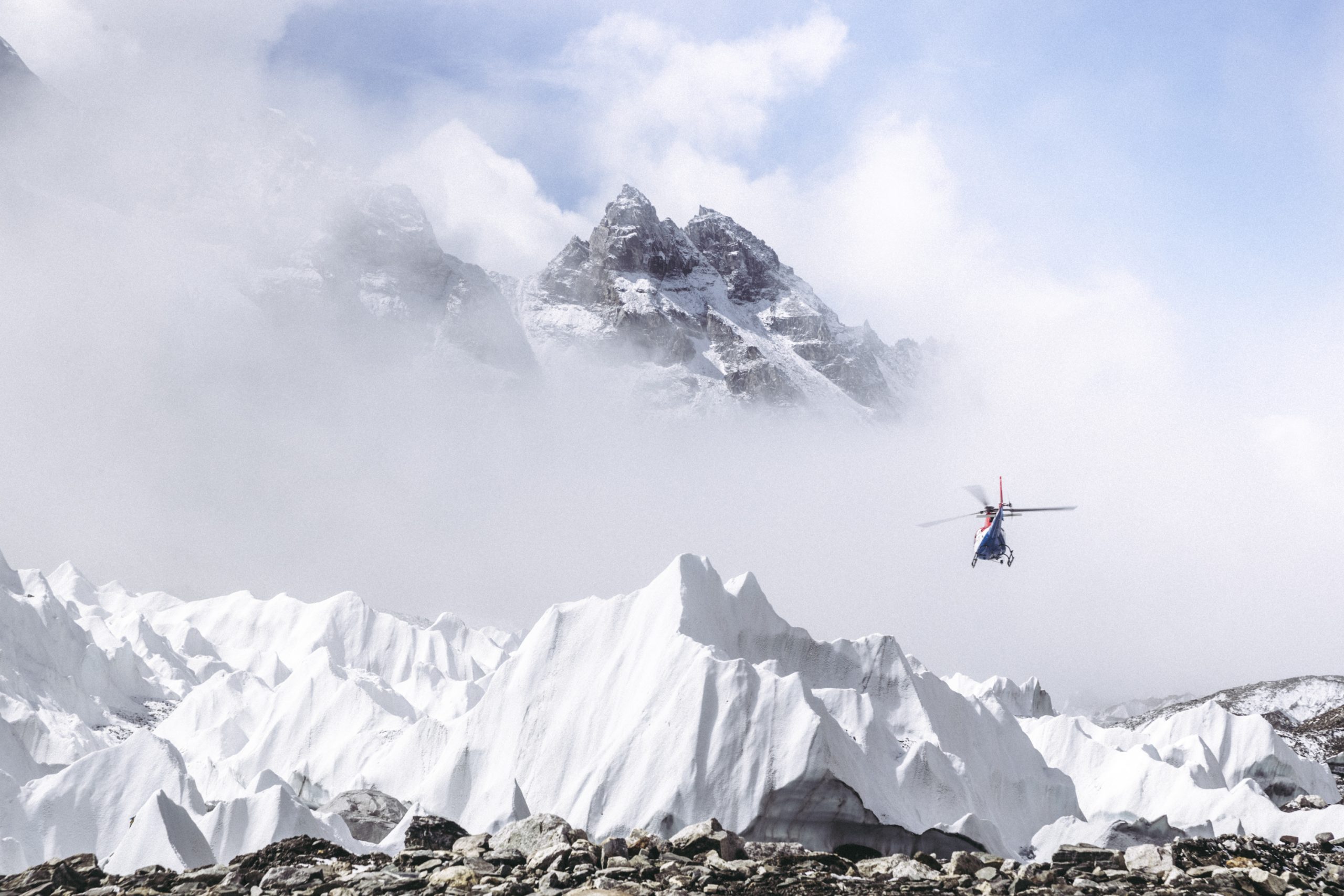
Helicopter evacuation of member trekking to Everest Base Camp, Nepal

The Everest season is now well under way and it has been a busy time for Global Rescue, with a number of successful evacuations already conducted. With the summit window approaching, we wish everyone a…

     A member’s view up the Khumbu Valley in Nepal

The Everest season is now well under way and it has been a busy time for Global Rescue, with a number of successful evacuations already conducted. With the summit window approaching, we wish everyone a safe and successful climb.

In April, a Global Rescue member developed severe abdominal pains during his trek to Everest Base Camp. Given the severity of his situation, Global Rescue evacuated him by helicopter to Kathmandu where he was admitted to the hospital for treatment.

On his safe return home, he wrote to thank Global Rescue:

“Six days into a trek to Everest Base Camp I developed a potentially life threatening condition that required immediate evacuation off the mountain. Global Rescue arranged for a helicopter to pick me up within an hour of the initial call to them and then had me delivered to a Kathmandu medical facility for emergency treatment within less than an hour after that. The physicians there were clear with me that had I not received such a timely evacuation, I would have suffered potentially irreparable organ damage.

Global Rescue also closely monitored my condition throughout the period before I was finally discharged to determine if further evacuation for medical care might be necessary. They remained in daily contact with me until after my return to the U.S., where I underwent additional evaluation and treatment by my own physicians.

I will never travel without having Global Rescue to turn to given the ever present possibility that a medical emergency requiring evacuation might occur. Thanks Global Rescue !!!

Don B.”

Further information about Global Rescue for climbers and trekkers can be found here


Share This:

Olympic hopeful Alice McKennis talks to Ski Racing Magazine after her crash

This March while competing at Garmisch-Partenkirchen, Germany, Olympic hopeful Alice McKennis crashed, shattering her tibia into 30 pieces. In this interview with Ski Racing Magazine, she remembers the accident and shares how a Global Rescue chaperone helped…

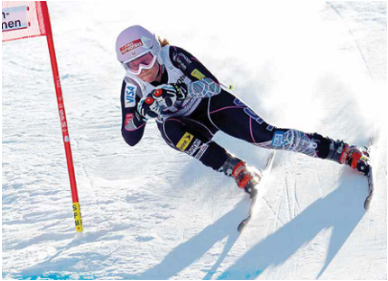
This March while competing at Garmisch-Partenkirchen, Germany, Olympic hopeful Alice McKennis crashed, shattering her tibia into 30 pieces. In this interview with Ski Racing Magazine, she remembers the accident and shares how a Global Rescue chaperone helped soften the blow.

Tell us a little bit about your season leading up to the injury?

It was a good season, and I had a great prep period in the summer. I had surgery last spring to take the hardware out of my left knee, but I didn’t miss any on-snow camps last summer, so I felt really confident and good going in to the season. I was skiing a lot better technically than I ever had been. I had a good race in Val d’Isere, which was the last race before St. Anton [the site of her first World Cup win] so that gave me a little more confidence in St. Anton. I think since I was skiing lot better technically than I ever have been, that it made all the difference for me this year.

Talk about the U.S. women’s speed team this season and how that factored in to your success.

It wasn’t really any different than other seasons. I think for the four of us who hadn’t podiumed before, it was just kind of time. We had all been in the top 10 a lot, and it finally started clicking for all of us. Of course we see Lindsey and Julia on the podium all the time, and we kind of expect that. But seeing Stacey on the podium in Lake Louise at the beginning of the season, the rest of us thought, “It’s possible for us to do it, too; it’s not just Lindsey and Julia.” But from then on we saw each other do it and we thought, “Wow, I can do it too.” We’re all close in racing and training; it just comes down to having that perfect run.

Describe the injury: Where were you? What happened?

I was in Garmisch, Germany, racing downhill on March 2 and basically was coming on to the bottom of the course and had a bad turn, moved inside pretty far, and my outside ski lost contact with the snow. When I came in contact with the snow again, I basically got turned sideways on a little bump, and that caused my right tibia plateau to shatter into 30 pieces and then also break my tibia.

How did Global Rescue respond?

I was helicoptered from the race hill to the hospital and I was in the Garmisch hospital for a few nights. Global Rescue came up with a plan and they flew a staff member over to Germany, and he came to Garmisch and picked me up and we went to Munich and we flew out the next day. We flew business class all the way to Denver and then he drove me up to Vail straight to the hospital. Global Rescue organized the whole plane flight and they made sure I was comfortable and made sure I had a chaperone the whole way.

How did this impact your experience? How did this impact your recovery?

I have flown back from Europe with a broken leg before by myself…and it was MISERABLE. So having someone there to help me and assist me the whole way made the travel a million times better. I was pretty pumped about the whole experience. Flying back with Global Rescue and having a chaperone assist me the whole day helped me a lot when I got to Vail. I was a lot more relaxed and I had a lot better frame of mind before surgery than previously when I had to fly home alone with a broken leg.

How did this injury experience differ from your other injuries? You had almost the exact same injury a few seasons ago — how did this injury compare?

Two years ago I broke my left tibia plateau; this injury was a lot more severe. I have a plate in 11 screws after this injury. When I injured my left leg, I had a plate and five screws, so this one was a lot more severe. I guess having some experience with injuries will help but it’s definitely just as frustrating.

Is it encouraging to know that you have already come back from the injury to get your first career win?

It really gives me a lot of hope and it’s really encouraging to know that I have recovered from something pretty bad and I made it to the top. I know it’s possible again, but it takes a lot of hard work and time.

What’s the rehab process like?

I had surgery about five and a half weeks ago and I am non-weight bearing still right now. I think hopefully another two to three weeks they will have me getting off crutches, so basically it’s going to be about eight weeks non-weight bearing. It kind of limits your therapy options, really. Now I am just trying to get my muscle control back and trying to keep my upper body in shape, doing some rowing, that kind of thing, trying to keep everything else going.

When are you hoping to get on snow?

November, depending on weather conditions in Colorado…maybe later in October if there is snow.

Do you have your eyes on Sochi next year?

Its definitely a different situation now; I’m going to have to work a lot harder and push myself a lot more, but it’s still my goal and it’s still a possibility. The rehab process has to go right. I can’t have any setbacks, really.

Would you recommend Global Rescue to other racers?

Definitely. This was my first experience with Global Rescue and I think it’s really important. When we go to Chile or some place like that, it’s not the same as it is here. Just having that peace of mind if something awful happens that Global Rescue is going to get things figured out and get you home as soon as possible. It’s really worth having it; you just never know what could happen, and when you are injured or hurt, the last thing you really want to be doing is trying to figure out the flight and how you are going to get home. Having someone else taking care of that is really nice.

Global Rescue is the Official Provider of aeromedical services to the U.S. Ski and Snowboard Team


Share This:

Global Rescue supports UNBRANDED, an epic Mexico to Canada horse ride

Global Rescue is proud to be supporting the UNBRANDED film project. Global Rescue will be providing medical advisory support and evacuation services for the team and their film crew.


Global Rescue is proud to be supporting the UNBRANDED film project. The upcoming documentary follows the story of Ben Masters, Thomas Glover, Jonny Fitzsimons, and Ben Thamer as they travel 3,000 miles through the deepest backcountry in the American West from the Mexican border to the Canadian border. Global Rescue will be providing medical advisory support and evacuation services for the team and their film crew.

The ride began on April 1, 2013 at the Mexican border east of Nogales, AZ. The journey will take 6 months and 3,000 miles through Arizona, Utah, Idaho, Wyoming, and Montana. They need to finish in mid-September before the snows block their path in Glacier National Park. The route travels almost exclusively through public land: National Forests, National Parks, BLM, and state land.  90% of the trip will be off of a road of any kind, the remaining 10% will be on a little used 4-WD dirt path. The route goes through famously scenic and rugged areas such as Yellowstone, the Grand Canyon, the Bob Marshall Wilderness, and many more.

“We are about to start on a 3,000 mile ride from the Mexican border to the Canadian border and we’ve chosen Global Rescue for peace of mind on the journey. If we get hurt in the backcountry it is reassuring to know that we can call their team and they will be there to help.” Said Ben Masters

“Snowy passes, flooded rivers, drought, forest fires, wildlife, injury, and fatigue will present difficulties but suburbs, highways, dammed rivers, barbed wire, and land use regulations are very real logistical complications as well. The trip won’t be easy, but the joys will be greater than the pains and the complications will disappear when we throw our cell phones away. The ride is broken into ten day segments that begin and end at a prearranged ranch.  We’ll take a day of rest at these ranches to resupply for the next segment.  Our horseshoes have been reinforced with hard surfacing on the heels and toes to prolong their lives.”

Mustangs, born and raised in the wild, will be taking them on their journey. This is a story of the partnership between horse and rider, a testament to the hardiness of mustangs, and a tribute to the early explorers whose spirit remains today.

The team hopes to show the documentary at Sundance Film Festival.

Learn more at www.unbrandedthefilm.com


Share This:

The Robb Report highlights Global Rescue’s unique Field Rescue capabilities

In the Robb Report article ‘Happy, Healthy Trails’ Sheila Gibson Stoodley recounts the story of Ted Panhuis, a motorcyclist who had to be evacuated from the Yukon after a crash in 2008. While comparing a…

In the Robb Report article ‘Happy, Healthy Trails’ Sheila Gibson Stoodley recounts the story of Ted Panhuis, a motorcyclist who had to be evacuated from the Yukon after a crash in 2008. While comparing a number of evacuation providers, Global Rescue’s ability to perform a remote Field Rescue is highlighted.

Global Rescue understands that in a serious emergency, getting yourself to the nearest hospital or landing strip might not be possible. For this reason, our commitment to our members is from the point of illness or injury. Whether by helicopter, road or yak, our rescue teams have helped members in the most remote corners of the world.

Ms. Gibson Stoodley writes:

“Ted Panhuis’s month long motorcycle journey through Yukon, Canada, last summer ended earlier than planned when his 2008 BMW R1200 GS Adventure hit a patch of deep gravel. “I tried to straighten the back wheel, but to no avail,” says Panhuis, a retired veterinarian from Ohio who has been riding motorcycles since the 1960s. “According to my friends, I was unconscious for four to five minutes after hitting the dirt.”

She continues:

“For his initial transportation to a hospital, Panhuis had to rely on the kindness of an Australian tourist—or he could have waited for an ambulance to arrive from Whitehorse. What are known as field rescues are beyond the scope of MedjetAssist [the outfit that ultimately evacuated Mr. Panhuis]. The Boston-based firm Global Rescue is among the companies that fill this gap. It offers medical-evacuation memberships with security-evacuation upgrades; it has come to the aid of members stuck in perilous situations ranging from the Haitian earthquake in 2010 to the Arab Spring uprisings to the Fukushima disaster in Japan in 2011. The price for a yearlong individual medical membership is $329 ($655 with the security option); a yearlong family membership costs $579 ($1,155 with the security coverage).

Two years ago, the company rescued an elite mountain climber who was stuck on Kanchenjunga, a Him­alayan peak near the India–Nepal border that is the world’s third tallest. The climber could not descend any farther because she had hurt her knee in a fall, and she was experiencing snow blindness. Before the call for help, she had made it to Camp 4, which is about 24,000 feet above sea level. “I don’t know what the highest helicopter evacuation was at the time,” says Global Rescue CEO and founder Dan Richards. “I suspect that if it didn’t set the record, it was close to it, right up near the threshold of operation [for a helicopter].”

Unlike MedjetAssist’s Gobbels, who has worked as a flight nurse and paramedic, Richards does not have hands-on rescue experience; he has a finance background. From 2003 through 2004, he searched the market for a company like Global Rescue so he could invest in it. Finding no business that fit the bill, he started his own. “I discovered that the assistance companies were very good at finding lost luggage, but when the situation is more extreme—if you wanted to have the cavalry come—that was not what they did,” he says. “I’m not smart enough to answer the question of why [companies such as Global Rescue] didn’t exist. I just know that they didn’t.”


Read the full article here: Health: Happy, Healthy Trails | Robb Report | The Luxury Resource


Categories:

News
Share This:

Robb Report – The Robb Report discusses medical evacuation and highlights Global Rescue’s unique Field…

Share This:

Global Rescue deploys to Uganda for member with cerebral malaria

Sometimes innocuous, seemingly harmless symptoms can be harbingers of something much, much worse.

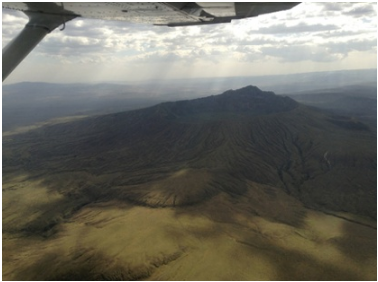
The Rift Valley as seen by Global Rescue’s deployed paramedic 

Sometimes innocuous, seemingly harmless symptoms can be harbingers of something much, much worse.

The member in question was in good health before the onset of seemingly minor symptoms. He initially experienced minor headaches and a low-grade fever, but felt well enough to return to work the day after he experienced them. However, the seriousness of his condition was revealed when a colleague found him unresponsive on the floor that evening.  As he entered the room, he watched as the member suffered from a series of seizures. He quickly alerted the hotel staff who called an ambulance which immediately rushed the member to a hospital in Kampala, Uganda for medical attention. Shortly thereafter, Global Rescue was notified and scrambled a medical team and aircraft from Nairobi to transport him to a facility better equipped to handle critical patients.  Unconscious with his vital signs deteriorating, it was clear that the member may not survive the transport.  The primary diagnosis was cerebral malaria and it was determined the best, closest location to undergo treatment was in Nairobi.  The member arrived at Nairobi General Hospital in critical condition and was immediately admitted to the ICU.  In addition to the transport team, Global Rescue deployed a paramedic to the member’s bedside to monitor his care and act as a liaison between physicians in Nairobi and Global Rescue’s and Johns Hopkins’ medical teams in the U.S.

For the first few days, his condition was extremely worrying: he was nonverbal, unresponsive to pain, and experienced difficulty breathing. When able to speak, he was often incoherent and suffered from short-term memory loss. During this period, Global Rescue’s paramedic spent as much time as possible with him to monitor his condition.

The treating physician confirmed that he had cerebral malaria, a dangerous and often fatal condition which develops when parasitized red blood cells form clots, thus preventing oxygen and essential nutrients from reaching areas of the brain. Serious brain damage can often be the result.

Fortunately, due to the attending physicians’ excellent care, coupled with his swift evacuation, the member continued to show steady improvement over the following weeks. He was able to communicate effectively, follow commands, and seemed generally sharper and more aware with each passing day. Though he remained dependent on supplemental oxygen to breathe, his physical condition steadily improved, and he was eventually able to stand and take steps with assistance.

Once Global Rescue’s medical team determined the member was fit to fly, transport was arranged for the member and his family to fly to Amsterdam, Holland, his preferred destination for continued treatment. They were accompanied by a paramedic during the flight and an ambulance was waiting at the airport in Amsterdam to transport the group to the hospital, thus ensuring proper treatment and care every step of the way.

Unwanted drama arose when the member’s sister was pickpocketed in Nairobi, resulting in the loss of both her and her brother’s passports. Global Rescue worked with Kenyan police to report the theft, and collaborated with the Dutch Embassy to obtain temporary passports and inform them of their arrival.  

After the group landed safely in Amsterdam, they travelled to his hospital of choice to continue his treatment. Global Rescue has maintained communication and the member continues to recover.

For advice on how to reduce the risks of malaria, read this interview with Global Rescue’s African Medical Director.


Share This:

Get Backup | Outside Magazine recommends Global Rescue in 2013 Travel Awards

We are excited to announce that for the second year running Global Rescue has been singled out in the Outside Magazine 2013 Travel Awards.

We are excited to announce that for the second year running Global Rescue has been singled out in the Outside Magazine 2013 Travel Awards.

To select this year’s awards, Outside tapped their global network of correspondents, who spent months on the road traveling from the Philippines to Switzerland to Namibia and then some.

Under the title ‘Get Backup’, Outside advised:

“If you’re going somewhere risky, consider Global Rescue, which offers evacuations services for members of its international medical and security coverage (from $119 per trip; globalrescue.com) Better yet, the company now offers members safety updates on every country – making it a better source of information than the State Department’s travel warnings, which can be six months old.”

Outside magazine has long been one of the world’s most trusted advisors for active and adventurous travelers,” says Outside Editor Christopher Keyes. “In addition to truly award-worthy destinations and travel providers, this year we unearthed a handful of amazing new frontiers in active travel. Our annual edit franchise honors the year’s best trips, hotels, lodges, luggage, islands, and new destinations that will be an invaluable travel resource for years to come.” 

Categories:

News
Share This:

Outside Magazine – Get Backup | Outside Magazine recommends Global Rescue in 2013 Travel Awards

Share This:

Injured Global Rescue members evacuated after plane crash in Myanmar

Emergencies can happen at any time, and Christmas Day is no exception. Global Rescue was ready to respond when two of our members found themselves caught in a life threatening incident while on vacation in…

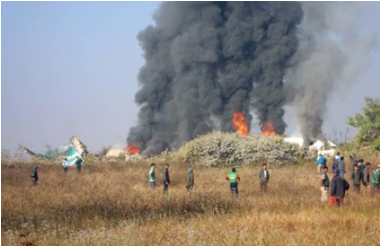
Emergencies can happen at any time, and Christmas Day is no exception. Global Rescue was ready to respond when two of our members found themselves caught in a life threatening incident while on vacation in Myanmar. Our Operations Team was notified that a plane had crashed just short of the runway at Heho airport, near the tourist destination of Inle Lake, and that there were multiple casualties, amongst them a husband and wife who were Global Rescue members. Global Rescue personnel immediately began putting the wheels in motion for the required evacuation to suitable medical care.

While the wife sustained a minor spinal injury, her husband suffered burns covering nearly 40% of his body—including his head, face, neck, hands, and feet—that required urgent attention. An IV was administered at a small, local hospital where other injured passengers from the crash were treated. It was clear though that this facility lacked the resources to appropriately treat this patient’s serious injuries. Global Rescue coordinated the launch of an aircraft to retrieve both members from the remote hospital, and to transport them to Bangkok, Thailand. Upon landing, they were met by an ambulance stationed on the tarmac and taken directly to one of the country’s leading hospitals. Here, they were met by a Global Rescue paramedic, deployed from our Bangkok Operations Center to oversee his care.  Their admittance had been pre-arranged and emergency care physicians were standing by, ready to receive them into the hospital’s Intensive Care Unit. After initial stabilization and having consulted with our specialists at Johns Hopkins Medicine; it was determined  that a transfer the best burn center in Singapore would be the next step in his fight for survival. The transfer was completed by private ICU aircraft and a seamless admission to the hospital was completed.

Understanding the complications beyond the immediate physical toll of such a trauma, our experienced Operations Specialists also attended to the finer but often overlooked details of their situation; replacing the wife’s prescription glasses that had been destroyed in the crash, relocating the wedding ring that had been cut off during initial treatment, bringing western-style food to the hospital for a comforting taste of home, reaching out to notify the couple’s daughter of any updates, and arranging a psychologist to work bedside with the couple to provide counseling after this traumatic event.

Within two weeks of the crash, after overseeing several skin graft surgeries, Global Rescue transported the husband by air ambulance back to his home country hospital in New York City. His wife, fitted with an orthopedic back brace, was met in New York by a member of Global Rescue’s operations team, and transported to her husband’s bedside. The couple continues to recover.


Share This:

Global Rescue partners with the American Birding Association (ABA)

Global Rescue is pleased to announce a new partnership with the American Birding Association.

Global Rescue is pleased to announce a new partnership with the American Birding Association.  As the ‘Official Emergency Medical and Evacuation Provider’ of the ABA, Global Rescue will offer the organization’s members and the birding community a choice of memberships, which include advisory, field rescue and evacuation services, in both medical and security emergencies.

We are proud to offer our members the services of Global Rescue,” said Jeff Gordon, ABA President.

We identified Global Rescue as the most capable company to provide the birding community with the protection they need in the event of a medical or security emergency. Fortunately, serious incidents are rare, but getting injured or becoming ill in many of the locations to which birders travel can be both a serious and costly matter. Global Rescue’s unique ability to conduct a field rescue and to evacuate a member to their home hospital, make them an obvious choice. I highly recommend that any ABA member or birder who travels consider their services, which are remarkably affordable.”

Global Rescue has a long track-record of providing emergency services to  difficult locations.  The company recently evacuated Jim Klug, Chairman of the American Fly Fishing Trade Association, from a remote river camp in Bolivia. Click here to read the whole story. Memberships start at $119.

About ABA

The ABA is a non-profit 501(c)(3) organization that provides leadership to birders by increasing their knowledge, skills, and enjoyment of birding. They are the only organization in North America that specifically caters to recreational birders. They also contribute to bird and bird habitat conservation through our varied programs. The ABA’s education programs promote birding skills, ornithological knowledge, and the development of a conservation ethic. The ABA encourages birders to apply their skills to help conserve birds and their habitats, and they represent the interests of birders in planning and legislative arenas.

About Global Rescue

Global Rescue is a worldwide provider of integrated medical, security, intelligence and crisis response services to corporations, governments and individuals. Founded in partnership with Johns Hopkins Medicine, Global Rescue’s unique operational model provides best-in-class services that identify, monitor and respond to potential threats. Global Rescue has provided medical and security support to clients during every globally significant crisis of the last decade. Memberships start at $119 and entitle members to rescue and transport services to their home hospital of choice.

For more information, call +1-617-459-4200