Loading...

Share This:

Global Rescue provides life saving care after member suffers serious cardiac event in the Middle…

Dr. John Schmeelk, a university teacher, suffered a life threatening cardiac condition while living in Qatar. Global Rescue medical teams were soon on the ground, overseeing his initial treatment and orchestrating his subsequent evacuation by…

Dr. John Schmeelk, a university teacher, suffered a life threatening cardiac condition while living in Qatar. Global Rescue medical teams were soon on the ground, overseeing his initial treatment and orchestrating his subsequent evacuation by air ambulance to Israel for a life saving procedure.

In his letter Dr. Schmeelk recounts his experience and explains how Global Rescue provided so much more than evacuation services:

January 21, 2013

Dear Global Rescue:

Now that I am safely back in the United States and on my way to recovery, I want everyone at Global Rescue to know how very grateful my wife, Jean, and I are for the wonderful, literally life-saving care that you provided not only for me but for her as well.

During the early hours of Friday, March 16, I was admitted into Qatar’s national hospital’s state-of-the-art heart pavilion that had just opened in October 2011. My defibrillator/pacemaker had shocked me twice in two days, and this was just the beginning of increasingly more shocks as my arrhythmia worsened. Very soon after my Human Resources Director put Global Rescue on alert that I might need to be evacuated to the US, Jean and I met David, a Global Rescue Medical Specialist, at my hospital bedside. He immediately began inquiring of the nurses and doctors about the details of my condition and my medications, and he began instructing Jean about taking carefully detailed notes, asking questions, and getting names of everyone who gave us information. He also encouraged her to go home and rest while he stayed with me. We had thought of Global Rescue as an evacuation service, but we were to learn that they are so much more.

On March 23, before I was stable enough to be evacuated, David was recalled to the US to handle another case. His replacement, a paramedic named Andrew, arrived on March 26 and continued the same extensive and informative care that David had performed. He monitored nurses’ care, explained what they were doing, occasionally assisted me himself, and asked both the nurses and my doctors questions that Jean and I did not know to ask. When we realized that I needed a heart ablation that the hospital could not perform if faulty nodes existed inside the heart tissue, Global Rescue immediately began contacting nearby hospitals trying to locate one that would be able to give the degree of care I needed. (I could not be directly evacuated to the US because I was not stable enough to endure the long commercial flight, and the medivac plane required refueling every three hours, making a long, trans-Atlantic flight even longer and more difficult.)

Once an appropriate hospital was located in Tel Aviv, Israel, Global Rescue arranged the medivac aircraft and doctor that would take me there, and they booked a commercial flight for Jean. When complications delayed our leaving the airport, Global Rescue in Boston stayed in touch with Jean via cell phone during her layover and arranged a hotel room for her to spend the night so she could arrive at the hospital about the same time that I did. Once on our way, Andrew accompanied me in the medivac closely monitoring my condition along with the evacuation doctor during the entire flight. The next day, he would leave me briefly to meet Jean when she arrived at the Tel Aviv airport. I learned later that Global Rescue’s “point man” on the ground in Tel Aviv arranged for a gentleman from the Israeli State Department to meet Jean at the door of the airplane when she landed and to escort her through Passport Control, ensuring that she moved quickly through the process and forestalling any language problems. This is but one example of the multitude of ways in which he proactively cared for both of us during the month of April while we were in Tel Aviv. In addition, he arranged resort accommodations for Jean within walking distance of the hospital at a greatly reduced rate, gave her several brief tours of the city, frequently talked with my doctors and relayed their information to Jean and me, to name just a few of his many ways of caring for us.

One of the most touching acts performed by Global Rescue was personally escorting Jean to Jerusalem to the Wailing Wall so she could post a prayer for my recovery before my first ablation. Such thoughtfulness and care were far beyond the call of duty, but very deeply appreciated by both of us.

We remained in Global Rescue’s care about six weeks, until they were able to deliver us personally to my cardiologist’s office in New York and hear that both my cardiologist and the ICD team were satisfied with my condition.

This past holiday season, my wife and I were able to celebrate more joyfully than ever before this year because we both know that these were  holidays I might very well not have lived to see. We send our deepest thanks to each of you—and we know there were many more “behind the scenes” whom we did not meet—at Global Rescue who participated in my evacuation.

With deepest respect and gratitude,

Dr. John Schmeelk


Share This:

Global Rescue partners with the International Game Fish Association (IGFA)

Global Rescue is pleased to announce a new partnership with the International Game Fish Association, a non-profit organization committed to the conservation of game fish and the promotion of responsible and ethical angling practices.

Global Rescue is pleased to announce a new partnership with the International Game Fish Association, a non-profit organization committed to the conservation of game fish and the promotion of responsible and ethical angling practices. As the ‘Official Emergency Medical and Evacuation Provider’ of IGFA, Global Rescue will offer the organization’s members and their families a choice of memberships, which include advisory, field rescue and evacuation services, in both medical and security emergencies.

“We are proud to have chosen Global Rescue as the ‘Official Emergency Medical and Evacuation Provider’ of the IGFA and its members,” said Mike Myatt, IGFA Chief Operating Officer.

“We identified Global Rescue as the most capable company to provide our clients with the protection they need in the event of a medical or security emergency. Fortunately, serious incidents are rare, but getting injured or becoming ill in many of the locations to which IGFA members travel can be both a serious and costly matter. Global Rescue’s unique ability to conduct a field rescue and to evacuate a member to their home hospital, make them an obvious choice. I highly recommend that IGFA Members consider their services, which are remarkably affordable.”  

Global Rescue has a long track-record of providing emergency services to anglers and recently evacuated Jim Klug, AFFTA Chairman and owner of Yellow Dog Fly Fishing Adventures, from Tsimane Lodge, Bolivia.  Click here to read the whole story. Memberships start at $119.

About IGFA

Founded in 1939, the International Game Fish Association is the authority on sport fishing worldwide. The IGFA is committed to the conservation of game fish and the promotion of responsible, ethical angling practices through science, education, rule-making and record keeping. With members in nearly 120 countries and territories, the not-for-profit association’s headquarters are in the 60,000 sq ft IGFA Fishing Hall of Fame & Museum in Dania Beach, Florida. Learn more at www.igfa.org


Share This:

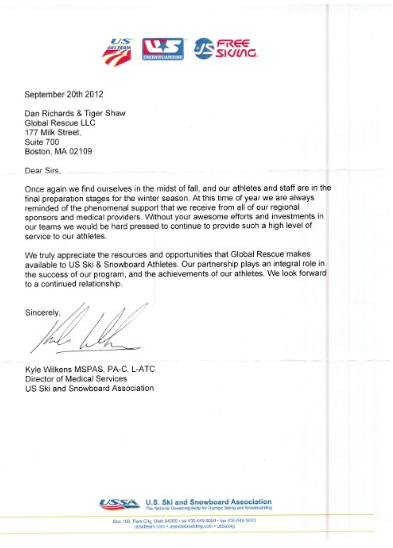
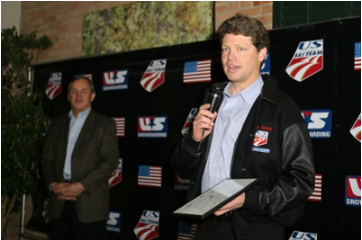
The U.S. Ski and Snowboard Association writes to thank Global Rescue

    Global Rescue is the official provider of aeromedical services to the U.S. Ski and Snowboard Team.  


Global Rescue is the official provider of aeromedical services to the U.S. Ski and Snowboard Team.


Share This:

VIDEO: Tannis Boisvert talks about her crash on Mt. Hood

Tannis Boisvert, a ski racer and Alpine Ontario Athlete, recalls her crash on Mt. Hood and subsequent road to recovery.

Share This:

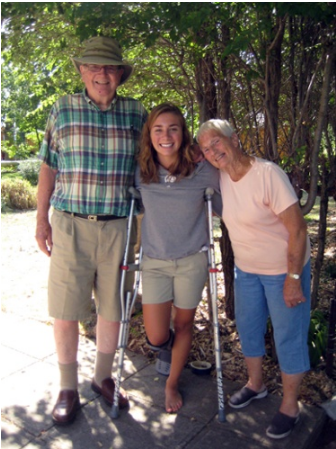
A young ski racer recalls Global Rescue’s role in her recovery after her accident on…

"...As I was flying through the air, I immediately felt a horrible searing pain go through my Achilles and my whole foot. I knew right away this was bad."

Tannis Boivert recovering after her accident on Mt. Hood

During this past summer I travelled to Mt. Hood, Oregon, with the Ontario Ski Team for our summer training camp. The training was absolutely amazing, and our team was fortunate enough to have great weather for the full three weeks that we spent there. Towards the end of the camp, our coaches met up with one of the Global Rescue advisors in the area, who explained the membership benefits and how to utilize them. With a full understanding of the program, our coaches were very glad to be on board, but only hoped they wouldn’t have to use it for their athletes.

On the last day of the training camp, the snow was very soft and unstable. About five turns into my warm up run, my right foot struck a hole half way through a turn, and at full speed, my feet stopped and my body kept going. As I was flying through the air, I immediately felt a horrible searing pain go through my Achilles and my whole foot. I knew right away this was bad.  

On the toboggan ride down, I was already very nervous and upset knowing that I had injured myself. After my coach and the ski patroller carefully pulled off my ski boot, an ambulance was called and I was transported to the closest hospital in Oregon. In the first hour of being at the hospital I had 3 x-rays taken of my foot, and two different doctors analyzed the results. The whole time I was just hoping that I had just sprained my ankle, or done something minimal enough that it wouldn’t take any time away from my training. But, when the doctors notified me that I had in fact broken my Calcaneus (my heal), I was mortified. I instantly started thinking of the training I would miss and the long and painful road to recovery.

Thankfully I didn’t have enough time to think about the après injury process because within 30 minutes of knowing my injury I had a foot specialist in my hospital room telling me my options, and explaining that the best one for me was to have surgery and get a screw put through my heal.  Being 18, I could make the decision on my own, and I decided on the surgery. But before I could get surgery I had to get my insurance cleared, and not being in Canada, insurance companies needed time to get the clear, which I didn’t have. Not having any luck contacting my parent’s insurance company, my coaches contacted Global Rescue, and from that point on everything happened so quickly.

The ability of Global Rescue’s response team was amazing and words cannot explain how thankful both my coach and I were at that moment to have them helping us. Because of Global Rescue I was able to get surgery on my foot 3 hours after arriving at a foreign hospital with one of the United States top orthopedic surgeons who was at the hospital for that evening only.

If I didn’t have Global Rescue’s help and guidance I most likely wouldn’t have been able to get surgery as quickly as I did. I might have even had to fly back to Canada and wait weeks to get the surgery that I got in just hours in the States because of Global Rescue. They were not only with me during the surgery but were there for me to organize my flight home in first class. After two months of therapy, pool workouts and routine phone calls from Global Rescue to hear about my progress, I am ready to get back on the slopes and begin what I hope to be my best race season yet!

Global Rescue isn’t just there when you’re injured, but is there until your back on your feet too, and as an athlete, the peace of mind that I have knowing that they’re there for me is worth every single penny.


Share This:

Global Rescue’s 24/7 medical advice saves one member’s vacation in Tanzania

One of our members, Rion Causey, recounts his experience using the advisory benefits of his Global Rescue membership while traveling in Tanzania:


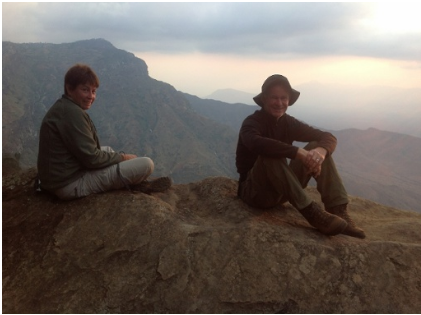
Rion and Diane Causey in the Usambara Mountains of Tanzania

While the headline stories about Global Rescue tend to describe challenging rescues from remote corners of the world, there is a less dramatic but equally important side to what we do.

Whether it is a simple stomach ache or something more serious, Global Rescue members can pick up the phone 24/7 and speak directly with our on-staff paramedics. In conjunction with our in-house physicians and specialists at Johns Hopkins Medicine, we will provide you with the timely and knowledgeable advice that can make or break your trip.

One of our members, Rion Causey, recounts his experience using the advisory benefits of his membership while traveling in Tanzania:

“I would like to compliment Global Rescue on their assistance to my wife during a recent hiking trip in the Usambara Mountains of Tanzania.  Her stomach had been getting progressively worse for two days, and now her temperature had begun to rise.  She had been taking Imodium, but with little success.  We had gotten a prescription for Cipromycin before leaving the States, but weren’t sure if the situation warranted use of such strong drugs, and how long to take it.  We used our iPad, connected to the Internet using a cellular SIM card, to contact Global Rescue and alert them to Diane’s symptoms.  They responded immediately and requested further information on specific conditions.  Within an hour of my transmission of that information, Global Rescue relayed treatment recommendations from their medical staff, which includes oversight from specialists at Johns Hopkins Medicine.  Taking the Cipromycin immediately and watching out for dehydration resulted in her temperature breaking within twenty four hours.  We were able to return to Arusha, and start our planned safari.  Having an emergency evacuation membership from a company that provides more than just evacuations saved our vacation.”

Rion Causey


Share This:

Jim Klug recalls his evacuation from the Bolivian jungle after freak eye injury

Member Jim Klug, AFFTA chairman and founder of Yellow Dog Flyfishing Adventures, recounts his freak eye injury and subsequent evacuation from deep in the Bolivian jungle:

Jim Klug, AFFTA chairman and founder of Yellow Dog Flyfishing Adventures, recounts his freak eye injury and subsequent evacuation from deep in the Bolivian jungle:

As someone who literally travels the globe for a living, I am more than aware that accidents can happen and problems can occur at any time and in any place. That said, I have always been of the mindset that accidents are things that happen to OTHER people, and that as long as I was careful and stayed “situationally aware” at all times, I could avoid problems and serious accidents. Recently, however, during a trip to jungles of Bolivia to photograph and fish for Golden Dorado, I received a healthy dose of reality that included a scary medical situation, a Global Rescue evac, and two days in the hospital in Miami. 

We had made the trip to Tsimane’s Asunta River Lodge on the Secure River, one of the most remote and untouched areas in all of Bolivia. This is an area that is home to spectacular Golden Dorado – one of the largest, meanest and toughest fish found anywhere in the world of freshwater fishing. On day three of the trip on the Secure River, as we headed back to the main lodge after camping some twenty miles upstream, I sustained a serious “blunt force trauma” injury to my right eye, which took out my vision entirely and left me with a serious concussion. When the accident occurred, we were still several miles upstream from the lodge, with the sun beginning to set and darkness coming on fast.

In trying to recreate the events of the accident in my mind, I realize that it was a totally random, freak accident that happened incredibly quickly.  We were moving down the river in large, 28’ dugout canoes, with a fishing guide, two anglers, and two local Indians who were “poling” the boats with long, 20’ wooden poles. As we negotiated the canoe though a fast section of whitewater,  the front boatman was attempting to push us off of an outcropping of rocks when the long wooden push pole became wedged in the rocks. Not wanting to let go of the pole and lose it, he attempted to hold on and pry it free from the rocks. What happened as the boat continued to move through the water was that the pole bent back like a loaded bow until the boatman could no longer hold on to it.  At that point, it slipped from his hands and the pole sprang back and hit me directly in the face. The blow was directly to my right eye, and I literally never saw it coming. It basically sprang back with the same force of someone swinging a heavy wooden baseball bat.  Direct hit to my eyeball and instantaneous loss of vision.

What had been a leisurely float back to the lodge quickly became a serious medical situation, and the moment I “came to” after receiving the blow, I knew that I was in trouble. I had completely lost all vision in my right eye and there we were in one of the most remote areas in the entire region. Within minutes of the accident occurring, my fishing partner was on the sat phone calling Global Rescue, who immediately kicked things in to high gear and began to help from several thousand miles away.   

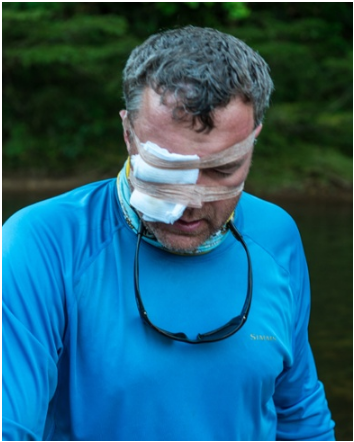
Thus began a series of calls, medical consultations, and support procedures that Global Rescue handled from that point on. After stabilizing the injury and making it back to the lodge that night, Global Rescue arranged for an air evacuation early the following morning. I was back in the Bolivian city of Santa Cruz that afternoon and was immediately checked in to the hospital. From there, I was flown back to Miami the following day, where I was taken directly to Bascom Palmer Eye Institute to meet with several doctors and eye specialists. As I departed the lodge to begin my journey back to the U.S., I had both eyes bandaged and covered (they tell you to cover both so that neither eye is open and there is no “sympathetic” eye movement from one to the other”) making for a pretty unusual journey. That said, every step of the way – from the moment I was flown out of the jungle to the time I arrived home in Montana five days later – Global Rescue was there to assist. With local representatives, medical support staff, interpreters, pilots, doctors, and many others, they simply did not miss a beat.

From years of traveling to exotic areas and remote locales, I have learned that it is always good to avoid taking unnecessary chances.  I am someone who believes that you should always fish and travel smart, avoiding situation where you could be injured.  What this situation taught me, however, is that no matter how careful you are, there are some situations and accidents that you simply cannot prevent. And when an injury occurs, it can come out of nowhere, and chances are you will never see it coming.  Travel smart and be prepared. When it comes to medical evacuation and security insurance, my recommendation is to never leave home without it!


Share This:

Global Rescue announces partnership with Young Presidents’ Organization

Global Rescue has partnered with Young Presidents’ Organization (YPO) to offer YPO members and their families worldwide crisis response, evacuation and consultative services.

Boston, MA (October 17, 2012) —  Global Rescue has partnered with Young Presidents’ Organization (YPO) to offer YPO members and their families worldwide crisis response, evacuation and consultative services.

“We are excited to partner with YPO and to protect and provide critical services to their members wherever they may travel,” said Global Rescue Senior Director of Response Services Tiger Shaw. 

As a partner of YPO, Global Rescue will offer the organization’s members and their families a choice of memberships, which include advisory, field rescue and evacuation services.

About YPO

YPO (Young Presidents’ Organization) is a not-for-profit, global network of young chief executives connected around the shared mission of becoming Better Leaders Through Education and Idea Exchange™.  Founded in 1950, YPO today provides 20,000 peers and their families in more than 120 countries with access to unique experiences, world-class resources, alliances with top learning institutions, and specialized Networks that help them enhance their business, community and personal leadership.  Altogether, YPO member-run companies employ more than 15 million people around the world and generate US$6 trillion in annual revenues.  For more information, visitwww.ypo.org.  Also find YPO on Facebook and Twitter.

About Global Rescue

Global Rescue is a crisis response and risk management company that provides best-in-class medical, security, advisory, consultative and evacuation services for individuals, corporations, governments and NGOs worldwide.  The company’s emergency response teams are comprised of paramedics, physicians and security personnel, many of whom are veterans of elite military special operations units.  Through an exclusive relationship with Johns Hopkins Medicine, Global Rescue members benefit from the oversight of some of the world’s finest physicians.  Global Rescue utilizes medically equipped aircraft to fly members to their home hospital of their choice in the event of an illness or injury requiring hospitalization.  Global Rescue is the official provider of medical evacuation and advisory services to the U.S. Ski and Snowboard Teams, the American Alpine Club, NASA and many leading companies.  For more information, visit www.globalrescue.com/ypo

For further information, please contact Global Rescue at +1 617 459 4200 


Share This:

Stranded hunter evacuated after running out of critical heart medication

While hunting in a remote part of Canada, one Global Rescue member never imagined that fog would be his biggest obstacle since facing a quintuple-bypass in 2004.

While hunting in a remote part of Canada, one Global Rescue member never imagined that fog would be his biggest obstacle since facing a quintuple-bypass in 2004. Global Rescue received a worried call from the member’s wife stating that persistent fog was creating dangerous flying conditions and delaying his scheduled helicopter flight home. For most, this postponement would mean hunting for a few more days, but for this Global Rescue member, who had already run out of his heart medications, it had become a life threatening situation.

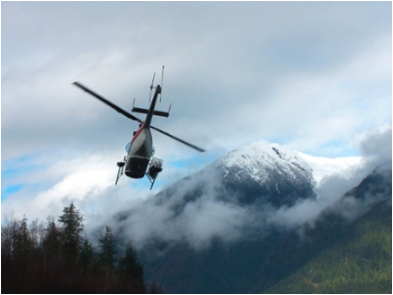
Global Rescue immediately assessed the situation and began coordinating with helicopter assets, the member’s Primary Care Physician, pharmacies and the outfitter. Having consulted with Johns Hopkins doctors, Global Rescue’s in-house medical team provided the member with advice to help keep his heart condition under control while he was waiting without medication. As soon as there was a window of time without fog, a helicopter was dispatched to the hunter’s location. The member along with six others in his party were extracted and transported to base camp. The helicopter pilot greeted the member with a package containing all of his medications and a potentially grave situation was averted.

After the member was safely home, he wrote to thank Global Rescue:

“Please convey my deep thanks to all who participated in this effort to help me during this episode. I and the others in my hunting party were very impressed with the thoroughness of your efforts, your commitment and, perhaps most important personally, the support and comfort that you gave to my family. I will remain a Global Rescue client and will laud your capabilities and performance at every opportunity. Thanks again.”

Denis Karnosky, October 2012


Categories:

Health & SafetyTravel
Share This:

Do or Die | 5 unique survival tips from our friends at The American Alpine…

If your expedition goes sour, first aid training and compass skills might not be enough to pull you from a life-threatening morass.

   Don’t let your expedition go south…

By Jeff Wise, American Alpine Club

Whether you love hiking, climbing, mountain biking, or kayaking, you probably know a lot about outdoor safety.

But if your expedition goes sour, first aid training and compass skills might not be enough to pull you from a life-threatening morass.

Here at the American Alpine Club, we’ve seen a little innovation go a long way, so we put together some of our favorite backcountry tips and tricks:

1. Fire Starters You Didn’t Know You Had.

Cleaning wounds is not a high priority when you’re lost or close to hypothermic. Bust out the first-aid kit anyway! You’ll find a few staples—alcohol swabs and cotton balls—that serve double duty as fire starters in an emergency. For extra spark, coat the cotton in petroleum jelly. Duct tape is also flammable, which demonstrates yet again that it is, without question, the most versatile tool in the universe. Or is it?  

2. Fishing Line—The New Duct Tape

Duct tape is good, but fishing line might be even better. Not only is fishing line super lightweight, but it also has dozens of backcountry uses when you’re in trouble. Hungry? Catch your food. Exposed or broken? Tie up a tarp for your shelter, repair clothes and shoes, or stitch up your wounds.

Stranded? Use the line to make a signal kite. Simply construct the frame from sticks, tent poles, or trekking poles. Build the body from a bright shirt or section of space blanket. Then tie it all together and launch it to direct rescue crews to you—or for impromptu fun on a windy day. Fishing line can even function better than tweezers to remove ticks: just tie an overhand knot around the head, get it snug, and pull away from the skin. Top that, duct tape!

3. The Sun: Nature’s Iodine

For safe drinking water in the backcountry, filters and tablets are best, of course. But there’s another crafty way to do away with dangerous bacteria in your water.

Pack a plastic bottle of soda and drink it the first night of your trip. Save the bottle because the thin layer of polyethylene terephthalate (PET) allows the sun’s ultraviolet radiation to perform a bit of magic. Just fill the bottle most of the way with your questionable water, shake it up, top it off, cap it, and put it in direct sunlight.

In one afternoon the combination of heat and radiation will have killed most, if not all, of the microbes that could do you harm. For the same reason, the top few inches of lake water are the cleanest because of the power of the sun. Remember to choose clean snow over lake ice because bacteria can survive for months in the ice, and use a bandana or shirt to remove large particulates and silt.

4. No Cell Service? No Problem. 

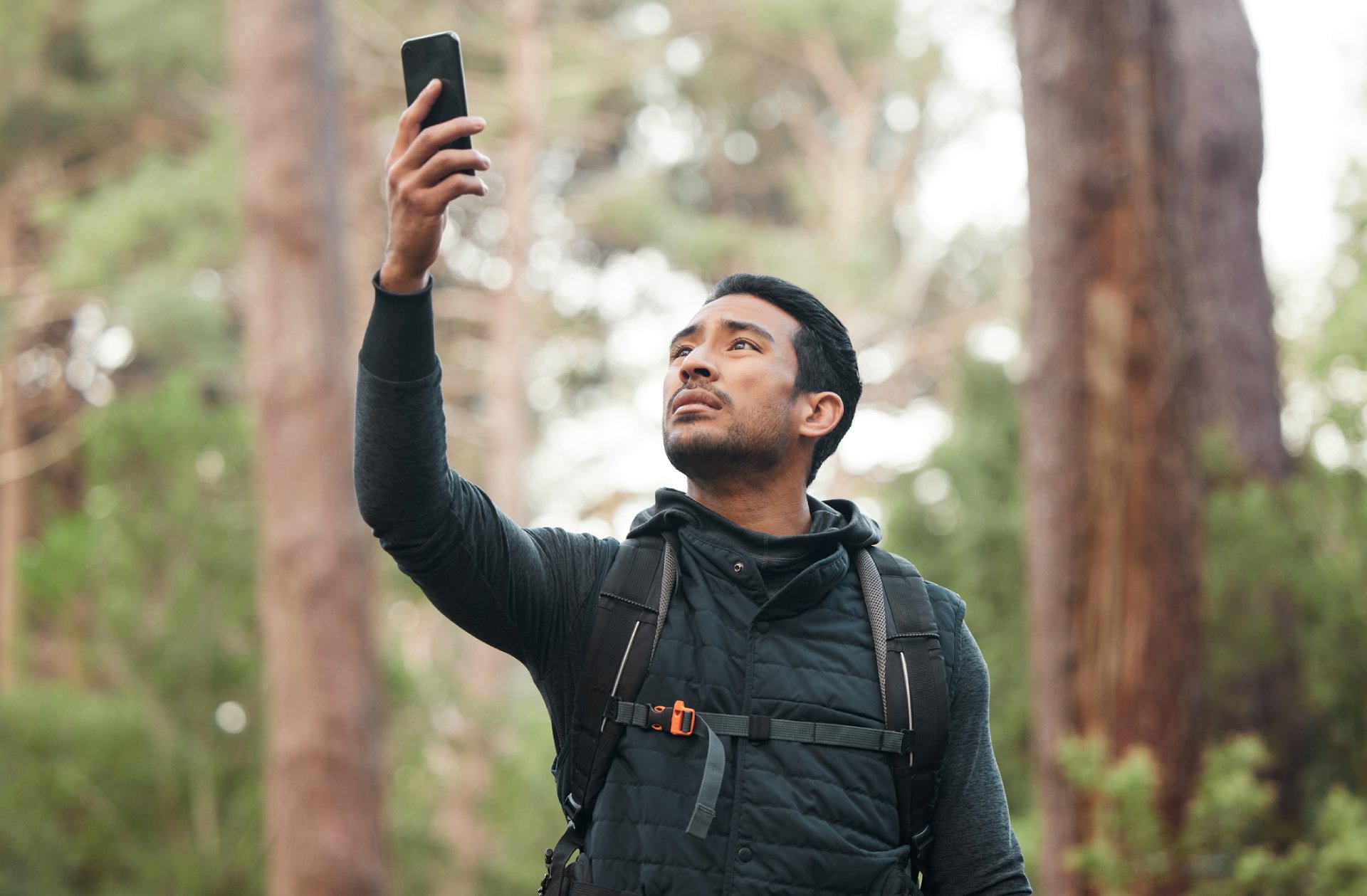
It’s no surprise that making a cell phone call requires satellites to know where you are. Use that to your advantage when you’re having an emergency in no-man’s-land. Even with zero cell service, you may be able to give emergency or rescue teams clues to your whereabouts.

If you can’t call 911 or send a text, at least turn on your phone to drop “digital breadcrumbs” that may aid those looking for you. Make sure your emergency contact at home knows about this trick and has your phone number and service provider at the ready.

5. The Back-Up Plan

Most adventurers have health insurance or accident insurance, but not many have rescue insurance. Whether you’re all about the weekend epic or a long trek overseas, rescue insurance protects you from insane five-digit costs. Even here in the United States, some local rescue groups and some governmental agencies are beginning to charge for rescue services.

Having the right insurance—available from Global Rescue or by joining the American Alpine Club—also creates peace of mind for you and your family and friends. If you have insurance and something does go wrong, you can focus on getting healthy instead of worrying about the rescue bill. 

Know other interesting survival tips? Have an epic rescue story? Share them in the comments below—we’d love to hear from you.

About the American Alpine Club
The American Alpine Club is a nonprofit organization that provides benefits, knowledge, inspiration, and conservation for the outdoor community.

All members benefit from a Trailhead Rescue service from Global Rescue and many climbers traveling abroad choose to upgrade to the full Global Rescue membership.

Learn more about AAC programs and member benefits at americanalpineclub.org       


Categories:

Health & SafetyTravel
Share This:

Travel Health |10 crucial things to consider before leaving home

Whilst a Global Rescue membership goes a long way to keeping you safe and well when traveling, there are some additional simple steps you can take to reduce the medical risks associated with traveling abroad.

Whilst a Global Rescue membership goes a long way to keeping you safe and well when traveling, there are some additional simple steps you can take to reduce the medical risks associated with traveling abroad. 

  1. Be prepared before you step out the door. Complete a pre-travel physical and make sure any chronic medical conditions are stable. Avoid traveling too soon after surgery, complications may surface 3-6 months after some surgical procedures. Make sure your vaccinations are up to date, for some countries you will need to provide proof of vaccination to enter the country.                                                    
  2. Know your health insurance policy and service coverage.Does your plan cover medical bills if you are hospitalized while traveling internationally? Do you have medical evacuation coverage for emergent medical transportation? Do you have trip cancelation insurance in case you miss your flight due to a medical emergency?                               
  3. There is a chance some international medical facilities will not work with your health insurance provider. Have a backup plan, a way to pay for emergency care if needed. Travel with a credit card or have another way to access funds quickly. Some facilities will turn you away at the door regardless of the nature of the medical emergency if you cannot provide a guarantee of payment or some type of financial deposit for services rendered.                                                          
  4. Keep emergency contact information with you at all times. Many people carry a quick reference card listing their important medical information, including daily medications, allergies, major medical conditions, past surgeries, and past medical history. Medical alert bracelets or necklaces are also important if the allergy or condition has the potential to cause a medical emergency.                                      
  5. Bring your own pharmacy, there is no guarantee there will be one around the corner. It is good to travel with basic over the counter medications and a small first aid kit. Pain relievers, medications to control a fever, antacids, basic bowel management medications (anti-diarrheal medications and stool softeners), allergy medicine, anti-biotic ointment, eye drops, decongestants, cough drops, cold medicine, blister dressings, band aids, oral rehydration electrolyte mix, yeast infection treatments and sunscreen are just a few items we take for granted that can easily be obtained at most drug stores. Any medications purchased abroad may not be subject to the same manufacturing standards and quality control you expect at home.         
  6. Bring 2x the amount of daily medication needed. If you are traveling for 7 days, bring a 14 day supply of daily medications. Travel plans can be delayed, flights cancelled, and pill bottles can spill. Refilling a prescription while traveling internationally can be challenging and having the flexibility to accommodate a few extra days of travel reduces the risk of this happening. If you have a prescribed medication you use “as needed”, make sure you bring it.                                     
  7. Keep prescription medications in the original bottle to prevent any questions of a medication’s identity. If this is not possible, bring the medication in pill box cases.                                                            
  8. Have the ability to call for help, know how to call for help, and know where you would want to go for help.  Outside of the US dialing “911” does not work. Have a way to call for help, a local cell phone or SAT phone, know how to dial that number based on international calling configurations, and what number to call for emergency medical services. Research local hospitals or travel clinics before your travel, know the best facilities available to you in a specific area. If you are a US Citizen, the US Embassy based in your country of travel is a great resource in providing this information. You can also register your dates of travel with the embassy, which can further help in an emergency.                                                           
  9. Be familiar with health concerns relevant to the location.There are general health advisories, health risk assessments and food and water safety precautions specific to different regions. For example, in certain regions you may want to avoid salads and ice cubes, both of which may have been contaminated by polluted water.                                 
  10. Travel itself can take its toll on your health – listen to your body. Allow your body time to acclimatize to different environments, time zones, air quality and altitude changes. Drink as much as possible to avoid dehydration and expect that humidity changes may influence your sinuses. 


Share This:

Tiger Burning Bright | Global Rescue Senior Director Profiled by Ski Racing Magazine

Ski Racing Magazine caught up with Tiger Shaw, senior director of response services for Global Rescue, to get his thoughts on skiing, life as a parent and his new role at Global Rescue.

USST veteran Tiger Shaw turns his talents toward a new role at Global Rescue

Tiger Shaw, a two-time Olympian and 10-year veteran of the US Ski Team and World Cup circuit enjoyed an athletic career at the highest international level. Today, several decades removed from his days on the hill, Shaw is the senior director of response services for Global Rescue — a crisis response company dedicated to redefining the evacuation services provided to corporations, academic institutions, government agencies and injured athletes, travelers and outdoorsmen all around the world.

From Global Rescue’s headquarters in downtown Boston, Shaw oversees accounts from large international corporations with thousands of employees overseas to elite teams of ski racers traveling to camps in Mount Hood, Chile, New Zealand, Europe and beyond. He says that his passion for the sport of ski racing and commitment to safety for young athletes propelled him to his current position at Global Rescue, where he believes he has an opportunity to impact medical care and safety in the ski community.

Ski Racing Magazine caught up with Shaw to get his thoughts on skiing, life as a parent and his new role at Global Rescue.

Your ski career produced a long list of achievements. What was your proudest moment as an athlete?

Making two Olympic teams was definitely a highlight, but my World Cup results are the most memorable. That’s the closest that I ever got to being best in the world — third in a run, sixth in a race, etc. Making the Olympics is an honor, but that is making a cutoff to make a particular team, not necessarily striving to be the best in the world. It’s less of an achievement to make the Olympics as an American than it is to place in the top five in the world.

Throughout your career, you must have traveled to some pretty out-of-the-way places. Global Rescue does what nobody else does, and gets to these places. What’s the most remote ski area you’ve ever been to?

Las Lenas, Argentina, no question. After a 12-hour flight to Buenos Aires, you have to drive 26 miles west to a small domestic airport. Then it’s a 45-minute 737 flight to interior Argentina. It felt like we landed on a dirt strip. Once there, we took buses to the resort where all the buildings are A-frames to withstand the 10 to 20 feet of snow that would fall between now and when we left. Not much else out there… I actually self-evacuated once after hurting my knee. Caught a flight to Buenos Aires, lugged my bags, spent three days locally trying to get a flight, all while limping around — fun!

With six knee operations under your belt, you’re no stranger to injuries. Have you ever witnessed a serious injury to a friend or teammate?

Yes, unfortunately. I was in Squaw when Joel Persone launched off a downhill jump while training, and landed on a coach who was salting the track. Luckily both survived, with one taking many years to recover, but he did. I have a few other stories like that — glaciers, accidents, car wrecks. I’m old enough to have seen a lot.

These days, you surround yourself with former athletes, paramedics, and U.S. special operations veterans at the Global Rescue headquarters. Tell us about your role.

I joined the company in the summer of 2011. My involvement here began with the rescue of my own kid — she wrecked her knee in Panorama, B.C., and Global Rescue brought her home for surgery, which, thankfully, went well and she is still racing today. We knew about Global Rescue because Burke Mountain Academy was way ahead on this preparedness curve. They required that all internationally-traveling kids have coverage. Similarly, GMVS covers every single kid and staff at the school with Global Rescue. Many clubs also stress coverage, some more than others, and as a result not all ski racers are covered, but should be.

How is Global Rescue making an impact in the ski community?

We’re trying to make it a safer sport through better preparation, and better response to problems and emergencies when they occur. I do believe that, through our work, we have significantly affected the lives of many skiers. There was no one as capable before us. Just ask anyone who has suffered because of the past deficiencies, and those that have benefited from us.

Over the past few years we’ve also formed a number of partnerships with ski clubs and academies across North America. Through these relationships, we can protect kids, members and their families, and also help clubs with risk mitigation and destination pre-planning. These are invaluable benefits for large groups traveling to race or train. Many clubs take advantage of the preparation help we can provide, some don’t. My message to them would be, “Don’t wait for a bad accident before you finally get prepared. Get coverage, get prepared!”

Now as a parent of several elite racers, it must be a bit unnerving to watch your children compete. How has your perception of risk in the sport evolved from your career as an athlete to your time as a parent?

Dramatically. As you get older, you grow more risk-averse. Smarter is safer. Even these days, when skiers are doing many and much more dangerous things (pipes, slopestyle, extreme), it is in fact safer than it used to be, because of awareness and equipment improvement. As a coach and a ski club director, I look at ski trails for safety, fencing in the proper position and place, obstacles protected, safety bars down, etc. I feel like I’m the opposite of that mayhem guy in the Allstate Insurance commercial. My kids create chaos; I try to control and mitigate it. When my kids travel to race and train, I sleep easy knowing they have one number to call in the event of an emergency.

As a parent, why would you recommend Global Rescue to the parents and coaches of athletes nationwide?

Peace of mind, security and professionals on top of it should an incident arise. One number to call, and a solution waiting to kick in. I recommend Global Rescue to parents because I know the people here, and I want them taking care of me if I need help. Plain and simple.