Categories:
NewsSeptember 1, 2011
Categories:
Missions & Member TestimonialsAugust 25, 2011
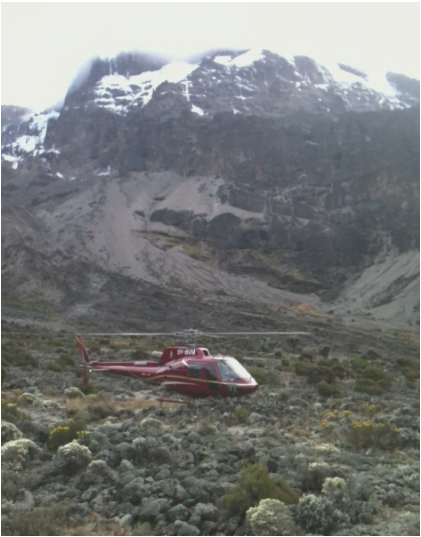
Global Rescue has performed a field rescue for a physician experiencing severe shortness of breath, chest pains and other signs of life-threatening illness as she was climbing Mt. Kilimanjaro.
About two-thirds of the way up Africa’s tallest mountain, Michele Donsky complained of tightness in her chest and extreme difficulty breathing. The 55-year-old marathon runner could only speak one or two words at a time before she began wheezing. Her climbing guide, Eddie Frank, owner of Tusker Trail, after establishing that she was a Global Rescue member, called Global Rescue and requested a medical evacuation. Tusker, which employs wilderness medicine trained staff and maintains a high guide-to-client ratio, is arguably the best prepared outfitter on Kilimanjaro when it comes to client safety.
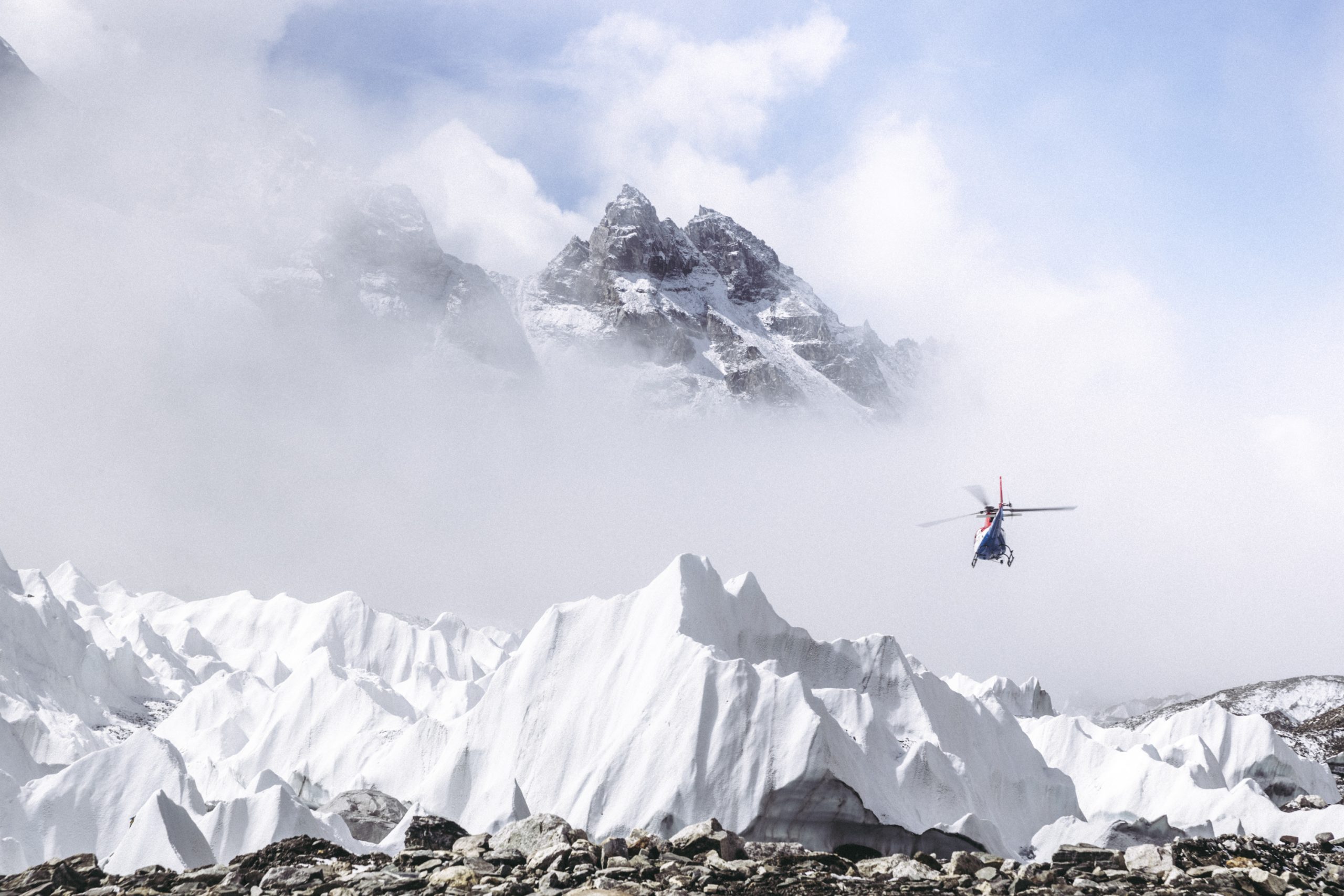
Fortunately, the group was close to one of the few areas on the mountain where a rotary-wing aircraft is able to land – in many cases, injured climbers are required to descend with the aid of a mountain gurney and porters – and so Global Rescue was able to deploy a helicopter to evacuate her from about 13,000 feet.
She was transported to a nearby hospital, and almost immediately her condition improved at the lower altitude. The member was evaluated by local doctors and in regular communication with Global Rescue medical staff.
“It was very reassuring to be able to hear the Global Rescue doctor’s voice on the sat phone and to know that he was making sound decisions for me,” Dr. Donsky wrote in a letter to Global Rescue. “I had the utmost trust and confidence in him and his team. I would never want to be without this kind of help in this situation, and it would not have been possible had I not signed up with Global Rescue.
“I cannot praise you enough,” she concluded. “I would be dead if you had not come to rescue me.”
Eddie Frank, who founded Tusker Trail and has recommended Global Rescue memberships to his clients for years, added “Global Rescue showed their true colors, and came through as promised – professional, expert, and true to their word; key elements of a top-notch outfit. I will continue to recommend Global Rescue’s services to Tusker Trail’s clients. The company is gold.”

Categories:
Missions & Member TestimonialsAugust 19, 2011
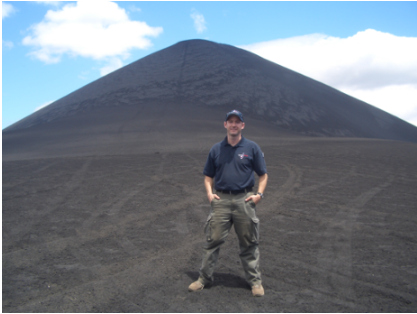
When Global Rescue paramedic Pat Brady looks back on his college years, he singles out one learning experience above the rest: the six months he spent on what he describes as his “semester abroad” in Iraq.
In December 2002, while in his senior year at the University of Kansas and also serving in the U.S. Marine Corps Reserve, Pat received a call from his battalion informing him that he would be deployed to Camp Coyote, Kuwait, within the week. He was visiting family in Chicago at the time, so he had to immediately drive back to Overland Park, KS, to pack whatever belongings he thought he would need for an undetermined period of time in the desert. Within five days of the phone call he was on board the U.S.S. Bataan, bound for the Persian Gulf.
His new home was a tent city with no running water or electricity, surrounded by a 360-degree horizon where brown sand meets blue sky. He spent more time than he cares to remember using his backpack as a pillow, awaiting orders to move north. When that green light arrived, his unit rolled past the 30-foot-deep, tank-lined trench that divided Kuwait from Iraq, onward to help secure Nasiriyah – the site of Jessica Lynch’s capture and some of the war’s fiercest fighting – and then further north to patrol the streets of Kut.
“That was basically like being a cop in a really bad part of town,” Pat said about his time in Kut. “But when you go to war, by necessity you learn a lot about that society. I gained a good understanding of how things work in the Middle East. That was the silver lining.”
It may not have been a typical semester abroad, but serving with the USMC 4th Reconnaissance Battalion in Operation Iraqi Freedom II prepared Pat for his career as a Global Rescue deployable paramedic in a way that no other experience could. Being in a constant state of alert and always ready to move was how he wanted to spend the rest of his career. So, after his time in the Marines, Pat studied to become a paramedic.
“When I left the military to focus on starting a family I knew I didn’t want to lose that edge,” he said, “ where you’re always looking over your shoulder, keeping your head on a swivel, constantly running through scenarios in your mind.”
While working with a rescue unit in his native Texas, Pat first learned about Global Rescue and was in touch with the medics in its Boston Operations Center. Eventually, he was invited to join Global Rescue’s security professionals and paramedics who were performing medical evacuations, security evacuations and humanitarian assistance in Haiti immediately after the 2010 earthquake.
“I came back from that experience knowing I had to join Global Rescue,” he said. “I was incredibly impressed by the team and I knew I was going to be working with the best in the business.”
Since that initial trip to Haiti, Pat has deployed to assist members worldwide, including missions to Europe, Africa and Central America. In Nicaragua, he was part of a high-profile sporting event with Red Bull, medically supporting a successful attempt to break the mountain bike land speed record. Appropriately, the attempt took place on the slopes of an active volcano. However, it was his latest deployment to Johannesburg (one of two missions to South Africa for him this year) that has been the most rewarding.
“In this line of work, you are used to assisting people who have a lot of needs and it requires a lot of patience. After all, you’re meeting them on probably the worst days of their lives,” Pat said. “That’s why this last trip to South Africa was so memorable. This was totally different.”
In this instance, the woman – a fellow Texan – was faced with a debilitating injury, but retained a remarkably positive outlook throughout her ordeal. She had been on safari in Zimbabwe when she was gored by a Cape buffalo, requiring a field rescue and medical evacuation to the best trauma center on the continent. She had sustained severe injuries, including a bruised spinal cord which left her without mobility in her lower extremities.
Pat was one of three paramedics deployed to oversee her care, assist her at her bedside and transport her home.
“She was just the most upbeat patient I can remember, such a positive attitude despite her injuries. It was inspiring for me,” Pat said.

Categories:
Missions & Member TestimonialsAugust 7, 2011
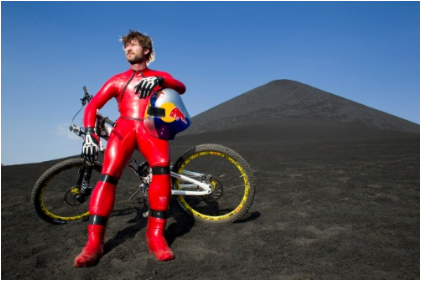
Be sure to tune into the National Geographic Channel tonight at 10PM Eastern for the story of Red Bull mountain bike daredevil Markus Stoeckl breaking the dirt speed record on a Nicaraguan volcano. Global Rescue paramedics are on hand to assist.
Categories:
Missions & Member TestimonialsAugust 2, 2011
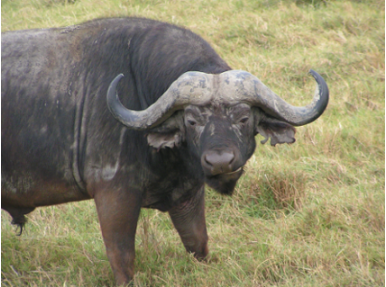
Global Rescue has medically evacuated a woman who was severely wounded by a Cape Buffalo while on safari in Zimbabwe.
The Global Rescue member and her husband were walking through the Tsitsingombe River Valley when a male Cape buffalo emerged from behind a ziziphus bush, bellowing and rushing towards the clients. The bull first hit the husband with a glancing blow on the arm, knocking him over, and then gored the woman from behind.
The attack left her with a gaping wound on her left side and she was losing blood rapidly. The guide accompanying the couple did his best to dress her wounds and staunch the bleeding, and then brought her to the nearest suitable landing area for a helicopter, where he informed Global Rescue about the accident.
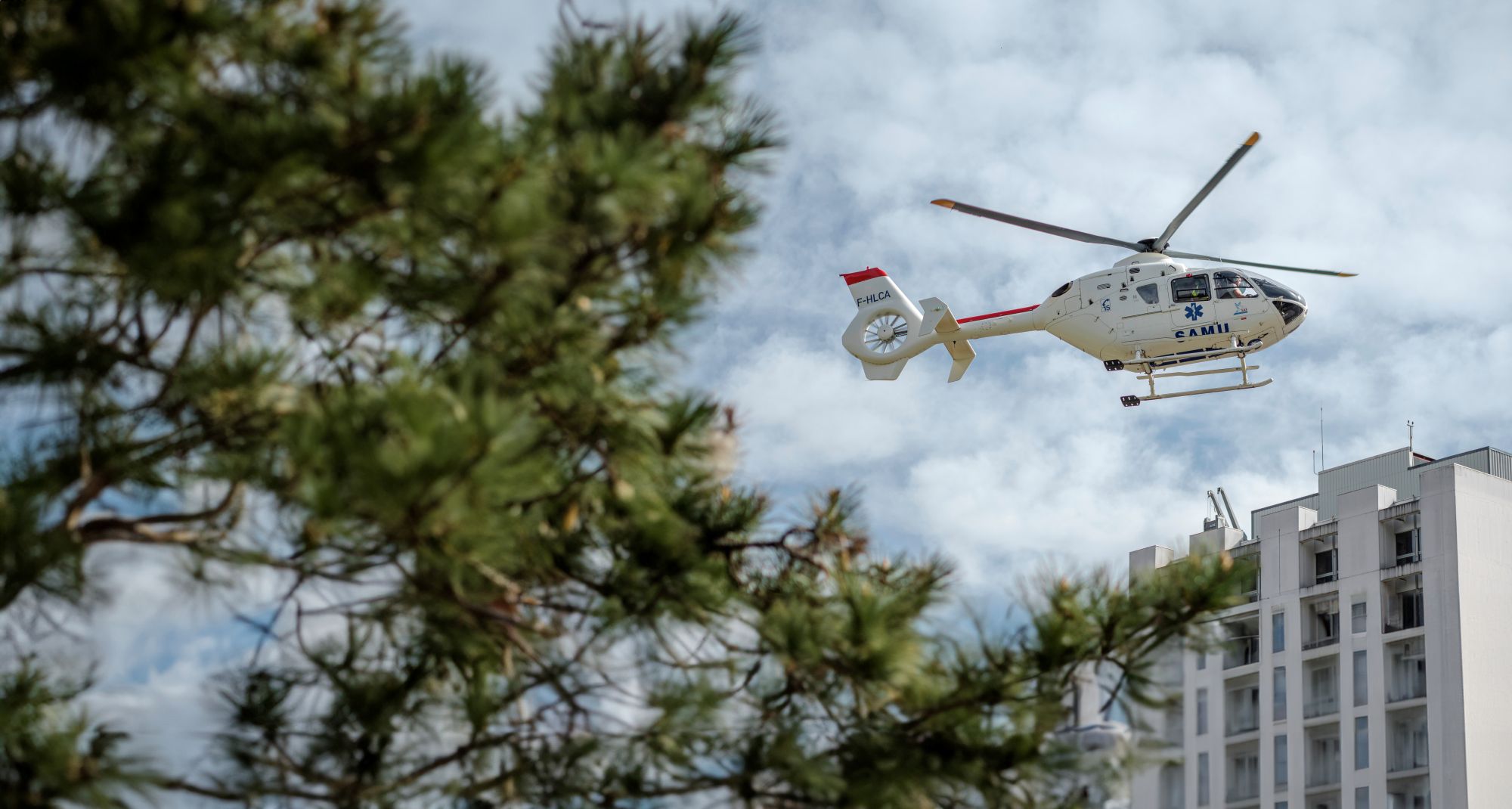
Within an hour of the attack, a helicopter arrived and flew the patient to a facility in Victoria Falls, where she was stabilized in an emergency room and her injuries were assessed. The patient had no sensation in her lower extremities and had lost a dangerously large amount of blood. Consulting with the attending physician, Global Rescue doctors determined that she should be transported immediately to South Africa. The company evacuated her via a medically equipped jet to a world-class trauma center in Johannesburg.
There, her wounds were treated, she remained on a respirator, and she was evaluated by neuro and trauma surgeons. In the meantime, Global Rescue had already dispatched a paramedic – and later two more – to oversee her care. In conjunction with specialists from Johns Hopkins medicine, the physicians determined that vertebrae in her spine should be fused. However, her spinal cord had been severely bruised by the buffalo and her lower extremities would remain paralyzed for an unknown period of time.
After undergoing emergency surgery and the subsequent care required to stabilize her for transport, a Global Rescue medical team evacuated her to her home. Once there, she began her rehabilitation, upbeat and determined to recover from her injuries.
Categories:
Missions & Member TestimonialsJuly 11, 2011
From the July issue of Global Traveler magazine:
By Christopher Cox
For countless travelers, the pyramids of Egypt represent the trip of a lifetime. But those tourists who happened to be in Cairo in late January got more than they bargained for when the country convulsed into mass demonstrations against longtime strongman Hosni Mubarak. Tear gas and tanks, government ministries aflame, the chaotic airport filled with thousands of stranded passengers — it was like a nightmare episode of When Vacations Attack.
As events in Egypt unraveled, Global Rescue was already on the move. The crisis response firm’s security team, comprised of former Navy SEALs and other special-ops veterans, ushered approximately 190 foreign nationals to central rally locations and then escorted them to Alexandria’s international airport for evacuation to Amman, Jordan, aboard a chartered Boeing 737.
Unfortunately, such an “extraction” isn’t an isolated travel event in an increasingly problematic world. Widespread political turmoil in the Middle East and devastating natural disasters such as the recent earthquake and tsunami in Japan — not to mention a steady stream of medical-related emergencies suffered by adventurers in remote locales — have resulted in an increase in travel-related crises.
“I’m not sure there’s ever been a quarter like this,” said Daniel L. Richards, chief executive officer of Boston-based Global Rescue. “Certainly not in a decade. … It really is unprecedented. It’s kept us very busy…”
To read the entire article, click here.
Categories:
NewsJuly 11, 2011
Categories:
Missions & Member TestimonialsJune 15, 2011

The following is a thank you note from Melanie Maycock, winner of a Global Rescue membership for her father, through one of Global Rescue’s newest partners, Hideaways International. To kick off the new partnership, Hideaways sponsored a “Rescue Me Contest,” open to all travelers. “It seems we struck a chord when we asked travelers to submit stories of travel woes and mishaps for the contest,” says Mike Thiel, Founder and President of Hideaways International (www.Hideaways.com). “And one submission stood out as most deserving of the prize.”
Global Rescue would like to congratulate Melanie on her winning entry and thank her father for all the good work he does around the world.
I am so glad you picked my father, Thomas Maycock, for the medical evacuation coverage while he is out of the country. As I mentioned, he has always been a role model, not just for our family but for others as well. He has been involved with prison ministries for ages. At one point, he forgot to turn in his cell phone and when he realized, he went and gave it to a guard. He was mandatorily suspended and had to appeal to get back in. We always teased him . He’s the only person we know who got kicked out of prison- and fought to get back in!
From the time we were kids he has always told us to be part of the solution and he has certainly led by example. I don’t know anyone more unselfish or less self-centered.
I don’t think I’ve ever seen anyone as happy to serve as my dad. We certainly did not have a lot when we were growing up but I can remember him asking us if we would be willing to give our picnic lunch away and telling us what a blessing it was that we had more food at home – just always being mindful that it was not just a responsibility but a privilege to work towards brightening the corner where we were.
He has never worried about himself or his own safety which completely drives the rest of us crazy! He has been going to Haiti for years and helping with an orphanage/school there (Caring & Sharing Mission). He traveled at his own expense and did everything he could to improve the conditions. He is a contractor by trade and not only used those skills to improve the plumbing and the housing but to train the older kids so they would have a marketable skill for the future.
He was always encouraging us to read and understand that there is a purpose for living. Years ago he had us memorize a quote : “The greatest want of the world is the want of men — men who will not be bought or sold; men who in their inmost souls are true and honest; men who do not fear to call sin by its right name; men whose conscience is as true to duty as the needle to the pole; men who will stand for the right though the heavens fall” and he told my sister and me that it applied to girls as well.
He is now working on getting equipment to Sierra Leone and helping the rebuilding effort there. I don’t know of anywhere that would be too scary or too dangerous for him if he believed that it would be for the good.
Just knowing that he will have someone to call on if he does get sick or injured is worth more than I own. I am so very, very grateful to Hideaways and Global Rescue! He may not worry, but we sure do!
Thank you again,
Melanie Maycock
Categories:
Missions & Member TestimonialsJune 9, 2011
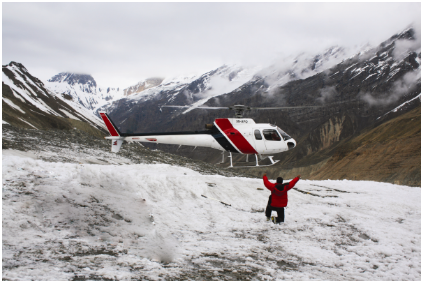
It has been a busy summiting season for Global Rescue members in the Himalayas, and consequently for our medical and rescue teams. Our operations center has fielded numerous calls from Nepal, China and Bhutan since April, and performed about a dozen operations in the region in the month of May alone. Here are a few of these members’ stories.
Mt. Everest, Camp 2: High-altitude medical evacuation
The expedition leader of a group at Everest base camp called Global Rescue to report that a 37-year-old climber in his care had collapsed and was unable to walk.
Two days prior, the man had climbed from Camp 3 to Camp 4 of the world’s tallest peak without supplemental oxygen, and had no health complaints at the time. The next day was a rest day, followed by a successful bid for the summit. During the descent, however, he complained of chest pains and dizziness. His speech was slurred. These signs and symptoms worsened during the descent to Camp 4 and he began to cough up fluid. Ultimately he required the assistance of four Sherpas and a sled to transport him down to Camp 2. The expedition leader then called Global Rescue for help.
The company’s doctors suspected High Altitude Pulmonary Edema (HAPE) and recommended an evacuation from the mountain immediately. Global Rescue dispatched a helicopter, and the member was flown to a clinic in Kathmandu where he was diagnosed with both pulmonary and cerebral edema. Further, he developed a respiratory infection and had suffered damage to his kidneys.
Over the course of a week, he was treated at the clinic and closely monitored. When he had made sufficient improvement, he was cleared to fly home on a commercial flight. He is currently at home in Colorado and is expected to make a full recovery.
Kangchenjunga, Camp 4: High-altitude medical evacuation
One of the world’s top-ranked female climbers was at Camp 4 on Kangchenjunga, the third tallest mountain in the world, where she was suffering from snow blindness and a knee injury suffered in fall. She could not descend.
After she called the Global Rescue Operations Center for help from a satellite phone, Global Rescue dispatched a helicopter to reach her at 24,500 feet – very near the altitude limit for rotary-wing aircraft. She was transported to a clinic in Kathmandu, where she was diagnosed with torn ligaments in her knee and corneal burn in her left eye.
The attending physician recommended she undergo immediate surgery on her knee, but after conferring with the Global Rescue doctors and Johns Hopkins specialists reviewing her case, the climber elected to have the procedure performed at home in the United States.
Lhasa: Medical Advisory Services
A 65-year-old woman on a tour through various countries in the Himalayas began to experience dizziness, shortness of breath and mild chest pains when her group arrived in Bhutan, at an altitude of approximately 8,000 feet. The symptoms worsened when she arrived at Lhasa, at a higher elevation, and tour leaders called Global Rescue. The member explained that she had experienced these chest pains frequently before her trip, and that her doctors at home performed a stress test and the results were negative. She apologized that there may be no real need for concern, but wanted to confer with Global Rescue’s doctors to alleviate worries she may be experiencing a cardiac incident.
In conjunction with the tour operator’s attending physician, Global Rescue doctors and Johns Hopkins specialists advised her to avoid any physical exertion, remain on supplemental oxygen in her hotel room, and the company helped arrange a commercial flight to bring her to Kathmandu ahead of schedule for evaluation at a trusted clinic.
When she arrived at the lower elevation the symptoms gradually disappeared. Physicians at the clinic in Kathmandu found no cardiac complications and cleared her for her flight home.
Categories:
Missions & Member TestimonialsJune 8, 2011
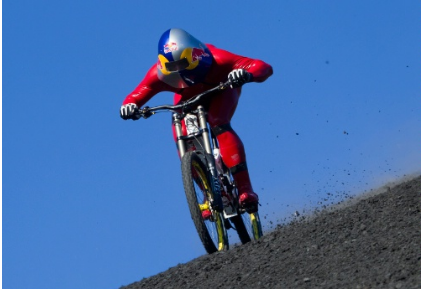
LEON (Nicaragua) – Nine years ago Eric Barone of France set the world speed record for serial as well as prototype bicycles with a set of spectacular runs down the Cerro Negro volcano in Nicaragua. But a horrific crash there on the black slope as he was slowing down after setting the record abruptly ended his career.
In the spring of 2011, the 50-year-old Frenchman returned to the scene of his greatest triumph and nearly fatal accident. But this time Barone, who still bears the scars of the crash, returned not as an active participant but rather as the organizer for a record-breaking attempt by Markus Stöckl, who came to Nicaragua already holding the world record on snow.
This time, Global Rescue paramedics were on hand in the event that the athlete required emergency assistance or a medical evacuation. In addition to the ground support, the company also had a medevac helicopter on standby.
Red Bull has frequently relied on Global Rescue’s services for high-risk sporting events in the past.
The 550-meter long track for the current record attempt on gravel on the still active volcano Cerro Negro in Nicaragua led directly from the rim of the crater to the base. “The surface is like riding down a 45-degree beach of sand and pebbles. Only once you hit higher speeds is it possible to ride with some stability,” said Stöckl. He gradually moved up higher towards the rim of the crater with a series of training runs and then broke the record on his first attempt – if only just. He was clocked at 164.95 km/h – just 1 km/h faster than Barone, who was the first to congratulate him in the finish area.