Categories:
TravelNovember 4, 2025
Article Highlights:
- 63% of travelers say the TSA should revise the 3-1-1 liquids rule; only 12% want it unchanged.
- US travelers and men show the strongest support for raising limits; women and non-US travelers are more cautious.
- Most supporters favor increasing the limit to 12 ounces; some want 32 ounces or no limit at all.
- Security concerns remain high, especially among women, though many see tech as a safer path forward.
- Travelers want “smarter security,” balancing safety with convenience and sustainability.
Nearly two decades after the Transportation Security Administration (TSA) introduced the 3.4-ounce restriction for liquids, gels and aerosols — better known as the TSA 3-1-1 rule — a majority of international travelers say it’s time for a change.
According to the Global Rescue Fall 2025 Traveler Safety and Sentiment Survey, nearly two-thirds (63%) of the world’s most experienced travelers believe the TSA should revise its liquids limit, while only 12% said it should remain in place.
The TSA has already begun easing other security measures, such as the requirement to remove shoes at checkpoints and is now reviewing whether to modernize its liquids policy, a move that most travelers would welcome.
Support for change is strongest among US travelers (65%) and men (65%), compared to 57% of non-US travelers and 59% of women. Interestingly, women and non-US travelers were also more likely to say they were “unsure” — suggesting a more cautious or security-focused perspective.
3-1-1 Rule: Time for Change?
“The liquids rule has been one of the longest-standing frustrations for travelers and the data show that the majority now see it as outdated,” said Dan Richards, CEO of The Global Rescue Companies and member of the US Travel and Tourism Advisory Board at the Department of Commerce. “Travelers are looking for a balance between convenience and safety that reflects current technology and screening capabilities.”
Among respondents who support revising the rule, more than half (56%) favored increasing the limit to 12 ounces, enough for everyday items like sunscreen, shampoo or baby formula.
Another 27% wanted to raise it further to 32 ounces, while 13% supported eliminating the limit entirely.
Breaking down preferences by region and gender shows some clear differences:
- US travelers overwhelmingly prefer moderate reform (62% favor the 12-ounce limit).
- Non-US travelers are more likely to back larger or unlimited allowances (40% and 18%, respectively).
- Women were slightly more likely than men to support no limit at all (16% vs. 12%) but less likely to favor the 32-ounce threshold.
These numbers paint a picture of a global traveler community divided not by whether change is needed but by how bold that change should be.
Security vs. Convenience: Why Some Still Say “No”
For the minority (12%) who oppose raising the limit, the issue comes down to one word: security.
About 61% of “no” respondents said higher limits could increase risk, while 44% of women — compared to 32% of men — worried that travelers might abuse a more lenient rule.
These travelers tend to see the 3-1-1 rule as an essential safeguard, even if it’s inconvenient. For them, any added flexibility may invite more uncertainty or potential for misuse.
“We’ve spent nearly 20 years learning to adapt to the 3-ounce rule,” said one frequent flyer surveyed. “If it keeps us safer, I can live with a little inconvenience.”
Still, even among skeptics, many agree that security screening should evolve with technology, especially as advanced scanners and AI-assisted detection systems make it easier to identify threats without the same strict liquid limits.
What Travelers Expect From a Change
When asked how a higher limit would affect the travel experience, respondents saw both benefits and trade-offs.
Top expected benefits:
- Greater convenience (59%)
- Less plastic waste (37%)
- Improved customer satisfaction (37%)
Top anticipated downsides:
- Longer screening times (28%)
- More spills or messes in luggage (25%)
Gender Differences
Gender differences again revealed distinct priorities. Women were more likely than men to highlight environmental benefits (46% vs. 34%) and to predict longer security lines (32% vs. 28%).
The data suggest that while convenience is the main motivator for change, many travelers also see an opportunity to modernize air travel for sustainability and customer experience.
“Travelers want smarter security, not simply more of it,” said Richards. “Advances in scanning and detection should allow for both safety and convenience without forcing passengers to give up common travel items.”
Why the 3-1-1 Rule Exists, and Why It Might End Soon
The TSA’s 3-1-1 rule was introduced in 2006 following a foiled terrorist plot involving liquid explosives on transatlantic flights. It limits travelers to containers of 3.4 ounces (100 milliliters) or less, placed in a 1-quart-sized bag, with 1 bag per passenger.
While the rule became second nature to generations of travelers, it has also been one of the most criticized elements of airport security, often cited for causing stress, confusion and plastic waste.
Today, however, airports around the world are piloting CT scanners and advanced imaging technology that allow liquids to remain in bags without increased risk. Airports in London, Amsterdam and Tokyo are already testing or phasing in relaxed liquid restrictions — a sign that the TSA may soon follow suit.
If the United States does raise or eliminate the 3-1-1 rule, it would mark one of the most visible changes to airport security procedures in nearly two decades.
The Global Rescue fall 2025 survey gathered responses from more than 1,600 current and former Global Rescue members between October 7–13, 2025. The participants — among the world’s most seasoned travelers — shared how they view safety, convenience and evolving security policies.
Key findings from this and related surveys show that:
- Travelers increasingly prioritize efficiency and comfort in security lines.
- Environmental awareness is influencing how people pack, with more travelers favoring reusable bottles and refillable containers.
- Non-US travelers tend to trust advanced screening technologies more than policy restrictions.
- Women travelers are more likely to emphasize safety and risk management, while men focus on speed and convenience.
Together, these insights suggest that while the world’s travelers differ in their preferences, most agree that the time for a smarter, more flexible security model has arrived.
The Global Rescue Connection
In a world where travelers are navigating changing security rules, evolving risks and complex international logistics, peace of mind remains essential. Even as airport policies modernize, emergencies can still arise far from home.
That’s where Global Rescue steps in.
A Global Rescue membership provides access to field rescue, medical evacuation and 24/7 medical advisory services anywhere in the world. Whether you’re crossing continents for business, adventure or leisure, Global Rescue ensures that if something goes wrong, expert help is only a call away.
Because while the TSA may handle airport security, Global Rescue protects everything beyond the gate: your safety, your health and your trip home.
Get a price estimate
Estimate
$0.00
Please answer all questions for estimate.
Two days into a Namibian safari, Scott Garrett developed a life-threatening infection. Global Rescue helped bring him home.
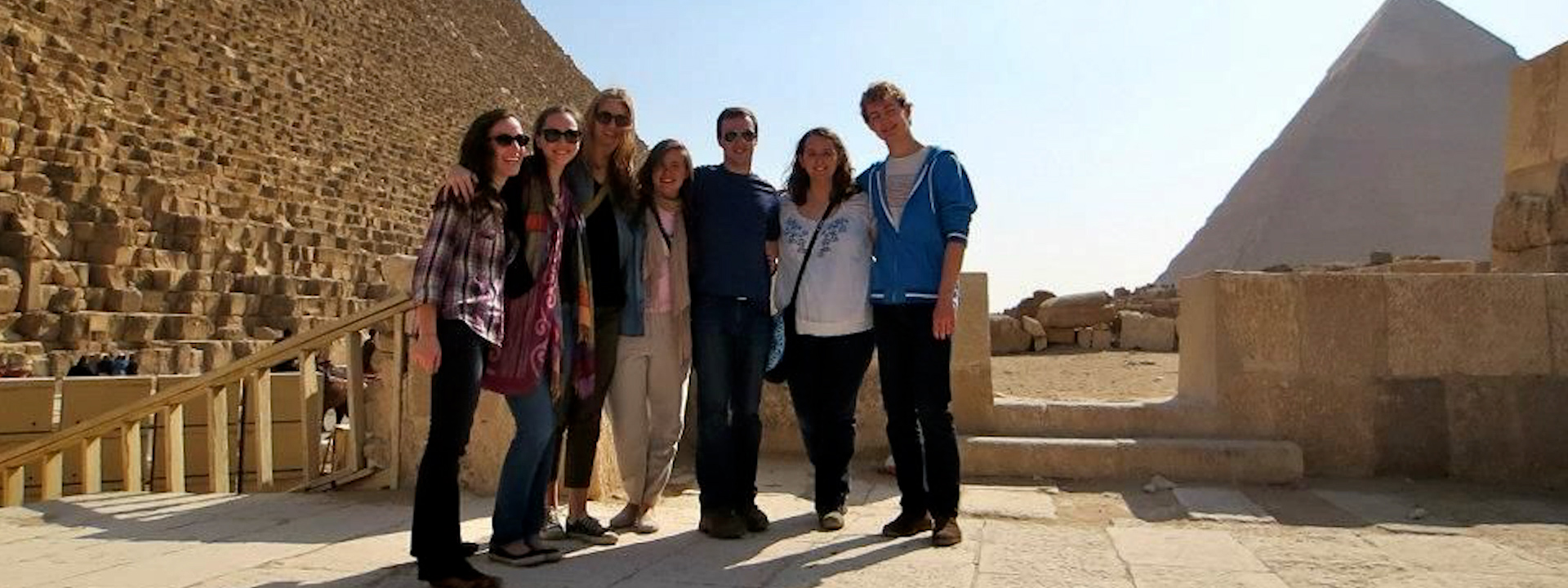
Caught in Egypt as the Arab Spring erupted, Middlebury students turned to Global Rescue.
After his son, Eddie, was injured overseas with the US Ski Team, Jim Gildea turned to Global Rescue for help.
A peaceful moment in the African bush turned perilous when a giraffe charged Dr. Daniel Core and his wife.
During an overseas race, Dianette Wells needed help fast. Global Rescue delivered.
When their daughter, Cate, began suffering seizures in France, Carolyn and Jason Lanzetta turned to Global Rescue to get her the care she needed.
While traveling in Zimbabwe, Angie Heister was gored by a Cape buffalo. Global Rescue helped save her life.
With decades in law enforcement and the Secret Service, Keith Young knows security. Here, he shares why organizations need Global Rescue’s travel risk and crisis management program.
Categories:
Press ReleaseNovember 3, 2025
(Lebanon, NH – November 3, 2025) – Travelers are increasingly prioritizing authenticity, nature and mindfulness over nightlife, modern attractions or staying connected to digital devices, according to the world’s most experienced travelers responding to the Global Rescue Traveler Sentiment and Safety Survey.
When asked what motivates them most when choosing a destination, more than a third (35%) of respondents said natural beauty and outdoor immersion top their list, outpacing iconic attractions (27%) and cultural experiences (23%). Women were especially drawn to authentic culture and community (26%) compared to men (21%), while non-US travelers leaned slightly more toward natural environments (37%) than their US counterparts (34%).
“Travelers are looking for genuine experiences that help them feel more connected to the world and less tethered to technology,” said Dan Richards, CEO of The Global Rescue Companies and member of the US Travel and Tourism Advisory Board at the US Department of Commerce. “People aren’t just going places—they’re seeking meaning, restoration and perspective.”
Disconnecting from technology also plays a growing role in travel satisfaction. Only a third (33%) of respondents said unplugging was “not important,” while the majority rated it moderately to very important, with non-US travelers (38%) and women (35%) placing higher value on digital disconnection than men or Americans (both at 33%).
Cultural depth clearly outweighs party scenes or contemporary aesthetics. A resounding 75% of travelers said they prefer destinations for their historic significance rather than a modern vibe and nearly two-thirds (65%) said they seek hidden gems over iconic attractions. Non-US and female travelers showed a stronger inclination toward exploration off the beaten path (68% each).
Nightlife barely factors into destination decisions. Just 2% said nightlife ranks high in their travel choices, while nearly half (46%) said it doesn’t matter at all. “The data show a decisive shift toward self-enrichment and sustainability over stimulation,” Richards said. “Quiet, history-rich and culturally authentic destinations are winning over travelers who want depth, not distraction.”
Even when considering once-in-a-lifetime events, travelers remain measured. Only 4% said they plan to travel to Europe’s northern regions to view the 2026 total solar eclipse, though women (6%) and non-US respondents (6%) were more likely to consider the trip than men (4%) or US travelers (4%).
Across activities, hiking and trekking (50%) lead the list of motivations, followed by hunting and fishing (35%) and SCUBA or snorkeling (23%). Women were far more drawn to hiking (58%) and wellness-oriented pursuits, while men showed stronger interest in hunting, fishing and overlanding adventures.
About the Global Rescue Traveler Sentiment and Safety Survey
Global Rescue, the leading travel risk and crisis response provider, surveyed more than 1,600 current and former members between October 7–13, 2025. The respondents revealed a variety of behaviors, attitudes and preferences regarding current and future travel.
About Global Rescue
Global Rescue is the world’s leading provider of medical, security, evacuation and travel risk management services to enterprises, governments and individuals. Founded in 2004, Global Rescue has exclusive relationships with the Johns Hopkins Emergency Medicine Division of Special Operations and Elite Medical Group. Global Rescue provides best-in-class services that identify, monitor and respond to client medical and security crises. Global Rescue has provided medical and security support to its clients, including Fortune 500 companies, governments and academic institutions, during every globally significant crisis of the last two decades. For more information, visit www.globalrescue.com.
Media Contact: Bill McIntyre | Email: bmcintyre@globalrescue.com | Phone: +1 202.560.1195