Loading...

Share This:

Global Rescue medics on National Geographic Channel tonight

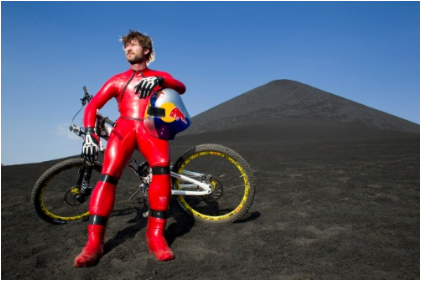
Global Rescue paramedics are on hand to assist Red Bull mountain bike daredevil Markus Stoeckl break the dirt speed record on a Nicaraguan volcano.

Be sure to tune into the National Geographic Channel tonight at 10PM Eastern for the story of Red Bull mountain bike daredevil Markus Stoeckl breaking the dirt speed record on a Nicaraguan volcano. Global Rescue paramedics are on hand to assist. 


Share This:

Global Rescue performs field rescue for woman gored by Cape buffalo in Zimbabwe

Global Rescue has medically evacuated a woman who was severely wounded by a Cape Buffalo while on safari in Zimbabwe.

Global Rescue has medically evacuated a woman who was severely wounded by a Cape Buffalo while on safari in Zimbabwe.

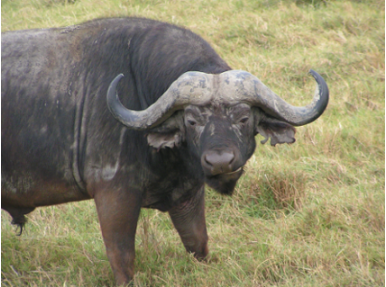
The Global Rescue member and her husband were walking through the Tsitsingombe River Valley when a male Cape buffalo emerged from behind a ziziphus bush, bellowing and rushing towards the clients. The bull first hit the husband with a glancing blow on the arm, knocking him over, and then gored the woman from behind.

The attack left her with a gaping wound on her left side and she was losing blood rapidly. The guide accompanying the couple did his best to dress her wounds and staunch the bleeding, and then brought her to the nearest suitable landing area for a helicopter, where he informed Global Rescue about the accident.

Within an hour of the attack, a helicopter arrived and flew the patient to a facility in Victoria Falls, where she was stabilized in an emergency room and her injuries were assessed. The patient had no sensation in her lower extremities and had lost a dangerously large amount of blood. Consulting with the attending physician, Global Rescue doctors determined that she should be transported immediately to South Africa. The company evacuated her via a medically equipped jet to a world-class trauma center in Johannesburg.

There, her wounds were treated, she remained on a respirator, and she was evaluated by neuro and trauma surgeons. In the meantime, Global Rescue had already dispatched a paramedic – and later two more – to oversee her care. In conjunction with specialists from Johns Hopkins medicine, the physicians determined that vertebrae in her spine should be fused. However, her spinal cord had been severely bruised by the buffalo and her lower extremities would remain paralyzed for an unknown period of time.

After undergoing emergency surgery and the subsequent care required to stabilize her for transport, a Global Rescue medical team evacuated her to her home. Once there, she began her rehabilitation, upbeat and determined to recover from her injuries.

Share This:

Global Rescue featured in Global Traveler magazine

From the July issue of Global Traveler magazine:

From the July issue of Global Traveler magazine:

By Christopher Cox

For countless travelers, the pyramids of Egypt represent the trip of a lifetime. But those tourists who happened to be in Cairo in late January got more than they bargained for when the country convulsed into mass demonstrations against longtime strongman Hosni Mubarak. Tear gas and tanks, government ministries aflame, the chaotic airport filled with thousands of stranded passengers — it was like a nightmare episode of When Vacations Attack.

As events in Egypt unraveled, Global Rescue was already on the move. The crisis response firm’s security team, comprised of former Navy SEALs and other special-ops veterans, ushered approximately 190 foreign nationals to central rally locations and then escorted them to Alexandria’s international airport for evacuation to Amman, Jordan, aboard a chartered Boeing 737.

Unfortunately, such an “extraction” isn’t an isolated travel event in an increasingly problematic world. Widespread political turmoil in the Middle East and devastating natural disasters such as the recent earthquake and tsunami in Japan — not to mention a steady stream of medical-related emergencies suffered by adventurers in remote locales — have resulted in an increase in travel-related crises.

“I’m not sure there’s ever been a quarter like this,” said Daniel L. Richards, chief executive officer of Boston-based Global Rescue. “Certainly not in a decade. … It really is unprecedented. It’s kept us very busy…”

To read the entire article, click here.

Categories:

News
Share This:

Global Traveler – Safe and Sound: Prepare for crisis situations to lessen your risk while…

Share This:

A letter from a contest winner who won a Global Rescue membership for her father

The following is a thank you note from Melanie Maycock, winner of a Global Rescue membership for her father, through one of Global Rescue’s newest partners, Hideaways International...

The following is a thank you note from Melanie Maycock, winner of a Global Rescue membership for her father, through one of Global Rescue’s newest partners, Hideaways International. To kick off the new partnership, Hideaways sponsored a “Rescue Me Contest,” open to all travelers. “It seems we struck a chord when we asked travelers to submit stories of travel woes and mishaps for the contest,” says Mike Thiel, Founder and President of Hideaways International (www.Hideaways.com). “And one submission stood out as most deserving of the prize.”

Global Rescue would like to congratulate Melanie on her winning entry and thank her father for all the good work he does around the world.

I am so glad you picked my father, Thomas Maycock, for the medical evacuation coverage while he is out of the country. As I mentioned, he has always been a role model, not just for our family but for others as well. He has been involved with prison ministries for ages. At one point, he forgot to turn in his cell phone and when he realized, he went and gave it to a guard. He was mandatorily suspended and had to appeal to get back in. We always teased him . He’s the only person we know who got kicked out of prison- and fought to get back in!

From the time we were kids he has always told us to be part of the solution and he has certainly led by example. I don’t know anyone more unselfish or less self-centered.

I don’t think I’ve ever seen anyone as happy to serve as my dad. We certainly did not have a lot when we were growing up but I can remember him asking us if we would be willing to give our picnic lunch away and telling us what a blessing it was that we had more food at home – just always being mindful that it was not just a responsibility but a privilege to work towards brightening the corner where we were.

He has never worried about himself or his own safety which completely drives the rest of us crazy! He has been going to Haiti for years and helping with an orphanage/school there (Caring & Sharing Mission).  He traveled at his own expense and did everything he could to improve the conditions. He is a contractor by trade and not only used those skills to improve the plumbing and the housing but to train the older kids so they would have a marketable skill for the future.

He was always encouraging us to read and understand that there is a purpose for living. Years ago he had us memorize a quote : “The greatest want of the world is the want of men — men who will not be bought or sold; men who in their inmost souls are true and honest; men who do not fear to call sin by its right name; men whose conscience is as true to duty as the needle to the pole; men who will stand for the right though the heavens fall” and he told my sister and me that it applied to girls as well.

He is now working on getting equipment to Sierra Leone and helping the rebuilding effort there. I don’t know of anywhere that would be too scary or too dangerous for him if he believed that it would be for the good.

Just knowing that he will have someone to call on if he does get sick or injured is worth more than I own. I am so very, very grateful to Hideaways and Global Rescue! He may not worry, but we sure do!

Thank you again,

Melanie Maycock

Share This:

A busy season in the Himalayas for Global Rescue medical and rescue teams

It has been a busy summiting season for Global Rescue members in the Himalayas, and consequently for our medical and rescue teams. Our operations center has fielded numerous calls from Nepal, China and Bhutan since April,…

It has been a busy summiting season for Global Rescue members in the Himalayas, and consequently for our medical and rescue teams.  Our operations center has fielded numerous calls from Nepal, China and Bhutan since April, and performed about a dozen operations in the region in the month of May alone. Here are a few of these members’ stories.

Mt. Everest, Camp 2: High-altitude medical evacuation

The expedition leader of a group at Everest base camp called Global Rescue to report that a 37-year-old climber in his care had collapsed and was unable to walk.

Two days prior, the man had climbed from Camp 3 to Camp 4 of the world’s tallest peak without supplemental oxygen, and had no health complaints at the time. The next day was a rest day, followed by a successful bid for the summit. During the descent, however, he complained of chest pains and dizziness. His speech was slurred. These signs and symptoms worsened during the descent to Camp 4 and he began to cough up fluid. Ultimately he required the assistance of four Sherpas and a sled to transport him down to Camp 2. The expedition leader then called Global Rescue for help.

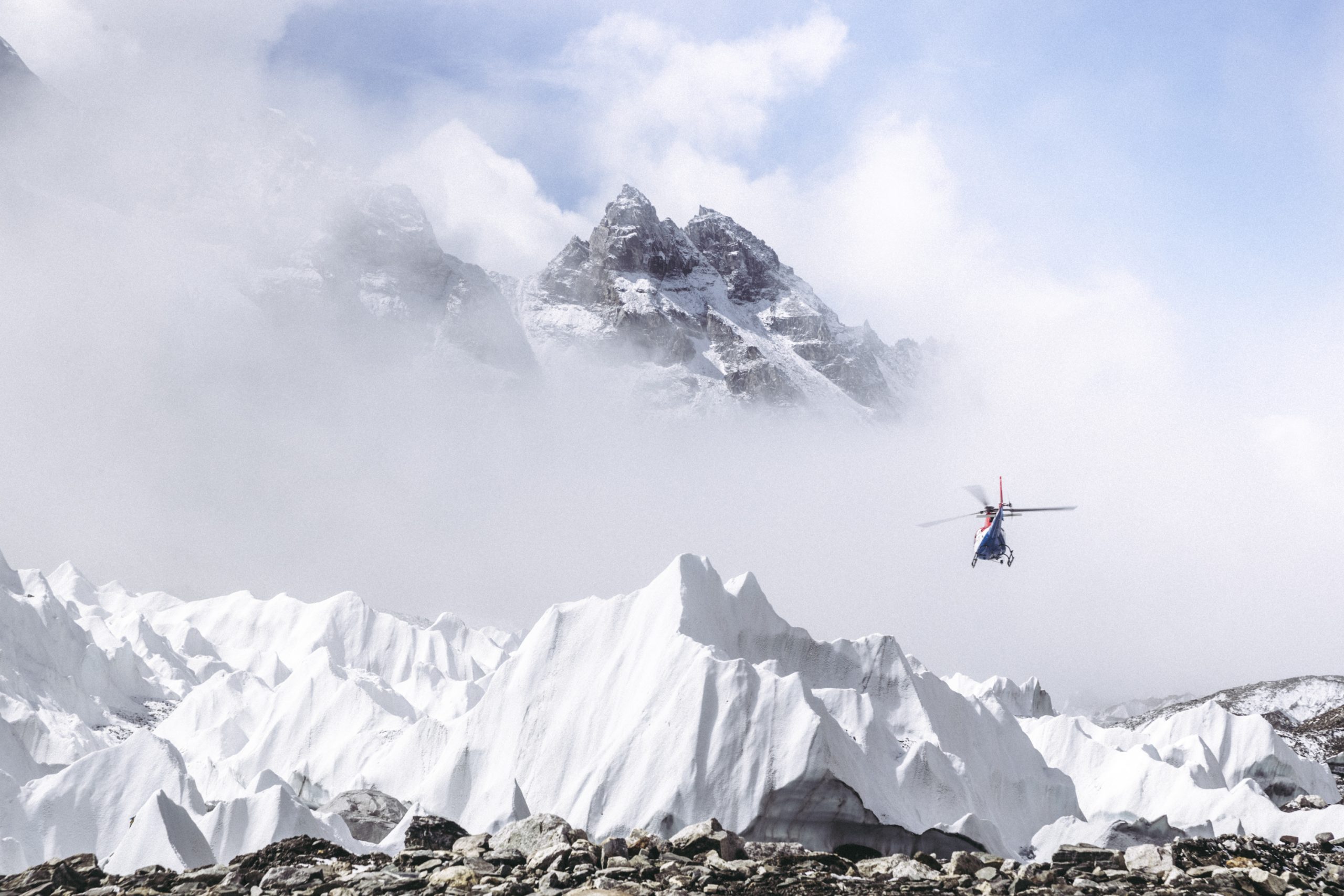
The company’s doctors suspected High Altitude Pulmonary Edema (HAPE) and recommended an evacuation from the mountain immediately. Global Rescue dispatched a helicopter, and the member was flown to a clinic in Kathmandu where he was diagnosed with both pulmonary and cerebral edema. Further, he developed a respiratory infection and had suffered damage to his kidneys.

Over the course of a week, he was treated at the clinic and closely monitored.  When he had made sufficient improvement, he was cleared to fly home on a commercial flight. He is currently at home in Colorado and is expected to make a full recovery.

Kangchenjunga, Camp 4: High-altitude medical evacuation

One of the world’s top-ranked female climbers was at Camp 4 on Kangchenjunga, the third tallest mountain in the world, where she was suffering from snow blindness and a knee injury suffered in fall. She could not descend.

After she called the Global Rescue Operations Center for help from a satellite phone, Global Rescue dispatched a helicopter to reach her at 24,500 feet – very near the altitude limit for rotary-wing aircraft. She was transported to a clinic in Kathmandu, where she was diagnosed with torn ligaments in her knee and corneal burn in her left eye.

The attending physician recommended she undergo immediate surgery on her knee, but after conferring with the Global Rescue doctors and Johns Hopkins specialists reviewing her case, the climber elected to have the procedure performed at home in the United States.

Lhasa: Medical Advisory Services

A 65-year-old woman on a tour through various countries in the Himalayas began to experience dizziness, shortness of breath and mild chest pains when her group arrived in Bhutan, at an altitude of approximately 8,000 feet. The symptoms worsened when she arrived at Lhasa, at a higher elevation, and tour leaders called Global Rescue. The member explained that she had experienced these chest pains frequently before her trip, and that her doctors at home performed a stress test and the results were negative. She apologized that there may be no real need for concern, but wanted to confer with Global Rescue’s doctors to alleviate worries she may be experiencing a cardiac incident.

In conjunction with the tour operator’s attending physician, Global Rescue doctors and Johns Hopkins specialists advised her to avoid any physical exertion, remain on supplemental oxygen in her hotel room, and the company helped arrange a commercial flight to bring her to Kathmandu ahead of schedule for evaluation at a trusted clinic.

When she arrived at the lower elevation the symptoms gradually disappeared. Physicians at the clinic in Kathmandu found no cardiac complications and cleared her for her flight home.

Share This:

Global Rescue medics deployed as Red Bull athlete sets world record on black volcano

Red Bull has frequently relied on Global Rescue’s services for high-risk sporting events in the past. This momentous event was no different.

LEON (Nicaragua) – Nine years ago Eric Barone of France set the world speed record for serial as well as prototype bicycles with a set of spectacular runs down the Cerro Negro volcano in Nicaragua. But a horrific crash there on the black slope as he was slowing down after setting the record abruptly ended his career.

In the spring of 2011, the 50-year-old Frenchman returned to the scene of his greatest triumph and nearly fatal accident. But this time Barone, who still bears the scars of the crash, returned not as an active participant but rather as the organizer for a record-breaking attempt by Markus Stöckl, who came to Nicaragua already holding the world record on snow.

This time, Global Rescue paramedics were on hand in the event that the athlete required emergency assistance or a medical evacuation. In addition to the ground support, the company also had a medevac helicopter on standby.

Red Bull has frequently relied on Global Rescue’s services for high-risk sporting events in the past.

The 550-meter long track for the current record attempt on gravel on the still active volcano Cerro Negro in Nicaragua led directly from the rim of the crater to the base. “The surface is like riding down a 45-degree beach of sand and pebbles. Only once you hit higher speeds is it possible to ride with some stability,” said Stöckl. He gradually moved up higher towards the rim of the crater with a series of training runs and then broke the record on his first attempt – if only just. He was clocked at 164.95 km/h – just 1 km/h faster than Barone, who was the first to congratulate him in the finish area.


Categories:

News
Share This:

The Reading Eagle (PA) – Evacuation insurance could be vital safeguard

Share This:

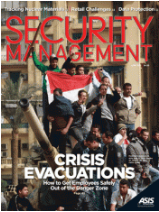
Global Rescue featured in Security Management magazine

From the June 2011 issue of Security Management magazine:

From the June 2011 issue of Security Management magazine:

By Matthew Harwood

Whether it’s political upheaval, such as this winter’s widespread uprisings across the Middle East, or nature wreaking havoc, as it did in Japan’s devastating one-two earthquake-tsunami punch, the ability to respond quickly is key to being able to safely extract personnel from hot spots. Invariably, however, valuable time is lost, because companies aren’t prepared to quickly communicate with employees in danger zones. “The communications part is far and away the most important component to every mission that we run,” says Dan Richards, CEO of Global Rescue, a Boston-based crisis response company.

Smartphones. In today’s world of split-second communications, the most valuable device is the one found in nearly every businessperson’s pocket. Simply put: the smartphone has revolutionized crisis communications. As long as employees’ BlackBerrys or iPhones can receive a cellular signal or snag a WiFi connection, a company or its security provider can call, text message, or e-mail its travelers and inform them immediately of danger roiling around them…

Satellite phones. The one caveat with relying on cellular-based smartphone communications is that they can fail or be disrupted. Thus, companies need alternatives that can serve as emergency backup communications devices. Crisis experts recommend a satellite phone, or sat phone, which also provides users multiple modes of communication such as voice, text, and e-mail. “[T]hey’re the only communication method that won’t be shut down by terrestrial disturbances,” says Christopher Falkenberg, president of Insite Security. When an earthquake or a tsunami hits, cell towers break, while satellites orbit safely in space.

Global Rescue’s Richards agrees. “When we deploy, we take sat phones…so we’re not reliant on the indigenous communications infrastructure,” he says. Richards adds that sat phones proved to be a useful alternative in Egypt when the government blocked cell phone communications at the start of the popular uprising that eventually toppled President Hosni Mubarak’s regime.

But satellite phones are not impervious to interruption by hostile regimes. Some countries, like Libya, have been known to block their transmissions, and both Libya and Cuba make it illegal to own a sat phone. There can be natural interference with satellite signals as well. Heavy forests, for example, can present connectivity problems for sat phones as can dense urban areas. “What you need is a clear line of sight to the sky,” Richards says…

Planning and Programs. Crisis response professionals hammer home the message that companies must do more than buy equipment or contract for services. Unfortunately, many companies have a consumerist attitude to crisis management. They “write a check and say, ‘If there’s a problem, we’ll call you,’” says Global Rescue’s Richards. “Those clients frankly are not going to be as successful in a disaster or crisis-type situation as companies that take these threats seriously.”

To read the entire article, click here.

Categories:

News
Share This:

Security Management – Planning for Tumultuous Times

Share This:

Global Rescue performs medical evacuation for angler in the Caribbean

Global Rescue medically evacuated an 83-year-old member who suffered a stroke in the Turks and Caicos, transporting him to Florida for treatment and onward to his home in Northern California.

Global Rescue medically evacuated an 83-year-old member who suffered a stroke in the Turks and Caicos, transporting him to Florida for treatment and onward to his home in Northern California.

The angler was at his lodge last week, getting dressed for a morning of bone-fishing when he started exhibiting signs of a stroke. His son had just returned from a trip to pick up coffee when he opened the door and saw his father with a blank expression on his face and slurring his words: He immediately knew something was wrong, most likely a stroke. One of the guests ran to inform the group’s tour operator, Keith Kaneko of Angling On The Fly.

“The first words out of my mouth when I got there were, ‘Bob, where’s your Global Rescue card?’” Kaneko recalled.

The group took him down the stairs to an awaiting ambulance, which brought him to a small clinic on the island.  Global Rescue doctors discussed the patient’s diagnosis with the treating physician there and recommended he be transported to a Center of Excellence in Florida for CT scans. Global Rescue immediately dispatched an air ambulance to the island which arrived a few hours later, and brought the patient to the Ft. Lauderdale area.  Once he was examined, treated and stabilized to fly, he was transported to a hospital in his home city of Sacramento by a Global Rescue paramedic on a commercial aircraft.

The patient’s son reports that his father has almost completely regained his speech at the rehabilitation center near his home, and no longer requires the use of a walker to get around.

“It was incredible, everything was beyond our expectations,” Kaneko said. “Global Rescue’s people took over and coordinated everything. The communication and everything else was just great.”

Angling On The Fly is a new partner for Global Rescue. The father and son were two of the first members Kaneko had signed up for the service.

“These were seasoned anglers, who had done many trips to Canada, mostly fishing in rivers,” he said. “This time they decided to do something different.”

“[The member] is 83 years old and I remember asking his son if they had ever taken out some kind of medical evacuation insurance. They hadn’t.”

Kaneko encouraged them to sign up for Global Rescue memberships. But while filling out the application, required for members over the age of 75, the father almost threw in the towel rather than have a physician complete the brief medical questionnaire. His son persuaded him to follow through.

“It’s a very good thing he did,” Kaneko said.

Categories:

Health & SafetyTravel
Share This:

Mistaking Global Rescue for medical evacuation insurance

There are a lot of things travel insurance can do, but one thing it won’t do is save your life.

There are a lot of things travel insurance can do, but one thing it won’t do is save your life.

Search around for tales of travelers who experienced a medical nightmare abroad, and you’ll commonly find stories of disappointment in their insurance carriers:

  • “My insurance company refused to help.”
  • “No one would come pick me up.”
  • “The local doctors misdiagnosed my illness, and nobody could tell me what was wrong.”

These are the refrains that lead to the sorts of questions our paramedics answer when they are asked to distinguish between a Global Rescue membership and travel insurance.

Misdiagnosis and Medical Evacuation Denials

The case of Robert Ferrari publicized in an ABC News story last year was a good example of what insurance won’t do to help.

Having been admitted to a local hospital in Italy with chest pain, Ferrari was misdiagnosed with acute gastritis. In fact, the 72-year-old’s condition was life-threatening: an undetected hole in his esophagus.

When liquid in his throat eventually leaked into his chest cavity and he got much sicker, he was rushed to an emergency room in Tuscany. In order to receive care at home he required a medical evacuation that would cost $67,000. Although the family had an insurance policy they were told would cover that cost, the insurance company refused to pay it, because, they said, he was receiving treatment in Italy. A lengthy court battle ensued.

Meanwhile, Ferrari’s wife Loretta had to find a doctor who was ready to treat him in the U.S.

“We had some recommended surgeons and we tried to make some calls, and we were unsuccessful even getting through,” said Barbara Ferrari-Shannon, Robert’s sister.

Most often, the family found itself in an endless round of phone menus without getting a human who could help.

“Someone in one case said, ‘Well, you have to get him in’ [for a consultation], and I said, ‘We can’t get him in. He’s in Italy,” Ferrari-Shannon said.

The Ferraris’ travails highlight a few important differences between a travel insurance “solution” and the benefits of a medical evacuation membership.

A Global Rescue member suffering from that same problem would have been able to call medical staff in Global Rescue’s Operations Center immediately, the case would have been reviewed by both Global Rescue doctors and Johns Hopkins specialists, and the medical evacuation would have been organized, carried out and entirely paid for by Global Rescue.

The internet is full of similar stories of insurance companies who have refused to help when their policy holders needed them most. In a highly publicized case last November, a Canadian man died from head injuries sustained by his hotel pool in the Dominican Republic after his insurance company refused to bring him home.

Help at the Point of Injury or Illness

Indeed, travel insurance is not of much help when a traveler, perhaps camping on a remote island, needs to get to a hospital. Many medical evacuation providers transport from hospital bed to hospital bed only.

[Related Reading: What Is Field Rescue?]

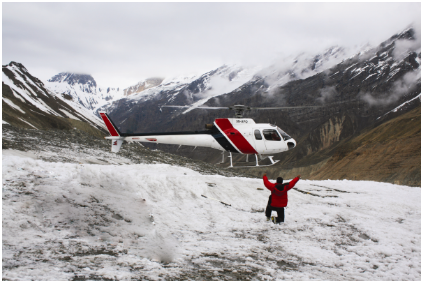
Here’s an illustration of how Global Rescue’s field rescue services bridge that gap. When Bela Hidvegi was camping in remote Cameroon last month, he contracted a severe bacterial infection and needed to receive first-world health care immediately. Global Rescue dispatched a helicopter to his camp, brought him to a hospital in the capital for initial stabilization, and then onward to his home in Europe for further treatment.

“Without Global Rescue and God’s help I might not have come out of Cameroon alive,” Hidvegi said.

Insurance is a wonderful tool to hedge against certain financial setbacks. On the other hand, if you are concerned about your health when traveling, Global Rescue will save your life.