Loading...

Share This:

USA Today features Global Rescue in story about managing travel risk

Roger Yu of the USA Today writes about how business travelers are increasingly sent to dangerous places, and how the companies who are sending them are managing travel risks:

Roger Yu of the USA Today writes about how business travelers are increasingly sent to dangerous places, and how the companies who are sending them are managing travel risks:

In pursuit of new clients and suppliers, U.S. companies of all sizes and interests — ranging from Halliburton to Marriott and Starbucks— are sending more employees on hardship assignments and taking new, aggressive steps to protect them from an ever-changing range of threats. Several recent events — the murders of Western aid workers in Afghanistan, the three American hikers imprisoned in Iran, the massive flooding in Pakistan and the killing of tourists on a bus in Manila on Monday — continue to serve as stark reminders of the perils travelers face overseas…

About 10% of employees who are transferred from the U.S. are assigned to countries that are considered “dangerous or have harsh conditions of living,” says Mariana Costa, an international employment lawyer from law firm Littler Mendelson.

Indicative of the danger and hardship they face: Global Rescue — one of the largest medical evacuation companies, whose clients include National Geographic, foreign aid agency Millennium Challenge Corp. (MCC) and technology firm EMC — says its number of international operations, including rescues and emergency responses, more than doubled in 2009…

Medical problems

Health issues are a ceaseless source of worry when more than 80 million travelers migrate annually from developed countries to countries with little or no medical infrastructure, according to the World Trade Organization.

Medical evacuation companies have responded. They partner with groups of doctors and travel security firms to provide quicker access to quality care to people traveling or working overseas.

When Emanuel Arvat, who worked as an electrical engineer for WorleyParsons, was assigned to Kuwait last year, he started dramatically losing weight and began suffering from severe heart palpitations. Doctors tested him for the avian flu and other cardiovascular diseases, but no clear diagnosis was made. His request to be transferred to a U.S. hospital was denied because no doctors would sign a waiver that would approve him for commercial air travel.

His employer called Global Rescue, a medical evacuation company. The firm flew him to a hospital in Turkey on a private jet. Doctors there treated him for a thyroid condition. “It didn’t take very long for the doctors in Turkey to figure out what was wrong,” Arvat says. “I had someone from Global Rescue with me the entire time.”

Share This:

Global Rescue renews sponsorship of US Ski and Snowboard Teams

Global Rescue has renewed its sponsorship agreement with the U.S. Ski and Snowboard Association (USSA), the company announced today.

Global Rescue has renewed its sponsorship agreement with the U.S. Ski and Snowboard Association (USSA), the company announced today. Global Rescue has been the official provider of medical evacuation services  to the USSA since 2006.

In renewing their agreement, Global Rescue and the USSA will continue to provide medical evacuation, consultation and support to the teams’ top athletes, including Ted Ligety, Lindsey Vonn and Julia Mancuso. The company contributes to the teams a portion of all memberships sold to their athletes and coaches nationwide.

Global Rescue has performed dozens of missions for USSA athletes over the years, including the evacuation of racer TJ Lanning who crashed in Lake Louise last year and fractured vertebrae in his neck. In February, the company had air assets on standby in Vancouver for the 2010 Olympic Winter Games, but fortunately no injuries required evacuation.

“Our association with Global Rescue has been superb,” Chief Operating Officer for the USSA, Dick Coe, wrote in a letter to all its members. “The response is immediate and the service is perfect.”

About USSA

The U.S. Ski and Snowboard Association (USSA) is the national governing body for Olympic skiing and snowboarding. Founded in 1905, the USSA manages year-round nationwide development and elite programs, including the national teams, in five distinctly different Olympic sports: alpine, cross country, freestyle, nordic combined,  and snowboarding, as well as two Paralympic sports – adaptive alpine and adaptive cross country. The USSA is based in Park City, Utah. For more information, visithttp://www.usskiteam.com or www.ussnowboarding.com

Share This:

Global Rescue evacuates climber off of glacier in Pakistan

Global Rescue paramedics received a call on July 22 from the climbing partner of a man who had experienced severe frostbite on the Gasherbrum Glacier in Pakistan.

Global Rescue paramedics received a call on July 22 from the climbing partner of a man who had experienced severe frostbite on the Gasherbrum Glacier in Pakistan. His toes were becoming gangrenous and had lost sensation. Photos of his injury were sent to Global Rescue doctors in the United States for review.

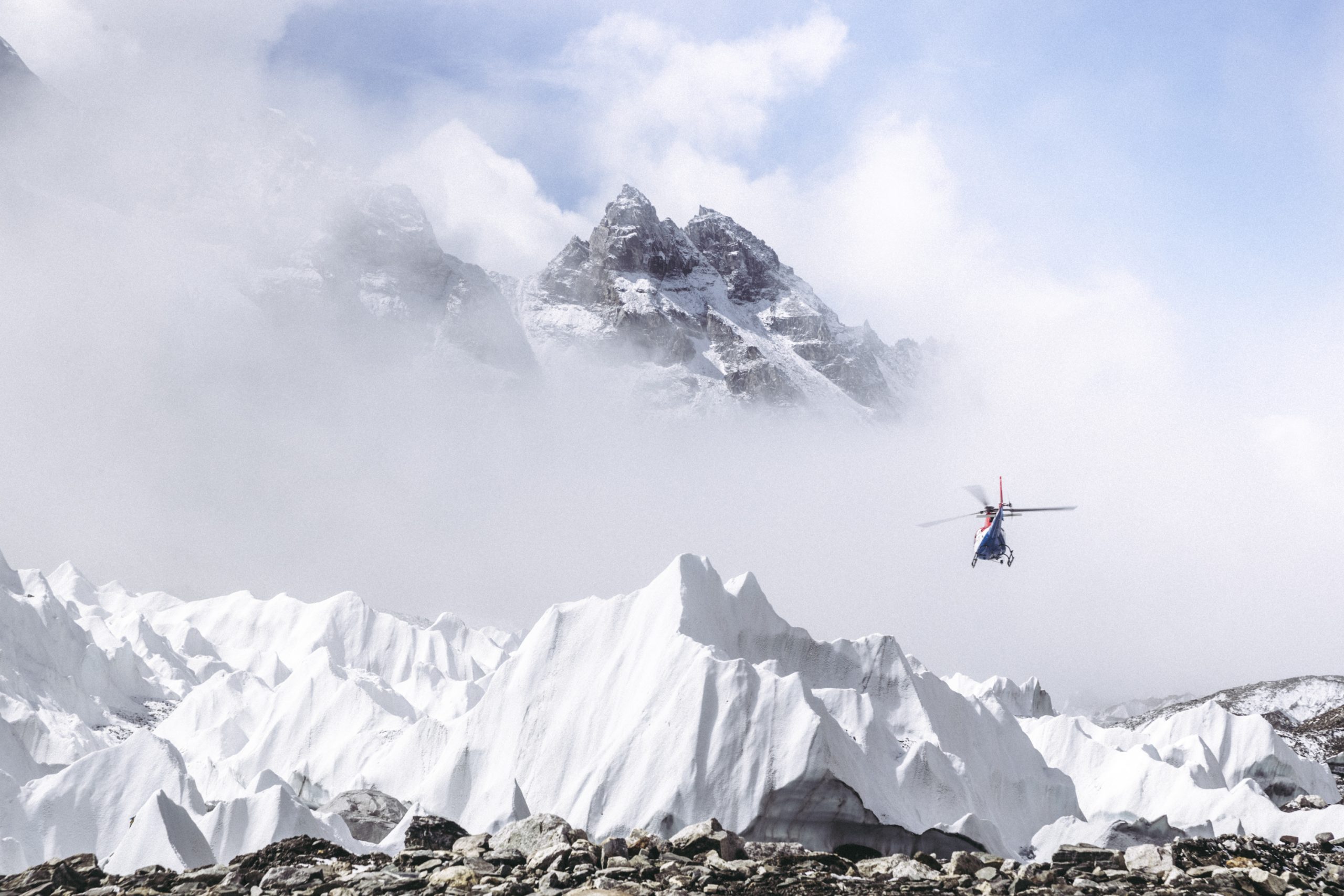
As the climbing party warmed his foot very slowly in their tent, Global Rescue dispatched a helicopter to the camp on the glacier and evacuated the man to a hospital in Skardu, Pakistan, for stabilization.

After initial treatment and blood testing there, the patient was further evaluated at a hospital in Islamabad, where he was cleared to board an international flight. He is currently being treated by his physician at home in Texas. 

Share This:

Global Rescue sponsors disabled veterans’ safari

Retired Army soldier Mike Mills had already put in his 20 years of service, but re-enlisted in order to take part in Operation Iraqi Freedom. He was on his way to Baghdad when he was…

Retired Army soldier Mike Mills had already put in his 20 years of service, but re-enlisted in order to take part in Operation Iraqi Freedom. He was on his way to Baghdad when he was caught in an attack that would change his life forever. 

Mike was gravely wounded in a roadside bomb attack. His truck exploded, he was soaked in fuel, and he burned until his colleagues could put out the flames. 

Mike survived but suffered deep tissue burns over 31 percent of his body.  He lost fingers, muscle tissue, his ears, his nose, and a lot of skin.  Now after some 37 surgeries, Mike has returned to living an independent, “normal” life. 

To honor Mike and all disabled veterans, two nonprofit organizations, the Langenfeld Foundation and the Minnesota chapter of Safari Club International are taking Mike on the trip of a lifetime — on safari in South Africa. Global Rescue will provide memberships for Mike and his fellow veterans and safari companions Walter Broich and Kyle Anderson. Kyle was also wounded in Iraq; he suffered traumatic brain injury when shrapnel penetrated his helmet and skull. 

If you or someone you know wants to say “thank you” to Mike and others like him, you can make a contribution at www.TheLangenfeldFoundation.org, or by mail to The Langenfeld Foundation, PO Box 533, Hastings, MN 55033. 

Share This:

Global Rescue evacuates angler from island in the Bahamas

A woman who was boating in the Bahamas with her husband earlier this week was medically evacuated by Global Rescue after she experienced symptoms consistent with appendicitis.

A woman who was boating in the Bahamas with her husband earlier this week was medically evacuated by Global Rescue after she experienced symptoms consistent with appendicitis.

The couple was fishing for marlin and had just reached the small, outlying island of Rum Cay when she began to feel severe pain in her abdomen. With no hospitals on the island or on the neighboring cays, she required an immediate medical evacuation. Her symptoms were indicative of appendicitis or an infection, but because the woman was of child-bearing age, Global Rescue doctors following her case from the initial call also could not rule out potentially fatal pregnancy complications.

Within two hours of receiving her call, Global Rescue scrambled an ICU equipped aircraft and medical team to the island.

The woman was taken to the Cleveland Clinic in Ft. Lauderdale. There she was stabilized and diagnosed with a non-specific infection. Her treatment was successful and she is currently in good health at home in North Carolina.

Share This:

After her car accident, a volunteer in Haiti is thankful she could stay calm

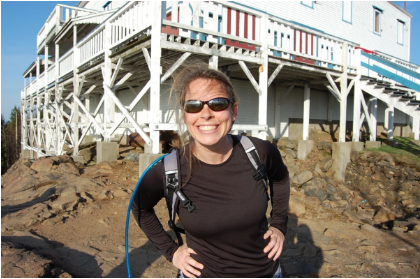
Holly Graham left for Haiti last month to rebuild schools and school infrastructure destroyed by the earthquake. Her mission ended prematurely when she was involved in a car accident, and called Global Rescue for help:

Note: Holly Graham left for Haiti last month to rebuild schools and school infrastructure destroyed by the earthquake. That story can be found here. Her mission ended prematurely when she was involved in a car accident, and called Global Rescue for help:

I was volunteering and doing some research in Haiti this year when I unfortunately got into a car accident.

I was bruised and battered, nothing too serious but I needed to get to a doctor. This is a normal response in the U.S., even if it’s just precautionary, but while accidents happen everywhere, what ensued afterwards alerted me to the differences in standards that we just take for granted.

There was no ambulance, no police and we were turned away from one health center and then brought to another where there was no water. I truly began to panic. This was not how the trip was to go, nor did it reflect how much work we had gotten done already. The chaos of the accident left me not only afraid, but also feeling my own bit of chaos.

My phone was lost in the accident, and I needed to get to the internet and realized then that even that can take a while in Haiti. When I did get online the next day (I had been teaching computers, but the internet can get knocked out and is always a struggle) I immediately contacted Global Rescue, who immediately started making arrangements for me. This allowed me time to get ready to go, talk to my family and get to a doctor.

It is tough to want to help and see the world–all of the world–and then privately wrestle with your own “standard”. I think most of us never want to appear as though we think the developed world is the only way, but there are many ways to define one’s standards. Simple structures like car inspections and guard rails, for example, suddenly become so important because they are precautionary, and yet they are so common to us that we rarely stop to consider that importance.

I have worked in inner city schools in Boston and Philly, and water and ice and Tylenol are pretty standard. Haiti is different. Knowing I had Global Rescue settled me down. I knew I was going to get medical care and get home, and it made the situation easier to deal with, and kept me from over reacting.

So while I am unsure as to how to appropriately thank Global Rescue for all the things that they do, including allowing the world to be accessible while maintaining your safety, I think the one thing that stands out is that I was able to stay calm instead of worrying about getting myself to a hospital, or focusing on all the things that went wrong—or, really, any other things that would have slowed the process of my return. In short, Global Rescue stayed with me from start to finish, including multiple check-ins after I got home.

Haiti is not a country to be ignored, because they need a lot of help, especially sustainable help that provides them with a foundation to get them to a place where precautionary measures are standard. I hope I do not ignore it, I hope I get past the accident and get it in me to go back and keep helping. With Global Rescue on my side, it will probably be the difference between persevering vs. fearing.

Share This:

Geographic Expeditions raises bar in risk-management, partners with Global Rescue

Geographic Expeditions has partnered with Boston-based crisis-response organization Global Rescue, the companies announced today, citing the limitations of conventional travel insurance and their continuing commitment to traveler safety.

Geographic Expeditions has partnered with Boston-based crisis-response organization Global Rescue, the companies announced today, citing the limitations of conventional travel insurance and their continuing commitment to traveler safety.

Geographic Expeditions President Jim Sano, who began his career with the National Park Service at Yosemite and is a frequent lecturer on risk management, said the first step in mitigating risk is having a plan for emergencies in remote areas. Sano said that Geographic Expeditions makes it clear to travelers that medical, security, and natural disasters can and do happen, and that “luck favors the well-prepared.”

“We have placed a high priority on continuously assessing and managing the inherent risks associated with our trips, and that has led us to Global Rescue,” Sano said. “For example, one reason we chose Global Rescue is that, when someone first calls in, the quality of the response is at a much higher level than at conventional assistance companies. From the first call until the client arrives home, there is a team of critical care paramedics, physicians, specialists at the John Hopkins Medical Center, search and rescue experts, and former military special operations personnel working on behalf of the traveler.  This is vastly superior to the old call-center /case manager model.”

Global Rescue staffs its operations center 24/7 with critical-care paramedics, who regularly deploy to the traveler’s bedside if he or she requires hospitalization. It is also the only company with field rescue capability, routinely evacuating members from canyons, mountainsides and the furthest reaches of the Earth, returning them to their home hospitals of choice.

About Geographic Expeditions

One of the pioneers in travel to the ends of the Earth, San Francisco-based Geographic Expeditions (http://www.geoex.com/) offers a sensationally varied roster of overland expeditions, treks, and expeditionary voyages to the world’s most beguiling places. It operates worldwide and specializes in destinations that are difficult or impossible to reach on one’s own. Half or more of its business comes from customized trips, and the company is much sought after as location and logistics managers for movie companies, museums and academic institutions. 

Geographic Expeditions has been consistently recognized by Travel + Leisure as one of the “World’s Top Ten Tour Operators and Safari Outfitters.”  Condé Nast Traveler also honors the company by naming three GeoEx Regional Directors in its “125 Greatest Travel Pros on Earth.” In addition, Departures and National Geographic Traveler regularly feature the outfitter’s trips in their annual best trips lists.

Share This:

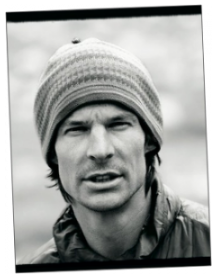
Steve House thanks Global Rescue after medical evacuation

Renowned alpine climber Steve House reflected on his life-threatening 80-foot fall in a post on the American Alpine Club's blog recently, and took a moment to thank the tireless work of Global Rescue's medical staff at…

Renowned alpine climber Steve House reflected on his life-threatening 80-foot fall in a post on the American Alpine Club’s blog recently, and took a moment to thank the tireless work of Global Rescue’s medical staff at the Canadian hospital and during his medical evacuation back to Oregon.

“On my second morning in the critical care ward at Calgary’s Foothills Medical Center we called Global Rescue and that same night a Global Rescue paramedic arrived and immediately began helping us make sense of the complicated diagnosis of my extensive injuries: two pelvic fractures, seven fractured vertebrae, nine fractured ribs (3 were pulverized) and a collapsed lung. I was reliant on the Global Rescue medic’s help, as I could do little clear thinking with all the pain and exhaustion that comes with such injuries.

“As my healing progressed, Global Rescue’s medic was already thinking ahead, working out the best way to get me home to Oregon.

“Global Rescue not only got me home as efficiently as possible, they repeatedly made the best decisions for me as a patient. For that I am forever grateful.”


Share This:

Global Rescue sponsors expedition to view endangered camel in the Gobi

Global Rescue is happy to sponsor a group of explorers who will set off to study the hairy two-humped beasts in their habitat.

The Arabian camel is not hard to find. The one-humped beasts are popular props in photo ops from Manama to Marrakesh and are a cheap source of labor for the natives.

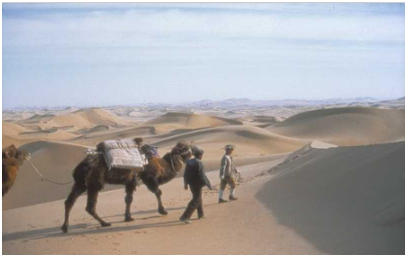
Its cousin, the two-humped camel, is much more difficult to see outside of a zoo. Once a common fixture all over Central Asia as late as the 1920s, the Bactrian camel is now a highly endangered species and the only examples living in the wild are found in two small nature reserves in the Gobi Desert. About 450 Bactrian camels survive in Mongolia, and about 600 in Northern China. This makes them less numerous than the giant panda.

Global Rescue is happy to sponsor a group of explorers who will set off to study the hairy two-humped beasts in their habitat.  The expedition to the reserve will be led by conservationist John Hare, who founded the Wild Camel Protection Foundation in 1997 (http://www.wildcamels.com/) after securing land from the government of Mongolia.  There are at least five other highly endangered large species in the area including the Gobi bear.

After a three-day ride over very rough roads, the group will reach a breeding center near the Mongolian reserve established by Hare to help sustain the species.  They will then mount domestic Bactrian camels to ride for two days to reach the reserve.  Temperature extremes are the norm in Mongolia and the variance at that time of the year ranges from the 90s (Farenheit) in the day to the high 30s at night.    

“To get some idea of how remote that is,” the expedition’s medical director, Michael Manyak said, “consider that Mongolia has 1.2 million people and a million of them live in the capital Ulaan Baatar. The other 200,000 are spread around an area almost three times the size of Texas.  We don’t expect much traffic out there.”

Mongolia is the least densely populated country in the world.   

These Explorers Club members are highly appreciative of the support from Global Rescue.  “Medical evacuation preparation and coverage is imperative in this type of environment where there are no medical resources,” said Dr. Manyak.  “We hope we don’t need them but, if we do, we know that Global Rescue has our backs.” 

Share This:

Global Rescue sponsors school-building efforts in Haiti

Global Rescue is happy to sponsor a group of explorers who will set off to study the hairy two-humped beasts in their habitat.

When University of Masachusetts-Amherst doctoral candidate Holly Graham heard her Haitian colleague discussing the lack of schools in his earthquake-stricken country, she knew right away how she’d be spending her time off this summer.

Working alongside the Honor for Haiti Foundation, Graham has volunteered to bring donated computer equipment, clothes and other supplies to parts of the Haitian countryside. The foundation has purchased the land for two schools, and the volunteers will be building them “from the ground up,” Graham said.

Graham, whose doctoral work lies in the areas of linguistics and education, will be charged with the creation of a cyber café and will help design curricula and administrative infrastructure for the new schools.

Global Rescue is pleased to sponsor Graham’s efforts in Haiti, a country where the company’s medical and security teams were very active after the earthquake in January. Global Rescue teams evacuated more than 20 peoplefrom the country, including Haitians who had suffered life-threatening injuries. Its contracted aircraft also helped bring in relief workers from non-profit organization and supplies.

“I was so impressed with the work that Global Rescue did in Haiti immediately after the earthquake,” Graham said. “I remember following along updates and being impressed from afar at how quickly they reacted and the work that they did with such selfless urgency.

“This speaks to the kind of company that Global Rescue is. Instead of fearing the world, Global Rescue seeks out ways for people to see the world without fear. It is that exact sentiment that is necessary when working in Haiti. So as I go to start training teachers and investing time in rebuilding a school, I cannot help but connect my work to the vision of GR. I am truly humbled by this offer.”

Share This:

TV personality Jim Shockey endorses Global Rescue

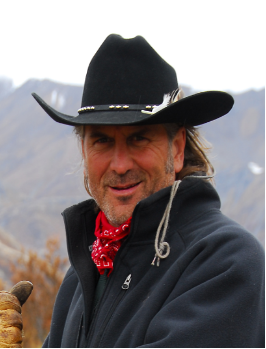
Hunting legend and television personality Jim Shockey is the latest traveling sportsman to endorse Global Rescue.

Hunting legend and television personality Jim Shockey is the latest traveling sportsman to endorse Global Rescue, officially recommending the company’s medical evacuation membership services to his fans and to those he takes into the wilderness.

Shockey, his family and his production team have been Global Rescue members since 2007.

“I hunt in remote corners of the globe, which is why I switched to Global Rescue,” Shockey said. “They’re the only service that will perform a field rescue and come get me no matter where I am, and that’s why I trust my life to Global Rescue.”


Share This:

Global Rescue evacuates bear hunter from remote camp in Kamchatka, Russia

While hunting brown bear deep in the forests of Russia's Kamchatka peninsula, a Global Rescue member severely injured his leg leaving him in need of medical evacuation.

While hunting brown bear deep in the forests of Russia’s Kamchatka peninsula, a Global Rescue member severely injured his leg leaving him in need of medical evacuation. Global Rescue evacuated the member to a local hospital for stabilization and ultimately to his home hospital of choice. 

Global Rescue launched a contracted helicopter to extract the 63-year-old man from the remote camp to a hospital in Petropavlovsk Kamchatskiy, where he was diagnosed with a badly fractured leg and torn ligaments. After the leg was immobilized, Global Rescue physicians evaluated the results of the member’s x-rays and approved him for travel.  The member was then evacuated by Global Rescue’s medical personnel to his home hospital of choice in St. Louis, Missouri for follow-on care.

Global Rescue made arrangements to have the member’s weapon accompany him on his flight home.