Loading...

Share This:

The Limits of Government-Provided Security: Another Lesson from Haiti

Civil unrest is again on the rise in Haiti, this time in Cap Haitien, where violence and threats to foreigners has prompted one of our media clients to request assistance for two reporters stuck in…

Civil unrest is again on the rise in Haiti, this time in Cap Haitien, where violence and threats to foreigners has prompted one of our media clients to request assistance for two reporters stuck in the midst of the rioting. Sixteen people have been reported wounded, two dead, and the local airport was closed to commercial traffic. Meanwhile, the death toll from the cholera outbreak in the region has topped the 1,000 mark.

Again, it will be the private sector that helps to provide a solution to this recurring problem. In a country where public safety infrastructure is now practically nonexistent, U.S. Embassy resources are stretched too thin to handle the volume of security emergencies facing Americans.

Coincidentally, I was at a conference this week at the U.S. State Department, where the Regional Security Officer for Haiti, Steve Lesniak, outlined the challenges he faced after the earthquake in Port-au-Prince in January. A chaotic crowd of Haitians arrived at the embassy in search of help of every description: urgent medical aid, food and water, shelter from machete-wielding mobs. The compound was so overrun at one point that even the Ambassador could not get inside.  Arriving medevac flights, Lesniak recalled, were waved off at the Embassy’s adjoining helicopter pad because the field was packed with livestock and refugees.

American citizens were turned away at the gates.

In her opening remarks at this conference, the 25th annual briefing of the Overseas Security Advisory Council, Secretary of State Hillary Clinton put the crisis in a global perspective:  There are so many tourists and businessmen engaged in activities in the furthest reaches of the planet that the U.S. Government will need to turn to the private sector to fill in the widening gap between the needs of American citizens abroad and the limited resources of diplomatic missions.

“It’s been 25 years since an innovative Secretary of State and a handful of innovative leaders from the private sector first met,” Clinton said. “Secretary George Shultz wanted to chart a new partnership on security for Americans overseas. Twenty-five years ago, even Secretary Shultz, who is such a visionary, might not have foreseen everything we deal with today. It’s a much more difficult security environment. The threat matrix is much more complex. The world has changed at a dizzying pace. American companies are everywhere. American students and tourists are everywhere. So we are living, working, learning in new ways like never before…

“So to stay active and engaged,” she told the crowd of a few hundred security professionals, “we need to work with you… This is a model public-private partnership which I’m very committed to doing more of. And in fact, any other ideas any of you have about how we can expand on our partnership models, I hope you will let us know.”

It was unclear just what shape new public-private partnerships would take in the future, but what was vividly clear was that the State Department recognizes that it can’t be counted on for the safety of every American abroad when the next earthquake, tsunami, ethnic riot or terrorist attack unfolds.

I remember answering questions for a CNN International interview after the earthquake in Haiti, when the query from anchorwoman Becky Anderson summed up the situation better than any answer.

“I would imagine, given what we’re hearing and seeing in a lot of cases,” she said “ a group of people or an organization that needs to move people around or get people out, they can’t just go to the police or the military here. I would imagine private security in many cases is really the only option.”

There is no police, military or embassy solution to the problems our clients are facing right now in Cap Haitien. If there was, they likely would not have turned to their employer to plead for assistance. And if their employers were confident that traveling representatives of the company would be kept out of harm’s way by the local embassy or police, they would not have become Global Rescue clients.

Over the weekend, one of our security teams, led by a former Navy SEAL, extracted the reporters from the violence. The team met the evacuees at a predetermined location and escorted them to Santo Domingo aboard a private flight, keeping their employer informed of their whereabouts and condition at every stage. They were then transported to the airport of their choice – in this case, in Virgina

In this time of holiday travel, Homeland Security has taken extraordinary measures to protect Americans against another attack on our soil. It is encouraging to know that the State Department is making progress in closing the security gap facing Americans abroad. I look forward to working with its staff to propose solutions that only the private sector can provide.

Share This:

Lion attack leads to medical evacuation from the field in Zimbabwe

While walking through the veld of Zimbabwe, a Global Rescue member was ambushed by a waiting lioness.

While walking through the veld of Zimbabwe, a Global Rescue member was ambushed by a waiting lioness, which knocked him to the ground and bit into both of his hands and his right wrist. As the young man fought to keep the animal from sinking its teeth into his jugular, his partner successfully subdued the lioness, and then called for help.

Global Rescue provided a field rescue from the remote location to a qualified hospital in the region. There, surgeons cleaned his lacerations, and acting upon recommendations from Global Rescue and Johns Hopkins, did not immediately close the wounds as there was a significant risk that they would become infected. (Infections from bacteria in a lion’s mouth lead to dangerous complications in cases like these, and are the cause of a significant percentage of resulting fatalities.)

When the doctors were confident that his wounds were ready to be closed, the man’s hands were sutured, and he elected to continue the rest of his vacation in Africa.

Share This:

Ski Racing magazine profiles Global Rescue’s Rusty Heise

Ski Racing magazine's Bryce Hubner recently interviewed Rusty Heise, a former ski racer who now manages Global Rescue's partnership with the U.S. Ski Team and represents the company within the skiing community at large. Here's what…

Ski Racing magazine’s Bryce Hubner recently interviewed Rusty Heise, a former ski racer who now manages Global Rescue’s partnership with the U.S. Ski Team and represents the company within the skiing community at large. Here’s what Bryce had to say:

Guns are trained on you at every corner in a far-off nation, where you were working to ameliorate poverty and hunger before a military coup overthrew the democratic government. The border’s closed and there’s no escaping the country — at least, not without help.

Or maybe you’re in the Andes on an expedition to summit a 20,000-foot peak. Unexpected snow hammers your team and four of you — tethered to the same rope — tumble hundreds of feet from the ridge you were traversing. You’re badly injured and need to be evacuated.

The world can be a crazy, inhospitable place, and if you find yourself in  a crisis far from home, it’s nice to have Rusty Heise and Global Rescue working on your behalf.

Heise was an alpine standout on the NCAA circuit before graduating from Dartmouth College in 2009. He’s now among the youngest business administrators at Boston-based Global Rescue LLC, a company that provides medical security evacuation and crisis response services for those in need — they might pluck you from that dicey, third-world country after a government coup, or rescue you from that Andean summit gone awry…

In addition to handling the U.S. Ski Team, Heise works in sales and member services with ski academies and clubs across the country. To some degree, he says, it’s an easy sell because there are so many tangible examples that show the value of Global Rescue’s services…


Share This:

Sporting Classics looks at Global Rescue member’s leopard attack

An article in this month's Sporting Classics magazine features Global Rescue's work, and in particular its medical evacuation of a South African man attacked by a leopard. John Ross writes in his "Travel" column:

An article in this month’s Sporting Classics magazine features Global Rescue’s work, and in particular its medical evacuation of a South African man attacked by a leopard. John Ross writes in his “Travel” column:

What does it cost to save your buns when the going gets dangerously bad?

Not a lot, really, even if you’re hunting in sub-Saharan Africa, the mountains of the Middle East or the jungle along Colombia’s border with Venezuela. A payment of less than $200, or $300 if you’re headed into a zone with possible civil unrest, terrorism or open warfare, will cover a two-week trip. Think how much you just shelled out for dinner for four at that good restaurant you and your wife love to frequent.

While you and your three friends were enjoying that chef’s new inspiration, a leopard in South Africa thought it would dine on John Abraham. It sank its teeth into his knee, and bit his wrist before it expired.

A local doctor cleaned and dressed the wound and Abraham returned to camp. Almost immediately infection set in. The pain was intense as was the swelling. More than 1,000 miles separated him from top-quality medical facilities in Johannesburg. His safari company is a member of Global Rescue, which specializes in medical and security evacuations. His wife placed the call, and Abraham is now recovering very well…

Categories:

News
Share This:

Ski Racing Magazine – At Global Rescue, former ski racer Rusty Heise is now in…

Categories:

News
Share This:

Sporting Classics – What does it cost to save your buns when the going gets…

Share This:

Global Rescue evacuates man bitten by African cobra

Global Rescue transported a member from Namibia to the United States after he was bitten by an African cobra that delivered a potentially fatal dose of venom.

Global Rescue transported a member from Namibia to the United States after he was bitten by an African cobra that delivered a potentially fatal dose of venom.

The Global Rescue member was getting into bed for the evening when the snake struck and bit into his foot. After killing the reptile, the member’s guide rushed the man to a local hospital where he was administered antivenin. 

The Angolan cobra, or Naja annulifera anchietae, kills hundreds of people every year. Worldwide, cobras are among the most deadly animals on the planet, accounting for about 50,000 deaths annually in Asia alone.Few other animals cause as many human fatalities – the most notable being the mosquito, which kills millions per year by spreading malaria.

The African cobra’s venom is neurotoxic and causes severe local swelling and pain — in this case the Global Rescue member suffered from necrotic skin on his foot, meaning the tissue of his foot began to die.  

To save his lower leg, physicians performed emergency surgery that completely removed the skin from the top of the man’s foot.  This was necessary in order to prevent severe, life-threatening blood infections. At the conclusion of the surgery, an attempt was made to graft replacement tissue to the wound.

After a thorough review of the medical records and images performed in conjunction with local physicians, it was determined the efforts to regraft the skin had been unsuccessful. Global Rescue’s medical team and Johns Hopkins specialists agreed that his foot should be operated on in the United States. He was immediately flown to Washington D.C., via Amsterdam.  Following transport, he was admitted to a top-tier hospital in Virginia, where surgeons removed additional tissue from the foot and a plastic surgeon repaired the top of his foot with a layer of synthetic skin.

After the ordeal, the member expressed his gratitude to the Global Rescue paramedic who had assisted him throughout the ordeal, and noted, “Anyone who doesn’t get Global Rescue is crazy.”

Categories:

News
Share This:

The Christian Science Monitor – Europe Travel Alert: Eight steps Americans can take

Share This:

Global Rescue featured in the Christian Science Monitor

From an article by Ron Scherer in today's Christian Science Monitor:

From an article by Ron Scherer in today’s Christian Science Monitor:

You have booked tickets for the Paris International Photo Fair or perhaps your son is already in Berlin studying German. Now that the US State Department has issued a “travel advisory” for Europe, what should you do? Cancel the trip? Bring junior home? Professional travel advisers say it is too soon to hit the panic button. Here are eight things you can consider doing…

If you are very concerned about safety, you might want to contract with an outside group, such as International SOS or Global Rescue – for-profit companies that specialize in international medical emergencies and security issues.

“In the event of a Mumbai-type of incident they are able to get into places and extract people,” says Sano, who contracts with Global Rescue. “They are for the traveler who wants a more robust safety net,” he says.

Share This:

Red Bull Human Express crosses the Rockies

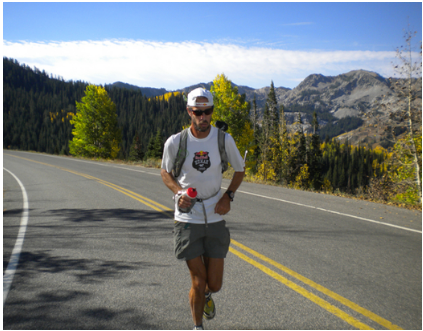
Extreme runner Karl Meltzer, a.k.a. Red Bull’s “Human Express,” worked his way into Wyoming over the weekend, crossing over the Continental Divide, and will close in on the 1,000-mile mark of his trip on Wednesday.

Extreme runner Karl Meltzer, a.k.a. Red Bull’s “Human Express,” worked his way into Wyoming over the weekend, crossing over the Continental Divide, and will close in on the 1,000-mile mark of his trip on Wednesday.

“Running yesterday out of Cottonwood [Utah],” he updated his fans on his Twitter account over the weekend. “Dare I say I FELT AMAZING. Cannot believe it, I am on week 3”

The 42-year-old athlete is slated to run 2,300 miles of largely unpaved trail along the old Pony Express route from Sacramento, CA to Kansas City, MO.

According to Red Bull, Meltzer burns only about 2,800 calories per 50-mile day. His average heart rate is pegged at about 100 beats per minute.

Global Rescue is providing medical evacuation coverage for Meltzer, with aircraft and ground transport on standby throughout the route in the event of a medical emergency.

Share This:

Global Rescue member calls in with signs of dengue fever

A 47-year-old man, the employee of a Global Rescue client, was traveling in Asia this month and experienced symptoms consistent with dengue fever upon his return to the U.K.

A 47-year-old man, the employee of a Global Rescue client, was traveling in Asia this month and experienced symptoms consistent with dengue fever upon his return to the U.K. He placed a call to Global Rescue after a local hospital’s staff suggested he might have contracted the disease on his travels. Johns Hopkins infectious disease specialists and Global Rescue physicians reviewed his medical information and recommended further evaluation at a highly qualified facility in the area.

Asian countries are on high alert for such diagnoses, with 11 reported cases in a single week this month in the Guangdon province of China, as it prepares to host the Asian Games.

September and October have historically been peak season for dengue in the region.

Last September at this time, officials in Vietnam reported 32,000 confirmed cases on the year. In Nepal, where a large number of Global Rescue members go each year on climbing and trekking expeditions, health authorities said earlier this month that the number of dengue, leptospirosis and H1N1 cases has now reached crisis levels. The Xinhua news agency reported that the Epidemiology and Disease Control Division of Nepal’s Dept. of Health Services will set up a dedicated fever clinic in the Chitwan district to combat the epidemics.

Dengue is transmitted by mosquitoes, and can be life-threatening if the flu-like symptoms develop into a high fever. Travelers to Asia this time of year should pack, and frequently apply, insect repellant and take extra precaution by covering exposed skin. As always, travelers to Asia should be sure that all of their immunizations are up to date.

Fortunately for the member who experienced these symptoms, a diagnosis of dengue was ruled out at the receiving hospital that Global Rescue recommended. His fever has since subsided and he is now in good health at his home.

Share This:

Red Bull Human Express run crosses Nevada-Utah border

Karl Metzer, the 42-year-old distance runner who is testing his endurance in Red Bull’s “Human Express” this month and next, crossed into Utah from Nevada over the weekend, bringing his total mileage past the 500…

Karl Metzer, the 42-year-old distance runner who is testing his endurance in Red Bull’s “Human Express” this month and next, crossed into Utah from Nevada over the weekend, bringing his total mileage past the 500 mark.

Meltzer is slated to run 2,300 miles of largely unpaved trail along the old Pony Express route from Sacramento, CA to Kansas City, MO.

According to Red Bull, Meltzer is averaging about 4 miles per hour, and about 50 miles and just 2,740 calories per day. His average heart rate is pegged at 99 beats per minute.

Global Rescue is providing medical evacuation coverage for Meltzer, with aircraft and ground transport on standby throughout the route in the event of a medical emergency.