Loading...

Share This:

Global Rescue sponsors expedition to view endangered camel in the Gobi

Global Rescue is happy to sponsor a group of explorers who will set off to study the hairy two-humped beasts in their habitat.

The Arabian camel is not hard to find. The one-humped beasts are popular props in photo ops from Manama to Marrakesh and are a cheap source of labor for the natives.

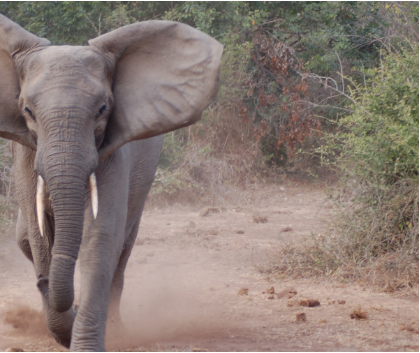
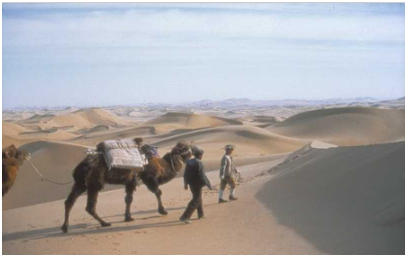
Its cousin, the two-humped camel, is much more difficult to see outside of a zoo. Once a common fixture all over Central Asia as late as the 1920s, the Bactrian camel is now a highly endangered species and the only examples living in the wild are found in two small nature reserves in the Gobi Desert. About 450 Bactrian camels survive in Mongolia, and about 600 in Northern China. This makes them less numerous than the giant panda.

Global Rescue is happy to sponsor a group of explorers who will set off to study the hairy two-humped beasts in their habitat.  The expedition to the reserve will be led by conservationist John Hare, who founded the Wild Camel Protection Foundation in 1997 (http://www.wildcamels.com/) after securing land from the government of Mongolia.  There are at least five other highly endangered large species in the area including the Gobi bear.

After a three-day ride over very rough roads, the group will reach a breeding center near the Mongolian reserve established by Hare to help sustain the species.  They will then mount domestic Bactrian camels to ride for two days to reach the reserve.  Temperature extremes are the norm in Mongolia and the variance at that time of the year ranges from the 90s (Farenheit) in the day to the high 30s at night.    

“To get some idea of how remote that is,” the expedition’s medical director, Michael Manyak said, “consider that Mongolia has 1.2 million people and a million of them live in the capital Ulaan Baatar. The other 200,000 are spread around an area almost three times the size of Texas.  We don’t expect much traffic out there.”

Mongolia is the least densely populated country in the world.   

These Explorers Club members are highly appreciative of the support from Global Rescue.  “Medical evacuation preparation and coverage is imperative in this type of environment where there are no medical resources,” said Dr. Manyak.  “We hope we don’t need them but, if we do, we know that Global Rescue has our backs.” 

Share This:

Global Rescue sponsors school-building efforts in Haiti

Global Rescue is happy to sponsor a group of explorers who will set off to study the hairy two-humped beasts in their habitat.

When University of Masachusetts-Amherst doctoral candidate Holly Graham heard her Haitian colleague discussing the lack of schools in his earthquake-stricken country, she knew right away how she’d be spending her time off this summer.

Working alongside the Honor for Haiti Foundation, Graham has volunteered to bring donated computer equipment, clothes and other supplies to parts of the Haitian countryside. The foundation has purchased the land for two schools, and the volunteers will be building them “from the ground up,” Graham said.

Graham, whose doctoral work lies in the areas of linguistics and education, will be charged with the creation of a cyber café and will help design curricula and administrative infrastructure for the new schools.

Global Rescue is pleased to sponsor Graham’s efforts in Haiti, a country where the company’s medical and security teams were very active after the earthquake in January. Global Rescue teams evacuated more than 20 peoplefrom the country, including Haitians who had suffered life-threatening injuries. Its contracted aircraft also helped bring in relief workers from non-profit organization and supplies.

“I was so impressed with the work that Global Rescue did in Haiti immediately after the earthquake,” Graham said. “I remember following along updates and being impressed from afar at how quickly they reacted and the work that they did with such selfless urgency.

“This speaks to the kind of company that Global Rescue is. Instead of fearing the world, Global Rescue seeks out ways for people to see the world without fear. It is that exact sentiment that is necessary when working in Haiti. So as I go to start training teachers and investing time in rebuilding a school, I cannot help but connect my work to the vision of GR. I am truly humbled by this offer.”

Share This:

TV personality Jim Shockey endorses Global Rescue

Hunting legend and television personality Jim Shockey is the latest traveling sportsman to endorse Global Rescue.

Hunting legend and television personality Jim Shockey is the latest traveling sportsman to endorse Global Rescue, officially recommending the company’s medical evacuation membership services to his fans and to those he takes into the wilderness.

Shockey, his family and his production team have been Global Rescue members since 2007.

“I hunt in remote corners of the globe, which is why I switched to Global Rescue,” Shockey said. “They’re the only service that will perform a field rescue and come get me no matter where I am, and that’s why I trust my life to Global Rescue.”


Share This:

Global Rescue evacuates bear hunter from remote camp in Kamchatka, Russia

While hunting brown bear deep in the forests of Russia's Kamchatka peninsula, a Global Rescue member severely injured his leg leaving him in need of medical evacuation.

While hunting brown bear deep in the forests of Russia’s Kamchatka peninsula, a Global Rescue member severely injured his leg leaving him in need of medical evacuation. Global Rescue evacuated the member to a local hospital for stabilization and ultimately to his home hospital of choice. 

Global Rescue launched a contracted helicopter to extract the 63-year-old man from the remote camp to a hospital in Petropavlovsk Kamchatskiy, where he was diagnosed with a badly fractured leg and torn ligaments. After the leg was immobilized, Global Rescue physicians evaluated the results of the member’s x-rays and approved him for travel.  The member was then evacuated by Global Rescue’s medical personnel to his home hospital of choice in St. Louis, Missouri for follow-on care.

Global Rescue made arrangements to have the member’s weapon accompany him on his flight home.


Share This:

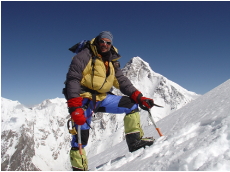
Chris Warner rescued from Makalu, medical evacuation halts historic climb up South Face

Global Rescue received a call from base camp in Makalu, Nepal, alerting operations teams that Chris Warner was suffering from increased shortness of breath, chest tightness and lethargy at 5,500 meters.

Global Rescue received a call from base camp in Makalu, Nepal, alerting operations teams that Chris Warner was suffering from increased shortness of breath, chest tightness and lethargy at 5,500 meters. Global Rescue medical teams advised Warner to descend as soon as possible for in-depth medical assessment and possible treatment for HAPE (High Altitude Pulmonary Edema), though heavy snow and avalanche risk prevented an immediate descent.

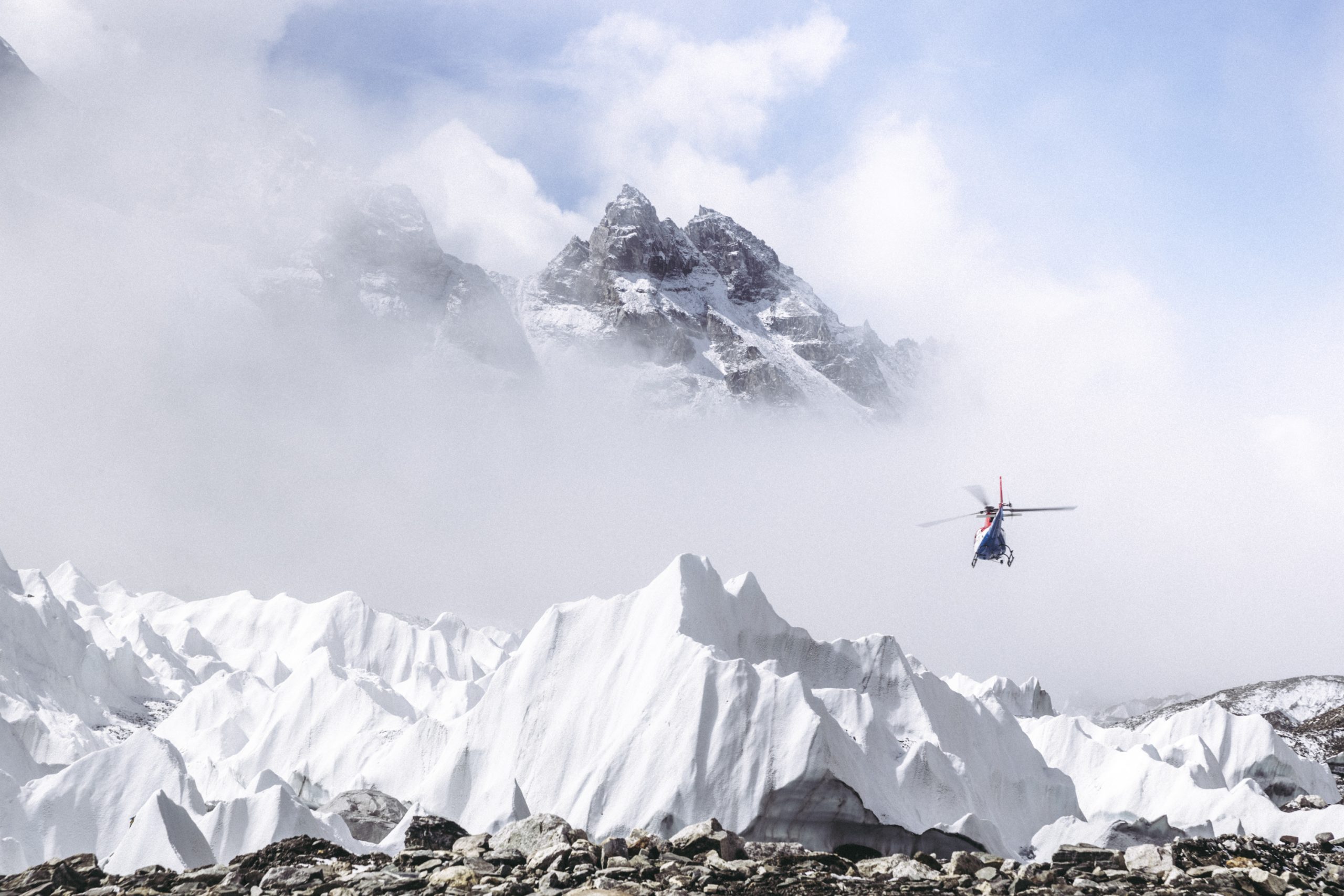
A window in the weather appeared at which time Global Rescue launched a helicopter equipped with a hoist that can evacuate climbers from locations with no landing zone. Unfortunately, the weather deteriorated and the helicopter was forced to turn back.

Warner and his team were able to descend to base camp on foot over the next 24 hours, where Global Rescue was able to evacuate him via helicopter to a medical center in Kathmandu.  After a battery of tests, HAPE was ruled out, although Warner was diagnosed with pneumonia. He has since been released and is making a quick recovery.

Share This:

Global Rescue evacuates man with fatal heart condition from a remote camp in Botswana

Global Rescue received a call from base camp in Makalu, Nepal, alerting operations teams that Chris Warner was suffering from increased shortness of breath, chest tightness and lethargy at 5,500 meters.

A man is safe and recovering at home after Global Rescue medically evacuated him from a remote camp in Botswana to a hospital where he underwent complex heart surgery that saved his life.

The man and his wife were on safari in the Tuli Block game reserves in Botswana when he began coughing severely. He visited a local clinic where he was diagnosed with bronchitis, his coughing worsened and he became short of breath. His safari guide called Global Rescue for help.

Global Rescue’s medical staff obtained the member’s test results, suggested he be evaluated for congestive heart failure after reviewing his medical history, and recommended a medical evacuation from the camp. Global Rescue immediately launched a medically equipped aircraft to evacuate the member, who was transported from a remote landing strip to Johannesburg, the location of the best cardiology unit on the continent. There, he was diagnosed with congestive heart failure, and the local surgeons and Global Rescue physicians agreed he would require immediate bypass surgery. Global Rescue deployed a medical team to his bedside to oversee and coordinate his treatment.

After a lengthy and complicated procedure and post-operative rehabilitation that saved his life, the man and his wife were transported home to Texas. 

Share This:

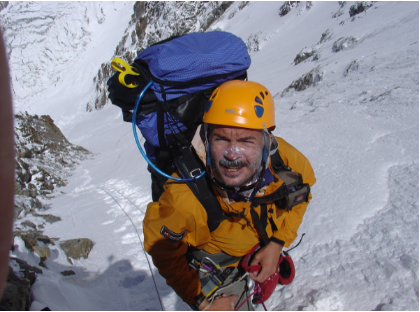
Climber Steve House is evacuated by Global Rescue after falling 80 feet

Steve House, one of the world’s most accomplished alpine climbers, is recovering after a fall in the Canadian Rockies left him with life-threatening injuries.

Steve House, one of the world’s most accomplished alpine climbers, is recovering in an Oregon hospital after an 80-foot fall in the Canadian Rockies left him with multiple life-threatening traumatic injuries. House was medically evacuated from Calgary to Oregon by Global Rescue.

House is a high-profile Ambassador for Patagonia clothing and a veteran of some of the highest peaks in the world. Reinhold Messner, who accomplished the first solo ascent of Everest without supplemental oxygen, once called House “the best high-altitude climber in the world today.”

House was attempting an ascent of Mt. Temple in Banff National Park when he fell. Following the accident, he was rushed to a medical facility in Calgary.

Global Rescue deployed a paramedic to oversee House’s treatment.  This oversight included consultations from Global Rescue and Johns Hopkins Medicine physician teams as House was being prepared for transport.  Once stabilized, Global Rescue evacuated House to his home hospital in Oregon aboard a medically equipped jet.

Global Rescue regularly performs rescue and evacuation services to injured members climbing the world’s tallest peaks. Recent missions include evacuations from Aconcagua, Dhaulagiri, Kilimanjaro and Everest.

Share This:

A thank-you note from the founder of the Wilderness Medical Society

Wilderness Medical Society founder Paul Auerbach, M.D., took a moment to thank Global Rescue for helping oversee the operations of University Hospital in Port-au-Prince after the devastating earthquake.

Wilderness Medical Society founder Paul Auerbach, M.D., took a moment to thank Global Rescue for helping oversee the operations of University Hospital in Port-au-Prince after the devastating earthquake.

“Within a day, four GR professionals, already in the country on other business, came to the hospital with a phone. Even though they had completed their work in Haiti on behalf of GR and its clients, and were scheduled to leave the country, they volunteered to assist at the hospital. They remained overnight as volunteers at the hospital to observe all aspects of the activities in order to create a report, which was very helpful in determining what additional persons, supplies and other support were necessary at night to care for patients…”

Share This:

Global Rescue paramedic deployed to Ethiopia, patient with cardiac incident is provided medical evacuation

Global Rescue recently received a call from a corporate client, saying that one of their employees had suffered a serious cardiac incident event while working in Addis Ababa, Ethiopia, and was being treated in a…

Global Rescue recently received a call from a corporate client, saying that one of their employees had suffered a serious cardiac incident event while working in Addis Ababa, Ethiopia, and was being treated in a local hospital.  
 
Global Rescue’s Boston Operations Center medical staff confirmed that the hospital was a reputable cardiac facility capable of stabilizing the patient. Before taking the patient to his home hospital of choice, all relevant test results were obtained and thoroughly reviewed by specialists at John Hopkins and Global Rescue in the United States, and a Global Rescue paramedic was dispatched  to the employee’s bedside.    
 
Global Rescue typically provides medically skilled bedside supervision to ensure that patients are receiving the best care possible.  It’s important that the proper tests are being administered, medicines are being given timely and in the proper dosage and that the patient has the reassurance that everything that can possibly be done to ensure a positive outcome.
 
This patient was particularly nervous as he had no primary care physician of his own,  and no one in the hospital with him to assist him. He therefore relied on Global Rescue’s medical staff to explain all the tests that were being done, the medicines being administered and the decisions that were being made on his behalf.
 
Transport can only occur after a determination has been made that it is medically safe. The doctors at Global Rescue, Johns Hopkins and the attending physician agreed that the patient was stable enough for air travel. Global Rescue evacuated him under medical escort to his home country, where he reports he is feeling much better and on the road to full recovery.  

Share This:

Global Rescue sponsors historic climb up the South Face of Makalu

Participants in the 2010 Shared Summits Makalu Expedition arrived in Nepal on Wednesday, their sights set on the world’s fifth-tallest peak.

Participants in the 2010 Shared Summits Makalu Expedition (www.sharedsummits.com) arrived in Nepal on Wednesday, their sights set on the world’s fifth-tallest peak. The ambitious climb sponsored by Global Rescue is ground-breaking, as the group will be the first to attempt a route along Makalu’s South Face.

Overall, this marks the tenth time that an American team has attempted a new route on an 8,000 meter (24,000 foot) peak. Only 13 Americans before this group have successfully conquered Makalu, the “Great Black.”

Accompanying climbers Chris Warner and Marty Schmidt is a team of filmmakers who are making a documentary on the historic ascent. Warner is the President of Earth Treks, Inc, (www.earthtreksclimbing.com), has been on more than 160 international mountaineering expeditions, and is a motivational speaker for corporate executives on the topic of leadership (www.highaltitudeleadership.com). Marty Schmidt has spent years as a guide on Mt. Everest and has set speed records on both Cho Oyu and Aconcagua.


Global Rescue regularly rescues injured climbers from the world’s tallest peaks. The company has recently performed rescue and recovery mission on Aconcagua, Dhauligiri, Broad Peak, Cho Oyu, and Everest.

Share This:

Patriot Ledger (Mass.) profiles Global Rescue medical staff

By Lana Lagomarsini

By Lana Lagomarsini
Posted Mar 17, 2010 @ 03:12 AM
Last update Mar 17, 2010 @ 03:31 AM

Share This:

Chief Paramedic Profiled in Boston Herald

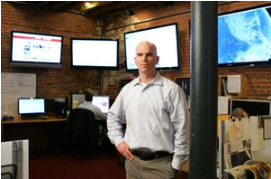
 Derek Rappaport, 39, is the chief paramedic at Global Rescue, a Boston medical evacuation company guaranteeing travelers immediate emergency care and transportation back to the home-country hospital of their choice.

Click HERE to read the article in the Boston Herald 

By Darren Garnick / The Working Stiff 


Derek Rappaport meets his clients on the worst days of their lives.

It’s a situation the career paramedic has experienced countless times from the back of a Boston ambulance and a Duxbury fire truck. But now he’s operating under the additional stress of culture shock.

Imagine you tumble down a canyon in the Andes Mountains or have a heart attack in the jungles of Thailand. Your vacation is over, but that is the least of your worries. You’re facing life-or-death surgery and the local hospital doesn’t have the strictest standards of hygiene – let alone a doctor who can communicate with you.

Rappaport, 39, is the chief paramedic at Global Rescue, a Boston medical evacuation company guaranteeing travelers immediate emergency care and transportation back to the home-country hospital of their choice. Essentially, he and his staff are dispatched around the world to “look over the shoulder” of foreign doctors and ensure that medical procedures and advice meet American standards.

“We can get a helicopter anywhere,” he says. “Sometimes the foreign hospital welcomes our presence and sometimes they are immediately hostile. You have to know when to bare teeth and when to buy the nurses coffee. And you have to do it right because we only have one chance.”

While a patient is stabilized at the hospital, Rappaport uses a pen-sized scanner to share medical test results and data with physicians at Johns Hopkins Medicine in Baltimore. The Global Rescue team determines what medical action needs to take place overseas before coming home.

Rappaport, who sometimes needs to leave his wife and two daughters for up to 10 days with little notice, describes his role as part diplomat and part personal concierge. He’s delivered grandchildren’s “get well soon” cards to patients and fetched their favorite foods.

“When someone is experiencing their scariest day ever, you show up, you speak English and have massive medical resources behind you. It’s a very powerful feeling and great to be able to be there for them,” he says.

Global Rescue’s annual medical evacuation memberships cost $329 for an individual and $579 for a family, with rates doubling to cover security evacuations in cases of natural disaster, war or civil unrest. The company hires ex-Navy SEALs to handle the latter scenarios.

Rappaport spends most of his time in the Boston operations center on Broad Street, running the logistics of each rescue. He recently was dispatched to Haiti to help evacuate missionaries stranded by the earthquake and was sent to Brazil to scout out helicopter companies for medical emergencies in the Amazon rainforest.

“You can only do so much over the phone,” Rappaport says. “You have to meet face to face. I might have to call these guys at three o’clock in the morning and if I haven’t gone down there and shaken their hands, how can I depend on them?”

Other recent missions have included helping a magazine photographer with a broken back get evacuated from Bangkok and confronting discriminatory treatment in Bahrain based on the color of his client’s skin. The oil-rich Gulf country, which heavily relies on migrant workers from India for its construction jobs, sends those workers to “subpar” hospitals, according to Rappaport. He negotiated to have his Indian-American client, who suffered cardiac arrest, moved from the mediocre hospital to Bahrain’s best facility.

Although his job does have an adventure travel component, Rappaport notes that he rarely sees beyond the hospital halls.

“I can’t tell you a single thing about the places I’ve been to,” he says. “You can never really see the sites. You’re there for only one reason, to help the patient.”