Loading...

Share This:

A busy summer in Africa, from Mozambique to Ethiopia

While Global Rescue’s personnel have been very active in Africa this summer, due in part to the growing numbers of safari enthusiasts in our ranks, the nature of the missions are anything but predictable.

While Global Rescue’s personnel have been very active in Africa this summer, due in part to the growing numbers of safari enthusiasts in our ranks, the nature of the missions are anything but predictable.

The last injury you might expect on safari is a detached retina from a bumpy ride in a jeep. But that’s exactly what happened to one of our members, who called from Mozambique to report of a loss of vision in one of his eyes. After Global Rescue doctors and Johns Hopkins specialists recommended he see a specialist immediately to prevent further damage, he was evacuated from the bush in Mozambique to Johannesburg where he was evaluated at a medical center of excellence. Our member had his retina successfully re-attached there and further damage to his eye was averted.

A few months prior, Global Rescue medically evacuated a hunter who had suffered a stroke in the highlands of Ethiopia. That was the beginning of what would be an eventful season in Africa: a 16 year-old girl bitten by a Vervet monkey in Zambia, a woman with an injured rib in South Africa after being knocked off the jetway at the airport and countless other medical calls from Nigeria, Kenya, Liberia and Tanzania.

As of this writing, Global Rescue had dispatched a security team, led by a former Navy SEAL, to Uganda to rescue a 22-year-old woman who was trapped in a house surrounded by rioting tribesman and gunfire. Be sure to checkback with Rescuewire to find out how that operation is resolved…


Share This:

Global Rescue Sponsors Conservation Efforts in Asia

Global Rescue, a committed sponsor of exploration and conservation efforts worldwide, is proud to support Global Wildlife Conservation’s efforts.

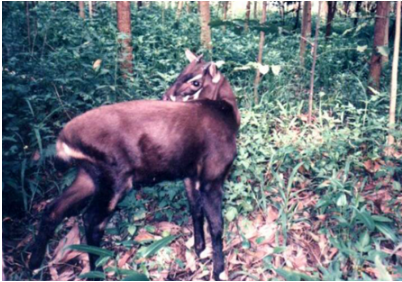
The Annamite mountain range on the Laos-Vietnam border represents the sort of remote terrain that beckons to our adventurous members – unexplored wilderness in a remote corner of the world – and it also happens to be the sole refuge of an elusive animal that is a few breaths from extinction. Global Rescue, a committed sponsor of exploration and conservation efforts worldwide, is proud to support Global Wildlife Conservation’s efforts to identify the biodiversity of these wild regions, and the human threats to its survival, especially from poaching.
 
Global Wildlife Conservation (GWC) members recently returned from a meeting in Laos organized by the world’s international experts on the Saola, part of a broader mission to map out the habitat of the antelope-like member of the bovid family and one of the rarest mammals on Earth. The numbers range from perhaps a dozen to no more than a few hundred. It was only discovered in 1992. No Western scientist has ever seen one in the wild, and the few instances where they were kept in captivity, the animal survived only a few weeks.

“The Saola is a unique animal, charismatic and mysterious, called the giant panda of the region by some,” explained GWC’s Wes Sechrest.

The major obstacle to the species’ recovery is poaching, Sechrest explained, whereby illegal hunters use snares or dogs to trap the animals both for meat and for trophies. Scientists and conservationists continue to find evidence of increased poaching activity in the field.

GWC’s goal is to provide local governments with the scientific information necessary to create sound policies to increase soala populations, and also to promote awareness of the problem in the United States, especially among the Vietnamese-American and Lao-Ameican communities.

Other recent conservation efforts by GWC have focused on the Cardamom Mountains region in southwest Cambodia, one of the last remaining large expanses of wilderness in that part of the world. Most of the region is largely unexplored and the distribution of species unknown, although the few surveys completed have discovered significant populations of threatened species such as Siamese Crocodiles and Asian Elephants.

Until recently, access to the Cambodian mountains was prevented by security concerns, and even today exploration of the remote areas presents health and safety risks from land mines, unexploded ordinance, malaria and dengue fever.

Share This:

Global Rescue sponsors expedition to what might be modern man’s oldest footprints

Global Rescue, a committed sponsor of exploration and conservation efforts worldwide, is proud to support Global Wildlife Conservation’s efforts.

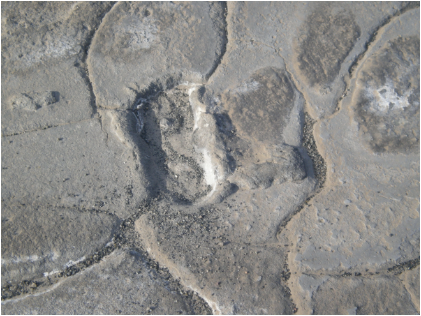
An expedition to Northern Tanzania earlier this month collected data from a set of ancient human footprints that may turn out to be the world’s oldest of modern man.

The prints are in hardened ash about a mile from the base of an active volcano, and are believed to be about 120,000 years old. While there are known footprints of other human ancestors, such as Australopithecus afarensis, that date back more than 3 million years, and others from the Homo genus dating back more than 350,000, if confirmed by later analysis, these are likely to be the oldest Homo sapiens footprints known to scientists.

The group was led by Dr. Cynthia Liutkus, assistant professor of geology at Appalachian State University. Accompanying Dr. Liutkus and her student, Kate McGinnis, were Dr. Michael Manyak, an expert in expedition medicine, and Mr. Jim Brett, a conservationist and ornithologist who first brought this discovery to the attention of scientists. Global Rescue was one of the sponsors of the expedition and stood by to provide medical evacuation support, if needed, from the remote African plains. Dr. Manyak and Mr. Brett are also members of The Explorers Club and carried The Explorers Club Flag awarded to Mr. Brett for this expedition.

 
Dr. Manyak described the trip to the location as a “five-hour drive over rough roads” from Arusha, a northern Tanzanian outpost best known as a jumping-off point for expeditions to Mt. Kilimanjaro.

Mr. Brett was made aware of the site in this remote location by local Maasai herders as well as employees of the nearby Ngare Sero Tented Camp, and organized the first scientific study conducted at the site. The data from laboratory analysis and photos will be submitted to a major scientific journal for publication. Further excavation and protection of the site are goals in the near future.


Share This:

Magazine photographer has narrow miss with unnecessary surgery in Thailand

Sometimes the best travel medical insurance is simply expert advice about what you don’t need if you're hospitalized abroad.

Sometimes the best travel medical insurance is simply expert advice about what you don’t need if you’re hospitalized abroad.

For every handful of stories of travelers who land in foreign hospitals, there is always a tale of an operation gone awry, or one that was unnecessary altogether: A businessman on vacation in Mexico who falls off a horse and has emergent hip surgery, only to find out months later in the United States that the ball of his femur keeps falling out of its socket. Or the software engineer in the Middle East who dies on the operating table because the cardiologist had never performed that kind of procedure before.

A magazine photographer was on a photo shoot in Thailand last month, lifting heavy equipment, when he felt a sharp sting in his back. The pain he experienced became so unbearable and immobilizing that he called Global Rescue, whose medical staff explained the dangers associated with this kind of injury. They directed him to a qualified hospital and then sent a critical-care trained paramedic to Bangkok to assist him.

The Bangkok facility where he was examined is considered the best in the city for that specialty and the doctor assigned to his case was trained in the United States. After examining the MRI of the patient’s herniated disks, the Thai doctor decided that the surgeons in Thailand would need to fuse five of the vertebrae together.

The paramedic initiated a conference call with the Thai doctor and Global Rescue’s physicians, who in turn consulted Johns Hopkins orthopedic specialists to discuss the diagnosis. They arrived at the conclusion that the patient could and should fly home for surgery as long as he could be accompanied by a medic, who would be able to inject him on board the aircraft with pain killers and anticoagulants.

Categories:

Health & Safety
Share This:

Global Rescue’s African Medical Director describes dangers lurking on the Dark Continent

In “The Snows of Kilimanjaro,” Ernest Hemingway’s lead character, Harry, is scratched by a thorn while on safari and develops gangrene in his leg. His life flashes before his eyes as he lies dying, awaiting…

In “The Snows of Kilimanjaro,” Ernest Hemingway’s lead character, Harry, is scratched by a thorn while on safari and develops gangrene in his leg. His life flashes before his eyes as he lies dying, awaiting an air ambulance from Nairobi that he knows will not arrive in time. The story does not have a happy ending.
That was written in 1936, a long time ago in terms of medical care,and yet gangrene is still a risk for safari travelers, said Dr. Phil Seidenberg, African Regional Medical Director for Global Rescue. Tetanus and a number of other illnesses that are easily treatable in the developed world are a recurring problem in Africa, as are illnesses that doctors rarely see in the United States these days.
 
But the greatest risk to travelers on safari is “blunt trauma from direct contact with an animal,”Dr. Seidenberg said.
 
Just a few days before giving this interview, the Zambia-based emergency room physician treated a 60-year-old man who was gored by a Cape buffalo. The tourist was paddling a canoe down the Lower Zambezi when he came in contact with the herbivore.Statistically the most dangerous of Africa’s “Big Five” game animals, this encounter went horribly wrong. The 2,000-pound animal charged, head lowered, and the beast’s horn punctured and tore off a piece of the man’s scrotum as it threw him into the air. Luckily, the buffalo wandered away before it finished him off, as frequently happens with these animals. Bleeding and in agony, the tourist, who had no travel assistance provider, endured a four-hour overland drive to the nearest medical center.
 
Dr. Seidenberg works at the emergency room at the University Teaching Hospital, a sprawling, 1,800-bed facility in Lusaka, and regularly sees injuries inflicted by big game in the surrounding bush. “Hippos are probably the most dangerous,” he said. “They’re faster than you might think.”
 
Other fearsome injuries he sees include bites from poisonous snakes, especially the black mamba and spitting cobra.
 
The Texas native originally went to Zambia on a public health mission with Massachusetts General Hospital, and he and his wife decided to live there. Now he directs all of Global Rescue’s medical missions on the continent.
 
Thousands of Global Rescue members travel to Africa every year, and its highest peaks are where most of the missions have taken place.Last summer, for example, Global Rescue worked two missions in the mountains of Tanzania. In one case, one of its members was showing signs of high altitude pulmonary edema (HAPE) on the summit of Kilimanjaro, so Global Rescue evacuated the man to his home in the United States.
 
There are roughly 1,000 medical evacuations from that mountain every year and between 20 and 30 deaths.
 
Even Harry, from Hemingway’s novel, hallucinated that he was aboard the rescue plane, off to meet his maker on the snows of Kilimanjaro.

Share This:

Wall Street Journal Notes Global Rescue’s Work With Injured Students Abroad

The 'Informed Patient' column in the Wall Street Journal last week explored the subject of keeping students safe while they're away from home for the summer, and mentions the story of a Global Rescue member who…

The ‘Informed Patient’ column in the Wall Street Journal last week explored the subject of keeping students safe while they’re away from home for the summer, and mentions the story of a Global Rescue member who was treated for gall bladder complications while in Togo. All of the stories — including a 14-year-old girl diagnosed with encephalitis in China and a college student who was hospitalized in Chile after eating undercooked fish — spoke of narrow misses with disaster and did not shed a positive light on the summer programs that sent the students abroad. This is the second warning from the mass media in about a month’s time about the holes in many programs’ coverage and disaster plans for students. Last month, USA Today profiled a number of students who were sick or injured on programs that lacked medical evacuation coverage, or any plans for crisis response (see below.)

Categories:

News
Share This:

The Wall Street Journal – Safety 101 For Summer Jaunts

Share This:

Q&A with Global Rescue’s surfing paramedic deployed to Indonesia

Global Rescue operations paramedic Grant Seivard recently returned from the remote Mentawais islands in Indonesia, accompanying a group of the world’s most elite surfers and some junior talent. We chatted with him briefly about his…

Global Rescue operations paramedic Grant Seivard recently returned from the remote Mentawais islands in Indonesia, accompanying a group of the world’s most elite surfers and some junior talent. We chatted with him briefly about his trip:

Q: Could you describe arriving at the location? When you left the airport, how did you finally end up off the coast of the archipelago?

A: So we hit the ground in Padang and it’s all hands on deck, get through customs, fend through the usual collection of locals who want to carry all your gear, for a tip, of course, and into the vans. The flow of traffic there is a little crazy! They drive on the left side of the road and the bikes and motorcycles seem to drive wherever they want. We pulled into a secured little compound and waited for what they call “tin boats” (just small outboard motorboats) to take us out to the island where the Trader IV is moored. Then you get a taste of the good life: crystal clear water, a super friendly crew and the anticipation of a great trip!

Q: What were some of the injuries you saw out there? How did you treat them?

A: I saw mostly minor injuries, some small abrasions and bumps and bruises. The worst injury by far was a 6-7cm laceration to the head, which required 22 staples. I also treated some minor infections from reef rash with some antibiotics.


Q: What do you think would have been the worst-case scenario? What might have necessitated a medical evacuation?

A: The worst-case scenario would be someone being rendered unconscious after striking the reef which would then be complicated by drowning. This scenario was very possible given the wave conditions and the shallow reef breaks so prevalent in the Mentawais.

Q: Considering that this was just a 12 day tour, how did the surfers react when they had to pause for an injury? Did it keep them out of the water?

A: Some of the surfers were sidelined for a bit with injuries, and as you can imagine, not so happy! I did everything I could to get these guys back in the water.

Q: How did this location stack up against California? Would you want to organize a surf trip out here in the future? If so, what would be your concerns?

A: The locations on this trip were all shallow reef breaks with very hollow waves. My home breaks have a little fatter wave, breaking on sandbars and finger reef. My home breaks in California don’t require as much skill and the take-offs are much less critical.

I consider myself a surfer and I have been out in some great waves but there were some days on this trip that I wouldn’t even consider paddling out. In terms of a vacation I think I would head back that way. There are so many breaks every kind of surfer should be able to find some fun waves.

Categories:

Health & SafetyTravel
Share This:

What’s In Your ‘Go-Bag’?

When you’re in trouble in the middle of nowhere, what do you want to have in your “go” bag? Global Rescue experts break down the basics of what you should pack in an emergency preparedness…

When you’re in trouble in the middle of nowhere, what do you want to have in your “go” bag? Global Rescue experts break down the basics of what you should pack in an emergency preparedness bag.

“The first thing you want to do before you go anywhere is tell someone where you’re going,” Global Rescue security personnel recommends.

It’s always advisable to leave that person with Global Rescue’s phone number in the event of an emergency. You should also have the number programmed into your cell phone or satellite phone.

First and Second Lines of Essentials

When packing for the trip, there is a “first line” and a “second line” of essentials. Global Rescue experts define the “first line” as items carried on your body. Keep a packaged, detailed map, a quality compass — not a cheap one, but one that was really built for navigation — and a GPS, all tethered with a lanyard so you can plot your movements on the map as you go.

You should, of course, also carry some kind of multi-tool. The Red Cross has suggestions for an emergency preparedness bag that you can use at home or take with you.

Addressing Five Basic Needs

The second line is a go bag, which addresses five basic needs: shelter, food and water, warmth, signaling and first aid. The Federal Emergency Management Agency offers emergency preparedness bag ideas for different natural disasters, such as flooding and winter weather.

You’ll want something to protect yourself from the rain if you’re lost or immobile in the wilderness. Bring an eight-foot by 10-foot tarp and 50 to 250 feet of parachute line. You might also need it to protect yourself from the wind.

The next thing to put in the go bag is some clothes to keep warm. Leave the cotton at home and bring something that wicks moisture away from the body. Even though you may be traveling in the hot sun during the day, it will be a lot colder at night. A pair of gloves always comes in handy.

Be prepared to start a fire: metal matches or stormproof matches and a small case of cotton balls soaked in Vaseline should do the trick.

Don’t travel anywhere without some access to water. Bring along a canteen or a Naplene bottle, or a Camelbak, etc., along with some iodine tablets to drop into any water you’ve found from natural sources.

For food, make sure you have a day’s worth of rations. Global Rescue staff usually pack a few energy bars.

The next thing to fit in the go bag: signaling devices. Pencil flares are very compact, a small strobe light would be helpful, and definitely bring a whistle.

The Bare Essentials

Finally, a first aid kit. A stripped down kit would include the bare essentials: a Sam splint, some Ace bandages and gauze.

For more complete kits, have a look at wildernessmedical.com or check out our post on what to pack in a first aid kit. And don’t forget to add your Global Rescue card to your go bag in case you need medical evacuation services. If you’ve got a GPS unit with you and cellular or satellite coverage, help is a phone call away.

Click here to learn more about Global Rescue travel memberships.

Share This:

Study abroad safety in the spotlight

Are your students safe when they study abroad? According to an article in USA Today, programs are not doing nearly enough to mitigate the many risks facing college students who enroll in study abroad programs.

Are your students safe when they study abroad? According to an article today in USA Today, programs are not doing nearly enough to mitigate the many risks facing college students who enroll in study abroad programs.

The author recounts the story of Jenee Klotz, an American student who was sexually assaulted while studying in Jamaica, and whose program director allegedly dropped her off at the airport the next day “still wearing pajama bottoms and with dried blood on her neck and chest.”

Then there were the eight University of Washington students in Ghana who had to request a medical evacuation when they contracted malaria and dengue fever. After complaining that the university did not do enough to safeguard their health, they were awarded a partial refund. (The article did not point out specifically if they had paid for the medical evacuation itself, which can cost uninsured parents tens of thousands of dollars.) As a result, the UW faculty received more training in this sort of crisis response.

These universities may have suffered a slap in the face, but at least their programs did not face the sort of lawsuits brought by the parents of four students who died in a bus crash in India in 1996. Or by the parents of a 16-year-old who sued the programs who ran his high school exchange, after one of the leaders supposedly denied his request for medical help. The boy died of complications arising from his diabetes.

As much as school programs now realize that protecting their students abroad includes having a comprehensive medical evacuation plan, the reality is that few university professors and program directors are prepared to deal with serious medical emergencies.

“I discovered that it was impossible to rely fully on my university to take care of me,” recalled Rebecca Orozco, a University of Southern California student who suffered irreparable damage to one of her bones after a nightmarish scenario in a hospital in southern Spain. She was hit by a car, broke her pelvis in two places, fractured one of her vertebrae and dislocated her elbow, and faced substandard care.

“The summer program director, along with my university, could only assist to a certain extent and the majority of the responsibility fell on the shoulders of my parents and myself,” she said.

Even if the program has insurance for a medical evacuation or security evacuation, professors and directors rarely have the time and experience to coordinate their student’s healthcare or safety when the worst happens. This exposes their programs to significant liability.
 
Following the number of suits filed against study abroad programs were calls for legislation that would clearly outline their liability in these cases, but colleges successfully argued that such laws would kill the concept of study abroad altogether.

Terry Hartle of the American Council on Education, which represents higher education in Washington, was quoted in the article as saying: “We want students to study abroad … and we want them to be safe. But if we wanted to send students to places where we were sure nothing bad could ever possibly happen to them, we probably wouldn’t send them anywhere.”

Of course, no program can absolutely guarantee the safety of their students in Moscow or Cairo any more than they can guarantee their safety in Memphis or Kalamazoo. But they can take steps to protect their health and security abroad by enrolling in Global Rescue, and in the process protect themselves legally.

To learn more about how Global Rescue can provide critical emergency resources to your student, child or study abroad program, please explore our website.

Share This:

Global Rescue provides medevac for hunter in Ethiopia

Suffering a stroke anywhere is a life threatening experience, but when it happens at 10,000 feet in a desolate corner of East Africa, it becomes that much more frightening. One of our members was hunting…

The highlands of Ethiopia are populated with some of the world’s most interesting game animals, from lions and leopards to elephants and buffalo. As dangerous as these animals can be at close range, the greatest perils to our health on Safari sometimes come from within.

Suffering a stroke anywhere is a life threatening experience, but when it happens at 10,000 feet in a desolate corner of East Africa, it becomes that much more frightening. One of our members was hunting there a few weeks ago, in the mountains of Ethiopia, when his wife and his professional hunting guide noticed that his speech was slurred. He exhibited other signs of what those in the medical field term an altered mental state. These, along with decreased motor function in oneside of the body, are the tell-tale signs of a stroke. Realizing the severity of his client’s condition, the professional hunter drove him to the nearest medical facility and then called Global Rescue.

It might be a stretch to call this field clinic a medical facility. In the hunter’s description it was more of a clinic with haphazard care – in fact, the patient had his own blanket stolen from him by one of the nurses, who then curled up for the night with it on the “hospital” floor. Needless to say, there were no highly trained neurosurgeons at his bedside to monitor his condition. All this, along with the persistent language barriers and general chaos of the clinic, made the man’s wife and the professional hunter extremely nervous.

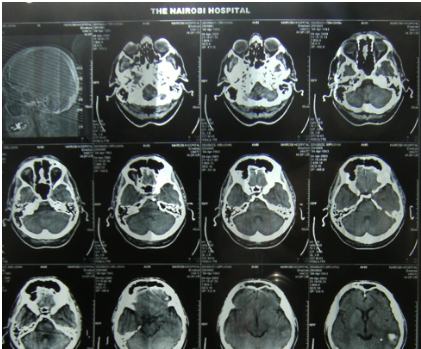
Global Rescue immediately scrambled an air ambulance to the clinic in Addis Ababa, which evacuated him and his hunting party to the best neurological facility in Nairobi, Kenya. There he was met by a deployed Global Rescue paramedic and treated and monitored by a U.S.-trained neurosurgeon. After viewing the CT scans, Global Rescue doctors cleared him for air travel and he was medically evacuated back to the United States.

There is little in the way of treatment for a patient who has suffered a minor stroke, but it is imperative to prevent further damage or death by closely monitoring the patient’s condition – something that was impossible to do in the clinic in Ethiopia. Had his condition worsened, the medical evacuation to Nairobi might well have saved his life.

Share This:

Bulletproof Blog’s Interview with CEO Dan Richards

Bulletproof Blog asked Global Rescue CEO Dan Richards how companies can prepare for the next crisis.

What are the salient crisis preparedness issues?

DR: The saying is that generals are always fighting the last war. Well, people are always preparing for what they’ve experienced. Typically, that is the last crisis they faced. But changes for which you may not be at all prepared define the very nature of crisis. 

Take a look at flu preparedness. The crisis happens in a minor way every year, in a major way every thirty years, and in a terrible way every one-hundred years. But we never know what’s going to happen and it’s a challenge getting corporations and institutions to invest the resources – both dollars and man-hours—to properly prepare. And you never know until the crisis occurs if you’ve done enough. 

There’s a big market for crisis consultants, for disaster preparedness, for systems redundancy. The problem is in actually making all the plans operational. It’s just human nature to put together a plan and then let it rot on the shelf. When it needs to be put into operation, people have no idea what to do and haven’t been trained to do anything. That’s where companies like ours come in, to ensure that plans can be implemented when needed. 

What can companies do to be more prepared for crises? What can a CEO do? 

DR: They must set up clear decision-making structures and put people in place who can grasp the problems occurring, make decisions about what to do next, and put those decisions into action. Those people aren’t always the people sitting in the C-Suite.  What are CEOs spending their time thinking about? It’s not, how am I going to respond to crisis? Instead: How am I going to grow the business, make this acquisition, continue negotiations. 

That said, what these people do during crises is incredibly important because they’re the leaders everybody’s looking to. The solution all around is to train and simulate various crises. The quality of the training, how realistic it is, will determine whether you’ll have a successful outcome when the crisis occurs.

What dangers are there for companies that try to think up crisis response plans during actual crises?

It’s a great question because it’s something we see all the time. Those are the 2 a.m. phone calls that come into our operations center from a company with 10 people in Lebanonas the Hezbollah-Israeli conflict is starting, and they’ve got no idea what to do. We’ve actually had that happen. No idea what to do. 

When it come time to mobilize, different corporate departments can even act in obstructionist ways, interfering with people trying to solve the crisis. We had a Fortune 25 company retain us to rescue their people. They approached us as if they were purchasing tool supplies. The purchasing division had to be involved, so did procurement, and legal. Everybody wanted something.

What it came down to, finally, was a C-Suite executive had to assert himself and cut through the bureaucracy that was preventing us from saving his people. We’ve seen it over and over. Sometimes these organizations get out of the way and let the problem be solved, and sometimes they don’t. 

So here too we’re talking about planning – in particular, anticipating bureaucratic issues before the crisis. The lawyer negotiating your contract can’t be the one with all the power. You can’t let that happen when everything is on the line.