Share This:

World Cup 2026 and the Medical Risks Fans Face at Large Stadium Events

Learn about the most common stadium emergencies and how you can prepare safely if you're attending.

Article Highlights:

  • The most common medical emergencies at FIFA World Cup stadiums include cardiac events, heat illness, injuries and alcohol-related incidents.
  • Heat and dehydration are among the leading causes of fan medical emergencies at outdoor matches.
  • Medical care standards and payment expectations vary significantly across Mexico, Canada and the United States.
  • Preparation, hydration and situational awareness significantly reduce health risks at large sporting events.
  • Comprehensive medical support is essential for international travelers attending World Cup 2026.


The FIFA World Cup 2026 will be the largest sporting event ever staged, spanning Mexico, Canada and the United States and welcoming millions of fans across dozens of host cities. As the first FIFA World Cup hosted by three nations, FIFA World Cup 2026 promises an unmatched celebration of global sport, culture and travel.

Yet large-scale stadium events also bring predictable medical risks. From cardiac emergencies and heat illness to alcohol-related incidents and crowd injuries, medical teams at major sporting events consistently respond to the same categories of emergencies. Understanding these risks and knowing how to prepare can significantly reduce the likelihood of a serious incident disrupting your World Cup experience.

What medical emergencies most commonly affect fans at major stadium events, and what steps can travelers take to stay safe during World Cup 2026?


The Most Common Medical Emergencies at Major Stadium Events

Cardiac Events: Heart Attacks and Sudden Cardiac Arrest: Cardiac emergencies are among the most serious and life-threatening incidents at large sporting events. The excitement of a world cup match, combined with emotional stress, prolonged standing, alcohol consumption and extreme weather, can trigger heart attacks or sudden cardiac arrest, particularly among individuals with pre-existing cardiovascular conditions.

Major stadiums are equipped with automated external defibrillators (AEDs) and trained medical staff are positioned throughout venues. Outcomes, however, depend heavily on rapid recognition and immediate response. Fans with known heart conditions should consult their physician before travel, take prescribed medications as directed and avoid excessive exertion in crowded environments.

Heat-Related Illnesses and Dehydration: Heat exhaustion and heat stroke are consistently among the most common medical calls at outdoor sporting events. Summer temperatures, prolonged sun exposure, limited shade and physical exertion can quickly lead to dehydration, dizziness, nausea, confusion and loss of consciousness.

During FIFA World Cup 2026, matches in warm-weather cities across the United States and Mexico may pose elevated heat risks. Hydration, lightweight clothing, sunscreen and scheduled breaks from direct sun exposure are essential preventative measures.

Traumatic Injuries: Falls, Sprains, Fractures and Lacerations: Stadium environments are dynamic. Staircases, uneven walkways, wet surfaces, alcohol use and dense foot traffic all contribute to slips, trips and falls. Injuries range from minor sprains and cuts to fractures and head trauma.

Fans should wear supportive footwear, use handrails, avoid rushing during breaks and remain alert in crowded concourses. Even seemingly minor injuries can become more serious when immediate care is delayed.

Respiratory Distress and Asthma Attacks: Respiratory emergencies are common at large events, especially for individuals with asthma or chronic respiratory conditions. Triggers include poor air quality, allergens, smoke from pyrotechnics, cigarette smoke and physical exertion.

Travelers with respiratory conditions should carry rescue inhalers at all times, understand stadium smoking policies and identify medical stations upon arrival.

Allergic Reactions and Anaphylaxis: Food allergies, insect stings and environmental allergens can provoke severe allergic reactions. Anaphylaxis requires immediate administration of epinephrine to prevent airway compromise and cardiovascular collapse.

Fans with known allergies should carry epinephrine auto-injectors, clearly communicate dietary restrictions and avoid unfamiliar foods when possible, particularly when traveling internationally.

Alcohol and Substance-Related Emergencies: Alcohol consumption is a leading contributor to medical incidents at sporting events. Over-intoxication can result in vomiting, dehydration, altered mental status, injuries and increased vulnerability to accidents.

Event medical teams are increasingly equipped with naloxone to treat suspected opioid overdoses, but prevention remains critical. Pacing alcohol intake, alternating with water and eating before consumption significantly reduce risk.

Fainting and Syncope: Fainting episodes are common in large crowds and often result from dehydration, heat exposure, prolonged standing or acute stress. While many cases are benign, syncope can lead to secondary injuries from falls.

Recognizing early symptoms — lightheadedness, sweating, nausea — and sitting or lying down promptly can prevent injury.

Crowd Crushes, Stampedes and Mass Trauma: Although rare, crowd crushes and stampedes represent the most severe stadium-related medical emergencies. Poor crowd flow, blocked exits, panic or sudden surges can lead to compressive asphyxiation, fractures and multi-casualty incidents.

Modern stadium design and crowd management reduce these risks, but situational awareness remains critical. Fans should note exit locations, follow official guidance and avoid moving against crowd flow.


[Related Reading: How To Stay Safe in Massive Stadium Crowds]


Understanding Medical Care Across World Cup 2026 Host Countries

Medical facilities and services in Canada meet international standards and are considered high quality. Emergency care is publicly funded for Canadian citizens, but non-citizens should be prepared to pay upfront for services. Emergency department wait times may be lengthy, particularly in urban centers. In Québec, some physicians may not speak English fluently.

Within major cities such as Mexico City, healthcare quality is generally acceptable. Emergency responder capabilities, however, may not meet international standards and facilities outside urban areas are often limited. Many hospitals require payment before treatment and do not bill insurance directly. Travelers should plan for upfront medical expenses.

Medical services in the United States meet international standards, with prompt emergency response and advanced trauma care, but emergency services are expensive and billing can be complex for international visitors. Non-emergency clinics may offer lower-cost alternatives for minor issues.


How Fans Can Prepare for Medical Emergencies at World Cup 2026

Preparation is the most effective way to reduce medical risk during world cup 2026 travel:

  • Complete a pre-travel medical checkup if you have chronic conditions
  • Carry medications, prescriptions and emergency devices in original packaging
  • Stay hydrated and manage heat exposure proactively
  • Understand stadium medical layouts and emergency exits
  • Avoid excessive alcohol consumption
  • Travel with comprehensive medical evacuation and advisory support


The Global Rescue Connection

Attending the FIFA World Cup 2026 is a once-in-a-lifetime experience, but medical emergencies can occur without warning, especially in crowded, high-energy stadium environments. A Global Rescue membership provides travelers with critical support when it matters most, including field rescue, medical evacuation and real-time medical advisory services. Whether navigating unfamiliar healthcare systems in Mexico, Canada or the United States, Global Rescue ensures expert guidance, rapid coordination and access to the appropriate level of care so fans can focus on the game, not the risk.

Categories:

Press Release
Share This:

International Travelers Continue to Take Water and Food Risks

(Lebanon, N.H – March 17, 2026) – Despite widespread awareness of health risks tied to certain foods and tap water abroad, many travelers continue to engage in behaviors that increase the likelihood of illness, according…

(Lebanon, N.H – March 17, 2026) – Despite widespread awareness of health risks tied to certain foods and tap water abroad, many travelers continue to engage in behaviors that increase the likelihood of illness, according to the Global Rescue Winter 2026 Traveler Sentiment and Safety Survey. The findings reveal meaningful differences by gender and residency, with men and non-US survey respondents generally more willing to trust local conditions than women and US survey-takers.

Tap water exposure remains one of the most common risk areas. Overall, 44% of travelers say they are most likely to brush their teeth with tap water in a foreign country, making it the most common accidental exposure. Another 30% report drinking beverages with ice added, while 9% say they consume drinks diluted with local water such as juice or cocktails. Smaller shares report rinsing their mouth in the shower (6%) or drinking a glass of tap water directly (2%).

US-based respondents and non-US respondents show distinct patterns. Half of non-US respondents say they brush their teeth with tap water, compared with 43% of US travelers. US travelers are more likely to consume drinks with ice (33%) than non-US travelers (20%). Men are significantly more likely than women to brush their teeth with tap water, at 56% versus 40%, while women are more likely than men to drink beverages with ice made from tap water (36% compared with 15%).

“Water safety boils down to the local area where travelers are staying,” warns Jeff Weinstein, a paramedic and medical operations manager for Global Rescue. “Assumptions about water quality can vary widely from place to place, even within the same country.”

Food-related trust presents similar risk tolerance. Nearly half of all travelers, 49%, say they trust freshly cooked hot food from a street vendor the most when faced with risky food choices during travel. All other options trail far behind, including street-vended fruits or snacks (7%), fresh salads or leafy greens (6%), and food purchased during peak crowds or festivals (6%). Sushi or ceviche, runny or soft-cooked eggs and buffet foods with unclear temperature control each draw trust from fewer than 5% of respondents.

Non-US travelers are more trusting of street food overall, with 53% selecting freshly cooked hot food from a street vendor compared with 49% of US travelers. Non-US respondents are also more likely to trust fresh salads or leafy greens, 11% versus 5% among US travelers. Men and women show similar levels of trust in street-vended hot food, but women (10%) are more likely to trust food purchased during peak crowds or festivals compared to men (6%).

“When you travel to a place that’s new to you, there are a lot of germs your body is not used to,” Weinstein said. “Something like traveler’s diarrhea or a really bad case of food poisoning can become an emergency.”

Dan Richards, CEO of The Global Rescue Companies and a member of the US Travel and Tourism Advisory Board at the US Department of Commerce, said the findings underscore a persistent gap between knowledge and behavior. “Most travelers understand, in theory, that food and water safety matters, but convenience and familiarity often override caution,” Richards said. “These results show why pre-travel medical and risk guidance remains critical, especially for travelers heading to regions with different sanitation standards.”

Richards added that differences between men and women, and between US and non-US travelers, point to varying risk perceptions. “Men and non-US travelers tend to accept higher levels of risk, while women and US travelers are generally more cautious, but no group is immune from making risky choices when traveling,” he said.

About the Global Rescue Traveler Sentiment and Safety Survey

Global Rescue, the leading travel risk and crisis response provider, surveyed more than 1,400 current and former members between January 13 – 17, 2026. Respondents shared their attitudes, behaviors and preferences related to travel safety, technology and global mobility.

About Global Rescue

Global Rescue is the world’s leading provider of medical, security, evacuation and travel risk management services to enterprises, governments and individuals. Founded in 2004, Global Rescue maintains exclusive relationships with the Johns Hopkins Emergency Medicine Division of Special Operations and Elite Medical Group. The company has provided medical and security support during every major global crisis over the past two decades.

Share This:

Where Is the Best Place To Experience St. Patrick’s Day?

Understand the history, global traditions and travel considerations behind St. Patrick’s Day celebrations worldwide.

Article Highlights:

  • St. Patrick’s Day began as a Christian feast day and evolved into a global cultural celebration on March 17.
  • Dublin hosts the largest events in Ireland, but smaller towns often provide more manageable experiences.
  • Northern Ireland and the Republic share the holiday date but differ in historical and cultural context.
  • Worldwide celebrations range from Caribbean commemorations to parades in Japan and Australia.
  • Smart crowd safety planning is essential when navigating high-density public events.


St. Patrick’s Day, observed each year on March 17, commemorates the death of Saint Patrick, the missionary traditionally credited with bringing Christianity to Ireland. What began as a religious feast day in the early 17th century gradually evolved into a broader celebration of Irish heritage, identity and culture.

Today, St. Patrick’s Day — or St. Paddy’s Day — is celebrated in more countries than any other national festival. From Dublin to Sydney, from Montreal to Tokyo, the shamrock and the color green have become global symbols of participation.

For international travelers, March 17 presents both opportunity and complexity: cultural immersion, large public gatherings, altered transport schedules and concentrated crowds.

Understanding the holiday’s origins helps frame what you’re experiencing on the ground.


Who Was Saint Patrick?

Saint Patrick was not Irish by birth. Tradition holds that he was born in Roman Britain in the fourth century. As a teenager, he was kidnapped and taken to Ireland, where he spent years in captivity before escaping. Later, he returned as a Christian missionary. Over centuries, legend amplified his legacy and he became Ireland’s foremost patron saint.

March 17 marks the day he is believed to have died. In liturgical churches — including the Catholic Church, the Anglican Communion, the Lutheran Church and the Eastern Orthodox Church — it remains a recognized feast day.

For travelers, this means St. Patrick’s Day still carries religious meaning, even where modern celebrations feel more like festivals.

Why Are the Shamrock and Wearing Green Important?

One of the most recognizable symbols of St. Patrick’s Day is the shamrock. According to tradition, Saint Patrick used the three-leafed plant to illustrate the concept of the Holy Trinity. Whether legend or teaching tool, the shamrock became intertwined with Irish identity.

The association with green developed over centuries. Though blue was historically linked to Saint Patrick, green became politically and culturally associated with Ireland in the 18th century. Today, “wearing the green” is a simple way for visitors to participate respectfully.

A small shamrock pin or green accessory is more appropriate than costume-style outfits, especially in Ireland.


Ireland: The Heart of the Celebration

In Ireland, St. Patrick’s Day is a public holiday in both the Republic of Ireland and Northern Ireland. Government offices close. Many businesses adjust hours. Public transport operates on modified schedules.

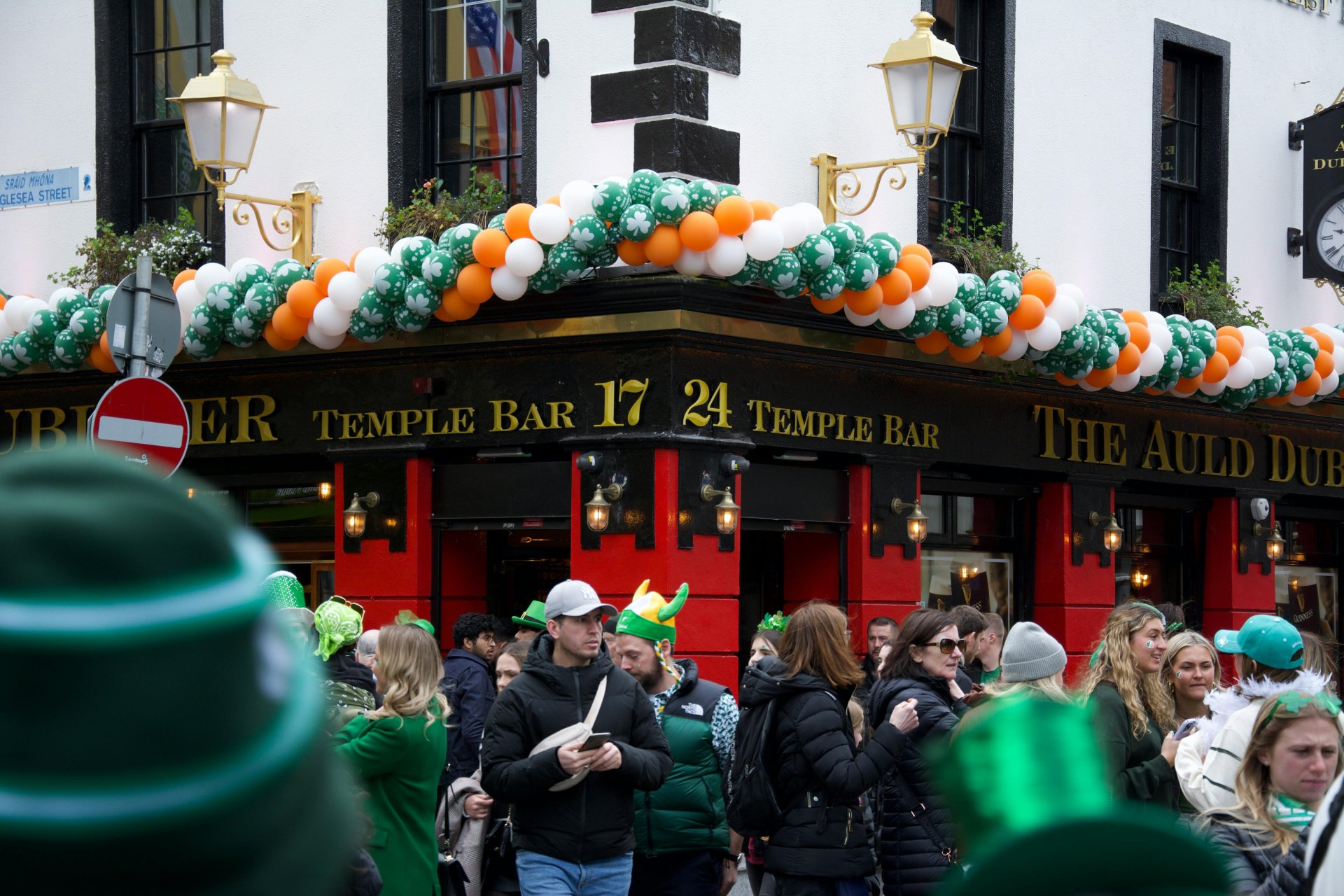
Dublin hosts the largest national parade and festival events. Expect large crowds, road closures and dense pedestrian traffic throughout the city center. Accommodation books months in advance. Restaurants and pubs reach capacity quickly.

Dublin, however, is not the only way to experience the holiday. Smaller cities such as Galway, Cork and Limerick — and even rural towns — often provide a more community-centered celebration. These events may feel less commercial and easier to navigate.

Historically, the holiday in Ireland was once a relatively subdued religious observance. Alcohol sales were even restricted until the mid-20th century. The modern festival format developed gradually, particularly in the 1990s, when Ireland began promoting St. Patrick’s Day as a showcase of national culture.


Ireland and Northern Ireland: Similar Date, Different Context

International travelers often combine Dublin and Belfast in one itinerary. While March 17 is a public holiday in both jurisdictions, historical context differs.

In Northern Ireland, the holiday historically intersected with sectarian divisions. Public celebrations were at times closely associated with community identity. Since the peace process of the late 1990s, many towns have emphasized cross-community participation.

For travelers moving between the Republic of Ireland and Northern Ireland:

  • Expect heavy transport demand on March 16–18.
  • Confirm bus and rail schedules in advance.
  • Allow extra time for intercity travel.
  • Remain culturally aware; celebrations may carry different tones in different neighborhoods.

Understanding context enhances your experience and reduces missteps.


Celebrations Beyond Ireland

Canada: St. Patrick’s Day is a government holiday in Newfoundland and Labrador and widely celebrated across Canada. Montreal hosts one of the longest-running parades in North America. Cities such as Toronto, Vancouver and Saint John hold major events. Travelers should confirm which services operate on holiday schedules, particularly in provinces where government offices close.

Montserrat: Montserrat, often called the “Emerald Island of the Caribbean,” recognizes St. Patrick’s Day as a public holiday. The celebration uniquely commemorates both Irish heritage and a historic 1768 uprising. It is one of the few places where March 17 blends Irish and local Caribbean history.

Australia and New Zealand: Major cities such as Sydney, Brisbane, Melbourne and Auckland host parades and weekend festivals near March 17. Events are often scheduled on the closest weekend rather than strictly on the date itself.

Europe: Across England, Scotland and other European countries, Irish diaspora communities organize parades, concerts and festivals. London and Birmingham host large-scale events. Glasgow has a significant Irish heritage presence. In Lithuania, the Vilnia River is dyed green. In Norway, Oslo holds an annual parade.

Asia: Tokyo has hosted St. Patrick’s Day parades since the early 1990s. Seoul, Busan and parts of Malaysia hold Irish cultural events and celebrations organized by Irish associations and embassies. In many destinations, landmarks illuminate in green as part of global recognition of the holiday.


Crowd Safety: Managing Risk During Major Public Events

St. Patrick’s Day celebrations often involve high-density gatherings. Large parades, festivals and nightlife concentrations compress thousands — or even hundreds of thousands — of people into small geographic areas.

Crowds create predictable challenges:

  • Reduced mobility
  • Increased pickpocketing and opportunistic theft
  • Limited emergency access
  • Transportation disruptions

Dense environments make it easier for criminals to operate unnoticed and harder for visitors to respond quickly.

Travelers should take practical precautions:

  • Use clothing with interior or zippered pockets.
  • Avoid displaying expensive jewelry or large amounts of cash.
  • Keep phones secure and avoid handling them loosely in packed areas.
  • Establish a meeting point if traveling with companions.
  • Screenshot maps and hotel addresses in case mobile networks slow down.

Situational awareness is critical. Monitor crowd tone and movement. Sudden pushing, rapid directional shifts or visible agitation can signal instability. Upon entering a dense area, identify at least two exit routes. Avoid standing near barricades, dead-end streets or tightly compressed areas near stage fronts.

Transportation disruptions are common. Roads may close for parade routes. Public transit can be delayed or rerouted. Build buffer time into all movements.

If driving in a foreign city during a major event, consider using vetted transportation or a knowledgeable local driver. Confusion behind the wheel in congested areas increases vulnerability.

Crowd safety is about anticipating predictable friction points and planning accordingly.

The Global Rescue Connection

Large-scale events like St. Patrick’s Day combine travel complexity with crowd density. Medical incidents, automobile accidents, lost documentation or sudden illness can be more difficult to manage when city centers are congested and services operate on modified schedules.

A Global Rescue membership provides an added layer of preparedness. Field rescue services can assist in difficult-to-access areas. Medical evacuation ensures transport to appropriate facilities when local care is insufficient. Medical advisory services help travelers interpret symptoms, identify treatment options and coordinate care within unfamiliar healthcare systems. Destination Reports provide pre-trip intelligence about medical infrastructure, security conditions and logistical considerations.

Celebrating St. Patrick’s Day abroad should be memorable for the right reasons. Preparation, awareness and access to professional support allow travelers to enjoy the music, culture and atmosphere of March 17, without unnecessary risk.

Categories:

News
Share This:

Global Rescue supporting travelers evacuating from the Middle East

Categories:

Press Release
Share This:

Global Rescue’s Deployed Security Experts Support and Evacuate Stranded Travelers Amid Middle East Conflict

Lebanon, NH – March 14, 2026 – Global Rescue has deployed security experts in the Middle East region to assist international travelers stranded by widespread airspace closures and escalating regional hostilities. The deployments come as…

Lebanon, NH – March 14, 2026 – Global Rescue has deployed security experts in the Middle East region to assist international travelers stranded by widespread airspace closures and escalating regional hostilities. The deployments come as ongoing US and Israeli combat operations against Iran and Tehran’s retaliatory missile and drone strikes continue to destabilize the region and disrupt global travel networks.

Global Rescue security teams are operating in coordination with numerous public and private security resources across the region to assist individuals, assess ground conditions and facilitate ground, air and sea evacuations when safe options become available.

“Our security teams are working in a highly dynamic operational environment to relocate travelers from high-risk areas when safe corridors become available,” said Fernando Lopez Medina, security operations supervisor at Global Rescue and a former US Army Special Forces Green Beret. “These operations require close coordination with regional partners, secure transportation resources and constant reassessment of the threat environment to ensure movements are conducted safely.”

Global Rescue deployed personnel are coordinating with a network of aviation, logistics and security partners across the region to assist travelers affected by airport closures and disrupted flight schedules. However, officials emphasize that in many locations sheltering in place remains the safest immediate option.

“In active conflict environments where missile and drone activity continues, unnecessary movement can expose travelers to greater risk,” Medina said. “Our teams evaluate conditions continuously and execute evacuation or relocation plans only when the security environment allows it.”

The conflict has severely disrupted global aviation routes. Airports in the region are operating under limited or irregular conditions. “Travel to or through the Middle East right now carries elevated and unpredictable risk,” said Kent Webber, senior manager of Intelligence Services at Global Rescue and former Senior Intelligence Operations Officer in the Office of the Under Secretary of Defense for Intelligence at the United States Pentagon. “Our intelligence teams are continuously gathering and analyzing information from multiple sources across the region to provide members with real-time threat assessments and operational guidance as conditions change.”

“These disruptions are cascading well beyond the Middle East and affecting international flight networks globally,” Webber said. “Travelers transiting the region for Europe, Asia or Africa may encounter extensive delays, rerouting and cancellations.”

Global Rescue maintains operations centers around the world providing continuous 24/7/365 monitoring, intelligence gathering and operational coordination for members and enterprise clients. The organization also maintains a network of nearly 4,000 operational assets in more than 150 countries, including medical and security teams, medical facilities and logistics support centers that support response operations worldwide.

“With rapidly shifting threats and restricted airspace across multiple countries, our teams have leveraged every available capability to assist travelers caught in the crisis,” said Dan Richards, CEO of The Global Rescue Companies, the world’s leading provider of medical, security, evacuation and travel risk management services and a member of the US Travel and Tourism Advisory Board at the US Department of Commerce.

“Our mission is to protect our members wherever they are in the world,” Richards said. “Through our global operations centers, intelligence analysts and deployed security teams, we are coordinating complex response efforts to help people navigate this extremely volatile environment.”

Global Rescue continues to advise travelers to postpone non-essential travel to the Middle East until the security situation stabilizes and commercial aviation operations normalize.

Due to the sensitive nature of security operations in active conflict zones, Global Rescue does not disclose operational details or the identities of individuals receiving assistance.

###

Contact:  Bill McIntyre | bmcintyre@globalrescue.com | +1 (202) 560-1195. 

About Global Rescue

Global Rescue is the world’s leading provider of medical, security, evacuation, and travel risk management services to enterprises, governments, and individuals. Founded in 2004, Global Rescue has exclusive relationships with the Johns Hopkins Emergency Medicine Division of Special Operations and Elite Medical Group. Global Rescue has supported clients through every major global crisis over the past two decades. For more information, visit www.globalrescue.com. 

Categories:

News
Share This:

Should I book travel now? What the Iran war means for your plans

Categories:

Travel
Share This:

Are Your Hand Gestures and Facial Expressions Sending the Wrong Message Overseas?

How seemingly common customs at home may be frowned upon abroad.

Article Highlights:

  • Common gestures such as nodding the head, crossed fingers and handshakes can carry opposite meanings across cultures.
  • Facial expressions and eye contact norms differ significantly between Western and Asian societies.
  • Kissing in public and sitting crossed legged may be socially restricted or legally sensitive in some regions.
  • Misinterpreting body language can affect business negotiations, security interactions and personal safety.
  • Cultural awareness is a key component of respectful and secure international travel.


Facial expressions and body language are often described as universal. In reality, they are deep cultural codes. A gesture that signals agreement, friendliness or respect in one country can communicate insult, defiance or impropriety in another. For international travelers, misunderstanding these non-verbal cues can create embarrassment at best and serious social, legal or security consequences at worst.

Crossed fingers, eye contact, handshakes, nodding the head or even sitting crossed legged may seem trivial. Yet these everyday behaviors operate within cultural frameworks shaped by history, religion, social hierarchy and law. For luxury and business travelers in particular, where business dealings, diplomatic interactions and high-profile social environments are common, mastering non-verbal communication is not just polite, it is strategic.


Nodding the Head: Accord or Denial?

In much of North America and Western Europe, moving the head up and down is almost universally understood as agreement. Some scholars, including Charles Darwin, speculated that this motion may even have developmental roots, observing that infants seeking nourishment make similar movements. Over time, this gesture became embedded in Western communication as a signal of affirmation, attentiveness or approval.

Yet this interpretation is far from universal. In countries such as Greece, Bulgaria and parts of Turkey, a head movement that appears to signal agreement may actually mean the opposite. A slight upward tilt of the chin can indicate “no,” while lateral movements that resemble a Western refusal may suggest consent in parts of the Balkans. To an outsider, these distinctions are subtle and easy to misread.

For travelers engaged in negotiations or official discussions, misinterpreting such a basic cue can create confusion at critical moments. Destinations like Switzerland or Singapore, where international business conventions align closely with Western norms, tend to present fewer ambiguities in high-level interactions, making communication more straightforward for global travelers.


Facial Expressions: Emotional Transparency vs. Composure

Many Western societies treat facial expressions as reflections of internal truth. Researchers have observed that expressiveness is often associated with authenticity, sincerity and emotional openness. In these contexts, visible reactions — smiles, frowns, raised eyebrows — help build trust and connection.

In contrast, numerous East Asian cultures emphasize emotional moderation. Maintaining a composed exterior, even under stress, can signal maturity, discipline and respect. A neutral face may reflect self-control rather than indifference.

Smiling, in particular, can be misunderstood. In certain East Asian contexts, a smile may mask discomfort, embarrassment or uncertainty rather than happiness. Assuming that every smile signals agreement can lead to significant misinterpretation.

Countries such as Japan are widely regarded as safe and orderly destinations, especially for luxury travelers. Their structured social codes, however, require attentiveness. Emotional restraint should not be mistaken for detachment and overt displays of frustration can undermine credibility.


Eye Contact: Assurance or Confrontation?

Eye contact plays a central role in human interaction, yet expectations surrounding it differ widely. Research highlights that while the eyes convey emotional information universally, cultures vary in how direct and sustained that gaze should be.

Across much of Western Europe and North America, steady — but not aggressive — eye contact conveys confidence, attentiveness and honesty. Avoiding someone’s gaze may be interpreted as evasiveness.

In parts of East Asia, however, prolonged direct eye contact can be seen as confrontational, particularly when directed toward elders or authority figures. Children are often taught to lower their gaze as a sign of respect. Misjudging these expectations can unintentionally signal aggression.

Luxury hubs such as the United Arab Emirates present additional nuance. In cities like Dubai, moderate eye contact in professional settings is appropriate, but prolonged or intense staring — especially across gender lines — can be perceived as uncomfortable or disrespectful. Understanding these subtleties improves both professional outcomes and personal safety.


Kissing in Public: Intimate Swoon or Cultural Doom?

Public displays of affection vary dramatically worldwide. In countries such as Colombia, Argentina, France, Spain and Italy, cheek kissing — whether one, two or more — is a customary greeting among friends and acquaintances.

By contrast, in many Asian and Middle Eastern societies, public kissing is viewed as a private act. In more conservative jurisdictions, visible displays of affection may attract social disapproval, fines or even legal consequences.

For luxury travelers seeking destinations where public affection is socially accepted, Southern European countries often combine expressive social norms with strong legal protections and low violent crime rates. In more traditional environments, discretion remains the safest approach.


The Nose: Signals of Secrecy and Social Etiquette

Gestures involving the nose also carry distinct meanings across borders. In England, tapping the side of the nose can imply confidentiality or inside knowledge. In Italy, a similar gesture may suggest caution or suspicion.

Cultural expectations extend to hygiene behaviors as well. Public nose-blowing may be frowned upon in parts of North America and the United Kingdom, whereas in some Asian cultures it is considered preferable to repeated sniffing.

Though minor in appearance, such gestures influence perception. In formal luxury settings like diplomatic receptions, executive meetings or high-end hospitality environments, small etiquette missteps can carry disproportionate social consequences.


Handshakes: Pressure, Duration and Protocol

The handshake historically symbolized peaceful intent by demonstrating an empty weapon hand. Today it remains a common global greeting, but execution varies considerably.

In Northern Europe and the United States, a firm and brief handshake is associated with professionalism and confidence. In Southern Europe and much of Latin America, greetings may be warmer and slightly prolonged. In Turkey and certain Middle Eastern countries, excessive firmness can be interpreted as aggressive rather than confident.

Hierarchy also influences protocol. In China, senior individuals are greeted first. In Korea, elders typically initiate the handshake, sometimes accompanied by a bow. Failing to observe these expectations can appear disrespectful.

Countries such as Canada, New Zealand and Scandinavia offer relatively predictable handshake customs for travelers accustomed to Western business etiquette.


The Hand Ring and Crossed Fingers: Innocent or Offensive?

The hand ring gesture, forming a circle with the thumb and forefinger, often signals “OK” in the US. In Japan, it can refer to money. In France, it may imply worthlessness. In Tunisia, it has reportedly been interpreted as threatening.

Similarly, crossed fingers typically represent good luck in Western contexts. In Vietnam, however, the gesture can be considered vulgar and deeply offensive. Travelers posing for photos or gesturing casually may not realize they are sending unintended signals.


Sitting Cross-Legged: Relaxed or Disrespectful?

Crossing one’s legs while seated is routine in North America and Europe. However, in many Asian and Middle Eastern cultures, displaying the sole of the foot is considered highly disrespectful. Resting an ankle over the opposite knee can unintentionally direct the sole toward another person.

In formal settings throughout the Gulf region, posture communicates respect. Countries such as Qatar and the United Arab Emirates are known for both safety and luxury, but adherence to social etiquette reinforces cultural awareness and professionalism.


When a Friendly Gesture Becomes a Global Offense

Gestures that seem routine at home can carry unintended meaning abroad. Pointing with an index finger is common in the US but considered rude in China, Japan and Malaysia. A palm-out wave is friendly in America yet deeply insulting in Greece, while the palm-up “come here” motion is offensive in the Philippines. Greeting customs also differ: bowing signals respect in Japan and Korea, handshakes may be limited by gender or hierarchy in parts of the Muslim world and Asia, and Namaste is a traditional sign of respect in India and Nepal. Some gestures are outright offensive. Greece’s moutza, France’s bras d’honneur, the fig sign in Russia and the inward-facing peace sign in the UK all parallel the middle finger gesture in the US. Cultural awareness prevents casual movements from becoming serious missteps.


The Global Rescue Connection

Body language missteps rarely escalate into serious incidents in stable, law-abiding nations. However, in politically sensitive environments or high-security settings, gestures can be misinterpreted as defiance or mockery.

Travelers need more than just a guidebook when cultural cues get lost in translation. A Global Rescue membership empowers travelers with critical tools to navigate unfamiliar territory safely and respectfully. Access to detailed Destination Reports allows members to understand local customs, laws and etiquette before arrival, minimizing the risk of misunderstandings tied to facial expressions, eye contact, handshakes or other non-verbal signals.

If a misunderstanding escalates into a legal or medical issue, Global Rescue provides 24/7 medical advisory support, field rescue and medical evacuation services. Legal locator and translation assistance help bridge language gaps during interactions with local authorities or healthcare providers.

In a world where crossed fingers, a simple nodding the head or sitting cross-legged can carry unintended meaning, preparation is protection. Cultural intelligence reduces risk. Professional support ensures that if something does go wrong, you are never navigating it alone.

Share This:

Which Are the Safest Countries for Luxury Travel in 2026?

Learn why security, privacy and evacuation readiness are defining the trips to these luxurious locations.

Article Highlights:

  • 40% of travelers define luxury as upgrading every aspect of the journey, according to the Global Rescue Traveler Sentiment and Safety Survey.
  • 20% prefer traveling less often but exceptionally well, while 14% prioritize privacy and discretion.
  • Alpine Europe pairs elite rescue networks with high-altitude environmental exposure.
  • Urban Europe offers institutional stability, advanced healthcare and low violent crime.
  • Remote landscapes in Canada, Australia and New Zealand require evacuation readiness despite national stability.


Luxury travel is no longer defined solely by five-star accommodations and private transfers. According to the Global Rescue Traveler Sentiment and Safety Survey, 40% of travelers define luxury as upgrading every aspect of the journey. Another 20% prefer traveling less often but exceptionally well, while 14% prioritize privacy and discretion. Among women, 44% equate luxury with comprehensive upgrades across the entire experience.

Safety, healthcare access, political stability and operational reliability now sit alongside comfort and exclusivity. The safest countries for luxury travel are those that combine low violent crime, advanced medical systems, resilient infrastructure and environmental awareness.


Alpine Europe: Precision at Elevation

These destinations combine world-class infrastructure with high-altitude exposure. Institutional stability is strong, but terrain and weather remain dominant risk factors.

Switzerland: Switzerland sets the global benchmark for safety, discretion and infrastructure precision. Low violent crime, political neutrality and one of the world’s most advanced healthcare systems make it ideal for luxury travelers. Private chalets in Zermatt, lakeside estates in Lucerne and five-star properties in Zurich operate within a culture that values privacy. Switzerland’s alpine rescue network is among the best in the world. Still, glacier crossings, off-piste skiing and high-altitude hiking carry inherent risk. Helicopter evacuation from remote terrain may be required even in this highly developed nation.

Austria: Austria blends imperial culture with elite ski prestige. Vienna offers secure urban sophistication, while Salzburg and Tyrol anchor the country’s alpine luxury identity. Crime rates remain low and emergency infrastructure is strong. Mountain rescue systems are highly organized, but alpine sports demand contingency planning. Environmental exposure—not crime—is the primary variable.

France (Alpine Regions): Courchevel, Chamonix and Megève represent the pinnacle of alpine luxury. France benefits from advanced healthcare and efficient emergency services. However, heli-skiing, mountaineering and winter sports require evacuation readiness. Terrain and climate conditions can change quickly, reinforcing the need for preparedness.


Urban Europe: Governance, Structure and Discretion

These countries excel in rule of law, public safety and healthcare access. Risk is generally limited to petty crime in high-density tourism zones.

The Netherlands: The Netherlands delivers safety through urban design, low violent crime and efficient public services. Amsterdam’s boutique hotels and Michelin-starred dining exist within a highly regulated environment. Healthcare access and emergency response are reliable nationwide, making it a stable choice for privacy-focused luxury travelers.

Belgium: Belgium combines stable governance with advanced healthcare and curated luxury in Brussels and Bruges. Urban environments remain generally safe, though situational awareness is prudent in crowded districts.

Denmark: Denmark consistently ranks among the safest countries globally. Copenhagen offers understated luxury, modern design and extremely low crime. Healthcare systems are robust and public services are efficient. Denmark exemplifies seamless integration of safety and sophistication.

United Kingdom: The UK benefits from strong rule of law, advanced healthcare and mature luxury markets in London, Scotland and the countryside. While petty crime exists in dense urban areas, institutional stability supports secure travel across high-end estates and private venues.

Ireland: Ireland offers political stability and low violent crime, paired with luxury castles and countryside estates. Medical infrastructure is strong in urban areas. Rural and coastal exploration requires attention to response-time factors rather than crime exposure.


Coastal & Atlantic Europe: Maritime Beauty With Natural Variables

Low violent crime and strong healthcare systems characterize these destinations, though marine and weather conditions introduce exposure.

Portugal: Portugal ranks among Europe’s safest nations. Lisbon, Porto and the Algarve combine security with refined hospitality. Surfing, sailing and island exploration along the Atlantic coast introduce environmental risks that require planning despite national stability.

France (Riviera & Coastal Regions): The French Riviera anchors one of the world’s most developed luxury markets. Violent crime remains relatively low in tourist zones, though petty theft exists in dense areas. Yachting and coastal activities demand awareness of marine conditions and seasonal crowding.

Iceland: Iceland consistently ranks among the safest countries globally, with very low crime and strong emergency services. Its luxury appeal centers on geothermal retreats, glaciers and volcanic terrain. Rapid weather shifts and remote access mean environmental risk is the dominant factor.


Asia & Middle East: Discipline, Infrastructure and Controlled Environments

These regions combine strict regulatory frameworks, low crime and advanced urban infrastructure, though geography and climate can introduce exposure outside metropolitan areas.

Japan: Japan combines extraordinary public safety with meticulous service standards. Crime rates remain among the lowest in the developed world. Tokyo, Kyoto and Osaka offer refined hospitality and advanced healthcare systems. Public transportation operates with near-flawless reliability. However, volcanic zones, alpine regions and coastal environments still require preparation.

United Arab Emirates: The United Arab Emirates, particularly Dubai and Abu Dhabi, combines extremely low crime with sophisticated luxury infrastructure. Private security culture, strict law enforcement and advanced medical facilities create a controlled environment. Desert excursions and marine activities remain popular and require environmental awareness rather than crime prevention.


North America & Oceania: Vast Landscapes, Remote Exposure

These nations combine political stability and strong healthcare systems with enormous geographic scale. Distance—not disorder—is the principal risk factor.

Canada: Canada offers low crime and world-class healthcare in cities like Toronto and Vancouver. Luxury experiences range from wilderness lodges in British Columbia to Arctic expeditions. Remote geography, however, means emergency response times may be extended. Heli-skiing, fishing and northern retreats require evacuation planning.

Australia: Australia provides modern infrastructure, strong healthcare systems and relatively low violent crime. Sydney and Melbourne support thriving luxury markets. Yet marine environments, desert terrain and long internal distances mean environmental exposure remains a factor.

New Zealand: New Zealand is known for low corruption, safety and natural beauty. Private lodges and helicopter-access vineyards define luxury here. Its fjords, glaciers and active volcanoes create distance from advanced medical facilities. Remote exploration requires evacuation readiness despite national stability.


The Global Rescue Connection

Luxury today means eliminating uncertainty, not just upgrading accommodations.

Even in the safest countries in the world, environmental hazards remain: alpine incidents in Switzerland and Austria, coastal injuries in Portugal, volcanic terrain in Iceland, desert exposure in the United Arab Emirates, road trauma in Japan or remote wilderness emergencies in Canada and New Zealand.

Global Rescue coordinated a medical evacuation for a 14-year-old female who suffered severe spinal injuries following a ski lift malfunction in Lausanne, Switzerland. In Japan, a US member crashed his motorcycle on a curve in Bisuka, Hokkaido. Global Rescue medical operations coordinated the air transfer and the member was successfully transported and admitted for continued treatment. In New Zealand, a 45-year-old female activated an SOS after sustaining a left ankle sprain while hiking the remote Te Araroa Trail. Global Rescue maintained continuous oversight until conditions allowed safe airlift to a medical facility the following morning.

These cases occurred in stable, developed countries widely regarded as safe.

A Global Rescue membership provides field rescue from remote areas at the point of injury. Members are medically evacuated to the most appropriate hospital, not necessarily the closest one, and can be repatriated to their home hospital of choice when medically appropriate.

Unlike traditional travel insurance, there are no claim forms, co-pays or deductibles. There is no requirement to pay upfront and seek approval from a benefits committee.

In modern luxury travel, upgrading every aspect of the journey includes how you prepare for the unexpected. Safety, privacy and evacuation readiness are not add-ons. They are part of the luxury standard itself.

Categories:

News
Share This:

Europeans And Expats Share How They REALLY Feel About American Tourists Right Now

Categories:

Press Release
Share This:

Travel Safety Concerns Shape Destination Choices Among Solo Travelers

(Lebanon, N.H – March 12, 2026) – Most travelers say they generally feel safe traveling alone, but a significant portion still modify their behavior and avoid certain destinations due to security concerns, according to the…

(Lebanon, N.H – March 12, 2026) – Most travelers say they generally feel safe traveling alone, but a significant portion still modify their behavior and avoid certain destinations due to security concerns, according to the Global Rescue Winter 2026 Traveler Sentiment and Safety Survey. Mexico and the Middle East are the most frequently cited destinations travelers avoid due to safety concerns.

Overall, 67% of travelers say they usually feel safe traveling solo in most destinations. Another 19% say they sometimes feel safe, while 6% say they rarely feel safe and 6% say they do not feel safe traveling alone. These findings highlight a prevailing sense of confidence among solo travelers, tempered by persistent underlying risk awareness.

Clear differences emerge between US and non-US travelers. Nearly three-quarters (76%) of US travelers say they usually feel safe traveling alone, compared to 46% of non-US travelers. In contrast, non-US respondents are far more likely to express uncertainty, with 31% saying they sometimes feel safe and 11% saying they rarely feel safe. Nearly 9% of non-US travelers say they do not feel safe traveling solo at all, compared to 5% of US travelers.

“Travelers may feel confident overall, but that confidence is not universal and it varies significantly by region,” said Dan Richards, CEO of The Global Rescue Companies and a member of the US Travel and Tourism Advisory Board at the US Department of Commerce. “Non-US travelers, in particular, appear more cautious and less assured when navigating destinations alone.”

That caution is reflected in the safety measures travelers adopt. The most common precaution taken when traveling alone is remaining aware of surroundings at all times, cited by 81% of respondents. Dressing conservatively to blend in follows at 57%, while 45% say they hire reputable drivers or taxis. One-third select lodging with 24-hour security or staffed lobbies, and 23% prioritize hotels with elevator key card access. Only 5% report taking no safety precautions at all.

Non-US travelers consistently report higher use of layered safety measures. Compared to US travelers, they are more likely to choose hotels with elevator key card access, carry portable door locks and stoppers, use personal alarms and rely on staffed lodging. They are also more likely to report constant situational awareness while traveling alone.

Safety concerns are also influencing where travelers choose not to go. Overall, 51% of travelers say they have avoided certain countries due to safety concerns when traveling alone. Among non-US travelers, avoidance rises sharply to 64%, compared to 47% of US travelers.
“These behaviors show that travelers are not ignoring risk — they are actively managing it,” Richards said. “Avoiding destinations, selecting secure lodging and adjusting daily habits are all part of a broader effort to reduce exposure and maintain personal safety.”

###

About the Global Rescue Traveler Sentiment and Safety Survey

Global Rescue, the leading travel risk and crisis response provider, surveyed more than 1,400 current and former members between January 13 – 17, 2026. Respondents shared their attitudes, behaviors and preferences related to travel safety, technology and global mobility.

About Global Rescue

Global Rescue is the world’s leading provider of medical, security, evacuation and travel risk management services to enterprises, governments and individuals. Founded in 2004, Global Rescue maintains exclusive relationships with the Johns Hopkins Emergency Medicine Division of Special Operations and Elite Medical Group. The company has provided medical and security support during every major global crisis over the past two decades.

Share This:

Safety Risks at Famous Natural Attractions

Explore the world’s most dangerous mountains, volcanoes and surf breaks and what makes them deadly.

Article Highlights:

  • Asia’s Himalayan peaks including Annapurna, K2 and Nanga Parbat remain the most lethal mountains due to altitude and avalanches.
  • Active volcanoes in Asia, Europe and North America threaten travelers with pyroclastic flows, ashfall and lahars.
  • Surf breaks in the Pacific, Atlantic and Indian Oceans generate massive waves over shallow reefs and unstable seabeds.
  • Well-known sites such as the Grand Canyon and Ben Nevis cause fatalities through exposure and underestimation.
  • Remoteness and delayed rescue response amplify consequences across all environments.


The planet’s most spectacular landscapes are shaped by tectonic collision, volcanic pressure, ocean energy and glacial erosion. These same forces create instability. High peaks collapse under avalanche. Volcanoes erupt under pressure. Waves magnify over underwater canyons. Cliffs crumble under wind and erosion.

Danger in these places is structural, embedded in geography, climate and physics rather than circumstance or bad luck. The terrain is unstable by nature. Weather systems shift without warning. Altitude alters human physiology. Ocean energy concentrates with immense force. When injury occurs in these environments, remoteness and limited emergency response capability often determine the outcome as much as the injury itself.

Across continents, mountains, volcanoes and surf breaks present different risk profiles shaped by local geology and climate patterns. In some regions, extreme altitude and avalanche corridors dominate. In others, explosive volcanic systems or underwater canyons amplify natural forces. Understanding how these hazards vary geographically is essential to understanding why certain destinations consistently rank among the most dangerous on Earth.


The Most Dangerous Mountains in Asia, From K2 to Mount Everest

Asia contains the most lethal mountaineering environments on Earth. The Himalayan and Karakoram ranges combine extreme altitude, unstable snowpack and logistical isolation.

Annapurna (Nepal) has historically recorded one of the highest fatality-to-summit ratios among 8,000-meter peaks. Its south face funnels snow into avalanche corridors. Hanging seracs collapse unpredictably. Climbers remain exposed for extended periods with few safe retreat options. K2 (Pakistan/China) is technically steeper and more demanding than Mount Everest. The Bottleneck section forces climbers beneath unstable overhanging glaciers. A single serac collapse can eliminate entire teams. Severe storms and limited infrastructure compound risk.

Nanga Parbat (Pakistan) known as the Killer Mountain rises in relative isolation. Its massive Rupal Face creates sustained exposure to avalanche and rockfall. Rescue capability is constrained by altitude and terrain. Kangchenjunga and Dhaulagiri (Nepal) combine complex ridgelines, avalanche-prone slopes and violent summit storms. These peaks are remote and evacuation may require days even in favorable conditions. Mount Everest (Nepal/China) while commercially guided remains dangerous due to the Khumbu Icefall, crevasses and prolonged exposure above 8,000 meters. The death zone impairs cognition and increases fatal errors during descent. Even technically smaller Himalayan peaks present severe medical and rescue challenges.

On Ama Dablam (Nepal) one of the most demanding high-altitude climbs in the region a climber descending from the summit began struggling to breathe, lost motor control and could barely speak — classic signs of severe altitude illness. High winds and steep terrain prevented a standard helicopter landing requiring a long-line airborne extraction from Camp 3 to Kathmandu. He was later diagnosed with HACE and HAPE life-threatening forms of high altitude cerebral and pulmonary edema along with dehydration and respiratory infection. The case highlights a defining risk of Himalayan climbing altitude can impair physical and cognitive function rapidly and rescue operations are often technically complex due to wind terrain and thin air.

Across Asia’s highest peaks danger is driven by altitude-induced hypoxia, unstable glacial terrain, extreme cold and delayed rescue logistics. Above 8,000 meters the human body deteriorates. Judgment declines. Simple mechanical tasks become difficult. When physiological stress intersects with exposure and remoteness minor symptoms can escalate into fatal emergencies within hours.


Europe’s Dangerous Mountains, From Mont Blanc to Ben Nevis

European mountains may be lower in elevation but present concentrated technical hazards and volatile weather.

Eiger (Switzerland) is infamous for its north face a vertical wall of rock and ice exposed to constant rockfall and icefall. Climbers remain committed once entering the face with limited escape routes. Mont Blanc (France/Italy) attracts large numbers of climbers increasing congestion on narrow ridges. Warming temperatures destabilize permafrost triggering rockfall. Rapid ascents without acclimatization lead to altitude sickness.

Ben Nevis (Scotland) though modest in elevation produces frequent rescues. Fog snow and ice obscure routes. Hikers underestimate alpine conditions and become disoriented. Dolomites (Italy) combine sharp limestone peaks and exposed via ferrata routes. Sudden storms transform manageable climbs into high-risk situations within hours.

In Europe danger often stems from underestimation. Accessibility creates complacency while weather shifts and technical terrain punish inexperience.


North America’s Extreme Peaks, From Denali to Mount Rainier

North America’s mountains blend alpine hazards with volcanic geology, extreme weather and vast glaciated terrain. Mount Rainier (US) presents heavily crevassed glaciers, avalanche corridors and rapidly deteriorating storm systems that can trap climbers high on exposed slopes. Its volcanic structure adds another dimension of long-term risk, as an eruption could trigger massive lahars capable of traveling far beyond the mountain itself. Even in non-eruptive periods, loose volcanic rock, shifting snow bridges and whiteout conditions create serious objective hazards.

Mount St. Helens (US) though partially rebuilt after its 1980 eruption remains geologically active. Climbers traverse unstable pumice slopes, loose ash fields and fractured volcanic rock that can give way underfoot. Rapid weather changes and limited shelter increase exposure, particularly outside peak season.

Farther north, Denali (US) introduces a different but equally severe risk profile. As the highest peak in North America, Denali combines extreme cold, high winds and immense vertical relief. Its massive glaciers are riddled with crevasses that may be concealed by fragile snow bridges. Storm systems rolling in from the Gulf of Alaska can pin climbers at high camps for days, grounding aircraft and delaying rescue. Temperatures regularly plunge far below zero, amplifying frostbite and hypothermia risk. Unlike many lower peaks, Denali demands sustained self-sufficiency in a remote environment where evacuation windows are narrow and weather dependent.

Across North America, mountain danger often reflects a convergence of technical climbing, glacier travel and rapidly shifting weather systems. Isolation, exposure and environmental volatility ensure that even experienced climbers must contend with hazards that evolve hour by hour.


The Most Dangerous Volcanoes in the World

Volcanic danger differs regionally based on eruption style population density terrain and remoteness. Even when not actively erupting volcanic landscapes are unstable and unpredictable.

Asia contains some of the most active and historically destructive volcanoes on Earth. The combination of dense populations and isolated volcanic terrain makes risk highly variable. Mount Merapi (Indonesia) is among the most active volcanoes globally. It frequently produces pyroclastic density currents superheated clouds of ash and gas traveling at lethal speed. Ashfall contaminates water supplies disrupts aviation and causes respiratory distress. Nearby villages and trekkers are vulnerable when activity escalates quickly. Pinatubo Volcano (Philippines) demonstrated how explosive eruptions can alter global climate. Its 1991 eruption ejected massive ash plumes into the stratosphere collapsed roofs and triggered lahars that devastated surrounding regions.

Indonesia also illustrates the danger of remoteness. While trekking Mount Tambora in West Nusa Tenggara site of the deadliest volcanic eruption in modern history a hiker fractured her leg during a steep descent on loose volcanic scree. Dense forest canopy ruled out helicopter extraction and fading daylight delayed evacuation. Local porters constructed a bamboo stretcher and carried her several kilometers to base camp before she was transported onward for advanced care in Jakarta. The incident underscores that even when a volcano is not erupting unstable ash slopes steep terrain and limited nearby medical facilities can quickly transform a routine hike into a complex rescue.

Asia’s volcanic risk therefore combines eruption potential with geographic fragmentation. Indonesia alone spans more than 17,000 islands many accessible only by small aircraft or boat. Rescue timelines are often measured in hours or days rather than minutes.


Volcanic Destinations in Europe

Mount Vesuvius (Italy) threatens millions in the Naples metropolitan area. Its historic eruptions generated pyroclastic flows capable of overwhelming entire cities within minutes. Mount Etna (Italy) erupts regularly. Lava flows may advance slowly but explosive phases eject ash and debris that disrupt aviation and infrastructure. Cumbre Vieja (Spain) showed how lava flows can destroy communities over extended periods. Though slower than pyroclastic flows lava’s persistence devastates infrastructure and displaces populations.

Europe’s volcanic risk is closely tied to population density and economic infrastructure.


North America’s Supervolcanoes

Mount Rainier (US) poses one of the greatest lahar threats in North America. An eruption could rapidly melt glaciers sending mudflows through populated valleys. Mount St. Helens (US) remains capable of dome collapses and explosive bursts. Yellowstone Caldera (US) is a supervolcanic system. While catastrophic eruption is statistically rare hydrothermal explosions and unstable geothermal ground present ongoing localized risk. Popocatepetl (Mexico) located near Mexico City generates ash plumes and explosive bursts affecting airspace and public health.

North American volcanic danger lies in scale either regional lahar impact or supervolcanic potential.


Wavy Wipeouts and the Most Dangerous Surf Breaks in the World

Ocean risk depends on bathymetry swell direction and reef structure.

The Pacific Ocean features shallow reefs and massive swells. Teahupoo (Tahiti) breaks over razor-sharp coral in shallow water. Its heavy pitching lip drives surfers into reef. Wipeouts cause severe lacerations and spinal trauma. Jaws and Waimea Bay (Hawaii) produce waves exceeding 50 feet during winter swells. Multiple-wave hold-downs test lung capacity. Rescue teams must operate in chaotic conditions. Mavericks (California) combines cold water strong currents and shifting peaks. Hypothermia compounds risk. The Wedge (California) though not open ocean produces amplified reflection waves that create unpredictable peaks and collisions.

The Pacific also includes Indonesia’s Mentawai Islands a remote surf destination with limited medical infrastructure. In one case a surfer was struck in the head by his board and suffered a severe eye injury requiring immediate surgery. With no advanced facilities on the island Global Rescue arranged a private speedboat transfer to a hospital in Padang where surgeons were able to save his eye. The incident illustrates how heavy surf reef impact and geographic isolation can quickly escalate a routine session into a medical emergency requiring rapid extraction.

The Atlantic ocean’s underwater canyons and amplified energy produce massive waves in Nazare (Portugal), often swelling into record-breaking wave heights. Tow-in surfing is often required for surfers to manage the extreme wave size. A fall resembles high-speed impact with enormous force. Belharra (France) breaks infrequently but powerfully over reef requiring precise timing and jet ski access.


Big Waves in the Indian Ocean and the Southern Hemisphere

Shipsterns (Australia) produces step-like waves that create sudden free-fall drops. The shallow reef increases injury severity. The Box (Australia) is a heavy hollow wave over reef that punishes mistimed takeoffs. Dungeons (South Africa) combines massive waves with strong currents and shark habitat.

Across all surf regions danger is driven by shallow reef massive wave force unpredictable currents and limited rescue windows.


Other Famous Yet Dangerous Natural Attractions

The Grand Canyon’s extreme heat and steep descents lure visitors into overexertion with dehydration and heatstroke causing fatalities while the Colorado River adds powerful whitewater hazards for rafters. The Cliffs of Moher combine high winds and unstable edges that make a single slip fatal while Norway’s Pulpit Rock offers a sheer vertical drop without protective barriers. Bolivia’s Salar de Uyuni disorients drivers with blinding reflections and flooded salt crust and its altitude and remoteness delay rescue. Italy’s Dolomites present sharp limestone peaks exposed via ferrata routes and rapidly changing alpine weather that increase fall risk.


The Global Rescue Connection

Across continents the pattern remains consistent remoteness magnifies consequence. A fractured leg on Annapurna, altitude illness on Ama Dablam, a volcanic injury on Tambora or a catastrophic wipeout in Mentawai requires coordinated field rescue and medical evacuation.

A Global Rescue membership provides field rescue extraction from the point of illness or injury and medical evacuation to the most appropriate hospital, not merely the closest facility. If medically necessary, members can be repatriated to their home hospital of choice.

Unlike traditional travel insurance there are no claim forms co-pays or deductibles and no need to pay upfront and seek approval from a benefits committee.

The world’s most dangerous natural attractions command respect because they are powerful. Understanding how risk varies by continent and preparing accordingly transforms exposure into calculated exploration rather than uncontrolled hazard.

Share This:

Pura Vida in Costa Rica: A Balance of Adventure and Nature

Get travel tips on wildlife, culture, safety and adventure planning.

Article Highlights:

  • Costa Rica protects more than 25 percent of its land and hosts roughly 6 percent of the world’s biodiversity.
  • Ecotourism drives the national economy and shapes how visitors experience rainforests beaches and wildlife.
  • The Pura Vida philosophy defines Costa Rica’s culture lifestyle and approach to travel.
  • Adventure activities are abundant but natural hazards and health risks require preparation.
  • Medical care is strong in San José but limited in remote regions making evacuation planning essential.


Costa Rica occupies a singular place in global travel. Roughly the size of West Virginia yet ecologically richer than many continents. The tiny country has built an international reputation as a leader in ecotourism, conservation and sustainable development. Travelers come for rainforests, volcanoes and beaches but often leave with a deeper appreciation for balance among nature, progress and quality of life. From cloud forests alive with birds to coastlines shaped by surf and sea turtles, Costa Rica delivers an experience rooted in biodiversity and guided by the enduring philosophy of Pura Vida.


Biodiversity as a National Asset

Costa Rica contains an estimated six percent of the world’s biodiversity despite covering less than 0.05 percent of the planet’s landmass. This concentration of life is the result of geography, climate and policy. Positioned between North and South America, the country acts as a biological bridge for species migration. Its varied elevations create ecosystems ranging from tropical dry forests to misty cloud forests to dense lowland rainforests.

More than a quarter of Costa Rica’s land is designated as protected through national parks, biological reserves and wildlife refuges. Corcovado National Park on the Osa Peninsula is widely considered one of the most biologically intense places on Earth. It is home to jaguars, tapirs, scarlet macaws and hundreds of bird and insect species. Tortuguero National Park on the Caribbean coast protects critical nesting beaches for green sea turtles and offers an immersive rainforest and canal system accessible primarily by boat.

Volcanoes are another defining feature of the landscape. Arenal Volcano long one of the most active in the country anchors a region of hot springs waterfalls and forest reserves. While activity levels vary, Costa Rica’s volcanic terrain shapes both scenery and risk considerations for travelers.

Cloud forests such as Monteverde represent one of the country’s most iconic environments. These high elevation ecosystems are defined by constant moisture drifting through the canopy supporting orchids, mosses, amphibians and rare bird species like the resplendent quetzal. For many visitors Monteverde encapsulates Costa Rica’s appeal as a place where nature feels immersive, immediate and alive.


Ecotourism and Adventure Travel

Costa Rica is widely regarded as a pioneer of ecotourism. Long before sustainability became a global travel trend the country invested in conservation-based tourism as an economic engine. Lodges, tour operators and guides often work in partnership with national parks and local communities creating experiences that prioritize environmental stewardship.

Travelers can choose from a wide range of outdoor activities. Ziplining through rainforest canopies offers a high-speed perspective on biodiversity. Hiking trails wind through volcanic slopes, jungle interiors and coastal reserves. Surfing along the Pacific coast, particularly in Guanacaste, attracts experienced wave riders and beginners. Snorkeling and diving reveal coral reefs and marine life in both the Pacific and Caribbean waters.

These experiences however carry inherent risks. Remote terrain, unpredictable weather, strong ocean currents and limited infrastructure outside urban centers mean that accidents and medical emergencies do occur. Adventure is central to Costa Rica’s appeal but preparation and risk awareness are equally essential.


Pura Vida Defined

Costa Rica’s cultural identity is shaped by stability education and an enduring commitment to peace. The country abolished its military in 1948 redirecting resources toward healthcare, education and environmental protection. Today, it is considered one of the world’s oldest democracies and consistently ranks high in quality of life metrics.

The phrase Pura Vida is more than a slogan. Literally translating to pure life it is used as a greeting, a farewell and a philosophy. It reflects optimism, simplicity and an emphasis on enjoying the present moment. This mindset influences how Costa Ricans, known as ticos, interact with visitors, and how the country presents itself to the world.


Coffee and Chocolate

Coffee and chocolate are two cultural and economic cornerstones. Costa Rica produces high quality Arabica coffee. It is grown primarily in the Central Valley and highland regions. Locally grown cacao is increasingly used to produce artisanal chocolate connecting agriculture tourism and sustainability.

While most Costa Ricans are of European or mestizo descent, the country also includes indigenous communities and a distinct Afro-Caribbean culture along the Caribbean coast, particularly in Limón where an English-based Creole called Mekatelyu is spoken.


Geography Climate and Regions

Costa Rica borders Nicaragua to the north and Panama to the south with coastlines on both the Pacific Ocean and the Caribbean Sea. The Central Valley which includes San José offers a mild climate and serves as the country’s political and economic hub.

The northern inland region features rainforests volcanoes and the Monteverde Cloud Forest. The southern zone contains some of the most remote and densely forested areas including Corcovado. The Caribbean coast is less developed for tourism but rich in culture rainforests and wildlife. The Pacific coast varies from dry forest landscapes in Guanacaste to lush jungle backed beaches further south.

Hurricane season runs from May through November bringing heavy rainfall flooding and landslides particularly on the Caribbean side. Earthquakes and volcanic activity are ongoing risks given the country’s tectonic setting.


Safety Health and Risk Considerations

The overall risk rating for Costa Rica is Low with a Low security risk rating and a Moderate health risk rating. Civil unrest is rare and the threat of terrorism is low. Crime targeting tourists, however, has increased in recent years including theft, robbery and assault. Most incidents are opportunistic and avoidable with situational awareness.

Natural hazards represent a more consistent risk. Flooding, earthquakes, landslides and volcanic eruptions are part of the environmental reality. Vector-borne diseases are present and travelers should take preventive measures.

Medical care in San José generally meets international standards and emergency treatment is available to visitors. A hyperbaric chamber is located in the capital which is significant for diving related injuries. Outside urban areas medical facilities may lack equipment staffing and advanced capabilities. In some regions ambulances function primarily as transport vehicles without onboard medical support. Payment in cash is often required before treatment.


Costa Rica as a Travel Destination

Costa Rica remains one of the world’s most compelling destinations for nature-based travel. Its success lies in combining biodiversity conservation with accessible adventure and a welcoming culture. For travelers willing to venture beyond resorts into rainforests surf breaks and remote parks the rewards are significant.

At the same time these environments demand preparation. Activities such as hiking surfing and exploring remote regions increase exposure to injury and medical emergencies. Understanding local risks and having access to expert medical and evacuation support is a critical part of responsible travel planning.


The Global Rescue Connection

Costa Rica’s appeal is inseparable from its wild landscapes and active travel experiences. These same factors make comprehensive travel medical and rescue support essential.

While traveling to San Jose Costa Rica a member suffered a cardiac emergency and required an emergency pacemaker implantation. Global Rescue physicians worked with the treating physician and recommended a medical escort. A Global Rescue medical escort was deployed to the bedside and assisted the member’s return to Texas where he was admitted to his home hospital of choice for continued care and recovery.

In another case, a 73-year old member from the US sustained a cervical spine injury in Costa Rica and underwent emergency surgery near Santa Ana. Although stable in intensive care he required specialized follow up in the US. Medical teams recommended air ambulance transport. Global Rescue arranged the flight to Texas where the member was safely transferred and admitted for ongoing treatment.

Costa Rica’s combination of adventure biodiversity and remote terrain underscores the importance of preparedness. A Global Rescue membership provides access to field rescue medical evacuation medical advisory services and coordinated care when local resources are limited. For travelers drawn to Costa Rica’s rainforests volcanoes and coastlines this level of support ensures that exploration remains inspiring rather than uncertain.