Categories:
TravelSeptember 2, 2025
Article Highlights:
- The Travel Boldly Global Rescue photo and video contest celebrates fearless exploration, storytelling and creativity.
- Nearly $10,000 in prizes include guided climbs, overland journeys and Rockies expeditions.
- Prizes feature safety support with complimentary 14-day Global Rescue memberships.
- Esteemed judges include acclaimed photographers, journalists and adventure storytellers.
- Contest entries close October 2, with winners announced in November.
Global Rescue is wrapping up 2025 with a celebration of adventure, creativity and the stories travelers bring home from their journeys. This year, travel is defined by bold choices — summiting legendary peaks, venturing into remote landscapes, savoring unforgettable moments with loved ones and capturing the rhythm of life on the move.
The 2025 Global Rescue Photo and Video Contest is themed Travel Boldly — a tribute to the explorers, storytellers and dreamers who turn their travel into art. From spontaneous encounters to carefully planned expeditions, your images and videos showcase the fearless curiosity that connects us all through travel.
To match the spirit of bold travel, Global Rescue has partnered with extraordinary sponsors offering prizes that go far beyond the ordinary. Together, they’ve created opportunities that span from scaling iconic summits to navigating wild deserts and immersing in breathtaking mountain landscapes. Nearly $10,000 in prizes are waiting for winners, including guided expeditions, immersive adventure experiences and the peace of mind of a Global Rescue membership.
Contest Sponsors and Prizes
Altezza – Kilimanjaro Expedition
Altezza Travel has become one of the most trusted outfitters for adventurers tackling Mount Kilimanjaro, Africa’s tallest peak and one of the famed Seven Summits. Known for its highly experienced mountain guides, professional logistics and an emphasis on both safety and comfort, Altezza has helped thousands of climbers from around the world reach Uhuru Peak at 19,341 feet. Contest winners will receive a once-in-a-lifetime prize: a free Kilimanjaro expedition with Altezza, including all the essentials for a guided ascent. This journey is more than just a climb—it is an immersion into Tanzania’s landscapes, from rainforest to alpine desert to glaciers.
A deeply memorable moment during an expedition was when photographs captured 86-year-old Angela V. who successfully climbed Kilimanjaro. “After her trip, Altezza received many inquiries from people in their 60s who had doubts about their ability to undertake such adventures. However, several pictures of Angela at the Uhuru Peak summit completely changed their minds. A simple picture inspired many to overcome their fears and scale Kilimanjaro.”
To further ensure peace of mind, winners will also receive a complimentary 14-day Global Rescue membership, offering medical and security advisory and evacuation services should the unexpected arise. Together, Altezza and Global Rescue provide not only the opportunity to achieve a legendary summit but also the assurance of safety and support throughout the adventure.
Climbing The Seven Summits – Mount Baker Classic
Climbing The Seven Summits specializes in guiding ambitious adventurers on world-class climbs across the globe, from beginner-friendly peaks to legendary mountains. As a contest prize, the company is offering a coveted spot on its 3-Day Mount Baker Classic Climb in Washington State. Mount Baker, an active stratovolcano standing over 10,000 feet, offers the perfect balance of challenge, skill-building and reward. Participants learn essential mountaineering skills—including glacier travel, rope techniques and ice axe use—under the guidance of expert instructors. By the summit day, climbers will put these skills into practice while enjoying breathtaking views of the North Cascades.
What moments are most important for participants to capture in photos or videos during these trips? “Summit shots are meaningful, but some of the most powerful images come earlier in the expedition. The journey is so much more than just the summits, it is also the culture and the people along the trail. Clients often look back on these moments as deeply memorable because they capture both anticipation and the richness of the landscape and community.
The experience is designed to empower climbers to take on bigger objectives while providing an unforgettable introduction to alpine climbing. Along with the climb, winners will also be covered by a 14-day Global Rescue membership, ensuring access to world-class medical and security support throughout their expedition.
Fresh Adventures – Rockies Mountain Experience
Fresh Adventures is known for designing small-group, all-inclusive outdoor journeys across Canada that blend adventure with cultural exploration. Contest winners will earn a place on the company’s 7-Day Rockies Mountain Experience, an epic adventure through some of Canada’s most breathtaking landscapes. Guests can expect a week filled with hiking stunning alpine trails, exploring turquoise lakes, camping under the stars and discovering hidden corners of the Canadian Rockies with knowledgeable guides. The itinerary emphasizes both thrilling activities and moments of relaxation, such as enjoying campfire meals or visiting charming mountain towns.
Fresh Adventures prides itself on fostering camaraderie among participants, making the trip both a physical adventure and a chance to form lasting connections. To complement the prize, Global Rescue provides a 14-day membership, ensuring that travelers are protected with expert medical and security resources wherever their journey leads. This combination of world-class guiding and reliable emergency support creates a prize that embodies the true spirit of adventure travel.
Four Points Adventures – Overland in Death Valley
Four Points Adventures specializes in off-the-grid expeditions that blend overlanding, camping and discovery of some of the wildest landscapes in North America. Contest winners will receive a spot on a 3-Day Overland Adventure in California’s Death Valley National Park, one of the most extreme and fascinating environments on Earth. Known for its otherworldly scenery—salt flats, sand dunes, colorful canyons and star-filled night skies—Death Valley is an explorer’s dream.
So, how does photography and video storytelling play a role in Four Points Adventures? “Photography plays an important role because it gives the viewer a sense of trust in where we will be taking them, what they will be seeing and doing. Photos, even in today’s world of AI, give the viewer a sense of truth where words alone can’t.”
The Four Points experience goes beyond sightseeing: it’s about self-sufficiency, navigation and immersing in the raw beauty of remote terrain. Participants will travel in capable vehicles, camp under the desert sky and learn practical overlanding skills from expert guides. The trip offers both challenge and reward, combining rugged exploration with the comforts of group camaraderie. To safeguard this journey, the prize also includes a 14-day Global Rescue membership, giving participants the confidence of knowing that emergency evacuation and medical advisory services are available even in one of the harshest environments on the planet.
Contest Deadline
Contest submissions are open until October 2. After that, our panel of judges will take on the challenge of selecting the very best from your outstanding photo and video entries — all while managing the travel envy your adventures are sure to inspire.
With your travel appetite sparked by these incredible prizes, it’s time to meet the judges who will carefully review your entries and select the very best examples of Traveling Boldly in each category. And remember — no matter how raw or refined your talent may be, these visual experts have an eye for spotting a sensational photograph and an unforgettable video.
The 2025 Judges Panel
Ben Horton: Photographer & Director | Environmental Storyteller
Ben Horton is an acclaimed photographer and director known for powerful environmental storytelling. From National Geographic expeditions to the Sports Illustrated Swimsuit Edition, his work blends adventure, conservation and commercial artistry. He documents remote landscapes and cultural stories, especially in Baja, Mexico, with authenticity and striking visual impact.
Jen Murphy: Award-Winning Journalist
Jen Murphy is an award-winning freelance journalist covering adventure travel and fitness. Splitting her time between Colorado and Maui, she writes for The New York Times, Outside, Conde Nast Traveler and more. She loves off-the-grid adventures, snowboarding, surfing and exploring the world’s wildest places.
Arnie Weissman: Editor Travel Weekly
Arnie Weissmann is editor in chief of Travel Weekly and executive vice president/editorial director for its parent company, Northstar Travel Group. A nationally awarded writer and photographer, he appears on PBS’s The Travel Detective and has been featured in top media outlets including CNN, BBC, The New York Times and Conde Nast Traveler China.
Berne Broudy: Writer and Photographer
Berne Broudy is a Vermont-based outdoor journalist, photographer and filmmaker. With 25 years of experience, her work appears in Outside, Popular Science and National Geographic Adventure. She co-founded an adaptive mountain biking trail group and co-directed Best Day Ever, a film about inclusive outdoor recreation.
Geoffrey Morrison: The Inveterate Adventurer
Geoffrey Morrison is a travel writer, photographer and author of Budget Travel for Dummies. Known as the Bald Nomad, he’s visited 60 countries and all 50 US states. His work appears in CNET, Wirecutter and The New York Times. He also writes the Undersea sci-fi novel series.
Chelsea Bakos-Kallgren: The Graphic Designer with a Photographer’s Eye
Chelsea Bakos-Kallgren is Graphic Design Lead at Guidehouse and former Head of Design at Global Rescue. Her visual work spans clients like Simon Pearce and the National Park Service. A passionate traveler and hiker, she documents her journeys on film with her beloved FM2 camera.
Allie Savage: Video Editor | Candid Storyteller & Run-n-Gun Videographer
Allie Savage is Global Rescue’s video editor, creating social and TV content with a focus on candid, emotional storytelling. A ‘run-n-gun’ videographer, she captures live events and spontaneous moments. Based in New Hampshire, Allie loves travel, adventure and filming unscripted stories that connect with viewers.
About the Global Rescue Photo Contest
The Global Rescue photo contest began in 2013. Photo entries spotlight some of the amazing expeditions and journeys Global Rescue members undertake each year.
“Serving as the world’s leading rescue and evacuation provider for mountaineers, explorers, researchers, adventure, business and leisure travelers since 2004, Global Rescue provides peace of mind as they travel the world,” said Dan Richards, CEO at Global Rescue.
Categories:
Press ReleaseSeptember 2, 2025
Lebanon, NH – September 2, 2025 – Global Rescue is wrapping up 2025 with a celebration of adventure, creativity and the stories travelers bring home from their journeys. This year, travel is defined by bold choices — summiting legendary peaks, venturing into remote landscapes, savoring unforgettable moments with loved ones and capturing the rhythm of life on the move.
“In 2025, travelers are embracing the richness of experiential journeys,” said Michael Holmes, Global Rescue’s head of marketing. “Whether it’s wild adventures, unexpected discoveries, special moments with family and friends or travel in motion captured on video — the joy of slowing down, the elegance of luxury and the allure of offbeat escapes are defining authentic travel experiences around the world.”
That’s why the 2025 Global Rescue Photo and Video Contest [https://www.globalrescue.com/lp/photo-contest-2025/] is themed Travel Boldly — honoring travelers’ enthusiasm, curiosity and fearless embrace of the world. The contest is open to all photographers and filmmakers — amateur or professional — until 11:59 PM (EDT) on October 2, 2025. Four category winners will be announced in November. Nearly $10,000 in prizes will be awarded to the winners.
Contest Categories
- In The Wild: People immersed in nature — trekking rugged trails, pedaling remote paths, swimming in open water or navigating the unknown with grit. Show us the raw beauty of adventure and the moments that connect us to the wild.
- Between Here and There: Celebrate the rhythm of movement — travelers in transit through airports, hotel lobbies, train stations and public spaces. Capture the vibrance of the in-between.
- Accidentally Perfect (Family/Friends): The best moments are often unplanned — blurry laughs, surprise hugs and chaotic joy. Share the candid connections that matter most.
- Life In Motion (Video): A cinematic short film capturing bold exploration — summiting mountains, exploring street markets, diving into oceans or embarking on epic road trips. Let the visuals tell the story.
Complete contest details are available here [https://www.globalrescue.com/lp/photo-contest-2025/].
Meet the Judges Panel
- Ben Horton is an acclaimed photographer and director known for powerful environmental storytelling as seem in National Geographic and the Sports Illustrated Swimsuit Edition.
- Jen Murphy is an award-winning freelance journalist covering adventure travel and fitness writing for The New York Times, Outside and Conde Nast Traveler.
- Arnie Weissmann is editor in chief of Travel Weekly and a nationally awarded writer and photographer who has appeared on PBS’s The Travel Detective and featured on CNN and the BBC.
-
Berne Broudy is an outdoor journalist, photographer and filmmaker whose work appears in Outside, Popular Science and National Geographic Adventure.
-
Geoffrey Morrison is a travel writer, photographer and author of Budget Travel for Dummies whose work appears in CNET, Wirecutter and The New York Times.
- Chelsea Bakos-Kallgren is Graphic Design Lead at Guidehouse and former Head of Design at Global Rescue whose work spans clients like Simon Pearce and the National Park Service.
- Allie Savage is Global Rescue’s award-winning video editor, creating social and TV content with a focus on candid, emotional storytelling.
Contact Bill McIntyre at bmcintyre@globalrescue.com or +1 (202) 560-1195 (phone/text) for more information.
About Global Rescue
The Global Rescue Companies are the world’s leading provider of medical, security, evacuation and travel risk management services to enterprises, governments and individuals. Founded in 2004, Global Rescue has exclusive relationships with the Johns Hopkins Emergency Medicine Division of Special Operations and Elite Medical Group. Global Rescue provides best-in-class services that identify, monitor and respond to client medical and security crises. Global Rescue has provided medical and security support to its clients, including Fortune 500 companies, governments and academic institutions, during every globally significant crisis of the last two decades. For more information, visit www.globalrescue.com.
Categories:
TravelSeptember 2, 2025
Article Highlights:
- Meet the distinguished panel of award-winning photojournalists, editors, and filmmakers judging the 2025 Global Rescue Photo and Video Contest.
- Nearly $10,000 in prizes include expeditions to Kilimanjaro, Mount Baker, the Rockies, and Death Valley, plus Global Rescue memberships.
- Judges bring diverse expertise—from National Geographic expeditions and Travel Weekly editorial leadership to documentary filmmaking and design.
- Authentic, bold, and emotionally powerful imagery will define the winning entries across categories like In The Wild, Accidentally Perfect, and Life In Motion.
- Submissions are open until October 2, with winners selected for their ability to capture the spirit of Traveling Boldly in 2025.
Whether it is In The Wild adventures, Between Here and There discoveries, Accidentally Perfect moments with family and friends, or Life In Motion captured on video, in 2025, travelers are embracing and documenting the richness of experiential journeys.
That’s why the 2025 Global Rescue Photo and Video Contest is themed Travel Boldly — honoring your enthusiasm, curiosity and fearless embrace of the world of travel.
Nearly $10,000 in Prizes Are Up for Grabs, Including:
- Altezza: A free Kilimanjaro expedition and a 14-day Global Rescue membership
- Climbing The Seven Summits: A spot on a 3-Day Mount Baker Classic Climb and a 14-day Global Rescue membership
- Fresh Adventures: A place for a 7-Day Rockies Mountain Experience and a 14-day Global Rescue membership
- Four Points Adventures: One space for 3-Day Overland Adventure in Death Valley and a 14-day Global Rescue membership
Contest submissions are open until October 2. After that, our panel of judges will take on the challenge of selecting the very best from your outstanding photo and video entries — all while managing the travel envy your adventures are sure to inspire.
With your travel appetite sparked by these incredible prizes, it’s time to meet the judges who will carefully review your entries and select the very best examples of Traveling Boldly in each category. And remember — no matter how raw or refined your talent may be, these visual experts have an eye for spotting a sensational photograph and an unforgettable video.
The 2025 Judges Panel
Ben Horton: Photographer & Director | Environmental Storyteller
Ben Horton is an acclaimed photographer and director renowned for capturing stunning imagery in the world’s most remote and rugged locations. From National Geographic expeditions to the 2025 Sports Illustrated Swimsuit Edition, his work showcases his exceptional outdoor skills and technical mastery. Specializing in environmental storytelling, Ben’s images invite audiences to connect with nature and inspire change. His work spans high-level commercial campaigns, documenting breathtaking landscapes and cultural narratives, with a focus on adventure and conservation. Ben’s passion for authenticity drives his projects, as he continues to blend artistry with exploration, especially in Baja, Mexico, and beyond.
- What role do images play in your storytelling?
“Images are everything to me. They transform complex narratives into visually compelling experiences. They let the viewer make up their own mind. Instead of telling someone how to feel, I aim to evoke emotion, spark curiosity, and foster a deeper connection with the subject, whether that’s for conservation, exploration, or as a way to elicit feelings about humanity. - Is there a destination you’ve covered that stands out visually? Why?“Baja, Mexico, stands out for me due to its raw, rugged, and remote, beauty. The stark contrasts between desert landscapes and coastal environments offer an incredible visual story. My time there in 2023, along with my deep connection to the region since 2015, has allowed me to capture its wild, remote beauty in a way that invites others to experience its fragile yet powerful ecosystem.”
- Where are your stories headed next, and what kind of imagery are you hoping to capture or include?
“My upcoming projects will continue to explore the intersection of the freedom that comes with adventuring out into the wild beauty of Baja, and environmental conservation through appreciation. I’m drawn to remote, underrepresented areas where human impact and natural beauty collide. I’m excited to capture both the untamed landscapes and the people who find themselves drawn to them.”
Jen Murphy: Award-Winning Journalist
Jen Murphy is an award-winning freelance journalist who splits her time between Colorado and Maui. She writes about adventure travel and fitness for publications including the New York Times, Conde Nast Traveler, Outside, Travel & Leisure, Bloomberg, Freeskier, and Sessions. She specializes in off-the-beaten path travel and tries to snowboard and surf as much as possible in her free time.
- What role do images play in your storytelling?
Images bring my words to life. I often work in tandem with photographers who can capture my story succinctly in a dozen or fewer images. Great images are the difference between a small one-page story in a magazine and a cover story with 10 dedicated pages. - Is there a destination you’ve covered that stands out visually? Why?
I live part time in Maui and every time I return, I am overcome with its visual beauty: the vivid colors, the diverse landscapes, the rich culture. - Where are your stories headed next, and what kind of imagery are you hoping to capture or include?
I’ll be doing a lot of traveling in the US: Texas, New Jersey, Vermont, Colorado. I think surprising images that show a fresh take on a well-known destination can shift people’s mindsets and stereotypes. We all think we know the Jersey Shore from the TV show or think we know the mountain towns of Colorado but by capturing local people and different vantage points — sometimes less sexy and more unfiltered imagery — we unveil the soul of a place.
Arnie Weissmann, Editor, Travel Weekly
www.travelweekly.com/Arnie-Weissmann
Arnie Weissmann is editor in chief of Travel Weekly and executive vice president/editorial director for its parent company, Northstar Travel Group. Weissmann has published articles and photos in outlets from the Washington Post to The Times (London) to Conde Nast Traveler China. His writing, photos and videography have won multiple national awards. Weissmann is seen regularly on PBS as a contributor to the program “The Travel Detective” and his commentary has appeared on CBS, NBC, ABC, CNN, BBC, Sky News and NPR, and he has been quoted in the New York Times, Wall Street Journal, Washington Post and USA Today.
- What role do images play in your storytelling?
Photography is as critical to a narrative as facts, quotes and written context to convey the reality of what’s being presented journalistically. Images not only bring a dimension to the people, places and objects being presented that complement words but are a format that can inspire and motivate in a unique and different way. - Is there a destination you’ve covered that stands out visually? Why?
Two years ago, I went to the North Pole. Whether that destination is aspirational or is one that the reader has no interest in actually visiting, it’s a stunningly beautiful destination with imagery found nowhere else on earth. Whether it’s the midnight sun casting a deep orange light on a glacier or a mother polar bear and cub walking through a vast, empty frozen landscape, the visual images trigger an emotional response that differs from written descriptions of the same events. - Where are your stories headed next, and what kind of imagery are you hoping to capture or include?
With the aid of AI, cameras and editing software have advanced to a point unimaginable a decade ago. Travel Weekly and I, personally, are still exploring what can be done with these technological leaps – it’s an exciting time for photography. These advancements will allow us both to capture images more accurately and truly connect viewers with the experience – that’s the ultimate goal.
Berne Broudy | Writer and Photographer
Berne Broudy is a Vermont-based filmmaker, photographer, and longtime outdoor journalist whose work spans five continents. A former international guide and philosophy of religion major, she’s spent 25 years capturing stories and images for Outside, National Geographic Adventure, Popular Science, and others. Her photography focuses on people, place, and the transformative power of the outdoors. In 2017, she co-founded a grassroots trail organization that built Vermont’s first fully adaptive mountain bike network. That effort inspired Best Day Ever, a film she co-directed to show how inclusive trails can break down ableism, build community, and expand access to joy for all.
- What role do images play in your storytelling?
Images are the trusses on which stories are built. Showing is 1000 times more powerful than telling. It creates wonder, awe, excitement, disbelief, empathy, happiness, sadness, and every other emotion. When the images are strong, words may not be necessary. - Is there a destination you’ve covered that stands out visually? Why?
Greenland might be one of the most intensely visual places I’ve been fortunate to cover. So was Mongolia. But I’m inspired by what I see around me, and when I take time to look, even my backyard is captivating - Where are your stories headed next, and what kind of imagery are you hoping to capture or include?
Most recently, I’ve been focused on moving pictures. I’m producing and co-directing a documentary, Best Day Ever, about community and the power of accessible recreation. It’s due to start a film festival tour this fall.
Geoffrey Morrison: The Inveterate Adventurer
Geoffrey Morrison is a travel writer and photographer whose work has appeared in CNET, Wirecutter, The New York Times, the Wall Street Journal and Forbes. His book “Budget Travel for Dummies” will be released in January. Also known as the Bald Nomad, Morrison is the Senior Editor at SoundStage Solo.
He spends most of the year travelling and has been to 60 countries across six continents. During multiple road trips, including a recent 10,000 mile, 2.5 month adventure, he has explored every U.S. state and 23 National Parks.
He is also the writer of the bestselling novel Undersea and its sequel, Undersea Atrophia.
- Why Photography? “I’ve always enjoyed taking pictures of all kinds, and with travel there’s the added bonus of being able to share what I’ve seen on my adventures with friends and family back home, as well as people online.”
- Favorite Destination Captured? “It’s a tie between the Scottish Highlands and the South Island of New Zealand, for similar reasons. Just remarkable landscapes, and in every direction, an amazing photo opportunity.”
- Next Destination Traveling To? “I just got back from 6 weeks in Europe. Not sure where I’m headed on my next trip. Probably to some more U.S. National Parks.”
Chelsea Bakos-Kallgren: The Graphic Designer with a Photographer’s Eye
Chelsea Bakos-Kallgren is a designer, photographer, and traveler who brings curiosity and creativity to everything she does. She’s currently a designer at Guidehouse, where she blends strategy and visual storytelling to help complex industries communicate clearly. Over the years, Chelsea has designed for brands ranging from local artisans to Fortune 500 companies, always with an eye for clean design and meaningful impact. Her love of adventure has taken her across the globe, where she captures people, landscapes, and cultures through a thoughtful lens. Whether designing, shooting, or exploring, Chelsea thrives on connecting beauty and purpose.
- What role do images play in your storytelling?
Imagery is one of the most effective ways to instantly connect with an audience. Photography has a unique ability to immerse viewers, drawing them into a story in a way that words or graphics alone cannot. As a designer, my work is goal-driven, focused on communicating an idea or message and often the most effective way to do so is through photography. - Is there a destination you’ve covered that stands out visually? Why?
A couple years ago, I trekked through the Peruvian Andes into the top of the Amazon rainforest. The sheer beauty and scale of the landscape felt almost surreal, shifting from towering peaks to dense, lush jungle. Experiencing such dramatic contrasts in such a short span of time was humbling and inspiring. - Where are your stories headed next, and what kind of imagery are you hoping to capture or include?
I know it’s cliche, but right now my life is reorienting around being a new parent. I’m looking forward to continuing to document my son’s first year of life with my grandfather’s Nikon FM2 camera.
Allie Savage: Video Editor | Candid Storyteller & Run-n-Gun Videographer
alexandriasavage.wixsite.com/my-site
Allie Savage is the video editor for Global Rescue’s in-house productions, overseeing everything from social media videos to TV ads across streaming platforms. With a passion for storytelling, Allie specializes in ‘run-n-gun’ videography, capturing dynamic footage at sports events, concerts, and live occasions. Raised in New Hampshire, she has a love for travel and memorable adventures, including a funny experience falling off a horse during an Aruban horseback ride. Allie’s approach to videography focuses on candid moments, using raw, unscripted footage to create authentic, emotional stories that resonate with viewers and bring every experience to life.
- What role do images play in your storytelling?
“When I capture both video and photo, I make sure to focus on the candid moments—those raw, unfiltered instances of what’s happening in real time. I believe that’s the golden ticket to storytelling. These authentic snapshots amplify the emotions of both the creator and the viewer, creating a story that can’t be replicated. There’s no better way to tell a story than by capturing it naturally, without a script, reference images, or direction.” - Is there a destination you’ve covered that stands out visually? Why?
“The country that most caught my eye was China in 2017. It was my first time traveling to an Asian country, and I was amazed by the intricate details in the architecture, the landscape, and the numerous religious statues. It was truly eye-opening.” - Where are your stories headed next, and what kind of imagery are you hoping to capture or include?
“I’ve got a few bucket list items I’m eager to check off! Egypt, Greece, and Easter Island are at the top of my list. I want to dive deeper into street photography and capture the daily lives of locals—how they dress, interact, and engage with their environment. It’s fascinating to document what’s foreign to me but native to them.”
About the Global Rescue Photo and Video Contest
The Global Rescue Photo and Video Contest began in 2013. Entries spotlight some of the amazing expeditions and journeys Global Rescue members undertake each year.
“Serving as the world’s leading rescue and evacuation provider for mountaineers, explorers, researchers, adventure, business and leisure travelers since 2004, Global Rescue provides peace of mind as they travel the world,” said Dan Richards, CEO at Global Rescue.
Categories:
TravelAugust 29, 2025
Article Highlights:
- Traditional travel insurance doesn’t include field rescue or guaranteed medevac to your home hospital.
- Many plans restrict coverage based on activity type, distance from home or region.
- Global Rescue offers no-questions-asked rescue from the point of injury—no mileage limits, no activity exclusions.
- Travel insurance from AMEX, Chase and Capital One requires claims, approvals and red tape.
- Global Rescue memberships start at $139 and include field rescue, medical evacuation and medical advisory.
Most travelers rely on credit card perks or traditional travel insurance. Options like Amex Travel Insurance, Chase Sapphire coverage and Capital One travel insurance promise emergency medical help and trip protection. But those policies often come with limitations, exclusions and miles of fine print. What if you need a medical evacuation or worse, a medevac from the field? What if your injury occurs while doing something “too adventurous,” like high-altitude hiking, SCUBA diving or backcountry skiing?
A traditional insurance policy may reimburse you after you get help, but it rarely sends anyone to rescue you. That’s where Global Rescue comes in.
Medevac and the Reality Gap With Travel Insurance
Travel insurance for international travel isn’t the comprehensive safety net many people assume. Coverage often begins after you’ve reached a hospital, not when you’re lying injured on a trekking trail in Spain or suffering a debilitating heart condition during a safari expedition.
Global Rescue pioneered field rescue services. That means when you become seriously ill or injured — no matter how remote the location — Global Rescue’s team coordinates and executes your field rescue from the point of illness or injury and evacuation to the nearest hospital that can provide the care you need. Rescues are executed by helicopters, 4×4 vehicles, fixed-wing aircraft, horseback and on-foot rescue teams…whatever it takes.
In contrast, most traditional travel insurance companies (and even premium credit card programs) won’t lift a finger until you’re admitted to a medical facility. And even then, evacuation may only take you to the closest hospital, not back home.
Misconceptions About Travel Insurance Coverage
Many travelers assume their traditional travel insurance plan will take care of them, but they haven’t read the fine print. Here are critical details that often catch people off guard:
- Activity Restrictions: Trekking in the Himalayas? SCUBA diving off the Maldives? Backcountry skiing in Chile? Most travel insurance providers — including benefits from AMEX, Chase and Capital One — exclude benefits due to injuries from skydiving, rock climbing, bungee jumping and similar so-called “high-risk” activities. Global Rescue has no activity restrictions.
- Mileage Requirements: Most insurance requires you to be 100 to 300 miles from home for benefits to activate. That means no protection for regional or domestic travel emergencies. Global Rescue? No mileage requirement.
- Claim Process Delays: With traditional travel insurance, everything from a sprained ankle to emergency medical evacuation requires pre-approvals, proof of loss, receipts and waiting weeks or months for reimbursement. Global Rescue offers direct service, not claims processing. You contact the Global Rescue operations center and they act immediately.
Credit Card Travel Insurance: Good Intentions, Limited Execution
Let’s take a closer look at what’s commonly offered:
- AMEX Travel Insurance can reimburse you for emergency medical expenses, but only after submitting claim forms and getting approval from a benefits administrator.
- Chase Sapphire Travel Insurance includes emergency care but requires pre-approval, full documentation and coordination with their benefits team.
- Capital One Venture Travel Insurance provides some protection, but always after a review process, and never includes field rescue or private evacuation back to your hospital of choice.
All of these can be helpful for minor issues or for travelers who are already in urban areas with quality care. But for those venturing off the beaten path or dealing with high-stakes emergencies the limitations are serious.
Real Stories, Real Rescue
When Australian Global Rescue member Ben Darlington went climbing, he watched others who used competing companies struggle to get assistance. “Other climbers used other companies and had huge issues,” he said. “I wouldn’t travel without a Global Rescue membership ever again.”
David Helland of Iowa had a similar experience. “When I was calling Global Rescue for the first time, it really impressed me that I was talking to somebody who actually knew something,” he said. “At most companies, the person you talk to doesn’t know what they need to know.”
These aren’t exceptions. They’re expectations.
What Traditional Providers Won’t Tell You
If you get seriously hurt in a location without immediate access to a hospital, traditional travel insurance providers can’t rescue you. They can’t even send help. You must figure out how to get to a hospital on your own. And then start the paperwork.
If you’re hospitalized but want to continue treatment at home, most providers only pay for transport to the nearest acceptable facility, not your home hospital. Global Rescue includes medevac to your hospital of choice, and without a bill.
Some companies even deny coverage if your injury stems from “unauthorized” activities like ballooning, mountaineering or paragliding. Global Rescue has zero activity restrictions. You’re protected whether you’re hiking, diving or free climbing.
Membership vs. Insurance: Know the Difference
A Global Rescue membership is not insurance. It’s better when you need real-time help. There are no claims to file, no deductibles, no co-pays. You don’t wait. You call and Global Rescue acts.
Plus, members gain access to their exclusive partnership with Johns Hopkins Emergency Medicine, one of the most respected names in health care. Want to be treated there? Global Rescue can arrange it. Want to send critical test results fast? They can courier or transmit files across borders in real time.
Essential Questions To Ask Before You Travel
- Will your provider rescue you from the field or only reimburse you after the fact?
- Do they have mileage limits or activity exclusions that might invalidate your coverage?
- Will they evacuate you to your preferred hospital, or just the closest one?
- Do they support worldwide members or only US residents?
- Do you need to file a claim or call for help?
If the answers to these questions don’t add up to complete, fast protection, you may be trusting your safety to the wrong plan.
The Global Rescue Connection
Traditional travel insurance—whether purchased separately or as a credit card perk—plays a valuable role in covering trip delays, cancellations and reimbursing out-of-pocket medical expenses. But it was never designed to rescue you from a mountaintop, evacuate you from a war zone or airlift you to the hospital of your choice.
That’s where Global Rescue fills the gap.
For travelers who value fast, no-questions-asked medical evacuation, emergency field rescue and real security extraction, a Global Rescue membership is not just nice to have, it’s essential. At just $139 for a 7-day individual plan (with options for more extended plans, family plans and student plans), it provides the kind of traveler protection services that traditional travel insurance providers can’t deliver.
Categories:
Health & SafetyAugust 28, 2025
Article Highlights:
- Over 30% of experienced travelers plan to acquire satellite-enabled smartphones for safety in remote areas.
- New devices like the iPhone 14+, Pixel 9 and Galaxy S25 allow emergency text messaging without cell service.
- Apple, T-Mobile and Verizon offer expanding satellite-to-cell services but with important carrier and hardware limitations.
- Satellite devices are banned or restricted in countries like China, India and North Korea, even for emergency use.
- Travelers often make critical errors like forgetting to charge their devices or not understanding the SOS process.
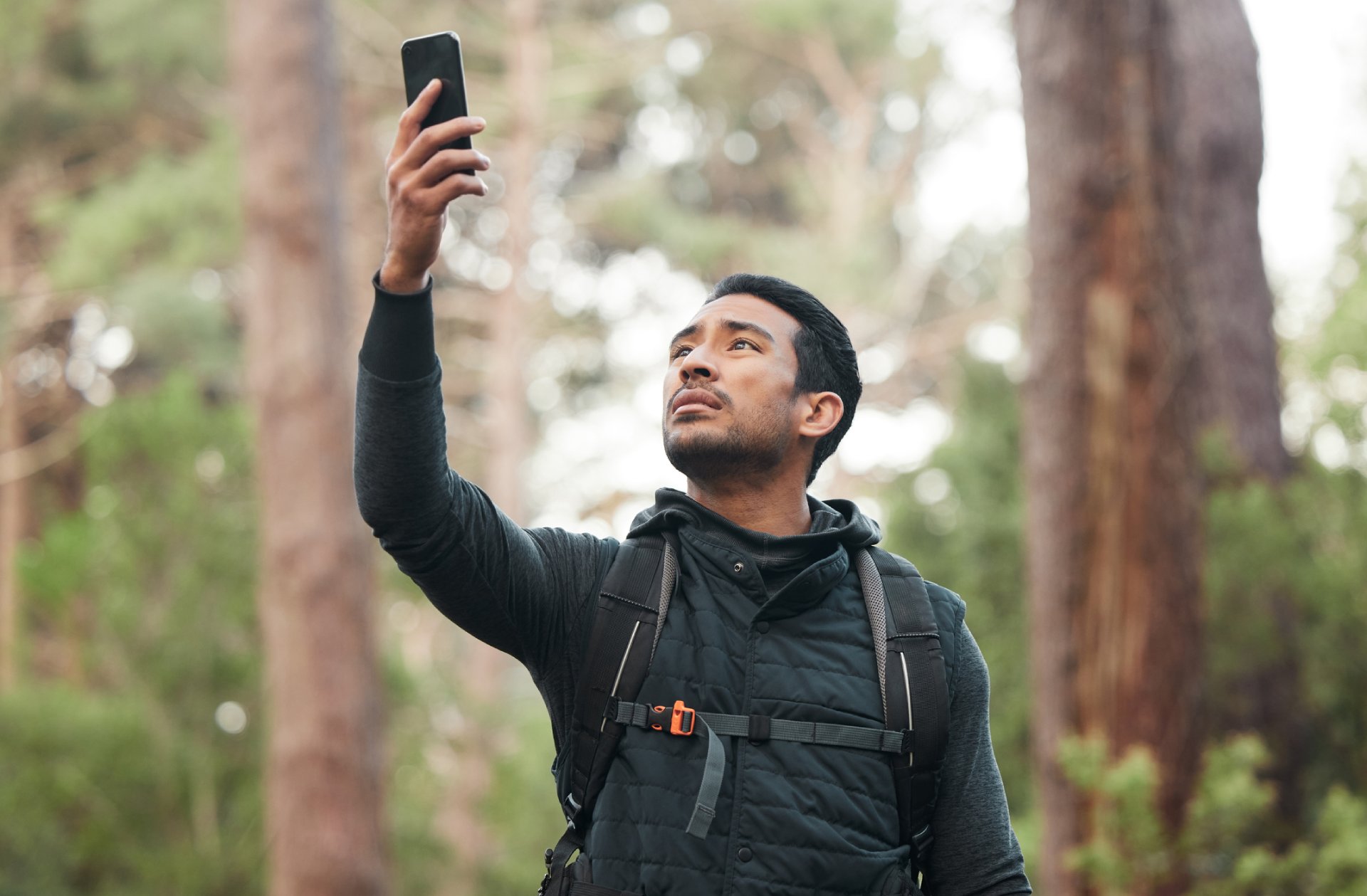
The words satellite phone may once have conjured up the image of a rugged, brick-sized device clutched by a government agent or extreme explorer. But that era is changing fast. Today’s SATCOMs are going mainstream. Thanks to hardware upgrades and strategic carrier partnerships, emergency satellite communication is now built into everyday smartphones like iPhones, Pixels and Samsungs. How do they work, what’s different, what do you need to know before relying on your phone as a satellite lifeline, and can they replace a dedicated iridium satellite phone in a real emergency?
The Smartphone-Satellite Revolution
Survey results from experienced travelers reveal both growing familiarity with satellite communication devices and a nuanced view of their practical application. Over half of respondents (53%) reported having used a satellite phone or satellite messaging device during a trip, underscoring that these tools are no longer reserved for extreme expeditions but are becoming increasingly integrated into mainstream travel safety strategies.
Among those users, the most common reason for satellite device usage was to enable communication during off-grid travel (43%), while others relied on them for staying in touch with loved ones (20%), emergency communication (17%) and location tracking (15%). This suggests that travelers see these devices as more than just emergency tools, but are valuable assets for overall trip management in remote areas.
When it comes to ownership, nearly half of the users (49%) reported owning their satellite communication device, while others preferred to rent (24%) or borrow (19%), a likely reflection of cost and usage frequency. While many already use or own these tools, however, the majority of non-users don’t currently plan to buy one, with only 3% saying “yes” and 29% still considering it.
A significant 68% said they have no plans to purchase a satellite device, which may indicate that while awareness and occasional use are high, regular adoption may remain limited until pricing, accessibility or capabilities improve further. These insights emphasize that while satellite smartphones and messaging tools are gaining traction, there’s still a gap between emergency preparedness ideals and personal investment.
Satellite connectivity in smartphones was once a fantasy, but it became a reality with Apple’s iPhone 14 launch in 2022. That debut paved the way for satellite-capable consumer smartphones, a growing trend accelerated by new partnerships across carriers and satellite networks.
Apple uses Globalstar satellites to power Emergency SOS and other features. Google’s Pixel 9 integrates the Skylo satellite service. Samsung’s Galaxy S25 connects through Verizon’s Skylo network and T-Mobile has gone all-in with Starlink’s “direct-to-cell” initiative, enabling compatible devices to send satellite messages without special hardware.
These, however, are still not full satellite phones. They can’t make calls or browse the internet via satellite. But for sending a crucial SOS when you’re lost, injured or off-grid, they can save lives.
Carrier by Carrier: Who’s Leading?
Here’s how the big three US mobile carriers are approaching SATCOMs:
- T-Mobile has partnered with SpaceX’s Starlink to provide T-Satellite messaging. It works with a wide range of “satellite optimized” phones, including iPhone 14+, Galaxy S24+ and Razr Plus 2024. It’s available to non-T-Mobile users for $10/month and free for certain premium T-Mobile plans.
- Verizon has teamed with Skylo to support satellite text messaging on Pixel 9 and Galaxy S25 models. The service is currently free but limited to specific handsets with satellite modems.
- AT&T is also working with AST SpaceMobile to roll out direct-to-cell capabilities in the near future. While still in early stages, this partnership is expected to rival T-Mobile’s Starlink approach.
Phones With Built-In Satellite Connectivity
The most capable satellite-enabled smartphones currently include:
- Apple iPhone 14, 15 and 16 series: SOS, location sharing, roadside assistance and iMessage/SMS via satellite (iOS 18 and above).
- Google Pixel 9: Satellite SOS and text messaging, currently US-only.
- Samsung Galaxy S25: Requires carrier support (e.g., Verizon) for satellite features.
- Other “Satellite Optimized” Phones: Galaxy Z Flip/Fold 6, Galaxy A36, Motorola Razr Plus 2024 (via T-Mobile’s T-Satellite).
These phones contain specialized modems and antennas or are optimized for low-orbit satellite signals through software.
SATCOMs and the Differences Among Devices
When it comes to accurate off-grid communication, dedicated satellite phones — such as those operating on Iridium or Inmarsat networks — continue to outperform satellite-enabled smartphones in several key areas.
Satellite smartphones are primarily designed for emergency backup, not as full-featured replacements for traditional satellite phones. While they offer the convenience of built-in emergency SOS messaging, they don’t yet support voice calls over satellite networks. In contrast, dedicated satellite phones allow for both voice and text communication virtually anywhere on the globe, a critical advantage during remote expeditions.
Text messaging is supported on both device types, but satellite smartphones typically have more limited coverage and functionality. For example, multimedia messaging and group texts are not available and sending messages may be slower depending on the user’s environment and satellite position.
Satellite smartphones currently do not support data or internet access via satellite. Dedicated satellite phones, while slower and more expensive to use for data, can offer limited internet capabilities, something useful for field teams, emergency responders or maritime users needing to transmit coordinates or receive weather updates.
Battery life is another distinction. Satellite smartphones rely on standard lithium-ion batteries, which may not last long in extreme environments or during prolonged use. Dedicated satellite phones are built with longer-lasting, rugged batteries meant for extended field use without immediate access to power.
Legally, satellite-enabled smartphones face fewer restrictions than dedicated satellite phones, which are more tightly regulated in several countries due to their powerful communication capabilities. However, both device types can be subject to local laws that travelers must research and respect.
In summary, satellite-enabled smartphones are incredibly useful in emergencies and offer a growing range of safety features. But for those planning deep wilderness treks, ocean crossings or expeditions far from any infrastructure, a dedicated satellite phone or personal communication device remains the gold standard for reliable, all-around off-grid communication.
What Satellite-Enabled Really Means
“Satellite optimized” doesn’t mean a phone has a satellite modem. Instead, it means the phone can communicate directly with new-generation satellites via software enhancements or limited hardware tweaks. You’ll only see the satellite icon or controls when you’re out of cell range, under the sky and when the satellite network is reachable.
In a pinch, these devices are powerful, but not perfect. Messages may take 15 to 60 seconds to send, depending on signal quality. You need to be outside, away from buildings, forests or valleys to lock on.
Where Satellite Devices Are Banned
Many countries tightly regulate or outright ban the use of satellite communication equipment. Travelers should be cautious when entering:
- India: Requires a special permit for any satellite device.
- China: Highly restricted; use without registration may result in detention.
- North Korea: Total ban.
- Russia: Restricted and monitored.
- Cuba, Myanmar, Nigeria, Chad, Sudan, Pakistan: Registration or permits often required.
Failing to declare or register a satcom device may lead to arrest, fines or confiscation. Do your research before you go.
Common Mistakes With SATCOMs
Even the best device can fail if the user isn’t prepared. Some of the most common user mistakes include:
- Battery Failure: Using satellite features drains a battery faster. Always carry backups.
- Expired Plans: Some services require subscriptions. Ensure yours is active before departure.
- Signal Assumptions: Indoor or tree-covered areas reduce signal. Test your device before your trip.
- No SOS Familiarity: Practice how to trigger SOS features and understand who gets notified.
- Forgotten Setup: Failing to preload emergency contacts or understand device features.
According to Global Rescue security expert Harding Bush, “The ability to alert emergency services, even without cell coverage, is transformative, but only if the traveler is prepared.”
The Global Rescue Connection
In the event of an emergency, the real benefit of SATCOMs is their ability to trigger a timely, life-saving response. Global Rescue has received and acted on hundreds of SOS alerts from satellite messaging devices around the world. Here are just a few real-world rescues:
- Sailor Stranded at Sea: After a mast collapsed off Delaware, an SOS call via satellite reached Global Rescue. Despite storm delays, the Coast Guard located and rescued the sailor.
- Flash Flood in Australia: A driver was trapped on top of a submerged vehicle. Satellite messaging alerted Global Rescue, which coordinated with authorities for a successful rescue.
- Hiker with Leg Injury: On New Zealand’s Te Araroa Trail, a trekker with a sprained ankle was airlifted out after her satellite device triggered a rescue.
- Abdominal Pain in the Backcountry: A hiker experiencing severe pain on a mountain trail in New Zealand sent a satellite SOS. Helicopter rescue followed.
- Unresponsive Patient in the Field: A bison hunter collapsed during retrieval. CPR was administered and Global Rescue helped dispatch a helicopter for evacuation.
Global Rescue encourages members to:
- Familiarize themselves with their satellite device’s SOS process.
- Save Global Rescue’s contact info: +1 (617) 459-4200, ops@globalrescue.com.
- Understand the services available through their device’s emergency monitoring provider.
Knowing how to properly activate your SOS signal and ensuring it reaches Global Rescue or another capable response team can mean the difference between a crisis and a rescue.
As satellite connectivity becomes a standard travel safety tool, responsible use, awareness of limitations and proactive planning will ensure your device serves its purpose: keeping you safe and connected when it matters most.
Categories:
Places & PartnersTravelAugust 27, 2025
Article Highlights:
- South Africa offers spectacular experiences, but travelers must stay alert due to high urban crime and road safety risks.
- Tap water is generally safe in cities; street food is delicious and usually safe when purchased from clean, well-established vendors.
- Michelin-starred restaurants and world-renowned wine estates enhance the country’s burgeoning culinary reputation.
- Highlights include Table Mountain, Kruger National Park, Robben Island, Drakensberg Mountains and Stellenbosch.
- Global Rescue provides vital medical evacuation and support, especially in remote or under-resourced regions.
South Africa is a country of stunning contrasts, where luxury safari lodges meet cosmopolitan cities, rugged coastlines rival epic mountain ranges and wildlife encounters compete with world-class cuisine and wine. Whether you’re summiting Table Mountain in Cape Town, tracking the Big Five in Kruger National Park or sipping wine in the scenic valleys of Stellenbosch and Franschhoek, travel to South Africa promises adventure, beauty and deep cultural engagement.
Nature lovers will be captivated by the grandeur of the Blyde River Canyon, the soaring peaks of the Drakensberg Mountains and the marine life off the coast of Hermanus, a global whale-watching hotspot. Adrenaline seekers can go cage diving for great white sharks in Gansbaai, while wildlife enthusiasts can explore Addo Elephant National Park, a malaria-free reserve that’s ideal for families and first-time safari-goers.
The climate varies widely. Cape Town has a Mediterranean climate. Kruger sees summer rains and dry winters. The Drakensberg Mountains can be chilly even in summer.
South African Food and Wine
South Africa’s culinary scene continues to gain international acclaim. While not traditionally known for fine dining, the country is now home to several Michelin-worthy restaurants, most notably in Cape Town and the Winelands. Establishments like La Colombe and FYN have drawn global praise for fusing local ingredients with international flair. Dining in Stellenbosch or Franschhoek often includes a wine pairing, thanks to their proximity to some of the best South African wine estates.
South African wine is renowned for its bold reds, crisp whites and signature varietals like Pinotage and Chenin Blanc, produced in scenic regions such as Stellenbosch and Franschhoek. With a winemaking tradition that dates back over 350 years, the country combines old-world craftsmanship with new-world innovation, offering wines that rival the best in the world.
Street food is an essential part of the South African food experience. Visitors should try local favorites like bunny chow, boerewors rolls and vetkoek. Food stalls in well-trafficked areas are typically safe, although travelers should exercise the same precautions as they would anywhere, choosing vendors with busy setups and fresh offerings. In most urban areas, tap water is potable, but bottled water is recommended in rural zones or during long overland travel.
Culturally, South Africa is one of the most diverse nations on Earth, with 11 official languages and a population that reflects African, European and Asian heritage. Travelers can explore the vibrant streets of Soweto, take in the haunting history of Robben Island or wander the bustling markets of Durban. In Cape Town, a cable car ride up Table Mountain offers panoramic views, while Boulders Beach provides a charming detour to see the famous African penguins.
The Global Rescue Connection
While most tourist visits are trouble-free, the country does contend with high crime rates, uneven access to healthcare and transportation risks. Global Rescue has supported travelers through serious medical events, including a quadriceps rupture in the Northern Cape and a fracture in Cape Town, cases that highlight the need for medical and evacuation support even in popular tourist areas.
That said, is South Africa safe? Safety in South Africa varies greatly depending on location and situational awareness. Violent crime is concentrated in specific urban neighborhoods and can generally be avoided with proper precautions. Tourists may encounter petty crimes, such as pickpocketing or phone snatching, in areas like Johannesburg, Cape Town and Durban, particularly after dark. Visitors are advised to use secure transportation, avoid isolated areas at night and remain vigilant when using ATMs. Tourist hubs like the V&A Waterfront, Table Mountain and Stellenbosch are heavily policed and safe during daylight hours.
South Africa Traveler Tips
In case of emergency, South Africa offers private ambulance services that are faster and more reliable than public options. Police (10111) and ambulance/fire (10177) services are available nationwide, but response times vary outside of cities. The US and Canadian consulates are located in Johannesburg and Pretoria, respectively, while Global Rescue offers 24/7 medical evacuation and field rescue support for travelers in need.
South Africa’s healthcare system is a mix of public and private providers. While private hospitals in cities such as Cape Town, Pretoria and Durban offer excellent care, rural clinics often lack adequate resources. Injuries related to safaris, hiking, or adventure sports are common, as are road accidents, particularly outside major cities. Malaria is present in parts of Kruger National Park and surrounding provinces. Travelers should consider vaccinations for Hepatitis A, Typhoid and Rabies, especially if they plan to participate in outdoor activities or encounter animals. Bottled water is widely available and recommended in rural areas, though tap water in urban centers like Cape Town and Johannesburg is generally safe to drink.
Getting around South Africa can be rewarding but requires caution. Roads are often scenic but may be poorly lit, riddled with potholes or shared with livestock in rural areas. Driving is on the left-hand side and vehicle crime (such as carjacking) is more common after dark. Tourists are encouraged to avoid minibus taxis and instead use licensed cabs or ride-hailing apps, such as Uber and Bolt. For intercity travel, domestic flights are a reliable option that connects most major destinations.
LGBTQ+ travelers are protected by law and same-sex marriage has been legal since 2006. Conservative attitudes can prevail in rural areas, however. Solo female travelers should exercise caution, particularly at night and avoid isolated areas or public transport. Those with mobility needs will find modern hotels and airports accommodating, but access may be limited to historic or wilderness areas.
South Africa is a land of beauty and contrast, best navigated with preparation, respect and an adventurous spirit.
Categories:
Business TravelSecurity & IntelligenceTravelAugust 26, 2025
Article Highlights:
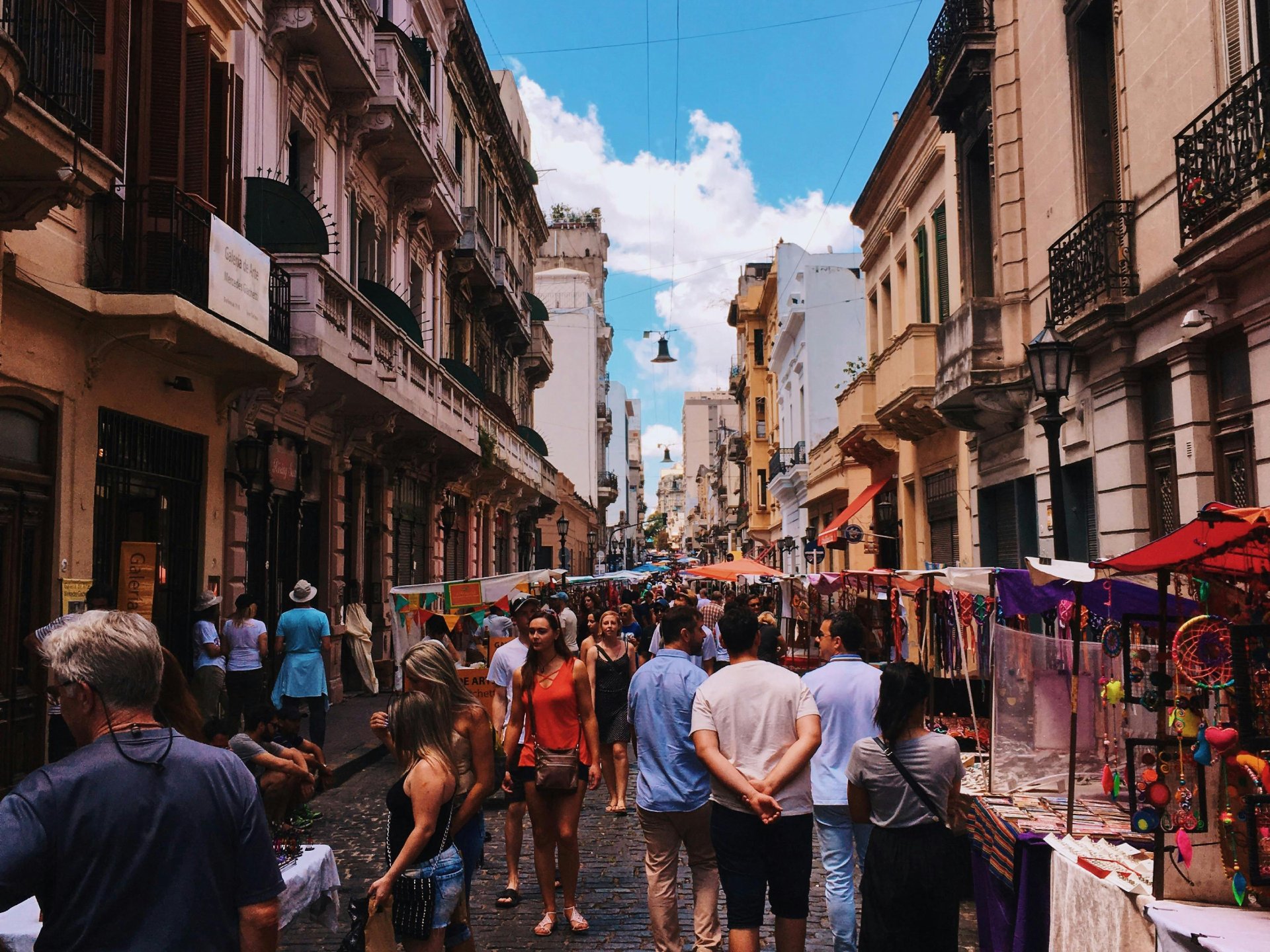
- Since July 1, 2025, Argentina requires all foreign tourists to have valid travel medical insurance.
- Coverage must include medical care, hospitalization, repatriation and emergency evacuation for the entire stay.
- Proof of insurance and a sworn statement of travel purpose are required at entry points.
- Airlines may deny boarding to travelers who cannot present insurance documentation.
- Private healthcare in Argentina is expensive; insurance is essential for smooth travel and peace of mind.
As of July 1, 2025, Argentina officially introduced a new regulation: every non-resident foreign traveler must carry valid travel medical insurance to enter the country. This shift marks a clear departure from the previous policy, which dropped COVID-19–related insurance requirements in September 2022.
The new law is a significant development for anyone planning a trip to Argentina — or South America more broadly — because it places medical preparedness at the forefront of international travel. Tourists, adventurers and business visitors alike will now need to arrange suitable insurance coverage before setting foot in Buenos Aires, Patagonia or the peaks of the Andes.
What Is Required?
Under the new entry rules, travelers need to be aware of four core requirements:
Mandatory Travel Medical Insurance: Visitors must secure an insurance policy that covers medical emergencies, hospitalization and repatriation. This applies universally, regardless of nationality, age or travel purpose.
Coverage Standards: Your policy should cover general medical care, hospital, 24/7 emergency assistance and medical transfer or possible evacuation.
Importantly, the insurance must remain valid for the entire planned duration of the stay.
Proof of Insurance: Travelers will need to show proof of insurance at official points of entry such as airports, ports and border crossings. Immigration officers may request printed or digital documentation and failure to provide it could result in denied entry.
Sworn Statement: In addition to insurance, all travelers must complete a sworn statement declaring the purpose of their visit. This step further aligns with Argentina’s broader immigration reforms designed to regulate access to healthcare, education and residency.
Why the Change?
Argentina’s new requirement is part of a sweeping immigration reform package intended to “regularize access to the health system, education, residence and deportations.”
While Argentina has historically welcomed millions of tourists each year, the government aims to protect its healthcare infrastructure from being overburdened by uninsured visitors. With travel surging post-pandemic, the measure also aligns with international trends, as many countries across South America and beyond enforce similar insurance mandates.
Several additional details highlight the seriousness of this new rule.
- Airlines may enforce the rule. Reports indicate that airlines have been instructed to check proof of insurance before allowing passengers to board flights to Argentina. Those unable to provide coverage may be denied boarding.
- No exceptions. Unlike past health-related entry measures, this rule applies to all travelers equally, regardless of nationality, trip length or travel purpose.
- Private healthcare costs. While emergency care may be available in public hospitals, access and quality vary widely. Foreigners are strongly encouraged to seek treatment in private hospitals, which can be costly without insurance.
For tourists drawn to Argentina’s vibrant cities, wine country or world-class mountains, ensuring proper insurance coverage is now as important as a valid passport.
Real-Life Examples: When Travel Insurance Coverage and Global Rescue Protection Matters in Argentina
Argentina attracts adventurers from all over the globe, particularly mountaineers seeking to scale Aconcagua, South America’s highest peak. These high-altitude pursuits carry unique medical risks that underscore the importance of comprehensive coverage and travel protection.
A Global Rescue member from Aruba recently radioed from Aconcagua: “I am at Aconcagua and have suffered partial blindness in my right eye due to prolonged hypoxia at altitude.”
The Global Rescue team immediately dispatched an airborne evacuation and ground transport to the nearest medical center. An eye specialist diagnosed a retinal hemorrhage, a condition associated with high-altitude retinopathy (HAR). Thankfully, the condition typically resolves without lasting damage. Still, without swift evacuation and medical evaluation, the traveler could have faced severe complications.
Another case involved a climber from Salt Lake City who, after summiting Aconcagua, was discovered semi-conscious with stroke-like symptoms: facial droop, slurred speech and arm weakness.
Global Rescue coordinated a helicopter evacuation and hospital care. The traveler was diagnosed with a Transient Ischemic Attack (TIA), a temporary stroke-like episode. With ongoing neurological monitoring, he was discharged and has since remained symptom-free.
Not all medical emergencies are life-threatening, but they can still derail an expedition. One member sustained a knee injury while climbing Aconcagua. After evaluation at base camp, Global Rescue arranged a helicopter evacuation to the nearest hospital. The diagnosis: a severe sprain requiring medication and rest.
These cases highlight the unpredictable nature of adventure travel. Without insurance coverage for evacuation, hospitalization and medical follow-up, the costs would have been overwhelming.
The Global Rescue Connection
Whether your itinerary involves tango in Buenos Aires, Malbec in Mendoza or trekking in Patagonia, travel medical insurance is now non-negotiable. Tourists should:
- Secure a policy that covers medical emergencies, hospital stays and evacuation.
- Carry proof of insurance in both print and digital form.
- Prepare to complete the required sworn statement before or upon arrival.
- Confirm with their airline that insurance documentation is verified before boarding.
The new rules represent more than bureaucratic red tape. They’re designed to safeguard both visitors and the Argentine healthcare system.
Traveling to South America is an adventure, but it comes with risks. As Argentina’s new policy shows, having insurance is no longer just a smart precaution, it’s a requirement.
Global Rescue specializes in medical evacuation services and comprehensive travel protection. From emergency rescues on Aconcagua to navigating stroke symptoms or high-altitude complications, Global Rescue has the expertise and resources to bring travelers safely home.
For tourists heading to Argentina, Global Rescue offers both traditional travel insurance and world-class medical evacuation services. With policies that meet Argentina’s coverage standards, travelers can explore with peace of mind knowing they’re protected against unexpected medical crises.
When your health and safety are at stake, insurance isn’t optional. It’s the lifeline between adventure and disaster. Before you pack your bags for Argentina, make Global Rescue your first call.
Categories:
NewsAugust 26, 2025
Categories:
Press ReleaseAugust 25, 2025
(Lebanon, NH – August 25, 2025) – Digital travel tools such as smartphone-based passports, smart glasses and live translation apps are gaining traction among global travelers, especially younger respondents. But widespread adoption still faces resistance due to privacy concerns and technological limitations, according to the Global Rescue Summer 2025 Traveler Safety and Sentiment Survey.
When asked whether they would feel comfortable using a digital passport or ID stored in a smartphone, 40% of travelers said yes and another 30% said maybe. Comfort levels were highest among travelers under 35, with 55% saying yes, compared to 46% of travelers aged 35–54 and 38% of those 55 and older. That makes younger travelers 45% more likely than the oldest group to embrace smartphone-based identification.
Despite this optimism, 35% of all respondents worry about losing access if their phone dies or is lost and 16% cite security concerns. Women are 28% more likely than men to be concerned about losing access (42% vs. 33%).
“Digital passports are appealing to some segments of the population, but travelers want confidence that they’ll still have access when technology fails and that data security and privacy concerns are addressed,” said Dan Richards, CEO of The Global Rescue Companies and a member of the US Travel and Tourism Advisory Board at the US Department of Commerce.
While 30% say digital passports would make travel faster and more convenient, just 4% are excited to see the US catch up with countries already using such features — a number that drops to near zero among travelers under 35.
Wearable technology like smart glasses and live-translation devices also show promise but remain underutilized. Only 3% of travelers have used one, though 14% plan to explore them and 35% are considering it. Interest is consistent across most groups, though travelers aged 35–54 are the most curious, with 18% planning to explore these tools — 50% higher than the overall average.
Meanwhile, live translation features integrated into messaging and video apps are widely seen as valuable. Nine out of ten travelers consider them useful, with 36% rating them “extremely useful” and 54% calling them “somewhat useful.” Interest peaks among travelers aged 35–54, with 40% calling it extremely useful, compared to 35% of those under 35 and 35% of those over 55. US and non-US respondents rated this technology similarly.
“Live translation built into communication apps has the potential to remove one of the biggest barriers to international travel — language,” Richards said. “The more seamless the technology becomes, the more confident and independent travelers will be.”
For more information contact: Bill McIntyre | Email: bmcintyre@globalrescue.com | Phone: +1 202.560.1195
About the Global Rescue Traveler Sentiment and Safety Survey
Global Rescue, the leading travel risk and crisis response provider, surveyed more than 2,900 current and former members between June 24–30, 2025. The respondents revealed a variety of behaviors, attitudes and preferences regarding current and future travel.
About Global Rescue
Global Rescue is the world’s leading provider of medical, security, evacuation and travel risk management services to enterprises, governments and individuals. Founded in 2004, Global Rescue has exclusive relationships with the Johns Hopkins Emergency Medicine Division of Special Operations and Elite Medical Group. Global Rescue provides best-in-class services that identify, monitor and respond to client medical and security crises. Global Rescue has provided medical and security support to its clients, including Fortune 500 companies, governments and academic institutions, during every globally significant crisis of the last two decades. For more information, visit www.globalrescue.com.
Categories:
Missions & Member TestimonialsAugust 22, 2025
Article Highlights:
- Dozens of altitude-related rescues from Kilimanjaro and K2 showcase the dangers of high-elevation trekking.
- Global Rescue coordinated multi-day evacuations using helicopters, horses and medical escorts.
- Medical crises included HACE, HAPE, severe infections, fractures, asthma and stroke.
- Coordinated care spanned over 10 countries, from Tajikistan to Mongolia to Italy.
- These real missions reflect the rising demand for emergency travel protection in 2025.
Even the best-planned journeys can unravel in an instant, especially when altitude, terrain and remoteness collide. In this issue of Mission Briefs, Global Rescue highlights the real stories behind some of our most challenging medical evacuations in recent months. From the towering peaks of Kilimanjaro and the Karakoram to the far reaches of Mongolia and Sicily, members faced life-threatening illnesses and injuries where access to care was measured not in miles, but in helicopters, horses and hours.
These stories reflect more than accidents. They illustrate the growing complexities of global travel in 2025. As more travelers venture into remote or high-altitude environments, medical risks rise sharply. Symptoms of HACE and HAPE, gastrointestinal distress, fractures, asthma attacks and cardiac-like events became urgent calls for assistance, often in extreme conditions. Global Rescue’s rapid-response teams coordinated cross-border operations involving aerial evacuations, medical escorts and continuity of care across dozens of countries.
What unites these missions is the common thread of preparedness and expert intervention. Behind every rescue is a traveler who chose to be protected before the crisis. These are their stories. They’re testaments to resilience, swift action and the unmatched value of global medical support when seconds matter.
Stroke in Sicily
An 82-year-old member with no listed home of record was hospitalized in Agrigento, Italy, after showing symptoms consistent with a stroke. Medical evaluation confirmed a minor ischemic stroke in the left parietal lobe as well as a diagnosis of urosepsis. Following initial stabilization, the member’s spouse requested repatriation to the United States. Due to his age and complexity of care, Global Rescue deployed a bedside escort to oversee his condition and facilitate transport planning. Medical records were retrieved from the treating hospital, and a private jet was arranged after the member opted against commercial travel. Upon discharge, he was flown to Palm Beach, Florida, and admitted to a local medical center for ongoing treatment. The escort remained with the member until transfer of care was complete. Global Rescue’s end-to-end support included medical oversight, bedside coordination, and transport logistics, ensuring continuity of care from Italy to the United States.
Fracture at Mongolian Festival
A 61-year-old member from the United States suffered a lower leg injury during a local festival in Ulaanbaatar, Mongolia. She landed awkwardly after jumping a ditch, resulting in immediate pain, swelling and inability to bear weight. Global Rescue advised her to seek medical evaluation, which revealed a tibial condyle fracture and ligament damage in the knee. The treating physician recommended orthopedic follow-up and noted she may require surgical repair. Given the injury severity and the limitations of local rehabilitation services, Global Rescue coordinated a medical evacuation. Business-class air transport was arranged from Ulaanbaatar to Newark, with wheelchair and luggage assistance. Upon her return, she scheduled an orthopedic consult and began physical therapy. The mission included door-to-door support and helped avoid further complications. The member later confirmed her safe arrival and expressed appreciation for the coordination and care provided during the evacuation.
Kilimanjaro Cases
HACE on Kilimanjaro
A 66-year-old member from the United States developed acute symptoms of high-altitude cerebral edema (HACE) during an ascent of Kilimanjaro. After reaching Barafu Camp, he began experiencing severe headache, dizziness, shortness of breath and was unable to walk unaided. Given the signs of altitude-induced neurological impairment and the camp’s high elevation, Global Rescue approved a helicopter evacuation to a nearby hospital. The member was promptly evaluated and diagnosed with altitude sickness. He responded well to treatment and was discharged later that day. This case exemplifies the dangers of rapid altitude gain and the critical importance of recognizing HACE symptoms early. Timely aerial evacuation and supportive care allowed for a fast recovery and prevented potentially severe outcomes. The member later reported that his condition had improved and confirmed that no additional follow-up care was needed after discharge.
Chest Pain at Shira Camp
A 30-year-old member from Australia became seriously ill at Shira Camp Two on Kilimanjaro’s Lemosho Route. She reported persistent chest pain radiating to the left side, accompanied by nausea, vomiting, general weakness and low oxygen saturation. Given the combination of symptoms, there was concern for a potential cardiac event or altitude-related illness. The remote location and lack of advanced medical care prompted Global Rescue to authorize an immediate helicopter evacuation. She was flown to a nearby hospital where an EKG ruled out a heart attack, but a chest X-ray revealed pulmonary edema. Treatment was initiated immediately. The member responded well to therapy, stabilized within a short period, and was subsequently discharged. This case illustrates the importance of rapid evacuation from high-altitude environments where serious conditions can mimic cardiac events and where timely access to medical resources is critical for a favorable outcome.
Altitude Sickness at Barranco Camp
A 36-year-old member from the United States began experiencing serious altitude sickness while staying at Barranco Camp on Kilimanjaro. She presented with a pounding headache, vomiting episodes and low oxygen saturation, along with a high heart rate. These symptoms were strongly indicative of acute mountain sickness and possibly high-altitude cerebral edema, a life-threatening condition if not treated quickly. Because of the elevated risk and lack of proper medical infrastructure in the area, Global Rescue arranged a helicopter evacuation to a regional medical facility. Upon arrival, she underwent evaluation, received oxygen support and began medical therapy. Her condition rapidly improved. Later that day, she was discharged and continued recovery at a nearby hotel. The member and her husband made plans to return home a few days later. Timely intervention ensured full recovery without complications.
Asthma Attack on Summit Descent
A 34-year-old member from the United States experienced a severe asthma attack following her successful summit of Mount Kilimanjaro. The combination of extreme altitude and exertion triggered shortness of breath and chest tightness, which worsened during descent to Kosovo Camp. At that elevation, the risk of altitude-related illness such as high-altitude pulmonary edema increased. Given her deteriorating respiratory status and the absence of high-level care at the camp, Global Rescue approved a helicopter evacuation. She was airlifted to a nearby hospital where she was treated for both asthma and HAPE. Her oxygen levels stabilized following supportive care and medication. She was discharged in improved condition and no longer required further medical assistance. The case highlights the dangers of underlying respiratory conditions at altitude and the necessity of rapid intervention.
Breathing Trouble on Kilimanjaro
A 32-year-old member from the United States encountered respiratory issues during a trek on Mount Kilimanjaro. While staying at Karanga Camp on the Mweka Trail, he began experiencing fatigue, shortness of breath, a rapid heartbeat and an oxygen saturation level of 77 percent even while on supplemental oxygen. These were clear indicators of altitude-related illness, potentially high-altitude pulmonary edema. Given the limited care options at elevation, Global Rescue arranged for immediate helicopter evacuation. He was flown to a regional hospital, where further testing, including a chest X-ray, confirmed mild HAPE. After receiving appropriate medical treatment and oxygen therapy, his symptoms quickly improved, and he was discharged the following day. Follow-up the next morning confirmed he was recovering well with no additional symptoms. The swift recognition of altitude illness and prompt evacuation ensured a positive outcome. His case serves as a reminder of how altitude can suddenly affect even otherwise healthy travelers.
K2 Operations
Severe AMS at Concordia
A 41-year-old member from the United Kingdom became seriously ill at Concordia Campsite in Pakistan. She had been suffering from persistent vomiting, diarrhea, fever and increasing shortness of breath despite being on supplemental oxygen. A review by Global Rescue’s medical team raised the possibility of gastroenteritis combined with acute mountain sickness, a condition exacerbated by high elevation. Due to worsening symptoms including weakness, elevated heart rate and inability to hydrate or ambulate, an urgent helicopter evacuation to a hospital in Skardu was arranged. There, she was admitted for treatment and observed as her condition stabilized over the next two days. Once her symptoms subsided, she was discharged with instructions for home care and hydration. The member continued recovery at her hotel and successfully returned to her home country several days later.
Altitude Illness at Concordia
A 46-year-old member from Singapore developed signs of altitude illness while stationed at Concordia Base Camp. He experienced shortness of breath, nausea, vomiting and pale lips, with his oxygen saturation dropping to 79 percent. Despite receiving field medications including antihistamines, salbutamol and cough syrup, his condition did not improve. Global Rescue determined that a higher level of care was necessary. A helicopter evacuation was coordinated to a hospital in Skardu where he was admitted and evaluated. After receiving oxygen support and additional respiratory treatment, his condition improved and he was discharged. He was provided with inhalers to manage residual symptoms and advised to continue his recovery in a low-altitude setting. The evacuation prevented further deterioration and ensured appropriate follow-up in a safer environment.
Food Poisoning on K2 Route
A 42-year-old member from Singapore suffered from food poisoning while on the K2 route. She developed severe vomiting and diarrhea, leading to rapid dehydration and weakness. Despite attempts at hydration both orally and intravenously by a fellow trekker who was a physician, she remained unstable and unable to walk or keep fluids down. Due to poor weather, an immediate helicopter evacuation from Urdukas Base Camp was not possible, requiring her to descend to Paiyu Army Camp. Once weather permitted, Global Rescue coordinated air transport to a hospital in Skardu. There, she was treated with IV fluids, antibiotics, and medications that stabilized her condition. She improved significantly and was discharged following observation. She expressed gratitude for the support and declined further follow-ups after reporting feeling well and able to eat again.
HACE Symptoms at Concordia
A 54-year-old member from the United States showed alarming signs of high-altitude cerebral edema while at Concordia in the Karakoram Range. His symptoms included confusion, hallucinations, vomiting, diarrhea and difficulty breathing, with a critically low SpO₂ reading of 61 percent. Global Rescue medical personnel reviewed his condition and advised an immediate helicopter evacuation. Due to weather and permit delays, the evacuation was completed the following day as part of a combined mission with another affected member. Both were transported to a hospital in Skardu for evaluation. The member was treated with supportive care and medications, and his symptoms resolved within days. He declined further monitoring after confirming his condition had stabilized and planned to return to the United States as scheduled.
Pulmonary Edema on K2 Trek
A 28-year-old member from Australia developed concerning symptoms shortly after arriving at K2 Base Camp. He experienced shortness of breath and chest pain that worsened over the following day, evolving into a hacking cough with blood-tinged sputum. These symptoms strongly indicated high-altitude pulmonary edema, a dangerous and potentially fatal condition at extreme elevation. With symptoms escalating and local resources insufficient for acute care, Global Rescue authorized a helicopter evacuation in coordination with another mission. The member was airlifted from Concordia and transported to a hospital in Skardu, where he received oxygen therapy and medication. After evaluation, his condition stabilized and he was released with follow-up instructions. A Global Rescue physician reviewed the case and noted no concerns. He remained in his hotel until he was fit to fly and returned home to Australia. Early recognition and prompt evacuation were critical to his full recovery in a challenging environment.
Gastroenteritis on K2 Route
A 42-year-old member from Australia became ill while trekking along the K2 route near Urdukas Base Camp. Over four days, he experienced worsening abdominal cramping, frequent diarrhea and intermittent pain. A general practitioner on the expedition examined him and noted possible signs of infection. Though initially manageable, his symptoms persisted, prompting a recommendation to join his partner’s planned evacuation. Global Rescue coordinated helicopter transport from Paiyu Army Camp after bad weather prevented access to Urdukas. Once evacuated, he was transported by ground to a hospital in Skardu where he was diagnosed with gastroenteritis. After receiving medical care including fluids and rest, his condition improved, and he was discharged in stable condition. He remained under observation for a short period before resuming travel. This case underscores the risks of gastrointestinal illness in remote, high-altitude environments and the benefits of shared evacuation coordination for expedition teams.
Severe Infection on K2 Trek
A 38-year-old member from Australia became acutely ill at Urdukas Base Camp on the K2 trekking route. She presented with fever, vomiting, dehydration and difficulty walking, symptoms indicating a systemic infection. A fellow trekker and physician assessed her condition and identified low oxygen saturation and elevated heart rate, prompting a recommendation for urgent evacuation. Initial plans were delayed due to poor weather, but Global Rescue successfully coordinated helicopter evacuation from Paiyu Army Camp to Skardu once conditions allowed. Upon arrival, she was admitted to a hospital where she received IV fluids, antibiotics and supportive care. Her health improved over the next 24 hours and she was discharged in stable condition. She declined additional monitoring but expressed gratitude for the assistance. This case reflects the dangers of infection during high-altitude trekking and the importance of early intervention when access to care is limited by weather and geography.
Rescues on Other Mountains
Back Injury on Gasherbrum II
A 41-year-old member from Nepal sustained a serious back injury while at Gasherbrum II Base Camp. He reported sharp pain radiating to his shoulder and leg, despite using pain medication. The severity of symptoms left him unable to descend without assistance. With the remote location limiting mobility and medical access, Global Rescue coordinated a ground evacuation using horse transport to reach Askole, followed by a vehicle transfer to a hospital in Skardu. The evacuation spanned several days, highlighting the logistical challenges of remote terrain. At the hospital, the member underwent a medical evaluation and was treated with pain management before being discharged. He returned to his home in Kathmandu for follow-up care and further assessment of the injury.
Leg Injury on Broad Peak
A 58-year-old member from Azerbaijan suffered a traumatic leg injury while descending from Camp 1 on Broad Peak. He was struck by a falling boulder, resulting in a suspected fracture with visible swelling and deformity. The remote alpine location made self-rescue impossible, and a helicopter evacuation was deemed necessary. Global Rescue coordinated the airlift to a hospital in Skardu, where the member was evaluated and provided with pain management and a discharge plan. Medical staff advised follow-up imaging and orthopedic consultation upon return home, including an MRI of the knee to assess possible internal damage. The incident underscores the risk of rockfall in high-altitude environments and the critical importance of rapid evacuation support. The member later returned to Azerbaijan for further medical care. This case demonstrated effective coordination between on-site contacts, air rescue teams, and medical providers to ensure timely treatment and recovery.
Altitude Illness in Tajikistan
A 41-year-old member from Germany experienced respiratory distress while trekking near Kulin, Tajikistan, at approximately 13,500 feet/4,100 meters. Symptoms began with a cough and headache, then progressed to chest pain, fever and coughing up pink-tinged sputum. With no guide accompanying the trek, his wife and a nearby French mountain guide provided initial assessment and care. Despite rest and hydration, his condition worsened, making self-evacuation impossible. Global Rescue arranged a complex ground evacuation involving a horse-assisted descent over several days and vehicle transport to a hospital in Khorog. There, he was diagnosed with rhinopharyngitis and discharged with supportive care instructions. Global Rescue medical staff reviewed the case and found the treatment appropriate. The member resumed his travel plans and expressed appreciation for the support provided. This case demonstrates the value of coordinated ground rescue in high-altitude remote rescues.
The Global Rescue Connection
Every rescue profiled in this issue of Mission Briefs reveals a powerful truth: when emergencies unfold far from modern medical infrastructure, the right response, delivered fast, can mean the difference between danger and safety, between uncertainty and recovery. Whether it’s a helicopter hovering above Concordia, a ground evacuation through the Karakoram, or a bedside escort from Sicily to Florida, Global Rescue is the vital link between crisis and care.
These real-world missions demonstrate the critical need for specialized medical evacuation and field rescue capabilities. In places where altitude, isolation, or local limitations hinder access to treatment, Global Rescue fills the gap with precision, expertise, and urgency. Our teams don’t just extract; they stabilize, coordinate and follow through until every member is safely on the path to recovery.
A Global Rescue membership is more than a service; it’s a lifeline. It means 24/7 access to medical advisory, emergency evacuations and support wherever your travels take you. Because while the world may be unpredictable, your safety plan shouldn’t be. With Global Rescue, help is always within reach, no matter how remote your journey.
Categories:
TravelAugust 21, 2025
By Mike Mercer, destination specialist at The Fly Shop
Article Highlights:
- Nearly all international fly fishing destinations can accommodate CPAP users with the right prep.
- Portable power stations like the Jackery can run a CPAP for multiple nights off-grid.
- Lithium battery packs are travel-friendly but have strict airline limits — check carefully before you fly.
- Some remote lodges offer 12-volt marine batteries to power CPAPs when there’s no nighttime electricity.
- Never check your CPAP; always carry it on. Confirm plug adaptors, voltage, and power availability before departure.
A few years ago, after a lifetime of effortless sleep, I suddenly found myself waking up exhausted and dragging through the day. A visit to the doctor confirmed the culprit: severe sleep apnea. Like millions of others, I now rely on a CPAP machine to sleep (continuous positive airway pressure) — a small price to pay for feeling rested and healthy again. While it’s a simple fix at home, the real challenge comes when traveling — especially to remote fishing lodges where reliable power isn’t always guaranteed.
As a Destination Specialist at The Fly Shop, I often travel to remote, off-the-grid fishing lodges. At home, reliable power is a given. Abroad — especially deep in the backcountry — it isn’t. For anyone like me who can’t sleep without a CPAP, the question is: “How do you travel with one?”
Never Check It and Know Your Plugs and Voltage
Your CPAP goes in your carry-on — always. Your trip could be over if it gets damaged or lost in checked luggage. Airport security has (almost) never been an issue. They treat it like a laptop: take it out of your bag, put it in a bin, and you’re through. Once you leave a city, the larger challenges begin. First, understand that wall outlets differ worldwide in plug style and voltage (120 vs. 240 volts). Most modern CPAP machines automatically adjust for voltage, but you’ll need a plug adaptor for the local outlets.
I use a universal travel adaptor with fold-out prongs that fit almost anywhere. It’s small, affordable, and indispensable. These are adaptors, not converters. Adaptors let your plug fit; converters change voltage — which most CPAPs don’t need nowadays. Check the label on your machine to confirm.
Will There Be Overnight Power?
Some remote fishing lodges have power all day but shut off generators at night. Others run on solar with battery backup, keeping outlets live 24/7. Your travel agent — or the lodge itself — should be able to answer this quickly. Lodges have gotten creative in accommodating CPAP users. Here are three solutions I’ve encountered — each with pros and cons.
Portable Power Stations (Like Jackery): Many remote operators stock battery packs like the Jackery Explorer 300. Fully charged, it can run a CPAP for several nights — even longer without the humidifier. It’s the simplest option if the lodge provides one, but it’s less practical for anglers to pack themselves. These units can be recharged from a wall outlet or a portable solar panel.
Lithium Battery Packs (Carry Your Own): These are much smaller and designed for air travel. Most will power a CPAP for 1–2 nights (without a humidifier). They’re pricey but convenient. Here’s the big caveat: lithium batteries are considered fire risks. They’re allowed in carry-on only — never in checked luggage. However, airlines and countries have distinct limits on battery size, usually measured in watt-hours. If yours exceeds that limit, it gets confiscated.
On a trip to Patagonia, my battery passed U.S. security, but in Santiago, Chile, airport security flagged it. It was slightly over the allowed limit for that airline. No debate. No appeal. My options were to throw it away or miss my flight. Goodbye $400 battery. The lesson I’ll share with you is to always check the battery regulations for every airline and country on your itinerary — not just the U.S.
The Car Battery Solution: Some lodges offer a surprisingly simple alternative: a standard 12-volt marine or car battery. These can run a CPAP for multiple nights — sometimes up to a week if you skip the humidifier. You’ll need an adaptor that connects your CPAP to battery terminals (with red/black alligator clips). Check your machine’s compatibility and whether you need an inverter (to convert DC to AC power). It’s a bit clunky but works well — and the lodge usually has the battery on-site.
CPAP Humidifiers: CPAP manufacturers strongly recommend using distilled water in the humidifier to avoid mineral buildup. Some travelers bring their own (in checked luggage), but many lodges can provide it if requested in advance. I’ve found that I can comfortably skip the humidifier for trips up to a few weeks. It’s worth testing at home before you travel to see if you can tolerate it.
CPAPs and Airport Security Inconsistencies
Most of the time, CPAPs are accepted on flights without issue. But sometimes, bureaucracy intervenes. On that same Patagonia trip where I lost the battery, the airline also decided my CPAP — a Philips DreamStation — wasn’t allowed because their rulebook only permitted ResMed brand CPAPs. Fortunately, I packed a spare machine — a ResMed — otherwise, I would’ve faced a costly delay in searching for a replacement in Santiago over a weekend.
On my return flight, the same DreamStation CPAP machine (oddly) passed inspection with no issues. The lesson is it pays to carry a backup — or at least check the airline’s rules in advance.
CPAP on the Fly
Traveling internationally with a CPAP has challenges, but they’re usually manageable with planning. I’ve hauled mine all over the world — from jungle camps to high-altitude lodges — and I’ve yet to find a destination where it didn’t work. At The Fly Shop, we regularly help clients determine their destination’s power situation. If you let us know you use a CPAP, we’ll check whether the lodge has all-night power, solar inverters, or battery options. We’ll also tell you whether you need to bring an adaptor or inverter.
CPAP use isn’t a barrier to adventure. More anglers than ever travel with them, and most lodges are accommodating. With foresight, you’ll sleep soundly under the stars — or a thatched roof — and wake rested, ready to chase fish in whatever wild corner of the world you’ve chosen.
Mike became The Fly Shop’s first employee in 1978, and in no time became a fly fishing and fly-tying prodigy. Still with The Fly Shop, Mike plans and organizes destination fly fishing trips around the world, sharing his wealth of knowledge and first-hand experience with the fly fishing community.