
Categories:
Press ReleaseAugust 17, 2023
(Lebanon, N.H. – August 16, 2023) Loud, rude conduct and disrespectful or entitled behavior by tourists while visiting another country are the leading characteristics that infuriate the world’s most experienced travelers, according to the summer 2023 Global Rescue Traveler Sentiment and Safety Survey.
“Global tourism is on track to rise by 30% in 2023 as travelers make up for lost time due to the pandemic-related travel restrictions. Unfortunately, a few travelers may have forgotten their manners in their post-pandemic travel exuberance. If so, then I hope they remember them soon,” said Dan Richards, CEO of The Global Rescue Companies and a member of the U.S. Travel and Tourism Advisory Board at the U.S. Department of Commerce.
An important part of travel is the responsibility each traveler bears at every destination. Are you dressed inoffensively? Is your behavior appropriate for the region? How you present yourself in foreign localities reflects on your homeland, but it also stirs reactions from the local population that could be helpful or provocative.
According to the survey, the worst tourist conduct observed by other global travelers was being too loud (27%). In second place, 26% of respondents reported that travelers’ unwillingness to try local cuisine or follow local social customs was the most infuriating behavior. The third most disappointing trait (18%) was the expectation that destination residents speak the same language as the traveler. Fewer than 10% of respondents said tourists who wear revealing, offensive or shabby clothing were the most exasperating.
“When you’re visiting a new country, it’s essential to respect the local culture and customs. Behaving like a tourist can be seen as disrespectful and offensive to locals. Travelers should do the research to know and understand the little things about the customs and culture of your destination,” said Harding Bush, a senior manager for security operations at Global Rescue.
Looking and acting like a tourist can produce assumptions that you are inexperienced, naive, lacking cultural awareness, and wealthy. “Standing out as a tourist can make you appear vulnerable and an easy target for scams, pickpockets and other types of crime. By blending in you reduce the risk of local criminals or scam artists spotting you as a foreign traveler and targeting you for fraudulent schemes or petty crimes,” Bush said.
###
Contact Bill McIntyre at bmcintyre@globalrescue.com or 202.560.1195 (phone/text) for more information.
About the Global Rescue Traveler Sentiment and Safety Survey
Global Rescue, the leading travel risk and crisis response provider, conducted a survey of more than 2,300 of its current and former members from July 11-15, 2023. The respondents exposed a range of behaviors, attitudes and preferences regarding international and domestic travel.
About Global Rescue
The Global Rescue Companies are the world’s leading provider of medical, security, evacuation and travel risk management services to enterprises, governments and individuals. Founded in 2004, Global Rescue has exclusive relationships with the Johns Hopkins Emergency Medicine Division of Special Operations and Elite Medical Group. Global Rescue provides best-in-class services that identify, monitor and respond to client medical and security crises. Global Rescue has provided medical and security support to its clients, including Fortune 500 companies, governments and academic institutions, during every globally significant crisis of the last two decades. For more information, visit www.globalrescue.com.
August 17, 2023
When company executives head out on the road, the stakes are extremely high. The reputation of the company, the brain power behind its success, the public-facing persona —it’s all on the line. And these days, when the world has so much access to the lives of the rich and famous, protecting executives is especially complex
Here are the potential pitfalls of modern executive travel and tips for how to mitigate them.
The Basics Can Bite You
Despite their success or celebrity, when an executive goes out into the field, they are ultimately still just a person, susceptible to the most basic risks of health and safety as any other person. A blistered foot can turn into an infection. Food borne illness can strike. Don’t let something minor take down the figurehead of your company.
It’s the responsibility of the company’s risk manager to take into account even the most basic scenarios. They need to make sure the team is equipped with a first-aid kit that can cover anything from minor scrapes to food poisoning. When the risk manager covers off on these basics, executives will be comfortable in the small ways that make a real difference on an important work trip.

Be Ready for Serious Medical Emergencies
Before leaving for the trip, make certain the entire security team is aware of any concerns in the executive’s medical history. Do they have chronic back problems? What is your plan if they do? Are they diabetic or hypoglycemic? Make sure you have necessary supplies like insulin and nourishing snacks on hand. These illnesses can be particularly hard to manage internationally, where medical supplies and resources may be less readily available. This is especially true in remote locations where medical services may be limited.
Increasingly, the best executive protection teams include a medical professional in case serious medical emergencies occur.
Cybersecurity
“Business executives are among the biggest targets of phishing and whaling attacks, in large part because they have such a high level of access to important data,” said CSO Online. “It’s vital that executives know what to look for that would indicate such an attack.”
This is especially true when executives travel to countries where internet connections are not as stable.
Protection against cyber crime starts before the trip begins by educating executives about digital security. Cyber security refers to every aspect of protecting an organization, its employees and their digital assets against cyber threats. As cyberattacks become more common and sophisticated and corporate networks grow more complex, a variety of cyber security solutions are required to mitigate corporate cyber risk.

Threats can often come from email. Modern email clients can make it easier to tell when a message comes from outside the organization but, according to Andrew Ellis, CSO at Akamai Technologies, a provider of content delivery network services, not all do. “Consider advising your company to tag, or change colors, of all messages from outside the company.”
Kidnappings and Shootings
Kidnappings and assassinations are perhaps the most feared risks of any executive travel. To protect against these extreme scenarios, the key is to avoid the risk altogether.
“A security detail is inherently proactive, meaning that it travels ahead of your team to evaluate the level of security of your destination and, if necessary, change plans. Of course, they can also respond to crises, but avoidance is the top goal,” said Harding Bush, a former Navy SEAL and senior manager for security operations at Global Rescue. He is also an expert in high-risk travel, cultural awareness, crisis preparedness, leadership and operational planning.
Cultural Awareness Is Protection
If your executive is headed to another country, they need to be briefed about cultural differences and taboos in advance. If they are not clued into these realities, their behavior could garner disrespect from the locals on the ground and put them at a greater risk.
This is especially important if your executive’s gender, lifestyle, political or religious beliefs put them in conflict with the prevailing cultural norms of the business trip designations.
[Related Reading: Better Awareness, Safer Travel]
Get Executives on Board
In order for any of this to work, executives need to be bought in.
CSO Online states, “Teaching the executive how to remain safe, emergency procedures, expectations from the security detail, and familiarization with protocols can be a tremendous asset in an emergency.”
Make sure your executives are briefed on the plan and are ready to follow the procedures set in place. This will increase safety and productivity, allowing business objectives to be met even in challenging and remote locations.
A Plan With No Omissions
“Corporate liability extends to omissions as well as negligence,” TravelPerk reported.
That’s why you need a partner to help you think through a comprehensive executive protection plan. Global Rescue is that partner.
Our team of security and medical experts can help you create and execute a plan with no omissions. The safety of your people and the reputation of your company depend on it.
Contact Global Rescue about traveler medical and security protection membership opportunities today.
Get a price estimate
Estimate
$0.00
Please answer all questions for estimate.
Categories:
Press ReleaseAugust 15, 2023
(Lebanon, N.H. – August 15, 2023) The Global Rescue security operations team supported several members during the Maui wildfire, including helping a California family get to safety during the deadly disaster in Lahaina, Hawaii. “The wildfire was spreading rapidly due to high winds and power was lost throughout the region,” said Adam Bardwell, a security operations manager for Global Rescue, a corporate travel risk and crisis management firm.
The member and his family safely reached Kapalua Airport where communication service remained temporarily intact, but the flights were stalled due to the dangerous conditions. The member contacted Global Rescue security operations seeking potentially life-saving advice.
“Due to the uncertainty on the ground, the Global Rescue security operations team relayed a rapid action plan with multiple escape contingencies that included evacuation options via land, sea, and air. We advised the member to drive immediately to Kahului Airport along route 340 if it remained open and clear, and board a flight off Maui to the island of Oahu,” Bardwell said.
At that point, communications were cut off but not before the member received Global Rescue’s list of alternate evacuation options which included an air evacuation from a small airfield via a chartered aircraft if Route 340 to the Kahului Airport was impassable and a boat transport capable of landing on the Maui shore to evacuate personnel and then returning to a nearby fishing vessel at sea. Helicopter transport out of the area was unavailable due to high winds that had grounded rotary wing aircraft. “If all airlift plans were unsuccessful, Global Rescue had pre-arranged for a zodiac boat transport capable of launching off Maui from the beach to a fishing vessel at sea,” Bardwell said.
Inadequate communications services on Maui during the disaster hindered overall safety and contributed to confusion. Thousands of people on Maui lost cellphone service because of the wildfires and, combined with the loss of 911 emergency services and officials failing to activate the state’s outdoor siren warning system, exacerbated.
Bardwell suggests travelers carry a satellite messaging system. “If you’re going to a place that has limited exits and limited cellphone service, the satellite communicator is absolutely necessary,” said Bardwell. “It doesn’t matter where you are, you have to be able to make the call for help.”
###
About Global Rescue
The Global Rescue Companies are the world’s leading provider of medical, security, evacuation and travel risk management services to enterprises, governments and individuals. Founded in 2004, Global Rescue has exclusive relationships with the Johns Hopkins Emergency Medicine Division of Special Operations and Elite Medical Group. Global Rescue provides best-in-class services that identify, monitor and respond to client medical and security crises. Global Rescue has provided medical and security support to its clients, including Fortune 500 companies, governments and academic institutions, during every globally significant crisis of the last two decades. For more information, visit www.globalrescue.com.
Categories:
Health & SafetyTravelAugust 15, 2023
Travelers are planning multiple trips in 2023, according to the summer 2023 Global Rescue Travelers Sentiment and Safety Survey. “Half of the world’s most experienced travelers are planning four or more trips this year, and they’re using credit card reward points to help pay for them,” said Dan Richards, CEO of the Global Rescue Companies and a member of the U.S. Travel and Tourism Advisory Board at the U.S. Department of Commerce.
Global Rescue conducted a survey of more than 2,300 of its current and former members from July 11-15, 2023. The respondents shared a range of behaviors, attitudes and preferences regarding international and domestic travel.
A fifth of respondents are planning six or more trips in 2023, another 31% will take four-to-five leisure trips, and 41% said they would take two-to-three vacations. Only seven percent said they would take a single trip and one percent reported they would not take any leisure trips in 2023.
With inflation and the rising cost of travel, it’s no surprise that most respondents (64%) reported using credit card reward programs to offset leisure trips and vacation expenses.
Adventure Tourism Increases, but Not Everywhere
Travelers are catching up on lost trip opportunities due to the pandemic. Demand for adventure tourism has shot up since COVID-19 with African safaris, hiking trips, camping excursions and motorcycle tours experiencing the fastest growth. But, there’s a limit to the risks travelers are willing to take, according to the survey.
The overwhelming majority of respondents (75%) would decline space tourism, even if they could afford the half-a-million-dollar cost for a few minutes of weightlessness. When it comes to undersea adventure tourism, 65% of respondents said they would take part in snorkeling or scuba diving tours of reefs, underwater caves, marine life and shipwrecks. Only 5% would stay at an undersea hotel or dine at an underwater restaurant. Less than 2% would sign up for a deep-sea tour in a submarine.
[Related Reading: Immersive Adventure Tourism]
“Travelers are demonstrating a growing desire for authentic experiences in an increasingly globalized and connected world,” said Richards. “While pent-up demand is playing a role in the adventure travel boom, we don’t expect to see it subside anytime soon.”
As more people return to travel and plan multiple trips, most (61%) are traveling with a guide, an outfitter or an expedition organization in 2023. “Respondents consistently indicated they include on-the-ground experts on their trips to reap the benefits of their local language skills, cultural knowledge, touring efficiency and overall safety,” said Matt Aubin, associate director of Global Rescue partner and channel programs.
Travel Fears Nosedive
Traveler fears are dwindling at the same time many are hoping to plan trips to countries currently listed by the U.S. Department of State as Level 3 – Reconsider Travel. “As the travel rebound continues, traveler worries are shifting dramatically and their appetite for exploring the world is increasing,” Richards said.
Traveler concerns about civil unrest and terrorism decreased by half in the last six months, withering from 14% to 7% since January 2023, according to the survey. Apprehension about COVID exposure and infection while traveling has dramatically dropped at a rate of 88%, down to 4% compared to 33% in August 2022.
Nearly half (48%) of the world’s most experienced travelers claim their greatest anxiety is having an injury or accident followed by trip cancellation (13%). Yet, despite that, travelers are increasingly interested in visiting new destinations outside of the traditional ones.
Before the pandemic, people were more content with traditional tourist attractions. Viewing the Mona Lisa in the Louvre and taking a River Seine cruise in Paris, visiting India’s Taj Mahal, or soaking up the sun on the Guanabara Bay, Rio de Janeiro, during Carnival, historically were go-to vacation activities. Now, tourists have a growing enthusiasm for places beyond the traditional, some of which are risky.
The U.S. Department of State issues a travel advisory for every country and rates them on a risk scale from 1 to 4. A country with a Level 4 designation carries a “Do Not Travel” advisory due to a greater likelihood of life-threatening risks. A Level 1 travel advisory is the lowest level for safety and security and advises travelers to exercise normal precautions. Travelers going to countries with a Level 2 advisory are encouraged to exercise increased caution due to heightened risks to safety and security.
[Related Reading: Executive Protection vs Bodyguards]
The countries listed by U.S. officials as Level 3 are the destinations where government officials advise people to reconsider and avoid travel due to serious risks to safety and security. Among the list of 20 countries with a Level 3 travel advisory, Egypt, Colombia, China and Hong Kong are the top four destinations the world’s most experienced travelers want to visit. Nigeria, El Salvador, Cote d’Ivoire and Niger were the least desirous places, according to the survey.
“The desire and willingness to travel to less touristy destinations are how many travelers will avoid the crowds associated with the post-pandemic travel rebound,” Richards said. “Before COVID, people were content with traditional tourist destinations. But now, places that are less accessible and a little more risky are gaining interest.”
Despite the travel rebound and the end of the COVID crisis, the threat of another pandemic remains. “Some may believe there’s no need to spend money to protect against a new potential pandemic, but they’re wrong,” Richards said. “It’s not a matter of if but when a new pandemic will emerge, and we have the means to prevent it, provided the international community has the will.” Most survey respondents (60%) agree and want international governments to invest in and develop pathogen scanners that can be deployed in transportation hubs like airports and railway terminals.
Survey Reveals Bad Tourist Behaviors
Loud, rude conduct and disrespectful or entitled behavior by tourists while visiting another country are the leading characteristics that infuriate travelers, according to the survey.
[Related Reading: Better Awareness, Safer Travel]
The worst tourist conduct observed by other global travelers was being too loud (27%). In close second place, 26% of respondents reported that travelers’ unwillingness to try local cuisine or follow local social customs was the most infuriating behavior. The third most disappointing trait (18%) was the expectation that destination residents speak the same language as the traveler. Fewer than 10% of respondents said tourists who wear revealing, offensive or shabby clothing were the most exasperating.
“When you’re visiting a new country, it’s essential to respect the local culture and customs. Behaving like a tourist can be seen as disrespectful and offensive to locals. Travelers should do the research to know and understand the little things about the customs and culture of their destination,” said Harding Bush, a senior manager for security operations at Global Rescue.
Looking and acting like a tourist can produce assumptions that you are inexperienced, naive, lacking cultural awareness, and wealthy. “Standing out as a tourist can make you appear vulnerable and an easy target for scams, pickpockets and other types of crime. By blending in you reduce the risk of local criminals or scam artists spotting you as a foreign traveler and targeting you for fraudulent schemes or petty crimes,” Bush said.
Travel safe and smart with a Global Rescue membership, which includes destination reports for 215 countries with up-to-date travel information — medical, security and intelligence data — in one place. A Global Rescue membership can also help travelers find coronavirus-capable hospitals and testing facilities or provide field rescue from the point of illness or injury to the nearest appropriate hospital, clinic or medical provider. Click here to learn more.
Categories:
NewsAugust 11, 2023
Categories:
Health & SafetyAugust 11, 2023
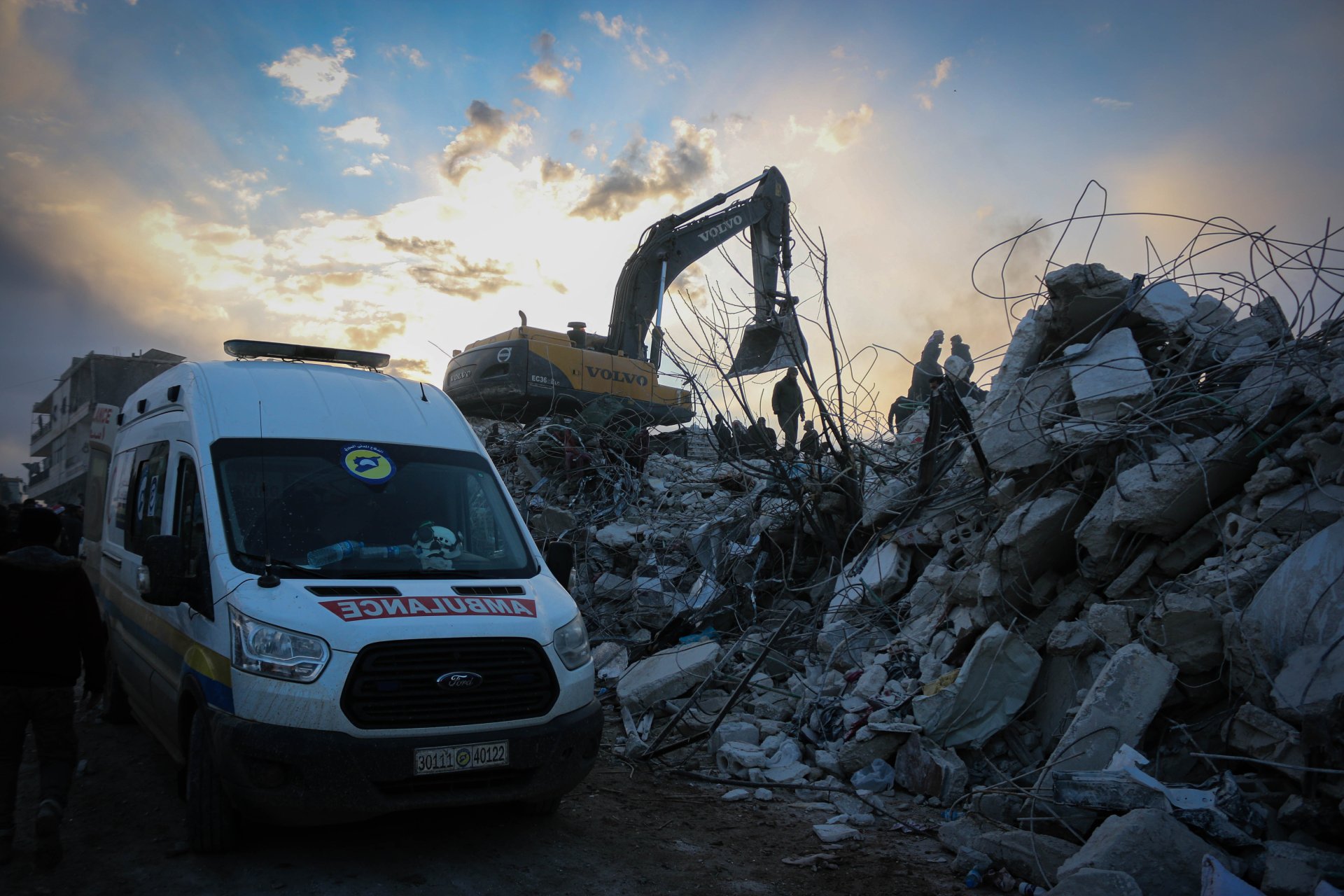
Unpredictable natural disasters, such as earthquakes, can strike without warning. In their wake they leave devastation either directly in the strike zone or by setting off a catastrophic tsunami. While earthquake prediction eludes scientists, they do know most of them come from two regions – and that helps travelers understand how to prepare for an earthquake and respond afterwards.
The global earthquake belt found along the rim of the Pacific Ocean is where more than 80% of the planet’s largest earthquakes occur, earning the nickname “Ring of Fire.” The 9.5 magnitude Chilean Earthquake [Valdivia Earthquake] in 1960 and the 9.2 magnitude Alaska Earthquake in 1964 were sparked in the Ring of Fire, according to the U.S. Geological Survey (USGS).
The Alpide earthquake belt extends from Java to Sumatra through the Himalayas, the Mediterranean, and out into the Atlantic, accounting for about 17% of the world’s most powerful quakes. The 7.6 magnitude Pakistan earth tremor in 2005 killed more than 80,000 people. In 2004, the 9.1 magnitude Indonesia earthquake triggered a tsunami that killed nearly a quarter of a million people. Both seismic catastrophes started in the Alpide belt.
[Related Reading: Working in the World’s Hot Spots]
Humans cannot control earthquakes and earthquake prediction is not possible. But we can take steps to prepare ourselves and respond effectively. By understanding the risks, creating an emergency plan, assembling a disaster supply kit and staying informed, you can enhance your safety and that of your loved ones following an earthquake.
“Global Rescue members are experienced travelers, and careful pre-travel planning is not a new concept for them,” said Harding Bush, former Navy SEAL and Global Rescue security manager. “Our members make themselves aware of all the significant threats and hazards so that they can avoid being caught up in an escalating incident.”
Understanding the Risks
The first step in preparing for an unpredictable natural disaster is to understand the risks specific to the regions you’re visiting for work or leisure. Quakes stemming from the Ring of Fire affect the landmasses enveloping the Pacific Ocean including major tourist destinations like San Francisco, Los Angeles, Tokyo, Mexico City, Lima, and Santiago de Chile.
Shocks triggered in the Alpides earthquake belt rumble through a seismic alley along the major ranges of the Atlas Mountains, the Alps, the Caucasus Mountains, Alborz, Hindu Kush, Karakoram, and the Himalayas. Travelers within these areas are at a higher risk of experiencing a quake in the same way that Caribbean visitors have a greater chance of encountering a hurricane, except that the former is unpredictable, and the latter is not.
No scientist has ever predicted a major earthquake, according to the USGS. “We do not know how, and we do not expect to know how any time in the foreseeable future. USGS scientists can only calculate the probability that a significant earthquake will occur in a specific area within a certain number of years.”
There are earthquake early warning systems, but they don’t predict them. Instead, they detect ground motion as soon as an earthquake begins and quickly send alerts that a tremor is on its way, giving people crucial seconds to prepare, according to experts. If you’re traveling to a quake region it is wise to familiarize yourself with local evacuation routes, emergency shelters, and community response plans.
“The human population of an urban environment presents an enhanced level of risk,” Bush said. “The character of commercial, industrial and residential sprawl can increase the effects of a natural disaster, such as a flood, fire or earthquake.”

Create an Emergency Plan
When traveling overseas internationally, it’s crucial to be prepared for the possibility of an unpredictable natural disaster like an earthquake, which is also a primary trigger in what causes a tsunami, an equally calamitous event. Failing to prepare in advance is a common mistake. Make preparedness a priority to minimize the impact of an earthquake, tsunami or other unpredictable natural disaster.
Here are a few of the most important preparations you can make in advance of a quake or tsunami disaster:
- Valid Identification and Travel Documents – Ensure you have your passport, identification and any necessary travel documents readily accessible. These documents are essential for identification, possible evacuation, and re-entry into your home country. Keep them in a waterproof and secure location, such as a sealed plastic bag within your travel bag.
- Emergency Contact Information – Carry a list of emergency contact numbers, including local authorities, embassy or consulate contact details, and the phone numbers of your loved ones back home. In the event of a disaster, communication networks may be disrupted, so having these numbers readily available can help you seek assistance and inform your family about your well-being.
- First Aid Kit and Medications – Make a compact first aid kit equipped with essential medical supplies such as bandages, antiseptics, pain relievers and any prescription medications you require. Consider the duration of your trip and the availability of medical services at your destination. Having necessary medications on hand can be critical, especially if you have pre-existing conditions.
- Emergency Cash and Backup Cards – Keep a sufficient amount of emergency cash in both local currency and a widely accepted international currency. ATMs and banking systems may be inaccessible during or after a disaster. Additionally, carry backup credit or debit cards in case your primary card gets lost, stolen or compromised.
- Local Maps and Language Guide – Include local maps and a basic language guide. Familiarize yourself with key landmarks, evacuation routes, and shelter locations. A language guide can help you communicate with locals and emergency responders, allowing you to understand instructions and seek help effectively.
- Designate a meeting point if a catastrophic event separates you from your family or group. Determine in advance where to shelter during an earthquake or moving to higher ground during a tsunami. Establish a communication plan to stay connected with loved ones during emergencies. Identify an out-of-area contact person who can relay messages and provide updates.
These items and actions are in addition to the standard travel essentials like appropriate clothing, toiletries and personal items. It’s also crucial to stay informed about the local emergency procedures and listen to instructions from local authorities during a natural disaster. Taking these precautions will enhance your safety and preparedness when traveling internationally.

Avoid Mistakes
Stressful situations can lead to mistakes. The human response to fight, flee or freeze in the face of a sudden disaster can override a deliberative, methodical thought process. It’s important to remain calm and act swiftly to ensure your safety. Some of the biggest mistakes to avoid include:
- Delaying Evacuation – Waiting too long to evacuate is a dangerous mistake. If authorities issue an evacuation order, follow it promptly. Delaying evacuation can lead to being trapped, cut off from necessary resources or rescue efforts, and exposed to greater danger.
- Inadequate Communication – Failure to establish a communication plan can hinder your safety. Lack of communication can result in confusion, separation from loved ones, or missed updates from authorities. Establish a communication plan in advance and ensure everyone knows how to contact each other.
- Insufficient Shelter – Choosing an unsafe location for shelter is a grave mistake. Seek sturdy structures or designated emergency shelters that are away from potential hazards. Avoid seeking refuge in areas prone to landslides, flood zones, or near unstable buildings.
- Lack of First Aid Knowledge – Not having basic first aid knowledge can be detrimental during a disaster. Learn essential first aid techniques to provide immediate assistance to yourself and others until professional help arrives. This knowledge can save lives in critical situations.
- Dependency on Technology – Relying solely on technology for information and communication can be problematic during a disaster. Power outages or damaged infrastructure can render technology useless. Have alternative methods like battery-powered radios and physical maps as backup.
Stay Informed
During a natural disaster, accurate and timely information is crucial. Stay informed through reliable sources, such as local authorities, emergency management agencies, and weather services.
Sign up for emergency alerts and notifications specific to your area. Keep a battery-powered or hand-cranked radio handy to receive updates in case of power outages. “Keep your devices charged. Power could go out for days, weeks or months. It all depends on the local infrastructure,” Global Rescue’s Harding Bush said. “Readiness, swift action and alert decision-making are core characteristics to manage catastrophic situations successfully.”
[Related Reading: Defying Nature’s Wrath: The Daring Choice To Stay During a Hurricane]
If evacuation is necessary, follow the instructions provided by authorities without delay. Stay tuned to news channels or use social media platforms to gather information about evacuation routes, shelter locations and available resources.
How Global Rescue Helps
While we cannot predict or prevent natural disasters, we can take proactive steps to prepare and respond effectively. By understanding the risks, creating an emergency plan, assembling a disaster supply kit, and staying informed, you can minimize the impact of unpredictable events like earthquakes and tsunamis. Remember, preparedness is key, and it is everyone’s responsibility to prioritize safety. By taking these measures, you can enhance your chances of staying safe, protecting your loved ones, and recovering more swiftly in the aftermath of a natural disaster.
If you’re traveling, and there’s a natural disaster, a Global Rescue security membership provides access to our expert team of veteran military special forces and their expertise. Traveling members who cannot evacuate following an earthquake can rely on our security operations teams to provide lifesaving advice, including where to shelter, to extracting you to safety. And since it’s a membership – and not insurance – there’s no claim forms or charges for members. Ever.
Categories:
Press ReleaseAugust 8, 2023
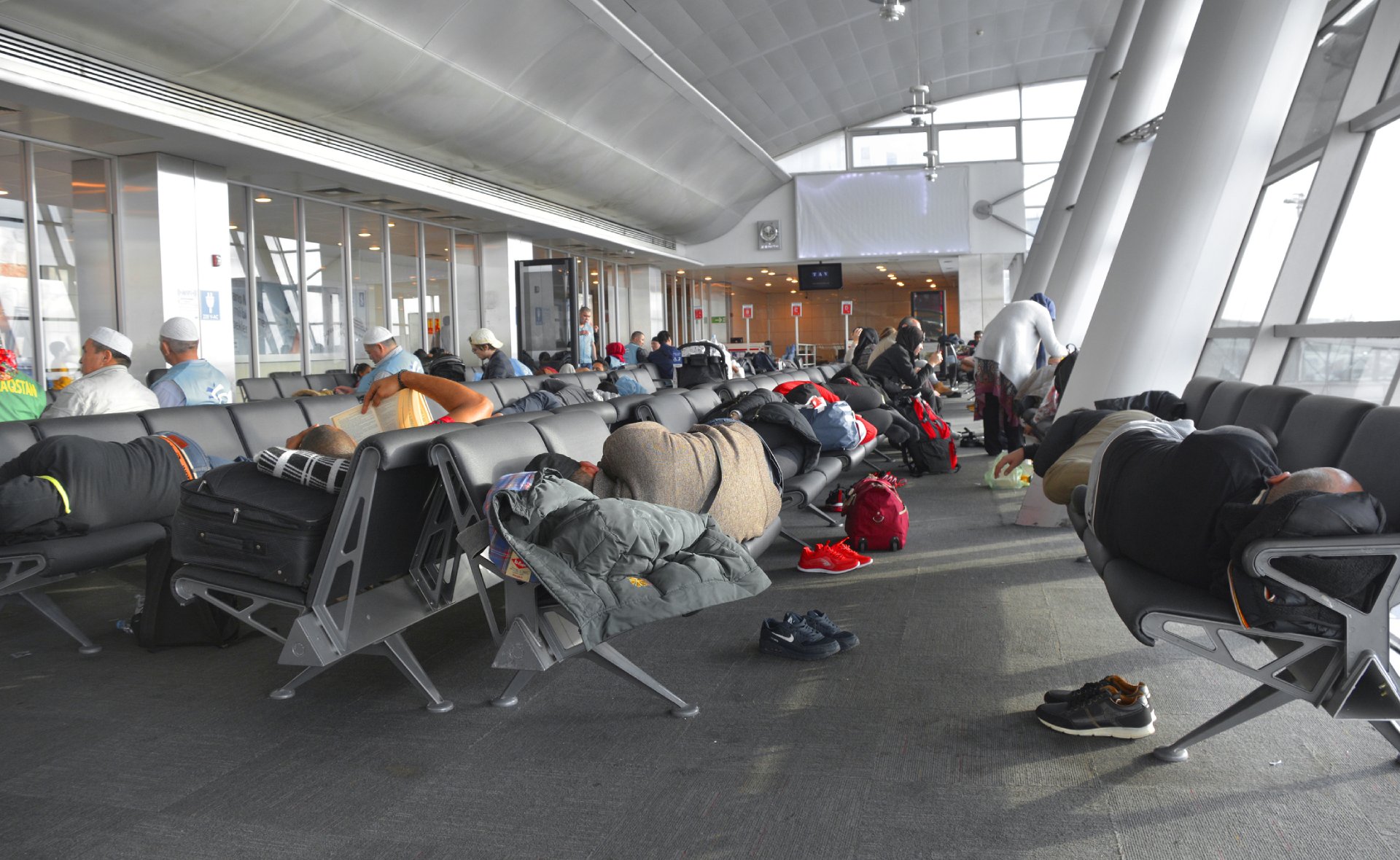
(Lebanon, N.H. – August 7, 2023) Incidents of misbehaving airline passengers remain high, according to the International Air Transport Association. Some aviation experts say many customers have most likely lost patience with airlines over widespread delays and cancellations in recent years. The world’s most experienced travelers overwhelmingly (51%) advised that individuals stranded overnight at the airport should rest, relax and try to sleep, according to the summer 2023 Global Rescue Traveler Sentiment and Safety Survey. Seventeen percent of respondents added that the next best thing to do when stranded overnight at the airport is to take a lively walk for a few minutes every hour.
According to the U.S. Department of Transportation airlines cancelled 1.7% of domestic U.S. flights over the first three months of 2023. While that is much lower than the 2.7% flight cancellation rate for all of 2022, it still leaves nearly 30,000 aircraft on the tarmac due to cancellation.
“Global tourism is on track to rise by 30% in 2023 as travelers make up for lost time due to pandemic-related travel restrictions,” said Dan Richards, CEO of The Global Rescue Companies and a member of the U.S. Travel and Tourism Advisory Board at the U.S. Department of Commerce. “Unfortunately, recurring flight delays and cancellations are disrupting highly anticipated post-pandemic trip plans. It’s understandably frustrating travelers, but I hope a combination of traveler patience and travel industry recovery combine to return global tourism to normal levels.”
Nearly half of the survey respondents (48%) reported the most important thing they would do if their flight was cancelled, no hotels were available, and they had to spend the night at the airport would be to check for airport lounges or sleeping pods that they could rent for the night or a few hours.
“I was at the Charles de Gaulle Airport in Paris facing a flight delay. No one knew how long it would be. I found a sleeping pod to use,” said Meghan Mahoney, a Global Rescue director and avid international traveler. The pod had a bed, desk and chair, and a noise cancellation system. “It was totally private so I could nap in comfort or work. And since I was still at the airport, I could regularly check flight status. The pod was worth every penny for the several hours I needed,” she said.
Sixteen percent said obtaining snacks and water before the airport shops close was essential while 11% believed fully charging their electronic devices was most important along with carrying an in-ear or over-ear headset to cancel out external noise or play calming music. Maintaining situational awareness is essential for personal safety and flight updates. “As a solo female traveler, I never cover more than one ear with a headphone so I can remain audibly aware of my surroundings,” said Josie Daigle, the Global Rescue social media manager.
Contact
Bill McIntyre at bmcintyre@globalrescue.com or 202.560.1195 (phone/text) for more information.About the Global Rescue Traveler Sentiment and Safety Survey
Global Rescue, the leading travel risk and crisis response provider, conducted a survey of more than 2,300 of its current and former members from July 11-15, 2023. The respondents exposed a range of behaviors, attitudes and preferences regarding international and domestic travel.
About Global Rescue
The Global Rescue Companies are the world’s leading provider of medical, security, evacuation and travel risk management services to enterprises, governments and individuals. Founded in 2004, Global Rescue has exclusive relationships with the Johns Hopkins Emergency Medicine Division of Special Operations and Elite Medical Group. Global Rescue provides best-in-class services that identify, monitor and respond to client medical and security crises. Global Rescue has provided medical and security support to its clients, including Fortune 500 companies, governments and academic institutions, during every globally significant crisis of the last two decades. For more information, visit www.globalrescue.com.
Categories:
Health & SafetyAugust 8, 2023

After coming to a near standstill during the pandemic, it seems students are making up for lost time in their pursuit of a study abroad experience. The number of students taking part in foreign study programs is tipping higher than before the pandemic, breathing new life and excitement into programs around the world.
A survey from the Institute of International Education (IIE) highlighted that 98% of reporting institutions offered in-person study abroad or a combination of in-person and online options, a big jump from just 31% in the summer of 2021.
Yet a global pandemic has a way of changing things, and international academic programs are no exception. Here are some examples of how overseas study programs look a bit different following the pandemic.

It’s Not Just About Europe Anymore
While Europe is still the top spot for studying abroad, other regions are growing with Japan, South Korea, Australia, Costa Rica, New Zealand, South Africa, Chile, Argentina, Mexico and Ecuador ranking some of the top destinations in 2023, according to the IIE.
[Related Reading: International Travel for Students and Grads This Summer]
China Is Less Popular
Last year, 350 Americans were studying in China. A dramatic contrast to 10 years ago, when 15,000 American students were studying in China, NBC News reported. The relationship between the countries has become increasingly complicated in the last decade, and the pandemic shutdowns caused enrollment to nosedive further.
Russia Is Not an Option
Russia’s war in Ukraine has largely shut down international study programs in both countries. But for students studying Russian, there’re alternatives. Many Russian study abroad programs have moved to countries previously in the Soviet Union. Harvard’s Russian studies programs have moved to countries like “Kyrgyzstan, Kazakhstan, Georgia, Armenia, and Estonia. These countries provide both an excellent environment for Russian [language] immersion and exposure to their rich cultural traditions.”
Increased Accessibility
The move to virtual study abroad programs highlighted one trait of the typical international studies experience that students and universities both hope to change: inaccessibility.
“As institutions adopted virtual programming, students who were previously unable to afford the experience or unable to travel due to financial, physical, mental health, or other obstacles were suddenly presented with the opportunity to participate,” University Business reported.
Best Colleges shared about potential legislation that would increase accessibility to study abroad programs. The Senator Paul Simon Study Abroad Program Act aims to: increase the number of undergraduate students studying abroad, ensure the demographics of study abroad students mirror the broad demographics of college students in the United States and increase the number of “nontraditional” study abroad locations.

Potentially More Scholarships Available
The Conversation recommended students ask about unused study abroad scholarships from the pandemic if they are looking for financial aid.
“Because study abroad programs were mostly paused for the past few years, the scholarship funds that colleges have dedicated to these programs may have been left largely untouched. Fund balances could be higher now and there may be a possibility to obtain a larger award than in years past.”
More Contingency Planning
If there’s anything the pandemic taught us, it’s that the unexpected can and does happen. That’s why The Conversation recommended students make sure their universities have a backup plan in case the program is disrupted.
For the large part, universities are delivering on this need by maintaining the infrastructure for virtual study abroad programs or offering alternative countries should the destination close down or become too risky for students.
[Related Reading: Medical Evacuation Services for My Child Studying Abroad]
Heightened Awareness of Risks
While COVID-19 restrictions have significantly subsided around the world, there may still be some to be aware of, depending on the destination. The State Department provides a country-specific glimpse at COVID-19 restrictions here.
Students and universities should also be more aware of travel risks besides COVID-19. The State Department’s country-specific resources can be found here.
Elon University’s dean of global education, Nick Gozik, recommended to Volt Magazine that all universities invest in a global health and safety officer to help manage the health and security risks of student travel. It was having an officer in this role, which helped the university’s study abroad program stay afloat—albeit restricted—during the pandemic.
If such a hire isn’t possible, Margaret Wiedenhoeft, executive director at Kalamazoo College’s Center for International Programs, adds that communication between students and sources at home and abroad becomes even more important.
“I don’t believe student safety has directly been impacted by staff cuts in international education offices, but I do think there has been more collaboration among offices both on-campus and with partners overseas,” Wiedenhoeft shared with Volt Magazine. “Everyone contributes to the safety of students whether on- or off-campus.”
Global Rescue: Your partner for Safe Study Abroad
Students and universities alike can rely on Global Rescue to help navigate the complicated environment of today’s international travel.
Our thorough destination reports bring the murkiness of international travel risk into crystal clarity, providing program managers, health and safety officers and students the awareness and confidence to travel to new places.
Our evacuation services are an affordable alternative to paying out of pocket in the event of an emergency—a cost that could reach as high as $250,000, The Conversation reported.
Our on-staff medical team is just a phone call away to help diagnose illnesses, create treatment plans and direct students to vetted, quality health care in your area.
Don’t study abroad without us.
Categories:
Health & SafetyAugust 4, 2023

Artificial Intelligence (or AI) has been around for a while, but not like we see it today. With almost endless ability to interact with us, answer our questions, write speeches, proposals and more, it’s clearly an attractive tool with potential applications across many spheres of life.
But can you use AI for travel? Is an AI travel agent in your future? Do you need an AI vacation planner? What are the pros and cons of AI when it comes to travel and trip planning?
The short answer to all is yes, or at least, maybe. Caveats abound.
Thinking of using AI to help plan your next trip? Take these pros and cons into account as you plan.
The Pros of Planning a Trip Using AI
Cuts down on research time – Trip planning is one of the best places to use AI, as it can simplify your process and cut down significantly on research time.
“Instead of slogging through hours of research, users get similar results with a quick conversation with AI,” Abigail Bassett wrote for National Geographic.
Digital nomad pioneer Olumide Gbenro uses AI to help him plan the practical parts of his life. He built an AI travel guide, which tells him the best places to visit and gives advice on the fastest travel routes.

Provides quick on-the-go advice – Any trip will have its hiccups, and asking AI for help can yield quick results the moment you need them. But how do you ask?
The benefits of using AI are all in how you craft your query.
Bassett recommends being as specific as you can with your question. “The more information you can give, the better your output will be.”
Ross Borden of Matador Network, the company behind GuideGeek, a travel AI chat, told National Geographic, “it’s crucial to ask questions in your native language. AI models can speak and understand many languages, and your grammar matters: The more accurate your punctuation, spelling, and grammar, the better the AI will be able to understand you.”
It’s essential to be specific. For example, we asked AI what the three best places to visit in Ireland are as an American. The answer? Dublin, the Cliffs of Moher, and the Ring of Kerry.
Then we asked AI what the three best places to visit in Ireland are as an American of Irish descent visiting for the first time in October. The answer? Dublin, County Kerry, and Galway.
With AI you get specific responses based on your query, but there’s no follow-up in the way a live agent or an excursion guide would pose additional questions to customize your trip plan.
[Related Reading: How To Travel Today: Plan Ahead and Be Patient]
The Cons of Planning a Trip Using AI
Information may be outdated – The free ChatGPT data is only as recent as September 2021, so its answers may no longer be relevant.
Olumide has seen this in his travels, with AI offering outdated recommendations like attractions or ticket prices no longer available.
For this reason, “experts recommend that travelers use AI as a rough outline or starting point—and not rely on it alone,” Bassett writes.
Lacks human perspective – Olumide said he notices the lack of human perspective in AI results.
“The beauty of reviews for places to travel to is that you hear it from a real person,” he said. “Until it starts taking real reviews and making it part of the AI’s ‘brain,’ it won’t be quite as valuable as real people.”
Might be biased – AI confessed its “systems are only as good as the data it’s trained on. If the data used to train the AI is biased, then the AI will also be biased. This can lead to serious consequences, such as discrimination against certain groups of people or inaccurate predictions.”
Chris Dong for AFAR agrees: “ChatGPT’s inputs aren’t clearly defined, which means the information it offers has the potential to be manipulated. If the proper guardrails aren’t put in place, answers can be heavily influenced by actors who feel like they can game the system.”
“Because of this, AI, in general, is best used as a sort of augmentation of humans,” Hannah Mieczkowski said in AFAR. Mieczkowski is an AI expert who holds a Ph.D. degree in human and AI interaction from Stanford University.
“I don’t believe there’s ever going to be a time in which these AI models are fully self-sufficient,” she added.

Can’t analyze trips for safety or address medical concerns – With an outdated system, AI may recommend travelers visit a country that’s currently in political turmoil but wasn’t back in 2021. It also may not provide accurate medical solutions, such as where to seek medical care in the event of an emergency.
For travelers with disabilities, it may not recommend accessible locations, or it may not be aware that some locations have become more accessible in recent years.
Lacks common sense – “AI systems lack the ability to understand common sense, which can lead to errors or unexpected results,” the system admits.
This gets tricky when planning a trip for a group of people, who may have various needs or desires for the trip. AI will not deliver the nuanced recommendations travelers may need.
Lacks creativity – AI acknowledged it “lacks the ability to be creative and come up with new ideas or solutions that are not part of their programming. This makes it limited in its problem-solving abilities, and it may not be able to adapt to new situations or scenarios.”
This can present problems in trip planning, as AI will tend to recommend generic vacation locations, rather than thinking outside the box to encourage travelers to try something different, while still meeting their travel desires.
“This can have an unintended negative impact on sustainability,” noted Seth Borko in AFAR. Borko is a senior research analyst at Skift and author of an April 2023 report titled “Generative AI’s Impact on Travel.”
“It could make overtourism worse by concentrating tourists rather than dispersing them,” he said.
For a look at these cons in action, read this article by Jordan Waller of The Points Guy, in which he regales his readers with stories from his AI-planned trip to Portugal.
Now that you know the risks, give AI a try as you plan your next trip. But take its answers lightly and don’t miss out on the value of a real, human travel agent to help you plan your dream itinerary.
And as always, Global Rescue is there for your medical and security needs, offering evacuation services AI could never replace.
We told AI we were traveling internationally and asked if we should get a Global Rescue membership. AI said, “Deciding whether to get a Global Rescue membership for international travel depends on various factors such as your destination, activities planned, personal health considerations, and level of comfort with the available local healthcare services. Global Rescue provides emergency medical evacuation and other travel-related services, which can be valuable in certain situations.
Helpful? You decide.
Categories:
Business TravelHealth & SafetyAugust 1, 2023

The pandemic revolutionized the way we work almost overnight. We learned that the “workspace is flexible,” as Panaphorn Khongpasuk put it for Travel Radar. At first, when offices shuttered, this simply meant that we all learned to work efficiently from home. But as restrictions began to loosen, the newfound workspace flexibility granted us unprecedented freedom to travel the world.
As a result, employees today are spending more time than ever on bleisure travel – a new form of travel where people integrate leisure into a business trip, or business into a leisure trip. It’s a trend that existed before the pandemic but has grown significantly since. The Global Business Travel Association’s 2022 report revealed that 82% of employers think their employees are “equally interested (53%) or ‘more/much more’ interested (29%) in combining business travel with leisure” – compared to before the pandemic.
According to the Global Rescue Traveler Sentiment and Safety Survey, 65% of respondents will take part in bleisure travel in 2023, if they haven’t already.
Who’s Bleisure For?
Everyone, with millennials taking the largest share of the pie.
Jeanne Liu of the Global Business Travel Association told the BBC, “it’s people from all different levels: we thought it might be more entry-level, but we found managerial does it as well, although we did find millennials more likely to partake in bleisure than some of their older colleagues.”
Employers are supportive of business travel, Liu said.
“Travel well-being relates to job satisfaction, which means people stay productive and stay longer in their jobs. Being able to take your kids or your family, to add some fun elements to a trip, makes that trip much less stressful.”
[Related Reading: Understanding and Fulfilling Your Duty of Care – Part One]
But employer support doesn’t mean employees have carte blanche to do whatever they want. It’s important to be upfront with your employer. “If you’re not transparent and your employer finds out later you worked in some pleasure on your trip, it might look like you were trying to hide something,” said Stephanie Diamond, Global Rescue’s vice president of Human Capital Management and a veteran international human resources expert. “That’s not the message you want to send. Make sure they hear it from you first — not from fellow colleagues or your Instagram selfies.”

Official Bleisure Policies Prove Tricky
While employers may be generally supportive of travel, Travel Weekly reports that bleisure “still faces hurdles to adoption, chiefly that travel policies don’t clearly spell out what is and isn’t permitted.”
This is another reason to be transparent with your employer so you can learn the company’s travel-expense policies prior to going. For example, what expenses will the company be responsible for versus you?
“The general rule of thumb is that the company will pick up the tab for anything that falls under the business part of the trip — flights, hotels, meals, local transportation — but you’ll be on the hook for anything on the leisure side,” Diamond said. “It’s important to talk it out before you go because you might be surprised to learn that your employer may choose to pay for some select leisure costs — almost like a reward or incentive.”
This is often due to the increased risk inherent in flexible employee travel. Varun Mehra, a senior consultant with CWT Solutions Group shared with Travel Weekly that “companies now feel a much greater sense of responsibility for the safety and well-being of their people, especially when they’re traveling for work.”
Employers carry a duty of care responsibility to take care of their employees and avoid exposing them to any unnecessary or undue risk. Things can get a little blurry when it comes to bleisure travel. Your company’s specific travel risk management policies and duty of care obligations may only apply to the business part of your trip. That means, when indulging in the leisure portion of your trip, you might be liable for your own travel safety.
“Back in 2005, I was in Quito [Ecuador] for business, where I planned to also hike the portion of the Inca Trail,” Diamond said. “If I hadn’t checked in on my company’s policies [Diamond did not work for Global Rescue at that time] , I would not have been protected if an emergency occurred on the trail.”
With these hurdles, the availability of employer-supported bleisure travel may fall short of the demand, so it often happens outside of official company policy.
Yet, while employers may not be able to fully meet the demand for individual employee bleisure travel, many are taking a different approach to the trend: bringing remote offices together in an exotic location for team building. Booking.com reports that “more than half (52%) of employers are currently planning corporate travel trips to bring together employees who now largely work remotely.”
Employees Struggle for Work-Life Balance
Perhaps one unintended consequence of bleisure travel, is that the lines between work and play have blurred, and many find it difficult to fully unplug. This may be why Booking.com’s research revealed an increased preference for work-free travel across several countries between 2022 and 2023.
Nevertheless, bleisure travel remains a hot trend, and the travel industry has come up with creative ways to take advantage of it.

Travel Industry Flexes To Attract Bleisure Travel
As bleisure has grown, so has the effort of the travel industry to attract and accommodate this new type of traveler.
Some bleisure travelers are bringing their families, recognizing the value of connecting with their loved ones while on a work assignment. As a result, “hotel partners are introducing new room types focused on longer stays,” said Nadiya Makarenko, senior vice president of Travel Edge Network, in a Forbes article. “These room types are offered in a variety of price ranges, characterized by apartment elements that allow for long-stay comfort.”
For travelers wanting to soak up the local culture after a long day of meetings, hotels like the W Panama City, keep a detailed calendar of local events for post-work fun. For those adding some vacation days after a work trip, the W Bogota “has created special luxury packages with local experiences for corporate guests extending their stay.”
In Mexico City, the Ritz Carlton has seen an increase in guests bringing significant others on trips. To enhance guests’ experience and encourage extended stays, the concierge staff “create meaningful experiences such as a private visit to a museum or a meeting with a historian at the top suite of the hotel.”
Global Rescue for Safe Bleisure Travel
Perhaps you’re a company tweaking your travel policy to include bleisure. Or you’re a digital nomad, freelance writing from the tropics.
For the employer, remember that employee safety is no longer isolated to work-only situations.
“Your employees’ safety should be important to you whether they’re on business travel, bleisure travel or vacation,” said Dave Leopold, director of enterprise sales for Global Rescue. “If something happens while they’re traveling, it has a negative impact on your business as well.”
For the digital nomad, fears of safety can be a barrier to travel in this increasingly complicated post-pandemic world.
In either case, Global Rescue is the answer. It bridges the gap in office policy around bleisure travel that so many companies struggle with, and allays employees’ and digital nomads’ safety and security concerns as they travel across the world.