
Categories:
Health & SafetyJuly 6, 2023

Have you ever chewed gum in Singapore or given a thumbs up in West Africa? If so, you probably learned quickly you were breaking the law in Singapore and offending your friends in Africa.
The customs and laws of our home country do not travel with us. And if we don’t understand the cultural differences of our destinations, we could be in for some awkward – even dangerous – moments. That’s because cultural differences often go deeper than chewing gum and hand motions (but for more on avoiding such faux pas, read some tips here).
The differences may come down to who we are: our gender, sexual orientation, race and faith. The comfort, acceptance and legal protections that exist in our own country sometimes vanish upon crossing a border. And it’s vital to be aware of how your appearance or lifestyle may fit, or not, into another country.
Solo Female Travelers
Solo female travel is booming, yet female travelers still deal with heightened vulnerability while traveling and must take extra precautions to stay safe abroad.

The U.S. State Department outlines key points to be aware of if you are a female traveling abroad:
Style of Dress: “Cultural differences might be reflected in expectations about women’s clothing and appearance,” the State Department cautions. Be mindful of modesty standards and think twice before you bring clothing that bares your shoulders, is tight-fitting or short. Note that ancient churches and cathedrals often require knees, midriffs and shoulders to be covered, even if it doesn’t matter elsewhere.
Freedom of Speech: While you might be tempted to discuss women’s rights with your travel companions, save those conversations for back home. If you’re overheard disparaging the local government, you could find yourself in a lot of trouble.
Women’s Health: The State Department notes that “each country has its own healthcare system and laws related to women’s health. Countries may criminalize some reproductive health services and may penalize pregnant individuals outside of marriage.”
[Related Reading: 5 Safety Trips for Solo Women Travelers]
LGBTQI+ Travelers
According to the State Department, there are approximately 70 countries around the world that “consider consensual same sex relations a crime, sometimes carrying severe punishment.”
This reality can make travel a daunting prospect for LGBTQI+ travelers. But with research and careful planning, you can plan a safe and enjoyable trip for you and your companions.
IGLTA, the world’s “leading network of LGBTQ+ welcoming tourism businesses” provides a wealth of resources for the queer travel community, including a safety guide, same sex marriage guide, trip planning help, tours and connections to supportive businesses around the world.
While on vacation, the State Department offers these tips to stay safe:
Abide by the laws of the country, keeping in mind that public displays of affection or discussing/promoting pro-LGBTQI+ materials may be illegal.
Be aware of entrapment campaigns where police may monitor specific websites, apps and physical locations for LGBTQI+ activity.
Be thoughtful in making new friends, as “criminals may target or attempt to extort LGBTQI+ foreigners.”
Keep in mind that LGBTQI+ resorts or neighborhoods may be quite segregated, and the culture of surrounding areas may be less hospitable.
Race and Ethnicity
If you’ve traveled to a country where you are a minority, you know you can feel the difference the moment you get off the plane. Especially in countries with less diversity, locals may not hold back in commenting about your appearance, touching your skin or hair, taking pictures of you and asking you questions.
The State Department highlights that race-based intrusions can take an uglier turn in some countries, where officials may profile and detain a person based on their skin color, prohibit them from accessing some hotels and restaurants and restrict their access to health care, for example.
This can be unsettling for travelers, so it’s best to be prepared. Consider if you’re ready for all of the attention you’re likely to receive. Avoid countries where race-based hate crimes are common.
Finally, seek support in your travel planning from a group like Green Book Global, the first ever black travel review website, that will help you find safe and welcoming locations and vendors for your trip.
Faith-based Travelers
Faith-based travelers, whether it be missionaries, humanitarian workers or medical volunteers, can find themselves in tricky situations if they don’t prepare in advance to learn the different cultures of their destination to avoid appearing intolerant or disrespectful.

Harding Bush, senior manager of operations at Global Rescue, emphasizes that preparation is everything and shares these tips:
Start with your sending organization, he says, and find out what they think are the best and worst things that could happen on the trip.
Read the local news to find out about important current events, or civil unrest in the area.
Prepare your devices. Some governments may practice surveillance, and you may put yourself and others at risk with something you post on social media.
If you’re going to a country where the government does not approve of your mission work, remember to keep a low profile.
“Focus on the least controversial parts of your mission when you share what you do and closely follow your organization’s guidelines,” Bush said.
[Related Reading: How To Travel Safely as a Missionary]
Global Rescue: Your Partner in Safe Travel
The cultural complexities of today’s world are vast, and if you’re a traveling minority, thorough preparation and awareness on the ground are vital to a safe and enjoyable trip. Part of that preparation is reviewing the Global Rescue destination report of the country to which you’re traveling. Global Rescue members can obtain detailed destination reports from more than 200 countries and territories. Non-members can get a one-time, free destination report here. These detailed reports will inform and help you prepare for potential cultural, religious or legal issues you may face.
Let Global Rescue – the world’s leader in travel protection – help you plan a safe trip and support you while you’re on the ground. Our deep-dive destination reports help you get a lay of the land before arrival, and our world class medical and evacuation services are there for you in a crisis.
Get a price estimate
Estimate
$0.00
Please answer all questions for estimate.
Categories:
NewsJuly 5, 2023
Categories:
Health & SafetyJuly 3, 2023

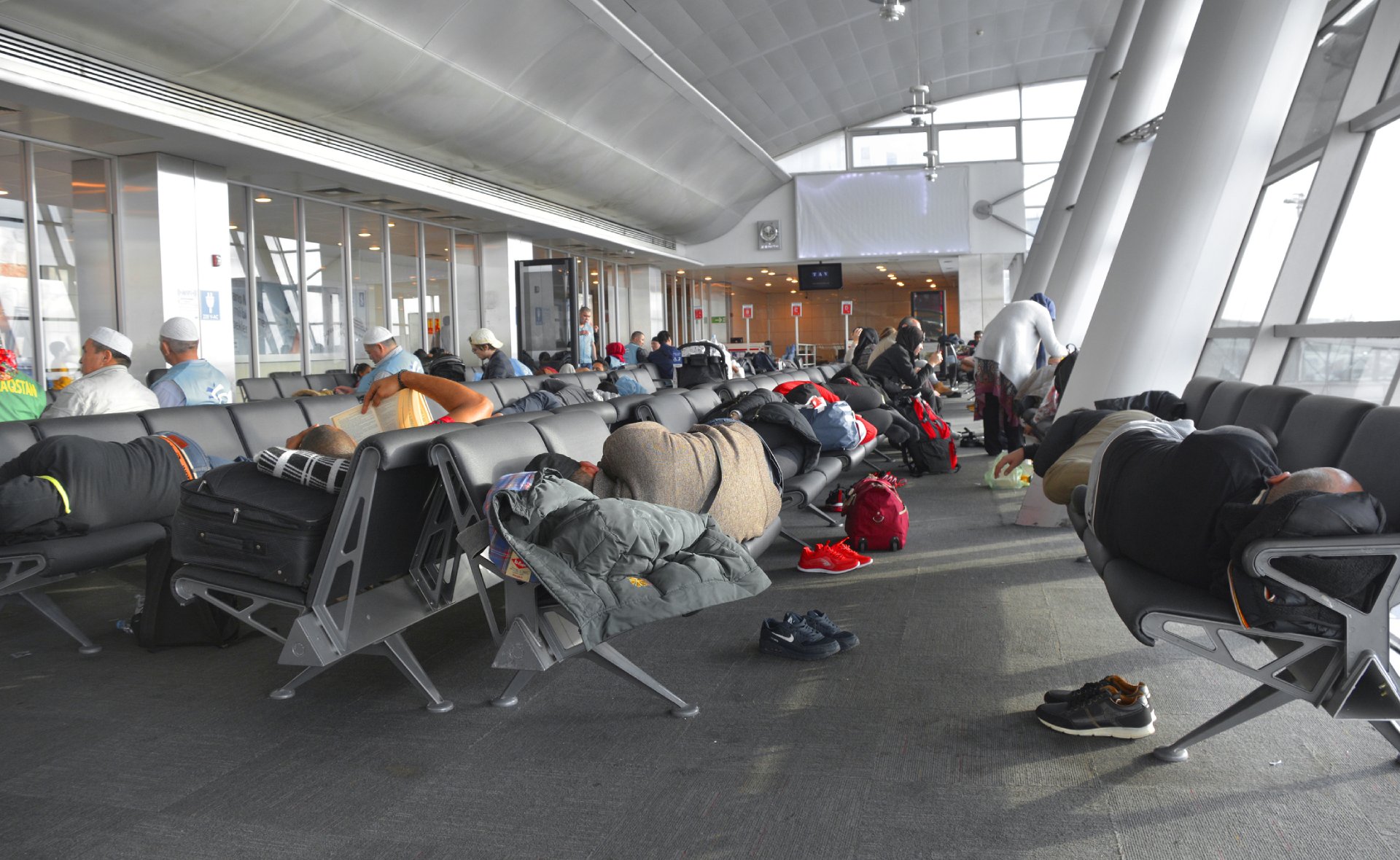
Will a flight cancellation strand you overnight at an airport? How do you make the best of an unplanned overnight airport layover? Can you get a sleep pod? How do you protect your valuables if you fall asleep? What can you do to flip a nightmarish layover into a manageable inconvenience?
According to the U.S. Department of Transportation airlines cancelled 1.7% of domestic U.S. flights over the first three months of 2023. While that is much lower than the 2.7% flight cancellation rate for all of 2022, it still leaves nearly 30,000 aircraft on the tarmac due to cancellation.
Inclement weather, airline industry staffing shortages, hurricanes, tornados, mechanical repair issues, volcanic ash, brushfire particulate and reduced flight schedules caused massive flight cancellations during 2022. Most of these same issues remain except staffing improved and flight schedules are increasing. The combination of those two factors, plus a relatively smooth springtime air travel season, is prompting experts to predict things will get better for air travelers in 2023.
“Most airlines handled the recent surge in spring break travelers relatively well, and the cancellation rate so far this year is down significantly from last year,” according to an NPR report.
[Related Reading: The Ultimate World Travel Safety Kit]
Hopefully, the weather, mechanical jet repairs, natural disasters or changing connection schedules don’t lead to a flight cancellation potentially forcing you into an overnight layover at the airport, especially if a hotel room is unavailable. But they could. So, we asked our Global Rescue travel risk experts and our members – both of whom are among the world’s most experienced travelers – for their tips, tricks and hacks on how to make it through an overnight airport layover.

“I once got stuck in an airport overnight and spent a night on the chair and was freezing,” said Dianette Wells, a longtime Global Rescue member and world travel adventurer. “Now, I always pack a wrap because it’s lightweight, travels well, I can use it as a blanket when it’s chilly or you can even ball it up for a pillow.”
Reconnaissance and Preparation
“I was at the Charles de Gaulle Airport in Paris facing a flight delay. No one knew how long it would be. I found a sleeping pod to use,” said Meghan Mahoney, a Global Rescue director and avid international traveler. The pod had a bed, desk and chair, and a noise cancellation system. “It was totally private so I could nap in comfort or work. And since I was still at the airport, I could regularly check flight status. Thankfully, I didn’t have an overnight delay, but the pod was worth every penny for the several hours I needed,” she said.
- Check for airport lounges or sleeping pods that you can rent for the night, or a few hours. Some offer nap seats with a cover while larger pods include a bed, a workspace, private bathroom and TV. Pod options vary by airport. London Heathrow Airport has YotelAir, the Seoul Incheon Airport has Nap Zones, Helsinki Vantaa Airport has GoSleep pods, and Munich Airport features NapCabs. There are nine U.S. airports that use Minute Suites.
- Look for 24-hour restaurants or cafes where you can grab a bite to eat and pass the time.
- Get snacks and water to stay hydrated before the airport shops close, if you don’t already have these items.
- Fully charge your electronic devices so you can use them throughout the overnight layover. Keep an eye on power sources in case you need to recharge during the night.
- Keep your toothbrush and toothpaste handy, as well as a travel-size bottle of moisturizer or lotion.
- Protect your valuables, especially if you are traveling alone. Put your valuables in your pockets or in a purse or backpack slung across your shoulder. Pull other items as close as possible and put your arm or leg through a strap. It’s not as secure as keeping a waking eye on everything, but it will make you feel better and help you relax. “I carry a daypack with my valuables and use that as a pillow. Money and passport I keep in a waist pouch or neck pouch under my shirt. If you are planning to sleep, set an alarm just so you don’t accidentally oversleep,” said high-altitude climbing legend and Global Rescue Mountain Advisory Council member Ed Viesturs.
Avoid Boredom
“I relied on Spotify Premium to get unlimited listening for music and podcasts when I’ve been stuck at Boston Logan and Glasgow International Airports,” said Rett Carpenter, Global Rescue enterprise sales manager.
- Using mobile apps to download content will help you dodge boredom during a long airport layover or delay. The Oodles app is free and has thousands of books and audiobooks. Spotify Premium is a digital music service that gives you access to millions of songs without ads. The Netflix mobile app gives you access to TV shows and movies from around the world.
- Consider socializing with other stranded passengers to pass the time and make new friends.
- Avoid sitting too long. Get up and take a lively walk for a few minutes every hour or less. Be certain to stretch. Fellow travelers might raise an eyebrow as you do light yoga or other stretches on the concourse, but you’ll feel more comfortable after stretching.

Relax or Sleep
If buying a lounge day pass isn’t an option, find a quiet, but not isolated, place to sleep, suggested Charles McCarthy, a Global Rescue marketing manager and world traveler. “This may even mean moving to a different terminal. I got stuck at Hartsfield-Jackson in Atlanta overnight once. The domestic terminals were a zoo, even late into the evening. The international terminal during that time, however, was relatively quiet, and easy to get to,” he said.
- Aim for rest and relaxation instead of hoping for eight solid hours of sleep. Make your goal to be as relaxed as possible and sleep will likely follow. If not, even the restful, quiet time will help you recharge. Set an alarm so you don’t oversleep.
- Pack a sleep mask to block light.
- Carry an in-ear or over-ear headset to cancel out external noise or play calming music.
- Bring a comfortable travel pillow (inflatable or packable) and blanket to help you. Not everyone sleeps easily in a chair, so consider packing a compact, inflatable pool air mattress (less than $10) to keep in your carry-on bag. If you want to stretch out and the floor is the only place available, simply inflate and lie down on something comfier than the cold, hard terminal floor.
- Carry extra undergarments and a soft exercise shirt in case you get stuck sleeping at the airport. It’s as close to pajamas as you may get and an easy way to tell your brain that it’s bedtime.
- Keep a lightweight, insulated jacket in your luggage year-round. You can drape it over yourself like a blanket and a hood can help block out harsh airport light. Large pockets are perfect for securing valuables on your person while you snooze, and you can stuff the jacket into its own sleeve for a crude pillow.
“As a solo female traveler, I never cover more than one ear with a headphone so I can remain audibly aware of my surroundings. I also learned that some airports have free layover programs. I was stuck at the Incheon Airport in Seoul, South Korea, overnight and was able to do a free three-hour tour of the area first thing in the morning,” said Josie Daigle, the Global Rescue social media manager.
Flight disruptions and cancellations have many causes. Global Rescue members can access Global Rescue services directly from their smartphone using the My Global Rescue mobile app. Download the My Global Rescue app for Apple devices here and Android devices here, and find travel alerts by clicking on destination reports, selecting the country and reviewing available alerts located at the top of the My Global Rescue app under “Events.”
Categories:
Health & SafetyJune 29, 2023

There must have been something in the water in 1994. For whatever reason, Hollywood released two whitewater rafting-themed movies in the same year. First, there was “White Mile,” an HBO movie about a whitewater rafting competition gone horribly wrong, starring three of the most unlikely adventurists show business has ever assembled: Alan Alda, Peter Gallagher and Robert Loggia. You’d be forgiven for not remembering that one. But nary four months later, Universal Pictures made a huge splash with “The River Wild,” an outdoorsy thriller about a family whose mother, an expert river guide played by Meryl Streep, is forced at gun point by killers (Kevin Beacon and John C. Reilly) to help them escape capture by navigating the perilous rapids via raft, including the infamous “Gauntlet.” What a time to be a rafter!
While Hollywood hasn’t done a great job of portraying this adventure sport in the best light, throughout myriad whitewater rafting movies (there are several more) it has occasionally captured the beauty and splendor of the great outdoors, and the sheer power of a wild river.

A Brief History of Whitewater Rafting
For centuries, water has served as a vital means of transportation, with native Americans using rafts and canoes to navigate the extensive waterways of North America. But the origins of modern whitewater rafting can be traced back to pre-American Civil War days when Lieutenant John Fremont and inventor Horace Day embarked on an exploration of Colorado’s Platte River aboard a primitive rubber raft they built to survey the Great Plains and Rocky Mountains regions.
In 1869, Major John Wesley Powell set out with nine others to explore the Green and Colorado Rivers. Although they used wooden boats that were in no way designed to navigate the rivers’ whitewater, the crew became among the first to hold on tight and ride the rapids.
Following World War II, surplus rafts became available, leading to regular trips down western rivers, including the first commercial rafting trip on the Salmon River in the northwestern U.S., and later the Snake River running through the newly constructed Grand Teton National Park.
But it wasn’t until the 1960s that commercial whitewater rafting truly transformed into a popular recreational activity, as outfitters replaced aging military rafts with more advanced inflatable versions.
The next decade saw the introduction of the whitewater rafting-adjacent sport of kayak slalom to the Munich Olympics, which drew significant attention. And in the ‘80s, the equipment, tools and infrastructure used in whitewater rafting continued to evolve, culminating in the sophisticated gear available today.
[Related Reading: Sail Away With Global Rescue on Board]
Whitewater Rafting 101
Modern whitewater rafting involves “putting-in” a large raft upstream of rapids on a fast-flowing river, sitting on the side of the raft with up to nine other people, pushing off and navigating the whitewater ahead. The goal is to try to hang on and remain in the raft, but depending on water conditions, you might get ejected out and pulled back aboard by your guide or fellow rafters. Sounds scary, but falling out can be part of the fun. So much so that it’s often encouraged by the guide once you’ve passed by the bigger sections of whitewater.
Whitewater
What is whitewater exactly? In a river, whitewater – collectively known as breaks, falls or rapids – is the white and opaque frothy water that’s the result of gradient changes to water’s smooth flow that causes turbulence. Rocks, cliffs, fallen trees, bridge abutments, piers or any other obstacles that stand in the way of the water’s free flow will create it. There is a grading system for whitewater called the International Scale of River Difficulty, in which whitewater is classified into six categories from class I (easiest and safest) to class VI (so difficult and dangerous most rafting companies don’t run them). Most rivers used for rafting in North America have a whitewater classification between II-IV.
Rafts
The rafts manufactured to withstand the rigors of whitewater are specialized inflatable boats made of a heavy-duty polyethylene upper and an armor-like polyurethane hull that won’t get damaged by rock hits or scrapes against the river or beach bottom. They’re festooned with handles and D-rings to attach rigging when you need to tie down gear or attach even more “hang on” handles. These self-bailing rafts are typically seven feet wide, 12-14 feet long and can hold up to 10 people.

Other Gear
When you book a trip with a rafting company, you’ll be provided with a few essential items for your ride: a required PFD (life jacket); a rafting or kayak helmet; a wetsuit, depending on the time of year; and a special paddle made with a lightweight shaft, a stiff blade on one end, and a t-handle on the other.
Duration
Depending on the rafting company and the itinerary, trips can range from quick half-day hits to multi-day excursions, with camping, fishing and even yoga activities from which to choose. All equipment and food are either brought along in dry bags on the raft or dropped off by vehicle at designated points on the bank.
Objections
Sure, whitewater rafting is an adventure not for the faint of heart and, though unlikely, it can be dangerous – according to the National Institute of Health, the rafting injury rate is about .55 per 100,000 user days – but overall, it’s a relatively safe sport.
Instead, it’s the rafters themselves who can be their own worst enemy.
“The number one mistake people make when they whitewater raft is forgetting to practice self-care on the river,” said Lauren von Jess of America’s Rafting Company, a Global Rescue Safe Travel Partner. “My advice? Wear sunscreen, drink plenty of water, wear your new river shoes before rafting day to break them in, and bring the right clothing.”
[Related Reading: Summer Water Safety: How To Identify Swimmers in Trouble]
Need More Reasons To Raft?
There are few activities that require such little training and skill to produce such tremendous thrills. If you’re able-bodied, can swim relatively well, listen to directions, wear a PFD and hold a paddle, you can whitewater raft. But ease of entry and adrenaline rushes are only a part of the appeal.
Accessibility
You don’t have to travel to the far reaches of the planet to find the best rapids. There’s whitewater in nearly every region of North America. From California to Quebec, Oregon to North Carolina, if there’s a fast-moving river, chances are there’s a whitewater rafting company happy to give you a ride. But if you do want to travel abroad for an international whitewater experience, there are several famous rivers throughout the world that would give even the most seasoned river guides pause.

Scenery
While you’ll be fixated on the walls of whitewater around you as you work your way through the rapids, there will also be plenty of time to take in the sights, sounds and smells of the deep forests typically surrounding the whitewater rivers. It’s hard to beat seeing a bear on the riverbank from the safe distance of a raft floating downstream.
Conservation Awareness
There’s an instant connection you’ll feel to the natural world as you embark upon your rafting adventure. You’ll have a firsthand experience of a natural waterway, exposed to the beauty and fragility of rivers and their surrounding ecosystems. Witnessing the importance of clean water, outside living and thriving forests and wildlife can foster a deeper appreciation for the environment and what it takes to keep it healthy.
Team Building
There’s a reason so many school trips or corporate retreats feature whitewater rafting. It’s a perfect team-building activity. It’s an adventure that requires a high level of collaboration and communication, trust and mutual support, problem solving and decision making, and leadership and followership. And because of that, it creates strong bonds and camaraderie, as well as personal growth and self-confidence. Plus, it’s just plain fun.
No Restrictions on Activities
Whether you’re braving the rapids of northwestern Maine or navigating the whitewater in Nepal, a Global Rescue membership does not exclude or restrict adventure activities. It’s part of our “No Restrictions” approach to travel. So, grab your PFD and paddle, and hop into the raft for one heck of a wild ride. And who knows? Maybe the next big Hollywood love affair with whitewater rafting is right around the bend.
Categories:
NewsJune 27, 2023
Categories:
Business TravelHealth & SafetyTravelJune 27, 2023

Driving in a foreign country can be a challenge for North Americans visiting destinations where most rental cars feature manual transmission, a gear-shifting system rejected by the overwhelming majority of U.S. and Canadian drivers.
In the U.S., only four percent of drivers use manual transmission, or stick shifting, while 96% drive automatic transmission vehicles, according to a report by the largest used car dealership in the U.S. In Canada, only nine percent of cars available use manual transmission, a massive decrease since the 1980s.
A vacation is not an ideal time to learn how to drive a stick shift. “It can take some getting used to before it becomes intuitive. Stalling is common when you’re starting out, which is why it’s best to get in some driving time before you start trying to navigate congested intersections and early evening traffic,” according to a transmission service company.
[Related Reading: Rent a Car Abroad? Read This First]
The challenge only increases when driving on the left-hand side of the road – and not the right – is the rule, especially if the driver is not used to it.
But there’s some good news. Many rental car companies in Europe now offer a range of automatic transmission vehicles in addition to their manual fleet, particularly in England and Ireland where driving on the left-hand side of the road is the norm.

Speaking of the U.K. and Ireland, they’re not the only countries that drive on the left-hand side of the road. Some 76 countries do the same including India, Japan, Australia, Kenya, Bahamas, Bermuda and many more.
Following are the tips, tricks and pitfalls from Global Rescue’s expert staff, partners and the most experienced travelers in the world to help you adapt to driving on the left-hand side of the road:
- Familiarize yourself with the rules of the road – In many countries the driver’s seat is on the right side of the car, and traffic moves on the left side of the road. Before driving, make sure you understand the rules, such as how to use roundabouts, yield to traffic on the right, and overtake on the right.
- Rent a car with an automatic transmission –-If you’re not used to driving on the left side of the road, it might be easier to rent a car with an automatic transmission. You won’t have to worry about shifting gears with your left hand, and you can focus on driving on the left side of the road. “I drive a manual transmission car in the U.S. so when I first drove one in London, I had to get used to the stick shift on my left. Thankfully the shift pattern is the same, too,” said Bill McIntyre, the Global Rescue communications director who has rented cars in seven different counties.
- Take time to practice – Before driving on busy roads or highways, take some time to practice driving on the left side of the road in a quiet area. This will help you get used to the new perspective and build your confidence.
- Keep your distance – Keep a safe distance from the car in front of you, especially when driving on highways or in heavy traffic. This will give you enough time to react if something unexpected happens. “Lane changes in Africa look a whole lot different than Kansas and could get you arrested in America. Some countries are like the wild west and have no rules at all. Whenever possible, travelers should hire local, trusted transportation. Automobile accidents pose the largest risk to travelers across the world. One of the best ways to mitigate that risk is to avoid driving altogether,” said Adam Bardwell, a Global Rescue security operations supervisor.
- Use GPS or a map – Make sure you have a GPS or a map with you to help you navigate. It’s easy to get disoriented when driving on the left side of the road, especially when you’re not familiar with the area.
- Stay focused – Always stay focused on the road and be aware of your surroundings. Keep your eyes on the road, watch out for pedestrians, and be prepared for unexpected situations. “Driving on the left side of the road on the coast of Ireland with the cliffs on one side and massive tourist buses coming at you from the other direction was scary,” said Meghan Mahoney, a Global Rescue marketing director who has driven on both sides of the road in several countries.
- Follow the traffic flow – Try to follow the flow of traffic and stay in the left lane unless you need to overtake or turn right. This will help you avoid confusion and make your driving experience much smoother. “The biggest challenge of learning to drive on the left-hand side of the road was navigating roundabouts,” said Charles McCarthy, a Global Rescue associate marketing manager reflecting on a trip he took to South Africa. “In the U.S., we head right in a counterclockwise direction, but in countries where you drive on the left-hand side of the road, you enter roundabouts to the left and drive clockwise. And because roundabouts were far more common in South Africa than they were in the U.S. when I was there, I was lacking a general familiarity with them, compounded especially by multi-lane roundabouts, which were everywhere on the major routes.”
- Be mindful of blind spots – When driving on the left side of the road, the driver’s seat is on the right side of the car, which can cause blind spots. Be mindful of this and take extra care to check your mirrors and blind spots before changing lanes.
- Be patient and take breaks – Driving on the left side of the road can be stressful and exhausting if you’re not used to it. Be patient and take breaks, especially when navigating unfamiliar roads or intersections.
Driving on the left side of the road can be challenging for North Americans, but with practice and patience, it can be done safely and effectively.
Driving on the Right Side of the Road
The challenges for travelers who are used to driving on the left side of the road but have to switch to driving on the right side of the road while in North America are similar. Following are tips to overcome the distinctions:

- Different driving laws and road signs – The United States has different driving laws and road signs than many other countries, which can be confusing for foreign drivers who are not familiar with them. For example, speed limits are typically posted in miles per hour rather than kilometers per hour. There are also different rules for turning, passing and merging.
- Different road layout – The road layout in the United States is different from many European countries. For example, many American roads have multiple lanes and are wider than European roads. This can be intimidating for European drivers who are not used to driving on such roads.
- Different driving culture – The driving culture in the United States is different from many European countries. For example, American drivers may be more aggressive and less patient than European drivers, especially in urban areas, which can be stressful for European drivers who are not used to this type of driving culture.
- Different types of vehicles – American cars are typically larger and more powerful than many European cars. This can be intimidating for European drivers who are not used to driving such vehicles, especially if they are used to driving smaller cars.
Overall, driving on the right side of the road can be difficult for anyone used to driving on the left side of the road, and vice versa Again, practice and patience are the keys to minimizing the challenges so you can enjoy the drive and your travels.
Do You Need an International Driving Permit?
The countries that require an International Driving Permit (IDP) can vary, and it depends on the country you plan to visit and your country of origin. The U.K., Ireland, and Cyprus do not require an IDP for visitors who hold a driver’s license from most countries, including the U.S., Canada, Australia and New Zealand.
[Related Reading: Driving Safely Abroad]
Most European countries recognize and accept the IDP including Japan, South Korea, Thailand, Indonesia, Vietnam, Malaysia, India and China.
If you live in the United States or Canada, you can get an International Driving Permit (IDP) from either the American Automobile Association (AAA) or the Canadian Automobile Association (CAA).
Be aware that specific requirements can vary based on each destination, so it’s best to check with the embassy or consulate of the country you plan to visit to confirm whether you need an IDP. Some rental car companies may require an IDP, even if it’s not legally required in the country you’re visiting. Check with your rental car company to see if they have any specific requirements.
Motor vehicle crashes—not crime or terrorism—are the number one cause of nonnatural deaths among US citizens living, working or traveling abroad. While car accidents cannot be fully predicted or prevented, preparation can help avert unfortunate situations. Whether you’re seeking advice or immediate medical or security assistance, Global Rescue operations centers are staffed 24/7/365 to assist our members. Click here to contact us about the benefits of membership.
Categories:
NewsJune 26, 2023
Categories:
NewsJune 21, 2023
Categories:
NewsJune 15, 2023
June 15, 2023
No one likes discrimination, unfair bias or injustice and, according to world-renowned author Mark Twain (or Samuel Clemens, if you want to be precise), travel is a remedy.
“Travel is fatal to prejudice, bigotry, and narrow-mindedness, and many of our people need it sorely on these accounts,” he said. That’s important tourist information. If anyone was a fan of bold travel and curious journeys, it would be Twain.
“Broad, wholesome, charitable views of men and things cannot be acquired by vegetating in one little corner of the earth all one’s lifetime,“ he said.
An important part of travel is the responsibility each traveler bears at every destination. Are you dressed inoffensively? Is your behavior appropriate for the region? How you present yourself in foreign localities reflects on your homeland, but it also stirs reactions from the local population that could be helpful or provocative. First impressions are lasting impressions. That means travelers should do the research to know and understand the little things about the customs and culture of your destination.
Do you look and act like a tourist? If so, it can produce assumptions that you are inexperienced, naive, lacking cultural awareness, and wealthy. Standing out as a tourist can make you appear vulnerable and an easy target for scams, pickpockets and other types of crime. By blending in you reduce the risk of local criminals or scam artists spotting you as a foreign traveler and targeting you for fraudulent schemes or petty crimes.
[Related Reading: How To Travel Today? Plan Ahead and Be Patient]
Global Rescue members and our intrepid staff are among the world’s most experienced travelers. They have summited the tallest Himalayan peaks, visited world-famous museums, dived in the deepest underwater caves, cruised the Nile River, fished far-flung waterways, toured the Colosseum in Rome, and traversed vast arctic tundra. Along the way, they have experienced the new and the strange. They have occasionally bungled interactions, suffered accidental slip-ups and mistakenly goofed up a social custom or two. Above all, they listened and learned the do’s and don’ts of world tourism – and how not to look like a tourist.

So, we asked them to share what they’ve learned. Here are some pro tips that will keep you safe and get you closer to Twain’s “bold, wholesome, charitable view” of the world we live in and share.
Behavior
- Stature and Purpose: Always look like you know where you’re going, even if you don’t. If you must look at a phone app, do it discreetly and in a way that others don’t think you’re looking at a map.
- Public Transportation: Use public transportation like the locals. Be certain to read and understand the bus routes and metro train schedules before you go and have the correct currency or pass for the fare. Using public transportation is a great way to blend in with the community and save money. It is also a fun and smart way to explore a city’s neighborhoods and get a sense of the local way of life.
- Hide the Map: Holding a map in the street is a tell-tale sign you are a tourist. Familiarize yourself with a local map before leaving your hotel room and plot your route ahead of time using Google Maps (or similar).
- Go Anti-Selfie: Leave the selfie stick at home. Avoid taking selfies, especially in crowded touristy areas. Not only will you reduce your “I’m a tourist” signature but you’ll also be part of a trendy anti-selfie movement.
- Be Quieter: Are you too loud? Many tourists are. It’s why they’re often perceived as being obnoxious. Be mindful of your volume and avoid drawing attention to yourself.
Appearance
- Modest Clothing: While traveling in conservative destinations avoid skin-revealing clothing. It’s important to blend in with residents and behave in a way that shows respect for their culture and way of life. Don’t try to be what you’re not. If dressing like a local means wearing clothing that doesn’t fit your ethnicity, then don’t do it. Avoid brightly colored clothing since it attracts more attention than wearing more muted tones.
- Casual Here Is Slobby There: Most countries are more formal than the U.S. Gym gear, yoga garb, sweats and anything that looks like you just rolled out of bed or came from a workout is offensive in most other cultures.

- Avoid Certain Imagery and Words: Religious or provocative imagery, curse words, profanity, sports teams, political brands and national flags are all potentially offensive, disrespectful or confrontational. Don’t wear it, if possible.
- Bling, Bezzle and Ice: Jewelry, especially flashy jewelry for men or women, stands out wherever you’re traveling. Tone it down or, better yet, opt for costume jewelry, less showy watches, necklaces and bracelets.
- Cameras: Leave your camera at home. Not only does an expensive camera provide a thief or mugger with a target, but it also draws attention to you and clearly signals that you’re not from the area and makes you an easy mark.
- Backpacks and Large Purses: Backpacks, knapsacks, shoulder bags and large purses are heavy and unwieldy for touring around town. They’re also easy targets for bad guys to snatch, grab or pick. Better options are cross-body bags or sling bags (if you must).
- Passport Holders. Wearing a passport holder with a cord around your neck makes you easily identifiable as a tourist. If you do have one, wear it under your top layer.
- White Sneakers: This one is a bit of a head-scratcher if you’re from the U.S., but white, lace-up tennis shoes or sneakers with Velcro on them not only mark you as a tourist but an “American tourist.” Pick appropriate footwear for your destination and if you wear sneakers, avoid the white ones.
Observe, Respect Local Customs
When you’re visiting a new country, it’s essential to respect the local culture and customs. Behaving like a tourist can be seen as disrespectful and offensive to locals. Try to learn about local customs to show respect for the local culture. Here are a few examples of destinations’ customs that may seem unusual for your home country.
- Tipping: Tipping in Japan is considered rude, and there’s no need to tip at restaurants in Denmark. Meanwhile, and a 20% gratuity is expected in the United States.
- Cab and Taxi Rides: While it’s normal, even required, to sit in the back of a cab in the U.S. it’s different in Australia, New Zealand, parts of Ireland, Scotland, and the Netherlands where it’s considered rude not to ride shotgun.
- Thumbs Up? If you’re trying to say, “Awesome” with a thumbs-up hand sign be careful in countries like the Middle East, Latin America, Western Africa, Russia, and Greece where it has the same meaning as holding up your middle finger in the U.S.
- From America? Are you an American traveling in South America? Be careful. Telling someone from South America that you’re from America, rather than the United States, can be seen as arrogant and offensive since it implies that only the U.S. should be considered America and that South America is unworthy of the label.
Making an international faux pas by not being aware of cultural differences and similarities in the country you’re visiting could ruin a trip. A fifth of Global Rescue members admits being unintentionally culturally insensitive is their biggest worry.
[Related Reading: Expert Tourists Reveal Their Top Travel Mistakes]
They know that looking or behaving like a tourist sometimes can hurt their travel experience. But, by blending in with regional inhabitants and respecting the local culture, you can avoid looking and acting like a vulnerable traveler and have a more authentic and enjoyable travel experience.
Categories:
Business TravelJune 15, 2023

Business travel is predicted to surge and “bleisure” travel has taken off, according to the Global Rescue Spring 2023 Travelers Sentiment and Safety Survey.
Seventy percent of business travelers responding say their work-related travel will match or exceed pre-pandemic levels in 2023.
The majority of business travelers taking the survey (65%) will include bleisure travel, adding extra days to their business trip for personal or leisure activities.
[Related Reading: How To Get the Most Out of Your Bleisure Travel Trip]
More than half of responding business travelers (55%) will travel both domestically and internationally for business compared to a year ago when nearly three-out-of-four respondents (72%) had not traveled abroad for business or did not have plans to do so.

“The business traveler mindset has changed, and employer attitudes have shifted, too. Face-to-face meetings are more effective at establishing and maintaining relationships than virtual meetings. It’s no surprise that domestic and international work-related travel is rising along with bleisure travel,” said Dan Richards, CEO of The Global Rescue Companies, the world’s leading provider of medical, security, evacuation and travel risk management services.
As business travel increases, so do the challenges facing employers, especially following the pandemic and the rise of remote work. “The biggest management challenge in this evolving environment will be how duty of care plays a role in protecting a location-independent workforce. They have to ask themselves if a set of rules or policies designed to maintain their health, safety and well-being while working is in place,” Richards said.
The overwhelming majority of business travelers surveyed (72%) say they do not have or do not know if they have a duty of care policy in place.
The majority of the 28% of business travelers who say they have duty of care provisions in place have trouble listing what the plan includes.
More than half say their policy includes pre-trip destination planning and health alerts. However, fewer than half say security, travel tracking and alerts were available during the trip.
“Corporate leaders carry a duty of care responsibility to their employees, to take care of them and avoid exposing them to any unnecessary or undue risk. As more workers become location-independent and include bleisure in their business travel trips, the more the firm’s duty of care policies must evolve,” Richards said.