Categories:
NewsDecember 5, 2022
Categories:
Health & SafetyDecember 1, 2022
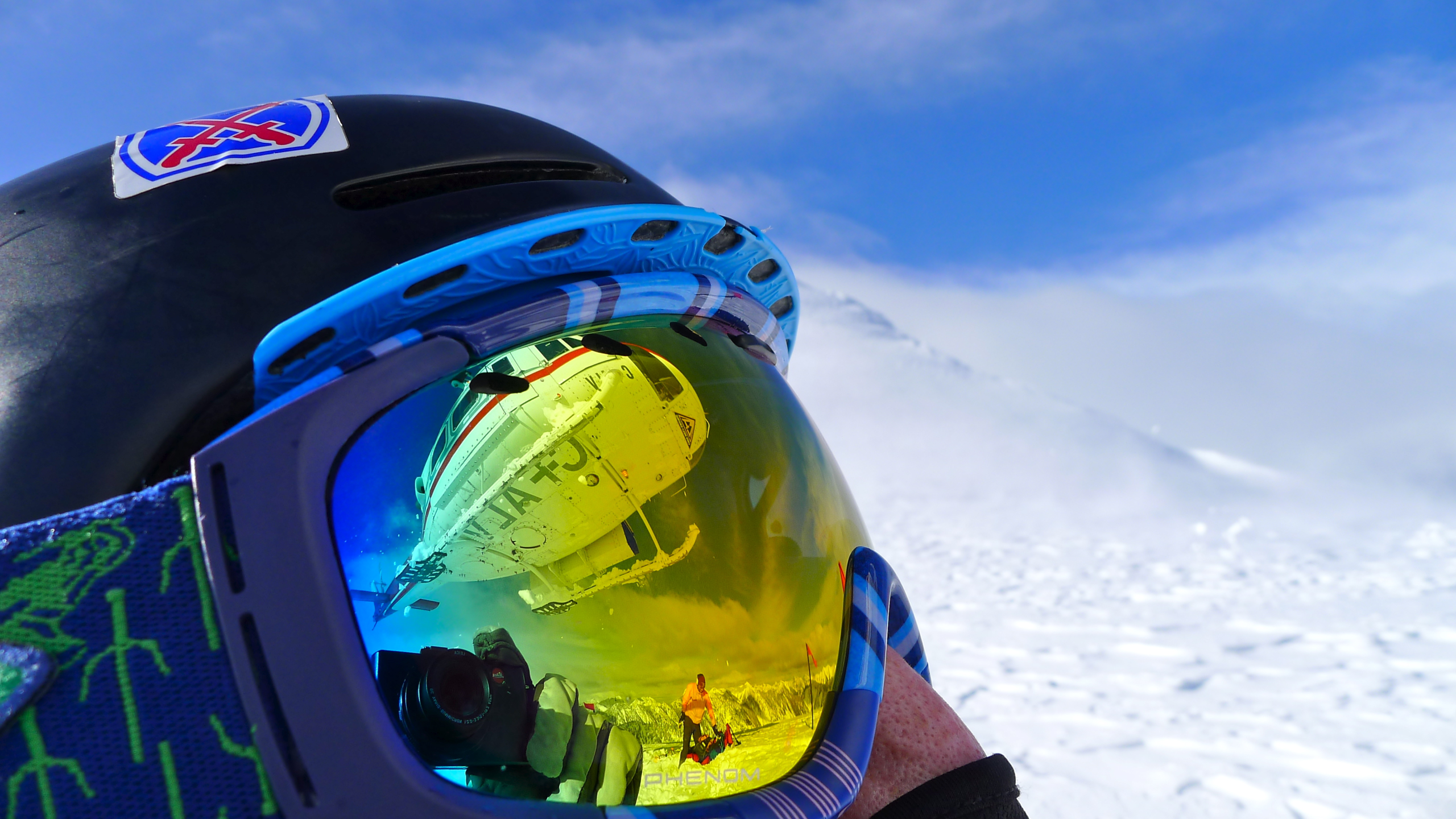
Mark Pattison, a former NFL player, successfully climbed Mount Everest in 2021 despite suffering from a case of snow blindness on summit day. He couldn’t see out of one of his eyes.
“When we woke up that morning and started our climb at 12:30, it was awful, we had snow and sleet coming across, blowing hard. All of that resolved itself around 4:30 in the morning and we had a beautiful sunrise, my problem is that I ended up getting snow blindness.”
He summited Mount Everest, capping his campaign to climb the Seven Summits as part of an epilepsy awareness campaign. Pattison documented his crusade in the Emmy Award-winning NFL 360 film “Searching for the Summit.”
Pattison was lucky. Snow blindness, a painful eye condition caused by overexposure to the sun’s ultraviolet (UV) rays, can happen in a matter of minutes.
Remember racer Doug Swingley, who removed his goggles during the 2004 Iditarod sled dog race for a quick look ahead? His vision became extremely blurry, according to the American Academy of Ophthalmology, and he had to leave the race to receive medical treatment.
Fortunately, snow blindness is not usually permanent and it’s often short-lived. The symptoms are caused by temporary damage to the cells on the surface of the eye. If there is vision loss, it typically resolves in 24 to 72 hours. If it doesn’t, contact your doctor immediately.
Snow blindness doesn’t occur only in the polar region. It can affect anyone enjoying snow sports —hiking, snowshoeing, skiing and snowmobiling — in the bright sun.

A Sunburn of the Eye
There’s a reason you squint in the sun. It’s your body’s way of naturally protecting itself.
“The sun’s ultraviolet rays can burn the cornea of the eye, causing irritation, pain and blurred vision,” said Jeff Weinstein, a paramedic and a Medical Operations supervisor for Global Rescue.
With the name — snow blindness — you would think those most at risk are the adventurer travelers outside in snowy terrain, across a snowfield or in a high-altitude winter environment without proper eye protection. And you’d be right; fresh snow reflects about 80% of UV radiation.
Water and white sand are also reflective, so spending a day on the ocean or lake also puts you at risk. Your eyes are prone to sunburn from a direct hit from the sun combined with the reflection of the sun from the water or sand.
Location and Season Make a Difference
Of course, you’ll want to protect your eyes at noon during the summer, when solar UV light is at its strongest. But where you are located on the earth matters as well.
According to a study in the Journal of Postgraduate Medicine, when you compare summer in the Northern hemisphere versus the Southern hemisphere, the Northern hemisphere is 1.7% farther away from the sun than the Southern hemisphere, and the intensity of UV light decreases by approximately 7%. Quebec in the summer, for example, will have a lower risk of snow blindness than Madagascar in the summer.
High altitudes also make a difference because there is less distance for the light to travel and the thinner atmosphere filters less UV radiation. According to the World Health Organization, UV levels increase by 10% to 12% with every 1,000 meters increase in altitude. Cloud cover, latitude and ozone levels are additional factors determining how much UV light reaches your eyes.

“Skiers in New England can get away with skiing with just sunglasses in fair conditions on a sunny day,” Weinstein said. “Once the wind kicks up stirring snow and other particles, goggles will be needed to protect your eyes from micro-debris damage as well as harmful UV rays. Goggles provide better protection against UV light, wind and debris.”
Symptoms and Recovery
Just like a skin sunburn, by the time you notice the damage to your eyes, it’s too late. According to The College of Optometrists in London, 6 to 12 hours after exposure, the eyes become red, painful, watery and sensitive to light. Additional snow blindness symptoms include:
- Burning eyes
- A gritty feeling, like there is sand in your eye
- Blurred vision
- Red and swollen eyelids
- Headaches
- Glare and halos around lights
To aid recovery, a doctor may prescribe eye drops or pain relief tablets to make the eyes more comfortable while they heal. A doctor may also recommend:
- Staying indoors to let your eyes heal before going back outside
- Keeping eyes well moistened with artificial tears
- Placing a cool, damp washcloth over closed eyes
- Removing contact lenses
An Ounce of Prevention
Alaska’s indigenous people knew the dangers of the sun. In the Smithsonian, you’ll see snow goggles made out of a piece of bone or wood with a strip cut into the center to reduce glare and protect eyes from injury. Today, outdoor adventurers can stop by a sporting goods store to purchase full coverage, mirror-coated sunglasses, glacier goggles with polarized lenses or tight-fitting snow goggles.
Here are a few additional suggestions to keep your eyes safe from snow blindness:
- If you participate in water or snow sports, invest in quality, wraparound sunglasses with photochromic lenses (lenses that darken upon exposure to light).
- Wear sunglasses that block out 100% of UV rays whenever you plan to be outdoors for more than three hours at a time.
- Remember reflective glare from sand, water and snow can still harm your corneas even when the weather is overcast.
As a rule, the view may be gorgeous but please keep those goggles or sunglasses on at all times.
How Global Rescue Can Help
Traveling to a sun-drenched or snow-covered location? Sign up for a travel protection services membership. Whether you are on the top of Aconcagua or in the middle of the Indian Ocean, you’ll have access to 24/7/365 medical advisory services, field rescue from the point of injury, and medical evacuation to the nearest hospital or home hospital of choice. And even if you’re skiing at your local mountain, Global Rescue’s memberships now include Local Field Rescue services within 100 miles of your home.
Get a price estimate
Estimate
$0.00
Please answer all questions for estimate.
Categories:
NewsNovember 30, 2022
Rescue and medical evacuation teams are standing by
to assist travelers who may need field rescue, medical evacuation or medical advisory.
Lebanon, NH – November 29, 2022 – Global Rescue operations experts are standing by to assist travelers who may need field rescue, medical evacuation or medical advisory due to the volcanic activity reported at Mauna Loa, a wide volcano that makes up more than half of the Big Island of Hawaii, rising 13,681 feet above sea level.
According to the U.S. Geological Service Volcano Notification Service (USGS VNS), the eruption of Mauna Loa has migrated from the summit to the Northeast Rift Zone where fissures are feeding several lava flows.
“Global Rescue’s intelligence and operations teams are monitoring the event and will report unsafe sulfur dioxide levels in the area in case air quality decreases,” said Dan Richards, CEO of Global Rescue, the leading provider of medical, security, evacuation and travel risk management services.
Travelers are advised to monitor developments as conditions can change rapidly and with little notice. “Lava flows are not threatening any downslope communities and all indications are that the eruption will remain in the Northeast Rift Zone. Volcanic gas and possibly fine ash and Pele’s Hair may be carried downwind,” according to USGS VNS reports.
“Flight disruptions or evacuations may be ordered if the situation escalates. Travelers should be prepared to utilize any means necessary to exit the affected region, including air, sea and land travel. Monitor local media, government alerts and airport notices to stay informed as the situation develops,” said Harding Bush, a former Navy SEAL and manager of security for Global Rescue.
“Travelers should check with the airlines and see if they are still able to fly to their destinations. Volcanic ash is a dangerous element of a volcanic eruption. The ash can damage aviation equipment, it’s very fine and can damage jet engines. Ground vehicle transportation may be affected, too, for the same reasons,” Bush said.
Volcanic ash near a flight path shuts down all aviation. In 2010 a volcano eruption in Iceland shut down air travel in Europe for a significant time.
“Travelers have learned that anything can happen during a trip, especially since the pandemic. Their mindset has made a tectonic shift, moving travel protection for emergency evacuation from ‘optional’ to ‘obligatory’. Travelers learned that emergency rescue and evacuation services are often essential, whether it’s due to COVID-19, a natural disaster, civil unrest or simply needing emergency help when you’re traveling,” Richards said.
###
Contact Bill McIntyre at bmcintyre@globalrescue.com or 202.560.1195 (phone/text) for more information.
About Global Rescue
Global Rescue is the world’s leading provider of medical, security, evacuation and travel risk management services to enterprises, governments and individuals. Founded in 2004, Global Rescue has exclusive relationships with the Johns Hopkins Emergency Medicine Division of Special Operations and Elite Medical Group. Global Rescue provides best-in-class services that identify, monitor and respond to client medical and security crises. Global Rescue has provided medical and security support to its clients, including Fortune 500 companies, governments and academic institutions, during every globally significant crisis of the last two decades. For more information, visit www.globalrescue.com.
Categories:
NewsNovember 28, 2022
Lebanon, N.H. – November 28, 2022 – The 22nd World Travel and Tourism Council (WTTC) kicks off its Global Summit in Riyadh, Saudi Arabia today. The annual Global Summit continues through December 1st and is the most influential travel and tourism industry event hosting industry leaders and key government representatives. The largest in-person gathering of Minsters of Tourism and CEOs of tourism companies continues to align efforts to support the sector’s recovery and move to a safer, more resilient, inclusive, and sustainable future.
Event Strategic Sponsor, Global Rescue, the world’s leading provider of medical, security, evacuation and travel risk management services to enterprises, governments and individuals, is on-site managing, monitoring, supporting and responding to any medical requirement.
Dan Richards, CEO of Global Rescue, presents at the “Enhancing our Resilience” panel. Travel and tourism have been able to bounce back from crises in an increasingly agile fashion; with crisis recovery time decreasing from 26 to 10 months between 2001 and 2018. However, he sees the need for much greater preparation for inevitable future disruptions.
“We’re one mutation away from another pandemic yet the travel and tourism industry – and the governments of most countries – have been slow to implement learnings from the last pandemic. While serving on the U.S. Travel and Tourism Advisory Board at the Department of Commerce, I helped author recommendations to improve industry resilience – the most important of which is the need for greater public-private partnerships for preparedness and prevention,” Richards said.
Arnie Weissmann, editor in chief at Travel Weekly, moderates the “Enhancing our Resilience” session, seeking insights from panelists Hon. Edmund Bartlett, Minister of Tourism, Jamaica; Hon. Sylvestre Radegonde, Minister for Foreign Affairs and Tourism, Seychelles; Robin Ingle, Chief Executive Officer, Ingle International Inc; Debbie Flynn, Managing Partner, Global Travel Practice Leader, FINN Partners; and Richards.
“The pandemic was an unprecedented challenge for the travel industry, and the global response was remarkable, overall. The ongoing challenge for the travel and tourism industry is the preparation, management and coordination of the resources needed to mount an effective response for the next big challenge. By working together, we will be able to further improve the sector’s resilience to systemic shocks,” Richards said.
###
About Global Rescue
Global Rescue is the world’s leading provider of medical, security, evacuation and travel risk management services to enterprises, governments and individuals. Founded in 2004, Global Rescue has exclusive relationships with the Johns Hopkins Emergency Medicine Division of Special Operations and Elite Medical Group. Global Rescue provides best-in-class services that identify, monitor and respond to client medical and security crises. Global Rescue has provided medical and security support to its clients, including Fortune 500 companies, governments and academic institutions, during every globally significant crisis of the last two decades. For more information, visit www.globalrescue.com.
Categories:
Business TravelHealth & SafetyPlaces & PartnersNovember 23, 2022
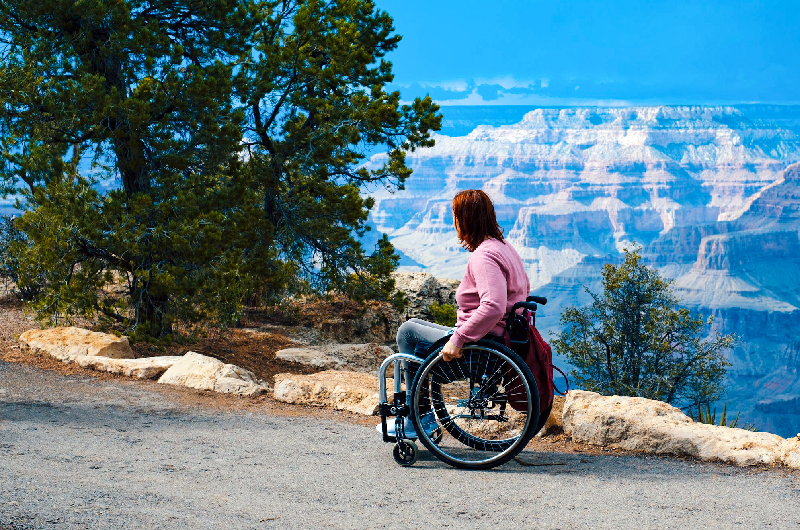
If you are traveling with a disability, planning a trip—especially internationally—can be met with daunting obstacles. Disabled travel is a reality experienced by most of the millions of disabled people who travel each year.
A recent report by MMGY Global, Portrait of Travelers with Disabilities: Mobility and Accessibility revealed that “nearly all (96%) of more than 2,700 respondents to the survey (those who either have a disability and use a mobility aid or a caretaker)…have faced an accommodation problem while traveling, experienced flight problems (86%) or have had in-market transportation problems (79%),” as reported by Travel Weekly.
Accessibility challenges can happen at nearly every stage of the travel journey from transportation to lodging to seeing the sites. This is especially true if traveling internationally where accessibility can vary dramatically by country and even within a country.

John Sage, founder of Sage Traveling—a travel company specializing in disability travel in Europe—knows this well. He’s traveled to more than 140 European cities in a wheelchair, assessing the accessibility of each location.
“In general, older cities and older parts of cities have more accessibility challenges,” he says. “These are often the most desirable parts of the city for tourists so accessibility challenges can be common. Finding an accessible bathroom in Paris’ Left Bank is challenging because many are located downstairs. Edinburgh’s Royal Mile has a significant slope to it. Florence’s cobblestones present challenges for many disabled visitors.”
Amanda Burrill, a Global Rescue member who lives with a traumatic brain injury, also has an unstoppable zest for travel and makes adjustments based on her needs to ensure a successful trip.
“I allow myself extra time when traveling to or from a place because it can take me longer to read and process signs,” she said.
If you are traveling with a disability, here are some tips from Sage and Burrill, based on their experience:
- Get organized in advance. Everything is going to take so much longer than you think because there is more to consider if you are traveling with a disability, Burrill says. Getting your paperwork together—such as for a visa—can save you a headache later. In Sage’s experience, “the more accessibility research you do, the more accessible your trip will be!”
- Hire an accessible travel specialist, like Sage Traveling. If you are not confident in the accessibility of a location, “enlist the help of a knowledgeable accessible travel specialist to ensure a smooth experience,” Sage says.
- Book hotels far in advance. Sage notes that hotels usually only have 1 or 2 accessible rooms, so booking them at least nine months in advance can help you secure one at a reasonable price.
- Pre-download locations on your phone, especially hospitals. Before Burrill travels to a location, she uses Google Maps to chart where the local hospitals are, should she need help.
- Build in necessary breaks. Due to the nature of her injury, loud noises and large groups of people can be particularly exhausting for Burrill. When she travels to a city, she builds in plenty of time to rest and recover at her hotel.
There are many other ways to make your trip go smoothly. Read Sage Traveling’s top 10 Europe Handicapped Travel Tips here.
The U.S. Department of State shares the following tips for preparing for travel, which include additional resources for those traveling with disabilities:
- Consult your travel agent, hotel, airline, or cruise ship company to learn about services during your trip and your destination, including specific requirements for service animals. View Mobility International USA’s tip sheet for Guide Dogs and International Travel.
- Call the Transportation Security Administration’s (TSA) helpline for travelers with disabilities and medical conditions at 855-787-2227 (toll-free) to request assistance with the security screening process, or check TSA’s website, TSA Cares. They can answer questions about screening policies, procedures, and security checkpoints.
- Check websites such as Mobility International USA to find overseas disability organizations.
- Read Section 6 of the State Department’s annual Human Rights Report for information about the human rights and social service framework protecting the rights of individuals with disabilities in your destination country. (U.S. Department of State)
The transportation and Security Administration offers customized advice, based on your specific needs. You can visit their website here.

All the extra work of traveling with a disability is well worth it for the experience, Sage and Burrill agree.
In Burrill’s case, traveling has served as a healing practice, facilitating neuroplasticity in her brain through new experiences.
“It’s hard to understate how helpful these new experiences have been for me,” she says. “It’s empowering and healing to enjoy life in this way.”
For Sage, his years of traveling in a wheelchair can serve as an inspiration to those considering traveling with a disability for the first time.
“Traveling with a disability can be done!” he says.” It might take extra work or extra resources, but it is entirely possible.”
For travelers of all abilities, Global Rescue’s memberships can add peace of mind while you travel. With a membership, you’ll have the confidence that if a medical or security emergency occurs, Global Rescue is here to get you the help you need. Become a member today.
Lebanon, N.H. – November 21, 2022 – Travelers are shrugging off inflation and working around anticipated flight disruptions for the holidays based on the results of the Global Rescue Fall 2022 Traveler Sentiment and Safety Survey. Despite inflation and the rising cost of travel, the majority of travelers (70%) have not canceled or postponed an international or domestic trip. To overcome airline staffing issues, more than half of travelers (55%) will fly nonstop whenever possible to minimize potential flight disruptions due to airline staff shortages during the fall and winter holidays.
“In the face of airline disruptions and the rising cost of travel, travelers are sticking with plans to travel,” said Dan Richards, CEO of Global Rescue, the world’s leading provider of medical, security, evacuation and travel risk management services and a member of the U.S. Travel and Tourism Advisory Board at the U.S. Department of Commerce.
Two-thirds (66%) of travelers will journey domestically for Thanksgiving or a similar holiday at the end of November, and 59% will travel domestically for the holidays during December, according to the survey.
“Travel is back to pre-pandemic levels and that means heavy crowds at airports. Travelers should book nonstop flights whenever possible to avoid delays or cancellations due to airline staff shortages. They should join a trusted traveler program like TSA PreCheck to move through security faster,” said Harding Bush, a former Navy SEAL and manager of security operations for Global Rescue.
Inflation is not curbing most traveler spending behavior. Nearly half (47%) of travelers are not making any changes while on travel but among those who are 11% are flying on less expensive plane tickets, 10% are lodging at less costly places, 8% are eating out less or at less expensive restaurants and another 8% are traveling for fewer days, only 4% are reducing or not buying souvenirs or gifts during their trip, according to the survey.
The survey also revealed growth in business travel, although not back to pre-pandemic levels. According to the survey, the majority of business travelers (71%) have already resumed business travel while another 14% expect to go back to business travel by summer of 2023.
Bleisure travel — a portmanteau of business and leisure that refers to a growing trend of business travelers tacking leisure days onto a work-related trip — may boost the return to business travel. The survey revealed that the majority of business travelers (73%) plan to use bleisure travel and take a few extra days for personal enjoyment following a business trip.
“Whether you’re an employer looking to use bleisure travel to incentivize a return to business travel or an employee looking to take advantage of it in the future, it’s important employers make certain their duty of care legal requirements are comprehensively detailed,” Richards said.
###
Contact Bill McIntyre at bmcintyre@globalrescue.com or 202.560.1195 (phone/text) for more information.
About the Global Rescue Traveler Sentiment and Safety Survey
Global Rescue, the leading travel risk and crisis response provider, conducted a survey of more than 1,000 of its current and former members between October 25 and 31, 2022. The respondents exposed a range of behaviors, attitudes and preferences regarding international and domestic travel.
About Global Rescue
Global Rescue is the world’s leading provider of medical, security, evacuation and travel risk management services to enterprises, governments and individuals. Founded in 2004, Global Rescue has exclusive relationships with the Johns Hopkins Emergency Medicine Division of Special Operations and Elite Medical Group. Global Rescue provides best-in-class services that identify, monitor and respond to client medical and security crises. Global Rescue has provided medical and security support to its clients, including Fortune 500 companies, governments and academic institutions, during every globally significant crisis of the last two decades. For more information, visit www.globalrescue.com.
Lebanon, N.H. – November 16, 2022 – For the first time since the coronavirus pandemic, traveler fears about COVID are dramatically subsiding. The Global Rescue Fall 2022 Traveler Safety and Sentiment Survey revealed the biggest fear or concern about international travel among the world’s most experienced travelers is having an injury or illness – but not a COVID-related illness.
Traveler fear of COVID is no longer their biggest concern. Since August 2022, apprehension about COVID dramatically dropped at a rate of 39%, down to 20% compared to 33% in late summer.
“Travel confidence is exploding in a positive direction. Borders are open, TSA data reflects traveler volumes pushing past pre-pandemic levels for the first time in more than two years, and travel spending is at its highest since the pandemic started,” said Dan Richards, CEO of Global Rescue.
Today, a third of travelers (33%) said their biggest fear is suffering a non-COVID illness or injury followed by trip cancellation (13%), civil unrest (11%), being robbed (5%), natural disasters (3%) and nuclear attack (less than 1%).
The survey further revealed that escalating threats of international military action and ongoing natural disasters make travelers more likely to obtain travel security services. When war broke out between Russia and Ukraine in February 2022 more than a third of surveyed travelers started buying security evacuation protection. Nearly a year later, the war continues and more than half of travelers said they are more likely or much more likely to acquire travel security services.
“Travel uncertainty generally increases traveler demand for emergency medical and security services. Between the war and the pandemic, travelers want medical and emergency response services more than ever,” Richards said.
Contact Bill McIntyre at bmcintyre@globalrescue.com or 202.560.1195 (phone/text) for more information.
About the Global Rescue Traveler Sentiment and Safety Survey
Global Rescue, the leading travel risk and crisis response provider, conducted a survey of more than 1,000 of its current and former members between October 25 and 31, 2022. The respondents exposed a range of behaviors, attitudes and preferences regarding international and domestic travel.
About Global Rescue
Global Rescue is the world’s leading provider of medical, security, evacuation and travel risk management services to enterprises, governments and individuals. Founded in 2004, Global Rescue has exclusive relationships with the Johns Hopkins Emergency Medicine Division of Special Operations and Elite Medical Group. Global Rescue provides best-in-class services that identify, monitor and respond to client medical and security crises. Global Rescue has provided medical and security support to its clients, including Fortune 500 companies, governments and academic institutions, during every globally significant crisis of the last two decades. For more information, visit www.globalrescue.com.
November 18, 2022
Contracting COVID-19 is nothing to shrug off. It’s a serious disease, especially for people who are older or have medical conditions that could complicate recovery. Unfortunately for Suzanne Blowers, a 78-year-old woman with three rare blood diseases, these were the circumstances facing her during a river cruise in France when she tested positive for coronavirus and experienced mild symptoms.

“My husband and I were catching up on trips this year following the easing of COVID restrictions for international travel,” said the upstate New York Global Rescue member. “We were on a cruise in Corsica and Sardinia in June and we took our grandson to the Galapagos in August. But this trip was just the two of us.”
The Blowers’ embarked on back-to-back river cruises in two different regions, Rouen and Normandy. The second cruise on the Seine River from Paris to Normandy and back to Paris. They were on the return to Paris when Suzanne started feeling run down. Knowing she had multiple, rare blood diseases, she acted promptly and took a COVID-19 rapid test. It was negative. But the next day she repeated the test because her mild symptoms continued and a cough was developing. This time the test was positive.
“I have no idea how or where I was exposed, or how I got it,” she said. She contacted Global Rescue. “I told them my situation and how I was en route to Paris on board a small river cruiser that did not have a doctor. I said I would like to see a doctor and asked if they had suggestions.”
The Global Rescue medical operations team helped her locate a doctor who spoke English and was able to examine her onboard the river cruiser and prescribe treatment. “The doctor came right into our stateroom and examined me and then he prescribed an antibiotic, some steroids and cough syrup,” she said.
The river cruiser was docked in Paris and close to a pharmacy where Suzanne’s husband could pick up the medicine. “The treatments were very effective. I felt better after a few days,” she added. The couple spent a few extra days in Paris before flying home to the United States.
Blowers, a longtime Global Rescue member, said this was the first time she needed to use the services of the medical operations team. “I highly recommend using Global Rescue. I’ve been saying so to my friends and family for years. It’s always been my biggest concern, getting sick or injured and needing emergency care – especially when you’re someplace where you feel uncomfortable with the medical resources of the area – plus the fact that if you need an air ambulance transport then the costs can be very expensive without a Global Rescue membership,” she said.

Blowers said she’ll continue to endorse Global Rescue to everyone, especially now that she experienced the value of the services beyond field rescue and medical evacuation. “I would recommend it more now because I was in a situation I hadn’t thought about but now realize would have been more difficult on my own. Having Global Rescue help find a doctor who spoke English while I was in a foreign country was a relief,” she said.