Loading...

Categories:

Health & SafetyTravel
Share This:

How to Avoid Illness When Traveling

The absolute worst time to catch that cold? While you are away from home. But there are plenty of ways to avoid illness abroad, and Global Rescue medical experts have put together a list of…

The absolute worst time to catch that cold? While you are away from home. But there are plenty of ways to avoid illness abroad, and Global Rescue medical experts have put together a list of seven tips to help you stay healthy when traveling. 


Adults get an average of two to three colds a year. Children have six to ten colds a year, and people older than age 60 usually have one cold annually.

What is one of the worst times to catch that cold? While you are away from home.

People who travel overseas have up to a 50% chance of suffering a travel-related illness, most of it minor. But a minor complaint can turn into a serious illness. For example, the most common travel illnesses are traveler’s diarrhea, E. coli diarrhea, malaria and influenza, according to Johns Hopkins Medicine.

It would be nice if you could prepare for every scenario — including an injury or an illness — that might happen during travel. But there’s no way you could plan for traveler’s diarrhea, a sprained ankle, a broken arm, altitude sickness, snow blindness, the common cold or even COVID-19 before your trip. (And even if you could, there’s no first aid kit that big.)

Covid-Services_web-page2

The fear of illness while traveling shouldn’t deter anyone from adventure and exploration. There are many steps you can take to stay healthy and avoid illness abroad. Global Rescue medical experts put together a list of seven tips to help you stay healthy when traveling.

Consult Your Doctor Prior to Traveling

visit-doctor-before-travel

All travel should start with a travel health consultation.

“A pre-travel doctor visit should check your overall health and ensure you are fit to travel,” said Jeff Weinstein, medical operations supervisor at Global Rescue. “This is especially important for older individuals with chronic medical conditions.”

Bring any health research with you to your visit: any illnesses currently in season in the area you’re traveling to and what vaccinations you might need prior to your trip.

“Consult your doctor about obtaining medications to mitigate the specific risks of the area you are traveling to, for example, malaria prophylaxis for a country with a higher risk,” Weinstein said. “Also ensure you have the appropriate vaccines: COVID-19, Yellow Fever, etc.”

Wash and Sanitize Your Hands Frequently and Thoroughly

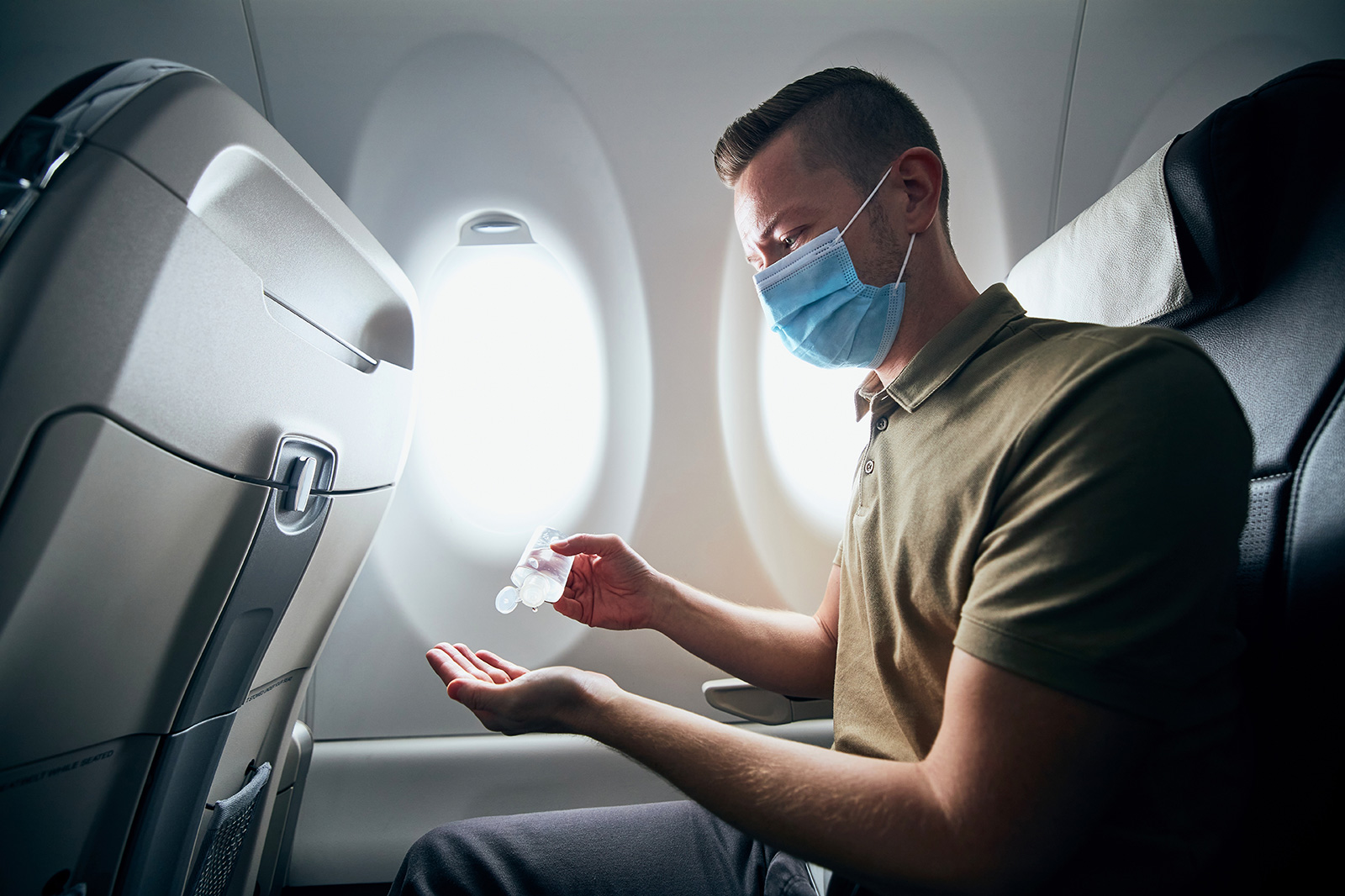
Something as simple as washing and sanitizing your hands regularly can make the difference between a great, relaxing trip and a nightmare. It depends on the virus, but common cold symptoms usually show up two to three days after exposure. With the flu, you could be spreading germs 24 hours before you show symptoms.

The majority of health care professionals agree that good hand-washing with soap and water is the best way to sanitize your hands and protect against germs. However, if you are in a place where you cannot wash your hands, hand sanitizer is a good alternative. If you are going to be using hand sanitizer, make sure it has at least a 60% alcohol content or it may not be as effective as desired.

Weinstein also recommends sanitizing frequently used devices such as cell phones, laptops and keyboards. “Try to stick to your normal shower routine as well,” he said. “Keeping yourself clean will reduce the risk of viruses and bacterial infection.”

Stay Active

It can be hard to find free time to work out and stay active while traveling. Luckily, there are little things you can do on the road to stay moving and maintain good circulation.

For long-distance travel — extended car, train, bus or plane trips — get up and walk around, exercise your legs and stay hydrated.

“Moving and getting up and walking during long periods of travel can get the blood moving and help to prevent deep vein thrombosis (DVT) or clots from forming, especially in the elderly or those with already compromised circulation,” Weinstein said.

Don’t forget to stretch before and after a physically demanding trek or activity.

“This can prevent injury and even help mitigate soreness and maintain mobility,” Weinstein said. “Stretching is a great idea for travelers who aren’t normally as active, for example, warming up your muscles before walking for a longer period of time than you usually do.” 

Stay Hydrated

stay-hydrated-safe-travel

Stay hydrated throughout travel is important — and key for air travel or when climbing, hiking or exploring at an altitude. It’s also important during warm weather and extreme heat.

“Replace fluid and electrolytes, especially during strenuous activity,” Weinstein said. The same is true for traveler’s diarrhea or any GI issues: replacing fluid and electrolytes can help you avoid a larger medical issue.

Experts suggest drinking at regular intervals, avoiding sugary drinks and alcohol, and trying coconut water for the extra electrolytes.

Get Plenty of Sleep

Your sleep patterns may be off schedule during a trip. It’s important to make sure you get enough sleep.

“A lack of sleep can impede decision-making capabilities and predispose you to illnesses,” Weinstein said. “When you’re traveling, you are also often enclosed in small spaces, such as planes or busses, with a lot of other people — exposing you to illnesses others might be carrying.”

If you find yourself jet-lagged and unable to adjust to the new time zone, avoid alcohol and caffeine, which disrupt sleep. Johns Hopkins Medicine suggests syncing up with the local schedule as best as you can, but follow the two-day rule: if your trip is less than two days, keep to your normal schedule.

Each traveler has his or her own preferred ways of dealing with jet lag and not all methods will work for everyone. Try what works best for you — even if it means attempting to adjust your sleep patterns before embarking on your journey.

Remember a First Aid Kit

first-aid-kit-travel

Bring a first aid kit, tailored to your activities and your destination, with you when you travel. A minor injury, like a blister, could turn in to a major issue — an infection or even sepsis. Having what you need on hand, even if it is a Band-Aid or moleskin, might make a big difference.

Don’t Neglect Your Mental Health

Make time for meditation, relaxation, nature walks — whatever makes you happy. If you don’t travel often, you may get stressed during your trip, such as being on time for your flight or navigating traffic in a new location. Adjust your itinerary so you’re not always on the go.

Global Rescue memberships include personalized advisory services, 24/7/365 emergency assistance and evacuation services at no additional cost to you. Learn more about the benefits of a travel membership.

Categories:

News
Share This:

What to consider before traveling to Europe

Share This:

Safety in the City: Six Essential Steps

You know the risks of backcountry exploration but, now that pandemic protocols have eased, are you prepared for the hazards of city travel? Global Rescue security expert Harding Bush maps out six essential safety tips…

You know the risks of backcountry exploration but, now that pandemic protocols have eased, are you prepared for the hazards of city travel? Global Rescue security expert Harding Bush maps out six essential safety tips for travel in urban environments.


While nature or weather may be more of a threat in the backcountry, cities have their own unique risks. An elevated level of crime may threaten personal safety. Roadways with more vehicles mean more chances of a traffic accident.  

“Even the character of commercial, industrial and residential sprawl can increase the effects of a natural disaster, such as a flood, fire or earthquake,” said Harding Bush, manager of operations at Global Rescue.

security to Competitive Analysis

Being prepared will give you the confidence to concentrate on your business trip or enjoy the sights as a tourist — rather than worrying if you’ll be a victim of a crime. 

“Your ability to reduce the overall risk level relies on your ability to recognize and avoid threats. In other words, always be aware of where you are and what is going on around you, and be able to avoid an escalating security situation,” Bush said. 

Here are six essential steps for safe travel in the city.  

Step #1: Conduct a Self-Assessment  

Before visiting a city, think about how familiar you are with the area. Have you been there before? What resources do you have there: friends, family, business colleagues? If it’s a foreign city, does your home nation have a consulate?  

Use multiple sources for your research: local and foreign news reports, travel reviews and social media. Ask friends and colleagues who have traveled there before what went well and what could have gone better during their travel.  

Large cities can be challenging enough with their expansiveness. Now throw in cultural considerations, a language barrier and perhaps an unstable government or infrastructure. Risk grows as the complexities build. Here are some questions to consider as you are planning your trip to the city: 

  • How reliable is the infrastructure? Learn about transportation, road and vehicle safety.  
  • Are there any cultural considerations? Are the local laws different? 
  • What is the economic situation? Research crime in the city and the capabilities of the police. 
  • What if you become ill? How are the hospitals? If it is a foreign city, will your health insurance cover you in that location?  

“The answers to those questions are the foundation of your safety or security plan,” Bush said. “Once these questions are answered, you can begin to prepare for a specific level of risk.”  

Step #2: Choose Your Transportation

safe-city-transportation

Think carefully before driving in an unfamiliar or foreign city. 

“Vehicle accidents are one of the leading causes of travelers being injured or killed abroad,” Bush said.   

If you decide to rent a car, get the appropriate insurance. Ensure the vehicle has all the required safety equipment. Take several minutes to familiarize yourself with the car before setting out on the roads. Preprogram destinations in your GPS, have and review maps, and understand the basic layout of the city.  

A car service with a local driver is nearly always safer and more efficient. You know you’ll get where you need to, and you don’t have to worry about parking or the car being stolen. Discuss safety considerations with the driver and have a point of contact at the car service company.  

Legal and registered taxis are the next best thing to a car service, and you can likely arrange these through your hotel for the safest and most reliable options.  

Step #3: Research Your Hotel

Choosing a hotel is a balance of safety and convenience. The higher the risk, the more weight you should put toward safety.  

“The less safe the city, the more research you need to put into hotel research and selection,” Bush said.  

He suggests researching your hotel online, reading multiple reviews and taking a look at the hotel on Google earth.  

“Observe if access to the hotel is controlled. Can anyone walk in and access the floors with guest rooms? That’s bad. If there is basement parking, can all the hotel floors be accessed from the parking garage? Again, bad,” Bush said. “Good secure hotels require a room key to access the guest floors. Ideally, only the lobby or function floors can be accessed from the garage.”  

Step #4: Recognize Surveillance

travel-safe-in-the-city

Nearly every sort of crime requires surveillance, which is when criminals observe and select potential victims for characteristics that make an easy target. If you can recognize the surveillance, you can avoid crime by presenting the traits of a difficult target.  

A quick way to determine if you are being targeted is if you see the same person multiple times in different locations and they are at a distance: across the street, other side of the lobby, at the bar when you are at a table. Ask yourself: what is their demeanor? Why are they there?   

Be aware of people who are asking too many questions — and questions that are outside of polite first-time conversation. A waiter asking you questions about where you are from is everyday conversation, but what time you leave for work and come home is not.  

There are two ways to thwart this tactic. The first is to be vague; answers like “It varies,” “I’m from all over,” or “the north” are best. The second way is to start asking about them: where are they from? How long have they worked there? Do they have kids? If they continue to bring the conversation back to you and ask for specific time and location information, they may be paid by criminals to pass it along. 

“If you recognize surveillance, don’t confront it,” Bush said. “Be aware and avoid the situation.”   

Step #5: Be a Difficult Target

Crimes are planned just like a military or terrorist operation. Surveillance and target selection are key elements.  

You must present yourself as a “hard target” to counter criminal activity.  

“Don’t fumble around with your bags or documents, especially in crowded areas with many travelers, like city centers. Be heads up and organized,” Bush said. “Criminals like confused and inattentive targets. Have a purpose and be confident; make the criminal look elsewhere.” 

Step #6: Avoid Multiple Mistakes

It is not usually one single significant event that gets travelers into trouble. It’s a combination of more minor mistakes, both in and out of their control.  

Here’s an example. You get in a traffic delay, and then it gets dark, and you don’t recognize where you are. You try to call someone, but your cell phone is dead. You are offered a phone to use but you don’t know any numbers to call, because they are all on speed dial — not memorized or written down.   

Take the extra steps to stay safe while traveling in urban areas. “Think of the contingencies around transportation, hotels, avoiding crime, and staying healthy. Research the area with multiple sources and have a plan,” Bush said. “You will have the confidence to feel and remain safe so you can enjoy the travel.”

Categories:

News
Share This:

The security squads saving staff from war

Categories:

News
Share This:

Russia’s Invasion of Ukraine Leading to Jump in Travel Security Service Plans

Categories:

News
Share This:

International travel hacks: When to book flights and hotels, how to deal with COVID rules

Share This:

Wartime Travel? Essential Information During the Russia-Ukraine Conflict

How will the Russia-Ukraine crisis affect international travel? Should you cancel your European vacation? Do you need emergency travel security protection? Global Rescue experts provide their insight. 

How will the Russia-Ukraine crisis affect international travel? Should you cancel your European vacation? Do you need emergency travel security protection? Global Rescue experts provide their insight. 


The war between Russia and Ukraine has made travel to and from those countries impossible. Travel to Belarus is also out of the question due to international sanctions for its support of the Russian invasion. In adjacent countries, like Poland, Romania and Slovakia, travel has been negatively impacted for security reasons and to keep up with the multitude of Ukrainians fleeing the conflict.   

“No one knows the likelihood of the conflict expanding into the Baltic states, but it could happen and that makes Lithuania, Estonia and Latvia a risky traveler choice until the situation normalizes,” said Global Rescue Security Manager Harding Bush, a former Navy SEAL, who, after serving in the military, worked in war-torn Yemen between 2011 and 2015.

security to Competitive Analysis

“How will the military conflict in Eastern Europe disrupt the course of early economic recovery following two years of pandemic-related travel restrictions? No one can forecast how long the crisis will last,” Bush said. “But as global sanctions against Russia build and international diplomacy strengthens, the state of affairs will hopefully resolve in the shortest possible time.” 

The State of Travel Before Russia-Ukraine Crisis 

Before the onset of military conflict between Russia and Ukraine, the pandemic recovery signals were loud and clear. Decreasing health impacts from the coronavirus contributed to a travel rebound. Three-quarters of the U.S. population had received at least one vaccination shot, and 64% were fully vaccinated. COVID-19 cases were falling in every state. Deaths and hospitalizations from the disease were decreasing and the omicron variant had not been as serious as originally feared.   

[Related Reading:
Why Tour Operators Are Optimistic About 2022 Travel]

Countries like the U.K. dropped all COVID-19 restrictions. New Zealand, Denmark, Norway, Sweden and others opened up their borders. Nearly every U.S. state had dropped its mask mandates. Nearly half of travelers (49%) had already taken an international trip since the start of the pandemic, reflecting an 88% jump in travel abroad since the summer of 2021, according to the Winter 2022 Global Rescue Travel Safety and Sentiment survey of the world’s most experienced travelers.   

Nine out of ten travelers (93%) are less or much less concerned about travel since the pandemic started, reflecting a 72% improvement in individual concerns about travel compared to traveler attitudes at the beginning of 2021. As pandemic fears subside, people are significantly less concerned about travel, and they are driving a significant return to travel.  

But the return to travel is still quite volatile, and responsive to global events like the Russian invasion of Ukraine. Travelers are pumping the brakes on planning international trips, taking a wait-and-see approach as the conflict in Eastern Europe develops. In the week since Russia invaded Ukraine, people searching for international travel dropped by 12 percentage points but regained more than half of that loss in the days following, according to Kayak, an online travel agency and metasearch engine. 

Travelers are also purchasing security service plans that provide emergency evacuation capabilities when they are in danger from insurgent attacks, terrorism, civil unrest and natural disasters. Traveler requests for Global Rescue’s non-medical security evacuation services jumped 31% since the Russian invasion of Ukraine.   

“War is not a tourist attraction. There are plenty of global destinations with no threat of conflict – make those locations your vacation spot. While concern is high for Eastern European countries directly involved in the conflict, it is premature for travelers to cancel international trips to other countries. Nevertheless, travelers should plan and prepare,” Bush said. 

If You Go, Travel Security Protection is Essential

Global-Rescue-Security-and-Intelligence

One of the biggest discoveries among travelers during the pandemic was the limitations of travel insurance and the importance of obtaining medical emergency evacuation travel protection that includes COVID-19. The military conflict in Eastern Europe may be the event igniting traveler attention for travel protection services that provide evacuation for non-medical emergencies when you are in danger – like insurgent attacks, social disorder, terrorism and earthquakes. 

“Travel uncertainty generally results in an increase in traveler demand for Global Rescue emergency medical and security services,” said Dan Richards, CEO of Global Rescue. 

Nobody wants to imagine a security emergency abroad. But if you’re traveling or working internationally then the possibility of civil unrest, unpredicted natural disaster or terrorism is always present. If you’re near a war zone, the potential spikes for a government-issued declaration to evacuate. 

“Being proactive and preparing for the possibility of a security emergency could mean the difference between a safe departure and being trapped in a dangerous situation out of your control,” Bush said. 

Travelers should obtain Global Rescue’s emergency travel security services that provide evacuation and advisory services. 

Travelers must understand what services are provided and under what conditions, too.  

“There is often a difference in security service options for a traveler caught up in a conflict and a traveler knowingly entering one,” Bush said.  

Categories:

News
Share This:

What’s the best way to pay when traveling abroad?

Categories:

Press Release
Share This:

War Sparks Increase in Travel Security Services

Traveler requests for non-medical security evacuation services jump 31% since Russian invasion of Ukraine.    Lebanon, N.H. – March 9, 2022 – The military conflict in Eastern Europe is driving travelers to purchase security service plans…

Traveler requests for non-medical security evacuation services jump 31% since Russian invasion of Ukraine.   

Lebanon, N.H. – March 9, 2022 – The military conflict in Eastern Europe is driving travelers to purchase security service plans that provide emergency evacuation capabilities when individuals are in danger from insurgent attacks, terrorism, civil unrest and natural disasters. Traveler requests for non-medical security evacuation services jumped 31% since the Russian invasion of Ukraine.  

“Uncertainty in travel generally results in an increase in traveler demand for emergency medical and security services. Between the war and the pandemic, travelers want medical and emergency response services more than ever,” said Dan Richards, CEO of Global Rescue, the world’s leading provider of medical, security, evacuation and travel risk management services and a member of the U.S. Travel and Tourism Advisory Board at the U.S. Department of Commerce.   

“Nobody wants to imagine a security emergency abroad. But, if you’re traveling or working internationally then the possibility of civil unrest, unpredicted natural disaster or terrorism is always present. If you’re near a war zone, the potential spikes for a government-issued declaration to evacuate,” Richards said.   

While concern is high for Eastern European countries directly involved in the conflict, it is premature for travelers to cancel international trips including to other countries in the region, such as Poland, Romania, Bulgaria and the Baltic States. Nevertheless, travelers should plan and prepare.  

“War is not a tourist attraction. There are plenty of global destinations with no threat of conflict. Travelers should make those locations their vacation spots,” said Harding Bush, former Navy SEAL and manager of security operations for Global Rescue.   

“Travelers should obtain emergency travel protection plans that provide evacuation and advisory services, which should be taken advantage of during the planning process,” Bush said.  

“Being proactive and preparing for the possibility of a security emergency could mean the difference between a safe departure and being trapped in a dangerous situation out of your control,” said Bush, who after serving in the military worked in war torn Yemen between 2011 and 2015.  

About Global Rescue   

Global Rescue is the world’s leading provider of medical, security, evacuation and travel risk management services to enterprises, governments and individuals. Founded in 2004, Global Rescue has exclusive relationships with the Johns Hopkins Emergency Medicine Division of Special Operations and Elite Medical Group. Global Rescue provides best-in-class services that identify, monitor and respond to client medical and security crises. Global Rescue has provided medical and security support to its clients, including Fortune 500 companies, governments and academic institutions, during every globally significant crisis of the last two decades. For more information, visit www.globalrescue.com. 

Media Contact 

For all media-related inquiries, please contact:  

Bill McIntyre  

Director, Communications

+1.202.560.1195 (call/text) 

bmcintyre@globalrescue.com


Categories:

News
Share This:

Is Europe Travel Safe During Russia’s Invasion of Ukraine?

Categories:

News
Share This:

Ukraine War Sanctions Raise Questions for Travel Insurance Firms