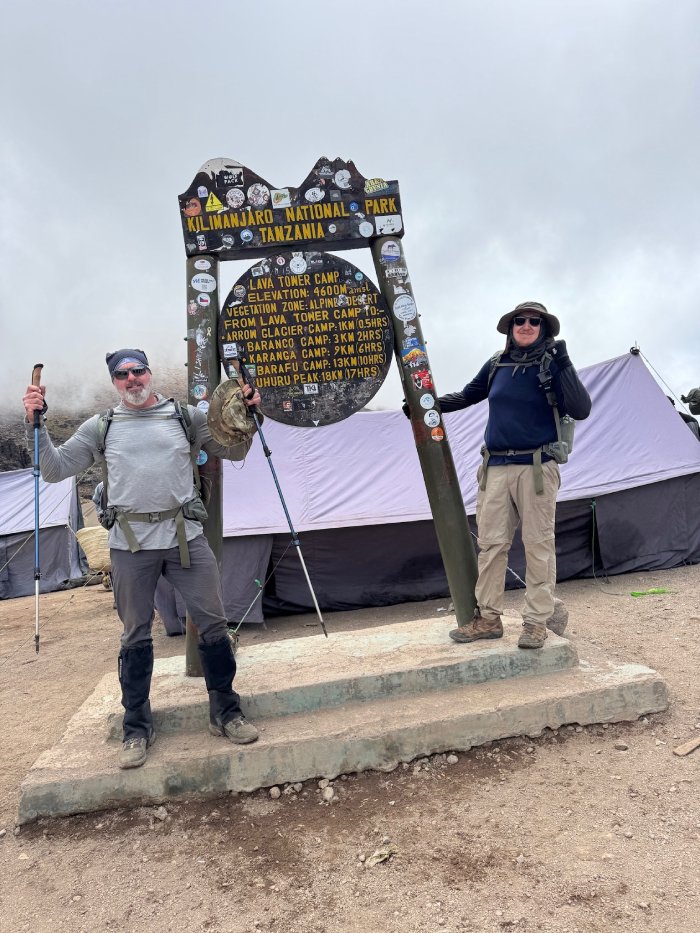
Mike D. from Georgia set out to climb Mount Kilimanjaro with a clear purpose: to share a meaningful, once-in-a-lifetime experience with his son. It wasn’t just about standing on the summit. It was about the journey they would take together. “This adventure… I went on was with my son,” Mike explained, underscoring that the climb was as much about connection as it was about challenge.
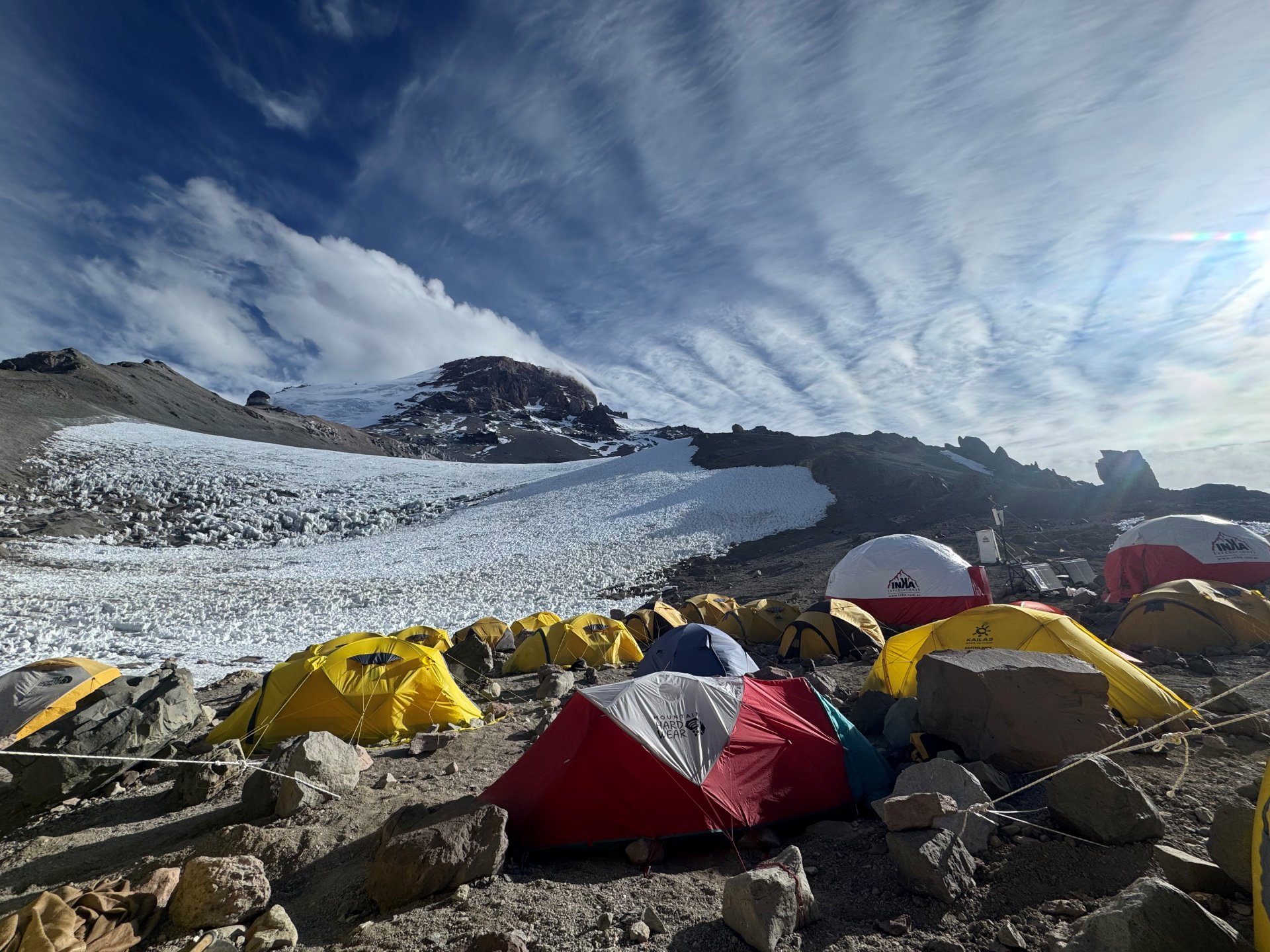
Coming from near sea level, Mike understood the risks. Kilimanjaro’s altitude — rising well above 19,000 feet/5,895 meters — can affect even the strongest climbers. While he had experience with demanding environments, this would be his first time at such elevation. He prepared carefully, including becoming a Global Rescue member. “I knew I needed a company that I can rely on,” he said.
A Strong Start, Then a Sudden Turn
The climb began smoothly. For days, Mike felt strong and acclimatized. Even the afternoon before everything changed, there were no warning signs. “I was doing fine that afternoon,” he recalled.
Then, almost instantly, the situation shifted. “The symptoms came on quite rapidly,” Mike said. “Difficulty breathing… and then I developed a lot of pain in my abdomen.”
What started as mild discomfort escalated into something far more serious. Every step became exhausting. Even minimal movement required effort. “Taking very short steps brought on very labored breathing,” he said.
Mike quickly recognized this wasn’t mild altitude fatigue. “I thought I probably have some type of altitude sickness, something a little bit more serious that needed medical care.”
That realization triggered a critical decision. Instead of pushing forward, he alerted the lead guide, choosing safety over summit.
Calling for Help
The guide contacted Global Rescue via satellite phone, connecting Mike directly with a medical professional. From there, things moved quickly. “They started to diagnose me and agreed that getting to lower altitude as fast as we can with supplemental oxygen was the best course of action,” he said.
Mike was immediately placed on oxygen, but his condition continued to deteriorate. “I went through about five bottles (of oxygen). I was burning through them pretty quickly,” he said.
Complicating matters, it was already nighttime and through Mike’s aviation experience he knew rescue helicopters don’t fly in the dark on Kilimanjaro since conditions at altitude can change rapidly. He knew he would have to wait until morning.
Those hours were agonizing. “It was a couple hours but seemed like 10 times that,” he said. “Just sitting up in my tent was laborious.”
Remaining at altitude meant his symptoms could worsen, and likely would. Walking down the mountain wasn’t an option. When it came time to move just a short distance to the landing area, he couldn’t do it on his own. “I had to be carried. I didn’t have a good, stable platform as I was walking,” Mike said.
The Rescue
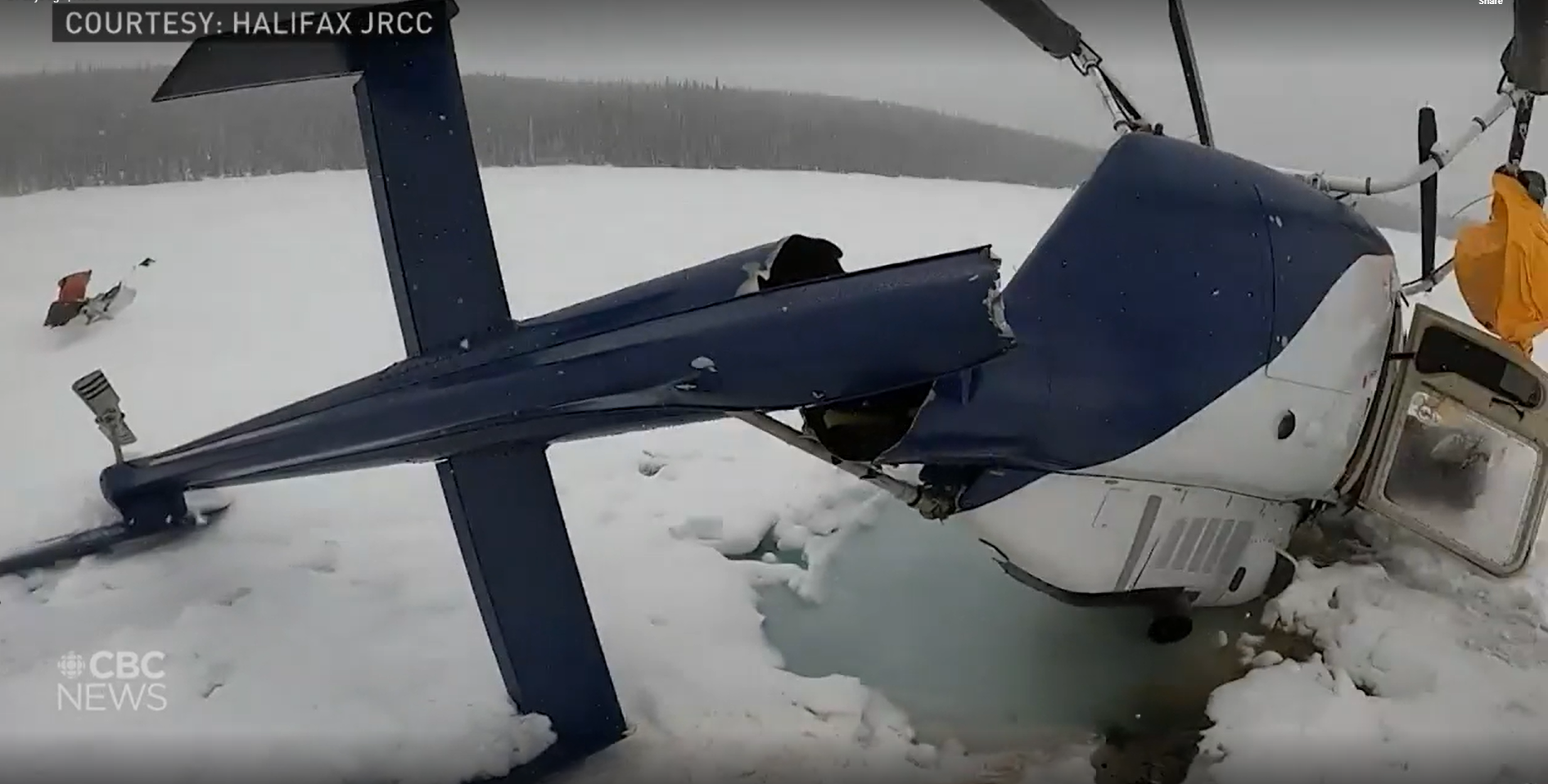
At first light, the sound of a helicopter broke through the silence. “I heard the helicopter coming from quite a distance,” Mike recalled. It was immediate confirmation: help had arrived. The team moved him to the landing zone, propping him up because he couldn’t stand. Once onboard, the pilot acted quickly.
The descent was rapid and surreal. After days of climbing, gaining elevation step by step, Mike was suddenly dropping thousands of feet in minutes. “It was a little surreal, to spend as many days to get up and just like that, I’m down,” he said.
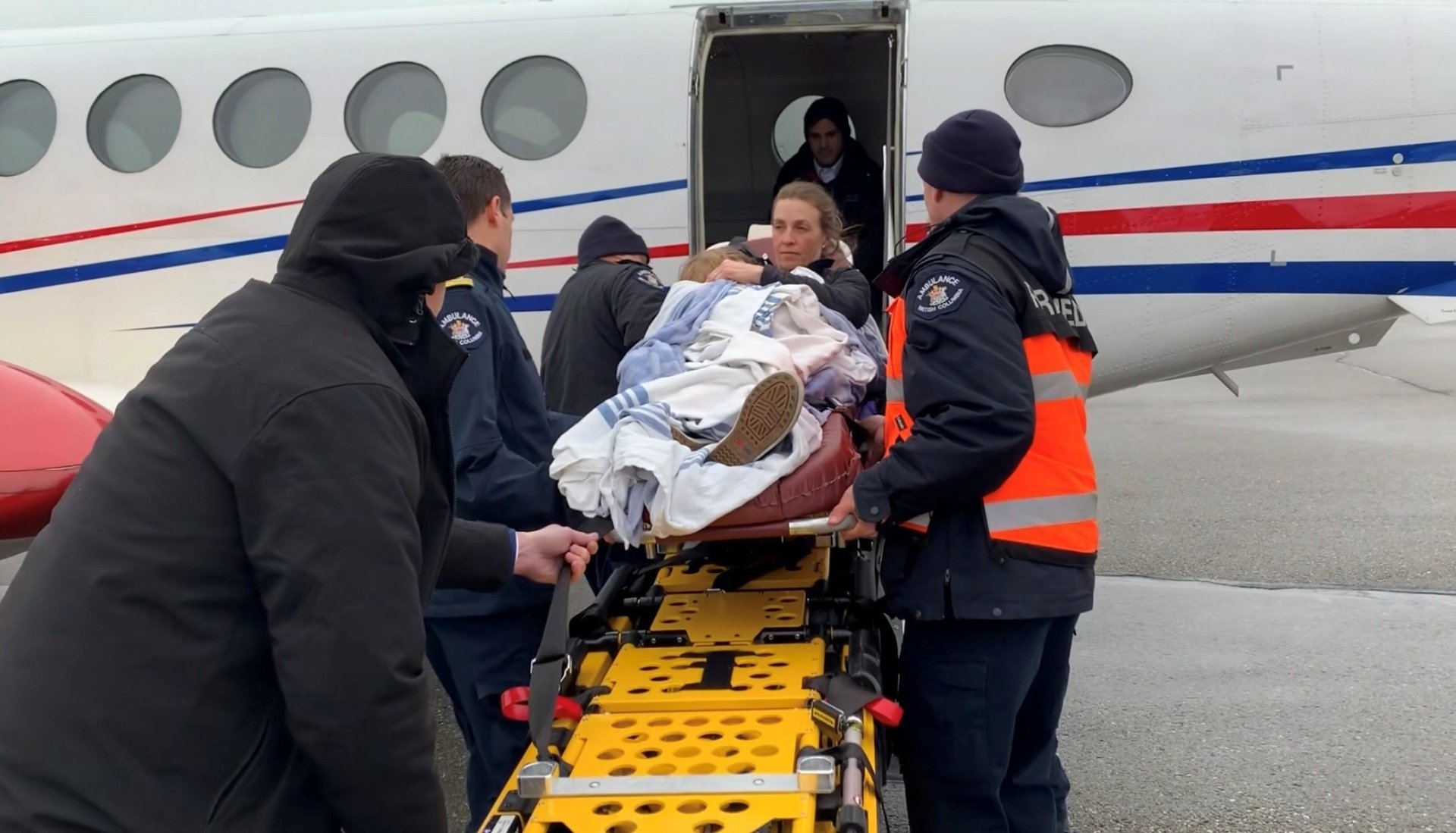
As they descended, the environment changed dramatically, from freezing alpine air to warm temperatures below. But while the altitude drop was critical, the medical emergency was far from over. At the base, an ambulance transported Mike to a local hospital. There, the severity of his condition became clear.
Hospitalization and Diagnosis
X-rays confirmed high altitude pulmonary edema (HAPE). “My lungs should be black on an X-ray but they were all white and smoky,” he explained. When lungs fill with fluid, called pleural effusion, a chest X-ray typically shows a white, opaque or hazy area. But it wasn’t just his lungs. The impact on his body was widespread.
“All my organs started to swell, my bladder, my prostate and my kidneys,” Mike said. The abdominal pain he had felt on the mountain intensified. “I was in excruciating pain,” he said.
Even after descending, recovery wasn’t immediate. Fluid remained in his lungs and his body needed time to stabilize. For hours, he underwent testing — X-rays, ultrasounds and blood work — while doctors monitored his condition.
Throughout the entire ordeal, Global Rescue remained continuously engaged. “Global Rescue immediately contacted me, and remained in contact with me nonstop,” Mike said. Even with spotty service, communication continued through WhatsApp — coordinating care, checking in and ensuring nothing was missed. They also reached out to his wife back home. “They immediately informed her what was going on,” he said. And critically, they helped maintain communication with his son on the mountain.
A Father’s Decision
Before his evacuation off the mountain, Mike made one of the most difficult decisions of the trip. “I told my son to continue on. I wanted him to summit Kilimanjaro,” he said. Through coordination between Global Rescue and the guiding team, updates were relayed up the mountain, giving his son the reassurance he needed to keep going.
“That provided my son some sense of relief. He knew his dad’s okay and that he could continue,” Mike explained.
And he did. “He did summit and took some pictures,” Mike said.
Later, after Mike stabilized and the team descended, they reunited bringing the experience full circle in a way neither had planned, but both would never forget.
Recovery and Reflection
Mike’s recovery was gradual. Even after leaving the hospital, he continued to feel the effects. “Just walking a short distance, I would have to stop. I was winded,” he said.
The journey home was long and physically demanding, but eventually, follow-up care confirmed his lungs had cleared and his body had recovered. Looking back, the experience was profound.
“It was a life-changing event,” Mike said. “I’ve never done something like that. It was definitely life changing.”
The Global Rescue Connection
For Mike, one defining factor stood out: communication. “Communication is very, very important to me,” he said. From the moment he became a member, Global Rescue established that trust.
“They immediately got in touch… ‘Do you have any questions? We’re here for you,’” he recalled. When the emergency happened, that promise was fulfilled, comprehensively.
“They were covering all the bases,” Mike said. From coordinating the helicopter evacuation to communicating with his family and guiding team, Global Rescue operated as a fully integrated support system.
Despite everything, Mike isn’t done with Kilimanjaro. “I have to complete what I did not finish,” he said. He’s already planning his return, and there’s no question about who will be part of that trip. “I will be using Global Rescue again, without a doubt.”