Article Highlights:

  • Israel compresses desert hiking, Mediterranean beaches, Red Sea diving, ancient religious sites and major cities into remarkably short distances.
  • Adventure opportunities are exceptional, but military restrictions, unexploded ordnance and rapidly changing security zones can limit independent exploration.
  • Leisure travelers gain access to Jerusalem, Tel Aviv, the Dead Sea, Acre, Haifa and exceptional Levantine cuisine, but must plan around elevated government travel advisories.
  • Business travelers enter one of the world’s most concentrated technology ecosystems, although aviation and security disruptions can complicate corporate travel.
  • Global Rescue Destination Reports can help members understand not just security conditions, but cultural differences involving religious observance, modesty, alcohol, LGBTQ+ travelers, photography and local behavior.


Israel is geographically small but extraordinarily dense. Mediterranean beaches, desert landscapes, archaeological sites, sacred places, nightlife districts, startup offices and some of the region’s most dramatic political and security boundaries can all exist within a few hours of one another. For a traveler, that concentration creates both Israel’s appeal and its central complication: experiences that would normally require several countries can be combined in one trip, but the security environment can change with little warning.

As of September 2026, that complication is significant since the US Department of State lists Israel at Level 3, advising visitors to Reconsider Travel and Canadian and Mexican officials advise travelers to avoid non-essential travel.

That does not make Israel a one-dimensional destination defined entirely by conflict. It does mean that adventure, leisure and business travelers need to judge the trip differently than they would a comparable Mediterranean destination, combining ordinary itinerary planning with real-time intelligence, contingency planning and an understanding of where travel is restricted or inadvisable.

Entry planning now starts before the airport. Since 2025, visitors from visa-exempt countries, including the US, Canada and Mexico, must obtain an ETA-IL, or Electronic Travel Authorization, before traveling to Israel. The authorization permits eligible visitors to stay for up to 90 days, remains valid for up to two years or until the passport expires and currently costs 25 Israeli shekels.


Adventure Travel: Remarkable Variety in a Very Small Area

Israel’s strongest adventure-travel argument is geographic diversity. In a relatively short trip, a traveler can hike through the Negev Desert, descend into Makhtesh Ramon, float in the Dead Sea and continue south to dive or snorkel in the Red Sea at Eilat.

Makhtesh Ramon is particularly distinctive. Often called Ramon Crater, it is a massive erosion formation rather than an impact crater, stretching roughly 40 kilometers in length and between two and 10 kilometers in width. Its exposed geological layers, desert trails and dramatic overlooks make it one of the country’s signature outdoor landscapes.

Farther south, Eilat presents a completely different environment. Israel’s Red Sea resort combines desert terrain with beaches, diving, snorkeling, kayaking and other water sports, while its coral ecosystem gives divers an experience completely removed from the Mediterranean landscape farther north.

The Dead Sea offers another experience that is almost impossible to replicate elsewhere. Its extreme salinity allows visitors to float easily at the lowest land elevation on Earth, while nearby desert landscapes and historic sites make the region attractive for travelers who want to combine outdoor activity with archaeology and history.

This compactness also makes longer trekking possible. The Israel National Trail and trails throughout the Galilee and Negev can appeal to hikers who want multi-day routes without the logistical distances associated with larger countries. Under normal circumstances, that would make Israel unusually convenient for an outdoor traveler.


Why Adventure Travelers Have More To Consider Than the Terrain

Adventure travelers should stay on marked trails, follow local guidance and avoid restricted or unfamiliar areas, particularly near borders and military zones. Mines and unexploded ordnance may be present in some rural locations, making off-trail exploration especially risky.

Environmental hazards also require attention. Extreme desert heat, flash flooding in dry wadis, sand and dust storms, seasonal flooding and wildfire conditions can quickly change an otherwise routine hike or outdoor excursion.


Leisure Travel: Extraordinary Cultural Depth

For leisure travelers, Israel’s attraction is difficult to reduce to one category. Jerusalem alone can occupy days, with the Old City bringing Jewish, Christian, Muslim and Armenian history into an exceptionally concentrated area. The Western Wall, Church of the Holy Sepulcher, surrounding religious sites, museums and markets make the city one of the world’s most historically layered destinations.

Tel Aviv offers an almost opposite atmosphere. Mediterranean beaches, restaurants, nightlife, modern architecture and a highly international social environment give travelers an urban experience that can feel dramatically different from Jerusalem despite the relatively short distance separating the two cities.

Then there is Acre, or Akko, with its historic fortified city; Haifa and the Bahá’í Gardens; the Dead Sea; Masada; the Galilee; the Negev and Eilat. Israel’s tourism resources promote exactly this diversity, pairing UNESCO sites and religious history with cycling, wine routes, national parks, desert experiences and coastal travel.

Food may be one of the country’s most accessible attractions. Israeli dining reflects influences from across the Levant, North Africa, Europe and the wider Middle East, with markets, bakeries, cafés, seafood restaurants and contemporary chef-driven dining making food an important part of both Jerusalem and Tel Aviv experiences.

The difficulty is predictability. A traveler might arrive with reservations for Jerusalem, northern Israel and Eilat only to find that military restrictions, rocket or missile threats, demonstrations, airline decisions or government security instructions require sudden changes. Air travel can therefore become part of the risk calculation rather than merely transportation. Ben Gurion Airport is operating, and the Israel Airports Authority reported the reopening of Terminal 1 for international operations on July 1, 2026, but recent years have demonstrated why travelers should check both airline and airport status immediately before departure rather than assuming schedules will remain unchanged.


Business Travel: Israel’s Technology Economy Still Matters

The business case for Israel is particularly strong in technology. The country remains heavily concentrated in cybersecurity, artificial intelligence, enterprise software, fintech, biotech, medical technology, defense-related industries and deep tech.

For executives, venture capital firms, technology companies and researchers, that means Israel may remain commercially important even when leisure travel is easier to postpone. Tel Aviv and surrounding technology corridors retain relationships, expertise and companies that cannot always be substituted by holding a meeting elsewhere.

The drawback is duty of care. A normal three-day business trip can become a significantly more complex corporate operation if flights are disrupted, employees need to shelter, meetings move suddenly or a traveler becomes stranded during escalation. Companies sending personnel into Israel should therefore treat contingency planning, communications and traveler tracking as operational requirements rather than optional precautions.


Jerusalem and Tel Aviv Require Different Cultural Expectations

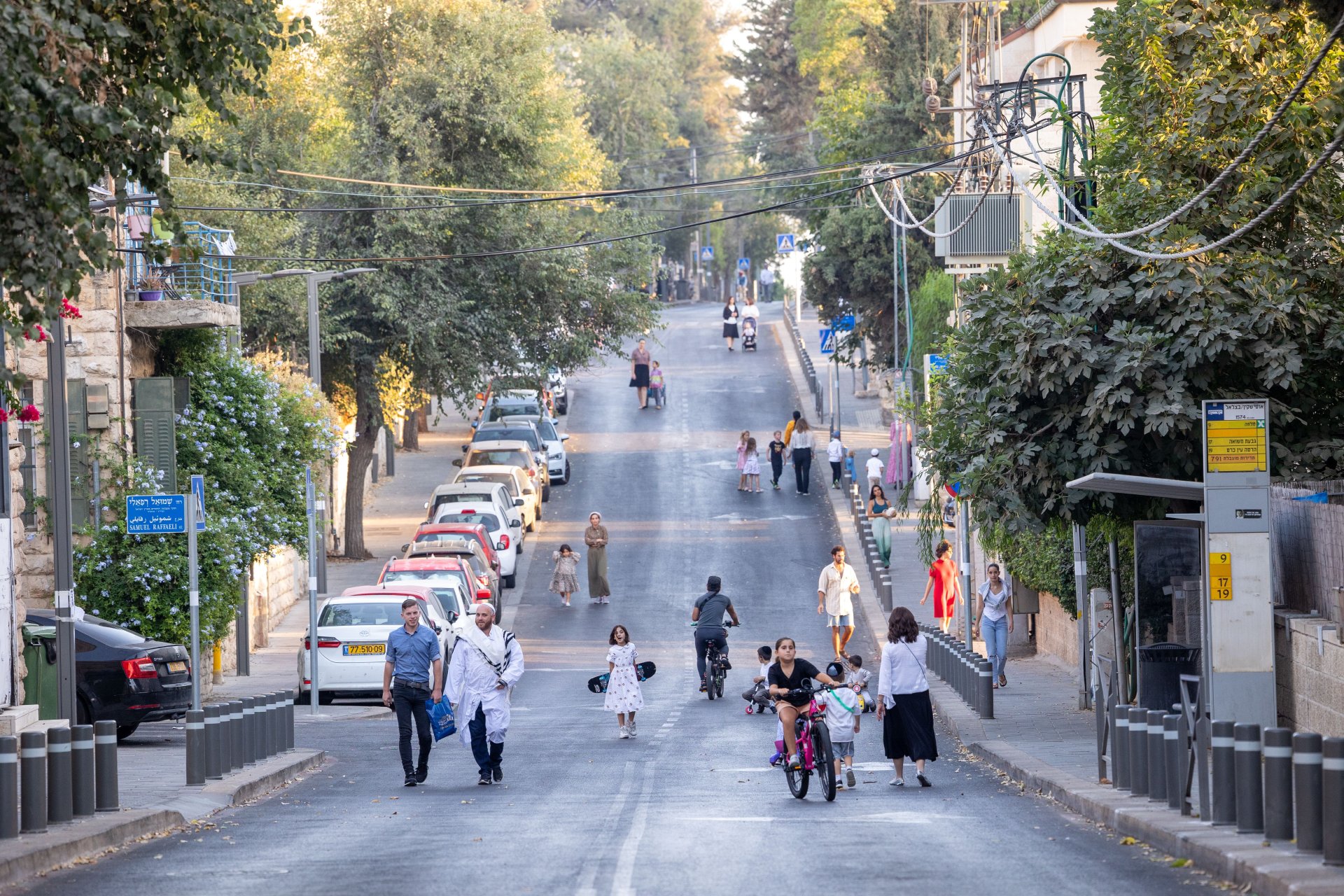
Travelers should also avoid assuming that one social rule applies everywhere. Tel Aviv is generally cosmopolitan and socially liberal, while Jerusalem contains neighborhoods and holy sites where religious traditions and standards of modesty are much more important.

Shabbat can also affect transportation, restaurant hours, businesses and normal routines from Friday evening through Saturday, with the degree of observance varying significantly by location. In conservative neighborhoods, travelers should be particularly attentive to local customs rather than assuming that behaviors considered unremarkable in Tel Aviv will be received the same way elsewhere.

Alcohol is widely available in many parts of Israel, particularly in Tel Aviv, hotels, restaurants and nightlife districts. Travelers moving into more religious communities, however, should recognize that legal availability and cultural acceptance are not the same thing, especially around sacred sites or religious observances. The same regional variation matters for LGBTQ+ travelers. Social acceptance can differ considerably by city and community, making Tel Aviv a very different environment from some conservative religious neighborhoods.


Medical Care Is Strong, but Security Can Complicate Access

Israel’s medical infrastructure is one of its advantages. Modern medical care, medicines and ambulances are widely available. The distinction becomes important when itineraries move outside Israel proper or when conflict affects transportation. For travelers, the lesson is that having excellent hospitals somewhere in the country does not eliminate the importance of knowing how quickly those facilities can be reached from the traveler’s actual location. A desert hiking injury, road closure, active security incident or movement restriction can turn geographic distance into a much more complicated problem.


The Global Rescue Connection

Israel is exactly the type of destination where a Global Rescue membership can become as important as the itinerary itself. The major attractions are easy to identify; the more complicated questions involve how a traveler should behave, where conditions are changing, what cultural expectations apply and how a seemingly short trip across the country can move through dramatically different security and social environments.

Destination Reports give Global Rescue members detailed information about security conditions, medical capabilities, transportation, local laws and cultural considerations before departure. The reports can also help travelers understand risks that are easy to miss in conventional tourism planning: unexploded ordnance in rural areas, shelter procedures during rocket or missile alerts, restricted border regions, demonstrations, potential transportation disruptions and differences in healthcare capability depending on location. Those considerations are especially important when official government advice can change as security conditions develop.

Global Rescue membership also gives travelers access to 24/7 medical advisory and emergency assistance, with medical evacuation and other services available according to membership terms. For members with applicable security services, Global Rescue and Global Risk Services can provide additional intelligence, advisory and crisis-response capabilities when security conditions deteriorate.

A trip to Israel can include hiking through Makhtesh Ramon, floating in the Dead Sea, diving the Red Sea, exploring Jerusalem and meeting technology leaders in Tel Aviv within the same itinerary. A Destination Report helps the traveler understand what changes between those stops—not only geographically, but medically, culturally and from a security perspective—before those differences become an unexpected part of the trip.