Article Highlights:

  • The safest winter escape depends on healthcare, transportation and emergency response as much as weather.
  • Belize and Cape Verde are appealing but require more careful planning for serious medical emergencies.
  • The Canary Islands, Barbados, Curaçao and Australia offer particularly strong combinations of stability and infrastructure.
  • Costa Rica, Panama and southern Thailand balance warm weather, adventure and comparatively affordable travel.
  • Destination Reports, medical advisory services, field rescue and medical evacuation provide critical support when local resources fall short.


Escaping winter is easy if the only requirement is warmth. Finding a destination that also offers political stability, dependable transportation, acceptable healthcare, manageable crime and effective emergency response requires a more disciplined comparison. Winter months are excellent for sunshine across the Caribbean, Central America, Southeast Asia, the eastern Atlantic and the Southern Hemisphere.

Yet a beautiful beach does not reveal how long an ambulance will take to arrive, whether a regional hospital can treat complex trauma or how easily a seriously ill traveler can be moved to advanced care. Experienced travelers should therefore compare medical and security infrastructure with the same care they devote to hotel quality, airfare and resort amenities. That approach is especially important when visiting islands, rural coastlines and remote nature destinations where the distance between a traveler and advanced medical care may be substantial.


Eastern Atlantic and Europe

The Canary Islands and Cape Verde provide winter warmth in the eastern Atlantic, but they offer very different levels of medical infrastructure, transportation redundancy and emergency-response capability.


Cape Verde

Cape Verde provides warm, dry winter weather, distinctive culture and comparatively affordable resort options, especially on Sal and Boa Vista. Winter temperatures average roughly 77 F/25 C and rain is uncommon. The country is generally safe and currently carries a Level 1 advisory, although crime requires greater caution in Praia. Travelers should also consider the ocean’s strong currents and undertows as well as variable road conditions and inter-island transportation capabilities.

Cape Verde’s primary weakness is medical depth. Routine problems may be treated locally, but island geography can complicate serious emergencies. Flight schedules, weather and the location of the patient may determine how quickly advanced care can be reached. Cape Verde is an appealing choice for experienced travelers, but less suitable for anyone assuming that a beachfront resort guarantees rapid access to sophisticated treatment.


The Canary Islands

The Canary Islands offer one of the best combinations of winter warmth, transportation reliability and medical infrastructure. Tenerife, Gran Canaria, Lanzarote and Fuerteventura generally experience daytime temperatures around the upper 60s to low 70s in February and March. This is not tropical heat, but it is comfortable for hiking, sightseeing, golf and beach time.

As part of Spain, the islands benefit from European-standard roads, airports, emergency services and healthcare. They are also connected by frequent inter-island flights and ferries. Spain is currently under a Level 2 advisory because of terrorism and unrest, although the advisory’s newly identified higher-risk area is Ceuta rather than the Canary Islands.

Travelers should still account for volcanic terrain, strong ocean currents, mountain weather and occasional transportation disruption. For those who value medical access and infrastructure more than tropical temperatures, the Canary Islands may be the strongest overall winter escape on this list. Spain’s developed transportation and healthcare systems make it comparatively easy to navigate, although regional differences still matter.


Central America

Central America offers some of the most accessible winter escapes for North American travelers, but medical capabilities and transportation reliability can vary substantially between major cities, resort communities and remote regions.


Costa Rica

Costa Rica is one of the strongest all-around choices for travelers who want beaches, wildlife, rainforest and outdoor activities without venturing into a politically unstable environment. February and March fall within the dry season across much of the Pacific coast and Central Valley. Coastal daytime temperatures commonly reach the upper 80s or low 90s, while the elevated Central Valley is usually more comfortable.

Tourism infrastructure is well developed, but safety conditions vary by location. The US Department of State currently advises increased caution because of crime, including petty theft and violent incidents affecting tourists. Rip currents are another significant hazard, while earthquakes and volcanic activity remain part of the country’s natural-risk profile.

Private medical care is strongest around San José. Travelers staying in Guanacaste, the Osa Peninsula or remote eco-lodges may face longer ground transfers and limited access to advanced treatment. Roads can also be slow, uneven or disrupted by weather. Costa Rica is not the cheapest Central American option, particularly during peak dry season, but it remains attractive for travelers seeking an established tourism sector and extensive adventure opportunities.


Belize

Belize offers Caribbean water, Maya sites, rainforest and an English-speaking environment in a relatively compact country. The annual average temperature is approximately 84 degrees Fahrenheit and February falls during the popular dry-season travel period. Its appeal comes with important qualifications. Belize is under a Level 2 advisory due to crime, with travelers advised to reconsider visiting Southside Belize City. The State Department also warns that local police resources are limited, emergency medical services may be unavailable or substantially delayed and serious illnesses or injuries normally require evacuation to another country.

Belize can provide good value outside luxury island resorts, but travelers should use licensed transportation, avoid unnecessary travel after dark and evaluate how far their accommodation is from an airstrip or medical facility. Diving, snorkeling, boating and cave excursions increase the importance of knowing who will coordinate extraction if an accident occurs away from a road.


Panama

Panama is well suited to travelers who want a tropical climate combined with a modern capital, an international air hub and access to beaches, islands and mountain communities. February and March are part of the Pacific dry season, with Panama City typically experiencing daytime temperatures in the 80s. Panama City has stronger transportation and medical capabilities than many smaller regional destinations, but those advantages diminish quickly in rural areas. First responders may be unable to reach areas outside major cities promptly and appropriate treatment for serious injuries is often concentrated in or near urban centers.

The country is currently under a Level 2 advisory because of crime and the potential for civil unrest. Travelers should avoid designated areas of the Darién and Mosquito Gulf and recognize that demonstrations can interrupt roads, goods and transportation. Panama remains a practical middle-ground option: generally more affordable than many Caribbean islands, easier to navigate than more remote destinations and supported by excellent international flight connections.


The Caribbean

The Caribbean offers some of the most convenient winter-sun destinations, especially for travelers from the eastern United States. However, island geography can complicate emergency care because advanced treatment may require air transportation to another island or country.


Curaçao and Barbados

Curaçao and Barbados are among the most compelling Caribbean choices for travelers who prioritize political stability, manageable crime and established tourism services.

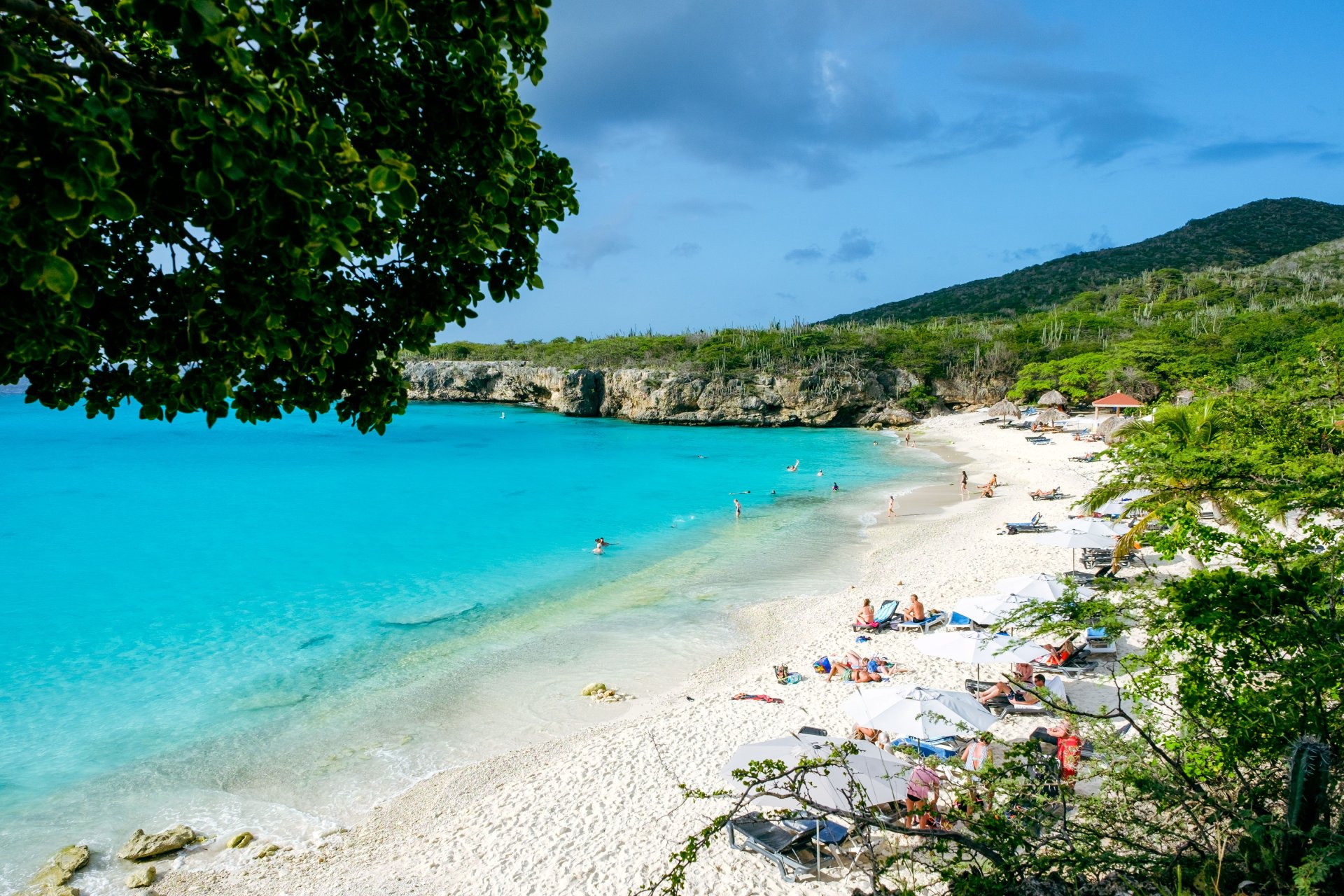
Curaçao generally experiences February highs near 86 degrees Fahrenheit with relatively little rainfall. It is under a Level 1 advisory, meaning travelers should exercise normal precautions. The island has an established medical center and intensive-care capability, although exceptionally complex cases may still require off-island transportation.

Barbados offers warm, comparatively dry winter weather and averages approximately 78 degrees Fahrenheit as a daily high across the year. The country is also under a Level 1 advisory and is considered generally safe, although pickpocketing and other crimes of opportunity occur in tourism areas.

Both islands have dependable tourism transportation and stronger emergency capabilities than many smaller Caribbean destinations. Their principal disadvantage is cost. February and March are desirable travel months, so accommodations and flights may command premium prices. Barbados is particularly suitable for travelers who want resort convenience and established institutions, while Curaçao appeals to independent travelers, divers and visitors interested in exploring beyond a single resort.


Southeast Asia

Southeast Asia can deliver excellent value, tropical weather and high-quality private care in major tourism centers. The greatest risks often emerge when travelers move from well-developed cities and resorts to smaller islands, remote beaches or long-distance road routes.


Southern Thailand

Southern Thailand offers some of the best value for accommodations, food and local transportation. February is generally warm and relatively dry in many popular areas, while March becomes hotter as the country approaches its summer season. Thailand’s average temperatures vary widely by region but can range from approximately 64 to 100 degrees Fahrenheit throughout the year. Thailand is currently under a Level 1 advisory, although travelers should exercise increased caution near the Cambodian border and in Yala, Pattani and Narathiwat because of conflict and unrest.

Medical care in Phuket and other major tourism centers is generally adequate, with good facilities available for emergency and routine care. Basic care is available on smaller islands, but English-speaking providers and advanced services may be harder to find. Transportation between major resorts is plentiful, but boats, scooters and long road transfers introduce risk. Travelers should select reputable ferry operators, wear helmets, avoid impaired driving and understand that an injury on a small island may require both marine and air transportation.


Oceania

Australia provides advanced infrastructure and strong emergency-response systems, but the country’s enormous size means that distance can still become a major medical and logistical factor.


Australia

Australia provides the strongest overall emergency-response, transportation and healthcare environment among these destinations. February is still summer, while March begins the transition into autumn. Conditions vary greatly: Sydney, Melbourne and Perth may be warm or hot, while northern Australia remains tropical, humid and exposed to cyclone and flooding risks. Australia’s Bureau of Meteorology emphasizes the continent’s substantial regional climate variation. Australia is under a Level 1 advisory and benefits from reliable public transportation, modern hospitals, trained emergency responders and political stability.

The tradeoffs are distance and expense. Long flights, higher hotel rates and costly domestic transportation may put Australia beyond the budget of travelers seeking a quick winter getaway. Natural hazards—including extreme heat, bushfires, surf, tropical cyclones and remote driving conditions—also require careful itinerary planning. Australia is extremely capable in an emergency, but travelers in the Outback or on distant islands can still be many hours from advanced care.


How Should You Choose?

The best destination depends on what “safe” means for your trip. Travelers prioritizing healthcare and emergency response should look closely at Australia, the Canary Islands, Barbados and Curaçao. Those seeking affordability may prefer southern Thailand, Panama or Cape Verde. Costa Rica is the strongest option for organized adventure travel, while Belize rewards experienced travelers who understand its medical and security limitations.

Before booking, compare the distance from your accommodation to a capable hospital, the availability of ambulances, road and ferry reliability, regional crime patterns, food and water safety and the feasibility of medical evacuation. Global Rescue’s own destination-focused content framework recognizes medical infrastructure quality as a core travel-planning topic rather than an afterthought.


The Global Rescue Connection

A sunny destination can still become dangerous when an illness or injury occurs far from appropriate care. Local emergency systems may stabilize a traveler without having the specialists, equipment or transportation needed for the next stage of treatment.

Global Rescue Destination Reports help members evaluate medical facilities, transportation reliability, security conditions and regional hazards before departure. During a trip, 24/7 medical advisory services connect travelers with medical professionals who can assess symptoms, review treatment and help determine whether local care is adequate.

When an illness or injury occurs away from a hospital, Global Rescue field rescue services can coordinate extraction from the point of emergency. If local treatment is insufficient, medical evacuation capabilities provide transportation to an appropriate medical facility or, when medically necessary, a member’s home hospital of choice. These services address the operational gap between expense reimbursement and actually conducting a rescue or evacuation.

Escaping winter should provide relief, not uncertainty. The strongest destination is the one whose weather, infrastructure, medical capabilities and risks fit the traveler, and whose emergency plan remains viable when the vacation stops going according to plan.