Article Highlights:

  • Tragically High Costs: Detailed breakdown of major high-altitude slide events, including the July 2026 Broad Peak tragedy that took the life of mountaineering legend Nims Purja and his team.
  • Extreme Recent Events: Analysis of recent extreme mountain failures, including the August 2026 Himalayan rock-ice collapse and California’s deadliest avalanche at Castle Peak.
  • Prediction Mechanics: Critical factors for evaluating avalanche risk, including slope angles (30°–45°), rapid weather/temperature spikes, and field “red flag” indicators.
  • Essential Rescue Gear: Comprehensive breakdown of the mandatory safety trinity (beacon, probe, metal shovel) alongside active tools like airbag systems.
  • Survival & Companion Rescue: Crucial tactical advice for surviving a slide and executing companion rescue searches within the vital 15-minute survival window.


Mountaineering is an endeavor defined by human courage, discipline, and the pursuit of nature’s most magnificent heights. Yet, above the snowline, the alpine environment operates under laws dictated solely by physics, weather, and geography. Among all the hazards encountered in high-altitude environments, from severe frostbite and pulmonary edema to rockfalls, avalanches remain the swiftest, indiscriminate and lethal threat facing climbers today.

In recent years, the frequency and severity of catastrophic slides across the world’s major mountain ranges have underscored a chilling reality: even the most experienced, elite mountaineers are vulnerable when thousands of tons of snow and ice collapse. Understanding how these disasters unfold, how to read unstable snowpacks and how to execute life-saving companion rescues are vital skills for anyone venturing beyond the trailhead.


Tragedy at Altitude: The Broad Peak Disaster and Beyond

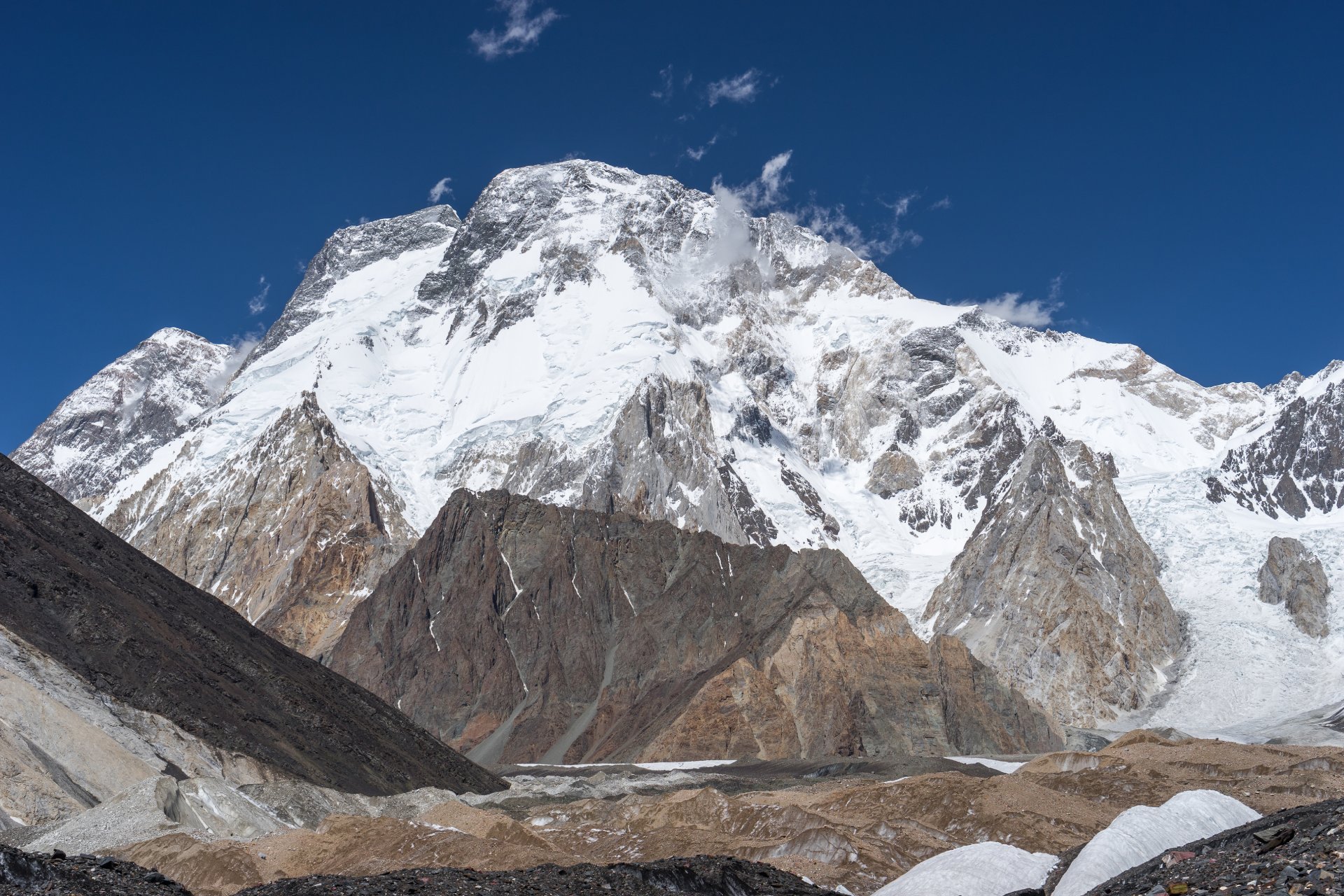
On July 30, 2026, the global climbing community suffered a devastating blow on Broad Peak, the world’s 12th-highest summit situated in the Karakoram range of Pakistan. A 10-person expedition led by legendary Nepali climber Nirmal “Nims” Purja, famed for climbing all 14 eight-thousand-meter peaks in record time and co-leading the historic first winter ascent of K2, was ascending between Camp 2 and Camp 3 at roughly 6,600 meters when a massive avalanche broke loose.

The violent slide swept the entire team over 2,000 feet down the steep mountain face into severe terrain near 5,700 meters. Tragically, all 10 members perished, including Purja, veteran Sherpa guides and international team members. The loss echoed across the globe, serving as a stark reminder that extreme altitude leaves zero margin for error.

The Broad Peak disaster is part of a continuing series of severe alpine events driven by changing mountain weather patterns. Less than a month after the Broad Peak tragedy, a massive hanging glacier and bedrock collapse near Mount Langtang Lirung along the Nepal-Tibet border triggered a catastrophic rock-ice avalanche and flood, registering as a localized 5.2 magnitude seismic event and causing over 1,000 casualties down the Trishuli River valley. And closer to home where slides can also occur, an intense winter storm near Lake Tahoe, California, in February 2026 triggered a massive slab avalanche on Castle Peak that buried 11 guided backcountry skiers, resulting in 9 fatalities, the deadliest single avalanche event in California’s history.

These events join a dark history of mountain disasters, including the 2015 Everest Base Camp avalanche (22 deaths), the 2014 Khumbu Icefall collapse (16 deaths) and the 2008 K2 Bottleneck icefalls (11 deaths).


Predicting the Slide: Recognizing Avalanche Conditions

Avoiding avalanche terrain altogether is always superior to surviving a slide. Avalanche prediction relies on evaluating three core components: terrain slope, weather conditions, and snowpack structure.

Terrain Angle Analysis: Slab avalanches, where a consolidated top layer slides off a weaker underlying layer, occur overwhelmingly on slope angles between 30° and 45°. Slopes steeper than 45° tend to slough snow frequently in smaller amounts, preventing large slabs from accumulating. Slopes under 30° rarely generate enough gravitational force to slide, though they can still be overrun by avalanches releasing from steeper terrain above.

Weather and Temperature Spikes: Snowpacks require stability to remain anchored to mountain slopes. Rapid environmental changes are primary triggers for natural slides. Heavy snowfall creates rapid accumulation adding immense weight before underlying layers can bond. Wind loading strips snow from windward slopes and deposits dense, heavily stressed “wind slabs” onto leeward slopes. Sudden warming or temperature spikes weaken the bonds between ice crystals, dramatically increasing slide risks.

Field Warning Signs (“Red Flags”): Climbers must remain hyper-vigilant for direct signs of instability. A hollow, booming sound (“whumpf”) underfoot indicates the collapse of a weak buried snow layer. Visible shooting cracks propagating across the snowpack surface, or fresh avalanche debris on nearby slopes of similar aspect and elevation, are immediate indicators that the snowpack is at or near its breaking point.


Preparation: Essential Safety Equipment and Planning

Venturing into avalanche-prone backcountry without proper safety equipment severely diminishes the likelihood of survival in an emergency. Every team member must carry and know how to operate the foundational safety trio:

The rescue trinity includes an avalanche transceiver (beacon) worn close to the body under outer garments. The beacon emits a constant 457 kHz radio signal. In the event of a burial, survivors switch their units to “search mode” to follow signal vectors to the victim. The second safety essential is a collapsible avalanche probe. This lightweight aluminum or carbon-fiber rod assembled to pinpoint the precise location and depth of a buried victim before digging. Finally, a metal snow shovel, not plastic since they break under the immense density of avalanche debris. Snow slide wreckage sets like concrete once motion stops. A durable metal shovel is critical for fast excavation.

All climbers, mountaineers and trekkers should consider more active safety technology like avalanche airbag packs, which inflate large balloons around the climber’s head. Using the physical principle of inverse segregation (where larger objects rise above smaller particles during motion), airbags significantly increase the likelihood of remaining near the surface of a slide.


Survival and Companion Rescue: Seconds Count

An avalanche requires rapid action. If caught, yell loudly to alert your companions, deploy your airbag immediately and fight to stay near the surface using vigorous swimming motions. Unstrap skis or snowboards if possible, as they act as anchors pulling you downward. As the slide slows, raise an arm across your face to create a vital air pocket in front of your mouth and nose before the snow hardens and inhale deeply to expand your lungs.

For survivors on the surface, time is the ultimate enemy. A buried victim uncovered within 15 minutes has a survival rate over 90%. After 35 minutes, survival rates drop below 30% due to asphyxiation. Surface survivors must instantly mark the last seen point, ensure the area is safe from secondary slides switch transceivers to search mode, pinpoint with the probe and execute strategic shovel digging immediately.


The Global Rescue Connection

While gear, training and meticulous route planning are fundamental to mountain safety, severe high-altitude medical emergencies, traumatic injuries and catastrophic avalanche events require resources that extend far beyond companion rescue. When an emergency strikes on an isolated Himalayan peak or in remote backcountry terrain, immediate access to world-class medical evacuation and field rescue becomes a matter of life and death.

This is where a Global Rescue membership becomes an indispensable part of every mountaineer’s and trekker’s standard protocol. Global Rescue provides point-of-illness and point-of-injury field rescue, medical evacuation and advisory services across the globe. Unlike standard travel insurance policies that often exclude high-risk activities or cap coverage at low altitude limits, Global Rescue is engineered specifically for extreme adventurers.

For those venturing onto major peaks, pairing a standard membership with the High-Altitude Evacuation Package is essential. This specialized protection extends field rescue capabilities up to extreme elevations, ensuring that specialized rotary-wing (helicopter) dispatch, high-altitude rescue teams and immediate transport to top-tier trauma centers are mobilized without delay or out-of-pocket friction. In unforgiving alpine environments where every minute counts, Global Rescue provides the critical lifeline needed to turn a catastrophic situation into a successful rescue operation.