
Categories:

Health & SafetyTravel
Share This:

Global Rescue Survey Finds Business Travel Is Returning

Experts predict business travel would return by fall, but a recent Global Rescue survey found more than half of business travelers (61%) have already taken their first multi-day domestic business trip. 

Experts predict business travel would return by fall, but a recent Global Rescue survey found more than half of business travelers (61%) have already taken their first multi-day domestic business trip.

“Business travel is returning due to climbing COVID-19 vaccination levels and the gradual reduction in government quarantine and testing requirements. Nevertheless, post-pandemic travel trepidations linger,” said Dan Richards, CEO of Global Rescue.  

International business travel is growing at a much slower pace. According to the survey, which polled more than 1,400 of Global Rescue’s current and former members between July 27-31, 2021, 17% of business travelers have already taken their first multi-day international business trip of the year. A little more than a quarter (27%) expect to do so between now and March 2022. Forty-five percent have no plans for international business travel. 

Why less global business travel? Travel risk management for international travel is complex. Employees have more pre-trip questions; need assistance with paperwork, such as vaccination documentation; and are frequently subjected to fewer flight options, more layovers and an increased chance of cancellation. Employers need travel risk management programs in place from prevention to awareness to response. According to a July poll by the Global Business Travel Association, 69% of respondents believe risk management and duty of care are more important than before the pandemic. 

“Never have business leaders been more aware and more concerned about the duty of care they have to their traveling employees,” Richards said. “Today, the risk profile for business travel is different, and business traveler awareness is at its highest levels.” 

hybrid-work-schedule

Business Travel Included in a Hybrid Work Schedule 

Work-from-home mandates have morphed into a hybrid work model of partial work from home and partial work from office. More than half of survey respondents (54%) who travel for business reported that their company is using, or going to use, a hybrid model of work on- and off-site. 

“If the pandemic demonstrated anything about remote working, it is that productive work can be done from almost anywhere – and people are going to take advantage of that,” Richards said.  

This hybrid work model will not reduce business travel, according to 61% of respondents. Despite the availability of online conferencing apps, 35% of business travelers said they expect video conferencing to replace about half of routine business travel in the future. Another 27% said they expect to use video conferencing sparingly and return to routine business travel for in-person business and sales meetings as the pandemic health threat abates.  

Sixteen percent said they believe video conferencing will replace most of the business travel for in-person business meetings and sales meetings. More than a fifth (21%) said they don’t use video conferencing in their business.  

“While video conferencing will likely reduce total business travel volume in the near term, there is no substitute for being in the same room with others,” Richards said. “While the days of traveling long distances for one meeting with one person could be gone forever, people will travel for business at scale into perpetuity.” 

According to a study by Forbes Insight, people believe they build stronger business relationships during face-to-face meetings, events and conferences. Global Rescue respondents agree: 90% of business travelers surveyed said in-person business and sales meetings are “without a doubt” or “generally” more successful than video conferencing. Technology is convenient, but in-person meetings build trust. 

What Business Travelers Want 

Informed travelers are safer travelers, and employees taking business trips want to know their employer has their back. The survey found the biggest concerns about future work-related travel are:  

  • being quarantined (29%) 
  • being infected with coronavirus (30%) 
  • border closing (23%) 
  • poor medical infrastructure at their destinations (10%) 
  • insufficient emergency response by their company during a medical or security emergency (6%) 

“Mitigating those risks falls to an organization’s chief security officer, travel manager and human resources director, who are accountable for the development and oversight of policies, programs and logistics protecting traveling staff,” Richards said. “Employees turn to them to do everything possible to keep them as safe as possible.”  

Travel risk management programs provide a duty of care responsibility to employees. Key components include prevention, such as intelligence gathering during the trip planning process; awareness, like a tracking program and alert system for travelers; and response, which would include medical assistance and field rescue should an incident occur.  

“All components are necessary to take care of employees and avoid exposing them to any unnecessary or undue risk,” said Richards. 

Global Rescue provides travel risk management consulting services to organizations of all sizes that need to meet duty of care requirements. For more information, click here. 

Share This:

Travel Is Roaring Back

72% of travelers have already traveled domestically; 26% have traveled internationally  Lebanon, NH – August 5, 2021 – Nearly three-quarters of travelers (72%) have already taken their first multi-day domestic trip of the year and…

72% of travelers have already traveled domestically; 26% have traveled internationally 

Lebanon, NH – August 5, 2021 – Nearly three-quarters of travelers (72%) have already taken their first multi-day domestic trip of the year and 26% have already taken their first international multi-day trip of the year, according to a Global Rescue survey of the most experienced travelers in the world.

“Economic recovery and the return of travel and tourism is underway due to climbing COVID-19 vaccination levels and the gradual reduction in government quarantine and testing requirements,” said Dan Richards, the CEO of Global Rescue and a member of the U.S. Travel and Tourism Advisory Board.

7-out-of-10 survey-takers (76%) are “much less” or “less” concerned about travel health and safety for the last half of 2021 compared to 2020. When border closings are not an issue, more than half of respondents (52%) said popular or crowded destinations would prevent them from traveling. Nearly a quarter of survey-takers (24%) reported that a location having insufficient medical facilities would cause them to stop them from making a trip.

“There needs to be predictability when it comes to pandemic protocols related to entering and departing countries,” Richards said. “The regulations change quickly and often, with little advance public notice, and those practices prompt people to delay booking travel. These micro-economic impacts are emblematic of a larger challenge,” he added.

Forty-three percent of respondents said they would pay a “Pandemic Recovery Fee” to travel to poorer countries suffering from dramatically negative economic impacts caused by COVID-19. Of those willing to pay such a fee, 17% would pay between $51-$100, 14% up to $50, 12% between $101-$250, and 5% more than $250.

“In the U.S. and Europe, where a substantial portion of the world’s wealth and GDP is generated, we can start traveling again and exporting the economic benefits of tourism to other countries dependent on our travelers. Collaboration among international health and government officials to get vaccines to those locations is smart, but we can also restart our travel with those countries to help them get out of their economic crises,” said Richards.

Half of respondents said they would travel internationally where possible and more than a quarter (28%) said they would only travel domestically. Nineteen percent said they would take longer trips and 21% said they would take advantage of discounts, deals and specials. Sixteen percent said they would only travel to places with modern health care facilities while 10% would take extra trips, and 8% said they would take less expensive trips.

About the Global Rescue Traveler Survey 

Global Rescue, a leading travel risk and crisis response provider, conducted a survey of more than 1,400 of its current and former members between July 27-31, 2021. The respondents revealed a range of support for travel expectations, behaviors, and safety concerns in anticipation of a return to leisure and business trips domestically and internationally. 

Contact Bill McIntyre at bmcintyre@globalrescue.com or 202.560.1195 (phone/text) for more information.

About Global Rescue

Global Rescue is the world’s leading provider of medical, security, evacuation and travel risk management services to enterprises, governments and individuals. Founded in 2004, Global Rescue has exclusive relationships with the Johns Hopkins Emergency Medicine Division of Special Operations and Elite Medical Group. Global Rescue provides best-in-class services that identify, monitor and respond to client medical and security crises. Global Rescue has provided medical and security support to its clients, including Fortune 500 companies, governments and academic institutions, during every globally significant crisis of the last decade. For more information, visit www.globalrescue.com.


Categories:

News
Share This:

The Ultimate A-to-Z World Travel Safety Kit

Categories:

News
Share This:

Survey: 72% of Travelers Have Already Traveled Domestically

Share This:

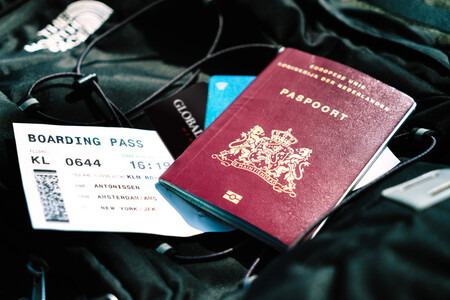
Safekeeping Your Travel Documents

Traveling internationally? It’s important to keep your travel documents safe — and accessible. Global Rescue travel experts provide general guidance around protecting and backing up travel documents.

Keeping essential travel documents and information safe — and accessible — during travel requires planning and preparation.  

If damaged or lost during travel, replacing these documents can, at best, be an inconvenience and, at worst, alter your trip plans from vacation enjoyment to bureaucratic Embassy and consulate visits. 

“Important documents during international travel go beyond just your passport,” says Harding Bush, a former Navy SEAL, an expert in high-risk travel and associate manager operation for Global Rescue. “Travel paperwork includes a driver’s license or other identity cards, medical insurance or evacuation service information, medical prescriptions, bank and credit cards, and your contacts list.” 

Make Copies 

Have physical and electronic copies of your passport, visas and entry stamps. The visa and entry stamp clarify the legal status of your visit.  

One copy will stay at home with a friend or family member. The other copy you’ll bring with you. Sometimes it is a requirement travelers carry their passports at all times and sometimes a copy is sufficient.  

“Understand the laws of the country you are visiting,” Bush said. “The country you visit determines this requirement — not your home country.”   

Start With a Travel Document Organizer 

First, you need a place to put your travel paperwork. There are a multitude of travel organizers, travel wallets and passport wallets on the market. Choose one that works for you. You will also need clothing with zippered pockets and a small backpack with multiple zippered compartments.  

The most crucial document you carry with you overseas is your passport. Your passport identifies yourself as well as your nationality and your legal status in the country you are visiting. You should always keep your passport close at hand: in a zippered pocket on your person. 

Other essential items, like copies of your travel paperwork, can be kept in a backpack. The backpack carries items you’ll use throughout the day: a rain jacket, sweater, water bottle, snacks and other items specific to your activity. The backpack goes everywhere with you — do not check it at the gate when offered by the airline. It goes in the taxi with you — not in the trunk.  

Use the room safe to store your passport if it’s not with you. 

Accessibility Is Important 

“Ensure the documents required are accessible. You want to be streamlined and not have to fumble or search for these items when needed,” Bush said.  

He suggests carrying a few dollars in your pocket “so you don’t have to take your wallet out for smaller transactions, such as tipping or buying a bottle of water,” he said. 

Electronic Storage 

Most travel documents can be conveniently stored on a smartphone. It’s fine to do so, just make sure all your information is backed up with physical copies. This includes phone numbers, which are usually just stored on your phone. 

“If your battery dies, you may not be able to recharge quickly enough and, in the meantime, you have lost access to a lot of important docents and information,” Bush said. “I have seen instances where the airline’s electronic reader was malfunctioning, and only those passengers with paper boarding passes could board.”  

You should have electronic copies of everything — passport, visas, credit cards and prescriptions. In addition to photos of each document saved in your phone, consider keeping them on a password-protected thumb drive. You can also e-mail this information to yourself or save it in drafts, making it permanently accessible.   

Other Digital Considerations 

Radio Frequency Identification (RFID) technology uses radio waves to identify people or objects. 

A RFID-protected wallet is essential to help protect the digital information on all your cards.  

You should also protect your documents and electronic devices from physical damage, especially in a maritime environment. This means zip lock bags for the documents in your backpack and shockproof and waterproof protection for your smartphone. Your backpack should have a carabiner on the top carrying strap so you can secure it while on board a boat. If you plan to use your phone while on board, it should be in a waterproof container with a lanyard attached to your person.  

According to the U.S. Department of State, water damaged passports need to be replaced. There are also descriptions of what is considered damage and what is considered natural wear and tear. The U.K. government has similar guidelines. 

If You Lose Your Passport  

As soon as you realize your passport is missing, you should notify local law enforcement and your home country’s consulate or embassy.  

Your hotel or guide service can likely assist you with contacting law enforcement to report the missing passport. Embassies will require a police report to move forward with replacement. There is also a good chance your lost passport could be turned into the police if found.  

“The police report can also function as a way to board aircraft for a domestic flight without having the usual required identification,” Bush said. 

Keep in mind: once you have reported your passport lost or stolen, it is invalidated by the State Department and cannot be used if it is found. 

The embassy will not consider a lost passport an emergency, and the replacement process will happen on their schedule, not yours.   

“You may have to wait over a weekend for the embassy to open or divert your travel for a visit to the consulate or embassy, a potentially inconvenient and expensive process,” Bush said. “U.S. embassies can issue an emergency passport, which may not be suitable for onward travel to countries other than the United States.” 

Losing your passport is inconvenient, but it’s not the end of the world — especially if you are a Global Rescue member. When Maredith Richardson lost her passport in Paris, Global Rescue security experts stepped in, managed the international administrative challenges, and quickly helped her obtain a passport replacement in less than a week. It’s just one of the many benefits of a travel protection services membership

Share This:

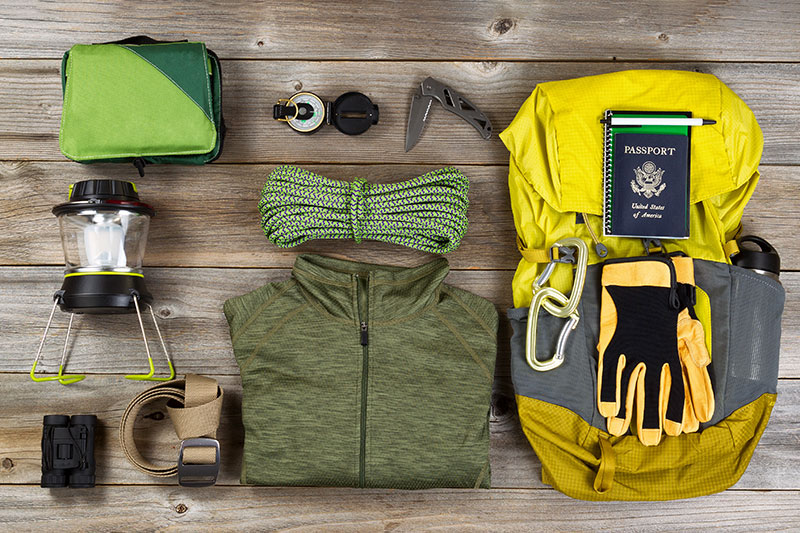
The Ultimate World Travel Safety Kit

Global Rescue’s ultimate world travel kit combines safety equipment, first aid items, survival kit components, and necessary gear for all types of travel — business, solo, family — and activities: mountain biking, fishing, hiking, climbing,…

Every day, Global Rescue’s travel health and security experts provide travel, health, safety, and security information for outdoor adventurers, families with children, students, and business travelers. Going into the backcountry? Be sure to bring your wilderness first aid kit. Taking a fishing trip? Make sure you have these fishing first aid items with you. Traveling to an area prone to winter weather? Pack items you might need for blizzard survival.  

But, for the first time, Global Rescue has compiled the ultimate world travel safety kit, which combines safety equipment, first aid items, and necessary gear for all types of travel — business, solo, family — and activities and circumstances: mountain biking, business conferences, fishing, family excursions, hiking, kayaking, climbing, cold weather camping and more. We’ve asked our medical operations and security experts, our Safe Travel partners, and our members for their go-to gear, listed here from A to Z. 

The list is not all-inclusive. Every traveler is different. Safe Travel partner travelhelix swears by these travel items: baby wipes (“an easy way to keep clean on the go”), sunscreen, bug spray, blister protection, and a quick-dry towel. But you don’t want to overpack — carrying items you may not need or don’t know how to use.  

“Building a travel kit is a dynamic process,” said Jeff Weinstein, medical operations supervisor at Global Rescue. “You’ll need to build it to the destination as well as the activity. If you plan on high-risk activity, like mountain climbing, you’ll want to add more trauma items. If you’re visiting a tropical destination, you may want to add sunblock or bug spray.” 

Weinstein encourages travelers to take only what they need and pack as lightweight as possible. “You can overprepare,” he said. “You don’t want your travel kit to become just another thing you have to carry with you.” 

“Everyone has a different idea of personal essential items to pack for a fly-fishing trip you are taking, no matter where, fresh or saltwater,” said Patrick Pendergast, director of international travel at The Fly Shop and Global Rescue Safe Travel partner. Pendergast provided many of the items fly fishers might need in their adventure travel kit in this comprehensive guide. “These items are in addition to what is normally packed in your kit — items that might just save another person’s life, or maybe yours.” 

Alcohol-based Hand Sanitizer 

Long before the coronavirus pandemic, hand sanitizer was the best way to wash your hands without soap and hot water. According to the CDC, effective hand sanitizer is at least 60% alcohol.  

If you’re traveling, it’s portable and easy to pack — and now the Transportation Security Administration allows passengers to bring up to 12 ounces of liquid hand sanitizer in carry-on bags.  

Batteries 

Pack extra batteries for everything: communication devices, cameras, radios, headlamps, and flashlights, to name a few. If you’re driving, consider packing a portable jump-start battery pack, which typically has USB plugs for charging phones or tablets. If you’re in the backcountry, pack a solar charger you’ve tested before the trip. If you’re flying, “it is important to note certain types of batteries, such as Lithium-Ion batteries, cannot be checked and must be carried on,” Weinstein said. 

Communication Devices 

Global Rescue suggests having two forms of communication available in the backcountry: cellular and satellite. “From a Global Rescue perspective, a good communications device is key or members won’t be able to access our services,” said Dan Stretch, operations manager at Global Rescue. 

You’ll also need a communications plan: informing someone back at home where and when you are going and how to get in touch with you. This plan must include what to do and who to contact if you don’t return as planned. Always update this person if your plans change.   

Duct Tape 

travel-pack-with-duck-tape-and-other-essentials

Did you know you can use duct tape to extract a splinter? 

“Duct tape is about the handiest adhesive ever invented and the uses are endless,” said Pendergast. “I once watched a bush pilot in Alaska repair the skin on an airplane wing that got gnawed on by a bear and flew us out. In a pinch, you can use it to repair a torn wader or bandage a blister.”  

Scott Mitcham, medical operations senior specialist at Global Rescue, advises using it sparingly on the skin, especially if you are older. “Duct tape has an extremely aggressive adhesive. One should take care with regards to applying duct tape to their skin as it can rip the thinner skin of elderly patients,” he said. 

Energy Bars

Whether you’re road-tripping, camping, hiking, or traveling on business, it’s always a smart idea to pack some extra food. Make sure you have a day’s worth of rations if you’re in the backcountry; Global Rescue staff recommend packing a few energy bars. Women’s Health notes energy bars are designed to replenish burned calories and you should look for ones with nuts, oats, dried fruits, and at least 5% of protein to curb hunger. 

Eye Protection   

Snow blindness, a painful eye condition caused by overexposure to the sun’s ultraviolet (UV) rays, doesn’t occur only in the polar region. It can affect anyone enjoying snow sports — hiking, snowshoeing, skiing, and snowmobiling — or water sports — rafting, boating, kayaking, or canoeing — in the bright sun. Be sure to pack and wear eye protection, like wraparound sunglasses with photochromic lenses (lenses that darken upon exposure to light) and block out 100% of UV rays. 

Travelers to a desert area should consider wraparound goggles. “While sunglasses look cool in your vacation photographs, they will not protect your eyes from blowing sand. Goggles, either those designed for desert wear or skiing, are the best protection,” Dr. Edward Otten, past president of the Wilderness Medical Society, a Global Rescue Safe Travel partner, wrote in his article, Beyond the Ten Essentials.

Electrolyte Powder

“You don’t just need to drink water when you are dehydrated; you need to replace your electrolytes,” said Weinstein. 

Harding Bush, associate manager of operations at Global Rescue, recommends packing a powder. “The powder is lighter than bringing an electrolyte beverage and easy to add to your filtered water,” he said. 

First Aid Kit 

first-aid-kit

Pack useful items in a small, waterproof container so you’re prepared for the frequently encountered issues — blisters, stomach upset, scrapes, and cuts — on a trip. You can start with a commercial first aid kit, but then personalize contents to match your adventure travel needs. You may not need a headlamp if you’re day hiking on a local trail, but you might want one if you are camping for a week in the great outdoors.  

“Where we go, you can’t walk out,” said Amy Ray, president of The Sisterhood of the Outdoors, a company dedicated to creating opportunities for women to hunt, fish, and learn to shoot. “Although we’re most often dealing with cuts and scrapes — a slip of a knife is the most common injury — it’s important to have the basics with you at all times.” 

Traveling near or around water? Weinstein recommends vacuum sealing your first aid kit to protect it from water exposure. 

“I would vacuum seal a medications module, a bandaging module, etc. You can cut a little triangular notch in the side to make it easier to rip open when needed,” he said. “Then I would vacuum seal the entire bag. This way if you open one module for something everything else is still protected. I would also carry extra zip-lock bags to seal an opened module.” 

Gloves

Gloves will protect your hands from heat or cold, bites and cuts, and provide extra grip for outdoor activities. Match your destination (hot or cold) and location (land or water) with the appropriate glove options: fleece gloves, wool gloves, sun gloves (“When it’s buggy,” said Danny Frank of Frigate Travel), or fingerless gloves. You should also include medical-grade gloves in your first aid kit. 

Headlamp

A headlamp leaves your hands free to do other things, such as to render aid or perform survival tasks unhindered.  

“Light is the primary obstacle to proceeding safely. Whether you choose a battery-powered headlamp or something you can charge via USB, ensure you have backup power on hand. Consider carrying a secondary light source in addition to your primary headlamp,” Conrad Lucas writes on Skyblue Overland’s blog

Iodine Tablets 

Clean drinking water is crucial. There are many different techniques to purify water: UV rays, boiling, and chemicals, including iodine tablets. The benefits of iodine tablets: they are portable, easy to use, and will kill most of the bacteria, viruses, and protozoa swimming around in the water.  

“Purification is important, but so is filtration,” Weinstein said. 

Dave Keaveny, a medical operations specialist for Global Rescue, agrees. “I use a Sawyer filter 99% of the time,” he said. “If I am very concerned about the water, I will also use iodine, or I will boil it. But people with shellfish allergies cannot use iodine tablets.” 

Jacket

high-quality-insulated-jacket

“It’s easier to stay warm than get warm,” Bush said. A jacket, appropriate to the activity or destination, is key.  

“Having the right warm, insulating layer can make or break your enjoyment level on a trekking or climbing trip around the world,” said Ian Taylor, owner, and CEO of Ian Taylor Trekking and a Global Rescue Safe Travel partner. He recommends choosing a jacket based on the month you decide to travel and the adventure you have chosen. “Your jacket may be one of the most important purchases you will make. Don’t skimp on the jacket and ruin your adventure.” 

Danny Frank of Frigate Travel and Global Rescue Safe Travel Partner, recommends clients bring a Patagonia Nano Puff and a Patagonia River Salt Jacket on Alaska or Oregon fishing trips. 

Knife

It’s must-have gear for fishing and hunting trips — and it also comes in handy if you need to cut a zip tie, shave, pop a bottle cap or cut clothes to access a wound. 

“I carry a pocket knife every day of the year and there are few days I don’t use it for something,” said Pendergast. “Make sure you pack it in your checked bag; TSA will not let you board a plane with one.” 

He also recommends carrying a multi-purpose tool, like a Leatherman. “Most have a file, knife, pliers, bottle opener, awl, and screwdriver. It may replace your pocket knife,” said Pendergast. “I used mine fixing an outboard motor at the mouth of the Copper River in Alaska. The guide forgot his.” 

Lip Balm 

The Wilderness Medical Society adds it to a winter rescue pack. It has more uses than just moisturizing your lips; it can soothe cracked skin on your hands, unstick a zipper, and clear fog on sunglasses or goggles. Purchase one with sunscreen for extra protection or a medicated lip balm to reduce pain from hot spots. 

Moleskin

Moleskin is a thin yet heavy cotton fabric used for blister prevention and care. It is soft on one side and has adhesive on the other.  

“Nothing will stop a trek, ascent, or hike like a bad blister,” Weinstein said. “Not being prepared to treat a blister can turn a nice trek into a situation where you have an infection from a popped blister, causing you to be stranded and requiring medical care.” 

Navigation Tools

navigation-tools

No matter how well you know the area or terrain, mistakes can be made. Never leave home without navigation tools, including a GPS unit with cellular or satellite coverage, a map, and a compass.  

“It’s crucial to understand your area and the cardinal direction to move to in the event of an emergency. GPS and smartphone navigation apps are a good idea, but batteries die and machines break,” Bush said. “Know how to use a map and compass. Review the map and your location before setting out. Have your map properly folded, so your location is easily referenced, and store it in a waterproof case. There are no substitutions for a printed map.” 

Over-the-counter Medications 

Be prepared to treat minor ailments long before they turn into an emergency. “Travelers should be well-stocked to treat colds, pain, swelling, diarrhea, constipation, cuts, and dehydration, to name a few,” Weinstein said. 

Many countries require medicines to be transported in original packaging. Prescription and over-the-counter medications without packaging run the greater risk of being confiscated. The U.S. Department of State suggests checking with the foreign embassy of the country you are visiting or transiting to make sure your medications are permitted. 

Parachute Cord

Parachute cord, a lightweight nylon rope originally used in parachute suspension lines, is often used as a general-purpose utility cord.  

“I love this stuff,” said Pendergast, noting he often brings 25 feet with him on trips. “The uses of parachute cord are endless: clothesline, wading boot laces, making a splint or replacing an outboard motor cord.” 

Pair parachute cord with a tarp for a quick shelter. “You’ll want something to protect yourself from the rain or wind if you’re lost or immobile in the wilderness,” Weinstein said. 

Quality Footwear

“Anyone around water knows waders and boots are crucial,” Frank said. “You have to stay dry out there.” He recommends breathable waders and wading boots with non-felt soled and no spikes. 

Jeff Callison, co-owner of Deadhorse Outfitters and Global Rescue Safe Travel partner, recommends a set of boots that fit the environment but are comfortable and capable of environmental changes. “Your feet are the most important part of your body when in the backcountry,” he said. 

Don’t forget water shoes if you’re swimming, kayaking or canoeing. “Unknown bottom conditions can end a swimmer’s day very quickly if they are not properly prepared for it. When swimming in lakes, ponds, rivers, or other natural landscape bodies of water, always were shoes of some kind to protect your feet from underwater debris,” Mitcham said. 

Rain Gear

“I guided and worked in Alaska for many years and, since then, I don’t leave home without a rain jacket, no matter what the weather predictions are,” said Pendergast. “In my mind, it’s the most important item in your entire kit.” 

Bush agrees. “Even if rain is not in the forecast, I bring one. Why? Because if it is waterproof, it is windproof. Anything designed to keep water and wind out will keep heat in. Throwing a waterproof shell over a light fleece can form an effective cold weather solution.” 

Socks

Ignoring proper foot protection is one of the easiest ways to ruin an adventure, especially if it’s a multi-day trip. “Great socks — ideally made of Merino wool — can make all the difference,” said Danielle Aronson, co-founder of travelhelix and a Global Rescue Safe Travel partner. “Smartwool socks are our go-to. They let our feet breathe when we’re working up a sweat during the day and keep us warm when it’s cold at night. Regardless of your brand preference, robust socks will ensure happy feet for a happy adventure.” 

Tourniquet

“The injury that will kill you the soonest: bleeding out within minutes if you hit the right artery,” said Weinstein, a critical care paramedic with an Advanced Wilderness Life Support (AWLS) certification. “You should always have a commercially available tourniquet with you. Don’t buy the cheap ones. You want it to be combat-proven and quality made when you are trying to save a life.” 

Travel Protection Services 

Global-Rescue-Membership-Card

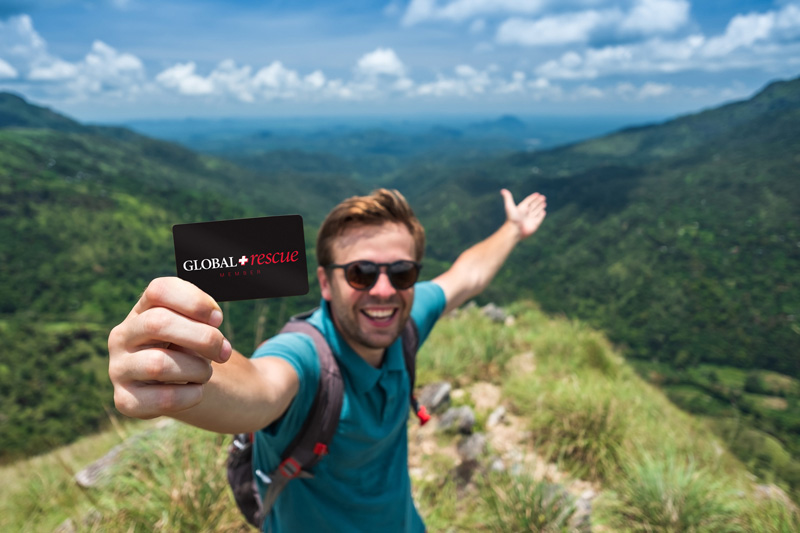
Help is just a phone call away if you have a travel protection services membership. It offers more than travel insurance, which is mainly protection for your wallet. Global Rescue is about protecting your health. When the unexpected happens during travel, Global Rescue’s team of medical and security experts help you from the point of emergency — regardless of where you are in the world. 

Underwear

We’ve talked about the outer layer — a jacket — but under layers can be just as important to keep you warm, cool, or dry. Women’s Hiking Crew Adventures, a Global Rescue Safe Travel partner, recommends “eliminating all cotton, including cotton underwear, and replace it with synthetic or polyester clothing with moisture-wicking properties to avoid rashes and chafing. Cotton and other materials that absorb sweat can lead to hypothermia among other problems, so replace them as soon as you can. Synthetic underwear can be a bit pricey, but worth it, especially since they are quick drying.” 

Vaseline 

Did you know that vaseline can be used as a fire starter? A candle? A lubricant for hinges or zippers? Removing resin from your hands? 

Waterproofing

“Even items ‘guaranteed waterproof’ need to be waterproofed,” Bush said. “A guarantee just means the manufacturer will replace the item if it is damaged by water. For example, a manufacturer’s guarantee for a backpack will not fix your flooded out GPS three days into a nine-day wilderness trip.” 

Keaveny will line his backpack with a heavy-duty trash bag and cover it with a pack cover on wet days. Bush will store items needing protection in a zip-lock bag, then in a waterproof sack, then in a standard backpack.  

“The only truly waterproof backpacks are dry bags, and dry bags can’t replace a conventional backpack,” Bush said, “but there are dry bags you can put in a backpack for a maritime transit.”  

X-tra Copies

Make color copies of your passport, any visas, and driver’s license. Keep a copy with you, separate from your passport, and keep a copy at your office or with friends and family. This can speed up the replacement process if it becomes necessary. In today’s travel world, you’ll also want documentation of a negative PCR test and vaccination certification and make extra copies of those as well. 

Yellow Card

If you’re traveling to a country with a high risk of yellow fever (mainly equatorial Africa), you’re going to want to bring your Yellow Card, a paper certification of vaccination issued by national health agencies and enforced by The World Health Organization. Yellow fever is a mosquito-borne viral disease and vaccination is required for travel to many tropical and subtropical areas. 

A vaccine may not be required for entry, but Global Rescue medical experts suggest researching health risks in your destination country.  

“Many countries may have certain viruses or parasites you should protect yourself against — even if it is not required on entry. Typhoid fever, Japanese encephalitis, and Hepatitis A are some examples,” Keaveny said. “We highly recommend the rabies vaccine. Rabies is 100% deadly if contracted. Some countries, especially developing nations, do not have the medicines available to treat a potential exposure.” 

Zip Ties

A zip tie is a thin, flexible nylon strap. One end is threaded through a locking mechanism on the other end, making it a convenient and effective tool with many uses. 

“Gosh, these are so handy,” Pendergast said. “I have used zip ties to strap a reel to a rod, splint a broken finger, as a zipper pull, attach a luggage tag, and secure zippers on my duffel bag. They are light, essential, and don’t take up any room.” 

26 Reasons You Need a Membership

Although you might think a travel protection membership is only for dramatic helicopter rescues from remote locations, many of our members take advantage of our in-house medical advisory services

“We have a lot of calls about altitude and acute mountain sickness, ski injuries, sinusitis and sinus infections, and traveler’s diarrhea,” Weinstein said. “The majority of the conditions we treat are preventable if members acclimatize, take the appropriate medication and consult a doctor before traveling.” 

Global Rescue’s Member Services team — full-time staffers on the job 24/7/365 — triages every call. Members with medical questions are immediately connected to the Global Rescue Medical Operations team of critical care paramedics, nurses, and physicians. The on-site team is supported by the Elite Medical Group, the Johns Hopkins Emergency Medicine Division of Special Operations, and Partners HealthCare.  

No request is too small. We want you to call with questions. Asking early about a symptom or injury is an important preventative step, and it’s always good to get in front of an issue before it becomes a crisis. 

Unlike other companies, the medical, security, and intelligence expertise is all in-house at Global Rescue. The operations centers are staffed by experienced nurses, paramedics, and military special operations veterans. Experts have experience with hazardous environments, peacekeeping operations, Himalayan expeditions, protection services as well as wilderness skills, and crisis response training. Global Rescue members can tap into this wealth of knowledge with every phone call.

Enroll today by clicking here

Share This:

When Are Cruise Ships Sailing Again?

Ever since the cruising industry went full astern at the start of the pandemic, U.S. cruise lines have been barely treading water — until, recently, when the CDC made moves to allow sailing to restart…

Celebrity Cruises’ Celebrity Edge recently dropped its lines and headed out into the open ocean from Fort Lauderdale’s Port Everglades. A year and a half ago, no one would have ever batted an eye at the idea of a 130,000-gross ton U.S. cruise ship setting sail. But, on that day, 15 months after the Center for Disease Control (CDC) first issued the No Sail Order, the event made waves as the first commercial cruise liner to leave a U.S. port with paying passengers aboard since the COVID-19 pandemic began…and the CDC rescinded its order.

“Celebrity is just the first of several lines that plan to restart cruises out of Florida and other U.S. ports over the coming weeks as big-ship cruising finally resumes in U.S. waters,” reported Gene Sloan, one of the nation’s best-known cruise experts, who was actually aboard Celebrity Edge’s “maiden” voyage and documented the whole experience for fellow cruising fans.

While it’s certainly an indication of sunnier skies ahead for the industry that was among one of the hardest hit by the pandemic, it’s not “smooth sailing” quite yet — at least not in a pre-Covid-normal sense. Yes, more and more cruise ships have restarted operations in destinations abroad (Europe and Asia, in particular), and smaller vessels — particularly those built for river and expedition cruising — are trending for their immersive journeys with fewer passengers. Yet, it will likely be early 2022 that we see the majority of the U.S.’s major cruise mega-ships return to normal service. Here’s what you need to know if you’re looking to book and board in the near future.

When Will Cruises Sail Again from U.S. Ports?

Before the pandemic, nearly half of the world’s cruises departed from U.S. ports, according to a 2019 report from Cruise Lines International Association. After a year of not being able to sail in U.S. waters under the No Sail Order, many major cruise lines chose to jump ship and relocate their operations to other destinations around the world in the meantime. Royal Caribbean, Norwegian, and Virgin Voyages, which usually depart from Florida, have all moved forward with announcing sailings from other parts of the world, including Greece, Jamaica, and the Dominican Republic, and the U.K.

Conversely, several cruise lines do have plans to launch restricted passenger voyages this summer from U.S. ports like Miami and Port Canaveral, Florida; Galveston, Texas; Seattle; New York; and Los Angeles pending CDC approval. Travel Weekly maintains a regularly updated list of lines and ships that have or are currently scheduled to launch, as well as those who have had to continue to postpone.

What Requirements Do Ships Need for a CDC Green Light?

The CDC requires the implementation of the kind of safety measures you’d expect, including screening passengers before embarking, contactless transactions aboard, enhanced cleaning and sanitation measures, upgraded medical facilities, as well as isolating and contact-tracing any passengers who may test positive during the cruise.

Once a cruise line has these measures in place, the CDC will permit them under one of two options:

  1. They can skip straight to offering restricted (paying) passenger voyages as long as they require that 95% percent of passengers and 98% of crew members are fully vaccinated.
  2. They can conduct what’s known as a simulated cruise to practice the CDC safety measures with a group of volunteer (non-paying) passengers, but vaccinations will not be required to board the ship (which must carry no more than 10% of its max capacity). At least one successful simulated voyage per ship is required before they earn their Conditional Sailing Certificate.

While the former scenario is a faster way to get paying passengers back on the water (and this was the route Celebrity Edge took with a 99% vaccination rate across its 1,200 passengers), not all cruise ships plan to mandate passenger vaccinations, particular those popular with families with passengers below the age of 12, which is why lines like Disney have opted to go with option two.

Do Passengers Need to Be Vaccinated and Show Proof of Vaccination?

vaccination-passport

Again, based on the above two pathways to begin sailing again, it will be situational based on policies varying by cruise line and ship.

Your best bet is to do your research thoroughly and regularly, especially as these requirements will likely be evolving. That’s already the case in Florida, where a new law that went into effect on July 1 prohibits businesses from requiring customers to be vaccinated or show proof of vaccination — cruises being no exception. While some cruise lines have dropped the requirement of proof of vaccination, Carnival and Norwegian are keeping it in place (and can result in penalties of up to $5,000 per violation) — at least for now.

Will All Passengers Be Required to Get a COVID-19 Test Before the Cruise?

Vaccinated passengers will not, but passengers who are unvaccinated will have to deal with certain protocols to board the ship, including COVID-19 testing at their own cost, using either the PCR or the rapid test. Again, this may change in the coming months as more ships take to the seas and the data informs what decisions the CDC and the cruise lines make.

Do Passengers Need to Wear a Mask?

For cruise ships with high rates of vaccinated passengers, the CDC’s latest May guidelines are in line with the recommendations the agency has made on land: Fully-vaccinated Americans can return to normal life and don’t need to wear masks or social distance in most settings — that means in casinos, bars and restaurants, spas, theaters and more. While social distancing is recommended in crowded or tighter areas — such as stairwells, gangways, elevators, and pools — the CDC will not be requiring it.

As for ships without the vaccination minimums, the mask-wearing requirements will be stricter; however, operators can establish certain sections of the ship to be accessible only to fully vaccinated passengers where masks and physical distancing will not be enforced.

Scott Mitcham, a senior supervisor in operations at Global Rescue, points out another possible factor. “Hand-washing is somewhat abandoned by most travelers on a cruise ship,” said Mitcham, who was in the Coast Guard for more than 20 years and has extensive experience aboard cruise liners and vessels. “This is not intentional; it’s the ‘theme park mindset’ with so much to see and do. Away from the cabin and out in common spaces, there’s less access to and emphasis on handwashing.”

What’s the Entertainment Experience Going to Be Like on Board?

Shows, buffets, casinos, rock-climbing walls — they’ll all still be there, just with limited capacity and certain social-distancing or masking-wearing requirements enforced for non-vaccinated passengers. 

One blogger who was aboard Celebrity Edge reported being pleasantly surprised by “the full gamut” of activities being available to them: Everything from trivia sessions and game show-like challenges to speakers to dance classes and live music. 

What’s The Experience or Expectation at Different Ports?

cruise-ship-at-port

This is another area that you’re going to need to do research ahead of time depending on the itinerary. While passengers have permission to explore ports from the CDC — whether that’s on their own or with an independent tour guide — what they can do largely depends on the different country’s rules and regulations. For example, if you’re not fully vaccinated, you may not be permitted to disembark and some locations may also require people to have proof of recent COVID tests. Some countries may require you to book a shore excursion, others may ask that you remain in your cruise line “travel bubbles.”

What If You Book a Trip and It Gets Postponed?

As we’ve learned in the last year, nothing’s 100% predictable when it comes to COVID. Just because the CDC gives a cruise the greenlight to go doesn’t mean it will always happen. Take, for example, Royal Caribbean, which recently had to push the inaugural sail of its ship Odyssey back from July 3 to July 31. Or Disney Cruise Line’s Disney Dream test cruise that was supposed to set sail on July 6, but has been postponed with no future date confirmed at the time of this posting. 

That said, operators have naturally had to become much more flexible. As a result, in almost all cases if your trip is canceled or postponed, you will be able to reschedule or receive a refund. And, in general, at this time, lines are also permitting those who booked to cancel ahead of time with no penalty.

What if Someone Tests Positive for COVID on a Ship?

As long as all the proper measures are taken, the hope is cruise lines will have the ability to manage any cases and avoid a large outbreak across the ship. That means having cabins set aside for quarantines, contact-tracing procedures, and plans for how to debark sick passengers.

There have been a couple of examples of cruisers testing positive already: Two cases on Celebrity Cruises’ Celebrity Millennium, which launched June 6 from St. Maarten, and another two on Royal Caribbean’s Adventure of the Seas, which launched on June 12 from Barbados. No known spread of the virus occurred in either incident.

Are Travel Protection Services Necessary for a Cruise?

travel-protection-cruise

Given how new a return to big-ship cruising is, it’s a good idea to make sure you have a plan to get care if cruising overseas. While there will be a doctor and medical services aboard your ship, once you disembark, your care with them ends. While Global Rescue’s travel membership involves coordination with the medical staff on board, we essentially pick up where they leave off: at the port, where our experts will determine — whatever your illness or injury — your further plan for care and evacuation should you need it.

Share This:

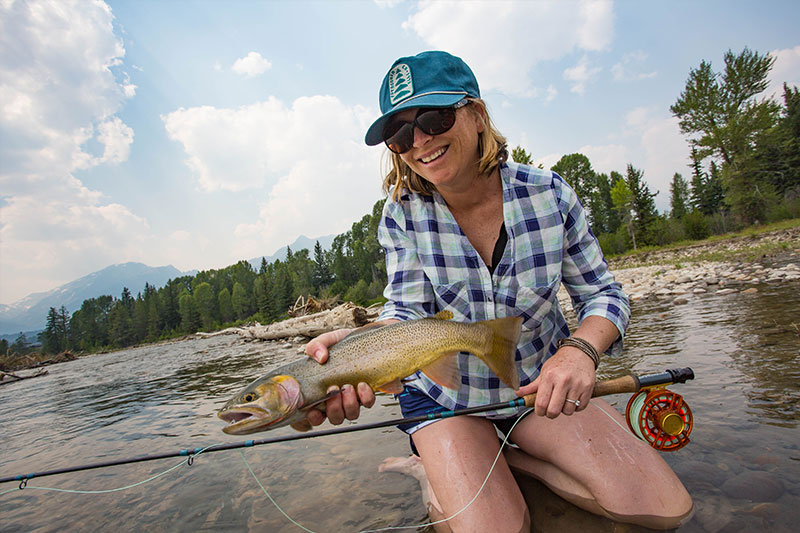
Fly Fishing Needs More Women

Fishing is one of the most popular outdoor recreational activities in the United States. In 2019, pre-pandemic, more than 50 million Americans took to the water for freshwater, saltwater and fly fishing activities. But only 36%…

Fishing is one of the most popular outdoor recreational activities in the United States. In 2019, pre-pandemic, more than 50 million Americans took to the water for freshwater, saltwater and fly fishing activities. 

Only 36% were women. 

Fly fishing is also on the rise. In 2018, 100,000 people went fly fishing, increasing to a record number of 7 million fly fishers in 2019. 

Only 30% of fly fishers were female. 

“Fly fishing is a game of stalking, accuracy and precision. Women are just as competent as men in the sport, yet it is still male-dominated in most parts of the world,” said Julia Zema, campaign manager of digital marketing at The Orvis Company. 

Fly Fishing with Female Experts 

Two Global Rescue Safe Travel Partners want to increase the diversity of fly fishers. 

“It’s time for women to enjoy the friendships, personal growth and camaraderie that goes along with the sport of fly fishing,” said Stephanie Albano, founder and owner of Finatical Flyfishing, Idaho-based fly fishing travel business by women for women. “My company offers the chance to fly fish with women in leadership positions in the fly fishing industry today. Many of their stories are very inspirational.” 

Albano mentions Patty Reilly, the first commercial operator to get a permit and guide in Argentina.  

“Patty Reilly has guided all over the western United States — from Jackson Hole and Yellowstone to Alaska and many rivers in between,” Albano said. “She is one of the most fun, down-to-earth people you’ll get the chance to fish with and she is co-hosting a 2022 trip to Ascension Bay, Mexico with Finatical Flyfishing.”  

Another female guide, Karlie Roland, was featured in Angler’s Journal as one of the premier guides Nick Price had fished with around the world. 

“Karlie Roland grew up in Utah fishing with her family, who took many trips to the Henry’s Fork. She worked in a fly shop in Bozeman, ran a women’s fly fishing program in Seattle, and returned to guide on the Henry’s Fork for Trouthunter,” said Albano. “Karlie will be one of the guides during Finatical Flyfishing’s women’s trip on the Henry’s Fork in August.”  

Diversity on the Water 

In 2017, The Orvis Company launched 50/50 on the Water, an initiative to introduce more women to fly fishing and promote those women already making a mark in the fly fishing world. The initiative grew to “60,000 users of #5050onthewater and an online community that’s taken on a life of its own,” Zema said. 

The campaign is under construction to stretch beyond binary genders and continue to encourage diversity on the water.   

“Originally, the goal was to get more women on the water as only a fifth of anglers identify as women. Now we are re-branding in a way that is more inclusive,” said Zema.  

Gender, age and skin color aside, fly fishing “builds community through a shared sport in the outdoors. We teach each other new skills, travel in the backcountry together, and bond on the water,” said Zema. “Fishing provides time and space to build a relationship with nature. Plus, it’s outrageously fun!”  

Orvis frequently offers women’s-only fly fishing classes at the Orvis Fly-Fishing School in Manchester, Vermont.  

“We aspire to educate and inspire women in a supportive, fun and noncompetitive environment,” Zema said. “Whether you choose our one-day or two-day school, you’ll leave with the knowledge and know-how to cast like a seasoned angler. Our instructors help you with everything from setting up the rod to fly selection to how to safely release your catch.” 

Learning About Nature 

fly-fishing-nature

Not only are you bonding with nature, but you’re learning about it as well.  

“Learning about different ecosystems helps me become a better angler,” Zema said. 

Julie Meissner, a fly fishing guide for more than 25 years and a river trip guide for more than 40 years in the Sun Valley and Stanley, Idaho areas, wants everyone to learn something during their day on the river.  

“Rarely do I guide a trip that doesn’t incorporate sharing and teaching opportunities for not only fishing, but for plants, geology and even local gossip,” she said. “It’s hard not to learn something on the river every time you go out.” 

Fly Fishing Safety Practices 

Fishing isn’t as high risk as some sports.   

“We do not see many fishing injuries,” said Jeffrey Weinstein, medical operations supervisor at Global Rescue. “I would say the most frequent are hook related, or falls.”  

Weinstein, with training and experience in austere medicine and wilderness rescue, likes to be prepared for all possible situations. He offers a list of essential items to include in a fishing first aid kit

“People may be on prolonged fishing expeditions, possibly at sea or in remote areas,” he said. “Minor injuries can become big issues if left uncared for while trying to get out of a remote area.”   

As Global Rescue Safe Travel partners, Finatical Flyfishing and Orvis provide an extra level of protection to their guides and clients with a travel protection membership. Whether you’re fishing close to home or abroad in a remote location, a Global Rescue membership expects the unexpected so you don’t have to. 

“I encourage women to try fly fishing in a safe environment. A women’s environment can take some of the pressure off and give many women a chance to meet other women who enjoy the sport,” Albano said. “Guides like Roland, Reilly and Meissner and companies like Global Rescue inspire women to get out there and live life to the fullest.”  

Share This:

10 Reasons You Need a Travel Protection Membership

You’ve traveled before with no incidents. Why do you need a travel membership today? Here are 10 ways a travel membership can have your back. 

You’ve traveled before with no incidents. Why do you need a travel membership today? Here are 10 ways a travel membership can have your back. 

1. You Are Ill or Injured While Traveling

A travel protection membership evacuates members from the point of illness or injury to the nearest appropriate hospital, clinic or medical provider.

2. You Need to be Transferred to a Different Care Facility

medical-transfer

Perhaps the hospital doesn’t provide the care you need. A travel protection membership can transport members to a vetted medical center or their home hospital of choice.

“The closest medical facility isn’t always the right one. Global Rescue gets you to the most appropriate hospital for your illness or injury,” said Dan Stretch, operations manager at Global Rescue.

3. You Have a Medical Question

Sometimes you just have a question about a symptom. Available 24/7/365, a travel protection membership team can direct you to the best local medical resources around the world so you are not left guessing about how to best address your health concern.

“Our team of medical professionals include paramedics, nurses and doctors. We handle calls for cuts and stomach upsets to more severe illnesses and injuries, like chest pains and serious trauma,” said Michael Lovely, operations supervisor at Global Rescue.

4. You Have a Travel Question

travel-question

How do I replace my stolen passport? Where is the nearest pharmacy? Travel questions are answered by in-house experts on your first call.

“The process to get an appointment for passport replacement could take weeks. The Global Rescue team handled it completely, got it hammered out within a couple of hours and got me into the embassy for an urgent passport replacement appointment,” said Maredith Richardson whose passport was stolen in France.

5. There’s a Terror Attack or Civil Unrest

One call, email or in-app message will put you in touch with a security team with years of military special operations expertise to provide the best advice for your situation.

“You can’t just have one plan. You need to have secondary and tertiary plans in place. We develop redundant air providers and ground options for operations related to civil unrest or terrorism. Just in case,” said Harding Bush, a former Navy SEAL and associate manager operation for Global Rescue.

6. A Tragedy Happens

Death overseas is not a frequent occurrence, but a mortal remains transport is a service included in a membership.

“Every travel adventure comes with risks including the ultimate hazard, the loss of life. It’s rare but it happens, and when it does, surviving loved ones face a slew of end-of-life tasks, including how to bring the deceased back home from their trip. Having mortal remains transport services as part of your travel protection saves your family and friends time, money, paperwork and unnecessary guesswork under duress,” said Bill McIntyre, Global Rescue communications director.

7. You Need Coronavirus Testing Before, During and After Travel

A travel protection membership can help travelers find coronavirus-capable hospitals and testing facilities.

“A member traveling with his family called on Global Rescue to help identify local urgent care centers where he and members of his family could be tested for virus antibodies and infection. The Global Rescue medical operations team investigated the area, vetted multiple resources and provided the member with the needed information,” said Jeff Weinstein, a paramedic and medical operations supervisor for Global Rescue.

8. Your Travel Includes High-Risk Activities

remote adventure travel

It doesn’t matter if you are climbing Mount Everest, paragliding in the Everglades or scuba diving off a remote island shore. A membership covers your adventure activities with no limitations.

“We’ve rescued injured climbers stuck in a remote Pakistan mountain range, an adventure racer suffering a dangerous infection in Fiji, a group of Middlebury College students caught up in the civil unrest known as Arab Spring, and honeymooners from Nepal following a massive earthquake,” said Dan Richards, CEO of Global Rescue.

9. One-stop Destination Information

Travelers don’t have to puzzle together a patchwork of sources to sort out entry requirements, immunization recommendations or safety levels. A membership includes destination reports for 215 countries with up-to-date travel information — medical, security and intelligence data — in one place.

“The pandemic has redefined how we travel. Travelers looking to get back on the road are re-examining what precautions and protections they need in the current environment. We know the must-haves for any trip in today’s world,” Weinstein said.

10. Peace of Mind

With a travel protection services membership, a vacation is truly time to relax, escape and enjoy. Travelers have access to a virtual team of experts: a doctor, a paramedic, a translator, a logistics expert, an intelligence analyst and a security advisor.

“Global Rescue kept me settled, calm and informed,” said U.K businessman Michael Blease-Shepley regarding a dangerous quarantine in Nigeria.

It’s no surprise that a Global Rescue travel protection membership can provide assistance for all 10 reasons. It’s the perfect way to travel prepared, no matter where your travels take you.

Categories:

News
Share This:

2021’s Troublesome Tick Season: 8 Pro Tips to Properly Protect Yourself

Share This:

Mission Briefs: April to June 2021

The pandemic has altered the way many people and businesses function, but not for Global Rescue personnel, who continue to manage medical, security and travel operations worldwide. Here are highlights from some of our most recent operations.

After the pandemic was declared more than a year ago, international borders closed and travelers hustled to return home quickly and safely. Vacations were canceled, business trips scratched, and leisure travel plans abruptly cut short. More than a year later, vaccinations are being distributed, air travel is bouncing back steadily and international borders are opening up. 

Throughout the onset of the pandemic and without any disruption, Global Rescue has responded to the needs of travelers at home and abroad. In a typical month, Global Rescue performs hundreds of operations in dozens of countries. Below are highlights from some of our most recent operations in various locations. 

Nepal – An Estonian woman in her mid-30s was climbing in Nepal when she called Global Rescue from Mount Everest Basecamp reporting severe fatigue, shortness of breath, and a cough. Her oxygen saturation was dangerously low at 60% and physicians suspected she was suffering from High Altitude Pulmonary Edema (HAPE) or Pneumonia with Pharyngitis. Medical staff and Global Rescue performed further examinations and recommended her for immediate helicopter evacuation to the Hospital for Advanced Medicine & Surgery in Kathmandu for treatment. Two days later, her condition improved and she was discharged with instructions for self-care and follow-up. Less than a week after her evacuation and treatment, her treating physician cleared her.  

Papua New Guinea – Children fall off their bikes all the time. But it’s not every day that they fall and sustain a serious injury while in a different country with no readily available health facility nearby. Such was the case for a 9-year-old American boy, who suffered a blow to his chin after a bicycle accident in Madang Province, Papua New Guinea. After Global Rescue organized a helicopter evacuation to a clinic 170 miles away in Ukarumpa, the child was stitched up, but diagnosed with a broken jaw that required surgery. Unfortunately, Australia — the nearest location to find a qualified surgeon — had a travel ban in place, so Global Rescue chartered a medical evacuation flight back to their home state in the U.S. The flight path required a stop in Sydney and Global Rescue successfully coordinated with the Ministry of Health on behalf of the family to obtain an exemption from the country’s required quarantine.  

California, United States – A Global Rescue member was hiking alone in California he was caught in a sudden snowstorm. With conditions worsening, the member took out his Bivy satellite communications device and activated it. When the Bivy Stick is paired through Bluetooth with a smartphone you have two-way satellite communications capability. The smartphone does not require cell service for this – it is working via the satellites through the messaging device. Through his Bivy communications device, he connected with the Global Rescue operations team experts who obtained details on the member’s location and condition. The operations team initiated a rescue. They proceeded to coach the member through the best safety procedures including remaining in his location, insulating himself from the ground and building a fire. Local search and rescue resources were deployed and successfully recovered the member and brought him to safety.  

Mozambique – Despite receiving clearance from his cardiologist before traveling to southeast Africa, a week into his hunting trip, a 70-year-old Texas man with a history of congenital heart disease found himself experiencing the tell-tale signs of a heart attack: edema in the legs and difficulty breathing. After a TotalCare Consult physician consultation, Global Rescue recommended the member receive an in-person evaluation as soon as possible and conducted a field rescue from the remote hunting camp to Instituto Do Coração (ICOR) in Maputo. After being diagnosed and treated for congestion, the member was released from the facility to his hotel, where our medical staff continued to monitor his condition until he was deemed fit to fly back to his home state.  

Nepal – Exhaustion and altitude sickness are far from the only calamities climbers face when summiting 29,032-foot Mount Everest. A painful eye condition called snow blindness can also occur – and that it did for a 27-year-old Indian man while he was descending from Camp 3 to Camp 2. Despite treating himself with an eyepatch and eye drops at the advice of the Base Camp physician, the member reported after two days the pain was worsening. Global Rescue was contacted and a field rescue was set in motion. After a helicopter evacuation to a hospital in Kathmandu, the climber was prescribed an antibiotic and ointment eye drops and cleared to return to his hotel. In a follow-up call from Global Rescue the next day, he reported his eyesight had improved and the pain was now manageable. 

The Bahamas – During a trip to Grand Bahama, a husband contacted Global Rescue on behalf of his 40-year-old wife, reporting that she was experiencing sharp pain in the lower left side of her stomach, as well as frequent vomiting. While her tests conducted at Freeport’s Rand Memorial Hospital (RMH) ruled out appendicitis/pancreatitis, she once again found herself consistently vomiting a few days later. Global Rescue facilitated a call between our doctors and RMH’s treating doctor and she was re-admitted to the hospital, where the general surgeon and our medical team agreed on an air ambulance transfer back to the U.S. as she was not fit to fly commercially. She was successfully evacuated to  Fort Lauderdale, Florida, where she underwent an endoscopy and was diagnosed and treated for Acute Gastritis. She was cleared that day and the couple was able to return to their home in Pennsylvania. 

Nepal – A 38-year-old Nairobi woman was trekking at an altitude of 5,300 meters (17,388 feet) in Gokyo, Nepal when over two days she suffered increasing symptoms of severe headache, shortness of breath, vomiting, fatigue, dizziness, loss of appetite, and difficulty sleeping. She successfully descended a few hundred meters (1,300 ft) but her symptoms persisted. Global Rescue was notified and, following a medical evaluation, it was determined that she had acute mountain sickness. Treatment was started and airborne evacuation to Lukla Hospital was initiated. After treatment and follow-up consultation, she was cleared by a pulmonologist with instructions to allow her body to fully recover by avoiding any strenuous activities, including additional ascents.  

Share This:

Global Rescue Champions Adventure Travel

The Adventure Travel Trade Association (ATTA) was founded in 2004 to give adventure travel companies a voice. Global Rescue, an early believer in ATTA’s mission, was recently honored as an Adventure Champion for 15 years of membership and support.

Seventeen years ago, the Adventure Travel Trade Association (ATTA) was founded to give adventure travel companies a voice.  

“The United States doesn’t have a federal bureau of tourism, like other countries, although many states have tourism departments,” said Russell Walters, regional director for North America and an original advisory board member. “ATTA was a way for smaller, fragmented adventure companies to share best practices and learn from each other.” 

Adventure tourism is a large market with many niche players. Adventure travel may involve exploring a remote location, venturing into the wilderness or learning about a new culture. It may include air, water or land activities from paragliding to scuba diving to mountaineering. Members — destinations, lodges, tour operators, outdoor educations and travel advisors — needed a community of their own to share ideas and innovations. 

“ATTA filled a void,” Walters said. “The association held networking events in the early days, bringing folks together. Global Rescue was an early adopter and believer.”  

Seventeen years later, Global Rescue is still a believer. The New Hampshire-based pioneer of field rescue was recently honored by ATTA as an Adventure Champion. “Private sector organizations must be ready and agile as adventure tourism grow. Working with organizations like ATTA help the industry’s leaders stay continuously attuned to always-evolving situations in the adventure tourism world so we can, in turn, keep our services properly tuned when it comes to meeting the community’s needs,” said Dan Richards, CEO of Global Rescue. 

“ATTA Adventure Champions are the vanguards of the adventure travel industry. In a world where the temptation in the tourism industry is to focus on volume, these leaders chose the often more challenging terrain of responsibility and sustainability over easy profit,” said Shannon Stowell, founder and CEO. “They are true believers in the power of adventure travel and have made an impact on the direction of ATTA and on the industry as a whole.” 

Adventurers First to Travel 

adventure-travelers

After more than a year of do-it-yourself, close-to-home outdoor activities, adventure travel will be the first return-to-travel segment.  

“It’s the nature of the adventure traveler to be first in the country, first in the area,” Walters said. In addition to his position with the association, Walters owns a rafting and snowmobiling company in Maine. “It was a slow season last year but travel opened up in June – and we saw a flight to nature. People came out in droves to spend time outdoors. Now tour operators and guides are adapting to new visitor patterns and a growth in demand.”  

There’s still some uncertainly around travel but Walters predicts it’s going to be busy this year and the coming years. The adventure travel market was already a growth industry before the pandemic, and is expected to grow to 3.1 billion by the end of 2026. 

ATTA’s focus expanded from North America to worldwide long ago, hosting events in Europe and hiring personnel in multiple continents and time zones. Today the association fosters new conversations with members across the globe, all dealing with “their local, compartmentalized issues,” Walters said. “Destination marketing has changed to destination management. With an influx of new visitors, locals need to be prepared. We’re providing education around the new ways of doing business.” 

ATTA’s reach has also gone beyond member travel companies, expanding directly to the end consumer, the traveler. 

“As a trade organization we haven’t necessarily been focused on consumers, but we see the opportunity to be able to prepare travelers, to be able to talk directly to consumers about sustainability, climate change and appreciation of the destination communities. We want everyone to get back into remote locations — sensibly, sustainably, responsibly and with local advice,” Walters said. 

Travel Safe 

Global-Rescue-to-The-Matterhorn

Part of ATTA’s conversation is about preparedness. Adventure travel sometimes requires special skills, extra safety measures and expert supervision. The pandemic has also added a new level of required travel expertise.  

“There are different protocols, mandates and challenges on a daily basis,” Walters said. “Global Rescue’s services are really important to adventure travel companies. We are passionate about running our businesses but we often need expert advice and guidance to keep up with the latest local and global restrictions.” 

In the early days of ATTA, “it was important for Global Rescue to meet members and have that one-on-one dialogue. The same is true today,” Walters said. “With the changing restrictions and personnel, there’s a constant awareness of the importance of travel advisory, emergency rescue services and travel insurance. Travel isn’t getting any less complicated.” 

Global Rescue is in good company; many Global Rescue Safe Travel Partners are also ATTA members including WHOA Travel, Todos Santos Eco Adventures, Active Africa, Portugal Nature Trails, Wildland Trekking, Atlas Obscura, H+I Adventures and Zara Tours, to name a few. By working together and with ATTA, the adventure travel industry is better and safer. 

“Global Rescue does something complex — there’s such a breadth of services from advisory to evacuations — and are experts at it,” Walter said. “These 24/7 capabilities across the globe are something members want for themselves and customers traveling with them.”