
Categories:
Health & SafetyTravelApril 12, 2021

Since January 2020 when COVID-19 was identified in Wuhan, China, Global Rescue has fielded thousands of calls about traveling during the coronavirus outbreak.
COVID-19 is a new coronavirus that has not been previously identified in humans. While it’s true the annual flu kills more people, albeit at much lower rate, scientists, physicians and travelers are familiar with the highs and lows of a flu season.
With COVID-19, there are still a lot of unknowns — and this is what worries travelers.
“Are there any recommendations for travel to Taiwan as a stopover during a trip to India? Do you know what is happening on the ground there?”
“I am looking to fly through Hong Kong and wanted to make sure it is currently safe to do so?”
“Do you have specific reports on the virus yet? We are traveling to Vietnam.”
Here’s advice from Global Rescue experts for travel safety in a coronavirus world.
1. Evaluate options
As long as you follow reputable hygiene and social distancing precautions, the odds are in your favor that you will not contract coronavirus. If you do contract coronavirus, the odds are in your favor that you will survive.
Questions you need to ask yourself before travel:
- Are you aware that borders can close without notice?
- Would you be okay with recovery in a foreign hospital?
- Do you understand the protocol to prove you are contagion free may not be well understood in your location?
- If you are not able to return home by air travel, are there other transportation options?
- Do you realize your family will not be able to visit you?
2. Assess your health
A pre-travel health consult is always recommended before traveling. COVID-19 is widely reported as more dangerous for seniors and people with a history of health conditions. Travelers with these characteristics should think think about their increased risk and ask a doctor for advice before a trip abroad.
According to China’s National Health Commission (NHC), 80% of coronavirus fatalities occurred in people over the age of 60 and 75% had an underlying disease.
While the Centers for Disease Control and Prevention (CDC) notes there’s still a lot to learn, current information does suggest older people and those with severe chronic health conditions, such as heart disease, lung disease and diabetes, are at higher risk of developing more serious illness from COVID-19.
3. Research your destination
The Global Rescue intelligence team is closely monitoring the outbreak, regularly updating a daily coronavirus report. The detailed report contains the latest information on restrictions and flight status updates, along with outbreak locations and data, signs and symptoms and advice for travelers. Members may also access real-time alerts for travel warnings through the My Global Rescue mobile app.
“As fewer and fewer countries remain coronavirus-free, travelers should gather information about the extent of the outbreak in their intended destination and make a decision consistent with the severity of the situation,” says Dan Richards, Global Rescue CEO.
4. Follow travel advisories
Be sure to do thorough pre-travel research for international travel. Start by visiting the U.S. Department of State website to check for any travel advisories for your intended destination.
The Department of State issues its travel advisories in four levels. When a country is listed as a “Level 4,” the Department of State advises U.S. citizens to avoid traveling to the destination or to leave as soon as it is safe to do so.
Be aware of varying levels. While the Department of State issues an overall travel advisory level for a country, levels of advice may vary for specific locations or areas within a country. For example, you might find the country you’re going to is listed as a Level 2 – Exercise Increased Caution, but a particular area of your destination might be listed as a Level 3 – Reconsider Travel.
Also consider any travel health notices for your destination, which are issued by the CDC to inform travelers and clinicians about current health issues.
5. Plan for restrictions
Global Rescue recommends travelers carefully review all coronavirus control policies for their destination before departure. Defer travel if there is a chance of being quarantined due to coronavirus.
Every traveler should be aware that restrictions — like mandatory quarantines or entry denials — can be imposed without warning.
Individual countries can also impose travel restrictions without warning. Borders may close without notice.
“Travel uncertainty will continue for at least a few weeks,” Richards said. “Travelers should plan for restrictions, cancellations and involuntary quarantines for an uncertain length of time.”
6. Practice safe hygiene
Dr. Carmen Dolea, Head International Health Regulations Secretariat of the World Health Organization, recommends etiquette similar to the flu or any respiratory infection. Dolea’s recommendations include screenings, testing and washing your hands often.
Other health and safety experts suggest social distancing, avoiding contact with sick people, working from home and self-quarantining to help reduce virus exposure.
7. Prepare for new guidelines
In countries with ongoing transmission of COVID-19, plan for an entry or exit screening. Screenings include taking a temperature, checking for symptoms (like a cough) and possibly a questionnaire to collect history of exposure or contact information.
Now some countries require documentation of a negative test result and/or proof of vaccination. Other countries are considering digital health passports. Do your research on the paperwork needed before travel.
8. Get travel protection services
At the end of many articles with information about COVID-19, you’ll typically find a recommendation to add travel insurance.
IMG Signature Travel InsuranceSM is the perfect add-on to a Global Rescue membership, providing coverage against a variety of unexpected expenses.
Global Rescue TotalCareSM members have access to a team of medical experts for real-time video consultations and treatment, without leaving home. Doctors are board-certified and licensed in 48 states.
Get a price estimate
Estimate
$0.00
Please answer all questions for estimate.
Categories:
Health & SafetySecurity & IntelligenceTravelApril 9, 2021
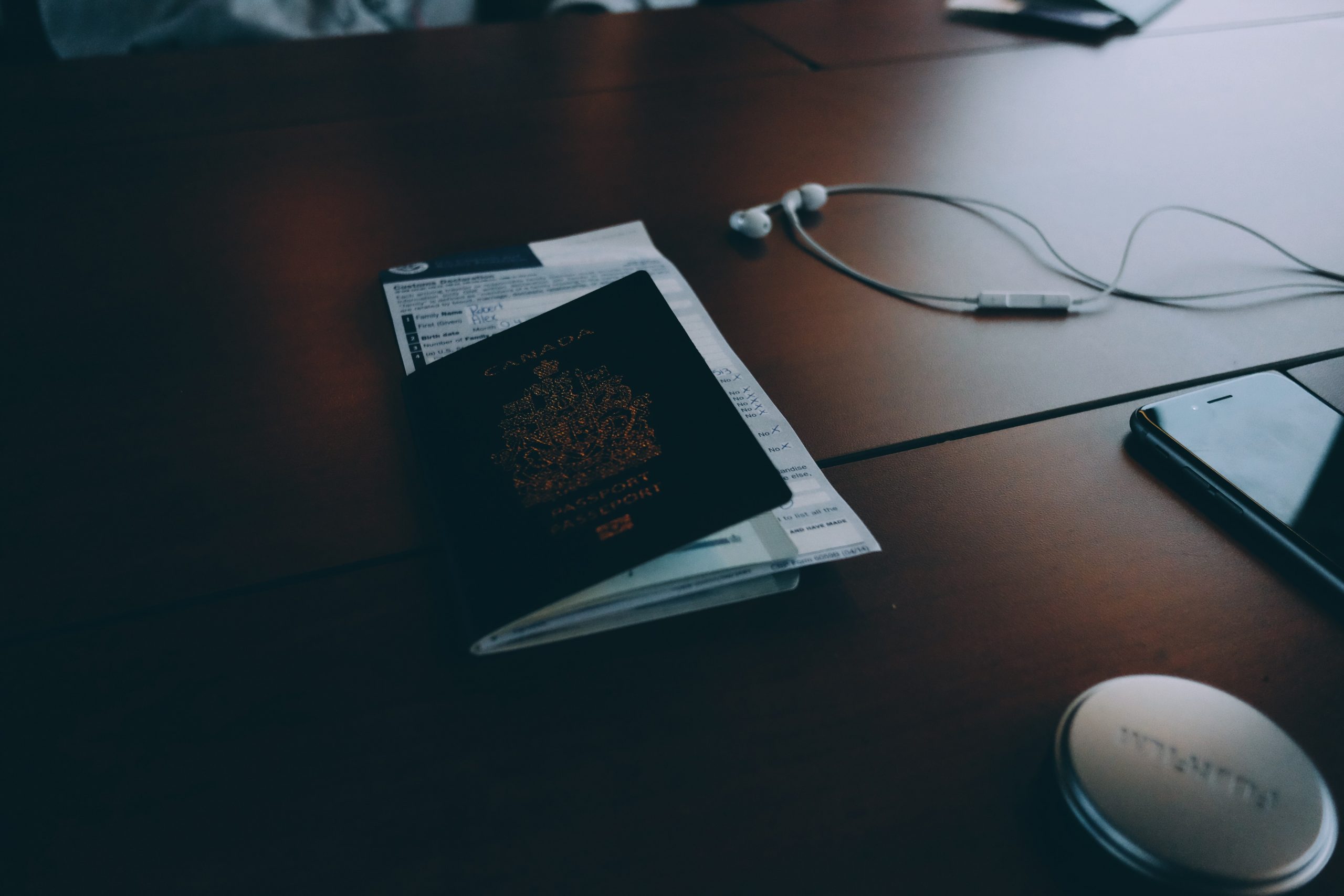
Traveling? Be prepared for paperwork.
A Global Rescue member traveling to Costa Rica requested proof of her Global Rescue membership and her travel insurance policy before her trip. The letter needed to be in English and Spanish and specifically address the three questions the Costa Rican government requires: the validity of the travel insurance policy during the dates of visit, coverage for medical expenses and coverage for quarantine lodging while in Costa Rica.
Another Global Rescue member was denied boarding a flight to the Turks and Caicos Islands because the dates on their travel protection membership and IMG travel insurance policy were incorrect.
“Travelling in the COVID era is a minefield,” the member wrote. “The dates per se are fine, but the specific form required by Turks and Caicos must reference specific benefits — and that we won’t become a burden on the state.”
“Having the correct travel documentation right now is critical: passport, vaccinations, health insurance, even travel insurance. There is no question that we are entering a new normal,” said Daniel Richards, Global Rescue CEO.
Paper Chase
If you are boarding a flight to the United States, you will need to show a paper or electronic copy of your negative test result to the airline. Once you arrive at your destination, public health officials might request to see it as well.
It’s not the same for every airline — Australian airline Qantas plans to ask passengers to provide proof they’ve had a COVID-19 vaccination if they want to fly into or out of the country — and requirements vary for every country. Greece is currently allowing tourists with a negative COVID-19 PCR test to visit starting May 17. Other countries, like Cyprus, currently say travelers who can provide proof of vaccination upon arrival will no longer have to present a negative COVID-19 PCR test or be subject to quarantine.
“COVID is treacherous, but equally onerous is the paper chase required by other countries to enter,” said a Global Rescue member. “PCR tests, insurance(s), special (extensive) authorization applications — one application was 11 pages long. The form is submitted online for clearance and authorization is either granted or denied. No authorization to enter, no travel.”
The lack of uniformity is also an opportunity for dodgy behavior.
“I know one person who travelled roundtrip between Switzerland and Thailand through Amsterdam flying a major airline on a faked COVID-19 test photoshopped using his friend’s legitimate test result. The same person tried this scam entering Spain recently and it didn’t work. There is a lack of uniformity in the methods used at international borders to verify test certificates,” said Roger Hyde of Dulabab Journeys, a U.S.-based travel company and a Global Rescue Safe Travel Partner.
Vaccine or Testing?
In January, Iceland started providing vaccine certificates to citizens to help them avoid border restrictions. The country will also recognize vaccine passports from other countries, allowing visitors to skip testing or quarantine rules if they show proof of full COVID-19 inoculation. But not every country will require proof of vaccination for entry. Testing and quarantines may continue to be the norm as the vaccine continues to roll out worldwide.
Either way, proof of testing or vaccination is currently a paper system.
According to the CDC, airlines require a negative test result for international arrivals to the U.S. with “sufficient personally identifiable information on the test result to ensure a match with the person’s passport or other travel information. This could include but is not limited to name, date or birth, age, passport number, etc.”
Countries in Latin America, Asia and Africa require a yellow fever vaccine and immunized travelers carry the Yellow Card, a paper certification of vaccination issued by national health agencies and enforced by The World Health Organization. U.S. COVID-19 vaccine recipients have something similar: a small white card called a COVID-19 vaccination record card with the vaccine received, the date received and the location you received it.
But Daniel Richards, CEO of Global Rescue, told The Washington Post he thinks all testing and vaccination information will soon be stored electronically.
Companies and countries are developing what travelers will eventually need: a trackable, verifiable and portable system that could keep pace with a vaccine rollout expected to cover the entire world’s population by 2024.
The CommonPass, a way to digitally document health status while traveling, is currently in trial. International Air Transport Association (IATA) offers the IATA Travel Pass, a digital platform to validate and authenticate all country regulations regarding COVID-19 passenger travel requirements. Delta and American Airlines are using a mobile app called VeriFLY that works like a health passport, allowing international visitors to the U.S. to verify they’ve tested negative for COVID-19.
The move to digital doesn’t eliminate concerns.
“There are issues with individual and civil liberties with tracking health information,” Richards said. “There are also bad actors around the world who might want to get access to that information. Creating a system that meets the necessary security requirements while respecting individual’s rights is going to be challenging.”
What to Do in the Meantime
While the technology is being developed and tested, here are some steps to keep you on the road and in the skies.
- Check with your destination country and take the required COVID-19 test at a certified lab in due time before traveling.
- Check your health insurance and see if it covers costs when you are abroad. If not, sign up for international health care coverage in case you need to cover medical expenses while abroad.
- Investigate travel protection memberships in case you get ill or injured while traveling and need transport to a hospital. Not every membership covers COVID-19 so be sure to ask.
- Have all of your travel information in one place: vaccinations, coronavirus test results, proof of health insurance, proof of travel protection services, passport, driver’s license, etc.
- Passengers whose documents are in a language other than English should check with their airline or aircraft operator before travel.
- Get documentation translated, if necessary.
- Make triplicate copies: carry one copy on your person, store one in your luggage or carry on and leave one with a reliable person back home.
Global Rescue provides members with advisory and transport services in connection with COVID-19 in the same manner as any other infectious condition. So long as it is safe for both the member and the transport team and there are no rules or regulations either in the member’s location or the destination prohibiting it, Global Rescue will provide transport services to members. Click here to learn more.
Categories:
NewsApril 9, 2021
Lebanon, NH – April 6, 2021 – LUX Life Magazine, a U.K.-based premium lifestyle publication, named Global Rescue winner of the “Best Travel Risk Management Solutions Organization – USA” in the magazine’s 5th annual Travel & Tourism Awards.
“Global Rescue is the only vertically integrated travel risk management solution, taking up a duty of care for all, from private members such as individuals and their families, government employees and enterprise corporate clients,” said Michael Pusey, Editor at LUX Life Magazine.
The annual LUX Life Travel & Tourism Awards are conferred to nominees who demonstrate expertise within their field, dedication to customer service and a commitment to promoting excellence.
“Global Rescue provides its consumer, enterprise, and government clients with unparalleled resources to address the increasingly challenging and complex world we live in,” said Dan Richards, CEO of Global Rescue, member of the U.S. Travel and Tourism Advisory Board at the U.S. Department of Commerce and a Global Member of the World Travel and Tourism Council.
Global Rescue’s pioneering methods and model have secured its reputation as the most forward-thinking services of its kind.
“The company provides the most up to date services available both in terms of the technology it uses and the training of its personnel, delivered by teams of critical care medical experts and military special operations veterans,” Pusey said.
Global Rescue has been offering medical evacuation throughout the pandemic in response to the COVID-19 crisis.
“It recognized the outbreak early, immediately sending out worldwide alerts to its members, repatriating hundreds of individuals and providing updates to the public, the press and to business leaders. Global Rescue responded to the pandemic by eliminating the more-than-100-mile rule that it previously held, providing support for its members venturing out around their private abodes,” Pusey said.
“Global Rescue handles high intensity and complex situations as well as the smaller tasks during travel such as advice on a destination or what to do if a passport is stolen,” he said.
About the LUX Life Magazine Travel & Tourism Awards
The LUX Life Magazine (circ. 238,000/2,000,000 annual page views) Travel & Tourism Awards cover all travel and tourism markets including: travel agencies and services, food and beverages providers, lodging and accommodations management, transportation, entertainment and tours. The 2021 Travel & Tourism Awards are judged purely on a merit following in-house research and analysis of online and public domain information as well as any materials supplied by nominees.
About Global Rescue
Global Rescue is the world’s leading provider of medical, security, evacuation and travel risk management services to enterprises, governments and individuals. Founded in 2004, Global Rescue has exclusive relationships with the Johns Hopkins Emergency Medicine Division of Special Operations and Elite Medical Group. Global Rescue provides best-in-class services that identify, monitor and respond to client medical and security crises. Global Rescue has provided medical and security support to its clients, including Fortune 500 companies, governments and academic institutions, during every globally significant crisis of the last decade. For more information, visit www.globalrescue.com.
Categories:
Health & SafetySecurity & IntelligenceTravelApril 2, 2021
You’re not alone when you board that plane, train or ship. Your Global Rescue membership is backed by 16 years of travel crisis experience. Global Rescue members travel with a virtual team of experts: a doctor, a paramedic, a translator, a logistics expert, an intelligence analyst and a security advisor.
More Than a Card
Behind every membership, there are Global Rescue professionals ready to help you travel better and safer — before, during and after a trip.
Global Rescue operations centers are staffed by experienced physicians, nurses, paramedics and military special operations veterans. Team members have experience with hazardous environments, peacekeeping operations, Himalayan expeditions, protection services as well as wilderness skills, crisis response training and medical evacuations.
It’s like having your own protective detail on standby, prepared to help when you need medical or security advice or a field rescue.
That protection is tailored to member needs and available for a spectrum of travel issues: lost passports to broken bones to sudden coronavirus lockdowns.
You may not need the entire team at once, but they are there, at the ready, for Global Rescue members.
Whether you are traveling with family or traveling on business, here’s how each Global Rescue expert can help during your trip.
Intelligence Analyst
Global Rescue has a team of intelligence experts researching travel destinations and tracking possible risks 24/7. Your Global Rescue membership gives you access to a wealth of data — through the app, online or with one phone call — to help you plan your travel.
Even after you’ve researched and selected your destination, Global Rescue keeps travel risk information at your fingertips. You can set up real-time alerts to keep you apprised of any health or safety issues while you are on your trip.
“To keep travelers prepared and informed, the Global Rescue intelligence team publishes detailed reports, real-time alerts and analyses on more than 217 countries and principalities,” said Melanie Goldberg, senior intelligence analyst at Global Rescue. “This means members always have the latest information on conditions and potential threats around the globe.”

Translator
It can be frightening to lose a passport or visit a doctor in a country where you don’t speak the language. Global Rescue members can call operations 24/7/365 for translation help. Our experts set up a conference call with the member and an interpreter or translators fluent in more than 160 languages.
When registered nurse Linda Quinn was on a month-long trip in Europe, she called Global Rescue to help her communicate with medical providers.
“For kind of an everyday thing you could handle easily at home, I was so impressed how helpful Global Rescue was when you’re in a country where there is a language barrier,” Quinn said.
Paramedic
It might be what you pictured when you signed up for a Global Rescue membership: a helicopter bringing a paramedic to your remote location and providing a field rescue from the point of illness or injury. This is what Global Rescue is known for: worldwide field rescue, medical evacuation to a home hospital and a paramedic by your side every step of the way.
Not every call results in a helicopter rescue. Sometimes you just need to ask a question about a symptom, get a recommendation for the best and nearest health care facility or have someone review the medical advice you received in a foreign country. A membership can have your back in many different ways.
Doctor
If you have a TotalCare membership, you’ll be able to request an urgent care consultation at any time. Your request is answered by an in-house Global Rescue operations team member and then you will be placed into a live video conference with a board certified, licensed doctor from Elite Medical Group (EMG).

Logistics Expert
The analytical and methodical side of your brain may not be functioning at full capacity when you are ill, injured or scared. That’s when a Global Rescue membership can help. Our in-house operations teams have organized, planned and executed thousands of successful missions.
“When I became unwell on my recent expedition and required evacuation from base camp, Global Rescue worked seamlessly with my expedition company to arrange everything,” said Global Rescue member Sophie Turner, who called Global Rescue while climbing Aconcagua. “As the patient and client, I did not feel any stress or concern over my well-being as everything was coordinated very quickly and smoothly. I felt extremely well supported by Global Rescue.”
It’s one of the benefits of having experienced military veterans on the other end of the phone. The operations team maps out Plan A, but also has a Plan B, C and D prepared in case the bridge is closed, the airport is shut down or major thoroughfares are gridlocked. When you’re ill or injured, Global Rescue can worry about the “what ifs” of your travel.
Security Advisor
Access to a crisis management team comes with each membership. If there’s a natural disaster, terror attack or civil unrest, one call, email or in-app message will put you in touch with Global Rescue’s operations personnel. You can be confident that the team, with years of military special operations expertise, will provide the best advice for your situation from identifying the safest shelter or the best path for an extraction.
This service is available for individual members as well as enterprise clients. Harding Bush, associate manager of operations at Global Rescue, shares an example. As part of Global Rescue’s consulting service, he provided a proactive threat/vulnerability assessment for a large call center in Texas.
“The company had an alternative site in case of an emergency, like a hurricane, but hadn’t developed a realistic plan,” he said. “They were unable to answer questions like how do you get people there? If they work from home, what happens when the power goes out? Then how do you get everyone back to work after the hurricane? How do you re-establish the business?”
Whether you’re traveling close to home or overseas, you’ll have peace of mind that every trip will be a safer trip with a Global Rescue membership.
Categories:
NewsApril 1, 2021
Categories:
Health & SafetyPlaces & PartnersTravelMarch 31, 2021

Spring climbing season is here, Mount Everest is open and the pandemic looms. Climbers, expedition guides and many others are eager to return to the Himalayan range but without a clear and reliable coronavirus outlook, no uniform approach is coming soon.
“There will most likely only be half of the normal numbers of climbers on the Nepal side of Everest compared to last season prior to the pandemic onset,” said Ed Viesturs, a member of the Global Rescue Mountain Advisory Council. “The reason is simple: many outfitters remain apprehensive about bringing teams to Mount Everest. They ultimately decided to postpone or cancel until the 2022 season.”
Extra Risk with COVID-19
Expedition guides choosing this path is certainly understandable. Guide services expect to take on the responsibility associated with the inherent risks and challenges of climbing an 8,000-meter peak. But the additional full or partial obligation associated with clients traveling to Nepal in the midst of a pandemic is too much for many.
China, the country where the Northeast Ridge route to summit Mount Everest is located, is prohibiting foreigners into Tibet, eliminating all the expedition teams that were planning on climbing the north side Mount Everest, Cho Oyu and Shishapangma.
Lukas Furtenbach, a Mount Everest guide already in Nepal and set to lead expeditions, agreed the tallest mountain in the world will not be very crowded.
“I expect fewer climbers than normal on the south side in Nepal. China is closed for foreigners. There are still uncertainties about the immigration and quarantine protocol in Nepal but, overall, the situation looks promising,” he said.
Less Crowded Doesn’t Mean Less Busy
Less crowded? Yes. But the mountain will be very busy, according to Global Rescue Operations Manager Dan Stretch, who is based in Nepal during the Mount Everest climbing season.
“There are 289 permits being processed for Mount Everest – the record was 381 in 2019. If all those permit holders travel and you include all the support staff and climbing guides then you can expect in excess of 700 to 1,000 people potentially on the mountain,” Stretch said. “It will be quieter than 2019, but still potentially very busy and with risks of overcrowding if the climbing groups are not well managed.”
That is potentially good news for climbers attempting to summit Mount Everest this season.
“Camps won’t be as crowded, perhaps there will be shorter lines to stand in the icefall and hopefully fewer crowds going to the summit on the same day. That definitely makes things more enjoyable and safer. But do not be lulled into a false sense of security. There will be a fair number on the mountain, making the potential for a crowded summit day a real possibility,” Viesturs said.
Furtenbach admitted the pandemic protocols like physical distancing will make climbing Mount Everest this spring very different from the past.
“The social part during the approach and in basecamp will be limited for clients and staff, but it`s necessary. We will stay in our own bubble and we will be testing,” he said.
Gordon Jasnow, an expedition guide with Alpenglow who will lead Mount Everest climbs this year, concurred.
“As our climbing teams move up to Base Camp, they will all be in a pod. We are not staying in lodges,” he said. “We will be tenting along the way and making our own food.”
Back to Business in Nepal
Climbing Mount Everest is certainly a tremendous challenge. Getting to Nepal to make the attempt to summit the mountain or trek to Base Camp, will be a challenge, too. The pandemic makes international travel tough for some.
“You will see a higher ratio of U.S., Indian and Asian climbers able to get to Nepal compared to European mountaineers due to pandemic-related travel restrictions,” Stretch said.
But the playing field levels out once people arrive in Nepal.
“Everyone has to comply with new entry rules that include obtaining $5,000 (USD) in medical insurance including coverage for COVID-19, presenting a negative PCR test 72 hours prior to travel and five to 10 days quarantine in Kathmandu,” he said.
The Nepalese economy relies heavily on the tourist industry and Mount Everest expeditions are a major part of the annual business. Nevertheless, some businesses are closed while others are re-opening.
“Hotels, bars and restaurants in Kathmandu have resumed near normal operations with standard precautions for hand washing and face masks requirements. Visitors can be arrested for failure to wear a mask,” Stretch said.
“It comes as little surprise to me that people with a desire to climb the tallest mountain in the world are equally as eager to prepare and overcome the pandemic challenges standing in their way,” Viesturs said.
“Everyone is keen to climb, to get out, to travel again after this long year of lockdowns. But everyone understands the situation and the limitations,” Furtenbach said.
“I am not surprised that people are willing to go through the extra expense and hassle to go ahead with their expeditions. With 2020 cancelled, there will be lots of people willing to make the effort, lots of expedition companies keen to resume business,” Stretch said.
Categories:
NewsMarch 27, 2021
Categories:
Missions & Member TestimonialsPlaces & PartnersMarch 24, 2021
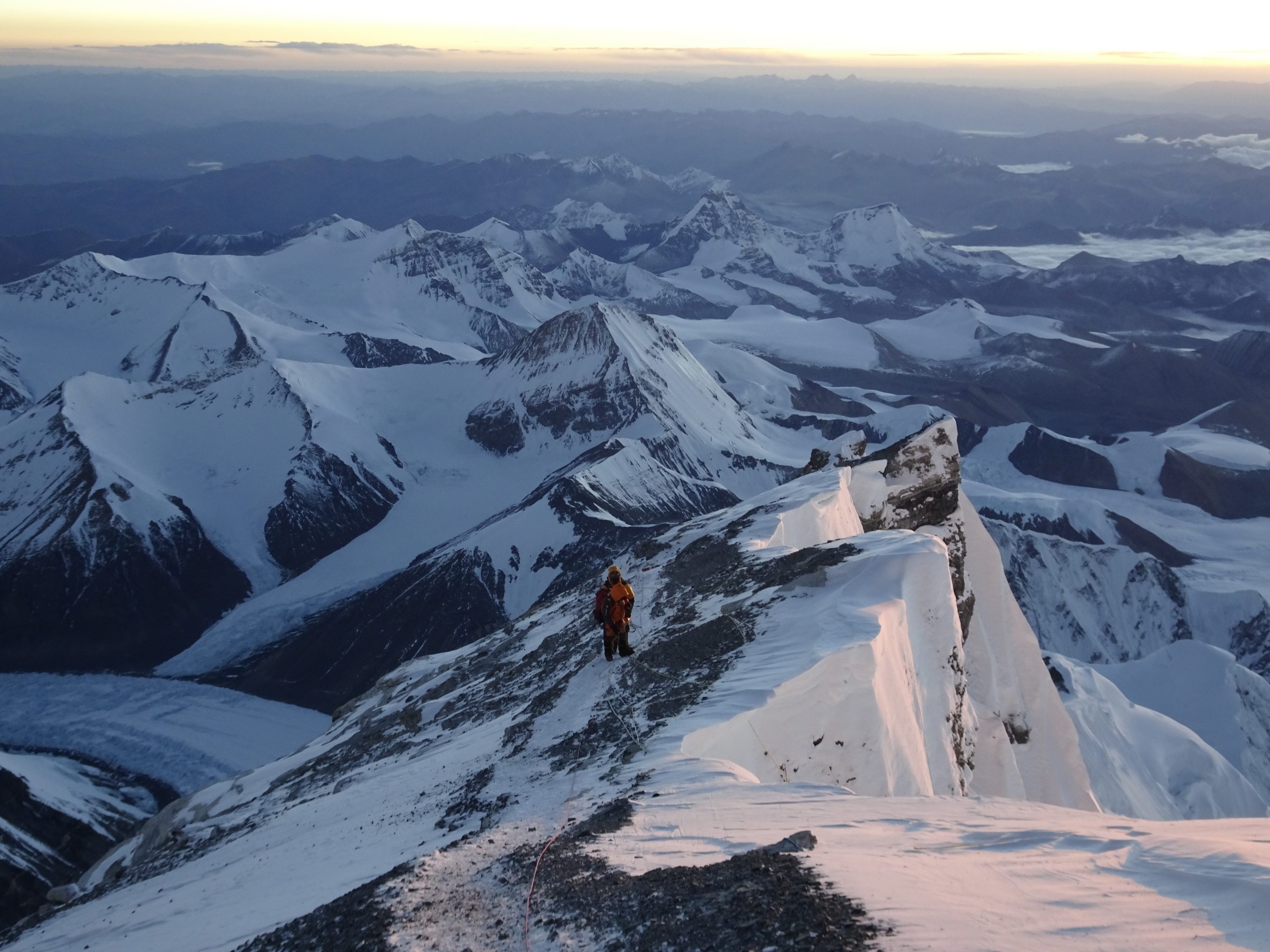
Ricky Munday watched Global Rescue in action when his climbing teammate needed a rescue from the north side of Everest. Now this Global Rescue member and founder of Inspire Alpine is a Global Rescue Safe Travel partner.
Ricky Munday set off on his first Mount Everest climb from China in 2017.
“I turned back at Camp 2 on the north side of Mount Everest due to low energy levels, concerns about oxygen levels and a suboptimal weather forecast,” said Munday, a United Kingdom resident and Global Rescue member. “An unfavorable weather forecast meant I would spend two nights at 7,900 meters (25,918 feet) instead of one.”
It was a wise choice for Munday to return to Base Camp (5,200 meters/17,060 feet). That morning, a windstorm hit the upper mountain and Munday’s teammates were caught in the storm.
“We saw tents being blown off the mountain by the storm at Camp 2,” he said.
Rescue on Mount Everest
During the emergency descent, one of Munday’s teammates, Mike, became separated at the back of the group and ran out of oxygen at 7,500 meters/24,606 feet.
“In the process of adjusting his head torch, it slipped off along with his hat and his goggles. The wind damaged his eyes and he became wind-blind. He collapsed onto his stomach and began dragging himself headfirst down the fixed ropes. His mitts were now touching the snow, his hands and fingers froze and he suffered severe frostbite,” Munday said.
[Related Reading: Protecting Your Eyes from Snowblindness]
“At midnight, he was rescued by two climbers who tied a rope around his legs and dragged him down to the North Col. Over the next two days, he was supported by two Sherpas from the North Col to Advanced Base Camp, then on an agonizing 22 kilometer walk down to base camp.”
That evening, Munday checked his satellite phone and found a text message from the expedition leader: “Serious rescue of Mike last night frostbite, snow blindness…you have been promoted to chief assistant leader, hope you don’t mind.”
Mike arrived at base camp supported by two Sherpas.
“It took them 13 hours to walk the 22 kilometer distance,” Munday said. “His fingers were badly frostbitten, he had ongoing problems with his vision and had developed a persistent cough.”
24/7 Medical Advisory Services
Mike was also a Global Rescue member. Munday, tasked with coordination of Mike’s evacuation, called Global Rescue for medical advisory and an evacuation request.
“Global Rescue medical staff provided precise treatment instructions,” he said.
The Chinese authorities do not permit helicopter operations so an evacuation directly from base camp was not possible. Munday liaised with the China Tibet Mountaineering Association liaison officer to request vehicle support to drive to Lhasa, where they would stay overnight before flying into Kathmandu.
“Global Rescue arranged for an ambulance to pick us up at Kathmandu Airport with a Global Rescue staff member in person. They took us directly to the hospital in Kathmandu, where Mike received his first professional assessment and treatment,” Munday said. “He had suffered nine pulmonary embolisms and had half of one finger amputated six months after the expedition.”
Glad to Have Global Rescue
Being a Global Rescue member was a huge comfort.
“If Mike had not been a Global Rescue member, we would not have received such timely advice on how to initially treat his injuries and we would have been far more anxious and stressed about what would happen when we arrive in Kathmandu, for example, which medical facility to take him to,” Munday said. “Knowing you had professional staff on hand to take responsibility for Mike’s care took a huge weight off our minds. We knew he would be in the best hands and receive the care he needed.”
[Related Reading: More than Medevac]
Munday, with his Global Rescue membership renewed, returned to Mount Everest in 2018 for a successful second summit attempt from the north side. That was also the year Munday, a full member of the Mountain Training Association and the British Mountaineering Council, founded Inspire Alpine® as a social enterprise to help close the attainment gap faced by disadvantaged young people.
“At Inspire Alpine, we dream of a world where all young people have the opportunity to succeed. Yet, there is a persistent gap in progress through school between young people from our richest and poorest areas,” Munday said. “This attainment gap has a profound impact on young people’s future career options and income levels. We believe your economic background should never define your future.”
Inspire Alpine offers purposeful outdoor adventures and free inspirational talks — Munday has spoken at more than 160 schools and to more than 25,000 young people — to help raise aspirations and build confidence. This social mission is funded by UK mountain events, overseas trekking and climbing expeditions, outdoor skills courses and virtual challenge events.
Of course, Inspire Alpine is a Global Rescue Safe Travel Partner, providing their clients with medical, security, travel risk and crisis response services.
“We partnered with Global Rescue last year after running our first two international expeditions to Kilimanjaro and Everest Base Camp,” Munday said. “We wanted reassurance that our clients would receive a world-class rescue service and professional medical care in case of an emergency. I had seen first-hand how professional and efficient Global Rescue is with remote advice and on-ground support. In the worst-case scenario, you want partners you can truly rely upon.”