June 12, 2019
After crossing into Uganda on 9 June, at least one person who was initially diagnosed with the Ebola virus has died. Two additional cases have been confirmed on 12 June following the spread of the Ebola outbreak in Kasese.
According to health authorities, the two confirmed cases are the fatality’s sibling and grandmother. The country’s health ministry further announced that eight other people, who have been in contact with the three victims, are currently being monitored.
The World Health Organization (WHO) will convene on 14 June to determine whether to declare the Ebola outbreak a global health emergency.
Analysis
On 11 June, health authorities confirmed that a Congolese boy tested positive for the Ebola virus. The boy, who crossed the Bwera border crossing, was initially treated at Kagando Hospital before being transferred to an Ebola treatment unit in Bwera. The situation marks the first known case of Ebola virus in the country amid an ongoing outbreak in neighboring Democratic Republic of the Congo (DRC). As of 4 June, at least 1,346 people have been killed in the ongoing Ebola outbreak, which is concentrated in eastern DRC province of North Kivu.
No proven vaccine or cure is currently available for the Ebola virus, which is highly contagious and often fatal. However, authorities are reportedly administering four experimental drugs during the current outbreak. Transmission may occur even through contact with deceased humans or animals. Symptoms include fever, headache, diarrhea, vomiting, and internal and external bleeding.
Advice
While hospital workers, laboratory workers and family members are at greatest risk of contracting the virus, individuals travelling to Ebola-affected countries should exercise basic health precautions including:
- Avoid areas of known outbreaks.
- Avoid contact with infected individuals.
- Strict personal hygiene including frequent hand washing should be adhered to while traveling in endemic areas.
- Report any symptoms to health officials immediately.
Our operations team is standing by 24/7/365 to provide travel assistance and advisory services to members. Contact Global Rescue at +1 617.459.4200 or email us at memberservices@globalrescue.com.
June 5, 2019
On 4 June, the U.S. government announced a series of major new restrictions for U.S. citizens traveling to Cuba, which take effect on 5 June. The two main changes include:
1. An end to group people-to-people educational travel.
This category of travel was the most common way that U.S. citizens were able to visit Cuba under previous regulations. Trips booked before 5 June would be allowed to proceed.
2. An end to all travel to Cuba for U.S. citizens on passenger or recreational vessels (including cruise ships and yachts) as well as on private or corporate aircraft.
Commercial flights from the U.S. will continue, since they can support other permitted categories of travel. The new regulation will reportedly affect approximately 800,000 bookings currently scheduled or underway with cruise ship companies. Carnival Corporation announced on 5 June that effective immediately, it would no longer operate cruises to Cuba due to the new restriction. Similarly, other cruise ship companies will reportedly re-route ships that had been planning to visit Cuba.
Though tourism to Cuba has not been formally permitted, U.S. citizens have been visiting the country under different permitted categories, including the group people-to-people educational travel category that is now banned beginning on 5 June.
On 17 April, President Donald Trump and his administration announced they would be imposing additional restrictions for U.S. citizens traveling to Cuba for non-family travel, though had not specified the details of the new restrictions until 4 June. U.S. officials have said Cuba continues to play a destabilizing role in the Western Hemisphere by assisting regimes in Venezuela and Nicaragua and the new restrictions are an effort to stop providing funds to the Cuban government and military.
The new restrictions under the Trump administration follow previous easing of restrictions for travel to Cuba under former President Barack Obama’s administration, which had permitted educational tours, commercial air travel and cruises for U.S. citizens. The U.S. became the second-largest source of travelers to Cuba following the easing of restrictions, with a majority of U.S. travelers coming to the island via cruise ship.
Our operations team is standing by 24/7/365 to provide travel assistance and advisory services to members. Contact Global Rescue at +1 617.459.4200 or email us at memberservices@globalrescue.com.
Categories:
Missions & Member TestimonialsJune 5, 2019
In an average year the Canadian Ski Council estimates approximately 2.5 million skiers and snowboarders hit its vast terrain, visiting well-known ski areas and even seeking out the country’s most remote locations for more extreme adventures.
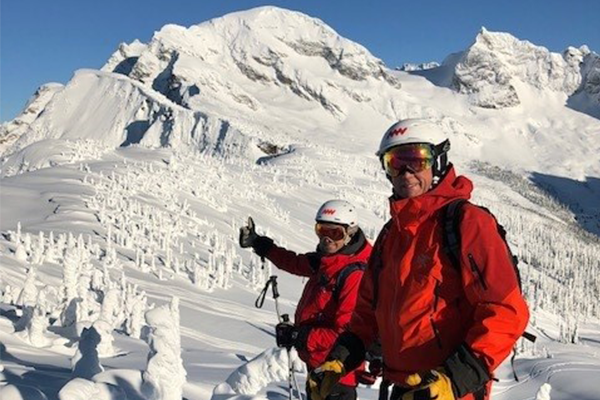
In early 2018, Richard Jorgensen and his son were in Blue River, British Columbia Canada for a heli skiing trip. A prime destination for any thrill-seeking powder lover, British Columbia is widely known as the birthplace of heli skiing.
An avid skier, angler and world traveler, Jorgensen had skied in Blue River for years, carving more than a few million vertical feet through the untouched cascading powder in British Columbia’s interior.
Whether fishing somewhere in the Indian Ocean or heli skiing with his family in Canada, Jorgensen has always traveled with a Global Rescue membership – just in case.
On one particular run with his son in Blue River, a mistake inadvertently sent Jorgensen airborne before he crashed into a large tree.
“I broke my ankle, both my femurs, my shoulder and my right hip got totally crushed,” Jorgensen said. “This was as broken as a person could be.”
Jorgensen told his son to call Global Rescue.
Among safety risks and concerns, trees, unmarked cliffs and crevasses are all common hazards when heli skiing in Canada.
“We got Global Rescue on board because I realized I wasn’t going to be riding normal transportation back to Colorado no matter what the outcome,” Jorgensen said.
Upon receiving the call from the mountain, Global Rescue’s medical operations personnel gathered details regarding Jorgensen’s condition before dispatching a medical evacuation aircraft for transport.
The severity of Jorgensen’s injuries meant multiple surgeries would be required.
“Global Rescue originally wanted me to go to a Level 1 trauma center in Denver, but I know the doctors in Boulder and felt I’d be more comfortable there,” Jorgensen said. “Global Rescue told me that their doctors were reviewing the facility I wanted to check into – being very proactive in addition to providing transport.”
By 1 a.m. local time, Global Rescue informed Jorgensen’s son he’d be in a bed at the Boulder hospital by the next evening at 10 p.m.
“… and at 10:20 the following evening I was in a bed in the Boulder hospital, so there’s something to be said for that,” Jorgensen said.
After transporting Jorgensen more than 1,300 miles, Global Rescue continued to follow his case, ensuring he was receiving the best possible care back in Colorado.
While Jorgensen’s accident was not his first, it was without a doubt his most severe.
“It’s really hard to break both your legs, your ankle and shoulder all at once,” Jorgensen said. “I consider myself quite lucky that it didn’t kill me.”
In the months following the crash, Jorgensen underwent a hip replacement, shoulder surgery and had to schedule ankle surgery.
Although the accident derailed a few planned trips, Jorgensen was hoping to be well enough for two Alaskan expeditions on the horizon.
With a seamless experience at a critical moment, for Jorgensen, Global Rescue is an easy decision because, “when you need it, you really need it.”
“I’ve been a Global Rescue member for a long time because I travel to remote parts of the world,” Jorgensen said. “The value for the dollar is well worth it, especially when you’re in the backcountry.”
Whether you’re headed to British Columbia or looking forward to an Alaskan expedition, Global Rescue’s memberships have a wide variety of benefits for all types of adventures. Contact us to learn more at +1 617.459.4200 or email us at memberservices@globalrescue.com.
Categories:
NewsJune 2, 2019
Categories:
Missions & Member TestimonialsMay 21, 2019
Each year Global Rescue deploys personnel to Nepal to support and assist our members who are climbing and trekking throughout the region.
Global Rescue conducted more than 100 field rescue and evacuation missions last year in the Himalaya and provided countless medical advisory operations.
Since the beginning of 2019, Global Rescue has successfully completed 87 operations in Nepal, with active personnel currently on the ground.
Below are highlights from some of these recent operations across various locations in Nepal.

Chukhung
- Performed a helicopter evacuation for a member who was intending to summit Ama Dablam following an acclimatization climb on Island Peak. Member was suffering from high altitude cerebral edema (HACE) and dehydration.
Dingboche
- Recommended treatment at a nearby medical facility for a member at Island Peak base camp. Member was suffering from a severe headache.
- Evacuated a member with probable acute mountain sickness (AMS) and low blood oxygen levels.
Everest Base Camp
- Facilitated a field rescue for a member with AMS and hyperglycemia.
- Evacuated a member suffering from AMS and hemoptysis, resulting in low blood oxygen levels.
- Completed a field rescue for a member who was unable to trek down safely and required diagnostic imaging following an ankle injury that occurred during a trek to Everest Base Camp.
Everest camp one
- Coordinated a field rescue for a member suffering from severe AMS and dehydration.
Everest camp two
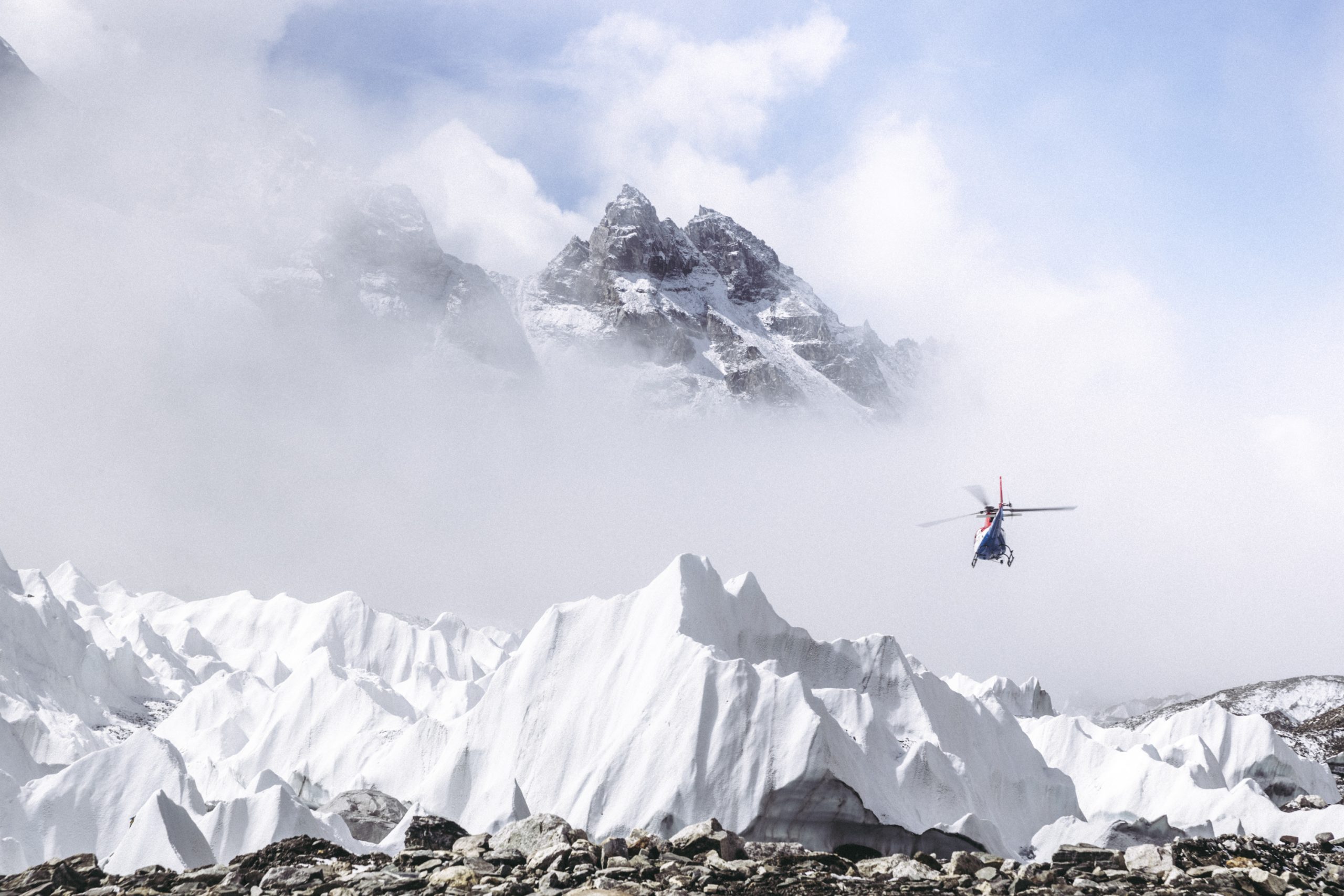
- Facilitated a helicopter evacuation for a member suffering from frostbite to both feet. The member was assisted by Sherpas from Everest camp four to camp two, where a helicopter was able to pick up the member and fly them to Kathmandu.
Everest North Base Camp
- Evacuated a member with pulmonary embolism and a lung infection by 4WD vehicle and helicopter.
Khote
- Evacuated a member with a severe respiratory infection, AMS with high altitude pulmonary edema (HAPE) and HACE during a Mera Peak trek.
Machermo
- Recommended treatment at a local medical facility for a member suffering from second degree sun burn on the face.
Lobuche
- Facilitated a helicopter evacuation for a member suffering from AMS and dehydration.
Mera Peak
- Completed a helicopter evacuation to rescue a member who was found semiconscious, suffering from HAPE and HACE.
Phortse Tenga
- Facilitated a helicopter evacuation for a member suffering from AMS, HACE and an upper respiratory infection.
Thukla
- Evacuated a member suffering from severe AMS.

May 19, 2019
At least 17 people, including several tourists, were injured when a roadside bomb detonated in Giza on 19 May. The attack reportedly targeted a tourist bus carrying 25 South African nationals on Marioutiya Road near the Grand Egyptian Museum.
Among the injured were 10 Egyptians and seven South Africans. None of the injuries were reportedly life-threatening. No group has yet claimed responsibility for the attack.
The incident marks the second time in six months that a tourist bus has been targeted in Giza: at least four people were killed, including three Vietnamese tourists. Eleven others were injured when a bomb detonated near a bus carrying tourists near the pyramids in Giza on 28 December 2018.
Our operations team is standing by 24/7/365 to provide travel assistance and advisory services to members. Contact Global Rescue at +1 617.459.4200 or email us at memberservices@globalrescue.com.
Categories:
TravelMay 16, 2019
From tales of travelers falling ill while hiking abroad to harrowing accounts of seriously injured tourists on safari, there are lots of reasons to be curious about what medical evacuation is and why it’s important.
In technical terms, The Free Dictionary defines medical evacuation as the evacuation of a person (usually by air transportation) to a place where they can receive medical care.
At first glance, a medical evacuation might seem like a response best suited for an emergency situation involving an extreme athlete or a serious adventure traveler. You don’t have to be an avid adventurer or an extreme athlete to find yourself in a situation requiring a medical evacuation though.
The chances of acquiring certain diseases or having an accident while traveling depend largely on where you travel and what you do while traveling. At the very least, a life-threatening illness, injury, or accident requiring a medical evacuation can happen anywhere and at any time.
When planning a big trip, thinking about what-if’s typically isn’t high on the to-do list. From food poisoning to traffic accidents, a seemingly small situation can quickly become serious, especially if you’re in a remote location or a foreign country where you don’t speak the native language.
So, for any traveler, it’s best to find out what is medical evacuation — and how to prepare yourself should you or a member of your family ever need one.
When is medical evacuation an appropriate response?
Not every traveler (and hopefully very few) will encounter a traumatic or life-threatening event while away from home. At the same time, not every situation requires a medical evacuation.
Illnesses or injuries triggering a medical evacuation are typically instances when remaining in the location where the incident occurred would be detrimental to the health of the traveler.
Serious conditions that cannot be adequately treated on location or require prompt in-patient hospitalization might also necessitate a medical evacuation.
What is medical evacuation coverage?
Medical evacuation coverage is not travel insurance. There are some travel insurance companies offering policies with medical evacuation coverage. However, it’s up to the individual to find an evacuation service, pay for it, and submit a claim for reimbursement. The same goes for travel insuranced offered through a credit card.
True medical evacuation services are typically sold as a membership.
Most medical evacuation memberships take care of costs associated with the transportation. It’s important to note that many medical evacuation memberships do not include costs for medical bills. For a more detailed explanation, check out our post What Does Medical Evacuation Insurance Cover?
Simple Summary of Medical Evacuation Services
“What is medical evacuation?” is, without a doubt, an important question for travelers to understand. An emergency requiring a medical evacuation can happen at any time and travelers are well served to fully understand what options are available before an emergency happens.
“Travel insurance and medical evacuation services are anything but synonyms,” says Dan Richards, CEO of Global Rescue told USA Today. “Travel insurance protects travelers from financial loss resulting from canceled trips, lost baggage, medical expenses and some medical evacuation expenses. Medical evacuation is a service used to deliver a traveler to life-saving care that may not be available at the traveler’s location.”
Global Rescue is the leading provider of medical and security advisory and evacuation services. With services for the leisure traveler to the extreme adventurer, Global Rescue is trusted by more than one million members worldwide.
Categories:
Missions & Member TestimonialsMay 15, 2019
For the last 15 years, travelers throughout the world have continued to seek out authentic experiences, fueled by a curiosity to find new ways to see the world.
Organizations, including businesses, academic institutions, government agencies and faith-based organizations are also sending their personnel farther from home than ever before. From natural disasters to illness and injury, unexpected but statistically predictable events can quickly turn a business trip or a memorable adventure into a nightmare.
Fortunately, Global Rescue has given more than a million members the confidence and peace of mind to travel boldly, knowing they have a dependable way to get themselves and their families to safety when emergencies happen.
“When I founded Global Rescue in 2004, I wanted to give organizations, their employees and leisure travelers experiencing medical or security emergencies a better way to get help,” founder and CEO Dan Richards said.
That vision came to life in an office on Boston’s Milk Street in the form of a company whose members could connect directly to deployable operations staff including U.S. special forces veterans.
Organizations could be assisted in minimizing their risk of duty of care liability and members could be evacuated to safety and hospital centers of excellence rather than figuring out how to get themselves out of danger. “A better way to get help” also meant helping members build a thorough understanding of what risks they could anticipate during their travels or avoiding crisis situations before they happen.
Since those days, Global Rescue has expanded to more than 250 personnel spread across five operations centers in five countries. Most importantly, we have conducted more than 20,000 operations worldwide, including evacuations during Hezbollah’s war with Israel, the Arab Spring, the earthquakes in Haiti and Nepal and more recently, Hurricane Maria in Puerto Rico.
“If you think it can’t happen, you’re wrong – and if it does happen, you want [Global Rescue] to be there for you,” Global Rescue member John Searles said after being evacuated from the Highlands of Ethiopia after suffering a stroke.
Global Rescue has exclusive relationships with the Johns Hopkins Department of Emergency Medicine Division of Special Operations, Partners HealthCare and Elite Medical Group.
We are proud to provide services and partner with prominent organizations such as National Geographic, NASA, U.S. Ski and Snowboard and the American Alpine Club to name a few. Over the years, we have expanded our offerings to include emergency action planning, security assessments, telemedicine, mobile and web applications and more.
Throughout all of these expansions and phases of growth, Global Rescue has remained true to its core mission of saving lives and giving members the confidence to travel boldly. Global Rescue is celebrating this “spirit of adventure” through photography.
During the summer, we hosted our annual photo contest to showcase the places you travel, the sights you’ve seen and the adventures you undertake. After receiving more than 100 entries, our panel of judges selected the winners.
Click here to view the winning submissions.
Global Rescue thanks all participants who submitted their photos in celebration of 15 years of saving lives and the spirit of adventure.
Categories:
Missions & Member TestimonialsMay 9, 2019
After a climbing trip to Mexico ignited a desire to push beyond his limits, David Helland set his sights on one of the highest trekking peaks in the world.
The owner and operator of a construction company in central Iowa, Helland has spent the last two years climbing. Beginning in the United States, Helland’s expeditions took him everywhere from Mexico to the Matterhorn.
“I had been going to Colorado and Montana by myself and ramping it up a little bit each time—a little higher, a little bit more difficult,” Helland said. “I went to Mexico and it was this super extreme experience that I absolutely loved.”
Next up, Helland and his two friends set off for Argentina’s Mount Aconcagua. The tallest mountain in the Western Hemisphere, its terrain can often be deceiving at first glance. While there is no hard evidence, experts estimate that Aconcagua has one of the lowest success rates of the Seven Summits, as preparation and patience can be a tricky balancing act when it comes to the peak’s staggering elevation.
Aware of the challenges presented by one the most popular peaks in South America, Helland’s friend, a veteran climber, urged him to enroll in a Global Rescue membership before their January trip. Helland was confident he could handle it, but opted to enroll as backup plan – just in case.
“I didn’t go into it thinking I was going to have a problem.” Helland said.
As the group rolled into the approach hike for the first three days, everyone felt fine and seemingly well acclimated. After one rest day at base camp, they decided to get a bit more aggressive and headed up with their heavy packs. A rookie move, according to Helland.
“On the second night, I was lying in my tent and I could hear my lungs gurgling. I knew I had pulmonary edema,” Helland said.
A rare but serious high altitude related illness, high altitude pulmonary edema (HAPE), can quickly become fatal if not treated right away. Typically, most symptoms are relieved by descending to a lower altitude.
Helland wasn’t quite ready to give up on his climb all together though.
“I thought, I’ll just go to base camp and stay for a day or maybe two and then it’ll go away,’” Helland said. “But by the end of the next day it was not getting better. My pulse oximeter rating was going down.”
That’s when Helland contacted Global Rescue.
Due to the risk of continuing to ascend, Global Rescue recommended a helicopter evacuation for Helland. He agreed.
“Had I pushed up another camp higher, it could have been really bad,” Helland said. “That’s the crazy thing about pulmonary edema – you go up one more level and you die or you go down and you’re fine.”
Transported safely to Mendoza, Helland recovered and then opted to head to the Patagonia region of Argentina, determined to salvage the remaining time of his trip.
“Global Rescue called to make sure that if I needed medical attention, I knew which hospitals I could go to,” Helland said.
With four more climbing trips planned this year, Helland doesn’t expect to have any problems, but won’t be traveling without Global Rescue.
“Global Rescue was certainly worth the money,” Helland said. “I will never travel without it. That sounds cliché but I won’t go on another expedition without a Global Rescue membership. Period.”
What made the difference for Helland was who was on the other end of the phone when he needed it most.
“When I was calling Global Rescue for the first time, it really impressed me that I was talking to somebody who actually knew something,” Helland said. “At most companies, they get big enough where the person you talk to doesn’t know what they need to know and you have to keep going further to get the real help you need. Everyone I talked to at Global Rescue was dialed in tight and that’s super rare.”
Categories:
Health & SafetyTravelMay 8, 2019
Whether you’re a new adventurer or a seasoned mountaineer, no list of essential climbing tips is complete without mention of avoiding acute mountain sickness (AMS).
A recent article published in a JAMA Network journal noted that acute mountain sickness affects more than 25% of individuals ascending to heights of 11,500 feet and more than half of those who go higher than 19,700 feet.
A globally recognized expert, Dr. Eric Johnson from Global Rescue has years of practice in high altitude medicine. When it comes to essential climbing tips, Dr. Johnson details a few potentially life-saving tips that he calls his “rules of engagement.”
1. Do Research.
If you are going above 8-10,000 feet, there’s no doubt pre-trip research is an essential climbing tip. Be sure to know the basics of your trip itinerary, ascent profile and be prepared to prevent and manage potential challenges such as altitude sickness.
2. Never Ascend with Signs of Acute Mountain Sickness.
This is Johnson’s most important rule. AMS is the most common type of altitude sickness, with symptoms often mimicking that of a hangover. When addressed, acute mountain sickness is not a life-threatening condition.
Symptoms include:
- Headache
- Feeling tired
- Lightheadedness
- Lack of appetite
- Trouble sleeping
- Nausea and sometimes vomiting
If you begin experiencing symptoms, allow yourself to recover either by stopping or descending until symptoms resolve. In his experience, Johnson has never encountered a case where AMS has prevented someone from completing their journey when prevention and treatment guidelines were followed. As long as those experiencing symptoms have time to recover, they can continue to ascend.
It’s important to note though – someone with symptoms of acute mountain sickness should never be left alone to recover. If the group is moving on, one essential climbing tip is to be sure there is a second person waiting with the affected member.
3. Don’t Rush Your Trip.
Many adventurers encounter problems only when they try to ascend too quickly. It is always worth a few extra days on the trail to ensure your ascent is safe – and more importantly, to prevent your illness from escalating to the point of requiring evacuation.
4. It’s OK to get AMS, but it’s NOT OK to die from it
Additionally, many climbers and trekkers encounter problems because they do not accept that they may be suffering from acute mountain sickness. As Johnson emphasizes, “altitude has no respect for fitness,” and it can impact anyone.
When it comes to AMS, physical condition is not a factor and you cannot predict how your body will react to altitude. Johnson suggests following a “Golden Rule of the Himalayan Rescue Association,” which notes that any occurring illness “like the flu,” is acute mountain sickness until proven otherwise.
Another essential climbing tip is to familiarize yourself with two more severe forms of altitude sickness, high altitude pulmonary edema (HAPE) and high altitude cerebral edema (HACE). HAPE and HACE are less common, but are more dangerous.
According to the Centers for Disease Control and Prevention (CDC), HAPE symptoms include shortness of breath, weakness and coughing. Symptoms of HACE include confusion, clumsiness and lethargy.
Much like the golden rule above, anyone who exhibits these symptoms should be treated as if they have HAPE or HACE until proven otherwise.
5. Carry Medication.
Prescription Diamox (Acetazolamide) can be used for the prevention or treatment of acute mountain sickness. Recently ibuprofen has also been proven to help treat AMS – and not simply headache-related symptoms.
6. Don’t Consume Alcohol.
Since the symptoms of acute mountain sickness resemble an alcohol hangover, it is crucial to refrain from alcohol consumption to help identify AMS related symptoms. In general, a key essential climbing tip is to always aim to be in good condition for any form of ascent.
7. Purchase Evacuation Services.
Johnson also adds that it should be mandatory for climbers and trekkers to purchase evacuation services. In fact, those following him up the mountain are required to show proof of services should an emergency occur.
While some trekking and climbing companies do not require this service, an essential climbing tip for adventurers is to be cautious of those who are not at least recommending you consider the purchase.
Should you purchase an evacuation membership, it’s critical to understand how to access your provider in the event of an emergency. It’s also important to have your own communication capabilities, like a personal satellite phone with your provider’s contact information programed.
No matter your level of climbing or trekking experience, with a little planning and awareness, climbers can help prevent potential AMS challenges from becoming life-threatening conditions. As a final essential climbing tip, always make an appointment with a travel medicine specialist to make sure you’re prepared for your trip.
Global Rescue is the leading provider of medical and security advisory and evacuation services. With services for the first time climber to the extreme adventurer, Global Rescue is trusted by more than one million members worldwide.
Categories:
TravelMay 8, 2019
No traveler wants to envision a situation involving a hospital visit — especially one requiring a medical evacuation.
According to the Merck Manuals, when it comes to foreign travel, about 1 in 30 people traveling abroad require emergency care.
Whether you travel domestically or abroad, once a year or all the time, accidents and emergencies can happen anywhere and at any time. A life-threatening illness or injury requiring a medical evacuation is not the time to be asking “What does medical evacuation insurance cover?”
So perhaps the answer to easing the anxiety of worst-case-scenarios is travel insurance with medical evacuation coverage.
Not exactly.
It’s no big secret that having travel insurance is important. So important that a recent Berkshire Hathaway Travel Protection white paper estimates travel insurance sales to Americans traveling outside the U.S. will increase by nearly 4% in 2019.
The U.S. Department of State’s Traveler’s Checklist also urges those traveling abroad to consider purchasing emergency evacuation insurance.
Before you get started gathering travel insurance quotes, beware of making a potentially costly mistake. Don’t assume medical evacuation coverage is just another name for travel insurance.
Medical Evacuation Services vs. Travel Insurance
Travel insurance and medical evacuation services are simply not the same thing.
Most travel insurance companies advertise that a typical policy includes coverage for financial loss, due to incidents involving lost or stolen baggage or travel delays.
Some travel insurance policies also offer medical evacuation coverage, too, but as the Wall Street Journal points out, “travel insurers write a lot of gotchas in most policies, especially the inexpensive insurance sold through airlines and online travel agencies.”
Those “gotchas” can easily be erased with some added clarity surrounding our first question, “What does medical evacuation insurance cover?”
If you’re searching for medical evacuation coverage, begin by searching for a medical evacuation membership instead. Think of access to medical evacuation services as a membership with benefits, not travel insurance with a policy.
For example, if you break your leg on a skiing trip in Austria and you have a medical evacuation membership, you may be evacuated from the point of your injury to a location where you’d receive stabilizing care and then transported to another medical facility (depending on the severity of your injury) — at no additional cost to you.
Some medical evacuation memberships even allow the traveler to select their hospital of choice for medical transportation.
On the other hand, a typical travel insurance policy generally covers only the cost of transport to the closest medical facility — which means it’s not up to injured travelers when it comes to where they go to receive care.
Travel insurance companies also operate reimbursements through a claims process. If notified of the need before any action is taken, medical evacuation memberships typically take care of medical transportation costs at no additional cost to members.
It’s important to note that most medical evacuation memberships do not cover costs for medical bills. This is where your health insurance or any extra travel insurance comes into play.
There’s a lot to consider when it comes to medical evacuation services, but a little planning and research can go a long way in keeping your trip of a lifetime what it was meant to be.
Global Rescue is the leading provider of medical and security advisory and evacuation services. With services for the leisure traveler to the extreme adventurer, Global Rescue is trusted by more than one million members worldwide.