Categories:
Health & SafetySecurity & IntelligenceTravelFebruary 13, 2020
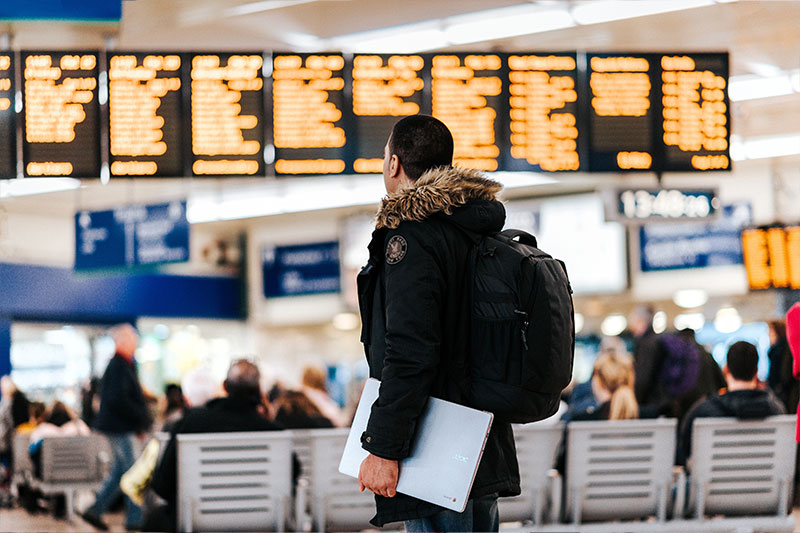
Global Rescue members have traveled far and wide. They’ve summited Mount Everest and the Eiffel Tower – and waited in customs. They have trekked Peru’s Inca Trail and the Maldives’ beaches – and searched for a local pharmacy in an emergency. They have casted lines in the Seychelles and explored the African savanna – and misplaced a passport along the way.
We asked what the biggest bungles they’ve made when traveling. What are the slip-ups that sidetracked a trip? What are the mistakes that, yes, even veteran travelers make? Admittedly, some of the responses are not a surprise, but others are. Here are the top nine travel mistakes not to make, plus three bonus tips from Global Rescue’s security experts.
#1: Overpacking
The majority of travelers (75% of respondents) admit to overpacking for a trip. The percentage decreases with age: 100% of 25 and younger travelers over packed while only 84% of travelers ages 30 to 39 stuffed their suitcase.
Harding Bush, associate manager of operations at Global Rescue, shares his packing secret: “Pack light, and buy what you need there.”
Pat Pendergast, The Fly Shop’s director of international travel, offers this hack. “Make a list of all the items you packed but never used and then use it to guide how you pack for future trips,” he said.
#2: Ambitious Travel Itineraries
About 40% of respondents create a too ambitious itinerary. Pendergast makes a related point about patience. “I see travelers at airports get worked up about delays and long lines. But that’s what travel is all about. Sooner than later you will get to your end destination, and getting all worked up about it does not get you there quicker.”
#3: Forgot Medical/Security Coverage
You spent all this money on a vacation, but what measures did you take to protect your health or security?
“Travelers just don’t think a medical emergency is going to happen to them,” Bush said.
That mindset showed up in 38% of respondents’ answers.
Older travelers, however, have more awareness about travel protection services and are less likely to go on an adventure without services from providers like Global Rescue. In the age 25-39 demographic, 49% travel without a service like Global Rescue, but this percentage drops to 31% for travelers over 60.
#4: Tip — or not?
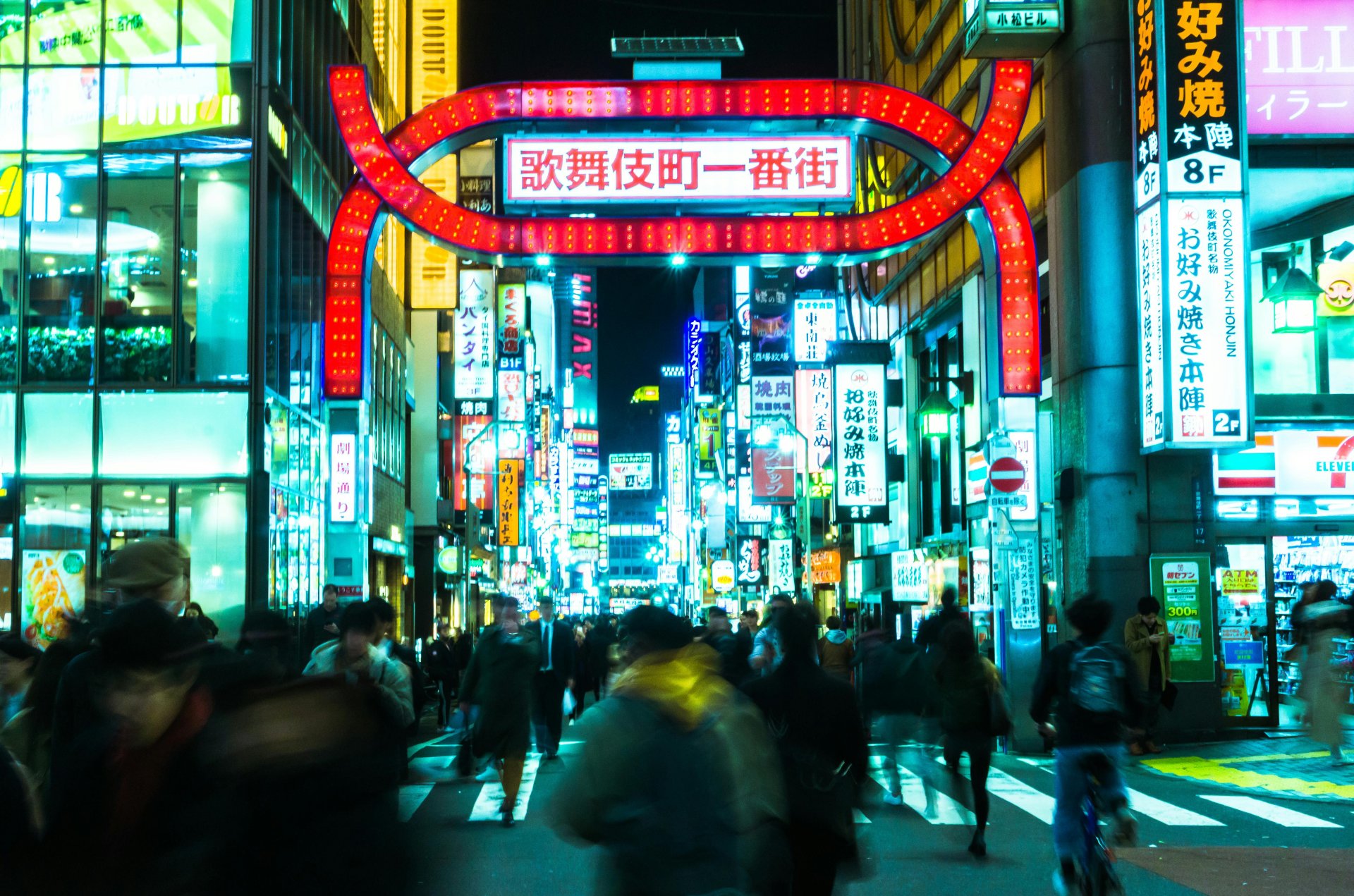
Tipping in Japan is considered rude, there’s no need to tip at restaurants in Denmark, and a 20% gratuity is expected in the United States. It’s no wonder survey respondents (35%) are worried about tipping appropriately while traveling.
#5: International Plug Adapter
If you plan on charging your phone or using a hairdryer, you’re going to need your international plug adapter. Almost one-third of respondents (31%) left their adapter behind.
#6: Drinking Unsafe Water
Pathogens — bacteria, parasites, viruses and other contaminants — are lurking in the water you drink. In the rush to stay hydrated while on the go, 29% of respondents drank unsafe water while traveling.
“It’s a mistake that’s easy to make,” Bush said. “Even I’m not as cautious as I should be when I’m eating.”
#7: Making an International Faux Pas
Not being aware of cultural differences and similarities in the country you’re visiting could ruin a trip, and 18% of survey respondents worry about being culturally insensitive.
#8: Didn’t Have Copies

The survey found 17% of respondents neglected to make a passport copy before they travel. Global Rescue experts recommend making triplicate copies: carry one copy on your person, store one in your luggage or carry on and leave one with a reliable person back home.
#9: Forgot the Meds
Prescription medication is one of the last items we pack, but one of the most important. The survey found that 9% of travelers have forgotten to pack prescription medicines before a trip.
BONUS MISTAKES
The Global Rescue operations experts couldn’t help adding a few more mistakes travelers make that didn’t show up on the survey.
- White Tennis Shoes. If you want to look like a tourist, wear white, lace-up tennis shoes or sneakers with Velcro on them.
- Passport Holders. Wearing a passport holder with a cord around your neck makes you easily identifiable as a tourist. If you do have one, wear it under your top layer.
- Cash or Credit? It seems like a good idea to use only plastic while traveling — but what if you forgot to notify the bank of your whereabouts and you’re without funds on a weekend and the banks are closed? “It’s smart to have a handful of cash ($200 to $300) on hand,” said Bush. “The amount of cash you need is relative to the duration of the trip and the potential need.”
Get a price estimate
Estimate
$0.00
Please answer all questions for estimate.
Categories:
NewsFebruary 12, 2020
Categories:
NewsFebruary 11, 2020
Categories:
Missions & Member TestimonialsFebruary 7, 2020
Global Rescue personnel are involved in medical, security and travel operations on a daily basis worldwide. Following are highlights from some of our most recent operations in various locations.
During December 2019 and January 2020, Global Rescue conducted nearly 300 on-the-ground and advisory operations in more than 50 countries including: Argentina, Australia, Canada, Chile, China, Egypt, France, Haiti, Israel, Italy, Iraq, Japan, Kenya, Malaysia, Mexico, Nepal, Peru, Qatar, Saudi Arabia, Singapore, South Africa, Tanzania, Thailand, United Arab Emirates, United Kingdom and the United States.
Below is a snapshot of some of our most recent operations in various locations across the world.
Argentina
Provided dozens of medical evacuations and numerous medical advisory services for climbers attempting to summit Aconcagua, the highest (22,841 feet) mountain in outside of Asia. Members suffered frostbite, cardiac arrhythmia, snow blindness, and high-altitude pulmonary edema.
Canada
A backcountry skiing accident injured a member’s leg in remote British Columbia, Canada. Unable to ski out, a helicopter rescue and evacuation took place.
Chile
Global Rescue provided medical advisory and assistance for a member who was hurt while on a motorcycle tour through the Andes. After briefly losing consciousness, the member was alert but transported by ambulance to a hospital.
China
Provided medical advisory support and security intelligence for business and consumer members in multiple regions of China, including Wuhan, regarding the coronavirus outbreak.
Nepal
Provided more than half a dozen medical advisory and evacuation services for members suffering from altitude sickness while trekking to Everest Base Camp.
South Africa
Provided medical advisory for a member experiencing intermittent abdominal pain, nausea, chills and back pain. Coordinated with local medical facilities to provide care and follow-up evaluations.
Tanzania
Offered medical advice for an individual suffering from an asthmatic attack triggered by a cold shortly before a planned expedition to Kilimanjaro.
United States
Provided medical advisory services for a member who fell 15 feet while climbing near South Lake Tahoe, California.
Global Rescue provides our members and clients with the world’s leading travel risk, crisis management, medical, security and evacuation services. Click here to learn more.
Categories:
NewsFebruary 7, 2020
Categories:
NewsFebruary 6, 2020
Lebanon, N.H. – Gender and age drive the biggest distinction among travelers, according to results of the 2020 Annual Global Rescue Travel Safety Survey.
“The Global Rescue Travel Safety Survey reveals unexpected travel safety concern disparities between the sexes and among the generations,” said CEO Dan Richards.
- Men are about 50% more concerned about family travel than women.
- Travelers are “very concerned” about travel to the Middle East, but respondents between the ages of 40-59 are a third more concerned than their younger counterparts.
- Forty percent of travelers under age 40 believe “health/medical issues” are the greatest threat while touring and exploring, compared to only 29% of travelers between 40-60 years old.
Among the top survey findings:
Likelihood of Travel: Consistent with results over the past several years, more than 95% of respondents are likely to travel in 2020, either domestically or internationally.
Travel Concern Gauge: Thirty-five percent of respondents are “concerned” or “very concerned” about their travel safety in 2020 while 13% are “not concerned” at all. For the last three years, roughly 85% of respondents expressed some degree of concern for travel safety.
Regional Fears: The Middle East is the region most troubling to travelers with 56% reporting they would be “very concerned” making a trip there. Trips to Asia and Africa were the next most worrisome for travelers. Sixty-four percent of travelers said they were “not concerned” about going to North America or Australia.
“I think the Middle East gets a bad rap,” said a Global Rescue Operations expert and former Navy SEAL. “There are places you just can’t go like Syria and Iraq. But Saudi Arabia, Lebanon, Israel, the UAE and other areas there are great. The Middle East is a good place.”
Business or Pleasure Travel: Family and personal travel were nearly three times more concerning than business travel. Less than 13% of respondents consider business travel a concern or very concerning compared to 30% of travelers thinking about family or personal travel. One respondent explained the reason for the result.
“If I’m involved in an incident or accident on family travel, it will likely affect not only my safety but that of my family members. On a business trip, my family of course will be affected by my injury or death, but they likely will not be with me and will not be involved directly in the calamity,” Bob M. of Arkansas said.
Greatest Travel Threats: Travelers listed health/medical issues and street crime as the greatest personal threats while traveling, followed by terrorism, traffic accidents, civil unrest, and – more than halfway down the list – cyber security. One Global Rescue security expert believes cyber security should be a higher concern saying, “I’m worried about cyber security. It takes less than two minutes to draw everything off your laptop or smartphone. Public Wi-Fi is not secure.”
A survey respondent concurred.
“Cybercrime is a big concern, especially identity and credit card theft. I have had both hacked while traveling and the pain and suffering to try and fix the mess it creates was staggering. I am to the point of using a single travel credit card to ensure I can contain any cyber theft issues,” James B. of Texas said.
Will You Change Travel Plans Due To Your Concerns? Nearly all respondents plan to travel in 2020 and most (85%) are concerned about travel safety. Yet, overwhelmingly (91%) say those concerns will not impact their plans. We discovered travelers are planning and researching and taking precautions so they can continue to enjoy their adventures. According to one respondent, you simply need to minimize your hazards.
“In my case, my overseas travel will be via reputable airlines and reputable cruise company, traveling to places with low risk percentages of incidents. I still, though, subscribe to Global Rescue as my ‘back up’ because I feel assured with Global Rescue that if anything happened, in the States or abroad, they would be my best ally,” said Laurie R., Texas
The 2020 Annual Global Rescue Travel Safety Survey was conducted January 22-28, 2020. The study results are based on a survey of 2,400 Global Rescue members.
Categories:
Health & SafetyTravelFebruary 5, 2020
Gender and age drive the biggest differences in travel concerns among travelers, according to results from the annual 2020 Global Rescue Travel Safety Survey.
“The Global Rescue 2020 Travel Safety Survey reveals unexpected travel safety concern disparities between genders and among the generations,” Global Rescue CEO Dan Richards said.
Among the top survey findings:
Travel Ahead
Consistent with results over the past several years, the majority of respondents (95%) are likely to travel in 2020, either domestically or internationally.
Most (85%) are concerned about travel safety. The breakdown: 25% of respondents are “concerned” or “very concerned,” 51% are “somewhat concerned” while 10% are “not concerned” about their travel safety in 2020.

For the last three years, this percentage has remained relatively stable: 87% in 2019 and 84% in 2018.
Worries about travel have become second nature.
“We have safety concerns when we stay home — if we go to a shopping mall or a movie theatre or religious service or places in our everyday life. I have concerns for my safety every time I go on the freeway — with all the traffic accidents and crazy people driving — but I still get in my car,” says a Global Rescue member from Berkeley, California. “Concerns about safety appear, unfortunately, to be a part of life at this time.”
Will (Probably) Not Change Plans
Although there might be unease about travel, most travelers (91%) say those concerns will not impact their plans.
“The travel must be done,”
said a Global Rescue member from Alma, Missouri.
“Can’t be grounded by fear,”
said a member from Clancy, Montana.
The 2020 survey found today’s travelers are planning and researching — taking precautions and adjusting expectations — so they can enjoy their adventures. According to one respondent, you simply need to minimize your hazards.

“In my case, my overseas travel will be via reputable airlines and cruise companies, traveling to places with low risk percentages of incidents. I still, though, subscribe to Global Rescue as my ‘back up’ because I feel assured with Global Rescue that if anything happened, in the states or abroad, they would be my best ally,” said a member from Tyler, Texas.
Personal and Family vs. Business Travel
Younger respondents (ages 25 to 39) are more worried about personal travel (31%) while older demographics — ages 40 to 49 — are more worried about family travel (35%).
“I think all of us are much more protective of our spouses and children than we are ourselves,”
said a member from Charleston, South Carolina.
Across age demographics, a little more than 30% of respondents were “not concerned” about business travel and less than 2% were “very concerned.”

Business travel may be less of a fear due to duty of care obligations of employers.
“I have a whole global security department at work to keep me safe and secure while traveling on business. So for my personal/family travel, the concern for safety and security falls on me, not work,” says a member from The Woodlands, Texas.
Global Hot Spots
The Middle East is the region most troubling to travelers with 56% reporting they would be “very concerned” making a trip there.
“The Middle East gets a bad rap,” said Matt Napiltonia, a Global Rescue senior operations manager and former Navy SEAL. “There are places you just can’t go, like Syria and Iraq. But Saudi Arabia, Lebanon, Israel, the UAE and other areas are great and relatively safe compared to other places.”
Trips to Asia (25%) and Africa (22%) were the next most worrisome for travelers. Sixty-four percent of travelers said they were “not concerned” about going to North America.
Europe Feels Safer
Concerns about traveling to Europe have decreased. The travel survey found 74% were worried about European travel in 2018, 66% in 2019 and 58% in 2020.
“Travel safety is a concern to me but not as high as other items on your list mainly because of where I’m going this year: Spain (1 trip) and Canada (2 trips),” said a Global Rescue member from Wyckoff, New Jersey. “Neither are risk-prone countries as defined by the U.S. State Department and are pretty tame from a personal risk perspective.”

Top Travel Threats
Travelers listed health/medical issues and street crime as the greatest personal threats while traveling, followed by terrorism, traffic accidents, civil unrest and – more than halfway down the list – cyber security.
Global Rescue security experts believe cyber security should be a higher concern. “It takes less than two minutes to draw everything off your laptop or smartphone,” said Napiltonia. “Public Wi-Fi is not secure.”
One respondent agreed the concern should be elevated among travelers.
“Cybercrime is a big concern, especially identity and credit card theft. I have had both hacked while traveling, and the pain and suffering to fix the mess it creates was staggering,” said a Global Rescue member from Texas.
Everyone Overpacks
It’s a given across the board — any age, male, female, single, married — everyone (75% of respondents) overpacks for a trip. The percentage does decrease with age: 100% of 25 and younger travelers overpacked while only 84% of travelers ages 30 to 39 stuffed their suitcase.
Other Interesting Stats And Facts
- Travelers ages 25 to 39 are the only demographic worried about natural disasters on their travels (11%).
“Although we had quite the roll of natural disasters in 2019, the threat is still low,” says Jake Johnson, a Global Rescue operations supervisor.
- Travelers ages 40 to 49 are the only demographic worried about traffic accidents on trips (23%). This is actually a safety risk that should concern everyone. The CDC reports 1.3 million people are killed in motor vehicle crashes worldwide, with nearly half of medical evacuations back to the United State as a result of a car crash.
“Traffic accidents are the number one thing I see in all places, good and bad,” Napiltonia said.“The likelihood is high compared to an earthquake or terrorist event.”
- Older travelers are less likely to go on an adventure without services from providers like Global Rescue. In the age 25-39 demographic, 49% travel without a service like Global Rescue, but this percentage drops to 31% for travelers over 60.
- Men are about 50% more concerned than women about family travel.
- Travelers under age 40 believe “health/medical issues” are the greatest threat (40%) while touring and exploring, compared to only 29% of travelers between 40 to 60 years old.
About the Survey
The annual 2020 Global Rescue Travel Safety Survey was conducted Jan. 22-28, 2020. The study results are based on a survey of 2,400 Global Rescue members.
Categories:
NewsFebruary 4, 2020
Categories:
Health & SafetyPlaces & PartnersTravelJanuary 31, 2020
According to the American Alpine Club’s State of Climbing Report 2019, there were nearly 8 million climbers in the U.S. in 2014 – a number only continuing to grow.
From bouldering to ice climbing, more and more climbing enthusiasts are packing up their climbing shoes and carabiners to scale what Mother Nature has to offer. In 2020, you’ll even see the sport join the Olympics.
Before you try a hands-free bat hang on the burliest crag, you may want to consider finding a guide to help you reach your summit aspirations.
Global Rescue spoke to Kel Rossiter, owner and lead guide at Adventure Spirit Rock+Ice+Alpine Experiences in Burlington, Vermont to find out what questions a climber, of any experience, should ask when choosing a guide or guide experience.
What’s the better option: a group tour or a custom climbing experience?
For Rossiter, it all comes down to one question: Are you looking to tackle a larger objective specifically tailored to your skillset, or are you okay going with a group of climbers with varying levels of training and commitment to preparation?
“When you climb a mountain, you move as a group, you do everything as a group,” Rossiter said. “If someone didn’t choose the correct group for themselves, the rest of the group risks getting derailed. You have to adjust the plan to meet that person and a simple six hour carry up to the next camp can easily become a grueling, frustrating, all-day affair. Too much of this affects the success of the whole team.”
If you have a specific goal and vision for your expedition, a customized program will allow you to pursue your objectives in your own style and at your own pace. This is particularly important in terms of acclimatization. Adjusting to a change in environment, such as altitude is a big consideration. Climbing guides should offer an acclimatization plan suited to your needs or, at a minimum, a plan for you to do it on your own in advance of the climb.
There is also a third option, which is to partner with someone who has the same skill set.
“If we have another interested climber that seems to share your style and spirit, we’ll offer you the opportunity to climb together and share costs,” Rossiter said. “The ultimate decision is up to you based on your overall goals and priorities.”
Does it matter if I know who the guide is?
Many guide services book trips well in advance of knowing who will actually lead the trip.
“Larger companies may start promoting a July trip in January but are not sure who will lead that trip,” Rossiter said. “You should know from the get-go who your lead guide is and be able to ask them about training, certification and familiarity with given type of terrain. You should be able to speak to someone who is specifically knowledgeable with the trip you wish to go on — not an office person who has never swung an ice tool before. You want the opportunity to communicate, plan and even train with your guide in advance of the climb.”
You also want to make sure the guide on your trip has the right climbing credentials. Sometimes when a guide service begins to grow, the company owners — the ones who have the climbing experience and certifications — become more involved in business management than climbing tours.
What training should the guide have?
According to Rossiter, look for a guide with American Mountain Guide Association (AMGA) certification, which is the highest level of credential attainable by a professional mountain guide.
These guides are recognized in more than 20 International Federation of Mountain Guide Associations (IFMGA) member countries. There are also certifications for each type of guide: alpine, rock and ski. There’s even avalanche training.
“Make sure you look at bios and certifications,” said Rossiter, who is an IFMGA+AMGA Certified Mountain Guide, one of 150 in the entire United States. Rossiter also has a doctorate in educational leadership. “Some have CPR training or wilderness first aid, but that’s it.”

What else should I look for in a guide?
If you’re climbing with a large group, you might not have as much instruction and interaction with your guide as you’d like. If you’re on a customized climb, trips may be staffed 2:1 or 1:1.
“It is also important to consider the personal bond and connection you have with your guide. A good personality match,” Rossiter said. “You want a good person to hang out with — but don’t make your decision solely on that.”
Rossiter offers this comparison: “It’s nice to have a personal connection with your airline pilot, but ultimately it comes down to their training, certifications and ability to land the plane safely.”
Should the guide ask me any questions?
“I like to get a feel of their progression of climbing skills, if it forms a smooth arc of what they’ve done and positions them for what they are looking to do,” Rossiter said. “I also ask about their goals and how they arrived at that goal. That way I can help them ensure their skills match their goals and their specific climbing objectives will meet their goals.”
He tells the story of two clients who wanted to climb Mount Rainier in the winter.
“I set them up with a guide of mine to do some training in the Northeast. My guide asked them, ‘That’s a big goal. Why winter?’ and they said, ‘We want to see snow.’ Well, Mount Rainier is a 14,000-foot high mountain with 26 glaciers and snow year-round. A summer climb is a far more realistic and obtainable first big mountain climbing goal.”
Rossiter doesn’t want to be a dream crusher but in order to get the climb his client wants, he does need to ask why the client has the particular goal in mind.
“Are you looking for something that is technically interesting — some technical challenges in a climb — or altitude endurance challenges?” he said. “To create the best customized program, I want to figure out what excites them about their climbing.”
What do I need to know about safety measures?
Every guide service has risk management plans and emergency communications gear. It is training customized to the specific place and style of climbing that will keep climbers out of a tight spot in the first place.
“Safety is the primary goal of the guide. We do all we can to mitigate hazards, but we can’t eliminate them,” said Rossiter, who has been a private guide for 10 years. “Everyone on this team — the guide, the other climbers and you — are responsible for your safety. We will all work together to maximize the safety of this trip.”