Categories:

News
Share This:

Everest Rescue Scams Expose Corruption Across Nepal

Categories:

Health & SafetyTravel
Share This:

Driving Safety Abroad

According to U.S. Department of State data, 30% of U.S. citizen deaths overseas are caused by vehicle accidents. While car accidents cannot be fully predicted or prevented, advance preparation can help avert unfortunate situations.  

According to U.S. Department of State data, 30% of U.S. citizen deaths overseas are caused by vehicle accidents. Motor vehicle crashes are the number one cause of nonnatural deaths among U.S. citizens living, working or traveling abroad, according to the CDC. While car accidents cannot be fully predicted or prevented, advance preparation can help avert unfortunate situations. 

If you are driving abroad for the first time, Global Rescue operations personnel have put together the following driving safety tips to help keep you and your passengers safe on the roads at home and abroad. 

Check if driving abroad with a U.S. license is possible.

Some countries require an International Driving Permit along with a valid U.S. drivers license. Check before you plan to drive in a foreign country. 

Know the rules of the road.

The driving laws — as well as the road conditions, signage and driving culture — vary in each country. If you rent a car, the rental agency can provide information on local laws. You can also request information from the embassy or tourism office. 

Provide friends or relatives with a rough itinerary prior to departure and keep them updated with any major changes.

Set-up a contact schedule with the same friends or relatives. Establish the length of interval between contacts and a preferred method of contact. What should your contact do in the event you do not check-in? Discuss these possibilities and agree to a plan of action. It will make everyone more comfortable with the trip.

Consider one or two alternative contact methods.

A few methods could include either a satellite phone or messenger. Carry a spare battery or solar charger for your communication devices.

Phone batteries can die and service may not be available in all areas.

Instead, carry a paper map and know where you are at all times. Research your itinerary and use your map to mark the locations of hospitals and service stations along and near your route. Identify known construction zones.

Make sure your vehicle is equipped with at least a minimal amount of safety equipment.

The following items can fit under the front seats of most vehicles.

  • Small first-aid kit
  • Multi-tool
  • Tire compressor, consider a small plug kit
  • Portable jump-start battery pack, most are the size of an old VHS tape
  • Rain gear
  • Flashlight or headlamp with spare batteries
  • Small towels and a little spray bottle of cleaning fluid (for windows, lights and mirrors)
  • Roll of toilet paper in a quart-size bag
  • Reflective vest, stay visible if you have to make an emergency stop off the road

Make it a habit to walk around your vehicle prior to entry.

Look for obvious defects such as low tires or oil leaks and ensure windows, lights and mirrors are free of grime. Make sure lights and signals are functional. Also, look for signs of tampering such as new fingerprints or smudge marks on the door handles, hood or trunk. Is there anything unusual?

Attempt to keep fuel tanks above half or at least above a quarter-full when fuel sources are reliable.

In more remote areas, consider carrying an external fuel-approved container. Plan routes accordingly for reliable fuel stops.

Skip the fancy first-aid kits.

Carry essentials including rolled gauze and an elastic wrap, plus two triangular bandages and a small roll of medical tape. With some creativity, these items and their packaging can stabilize a wide variety of injuries. Add some basic over-the-counter medications including anti-inflammatories, antihistamines and an antidiarrheal. Antibiotic and anti-itch ointments are useful as well.

Carry additional food and water per person

This is especially key for remote travel or in trips in very warm climates. Food items should be temperature stable and easily palatable. Consider a means of storing and treating additional water.

Pack a blanket or sleeping bag

Also pack warm clothing when traveling through cold/remote climates.

For longer trips or in older vehicles, carry additional fluids

This includes fluids such as oil, coolant and windshield cleaner. Add a small funnel. If knowledgeable and comfortable with them, add basic automotive tools including wrenches and sockets.

Whether you’re seeking advice or immediate medical or security assistance, Global Rescue operations centers are staffed 24/7/365 to assist our members. Click here to contact us about the benefits of membership.


Categories:

News
Share This:

Insurers Give Nepal Ultimatum to End Tourist Rescue Fraud

Categories:

Health & SafetyTravel
Share This:

Advice for Travelers: Beware of Stray Animals

Global Rescue routinely assists our members abroad with animal bite cases. Our Medical Operations personnel offer these recommendations for what to do when encountering stray animals.

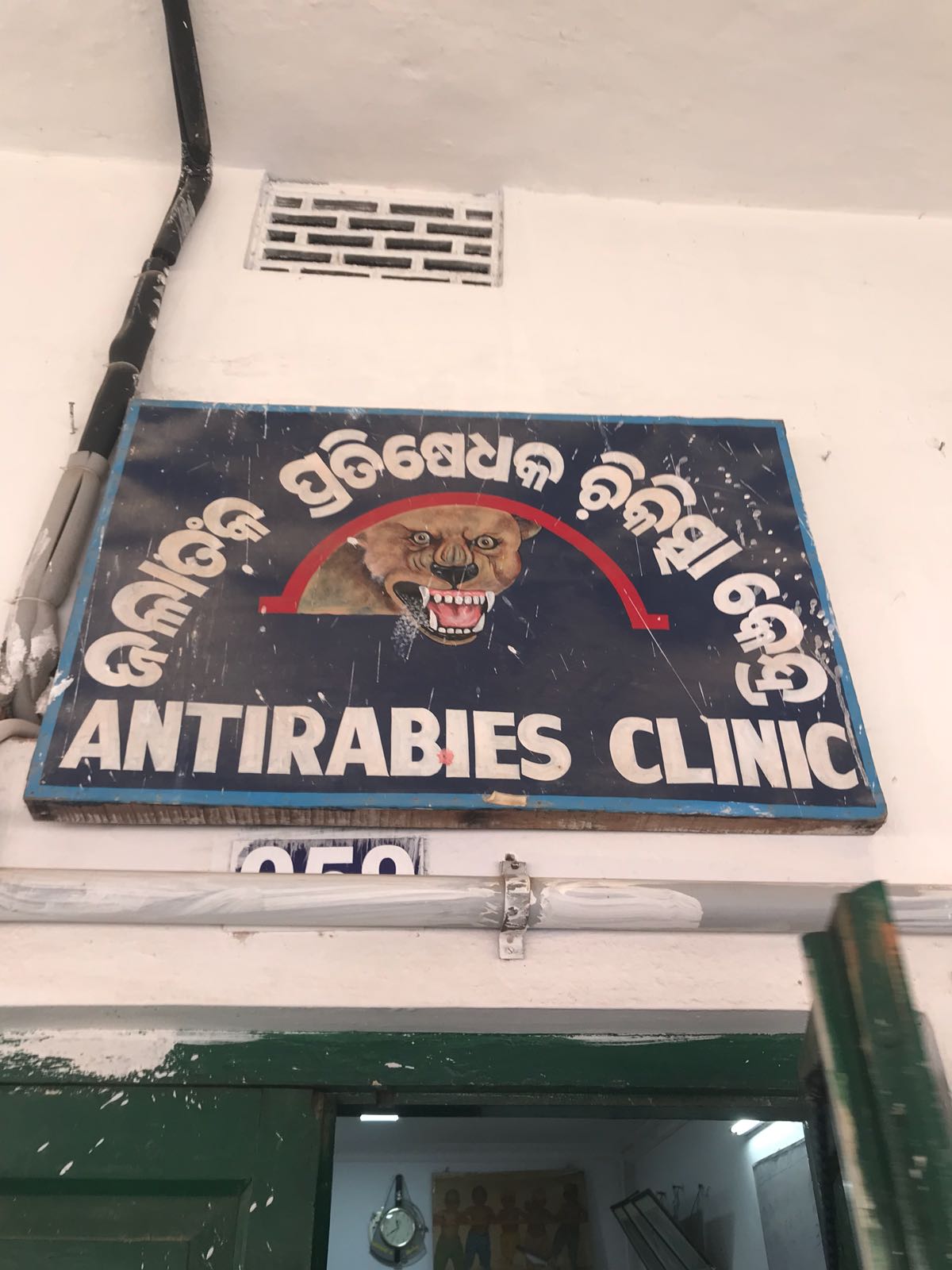
Signage in rural India

Global Rescue routinely assists our members abroad with animal bite cases. Our Medical Operations personnel offer the following recommendations for what to do when encountering stray animals.


As a rule, travelers should presume that all stray animals are rabid and avoid contact with them. Dogs are the main source of human rabies deaths, contributing up to 99% of all rabies transmissions to humans.

Dog bites are very common amongst tourists, with varying risk factors for contracting the disease. The depth of the bite, number of bites, and the stage of illness of the dog are primary considerations. Bites to the upper body and head are the most likely routes of transmission. It’s imperative to remember that once contracted, rabies is almost always deadly without prompt post-exposure vaccination.

While complete avoidance of stray dogs is the best practice, travelers should keep the following in mind:

  • Ensure that you receive prophylactic rabies vaccinations prior to travel. This substantially decreases the likelihood of infection after exposure. You will still require two post-exposure vaccinations, but will not require human rabies immune globulin, a product that is not readily available in numerous developing countries.
  • Always remain calm around stray animals and walk slowly so that they are not encouraged to give chase.
  • Never bring food in the vicinity of stray dogs, especially when they’re in packs. The same holds true for monkeys.
  • If a stray dog attacks, do anything necessary to shield yourself from being bitten near the head or upper body.

If bitten, immediately wash the wound with soap and water, and seek care at the closest medical facility. The same holds true if a stray dog licks any area of broken skin, or near any mucous membranes. Unvaccinated individuals will require a series of vaccinations: one dose post-exposure, and additional doses on day 3, 7, and 14, as well as a shot of rabies immune globulin at the same time as the first dose.

Global Rescue members should contact Global Rescue at the time of exposure so that we can coordinate post-exposure care in a timely manner. The Global Rescue Operations team is standing by 24 hours a day, 7 days a week, and 365 days a year to provide travel assistance and advisory services to our members worldwide.

Categories:

News
Share This:

Helicopter Operations in Pakistan

Share This:

Broken Legs on Carstensz Pyramid

After an arduous trek through dense jungle, experienced mountaineer and adventure traveler Voldemars Spruzs successfully summitted Puncak Jaya, or Carstensz Pyramid, leaving only Mount Vinson to complete his Seven Summits challenge.      

Voldemars Spruzs the morning after his surgery

After an arduous trek through dense jungle, experienced mountaineer and adventure traveler Voldemars Spruzs successfully summitted Puncak Jaya, or Cartensz Pyramid, in Indonesia, leaving only Mount Vinson to complete his Seven Summits challenge.

During a particularly rainy day on the final few meters of descent, Voldemars slipped on the wet rocks, sustaining fractures to both lower legs. He was completely incapacitated and far away from medical care.


Medical Evacuation from Papua

Expedition leaders contacted Global Rescue, which put into action a complex rescue plan.

A helicopter evacuated Voldemars from the remote jungle of Papua to a medical facility in Timika for initial stabilization. Shortly after, a further transport was performed by air ambulance to a medical center of excellence vetted by Global Rescue in Jakarta. Here, Voldemars received initial surgical repair of his fractures.

From Jakarta, the journey was not over. Global Rescue deployed two medical operations personnel to Voldemars’ bedside to coordinate his trip home to Riga, Latvia. After an additional week’s recovery in Jakarta, Global Rescue personnel accompanied Voldemars back to the care of his chosen medical facility in Riga.

Voldemars’ immediate family was kept apprised by Global Rescue throughout the events to provide relief and comfort.

“Every step of the way, Global Rescue was there for me to look after all the things I couldn’t – from complex issues like transporting me internationally, to the simple things like making sure I got a good cup of coffee while recovering in the hospital,” Spruzs said. “I would never climb again without being a Global Rescue member.”

Voldemars has successfully undergone a second surgery and is on his path to full recovery, but he isn’t finished yet. Voldemars will restore his strength to complete the Seven Summits as planned and explore many more new mountains and adventures.

Whether you’re seeking advice or immediate medical or security assistance, Global Rescue operations centers are staffed 24/7/365 to assist our members. Click here to contact us about the benefits of membership.


Spruzs at the summit of Carstensz Pyramid


Share This:

Mission Brief: July 2018

Every day, Global Rescue personnel are involved in medical, security, and travel operations all over the globe. Here is a snapshot of some of our recent activity.   

Every day, Global Rescue personnel are involved in medical, security, and travel operations all over the globe. Here is a snapshot of some of our recent activity. 

– MEDICAL-

NEPAL – Performed 77 rescue and evacuation missions in the Himalaya during the Spring 2018 climbing season. Assisted members with snow blindness, acute mountain sickness, frostbite, dehydration, flu symptoms, gastrointestinal issues, trauma and other serious conditions.

TANZANIA – Facilitated the transportation, medical care, and eventual repatriation of a member who was seriously injured after crashing his motorcycle in Mpanda.

NIGERIA – Provided medical evacuation and escort services to the employee of a client organization who sustained serious head injuries after a motor vehicle accident in Port Harcourt.

BAHAMAS – Provided medical advisory services and a hospital referral to a member who was experiencing severe rib pain in Freeport.

KENYA – Assisted the employee of a client organization who was bitten by a scorpion while in Mutomo.

SOUTH AFRICA – Provided medical advisory services and clinic referral for evaluation in Johannesburg to a member who was experiencing sharp ear pain.

RWANDA – Assessed the condition of a member who was bitten and scratched by a wild dog in Kigali and arranged a subsequent rabies vaccination.

SWEDEN – Provided referral to a dental facility to an employee of a client organization who was experiencing severe pain while working in Stockholm.

COSTA RICA – Assisted a family in obtaining proper care and imaging for their daughter, who had injured her back after jumping into shallow water.

CHINA – Arranged for a doctor to visit a member who was experiencing symptoms of food poisoning while traveling in Hong Kong.

UNITED KINGDOM – Advised a student who fell ill while studying abroad and located a nearby hospital for urgent care.

DEMOCRATIC REPUBLIC OF THE CONGO – Facilitated the medical care of an employee of a client organization who suffered an angina episode while in Lubumbashi.

PANAMA – Located a nearby hospital for a student suffering from swelling of the feet in Panama City.

BOSNIA AND HERZEGOVINA – Provided medical advice and facilities recommendations for a member who was experiencing gastrointestinal issues while traveling from Sarajevo to Prishtina, Kosovo.

PERU – Performed a field rescue and facilitated the medical care of a member who was suffering from hypertension and chest pain while traveling in Puerto Maldonado.

UTAH – Assisted a member who was climbing in Little Cottonwood Canyon, Utah, and sustained injuries after falling more than 30 feet.

HAWAII – Provided medical advisory services to a member who sustained injuries to his feet after walking over sea rocks while canoeing in Kailua-Kona.

TANZANIA – Provided medical advisory services to a member who was experiencing symptoms of vertigo, rheumatoid arthritis, and exhaustion while in Arusha.

CANADA – Evacuated a member from a remote camp in Nanavut who had sustained multiple head injuries in a snowmobile accident.

– SECURITY-

GREENLAND – Performed a field rescue for members in the wake of severe inclement weather during a trekking expedition.

HAWAII – Conducted security assessment for a client following the eruption of the Kilauea volcano and subsequent fissures.

THAILAND – Assisted a member who lost his passport in Bangkok and facilitated the procurement of necessary travel and legal documents to ensure his safe return home to Qatar.


Share This:

Travel to the 2018 FIFA World Cup

Global Rescue’s medical, security, and intelligence teams of critical care paramedics, physicians and special operations veterans routinely perform boots-on-the-ground assessments of destinations important to our traveling members.

Global Rescue’s medical, security, and intelligence teams of critical care paramedics, physicians and special operations veterans routinely perform boots-on-the-ground assessments of destinations important to our traveling members.

Comprehensive in-country reconnaissance and on-going intelligence reporting are just a few of the reasons why serious travelers trust Global Rescue.

Background

The men’s 2018 FIFA (Fédération Internationale de Football Association) World Cup will be held in Russia between 14 June and 15 July.  The World Cup is an international soccer (football) tournament held every four years among the national teams of member countries of FIFA. The matches will take place in 11 Russian cities: Moscow, Kaliningrad, St. Petersburg, Volgograd, Kazan, Nizhny Novgorod, Samara, Saransk, Rostov-on-Don, Sochi, and Yekaterinburg. The Russian government is expecting at least 1.5 million foreigners to visit the country for the World Cup.

Given the magnitude of the event, the World Cup naturally presents a number of security challenges to Russian authorities and to the many fans, media personnel, teams, and others who will travel to the country. The Russian government will be taking a number of additional security measures for the event. These measures include additional restrictions around infrastructure facilities, waterways, and coastlines in cities hosting a match, and restrictions of access to controlled areas in and around World Cup facilities, including the hotels where the players will be staying during the tournament.

Travelers can expect road closures in the host cities and increased security measures during public events not connected to the World Cup, which have yet to be specified by the Russian government. In addition, Russian security officials will be utilizing thousands of CCTV cameras with facial recognition technology to identify potential attackers, and will be deploying anti-drone and other military equipment to provide enhanced security measures.

Some top security concerns for the World Cup include terrorism, hooliganism, threats to LGBT travelers, and cyber and information security concerns.

Terrorism

Like for most major events, there is an ongoing threat of terrorism, particularly “lone wolf” attacks inspired by the Islamic State (IS) and other militant groups. IS and other terrorist organizations have carried out attacks on Russian soil in the recent past.  The threat has been exacerbated by Russia’s military involvement in Syria, as well as separatist militancy in the disputed Northern Caucasus region.

IS has been issuing threats specific to the 2018 World Cup since late 2017. Recently, the group has been encouraging would-be attackers to strike during the tournament and has been spreading propaganda material on its social media channels and via the encrypted messaging platform. Most prominently, an IS image was released on 20 April by the group’s propaganda wing stating, “Putin: You disbeliever. You will pay the price for killing Muslims.” However, IS has distributed similar propaganda threatening attacks ahead of other major events in recent years that failed to actually result in attacks.

Hooliganism

Russian authorities have taken steps to prevent hooliganism at the World Cup, but the threat remains. In June 2016 at the European Championships in Marseille, France, Russian hooligans violently attacked English fans in the Old Port, resulting in over 30 people injured and many others arrested. The hooligans were reportedly well-organized and appeared to have been trained. In an effort to curb the potential for similar violence at the World Cup, approximately 1,750 people have been banned from attending soccer matches, including 91 people connected to the Marseille incident. Russian authorities generally know the identities of the hooligans, and have taken steps to ensure that the violence witnessed in 2016 in Marseille does not disrupt the World Cup events. Despite these efforts, spontaneous hooligan-related violence remains possible.

LGBT travelers

Lesbian, gay, bisexual, and transgender (LGBT) individuals in Russia may face discrimination and harassment. Although same-sex relations are not illegal in Russia, there are no laws prohibiting discrimination based on sexual orientation or gender identity. Additionally, local laws ban “the propaganda of nontraditional sexual relations” to minors, for which foreigners found in violation can be punished with fines, up to 15 days in jail, and deportation. The vague language of this law effectively makes any action or statement that appears to promote LGBT issues illegal, which could extend to posts on social media.

The number of reported homophobic incidents has reportedly increased since the passage of the propaganda law in 2013. Travelers may be targeted for public expressions of homosexuality, and harassment towards LGBT people can range from street harassment to violent assault. Although Moscow and St. Petersburg have thriving gay communities, people leaving or in the vicinity of LGBT clubs and bars may be targeted for homophobic attacks or police harassment. Other types of discrimination—including racism, sexism, Islamophobia, anti-Semitism, and xenophobia— may intersect with local homophobic and transphobic attitudes to increase the likelihood or severity of harassment experienced by LGBT travelers.

Further, travelers should be wary of entrapment campaigns, as LGBT individuals—particularly gay men—have been lured on dating apps under false pretenses and then attacked. In several instances, neo-Nazi groups have entrapped gay men before torturing and/or murdering them. Russian law enforcement is generally ineffective at prosecuting these crimes, and members of anti-LGBT vigilante groups often operate with impunity.

Cyber and information security

Surveillance of telephone and electronic communication is prevalent in Russia, and all travelers should operate under the assumption that all their communications are being monitored while they are in the country. Do not discuss private or sensitive matters, including anything political in nature, on any mode of communication while in country. Further, cybercrime is prevalent in the country, and criminals may seek to gain access to sensitive information, particularly banking and other personal information (like passwords), via electronic devices.

Travelers should take appropriate measures to minimize exposure to surveillance and to reduce the possibility that private or sensitive information is exposed:

  • To the greatest extent possible, maintain positive control over all electronic devices (cell phones, tablets, laptops, etc.) by keeping them with you at all times.
  • Ensure the Bluetooth and wireless functions on all devices are turned off when not in use. Do not connect to public or unsecured Wi-Fi networks, including at airports, train stations, and other public areas. If wireless connectivity is essential, utilize a virtual private network (VPN) and do not conduct sensitive business, such as online banking.
  • Limit or avoid social media activity while in country, which can reveal personal information, location, and other sensitive information.
  • Alert friends and family of your trip before you leave and make sure they don’t send you any sensitive or private information while you’re traveling.
  • Never plug an unknown USB flash drive into your computer or other device.
  • Do not charge a phone or other device with a USB unless it is connected directly to an electric outlet. Consider an external battery charger so you do not have to connect your device to outlets.
  • GSM is the most common mobile system in Russia. Consider purchasing a GSM compatible phone that is separate from your daily device for cyber security purposes.
  • Consider a wallet that blocks would-be criminals from wirelessly obtaining credit card information via radio frequency identification (RFID).

Additional advice

  • Healthcare in Russia can be an issue. Pack a sufficient medical kit to treat minor illness and injuries.
  • Marked and metered taxis are the recommended method of transportation from airport to lodging. Mobile ride-share programs or reputable hotel arranged transportation are also suitable, but be sure to utilize vetted resources.
  • It is suggested to obtain lodging from the FIFA Recommended Accommodation list, which can be found on the FIFA website.
  • Global Rescue recommends drawing cash from ATMs at reputable hotels or shopping centers. ATMs elsewhere should not be trusted.
  • FAN ID, which is required for entry to events, along with the FIFA website, can help arrange free travel. It is recommended to use this option as it will be closely monitored and likely to have enhanced security.
  • The hooligan threat has been initially addressed by the Russian government, but unrest may still occur. Avoid if possible. If you must move through an area of disturbance stay to the outside or step inside a safe building and wait for the situation to deescalate.

Global Rescue members have access to the My Global Rescue mobile app, which is a direct link to our operations centers in case of emergency and provides real-time reports on health and security issues in 215 countries and principalities worldwide.

Questions? Contact Global Rescue at 617-459-4200 or memberservices@globalrescue.com.


Categories:

News
Share This:

Travel Insurance May Not Cover High-Altitude Treks to Kilimanjaro, Everest

Share This:

Difficult Diagnosis in Cambodia

Global Rescue member Nancy Hunsicker describes the moment her appendix burst while on a cruise in Cambodia.

Nancy Hunsicker plays with a snake at the Bangkok floating market.

Nancy Hunsicker was traveling through Asia with her husband and friends on a small-ship cruise trip and eagerly awaiting their stop in Cambodia.

“The one thing I wanted to do in Asia was to see Siem Reap and Angkor Wat,” she said.

The day before the group was to disembark for the overland trip in Cambodia, Nancy woke up at 3 AM with extreme abdominal pain.

Dismissing the pain as something she could “get through,” Nancy continued on the excursion with the group. “I tramped through the whole day in Phnom Penh—saw palaces, museums, gardens, took pictures, posted on social media—and by the end of the day, I was even more miserable.”

Nancy knew something was seriously wrong. “I’ve never felt like that before. I work out, I eat carefully—I’m as healthy as a horse.”

After another hard night —“at some point I woke up and I was just shrieking” — Nancy and her husband decided to call in a local doctor. Concluding that Nancy did not have appendicitis and most likely had food poisoning, the doctor gave her antibiotics and painkillers to try to relieve some of the symptoms.

Hours later, Nancy saw no improvement. When the doctor came back early in the morning to examine her again, he explained that, in fact, his previous diagnosis was incorrect. He still wasn’t sure what it was, but he knew it was more serious than food poisoning. That’s when Nancy’s husband called Global Rescue.

Global Rescue quickly identified and contacted a world-class hospital nearby. The Global Rescue Operations team arranged for an ambulance to be sent to transport Nancy to the facility for immediate medical attention.

“I had a burst appendix. The reason the first doctor was confused is that it turns out my appendix was abnormally situated on the opposite side of my body. I damn near died,” said Nancy. “Global Rescue got me to the hospital and were great all the way through. It was a huge comfort.”

Nancy underwent surgery at the hospital and remained for several days to recover. “It was an incredibly immersive cultural experience—just not the one I planned on,” she recalled.

“Global Rescue personnel called several times a day and talked to my husband, the doctors, and me. Global Rescue evaluated copies of everything, asked questions, critiqued, made suggestions, and made sure I got the anti-coagulant shot so I could safely get on a plane to Hong Kong post-surgery,” Nancy said.

Global Rescue continued to monitor Nancy during her trip to Hong Kong and as she returned home to the United States, safely and without any complications. “It couldn’t have been more seamless,” she said.

Nancy Hunsicker and her husband in Hong Kong 10 days after her surgery.

Looking back, Nancy realized she never thought she would be the one to need Global Rescue. She had insisted that her friends and family become Global Rescue members in case something happened during the trip.

“The funny thing is, the people I travel with are all older than I am—rather significantly—so I encouraged everybody to get Global Rescue, thinking, ‘We’ll take care of the older ones.’ Then here it is me needing Global Rescue’s help.”

Nancy continued, “It was a very scary situation. Global Rescue didn’t scoop me up out of the jungle or the side of a mountain, but if it hadn’t been for Global Rescue, I don’t know what we would have done. Global Rescue is really good any time you’re 100 miles from home. Even if I’m not traveling abroad, I often go out of town and show horses where I could get hurt. I wouldn’t be without Global Rescue.”


A few months post-surgery, Nancy was back in the saddle, showing her horse.

Categories:

News
Share This:

Don’t Let Volcanoes, Other Irrational Fears, Ruin Your Summer Vacation