Categories:
Missions & Member TestimonialsOctober 1, 2014
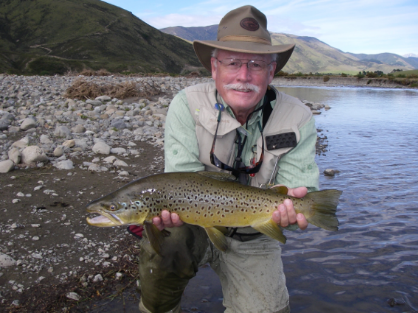
John Bates during a fishing trip to New Zealand
Kiritimati, also known as Christmas Island, is one of the most remote places on earth, lying in the middle of the Pacific Ocean. With many distinctive species of fish in the surrounding oceans, Christmas Island attracts anglers from all over the world.
Global Rescue member John Bates of Billings, Montana, traveled to Kiritimati on a much-anticipated fishing trip over the summer. Late one evening, he fell seriously ill at his lodge. His symptoms included weakness, high fever, an inability to walk, and difficulty breathing.
Dr. Gordon Cox, a retired pathologist traveling with Mr. Bates, contacted Global Rescue for help when Mr. Bates was unable to do so. Because of its remote location, Kiritimati presents challenging communication issues. Communication on the island is very poor, with the only access provided via the island’s “communications center,” and even then in limited fashion.
The Global Rescue medical team determined that Mr. Bates’ complex medical history meant that he was particularly sensitive to the symptoms he was experiencing, with a life-threatening risk of sepsis, in a remote location where proper care was unavailable. It was clear that Mr. Bates’ condition necessitated evacuation from the island to receive needed care.
With no time to waste in obtaining the best care for Mr. Bates, Global Rescue physicians recommended an immediate medical evacuation from Christmas Island to a hospital in Honolulu, Hawaii, for medical treatment. It was determined that this was the closest, best hospital for treatment under the circumstances.
Following a brief hospitalization where he received stabilizing care, Mr. Bates was able to travel home to Montana. He made it home safe and sound, praising the efficiency of the medevac team and thanking Global Rescue for its role in his medical care.
Mr. Bates had the following to say about his ordeal:
“First, I would suggest to the tour company I was traveling with, which books trips to Christmas Island, that they mandate that anyone going to fish in a remote area like Christmas Island sign up with Global Rescue. You’re nuts if you go someplace like Christmas Island and don’t have Global Rescue in your back pocket.”
“Second, I’d suggest that someone in your group investigate the communications technology available at any destination. When in doubt, have a satellite phone, acquired specifically for the purpose of the trip, to provide a clear line of communication in case of emergency.”
“It was Dr. Cox, in fact, who had suggested Global Rescue to me. I looked at the information and thought maybe I should join up. I’m very grateful that I did. I’m here, and I’ve got all of my limbs. I’m glad I had you guys. Having seen what you can do, I’m a believer.”
“Global Rescue’s follow-up system certainly makes you feel you’re being tended to. It becomes apparent that they’re on top of things, and that’s important.”

Dr. Gordon Cox (L) with John Bates (R)
Categories:
NewsSeptember 30, 2014
Categories:
Press ReleaseSeptember 26, 2014
ASIS 2014 Atlanta, Booth #2246 — Global Rescue, provider of the highest quality medical, security, intelligence, travel risk management and crisis response services for governments, corporations and individuals, will participate in the 2014 ASIS International 60th Annual Seminar and Exhibits. The event is slated for September 29 – October 2, 2014, at the Georgia World Congress Center in Atlanta, GA. More than 20,000 security professionals from 80 countries are expected to attend.
As multinational organizations face increasing vulnerability from the rising incidence and magnitude of natural disasters, political instability, terrorism, and cultural conflicts, the importance of enterprise-wide emergency action planning, travel risk and integrated crisis response cannot be overstated. The best-prepared organizations are proactive in protecting employees against evolving international threats through the implementation of an integrated enterprise-wide approach to travel risk and crisis management. The Global Rescue team will share best practices in travel risk and crisis management, drawn from the thousands of successful medical and security emergency response operations which the company has conducted. The team will highlight for ASIS attendees Global Rescue’s work with the U.S. Ski Team and other clients at the 2014 Sochi Olympic Games as well as its support of clients during other major global events such as the Arab Spring, the Haiti earthquake and the Mumbai terrorist attacks.
In addition, Global Rescue executives will showcase new features in GRID, the company’s travel risk and crisis management product. GRID enables employers to track employees traveling overseas, receive real-time alerts for global events, communicate with employees, and monitor their assets’ locations — all in one place. With easy access from Global Rescue’s mobile app, employees can access detailed destination reports and set up global event alerts. All of these capabilities are completely integrated with Global Rescue’s crisis management and response services.
Attendees are invited to visit Global Rescue at booth #2246. To learn more about Global Rescue and its integrated travel risk and crisis management solutions, visit www.globalrescue.com or call 617-459-4200.
ASIS International is the preeminent organization for security professionals, with more than 38,000 members worldwide. Founded in 1955, ASIS is dedicated to increasing the effectiveness and productivity of security professionals by developing educational programs and materials that address broad security interests, such as the ASIS Annual Seminar and Exhibits, as well as specific security topics. ASIS also advocates the role and value of the security management profession to business, the media, government entities, and the public.
About Global Rescue
Global Rescue is a worldwide provider of integrated medical, security, intelligence, travel risk management and crisis response services to corporations, governments and individuals. Founded in partnership with Johns Hopkins Medicine, Global Rescue’s unique operational model provides best-in-class services that identify, monitor and respond to potential threats. Global Rescue has provided medical and security support to clients during every globally significant crisis of the last decade. Memberships start at $119 and entitle members to rescue and transport services to their home hospital of choice.
For more information, call +1-617-459-4200 or visit www.globalrescue.com.
Categories:
NewsSeptember 23, 2014
September 22, 2014
As the Ebola outbreak continues, here is an update on this rapidly changing situation as well as advice for Global Rescue members regarding travel:
Outbreak Background
The current outbreak of Ebola virus disease (EVD) in West Africa began in Guinea in December of 2013; however it was not identified as Ebola until March 2014. This delay likely allowed the virus to gain significant traction within the locales where EVD is now present. By May, EVD spread to Liberia and Sierra Leone, likely aided by very porous regional borders. EVD was imported to Nigeria by a single sick traveler in July from Guinea, which is not geographically contiguous with any of the original affected countries. Senegal also reported an imported case in late August. A Senegalese student who had been studying in Guinea was infected, developed symptoms and returned home to Senegal. There have been no confirmed cases of EVD importation elsewhere in the continent, or world, since the Senegal case.
Current Situation
As of the most recent World Health Organization (WHO) Situation Report dated 18 September, the current total number of cases associated with the West Africa outbreak is 5,335. This figure includes 2,622 fatalities as of 14 September. Currently, the only countries affected by the West Africa outbreak are Guinea, Liberia, Sierra Leone, Nigeria, and Senegal. Widespread transmission exists in Guinea (942 total cases), Liberia (2,710 total cases), and Sierra Leone (1,673 total cases). In Sierra Leone, dozens of new Ebola cases and deaths were recorded as the country concluded its three-day nationwide lockdown on 21 September. Nigeria, and Senegal have fewer than 25 total combined cases, and thus far have not seen the intense transmission noted in other affected countries. This is likely due to aggressive isolation efforts within both countries once import-vectors were identified, as well as public-health campaigns and response posturing by international healthcare organizations.
Unrelated Outbreak – Democratic Republic of Congo
There is an additional outbreak of EVD in Equateur province in the Democratic Republic of Congo. While the strain identified in the DRC is the same as the strain affecting West Africa, it has been confirmed to be epidemiologically unrelated. The DRC outbreak is believed to have started in the village of Ikanmongo, where a pregnant woman died on 11 August. She was reported to have recently butchered a bush animal, and then fell ill with flu-like symptoms. As of 17 September, there have been 71 cases reported, and 40 fatalities.
The outbreak zone within the DRC is remote – approximately 1,200 kilometers from Kinshasa. There are no major transportation routes that connect the zone with other regions of the DRC, and risk of transmission/importation to other major population centers is considered unlikely. U.N. analysis suggests that the outbreak there is under control at this time
Prevention is primarily guided by awareness of how the disease is transmitted, and practicing safe hygiene. These preventative measures may include:
- Avoid nonessential travel to Liberia, Guinea, and Sierra Leone.
- If you must travel, please make sure to do the following:
- Practice safe hygiene. Avoid contact with blood and body fluids of people who are sick with Ebola. Regular hand-washing is essential and highly recommended.
- Do not handle items that may have come in contact with an infected person’s blood or body fluids.
- Avoid funeral or burial rituals that require handling the body of someone who has died from Ebola.
- Avoid contact with wild animals and with raw or undercooked meat (bushmeat).
- Avoid hospitals where Ebola patients are being treated. Global Rescue can provide advice on facilities that are suitable for your needs.
Is it safe to travel during an outbreak?
While travelers should always be vigilant with regard to their health and those around them, the risk of infection for travelers is very low since person-to-person transmission results from direct contact with the body fluids or secretions of an infected patient.
Is it safe to travel to West Africa?
The risk of travelers becoming infected with Ebola virus during a visit to the affected areas and developing disease after returning is extremely low, even if the visit included travel to the local areas from which primary cases have been reported. Transmission requires direct contact with blood, secretions, organs or other body fluids of infected living or dead persons or animals, all of which are unlikely exposures for the average traveler. That being said, the Centers for Disease Control and Prevention (CDC) has issued Level 3 (Avoid Nonessential Travel) notices for Liberia, Guinea, and Sierra Leone. Should travel to one of these locations be necessary, be mindful of the prevention guidance noted above.
Categories:
Press ReleaseSeptember 22, 2014
Boston, Mass., and Washington D.C. – Crisis response firm Global Rescue’s CEO Daniel Richards will share his perspectives on travel risk management at the World Medical Tourism & Global Healthcare Congress, running September 20-24, 2014, in Washington, D.C. Global Rescue is a worldwide provider of integrated medical, security, transport, intelligence and crisis response services for corporations, governments and consumers.
Richards’ presentation on the panel, “Travel Insurance in the 21st Century: From Medical Travel to Emergency Evacuations,” will highlight the changing nature of travel risks. Organizations which provide services that involve travel or have employees who travel face increasing “duty of care” liability if they fail to: disclose potential risks related to travel; provide relevant information related to those risks; or respond to medical and security emergencies.
The “Travel Insurance in the 21st Century: From Medical Travel to Emergency Evacuations” session is set for Tuesday, September 23, 2014, at 4 p.m., at the Gaylord National Resort and Convention Center, Washington, D.C.
To learn more about Global Rescue and its integrated crisis response services, visit www.globalrescue.com or call 617-459-4200.
About World Medical Tourism & Global Healthcare Congress
The World Medical Tourism & Global Healthcare Congress is the world’s largest medical tourism event and the most comprehensive international healthcare conference and tradeshow in the industry. The event is sponsored by the Medical Tourism Association, which has worked hard to bring together the best expert speakers and the most informative and cutting edge sessions and topics. The Medical Tourism Association is the first membership based international non-profit trade association for the medical tourism and global healthcare industry made up of the top international hospitals, healthcare providers, medical travel facilitators, insurance companies, and other affiliated companies and members with the common goal of promoting the highest level of quality of healthcare to patients in a global environment.
About Global Rescue
Global Rescue is a worldwide provider of integrated medical, security, intelligence, travel risk management and crisis response services to corporations, governments and individuals. Founded in partnership with Johns Hopkins Medicine, Global Rescue’s unique operational model provides best-in-class services that identify, monitor and respond to potential threats. Global Rescue has provided medical and security support to clients during every globally significant crisis of the last decade. Memberships start at $119 and entitle members to rescue and transport services to their home hospital of choice.
For more information, call +1-617-459-4200 or visit www.globalrescue.com.
Categories:
NewsSeptember 17, 2014
Categories:
NewsSeptember 16, 2014
Categories:
Health & SafetyTravelSeptember 5, 2014

Snakes are an integral part to many ecosystems and, as an outdoor enthusiast, it is only a matter of time before you encounter one in the backcountry. Venomous snakes are most prevalent in temperate and tropical climates, with April-October being peak snakebite season. There are roughly 15-20 deaths per year in North America related to venomous snakes. The risk of dying from a venomous bite increases when multiple bites are involved and when the bite occurs in the very young, old, or in persons with underlying respiratory or cardiovascular problems. In the US, venomous snakes account for only about 20% of all snakebites and out of that 20%, many do not result in envenomation. Some studies suggest that up to 20% of rattlesnake bites are deemed ‘dry’ bites, with no venom being injected. Dry biting is a sign of maturity in the snake; more experienced snakes will use a dry bite as they try to gauge the level of a perceived threat and since snakes do not have an infinite amount of venom they will try to use it sparingly.
The majority of poisonous snakes in the US are pit vipers. Rattlesnakes, copperheads, and cottonmouth (water moccasins) snakes are in this family, known as Crotalidae. Typically, pit viper victims tend to be young males, 11-19 years old, who are bitten on the hand while trying to pick up the snake. Alcohol has been shown to be a common factor in these incidents.
The best guideline for snakes is complete avoidance. The old adage that ‘it’s more afraid of you than you are of it’ is generally true, and most snakes only bite when they feel threatened. If snakes are encountered, give them a wide berth and continue on your trek.
As there are many types of snakes, venomous vs. nonvenomous, and different types of venom, hemotoxic vs. neurotoxic, opinions on treatment methodologies can be as numerous as the different snakes themselves. However, many experts tend to agree that certain folklore treatments should be avoided. These include pouring alcohol over the bite, making an incision over the bite site, cauterization, amputation, use of electric shocks, and packing the extremity in ice. Many of these so-called treatments are urban legends. The use of suction (attempting to ‘suck’ the venom out of the bite) is controversial but all experts agree that if attempting this technique you should not use your mouth to apply suction.
Field management for snakebites should focus on limiting the systemic spread of the venom and rapid evacuation of the victim to a hospital equipped to handle envenomations. During the evacuation, you should do the following:
- Keep the patient calm and inactive. Remove jewelry and constrictive clothing.
- Clean around the bite site and keep the wound free from dirt and debris by covering with a sterile dressing.
- Immobilize the limb in a neutral position.
- Avoid the use of compression bandages unless bite is from a neurotoxic snake (coral snake, cobra, krait, or other).
For those with advanced medical training, continue to monitor vital signs, ensure airway is patent, be prepared to treat victim for anaphylaxis, nausea/vomiting, and pain. The patient should be continuously monitored for the first 4-6 hours. If after 6 hours the victim does not display any adverse signs or symptoms, it is generally safe to suspect a bite without envenomation. Support hydration orally if possible, start an IV in an unaffected limb if available. Defer food ingestion during prompt evacuations; if a prolonged evacuation is presented, nourishment will become important to support strength and health. Avoid alcohol intake. Evaluate victim’s tetanus status and consider giving tetanus toxoid. Antivenin is the only proven therapy for snakebite but only when it is specific for the snake involved. DO NOT try to kill or capture the snake for identification purposes. Dead snakes, even several hours later, can reflexively bite injecting venom causing either a second bite or biting another member of the group. Embrace technology and snap a photo with your smartphone…using the zoom!
Wherever your travel takes you, Global Rescue encourages you to do a thorough area study of your destination and research the native flora and fauna that might be harmful.
Read here about a medical evacuation we conducted for a member bitten by an African cobra in Namibia.
Categories:
Missions & Member TestimonialsAugust 29, 2014

“Do I have to be an American citizen to join Global Rescue?” It’s one of the questions we hear often. We thought it would be helpful if we regularly highlighted a few of these frequently asked questions (FAQs) along with the answers. Here is the first post in the series.
Q: Do I have to be an American citizen to join Global Rescue?
A: Global Rescue membership is available to anyone, regardless of his or her country of citizenship. We have thousands of foreign national members who enjoy the exact same benefits as U.S. citizens.
Q: Why do I need Global Rescue when I have travel insurance?
A: Because no other service provides the resources, expertise and boots-on-the-ground capabilities of Global Rescue. If you’re concerned about lost luggage, a canceled trip, or don’t have medical insurance, we are an excellent complement and improvement on standard travel insurance. Global Rescue advises and helps manage your medical or security emergency while you are experiencing it. However, with travel insurance you must manage the emergency by yourself, and later submit receipts to get expenses reimbursed.
Global Rescue is a membership organization that provides medical, security, advisory, intelligence and evacuation services for members who require inpatient hospitalization more than 160 miles from home.
Members pay a flat membership fee up front, and all costs associated with advisory services or an evacuation from the point of injury or illness to the home country hospital of choice (or home country, in the event of a security evacuation) are included in the cost of membership. Since a Global Rescue membership is not insurance, there is no out of pocket payment or deductible. It should be noted that Global Rescue does not cover medical bills, trip cancellations, baggage loss, delayed flights, etc.
Q: Do you have restrictions on where I can travel? On elevation/altitude? On activities?
A: The standard Global Rescue membership is in effect anywhere other than the polar regions — below 60 degrees South latitude and above 80 degrees North latitude. We do not have altitude or activity restrictions for Global Rescue members, however Global Rescue’s High-Altitude Evacuation Package is required for delivery of rescue and evacuation services. We strongly advise climbing members to educate themselves on preventing acute mountain sickness (AMS). It should be noted that helicopter options above 20,000 feet are limited and evacuations above that altitude can be time-consuming and difficult.
Do you have a question about Global Rescue membership? Add it in the Comments below.
Categories:
Missions & Member TestimonialsAugust 28, 2014
Over the past decade, Global Rescue has been very active in the Himalaya, advising and evacuating hundreds of our members who have faced severe illness and injury while climbing Everest and other peaks.
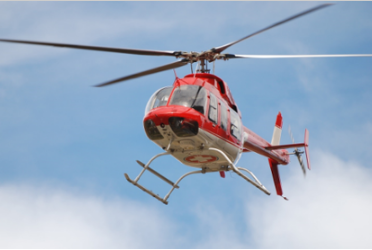
Recently, however, in addition to the perilous nature of the climbs themselves, climbers and trekkers have faced another danger: the threat of forced or coerced evacuations in non-emergencies as part of fraudulent practices by some in the Nepalese helicopter industry.
We posted about this issue first in June 2013 and again in December 2013, with advice on how to avoid being victimized by this corruption.
For several years, Alpine Rescue Service has been working diligently to put an end to this fraudulence. Climbers and trekkers will be pleased to know that progress is being made. ARS wrote in its June newsletter that its effort to suppress fraudulence “is gaining rapid momentum through collaborative efforts of our insurance partners.” These insurance partners have been investigating questionable cases that resulted in evacuations and visiting the offices of the service providers who initiated these evacuations. ARS writes that it is “hopeful that this initiative will ensure that fraudulence is minimized significantly and emergency medical assistance for travelers to Nepal will ultimately foster with genuine cases demanding the same.”