Categories:
Health & SafetyTravelSeptember 26, 2012
Don’t let your expedition go south…
By Jeff Wise, American Alpine Club
Whether you love hiking, climbing, mountain biking, or kayaking, you probably know a lot about outdoor safety.
But if your expedition goes sour, first aid training and compass skills might not be enough to pull you from a life-threatening morass.
Here at the American Alpine Club, we’ve seen a little innovation go a long way, so we put together some of our favorite backcountry tips and tricks:
1. Fire Starters You Didn’t Know You Had.
Cleaning wounds is not a high priority when you’re lost or close to hypothermic. Bust out the first-aid kit anyway! You’ll find a few staples—alcohol swabs and cotton balls—that serve double duty as fire starters in an emergency. For extra spark, coat the cotton in petroleum jelly. Duct tape is also flammable, which demonstrates yet again that it is, without question, the most versatile tool in the universe. Or is it?
2. Fishing Line—The New Duct Tape
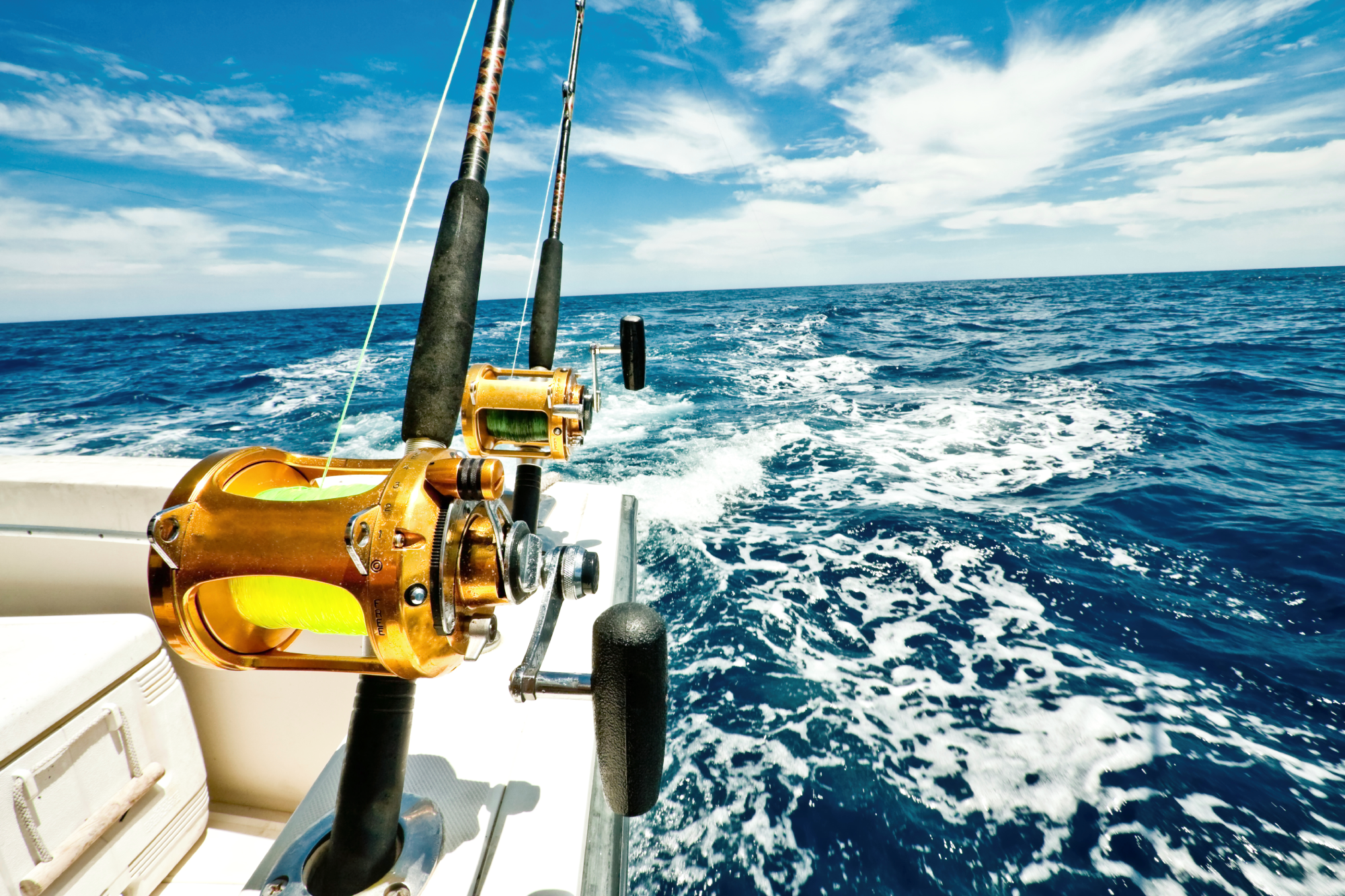
Duct tape is good, but fishing line might be even better. Not only is fishing line super lightweight, but it also has dozens of backcountry uses when you’re in trouble. Hungry? Catch your food. Exposed or broken? Tie up a tarp for your shelter, repair clothes and shoes, or stitch up your wounds.
Stranded? Use the line to make a signal kite. Simply construct the frame from sticks, tent poles, or trekking poles. Build the body from a bright shirt or section of space blanket. Then tie it all together and launch it to direct rescue crews to you—or for impromptu fun on a windy day. Fishing line can even function better than tweezers to remove ticks: just tie an overhand knot around the head, get it snug, and pull away from the skin. Top that, duct tape!
3. The Sun: Nature’s Iodine
For safe drinking water in the backcountry, filters and tablets are best, of course. But there’s another crafty way to do away with dangerous bacteria in your water.
Pack a plastic bottle of soda and drink it the first night of your trip. Save the bottle because the thin layer of polyethylene terephthalate (PET) allows the sun’s ultraviolet radiation to perform a bit of magic. Just fill the bottle most of the way with your questionable water, shake it up, top it off, cap it, and put it in direct sunlight.
In one afternoon the combination of heat and radiation will have killed most, if not all, of the microbes that could do you harm. For the same reason, the top few inches of lake water are the cleanest because of the power of the sun. Remember to choose clean snow over lake ice because bacteria can survive for months in the ice, and use a bandana or shirt to remove large particulates and silt.
4. No Cell Service? No Problem.
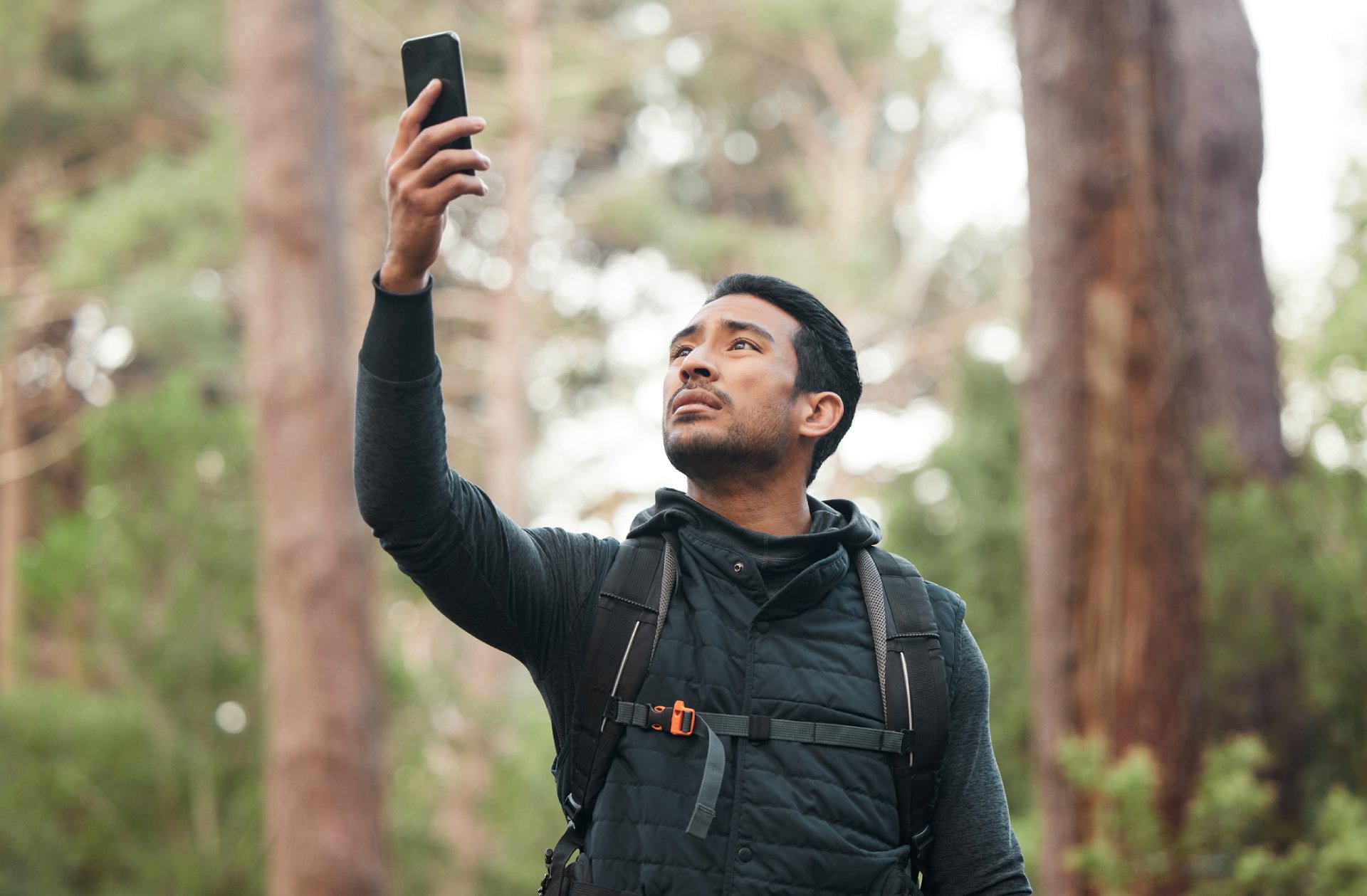
It’s no surprise that making a cell phone call requires satellites to know where you are. Use that to your advantage when you’re having an emergency in no-man’s-land. Even with zero cell service, you may be able to give emergency or rescue teams clues to your whereabouts.
If you can’t call 911 or send a text, at least turn on your phone to drop “digital breadcrumbs” that may aid those looking for you. Make sure your emergency contact at home knows about this trick and has your phone number and service provider at the ready.
5. The Back-Up Plan
Most adventurers have health insurance or accident insurance, but not many have rescue insurance. Whether you’re all about the weekend epic or a long trek overseas, rescue insurance protects you from insane five-digit costs. Even here in the United States, some local rescue groups and some governmental agencies are beginning to charge for rescue services.
Having the right insurance—available from Global Rescue or by joining the American Alpine Club—also creates peace of mind for you and your family and friends. If you have insurance and something does go wrong, you can focus on getting healthy instead of worrying about the rescue bill.
Know other interesting survival tips? Have an epic rescue story? Share them in the comments below—we’d love to hear from you.
About the American Alpine Club
The American Alpine Club is a nonprofit organization that provides benefits, knowledge, inspiration, and conservation for the outdoor community.
All members benefit from a Trailhead Rescue service from Global Rescue and many climbers traveling abroad choose to upgrade to the full Global Rescue membership.
Learn more about AAC programs and member benefits at americanalpineclub.org
Categories:
Health & SafetyTravelSeptember 26, 2012

Whilst a Global Rescue membership goes a long way to keeping you safe and well when traveling, there are some additional simple steps you can take to reduce the medical risks associated with traveling abroad.
- Be prepared before you step out the door. Complete a pre-travel physical and make sure any chronic medical conditions are stable. Avoid traveling too soon after surgery, complications may surface 3-6 months after some surgical procedures. Make sure your vaccinations are up to date, for some countries you will need to provide proof of vaccination to enter the country.
- Know your health insurance policy and service coverage.Does your plan cover medical bills if you are hospitalized while traveling internationally? Do you have medical evacuation coverage for emergent medical transportation? Do you have trip cancelation insurance in case you miss your flight due to a medical emergency?
- There is a chance some international medical facilities will not work with your health insurance provider. Have a backup plan, a way to pay for emergency care if needed. Travel with a credit card or have another way to access funds quickly. Some facilities will turn you away at the door regardless of the nature of the medical emergency if you cannot provide a guarantee of payment or some type of financial deposit for services rendered.
- Keep emergency contact information with you at all times. Many people carry a quick reference card listing their important medical information, including daily medications, allergies, major medical conditions, past surgeries, and past medical history. Medical alert bracelets or necklaces are also important if the allergy or condition has the potential to cause a medical emergency.
- Bring your own pharmacy, there is no guarantee there will be one around the corner. It is good to travel with basic over the counter medications and a small first aid kit. Pain relievers, medications to control a fever, antacids, basic bowel management medications (anti-diarrheal medications and stool softeners), allergy medicine, anti-biotic ointment, eye drops, decongestants, cough drops, cold medicine, blister dressings, band aids, oral rehydration electrolyte mix, yeast infection treatments and sunscreen are just a few items we take for granted that can easily be obtained at most drug stores. Any medications purchased abroad may not be subject to the same manufacturing standards and quality control you expect at home.
- Bring 2x the amount of daily medication needed. If you are traveling for 7 days, bring a 14 day supply of daily medications. Travel plans can be delayed, flights cancelled, and pill bottles can spill. Refilling a prescription while traveling internationally can be challenging and having the flexibility to accommodate a few extra days of travel reduces the risk of this happening. If you have a prescribed medication you use “as needed”, make sure you bring it.
- Keep prescription medications in the original bottle to prevent any questions of a medication’s identity. If this is not possible, bring the medication in pill box cases.
- Have the ability to call for help, know how to call for help, and know where you would want to go for help. Outside of the US dialing “911” does not work. Have a way to call for help, a local cell phone or SAT phone, know how to dial that number based on international calling configurations, and what number to call for emergency medical services. Research local hospitals or travel clinics before your travel, know the best facilities available to you in a specific area. If you are a US Citizen, the US Embassy based in your country of travel is a great resource in providing this information. You can also register your dates of travel with the embassy, which can further help in an emergency.
- Be familiar with health concerns relevant to the location.There are general health advisories, health risk assessments and food and water safety precautions specific to different regions. For example, in certain regions you may want to avoid salads and ice cubes, both of which may have been contaminated by polluted water.
- Travel itself can take its toll on your health – listen to your body. Allow your body time to acclimatize to different environments, time zones, air quality and altitude changes. Drink as much as possible to avoid dehydration and expect that humidity changes may influence your sinuses.
Categories:
Missions & Member TestimonialsSeptember 25, 2012
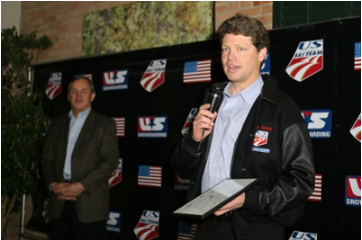
USST veteran Tiger Shaw turns his talents toward a new role at Global Rescue
Tiger Shaw, a two-time Olympian and 10-year veteran of the US Ski Team and World Cup circuit enjoyed an athletic career at the highest international level. Today, several decades removed from his days on the hill, Shaw is the senior director of response services for Global Rescue — a crisis response company dedicated to redefining the evacuation services provided to corporations, academic institutions, government agencies and injured athletes, travelers and outdoorsmen all around the world.
From Global Rescue’s headquarters in downtown Boston, Shaw oversees accounts from large international corporations with thousands of employees overseas to elite teams of ski racers traveling to camps in Mount Hood, Chile, New Zealand, Europe and beyond. He says that his passion for the sport of ski racing and commitment to safety for young athletes propelled him to his current position at Global Rescue, where he believes he has an opportunity to impact medical care and safety in the ski community.
Ski Racing Magazine caught up with Shaw to get his thoughts on skiing, life as a parent and his new role at Global Rescue.
Your ski career produced a long list of achievements. What was your proudest moment as an athlete?
Making two Olympic teams was definitely a highlight, but my World Cup results are the most memorable. That’s the closest that I ever got to being best in the world — third in a run, sixth in a race, etc. Making the Olympics is an honor, but that is making a cutoff to make a particular team, not necessarily striving to be the best in the world. It’s less of an achievement to make the Olympics as an American than it is to place in the top five in the world.
Throughout your career, you must have traveled to some pretty out-of-the-way places. Global Rescue does what nobody else does, and gets to these places. What’s the most remote ski area you’ve ever been to?
Las Lenas, Argentina, no question. After a 12-hour flight to Buenos Aires, you have to drive 26 miles west to a small domestic airport. Then it’s a 45-minute 737 flight to interior Argentina. It felt like we landed on a dirt strip. Once there, we took buses to the resort where all the buildings are A-frames to withstand the 10 to 20 feet of snow that would fall between now and when we left. Not much else out there… I actually self-evacuated once after hurting my knee. Caught a flight to Buenos Aires, lugged my bags, spent three days locally trying to get a flight, all while limping around — fun!
With six knee operations under your belt, you’re no stranger to injuries. Have you ever witnessed a serious injury to a friend or teammate?
Yes, unfortunately. I was in Squaw when Joel Persone launched off a downhill jump while training, and landed on a coach who was salting the track. Luckily both survived, with one taking many years to recover, but he did. I have a few other stories like that — glaciers, accidents, car wrecks. I’m old enough to have seen a lot.
These days, you surround yourself with former athletes, paramedics, and U.S. special operations veterans at the Global Rescue headquarters. Tell us about your role.
I joined the company in the summer of 2011. My involvement here began with the rescue of my own kid — she wrecked her knee in Panorama, B.C., and Global Rescue brought her home for surgery, which, thankfully, went well and she is still racing today. We knew about Global Rescue because Burke Mountain Academy was way ahead on this preparedness curve. They required that all internationally-traveling kids have coverage. Similarly, GMVS covers every single kid and staff at the school with Global Rescue. Many clubs also stress coverage, some more than others, and as a result not all ski racers are covered, but should be.
How is Global Rescue making an impact in the ski community?
We’re trying to make it a safer sport through better preparation, and better response to problems and emergencies when they occur. I do believe that, through our work, we have significantly affected the lives of many skiers. There was no one as capable before us. Just ask anyone who has suffered because of the past deficiencies, and those that have benefited from us.
Over the past few years we’ve also formed a number of partnerships with ski clubs and academies across North America. Through these relationships, we can protect kids, members and their families, and also help clubs with risk mitigation and destination pre-planning. These are invaluable benefits for large groups traveling to race or train. Many clubs take advantage of the preparation help we can provide, some don’t. My message to them would be, “Don’t wait for a bad accident before you finally get prepared. Get coverage, get prepared!”
Now as a parent of several elite racers, it must be a bit unnerving to watch your children compete. How has your perception of risk in the sport evolved from your career as an athlete to your time as a parent?
Dramatically. As you get older, you grow more risk-averse. Smarter is safer. Even these days, when skiers are doing many and much more dangerous things (pipes, slopestyle, extreme), it is in fact safer than it used to be, because of awareness and equipment improvement. As a coach and a ski club director, I look at ski trails for safety, fencing in the proper position and place, obstacles protected, safety bars down, etc. I feel like I’m the opposite of that mayhem guy in the Allstate Insurance commercial. My kids create chaos; I try to control and mitigate it. When my kids travel to race and train, I sleep easy knowing they have one number to call in the event of an emergency.
As a parent, why would you recommend Global Rescue to the parents and coaches of athletes nationwide?
Peace of mind, security and professionals on top of it should an incident arise. One number to call, and a solution waiting to kick in. I recommend Global Rescue to parents because I know the people here, and I want them taking care of me if I need help. Plain and simple.
Categories:
Missions & Member TestimonialsSeptember 19, 2012
While in Germany vacationing with his family, a member was attempting to board a train when he fell into the gap between the train and the platform, severely lacerating his leg. Soon after the incident, his son contacted Global Rescue.
After the initial call, local medics arrived on the scene and transported the member to a nearby hospital, where physicians attempted to control the bleeding and performed an x-ray. On first review, local medical staff in Germany felt that the situation was stable and that there was no evidence of any fractures or injury beyond the laceration.
After reviewing the injury with local doctors, it was decided that the best course of action would be for the member to remain in Germany for a further 5 days to determine whether the leg was stable for transport and if a skin graft would be required. The member could then be transported to his home hospital in Houston for further treatment.
Global Rescue took steps to ensure the member remained comfortable in hospital and contacted his wife, who helped obtain the release of relevant medical records. These allowed Global Rescue medical teams to better understand whether appropriate care was being received and what the next steps should be in the treatment process.
As a result of the extended stay and to monitor the patient during the onward transportation, Global Rescue deployed medical personnel to Germany who met the injured member and his wife at the hospital, arranged his discharge, and oversaw his transport.
Once on the ground in Houston, Global Rescue arranged ground transportation for the member from the airport to ER at the receiving hospital.
After an ER evaluation and diagnostics, it was determined that the member’s injury was healing well and the situation did not require further hospital admission.
Categories:
Missions & Member TestimonialsSeptember 10, 2012
Former U.S. Ski Team member and 2008 U.S. downhill champion, TJ Lanning, talks to Ski Racing Magazine about his 2009 crash and subsequent evacuation by Global Rescue.
Global Rescue is the official provider of aeromedical services to the U.S. Ski and Snowboard Team.
TJ Lanning relives his 2009 crash with Ski Racing Magazine from Global Rescue on Vimeo.
Categories:
Missions & Member TestimonialsSeptember 6, 2012
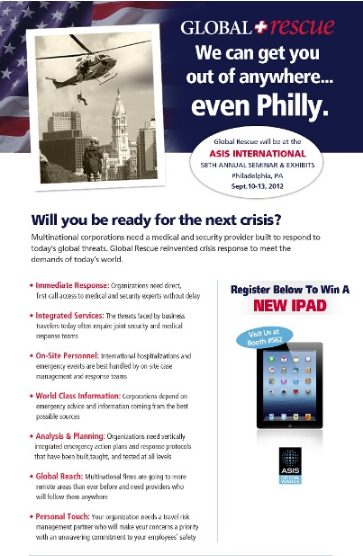
To register to Win A New IPAD and to set an appointment, contact
VISIT US AT BOOTH #562
For further information please contact Accounts@globalrescue.com or call
Global Rescue at +1-617-459-4200.
Categories:
Missions & Member TestimonialsAugust 24, 2012

While vacationing in Greece, a US citizen experienced an unprovoked seizure that lasted for nearly thirty minutes. Hospitalized locally, she was placed into a medically induced coma. Shocked by this sudden episode, the patient’s sister contacted Global Rescue.
At the request of family members, Global Rescue organized the patient’s transportation from the Greek hospital to the US in order to ensure that the patient was receiving the highest level of care possible. Global Rescue coordinated communication between the hospital in Greece, the patient’s family, and specialists at a leading US hospital. Doctors were advised to prepare a place for the patient, who would be transferred from the Greek hospital as soon as her condition was diagnosed as ‘safe for travel.’ The patient was cleared for travel aboard a medically equipped jet, and family members made plans to arrive at the receiving hospital immediately following the patient’s admission.
The patient was flown from the hospital in Greece directly to Boston. After coordinating with the flight crew, Global Rescue assured family members that the patient’s vital signs remained stable throughout the transport process and that the flight went without incident. The patient was met by two Global Rescue paramedics at the airport, who provided direct care during the ambulance transport to the hospital. All important medical information was relayed to staff members at the receiving hospital, who were fully prepared to receive the patient and begin medical procedures upon arrival.
The patient continues to make a recovery and family members thanked Global Rescue for their work and support throughout this difficult event.
Categories:
Missions & Member TestimonialsJuly 18, 2012
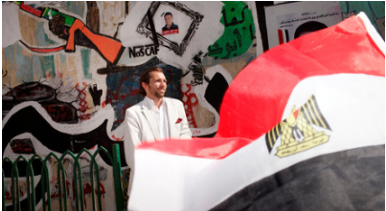
David Degner/Getty Images
A Rush to Do Business in the Middle East
By Michael T. Luongo
More than a year has passed since the Arab Spring, the catchall name for the revolutions sweeping the Middle East. The political and economic changes have closed some doors and opened others for business people willing to tolerate risk.
“I have seen a flurry of activity because of the Arab Spring that was not happening before,” said Naava Mashiah, an Israeli who is the chief executive of M.E. Links, a consulting company that she described as working “to nurture economic relationships between Israel and other places.”
Ms. Mashiah, who works out of Geneva, said much of the activity is in soft diplomacy and informal development meetings, often coordinated with human rights and nongovernmental organizations. She mentioned helping clients develop contacts in or from locations that include Tunisia, Qatar, Egypt and Libya.
“It is bringing people together, even if it is a think tank,” she said, adding: “A lot of networking goes on in the corridors.” She described the current back-channel activity and potential as akin to the 1993 Oslo Accords between Israel and the Palestinians, which touched off an economic boom.
Chuck Dittrich, executive director of the U.S.-Libya Business Association, said he thought that American business people needed to “just get over there and get a feel for the place,” even if it did not seem immediately productive.
Mr. Dittrich said that association members were meeting Libyan government officials and business people, and that they were “not so much there to sell, as more developing relationships as they do their planning process and decide where to go now.” He mentioned Libyan trade shows focusing on oil, transportation and infrastructure development, health and education.
Mr. Dittrich said the Libyan economy had begun to be liberalized in 2005, when Muammar el-Qaddafi, then president, began courting the West. From a business perspective, he said, that means “the glass is more than half full,” adding, “The ingredients are all there for them to pull this off in a very good way.”
American businesses that wait too long, fearing the risks, could be left behind, he said. Mr. Dittrich said his group visited in April, and “we were the first organized U.S. business organization to go to Tripoli since the conflict.” But, he said, “Turkish and European delegations were there right from the early days.”
But a business traveler briefly stopping in the region has to make different preparations from someone who is based in a country in the midst of change. Marshall L. Stocker, a chartered financial analyst with the Boston hedge fund manager Emergent Property Advisors, moved to Cairo in June 2010, and temporarily fled after the mass protests began on Jan. 25, 2011.
“In Egypt, cells were off, the Internet was off. Obviously there was no business to be done. I was barricaded in my apartment,” he said, adding, “I self-evacuated to the airport with tickets for three different flights” that his wife had arranged for him from the United States.
Mr. Stocker returned in February 2011, after Hosni Mubarak resigned as president. Despite the disruptions, he said, Egypt presents business opportunities. “Now is a great time to buy assets,” he said. “Conceptually, and in practice here, assets are falling in value.”
He said his company was interested in Egypt because of the direction its business climate was moving. “One of the things that attracted us to Egypt was that the World Bank had improved its ‘ease of doing business’ rating,” he said. “Egypt had become more hospitable to investment. From 2004 to 2007, it had the single greatest improvement in ‘ease of doing business’ of any country in the world.”
While things have generally settled, he said he was prepared for emergencies. “As a result of the Arab Spring, I bought political evacuation insurance, and I have a satellite phone,” he said. He uses Global Rescue, a company that provides medical evacuation, security services and other emergency assistance. Still, Mr. Stocker said some Cairo business travel costs had decreased, including hotel rates and airfares.
Read more here…
Categories:
NewsJuly 18, 2012
Categories:
Missions & Member TestimonialsJuly 3, 2012
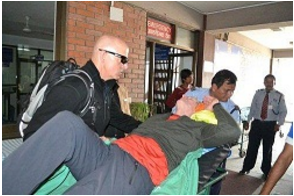
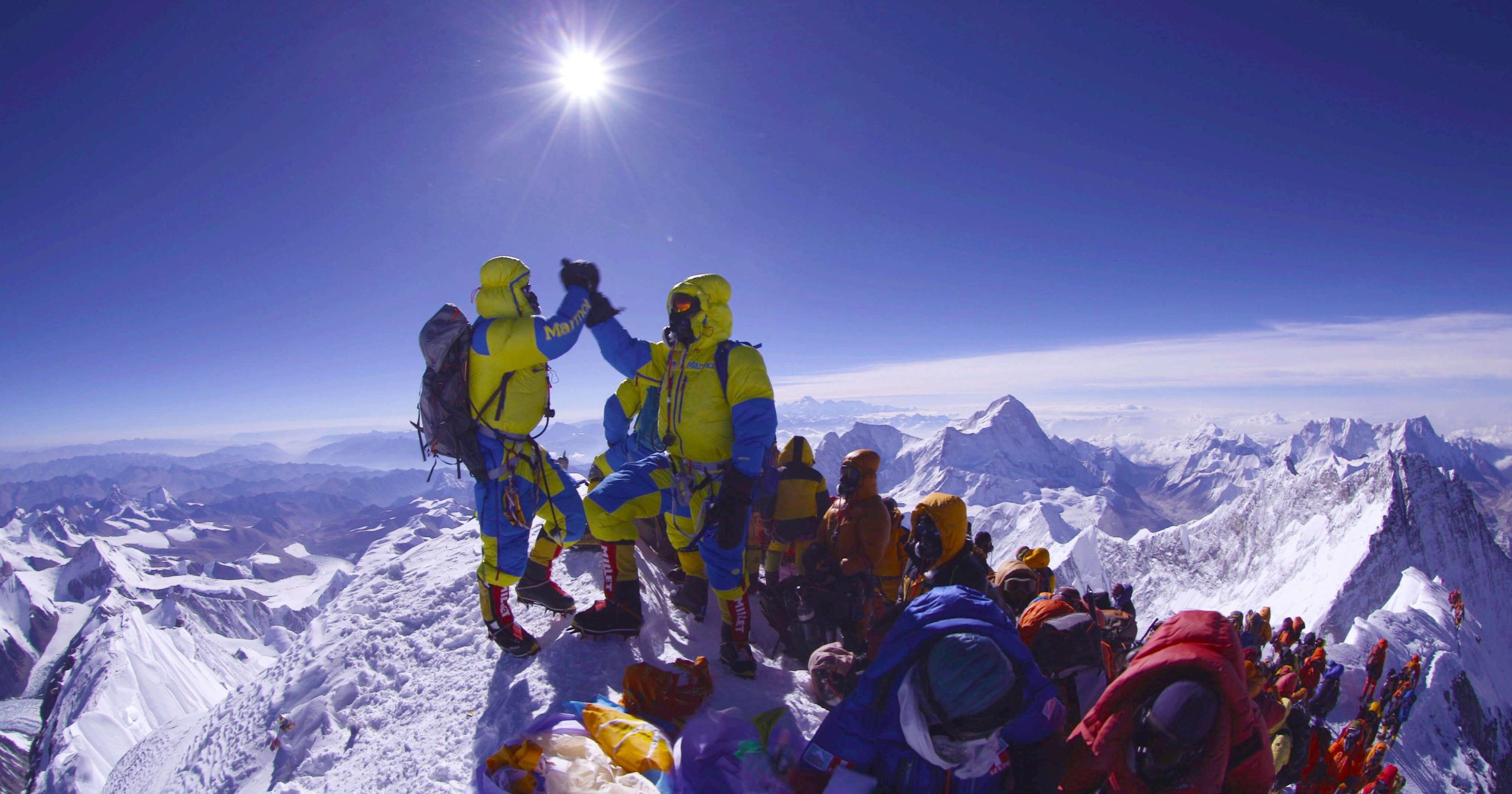
As usual Global Rescue was kept busy assisting members during the Himalayan climbing and trekking season. We conducted a number of rescues in Nepal, including high altitude evacuations from Everest itself. To support operations, a Global Rescue paramedic was on the ground in Nepal during peak season.
One member, Dr. Robert Vestal, writes to thank Global Rescue:
Dear Global Rescue,
Obviously you are aware that I had to be evacuated by helicopter from Namche Bazaar on Friday, April 27. Obviously, I was hugely disappointed that I could not continue my trek to Everest Base Camp. However, I was exceedingly glad to have a Global Rescue membership. I was equally glad that Bob Veno, a paramedic in your operations group, had been deployed to Kathmandu to represent Global Rescue and assist with any and all medical problems encountered by Global Rescue members. He was there at the airport when the chopper touched down. He accompanied me in the ambulance to the hospital and stayed with me many hours during the course of my hospitalization.
Basically, Bob shepherded me through the entire hospitalization process and made sure that the necessary studies were done for evaluation and that we had copies of the medical records and reports. I also know that he performed a similar role for others during his deployment in Nepal. I was hugely impressed with his interpersonal and technical skills, as well as his valuable field experience in many diverse settings. He made a big difference to me and others while he was in Nepal. I will not hesitate to recommend Global Rescue to anyone who is contemplating a trip where an evacuation or medical transport may be needed.
Finally, many thanks to everyone at Global Rescue including the staff taking calls 24/7 in the office and your physician medical consultants, such as Doctor Eric Johnson, for providing me with the best available care and transport surrounding my injury.
Sincerely,
Bob Vestal
Member – Wilderness Medical Society
Categories:
Missions & Member TestimonialsMay 21, 2012
Global Rescue was alerted to an incident involving a member in Ecuador who had suffered a five foot fall onto concrete. Immediately after the fall he developed shortness of breath and medical transport was arranged to a local clinic in the small town of Esmereldas. Once there, chest x-rays revealed several broken ribs. The preference of local surgeons was to wire the member’s ribs to prevent further injury. However, Global Rescue’s medical team questioned whether this invasive surgery was necessary. Global Rescue immediately deployed a bedside paramedic to manage this complicated case and advocate for the patient. After further consultation with both local physicians in Ecuador and specialists from Johns Hopkins Medicine, Global Rescue insisted the member be transported to a local radiology clinic for further assessment. This revealed blood and air had entered the space around his lungs due to the traumatic injury. Due to the nature of the injury, the risks involved in transporting the patient prevented him from being moved safely. As a result, Global Rescue’s paramedic remained on station in the hospital overseeing and coordinating care until the member could be transported. The member was ultimately able to return home under Global Rescue’s supervision and is expected to make a full recovery.