Loading...

Categories:

Press Release
Share This:

Attack on Israel Drives Travelers to Obtain Security Extraction Services

San Juan, Puerto Rico – October 23, 2023 – The ongoing armed conflict between Israel and Palestinian terrorist groups led by Hamas is driving a spike in traveler purchases of security extraction services since the…

San Juan, Puerto Rico – October 23, 2023 – The ongoing armed conflict between Israel and Palestinian terrorist groups led by Hamas is driving a spike in traveler purchases of security extraction services since the attack on October 7th, 2023.

“We’ve seen a 33% increase in traveler purchases of security services since the attack compared to the same period before the strike,” said Dan Richards, CEO of The Global Rescue Companies, the world’s leading provider of medical, security, evacuation and travel risk management services, and a member of the U.S. Travel and Tourism Advisory Board at the U.S. Department of Commerce.

“Terrorism and war in a country drives down traveler confidence in the entire region as travelers grapple with a dramatically different risk environment. We’re also seeing an increase in traveler concern worldwide, but it is the most pronounced in the Middle East,” he added.

Global Rescue continues to orchestrate operations to bring member tourists and others to safety.
“We’re doing everything we can in a tough and evolving situation,” Richards said. “Our security operations teams already have successfully helped more than 68 members to safety and we will continue to assist those who contact us in need of help.”

###

Contact Bill McIntyre at bmcintyre@globalrescue.com or 202.560.1195 (phone/text) for more information.

About Global Rescue
Global Rescue is the world’s leading provider of medical, security, evacuation and travel risk management services to enterprises, governments and individuals. Founded in 2004, Global Rescue has exclusive relationships with the Johns Hopkins Emergency Medicine Division of Special Operations and Elite Medical Group. Global Rescue provides best-in-class services that identify, monitor and respond to client medical and security crises. Global Rescue has provided medical and security support to its clients, including Fortune 500 companies, governments and academic institutions, during every globally significant crisis of the last two decades. For more information, visit www.globalrescue.com.

Categories:

Health & Safety
Share This:

Crowd Control: How To Be Stadium Safe at the World’s Biggest Events

Sometimes massive crowds attract big trouble. This guide will help you keep your guard up.

On July 23 of this year, Taylor Swift caused a 2.3 magnitude earthquake in Seattle. Well, not Taylor specifically, but her fans—the more than 70,000 “boisterous Swifties” who filled Lumen Field that night, reported Wide Open Country.

In May, The Indianapolis 500 beat out the Super Bowl for the largest sporting event thus far in 2023 with 230,000 tickets sold, Forbes reported.

Can you imagine being in a crowd of that size? Or at an event with volume and attendance so high it could cause a minor natural disaster?

If you made plans to attend an upcoming major concert or sporting event—like one of Taylor Swift’s international concerts, or the Olympic Games in Paris next year—you could find yourself in one of these frenetic environments. The fun, the excitement, the energy—everything would be at a fever pitch, sure to create one of the most memorable events of your life.

But what if something goes wrong? What if you lost your child? Or violence broke out among fans? How would you find each other? How would you escape? At Global Rescue, our experts think through the worst-case scenarios and know what to do when they occur. Our experience shows us that emergencies don’t just happen when you’re fly fishing in Bolivia or adventure racing in Fiji. They can happen at major events too, where large crowds are gathered.


[Related Reading: 5 Crowd Safety Tips for the Holidays]


With this in mind, we’ve compiled our best tips for staying safe in a crowded stadium or venue.


A sea of concert goers surround a musician as he plays amongst the crowd.


Safety in a Crowded Stadium

There are five main ways to stay safe in a crowd:

  1. Do your homework. In advance of the event, save a map of the venue on your phone and identify the exits, where you’re sitting and transportation location. Choose three meeting points for the group if you should get separated: two inside and one outside. Make sure you can find the spots in a large crowd (like a banner or a large pole) and try to find a spot with good lighting. If there’s a crisis, it may not be possible to take a direct route to your transportation, so identify alternative routes in advance.
  2. Outfit yourself for the unexpected. Wear or bring comfortable shoes in case you need to walk a long distance or run. Fully charge your phone in advance of the event and bring a portable charger with you. Bring proper clothing, not just for the event but in case you have to wait for a long period in the cold or rainy weather. If you’re traveling with small children, attach an AirTag to their ankle with a bracelet. If they get lost, you can check their location on your phone.
  3. Keep group members close, and if you’re walking around the venue, travel in pairs. Tell others in the group that you’re leaving and be specific: “Jane and I are going to get another pretzel from the vendor outside zone M420. We’ll be back in 10 minutes and have our phones. We’ll let you know if we get delayed.”
  4. Understand incident response. Unless you’re in imminent danger, stay where you are and take all instructions from competent authority. Avoid rushing to an exit and getting caught up in a large and panicky crowd. If you’re forced into a crowd, attempt to stay near a wall and walk purposefully.
  5. Stay alert. Throughout the event you should be practicing situational awareness, which goes beyond preparing for the occasion itself; It’s all about being attuned to your immediate surroundings. This will help you stay alert to notice if things seem off or if the worst-case scenario happens.


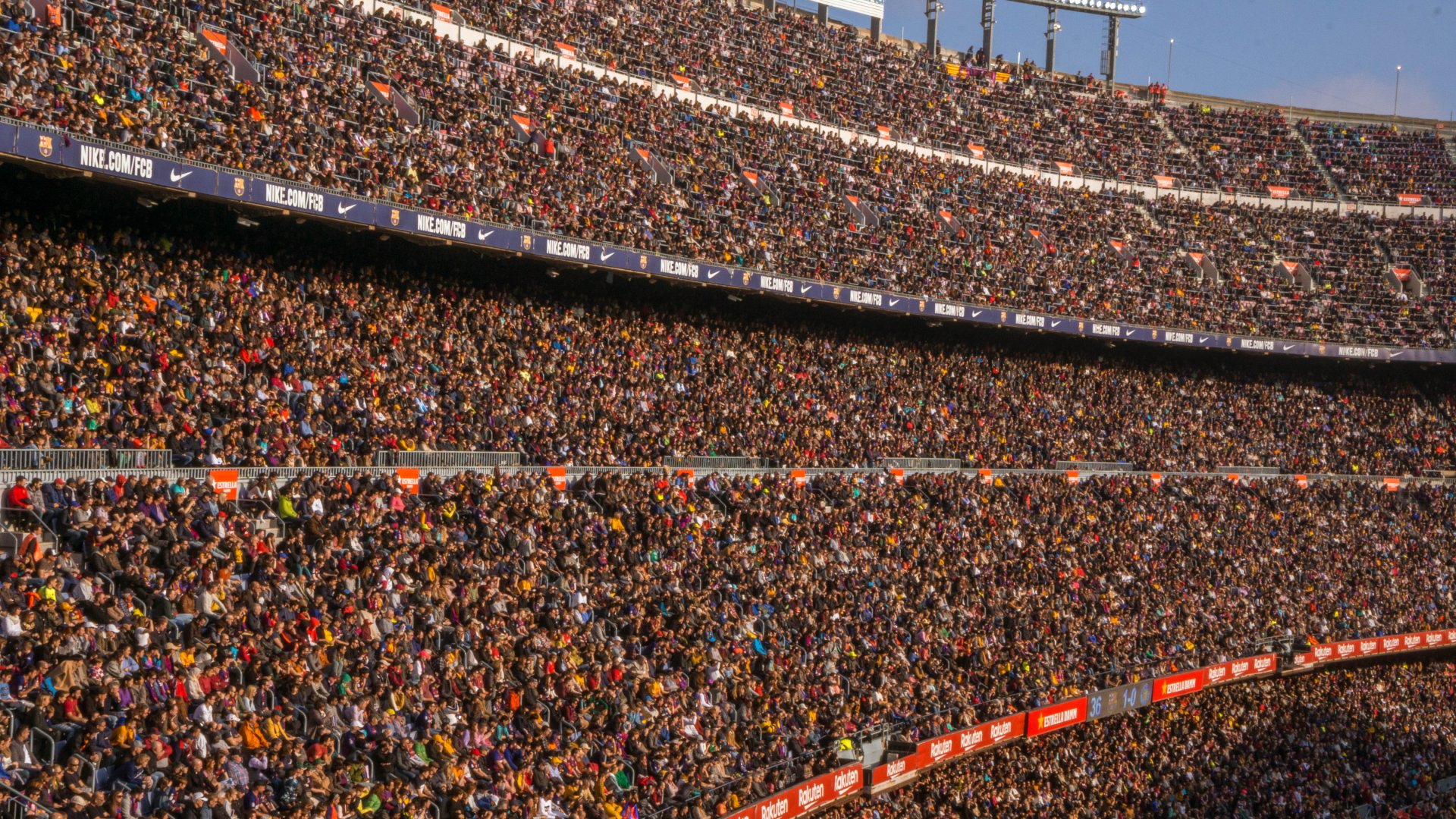
A massive soccer stadium with fans wearing red and white inside the well-lit, open-roofed round building.


What To Do If the Worst Occurs

Harding Bush, security expert and operations manager at Global Rescue, offers these tips for worst-case scenarios.


If violence breaks out:

Resist the temptation to draw closer to a disturbance to see what’s happening.

“We always advise our members to avoid all areas of demonstration and public unrest when they’re traveling. It’s the same idea at a sporting event,” Bush said. “Don’t engage, go the opposite direction and, since you already have situational awareness and know where the authorities are, alert them to the issue.”


[Related Reading: What To Do if Violence Breaks Out at a Sporting Event]


If an explosion occurs:

Be thoughtful about where you exit after an explosion, avoiding popular exits where another explosion could happen.

“There may be a second explosive located where emergency responders may arrive to or from, or where the attackers may think additional targets may move to,” Bush said, referencing the 2017 Manchester Arena Ariana Grande concert bombing, where the attacker intentionally targeted the busiest exit. “It may often be best to pause and evaluate, rather than hastily move. The best exit may not be the one closest to you.”


A large crowd of angry men fight in a dark room.


If the crowd stampedes:

When a crisis occurs, you may have the instinct to follow the crowd to safety. But there are risks with this approach, especially if there is a stampede or crowd crush. Consider an alternative exit if everyone is heading toward the most obvious or closest one to avoid getting swept up in a crowd altogether.

If you do find yourself amid a swarm, fold your arms up in front of you at chest level — much like a boxer stance — to maintain balance and protect your breathing space.

Next, try to keep pace with the crowd overall and avoid pushing against it — it’s extremely important you stay on your feet, plus pushing against a crowd will only tire you out.

Finally, carefully weave your way diagonally to the outer edge of the stampede, to avoid ending up stuck at a chokepoint (chokepoints are doorways, hallways and other narrow spaces that restrict the flow of the crowd).

Be Prepared, Not Scared

Don’t let an awareness of the risks stop you from buying tickets to see your favorite band or sports team. Go ahead and buy the tickets. And for an extra measure of confidence, get a Global Rescue membership before you go. We’re there for you at any event, helping you evaluate the risks so you can be prepared (not scared), knowing that we have your back with our security, medical and evacuation services.

Categories:

Health & Safety
Share This:

Sex, Sand and Sitting: Laws Every Traveler Should Know

What’s permitted at home may be against the laws of the country you’re visiting. Let’s explore some of the most unusual examples.

One of the biggest mistakes travelers make is assuming that what’s permissible in their home country applies to wherever they travel. “Not so,” said Dan Richards, CEO of The Global Rescue Companies. “Which is why having some knowledge of your destination’s laws is critical before traveling.”

We’ve written about several unusual things that are illegal in parts of the world including wearing camouflage attire in the Caribbean, chewing gum in Singapore, and swearing in public in the U.A.E. – all of which are prohibited. Here are a few more.

A person popping out yellow pills from their wrappers.

Rx and OTC Drugs

Many prescription medications and even over-the-counter drugs are illegal in various countries. A few examples: Ambien (particularly in Nigeria and Singapore), pain medications containing tramadol or codeine, attention-deficit drugs, as well as psychiatric or opiate medicines. In Japan and Greece, Sudafed and Vicks are also illegal.

Medical marijuana is legal in 38 U.S. states and the District of Columbia. Recreational marijuana use is legal in 23 states plus D.C. But marijuana is illegal for use in more than 100 countries including Fiji, the Bahamas, Monaco, Iceland, Indonesia, Hong Kong, Tanzania and Taiwan to name just a few.


[Related Reading: 5 Precautions for Traveling With Medication]


WNBA star Brittney Griner’s arrest and conviction in Russia for possession of medical cannabis oil is a critical lesson for all international travelers to learn. International travelers who run afoul of the law may receive a stern warning or the item could be confiscated. At worst, officials can fine you, arrest you, expel you and even jail you, as was the case for Griner.

Travelers should carefully research the laws around their required medicine in countries they plan to visit and consult medical guidance on substitute medications. Even if a medicine is legal, travelers should always keep it in the original container and have a copy of a prescription.


Amsterdam's red light district at night.

Sex Services, Surfside Souvenirs and Seated Infractions

The exchange of sexual services for money is legal in the UK and many European countries but not in Northern Ireland or all U.S. states, except certain parts of Nevada. In Amsterdam’s famous red-light district, it’s illegal to take pictures of sex workers.

White sand, colorful shells and polished quartz stones are sought-after souvenirs among tourists visiting Sardinia, Italy’s second-largest island, but it’s illegal so don’t risk it. Under Italian law, trading sand, pebbles and shells is illegal and punishable with fines of up to €3,000 ($3,148 or £2,750). Pierluigi Cocco, Sardinian resident and environmental scientist, said one of the threats to the beaches is tourists absconding with sand, shells and pebbles.

Tired? Need a break? Be careful where you sit if you’re in Venice, Italy. According to the officials, it’s a finable offense to sit in certain locations at St. Mark’s Square including at the Piazzetta San Marco entryway. Why? It’s an effort to reduce crowding. You can also be fined for going topless, feeding the pigeons, riding a bike, swimming in the canals and littering.


Naked female legs walking in a grassy field of purple clover.

Drinking, Right Turns and Naked Hiking

Thinking of enjoying a cocktail made with the popular Dutch gin Jenever on a sunny sidewalk in The Netherlands? Think again. The consumption of alcohol is prohibited in the majority of public places in Amsterdam.

Traveling to Middle East countries like Lebanon, Syria, Jordan and Tunisia? They have no alcohol restrictions, and it’s available in restaurants, bars and shops. Alcohol is prohibited, however, in Libya, Somalia, Sudan and Yemen – all of which are “do not travel – level 4” destinations.


[Related Reading: Helpful Tips for Driving in a Foreign Country]


Turning right on red in the U.S. is overwhelmingly legal, except in NY City where it’s only allowed at certain intersections. However, many countries have banned “right on red” nationwide. For example, a right turn on red is generally not allowed in Europe, except where signage indicates otherwise.

Most drivers are regularly reminded of the rules against using their smartphones while driving. Rarely enforced in the U.S. it is the opposite in the U.K. where phone use while driving is taboo, according to Travel of Path. “Police are extremely vigilant when enforcing the law and can pull a vehicle over if they suspect a phone may have been used in any manner. The penalties can be huge and are set to get even stricter this year.

Finally, some people like to go au natural when they are in nature, wearing little more than their birthday suit. Whether it’s a preference to avoid tan lines or simply to feel unconstrained by clothing, there are nude beaches in Ibizia, clothing-optional hotels in Negril, and naked skiing in Colorado. But Switzerland, a country famous for its outdoor lifestyle, does not permit naked hiking. The country has no law on public nudity, but it does prohibit indecent exposure. When a hiker was found wearing only socks and hiking boots, they were fined. The fine was challenged and debated before officials determined hiking naked was a violation of the indecency law. So, if you decide to hike anywhere in Switzerland, be sure to keep your pants on.

Learn and Obey Local Laws

“The U.S. Department of State’s travel information web page for overseas travel advice explains you are subject to local laws while abroad,” said Harding Bush, a former Navy SEAL and Global Rescue’s senior manager of Security Operations. “You are bound by those laws. You can’t just say, ‘Oops, I didn’t know.’ Ignorance is not an excuse.”

If you’re a member of Global Rescue, the best place to start your research regarding the rules and laws of a country is with our destination reports. Maintained by our travel intelligence analysts, these reports cover 215 countries and territories, and are always accessible in your member portal or on your My Global Rescue App.

Not a member? You can download one free destination report on our Travel Intelligence Center.

Categories:

News
Share This:

Global Rescue Leads Teams to Israel to Help

Categories:

News
Share This:

New Hampshire Firm Getting People Out of Harms Way in Israel

Categories:

Health & Safety
Share This:

Mountain Mastery: Unveiling the Most Epic Peak-Bagging Challenges

Jaw-dropping views, distinct trails, and new perspectives are just a few of the reasons to summit – that and bragging rights.

“There’s only one way to eat an elephant: one bite at a time.”

Desmond Tutu probably wasn’t thinking about peak-bagging lists when he shared this bit of wisdom. But it holds true for hikers, trekkers and climbers who want to travel the world by summiting its most famous peaks. How do you complete your massive peak-bagging list? One peak at a time.

And it can take a long time.

Ed Viesturs needed 18 years to become the first American, and 12th climber in history, to summit all 14 mountains over 8,000 meters (collectively known as the eight-thousanders). That was in 2005. Eighteen years later Chris Warner became the second American to accomplish this same challenge. It took him 24 years.

If, however, spending a quarter of a lifetime climbing to the highest points on earth sounds a bit too lofty a goal, there are plenty of other summiting challenges out there waiting for you to scale. Here’s a list that’s sure to inspire peak baggers of every variety from the cautious newbie to the seasoned pro.


Mt. Kilimanjaro Summit at Sunrise


The Seven Summits

Make it to the top of the highest point on each of the seven continents, and you’ll have bagged some of the most challenging peaks in the world, packing in some serious sites and cultural experiences as you do.


A grassy canyon between two peaks in the Scottish Munro Mountains.


The Scottish Munros

In September of 1891, mountaineer Sir Hugh Monro, “changed hiking in Scotland forever,” Stuart Kenny wrote for Much Better Adventures. He published his “Tables giving all the Scottish mountains exceeding 3,000 feet in height,” which now (with subsequent revisions) amount to 282 mountains rising 3,000+ feet above sea level. Why not plan a trip to Scotland next fall? Lonely Planet calls it “an excellent time of year for outdoor pursuits,” due to the “dry and mild” weather. Plus, there’s tons of great attractions to enjoy in Scotland as a reward for bagging these legendary summits.


[Related Reading: Are You Prepared To Summit?]


The New Hampshire 48

With each peak conquest, hikers reach new status, exclusive to those with the stamina and grit to summit. According to New Hampshire Way, if you climb all of the New Hampshire 48 (each over 4,000 feet), you can be recognized by the Appalachian Mountain Club, get an achievement patch and be invited to an awards dinner. Climb it in the winter—an especially treacherous time, even on the “easy” hikes—and you can earn another patch.


A Colorado mountain scene, with blue skies, tower mountains, and green pine trees.


The Colorado 14ers

The 53 summits rising above 14,000 feet in Colorado, known as the Colorado 14ers include “peaks easily accessed by urban visitors, as well as, remote backcountry peaks that provide a wilderness experience,” according to the Forest Service of the U.S. Department of Agriculture. Colorado.com writes that the peaks are ranked 1 to 4 by difficulty. The easiest are still challenging, Colorado.com says, but have “straightforward, clearly marked trails.” The difficulty increases with unmarked trails, steep climbs, scrambling, and in category 4, “Steep and dangerous terrain necessitating hand- and footholds to reach the top, plus ropes and climbing.”


California's Mount Tamalpais, with its green vegetation and winding summit road.
Mount Tam – Photo by Fabrice Florin


Everest by the Bay

Not quite ready for Mount Everest’s 29,032 feet in one go? Climb “it” in installments via the nine peaks of Everest by the Bay in San Francisco. According to Public Lands, the summits are “all between 2,000 and 3,000 feet, surrounding San Francisco Bay. If you summit them all, you’ll have climbed roughly 32,000 feet in elevation—the same as climbing Mount Everest from sea level, and then some. The catch: they all require between a 10- and 20-mile hike, making this list a tough one for novices.”


The Adirondack 46ers

This bundle of peaks was first identified in 1927 in a book called “Peaks and People of the Adirondacks” by Russell M.W. Carson, according to Adirondack.net. Originally, all the mountains were recorded to have elevations of at least 4,000 feet. More recent studies have revealed some fall short of that, and one summit that meets that number was not included. “Nevertheless, the original 46 are still grouped together and recognized as the ones to overcome. If you climb them all, then you are eligible to become an official Adirondack 46er,” Adirondack.net reports.


South Beyond 6000

There are more than 60 summits in the southern Appalachian Mountains, according to The Carolina Mountain Club, but only 40 meet the criteria for the South Beyond 6000: the summit elevation is more than 6,000 feet above sea level, and there is a drop of 200 or more feet to a saddle between one peak and another qualifying peak or, there is a distance between the peaks of .75 miles. The Carolina Mountain Club notes that the terrain has changed significantly over the years, making the hike more difficult.


[Related Reading: How To Get into Mountaineering]


MLK’s “I Have a Dream” Peaks

In Martin Luther King Jr.’s famous “I Have a Dream” speech, he calls for freedom to ring out from the peaks of mountains across the United States. The eight peaks he references are now a peak-bagging list, which hikers can summit in solidarity and remembrance of his powerful message.

King declared, “Let freedom ring from the prodigious hilltops of New Hampshire. Let freedom ring from the mighty mountains of New York. Let freedom ring from the heightening Alleghenies of Pennsylvania! Let freedom ring from the snowcapped Rockies of Colorado! Let freedom ring from the curvaceous slopes of California! But not only that; let freedom ring from Stone Mountain of Georgia! Let freedom ring from Lookout Mountain of Tennessee. Let freedom ring from every hill and mole hill of Mississippi. From every mountainside, let freedom ring!”

While King referred to, but did not call out, specific peaks, his references have been narrowed down to this list from peakbagger.com and range from elevations of 800 feet to more than 14,000 feet.


A snow-capped mountain range in Montana, USA.
Montana Mountains – Photo by Cloud.Shepherd


Montana 53

Peakbagger.com outlines the 53 peaks of the Montana 53, first established in Cedron Jones’ 2011 guidebook Peakbagging Montana. Peakbagger.com notes that although the list is not as daunting as some other Montana peak bagging lists, “there are still many stiff challenges…only skilled scramblers comfortable on Montana’s notoriously crumbly rock will be able to complete it. Under ideal weather and route conditions, no peak on this list will require a rope for peakbaggers comfortable with class 3 terrain with occasional bits of class 4. Still, many peaks require multi-day expeditions and solid wilderness skills. The peaks in Glacier National Park and the Beartooths in particular can be difficult.”


Arizona 20-20 Challenge

The Arizona 20-20 is unique to the lists here because it includes 20 of Arizona’s deepest canyon hikes, in addition to its 20 highest peaks. You can see a map of the list and learn more about hiking it on The Arizona’s 20-20 Challenge website, which shares that “Arizona has a diverse landscape. In addition to deeply incised canyons, for which Arizona is famous, we also have snowy summits above tree line. The statewide distribution of the hikes in Arizona’s 20-20 Challenge allows you to experience the physiographic, biotic, geologic, and climatic diversity of Arizona.” As far as difficulty goes, the site says the hikes are challenging for different reasons. “Some hikes are steep (Humphreys Peak), some are long (Paria Canyon), and some are in extremely remote areas (Jumpup Canyon).”


A woman poses with an American flag in front of an enormous summit sign on top of a mountain in Africa.


Ready To Bag Some Peaks?

Don’t set off without a Global Rescue membership. If you’re planning to go above 15,000 feet or 4,600 meters at any point during your peak-bagging excursion, include Global Rescue’s High-Altitude Evacuation Package. We’re here for you in even the most extreme circumstances—like when you’re standing atop the world’s highest peaks. Our medical and evacuation services provide the protection you need to fearlessly hike, climb and scramble your way around the world.

Categories:

News
Share This:

New Hampshire man leading teams in helping evacuate civilians from Israel amid unrest

Categories:

Press Release
Share This:

Global Rescue to Help Tourists Threatened by War in Israel

(Lebanon, NH - October 7, 2023) The deadly attack by Hamas on Israel has surprised officials, residents, religious pilgrims and tourists, trapping many in a violent conflict that has already escalated. Global Rescue, the world’s…

(Lebanon, NH – October 7, 2023) The deadly attack by Hamas on Israel has surprised officials, residents, religious pilgrims and tourists, trapping many in a violent conflict that has already escalated.

Global Rescue, the world’s leading medical and security evacuation and travel risk company, is orchestrating operations to bring member tourists and others to safety.

“We’re doing everything we can in a tough and evolving situation,” said Dan Richards, CEO of The Global Rescue Companies. “Our security operations teams are working to secure the safety of our members but the situation remains fluid.”

Contact Michael Holmes at mholmes@globalrescue.com or +1 (603) 783-6268 to schedule an interview with Global Rescue CEO Dan Richards.

Categories:

News
Share This:

No one plans on ‘security issues’ while traveling: How to stay safer on your trip

Categories:

News
Share This:

Revenge travel was sweet, but what happens next could turn your vacation sour

Categories:

Health & Safety
Share This:

Top-10 Risky Birding Destinations

Don’t let location prevent you from crossing the rarest birds off your list.

If you’re an avid birder, you probably have a bucket list of rare birds you dream of seeing one day. But like any bucket list, the distance between dreaming and doing can feel greater than the distance a Bar-tailed Godwit travels while migrating, especially when there is an element of risk involved.

The following destinations, though home to some of the rarest, most breathtaking birds on earth, might give even the most daring birder pause, especially given their travel advisory status from GRID – the Global Rescue Intelligence Delivery system, which is informed by the most recent and relevant resources, including the U.S. Department of State.

And yet these trips are not impossible. With smart research and planning, an abundance of persistent awareness, a Global Rescue membership with a security add-on and a lot of courage, you have the best chance to realize those birder bucket list dreams.


The close-up face of a Night Parrot.
Night Parrot – Photo by Kimberly Collins

1. Australia

It’s no surprise that Australia is very safe for traveling and has a low-risk rating (exercise normal precautions) by GRID. But you would need to embark on some daring adventures to spot the Night Parrot, only found in the Outback once the sun sets.


Two Beautiful Nuthatches perched in a tree.
Beautiful Nuthatches – Photo by Lee Alloway

2. Bhutan

Bird Spot lists Bhutan as one of the top birding destinations in the world.

“Unlike many other countries in the Himalayas, which have undergone massive deforestation programs, the kingdom of Bhutan has protected large areas of forest which means many species of birds thrive here that do not elsewhere,” according to Bird Spot.

Although GRID gives Bhutan a low-risk rating as well, we strongly advise that travelers have evacuation services for their trip due to the mountainous, remote nature of the country. In general, medical resources are scarce, especially outside populated areas. But if you’re willing to take the risk, you will be richly rewarded with the opportunity to see a wide variety of birds, including several endangered species like the Baer’s pochard, the Black-necked Stork, or the Beautiful Nuthatch.


A raptor soars high above the mountains in Peru.
An enormous bird of prey soars above the Peruvian mountains – Photo by Belinda Grasnick

3. Peru

Rated as having a moderate risk (exercise increased caution) by GRID, travel to Peru gets more dangerous the more remote you are. And you will need to get remote to see the more than 1,800 birds native to this South American birding paradise, said Nicholas Lund, expert birder and writer.

“Peru has one of the largest species lists of any country on Earth,” he said. “But to see them, you will need to travel to every region of the country, traversing the Humboldt Current, the Andes Mountains and the Amazon Basin.”


A Dulit Frogmouth perched in a tree at night.
Dulit Frogmouth – Photo by Ross Tsai

4. Indonesia

“This tropical nation is one of the most storied birding destinations in the world, with hundreds of islands to explore and thousands of species to discover,” Lund said.

An increased level of caution is advised due to terrorism and natural disasters. But if you’re willing to take the trip, you may be lucky enough to see:

The Sunset Lorikeet, found on the islands neighboring Indonesia.

The Bronze Parotia of the Foya Mountains, which lives in West Papua, Indonesia.

The Dulit Frogmouth of Borneo, a mountainous island in the Indonesian archipelago.


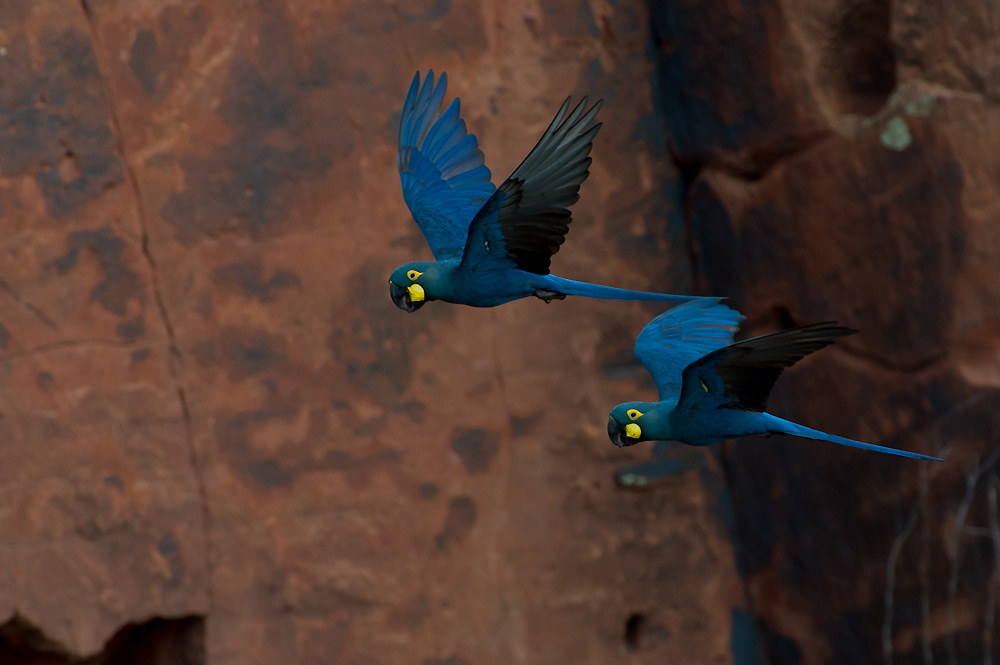
Two Lear's Macaws perched on branches in captivity.
Lear’s Macaws – Photo by Jan Helebrant

5. Brazil

GRID also rates Brazil as a moderate risk country. There’s heightened risk as you travel through forests and encounter tropical birds, but it may be worth it to see:

The Lear’s Macaw. Although endangered, this bird, also known as the Indigo Macaw, can still be found in northeastern Brazil, especially at a reserve called the Canudos Biological Station. There you can find guided tours through the sandstone cliff habitat where they live.

The Scaled Ground-Cuckoo, which lives in the lower Amazon in northern Brazil. The Matador Network reports the bird is very hard to spot, and you must be prepared to “access some very inhospitable terrain and endure the stinging bites of the army ant swarms the species habitually follow.” reports the bird is very hard to spot, and you must be prepared to “access some very inhospitable terrain and endure the stinging bites of the army ant swarms the species habitually follow.”


The green and light yellow head and brown upper body of a Raggiana Bird of Paradise.
Raggiana Bird-of-Paradise – Photo by Mark Gillow

6. Papua New Guinea

GRID rates Papua New Guinea as high risk because of civil unrest, crime and piracy. Medical care is spotty, and birding adventures will take you to remote, hard-to-reach places. A trip here would require serious consideration and planning, and a Global Rescue membership with a security add-on would certainly provide the additional protection needed as you attempt to see:

The Raggiana Bird-of-Paradise, which is native to Papua New Guinea.

The Dwarf Cassowary—one of the world’s most elusive birds.

The Greater Bird-of-Paradise, which lives in inaccessible, dense rainforest habitats in Papua New Guinea and surrounding islands.

The Vogelkop Superb Bird-of-Paradise, which is found only in the Bird’s Head Peninsula in the far west. According to Nature Anywhere, this is a brand-new species!


The brilliant emerald green and ruby red of the Resplendent Quetzal
Resplendent Quetzal – Photo by Ryan Acandee

7. Guatemala

The Resplendent Quetzal lives in the mountainous tropical forests of Central America and is the national bird of Guatemala. Bella Falk for BBC’s Discover Wildlife reports that the quetzal is extremely elusive, and to see it in Guatemala, “you have to go to one of just four protected cloud forest reserves, which means getting up before dawn and hiking for several hours into the jungle.”

Crime levels are high in Guatemala and although medical services are available in Guatemala City, emergency medical care would be spotty on a remote trip to find this bird. For these reasons, we urge travelers to reconsider their trip to Guatemala (GRID rates it as a high-risk country).


A Golden Pheasant walks along the grass.
Golden Pheasant – Photo by Peter Trimming

8. China

The Golden Pheasant is native to the mountainous areas of western China. Due to political instability, GRID gives China a high-risk rating, and we urge people to reconsider travel. Medical care in China is also unpredictable, which is a critical emergency care gap especially since many China birding adventures would be in higher altitudes where the likelihood of Acute Mountain Sickness, HAPE or HACE is a serious threat.


9. The Democratic Republic of Congo

A trip to find the Congo Bay Owl is extremely dangerous, not to mention extremely rare. The last one seen was in 1996, the Matador Network reports. Could you be the next to lay eyes on one? Only if you’re willing to travel to the Itombwe Mountains in a high risk-ranked country fraught with politically motivated, violent conflicts, civil unrest, terrorism and kidnapping.


A Shoebill stork in the daylight.
Shoebill Stork – Photo by Eric Kilby

10. Senegal

This is the only non-extreme risk (“do not travel”) country where you may be able to spot the Shoebill Stork, White-crested Turaco and the Blue-bellied Roller.


Should You Stay or Should You Go?

As with any travel, we strongly advise our members always to abide by Global Rescue’s GRID-informed guidance. As you plan your next birding trip, always consider the risks involved. The best place to start is by reaching out to our team of experts who will help you identify and understand the potential dangers of a trip anywhere, and help you prepare to minimize the risks involved.

Categories:

Press Release
Share This:

Global Rescue Announces GRID 2.0 – The Global Rescue Intelligence Delivery System 

(Lebanon, N.H. – September 26, 2023) Global Rescue, the world’s leading provider of medical, security, evacuation and travel risk management services, announced the release of GRIDSM 2.0, The Global Rescue Intelligence Delivery System. “GRID 2.0…

(Lebanon, N.H. – September 26, 2023) Global Rescue, the world’s leading provider of medical, security, evacuation and travel risk management services, announced the release of GRIDSM 2.0, The Global Rescue Intelligence Delivery System. “GRID 2.0 is revolutionizing business travel safety,” said Dave Leopold, Global Rescue director of enterprise sales 

GRID 2.0 is the only integrated travel risk, asset tracking, intelligence delivery and crisis response platform available in the world today. It is designed to minimize traveler risk when the unexpected happens and get business travelers to safety.   

During a preliminary launch in recent months, the GRID 2.0 system was used to coordinate evacuations of travelers from war-torn Ukraine and Sudan’s violent conflict, help students and faculty get out of Russia, and provide security advisory for foreign news correspondents working for several major U.S. news outlets.   

“GRID 2.0 helps keep track of people. It makes the needle bigger and the haystack smaller,” said Harding Bush, former Navy SEAL and Global Rescue security operations manager.   

“I rely on GRID to keep our worldwide workforce safe. With real-time tracking and emergency alerts, GRID gives me the visibility and response capabilities to protect our travelers anytime, anywhere. This innovative platform is essential for globally minded organizations like ours,” said Eric Cioè-Peña, MD, MPH, FACEP, vice president of global health center for Northwell Health. 

GRID 2.0 features five specific traveler safety attributes that make it a ‘must-have’ app for the health and safety of business travelers.    

  1. Instant Communication: The updated traveler-tracking feature allows users to share links directly from the portal with colleagues to enhance safety and peace of mind.   
  2. Smart Alerts: An augmented algorithm computes travel data visualization and determines which travelers are impacted by events at destinations and informs them through alert notifications.    
  3. Visualize the World: state-of-the-art integrated map functionality enables users to visualize real-time traveler data dynamically and interactively.    
  4. Enhanced Experience: Enhanced user experience (UX) and user interface (UI) upgrades improve seamless dissemination of information.   
  5. Global Insights: The redesigned control center provides near-to-real-time global event updates customized to the needs of travelers who potentially may be impacted.    

“Beyond all its capabilities, we built GRID 2.0 as an extension of our best-in-class medical, security, evacuation and travel risk management services. GRID 2.0 isn’t just software; it’s an indispensable companion app to everything Global Rescue offers in worldwide travel protection services,” Leopold said. 

“This one-of-a-kind system includes innovative traveler safety features, advanced traveler-tracking capabilities, and an enhanced user interface to keep business travelers safe, informed and connected,” Leopold said. “GRID 2.0 provides travelers with real-time background, analysis, and advice about what to do in the event of an emergency in the country they are visiting.”  

Most business travelers lack immediate access to travel intelligence information or communication capabilities that may be lifesaving in the event of a medical or security emergency.   

GRID 2.0 changes that.   

The GRID 2.0 system distributes Event Notifications and Alerts for civil unrest, disease-related developments, safety issues, transportation disruptions, communications blackouts, and natural disasters including floods, hurricanes, earthquakes, and volcanic activity.   

In an emergency, the GRID 2.0 app puts its members in immediate contact with the medical teams and military special operations veterans who staff Global Rescue’s Global Operations Centers.    

GRID 2.0 Connects Users With Business Chief Security Administrators 

The GRID 2.0 system is comprised of two parts to reduce traveler risk. The Individual Traveler Mobile App and the Desktop Administrator Control Center work together to help individuals, organizations, companies and universities protect, track and communicate with remote travelers, employees and students.    

Travelers using the GRID 2.0 Individual Traveler Mobile App can research medical and security risks by destination, obtain automatic Destination Reports, receive active security alerts including analysis and advice, connect for GPS “check-ins” with real-time location tracking, and stay in touch with in-app communications both internally and with Global Rescue.    

Administrators managing the GRID 2.0 Desktop Administrator Control Center receive comprehensive situational awareness of global risks 24/7/365, monitor real-time global threats and analysis with Event Alerts, audit a dynamic global risk map to identify regions of increased risk, manage communications using the in-app messaging that allows direct contact with individual or group GRID 2.0 Mobile App users.   

“The GRID mobile app places critical medical, security and other essential travel intelligence at fingertips of my traveling workforce, and the GRID Administrator Control Center gives us access to global risks 24/7/365 so we can monitor and respond for the safety of our business travelers,” said Sherri Hersh, senior manager, International Accreditation, ABET. 

GRID 2.0 mobile application is designed for ease of use and includes six essential user functions:   

  1. Emergency Function: During an emergency, tap and hold the Emergency button at the top of the landing page for three seconds. This will automatically send a message to the Global Rescue’s Operations Center, which will start working on your case immediately. You can choose to add details if appropriate.    
  2. Alerts Function: The Alerts Function allows you to view Event Alerts that meet the specific criteria you’ve selected via the online GRID 2.0 platform for unique Alert Profiles.   
  3. Check-In: If you choose to check in, tap the “check-in” button on the landing page, and then the “check-in” button on the next page. You can include a message if you would like. By checking in, you are sending your GPS coordinates to Global Rescue and your company.   
  4. Events: The Events Function shows all Event Alerts that Global Rescue’s in-house Intelligence team publishes. The titles of the Event Alerts are visible on the first page, along with the risk rating of the country affected. You can select any of the Event Alerts that interest you and read a summary and analysis of the situation and advice on what actions to take if affected.   
  5. Destination Reports: The Destination reports cover everything from currency and common scams to travel health and personal security advice in 215 countries and principalities worldwide.   
  6. Contact Global Rescue: Global Rescue is available 24/7/365 for questions or concerns. Get real-time access to doctors, paramedics, nurses and intelligence experts.   

### 


Contact Bill McIntyre at bmcintyre@globalrescue.com or 202.560.1195 (phone/text) for more information.   

About Global Rescue    

The Global Rescue Companies are the world’s leading provider of medical, security, evacuation and travel risk management services to enterprises, governments and individuals. Founded in 2004, Global Rescue has exclusive relationships with the Johns Hopkins Emergency Medicine Division of Special Operations and Elite Medical Group. Global Rescue provides best-in-class services that identify, monitor and respond to client medical and security crises. Global Rescue has provided medical and security support to its clients, including Fortune 500 companies, governments and academic institutions, during every globally significant crisis of the last two decades. For more information, visit www.globalrescue.com.