Categories:

Press Release
Share This:

Visiting New Countries Tops 2026 Traveler Resolutions; Travelers Embrace Off-Peak Seasons and Lesser-Known Destinations

(Lebanon, N.H. — January 26, 2026) — Visiting a new country, destination or continent is the top travel resolution for 2026, according to the Global Rescue Winter 2026 Traveler Sentiment and Safety Survey, signaling a…

(Lebanon, N.H. — January 26, 2026) — Visiting a new country, destination or continent is the top travel resolution for 2026, according to the Global Rescue Winter 2026 Traveler Sentiment and Safety Survey, signaling a strong appetite for exploration and global mobility despite ongoing uncertainty in the travel environment.

Overall, 41% of respondents say their most important 2026 travel resolution is to visit someplace new. The desire for exploration is particularly pronounced among women, with 46% citing new destinations as their top priority compared to 40% of men. The gap widens geographically: 54% of non-US travelers prioritize visiting new destinations, versus 38% of US travelers.

US respondents are more focused on increasing the frequency of travel, with 21% naming “travel more” as their top resolution, compared to 15% of non-US travelers.

“Travelers are clearly prioritizing discovery in 2026,” said Dan Richards, CEO of The Global Rescue Companies and a member of the US Travel and Tourism Advisory Board at the US Department of Commerce. “Whether it’s a first-time destination or an entirely new region, that sense of exploration comes with added complexity — and it reinforces why medical, security and evacuation preparedness remain essential.”

Off-Peak Travel Becomes the New Normal

While bold exploration is top of mind, most travelers are not dramatically changing when they travel. A majority, 57%, say they expect to travel internationally during off-peak or ‘hidden’ seasons about the same as before, but 34% say they are more likely to do so in 2026.

Women are more inclined toward off-peak travel, with 39% saying they are more likely to travel during hidden seasons, compared to 33% of men. US travelers express greater hesitation, with 10% saying they are less likely to travel off-peak, compared to just 1% of non-US travelers.

“Hidden-season travel offers fewer crowds and often better value, but it can also mean limited infrastructure and reduced local services,” Richards said. “Travelers need to balance opportunity with risk awareness.”

Lesser-Known Destinations Strongly Preferred

Destination choice further underscores the shift toward exploration. More than half of all respondents, 52%, say they prefer lesser-known international destinations with fewer crowds in 2026. Only 12% favor well-known destinations with established tourism, while 27% report no strong preference.

Women overwhelmingly favor lesser-known destinations, with 63% selecting this option compared to 49% of men. Non-US travelers, at 55%, also show a stronger preference for emerging or less crowded destinations than US travelers, at 52%.

“Travelers are pushing beyond traditional hotspots,” Richards said. “That trend increases the importance of having rapid access to medical care, evacuation services and real-time security intelligence — especially in destinations where resources may be limited.”

###

About the Global Rescue Traveler Sentiment and Safety Survey

Global Rescue, the leading travel risk and crisis response provider, surveyed more than 1.400 current and former members between January 13 – 17, 2026. Respondents shared their attitudes, behaviors and preferences related to travel safety, technology and global mobility.

About Global Rescue

Global Rescue is the world’s leading provider of medical, security, evacuation and travel risk management services to enterprises, governments and individuals. Founded in 2004, Global Rescue maintains exclusive relationships with the Johns Hopkins Emergency Medicine Division of Special Operations and Elite Medical Group. The company has provided medical and security support during every major global crisis over the past two decades. For more information, visit www.globalrescue.com.

Categories:

Health & SafetyTravel
Share This:

Emergency Ambulance Costs for Travelers, Free Ride or Financial Shock?

Discover the true cost of emergency services abroad and why one medical crisis can cost more than your entire trip.

Article Highlights:

  • Emergency ambulance costs for travelers range from free to more than $10,000 depending on the country and type of transport.
  • Air ambulance services are among the most expensive medical services travelers may ever face.
  • Many countries with universal healthcare still charge tourists for ambulance services.
  • Public ambulance systems are often cheaper than private ambulance services, but access varies.
  • Travel insurance and medical evacuation memberships are critical financial safeguards.


For travelers, few situations are as frightening as a sudden illness or injury far from home. In those moments, the arrival of an ambulance or emergency vehicle can feel like a lifeline. What many travelers do not realize until long after the sirens fade is that emergency ambulance services can also deliver a financial shock that rivals the cost of the trip itself. The price of an ambulance, whether a ground ambulance or an air ambulance, varies dramatically around the world and is influenced by healthcare systems, local regulations and whether a traveler is considered a resident or a tourist.

Emergency medical service systems differ widely by country. Some nations treat emergency ambulance transport as a public good, funded through taxes and available to everyone regardless of citizenship. Others operate hybrid systems where emergency response is public but transportation and treatment are billed. In many destinations popular with international travelers, ambulance services are fully privatized, meaning tourists are often responsible for the entire cost out of pocket.

Understanding how these systems work and what travelers may be charged is essential for anyone crossing borders, particularly those engaging in adventure travel, long-term travel or travel to remote regions.


Why Ambulance Costs Vary So Widely

The cost of an ambulance service is shaped by several factors. These include whether the service is public or private, the distance traveled, the level of care provided en route and whether advanced life support is required. In some countries, the emergency vehicle itself is funded by the government, while in others the ambulance operates much like a private contractor billing per kilometer, per treatment or per call-out.

Ground ambulance services are typically less expensive than air ambulance services, but even ground transport can carry substantial fees. Air ambulances, which include helicopter and fixed-wing aircraft, involve specialized medical crews, aviation fuel, landing fees and international clearances, making them extraordinarily costly.

Another critical factor is residency status. Tourists are frequently excluded from national healthcare subsidies, even in countries with universal healthcare systems. As a result, travelers may face charges that residents never see.


Countries With Free or Low-Cost Emergency Ambulance Services

In a limited number of countries, emergency ambulance transport is free or very low cost, even for tourists, though there are often important caveats.

The United Kingdom provides free emergency treatment through the National Health Service, including ambulance transport, regardless of nationality. France operates the SAMU emergency medical service, which is largely free, though some co-pays may apply and are often reimbursable through insurance. Spain offers free emergency ambulance services, while private or non-emergency transport typically ranges from €20 to €120.

Italy provides free emergency ambulance services for travelers holding an EHIC or GHIC, while non-emergency transport may cost €25 to €50. Japan generally offers free ambulance transport, though fees may apply if a patient is discharged the same day. New Zealand’s system provides free emergency transport for members of St John Ambulance, while non-members may pay around NZD 90.

While these countries offer significant protections, travelers should not assume all costs are covered. Hospital treatment, follow-up care and non-emergency transport can still result in substantial bills.


Countries Where Tourists Often Pay High Ambulance Costs

In many other destinations, ambulance services can be extremely expensive for travelers. The United States is the most frequently cited example, with ground ambulance costs typically ranging from $950 to $1,300 and air ambulance services often exceeding $10,000. These charges are common even for short transports and are frequently not fully covered by standard travel insurance.

Canada also charges tourists for ambulance services, with costs ranging from CAD 321 to CAD 650 or more depending on the province. Australia’s system varies by state, with ambulance fees ranging from AUD 650 to over AUD 2,000 unless travelers are covered by reciprocal healthcare agreements or local ambulance subscriptions.

South Africa’s public ambulance services may cost between R450 and R4,000, while private ambulance services can be significantly more expensive. Mexico presents a mixed system where public ambulances may be free or inexpensive, but private ambulance services commonly charge £50 to £300 or more. Thailand’s public ambulance services average around 2,500 baht, while private services cost considerably more.

Even in countries with advanced healthcare infrastructure, tourists are often treated as private patients, responsible for the full cost of emergency medical service transport.


Air Ambulance Services and Medical Evacuation

Air ambulance services represent the highest financial risk for travelers. These services are typically required when patients need rapid transport over long distances, from remote locations or across international borders. A single air ambulance flight can cost tens of thousands of dollars, depending on distance, aircraft type and medical complexity.

Travelers injured while hiking, diving, skiing or traveling in remote regions are particularly vulnerable to air evacuation costs. In many cases, standard travel insurance policies place strict limits on air ambulance coverage or require pre-authorization that may be difficult to obtain in an emergency.

Medical evacuation, which may involve transferring a patient to another country or back home for treatment, compounds these costs further. Without dedicated evacuation protection, travelers can face bills that exceed six figures.


Key Considerations for Travelers

One of the most important steps travelers can take is securing comprehensive travel medical insurance that explicitly covers emergency medical service transport, including ground ambulance and air ambulance services. Even then, travelers should carefully review policy limits, exclusions and reimbursement processes.

Whenever possible, travelers should request public ambulance services rather than private providers, as public systems are usually cheaper or free for emergencies. However, in some countries, private ambulance services dominate and travelers may have limited choice in high-stress situations.

Travelers should also recognize that ambulance transport is only one part of the medical cost equation. Hospital admission, diagnostics, surgery and ongoing care can quickly multiply the financial impact of an emergency.


The Global Rescue Connection

Emergency ambulance costs are one of the most overlooked financial risks in travel. A single incident can result in bills that far exceed the cost of flights, accommodations and activities combined. For travelers who venture beyond familiar healthcare systems, preparation is not optional.

A Global Rescue membership provides critical services that traditional insurance often does not. Members gain access to field rescue from remote or dangerous locations, medical evacuation to the hospital of choice and continuous medical advisory support during emergencies. In situations where an ambulance or air ambulance is only the first step, Global Rescue ensures travelers are not left navigating complex medical and financial decisions alone.

For anyone traveling internationally, especially to destinations with expensive or privatized ambulance services, the right preparation can mean the difference between a manageable emergency and a life-altering financial crisis.

Share This:

How To Prepare for a Safe Ski Touring Trip in Arctic Norway

Learn how to prepare for Lyngen, Lofoten and Finnmark with avalanche safety, gear and guide tips.

By Gauthier Poncelet, co-founder of Explore-Share, a leading global booking marketplace for certified local mountain and outdoor guides worldwide.


Article Highlights:

  • Arctic weather and coastal snowpacks require careful planning.
  • Terrain varies significantly between Norway’s northern regions.
  • Proper equipment and fitness are essential in remote environments.
  • Clear communication with guides supports safer decision-making.
  • Emergency and evacuation planning should be part of trip preparation.


Ski touring in Arctic Norway involves complex terrain, rapidly changing weather systems and limited infrastructure in remote areas. While the region attracts experienced ski tourers, its environmental conditions require a higher level of preparation and risk awareness than many alpine destinations. Understanding these factors and planning accordingly, is essential for managing exposure and reducing risk during a ski touring trip in northern Norway.


Why Ski Touring in Norway Is Unique

Several environmental factors distinguish ski touring in northern Norway from more traditional alpine destinations:

The Arctic landscape: Mountains rise directly from sea level, creating steep elevation changes and complex transitions between terrain types. This increases exposure to weather and requires careful route selection.

Seasonal light conditions: Depending on the time of year, travelers may encounter limited daylight during polar night or extended daylight later in the season. Both conditions affect visibility, fatigue management and timing decisions.

Remote environments with limited infrastructure: Many touring areas are far from populated centers, with restricted road access and fewer rescue resources. Group self-sufficiency and conservative planning become essential.


Top Ski Touring Regions in Norway

Norway offers a variety of ski touring regions, each with its own appeal:

Lofoten: Famous for its dramatic fjords and peaks, Lofoten is a remote and stunning destination for experienced skiers. The terrain varies from steep alpine slopes to rolling hills, perfect for those seeking adventure.

Lyngen Alps: Known for its steep terrain and rugged beauty, the Lyngen Alps are a must-visit for advanced skiers looking for a challenging experience.

Finnmark: Located above the Arctic Circle, Finnmark offers vast, wide-open spaces and pristine wilderness. The terrain here is more moderate, making it suitable for intermediate skiers.

Svalbard: Situated far north, beyond the Arctic Circle, Svalbard is one of the most remote and striking destinations for ski touring in Norway. Known for its combination of rugged mountains, glaciers and vast, isolated polar landscapes, it’s ideal for experienced skiers looking to embrace extreme conditions. Global Rescue membership services extend up to the 80th parallel north, reaching well into the Arctic Circle and covering most of Svalbard. Field rescue and evacuation beyond the 80th parallel north are available on a fee-for-service basis when needed.


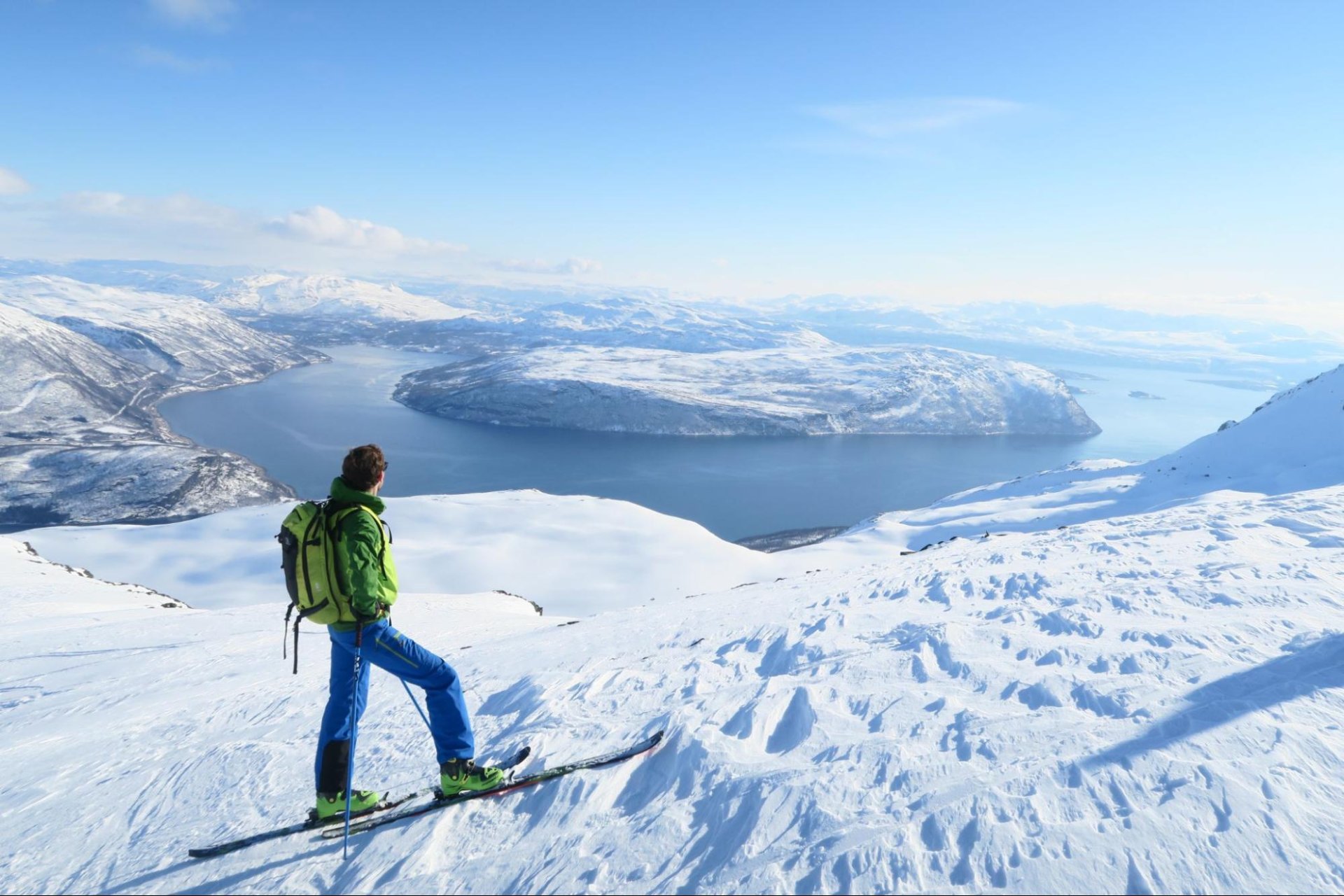
A lone skier, dwarfed by the immensity of a snowy slope, makes a turn.

How To Prepare for a Safe Ski Touring Trip

Ski touring in the Arctic requires special preparation, particularly given the challenging weather conditions and remote locations. Here’s how to ensure you’re ready for the adventure:

1. Hire a certified, experienced guide: An IFMGA-certified guide is your best bet for ensuring safety in the Arctic’s harsh and unpredictable environment. A certified guide offers expertise in route planning, snowpack assessment and adapting to changing weather conditions. Local guides or those familiar with the terrain are even more valuable, as they can help you navigate the nuances of the region. For example, Pavel, a mountain guide familiar with the Uloya region, emphasizes the importance of knowing the terrain and weather to avoid accidents.

2. Communicate your skill level: It’s crucial to be upfront with your guide about your skiing background and fitness level. This allows them to plan a trip that matches your abilities and helps manage risks effectively. For example, if you’re a beginner, the guide can choose routes with less exposure or more gentle slopes.

3. Bring the right gear: Packing the correct equipment is key to ensuring a safe trip:

  • Clothing: Weather in Arctic Norway can be harsh. Dress in layers, focusing on moisture-wicking base layers, waterproof outer layers and insulated clothing. Don’t forget hats, gloves and a neck gaiter to protect from windburn.
  • Skis: Ensure your skis are suitable for touring. These should be lightweight but durable enough for challenging descents.
  • Alpine Gear: Depending on the terrain, you may need crampons, ice axes or other alpine tools for steeper slopes.
  • Safety Gear: The essentials include a beacon, probe, shovel and airbag for avalanche-prone areas.

Guides typically provide detailed equipment lists prior to departure based on terrain, conditions and group experience.

4. Ensure you have rescue and evacuation protection: Northern Norway includes remote areas with limited road access and extended response times.

  • Emergency response may be delayed by weather or terrain
  • Communication planning is essential
  • Travelers should ensure they have appropriate rescue and evacuation protection for remote Arctic environments
  • Emergency planning should be considered part of trip preparation, not an afterthought.

5. Be physically prepared: Ski touring in Norway demands both mental and physical preparation. The steep terrain and long days can be physically demanding. Unlike lift-served skiing, ski touring in Arctic Norway involves long, continuous ascents at low intensity, often in cold and windy conditions. Preparation should focus on:

Aerobic endurance: Long, steady efforts of 800–1,200m (2,625-3,937 ft) vertical gain per day are common. Training hikes or ski tours of 4–6 hours at conversational pace are more relevant than short, high-intensity workouts.

Lower-body endurance and stability: Quadriceps, glutes, hamstrings and calves are heavily loaded during both skinning and downhill skiing with a pack. Single-leg strength (lunges, step-ups) is particularly important.

Core and hip stability: Traversing icy sidehills and uneven snow requires strong hip stabilizers and core control to reduce fatigue and prevent falls.

Cold tolerance and energy management: Cold conditions increase calorie burn and accelerate fatigue. Training outdoors in winter conditions helps skiers learn pacing, layering and nutrition strategies.

6. Establish minimum skiing experience benchmarks: Ski touring in northern Norway is best suited to skiers who already feel comfortable in demanding backcountry environments. As a general benchmark:

  • Skiers should be confident skiing 30–35° slopes in variable snow (wind-affected, crust or breakable conditions), not only soft powder.
  • A good reference point is having completed multi-day ski touring trips in alpine regions such as:
    • The Alps (e.g., ski touring in Chamonix, the Aosta Valley or the Haute Route terrain)
    • Western Canada or the U.S. Rockies
    • Iceland or coastal mountain environments with maritime snowpacks

Just as climbers don’t attempt Mount Everest without prior high-altitude experience, skiers should not treat Arctic Norway as a first ski touring destination.


Expert Advice: Juho on Ski Touring in Norway

According to Juho, an experienced IFMGA-certified guide, “The key to a safe and enjoyable ski touring experience in Norway is preparation. From your fitness level to your gear, everything must be in place. And, most importantly, trust your guide, local knowledge can make all the difference, especially when it comes to avalanche risk and weather.”


A skier in a blue jacket and backpack with helmet hanging pauses to observe the view while on a ski tour.

Final Thoughts: Safety Is Key

Ski touring in Arctic Norway is an unforgettable experience, but it requires a high level of preparation to stay safe. By hiring a certified guide, communicating your skill level, bringing the right gear, ensuring proper insurance and staying physically prepared, you can enjoy the rugged beauty of Norway with confidence.

Whether you’re exploring the Lyngen Alps or skiing the pristine slopes of Lofoten, always prioritize safety and respect for the terrain. The Arctic is a wild place, but with the right planning, it’s also one of the most rewarding destinations in the world for ski touring.

[Author bio: Gauthier Poncelet is the co-founder of Explore-Share and has worked extensively with certified mountain guides worldwide. He has traveled to Norway multiple times, including ski touring regions such as Jotunheim, Lofoten and Finnmark and has helped thousands of travelers plan ski touring trips in collaboration with certified guides.]


Photography owned by Gauthier Poncelet

Categories:

Travel
Share This:

World Cup 2026 Travel Guide for Canada, Mexico and the United States

Learn the visa, passport and entry rules for the North American hosts.

Article Highlights:

  • World Cup 2026 spans three countries, making entry and exit planning essential for all travelers.
  • Visa and passport delays are expected as global demand increases ahead of the FIFA World Cup.
  • US, Canada and Mexico each have distinct entry requirements that apply at every border crossing.
  • Early preparation reduces the risk of denied boarding, entry refusal or missed matches.
  • Traveler awareness programs and contingency planning are critical during high-volume global events.


The World Cup 2026 will be unlike any previous tournament. For the first time, the FIFA World Cup will be jointly hosted by three countries — the United States, Canada and Mexico — with matches spread across dozens of cities and multiple international borders. For travelers, that scale creates extraordinary opportunity and equally significant logistical complexity.

Whether you are following your national team across borders or attending a single match abroad, understanding immigration rules, passport requirements, visa timelines and entry procedures is essential. The FIFA World Cup 2026 will attract millions of international visitors and governments across North America are already urging fans to prepare early to avoid delays, denied boarding or entry refusal.

This guide outlines what travelers need to know to enter and exit the United States, Canada and Mexico smoothly during the world cup, and how to reduce risk while moving between host countries.


Entering the United States for World Cup 2026

For international fans attending matches in the United States, early planning is critical. US immigration authorities have made clear that standard visa security and processing protocols remain in place for World Cup 2026, even as special accommodations are expected for ticket holders.

If you require a US visa and do not already have one, now is the time to begin the process. Visa appointment wait times in many countries already stretch for months and demand will surge as the tournament approaches.

Foreign travelers should confirm which of the following applies:

Visitors from countries participating in the Visa Waiver Program (VWP) — currently 42 nations — may apply for entry using the Electronic System for Travel Authorization (ESTA). ESTA approval is required before boarding a flight to the United States and must be secured in advance.

Travelers from countries not eligible for the VWP must apply for a B1/B2 visitor visa. This process includes an in-person interview at a US embassy or consulate and may involve long wait times depending on location.

Canadian and Bermudan passport holders do not need a visa or ESTA to enter the United States as tourists.

All visitors entering the United States must hold a passport valid for at least six months beyond the period of intended stay, unless they are citizens of exempt countries under US agreements.

The US Department of State has announced that additional information regarding the FIFA Priority Appointment Scheduling System (PASS) will be shared with ticket holders in early 2026. Travelers whose visa appointment availability extends beyond tournament kickoff are advised to wait for PASS details before booking.

American fans traveling to Canada or Mexico for World Cup matches should immediately verify passport expiration dates. A valid US passport is required for international air travel and is the most reliable form of identification at land borders.

Current US passport processing timelines include:

Routine service: 4–6 weeks
Expedited service: 2–3 weeks, plus an additional fee

These timelines do not include mailing time, which can add several weeks to total turnaround. Travelers should factor in the complete processing cycle when booking flights or accommodations.

Last-minute passport renewals during peak World Cup demand may result in missed matches or denied boarding.


STEP Enrollment and Traveler Awareness

American travelers heading abroad for World Cup matches should enroll in the Smart Traveler Enrollment Program (STEP). This free service allows the US Department of State to provide real-time safety, security, weather and health alerts for destinations in Canada and Mexico.

STEP also enables embassies and consulates to contact travelers during emergencies such as natural disasters, civil unrest or family crises. Enrollment takes approximately 20 minutes and can be completed online before departure.


Entering Canada During World Cup 2026

Canada will host matches across multiple cities and entry requirements vary based on citizenship and travel method.

US citizens do not need a visa, Canadian passport or Electronic Travel Authorization (eTA) when entering Canada with a valid US passport. Border officials will verify identity and citizenship upon arrival.

While alternative documents may be accepted at land crossings, a passport remains the recommended and universally accepted form of identification.

US permanent residents arriving by air must present proof of citizenship and a valid US permanent resident card. Those arriving by land or water from the United States may present their permanent resident card without a passport.

International travelers (non-US citizens and non-permanent residents) must carry a valid passport and may require either a visa or an Electronic Travel Authorization (eTA). Eligibility depends on nationality and travel method.

Travelers who require an eTA should apply well before booking flights. While many approvals are issued within minutes, processing delays can occur, especially during periods of high demand.


Entering Mexico for World Cup Matches

Mexico’s role in World Cup 2026 will draw substantial international travel, particularly from fans attending multiple matches across borders.

All travelers entering Mexico must carry a valid passport book or card. There is no minimum passport validity requirement beyond the length of stay, but the passport must remain valid throughout the visit.

Upon arrival, travelers must complete the Multiple Digital Migration Form (FMMd), provided by airlines or available online. This document must be retained and presented upon departure from Mexico.

Mexican immigration officers may request additional documentation based on travel purpose. For tourists, this may include hotel reservations or return tickets. Business travelers, technicians and students may be required to present supporting letters or contracts.

US citizen minors traveling domestically within Mexico by air must carry a US passport book.

Length of stay authorization is determined by Mexican immigration authorities at the port of entry and may vary.


Managing Cross-Border Travel During the Tournament

One of the defining challenges of the FIFA World Cup 2026 is the likelihood of fans crossing borders multiple times within a short period. Each entry is treated as a separate immigration event and travelers must meet all requirements at every crossing.

This means travelers should carry original passports at all times, ensure visas and travel authorizations remain valid for the duration of travel and plan buffer time for border inspections, especially during peak match days.

Failure to meet entry requirements, even once, can disrupt entire itineraries.


The Global Rescue Connection

International sporting events like the World Cup 2026 combine massive crowds, fast-paced travel and unfamiliar environments, conditions that increase medical, security and logistical risks for travelers.

A Global Rescue membership provides vital protection beyond traditional travel insurance, including field rescue, medical evacuation, real-time medical advisory services and global security support. When emergencies occur far from home or across international borders access to coordinated medical and evacuation expertise can make the difference between disruption and safe return.

For travelers following the world cup across the United States, Canada and Mexico, preparation extends beyond tickets and visas. It includes ensuring professional support is available wherever the tournament takes you.

Share This:

Security Decisions That Make Shelter in Place and Lockdown Actions Clear

Understand shelter in place vs. lockdown with expert guidance on security, evacuation and crisis decisions.

Article Highlights:

  • Differentiating shelter in place from lockdown is essential for effective crisis response.
  • Shelter in place offers a temporary protective pause during threats like earthquake, wildfire, storm or power outage.
  • Lockdown is used for immediate, violent threats such as active shooters or riots and requires total immobility and compliance.
  • Instincts often push people toward unsafe actions during emergencies; preparedness and communication counter those impulses.
  • Travel and organizational safety depend on clear plans, situational awareness and coordinated evacuation when conditions allow.


Security incidents, natural disasters and sudden disruptions remind us over and over again how quickly normal can crumble. A mass power outage across Spain and Portugal blacked out millions. Political protest movements in Madagascar and Nepal erupted without warning. A UPS cargo plane crash in Louisville shut down major portions of the city. And when tensions between Israel and Iran escalated into a brief but intense war, even travelers in Doha felt the explosive ripple effects.

Add to these the familiar but no less dangerous events — earthquake, wildfire, bomb scare, active shooter, blizzard — and the reality becomes impossible to ignore: crises are no longer rare. They are part of the modern landscape.

Harding Bush, former Navy SEAL and Global Rescue’s director for security operations, captures the urgency clearly: “Survival often hinges on recognizing what type of emergency you’re facing and understanding how to respond in the earliest moments.”

Yet two of the most common emergency instructions — shelter in place and lockdown — remain widely misunderstood. The terms sound similar, but as Bush emphasizes, confusing them “can place both civilians and emergency responders in greater danger.”


Shelter in Place: A Protective Pause

A shelter-in-place directive is about time. Time to gather information. Time to evaluate risk. Time for authorities to stabilize what’s unfolding.

Bush describes it as “a protective pause,” a period of deliberate stillness designed to reduce exposure to hazards outside. In situations such as hurricanes, storms, chemical releases, fast-moving wildfires or even extreme power outage events, staying indoors protects civilians while keeping roads clear for emergency vehicles.

Sheltering in place serves three essential purposes:

1. Reduces unnecessary exposure: Even when the instinct to flee is strong, the outside environment might be the bigger threat. Downed power lines, falling debris, contaminated air or collapsing infrastructure can turn an attempted escape into a life-threatening decision.

2. Prevents congestion and interference: People on the move during a crisis, especially during weather-driven or infrastructure-driven emergencies, “can clog evacuation routes that responders need to access,” Bush notes.

3. Creates space to plan: A shelter-in-place period provides critical minutes for individuals to: gather supplies; secure their immediate surroundings; communicate with family or coworkers; monitor evolving conditions; and prepare for a potential evacuation if conditions shift.

It is not a long-term measure. It is a temporary tactical choice that buys safety and clarity.


Lockdown: When the Threat Is Immediate

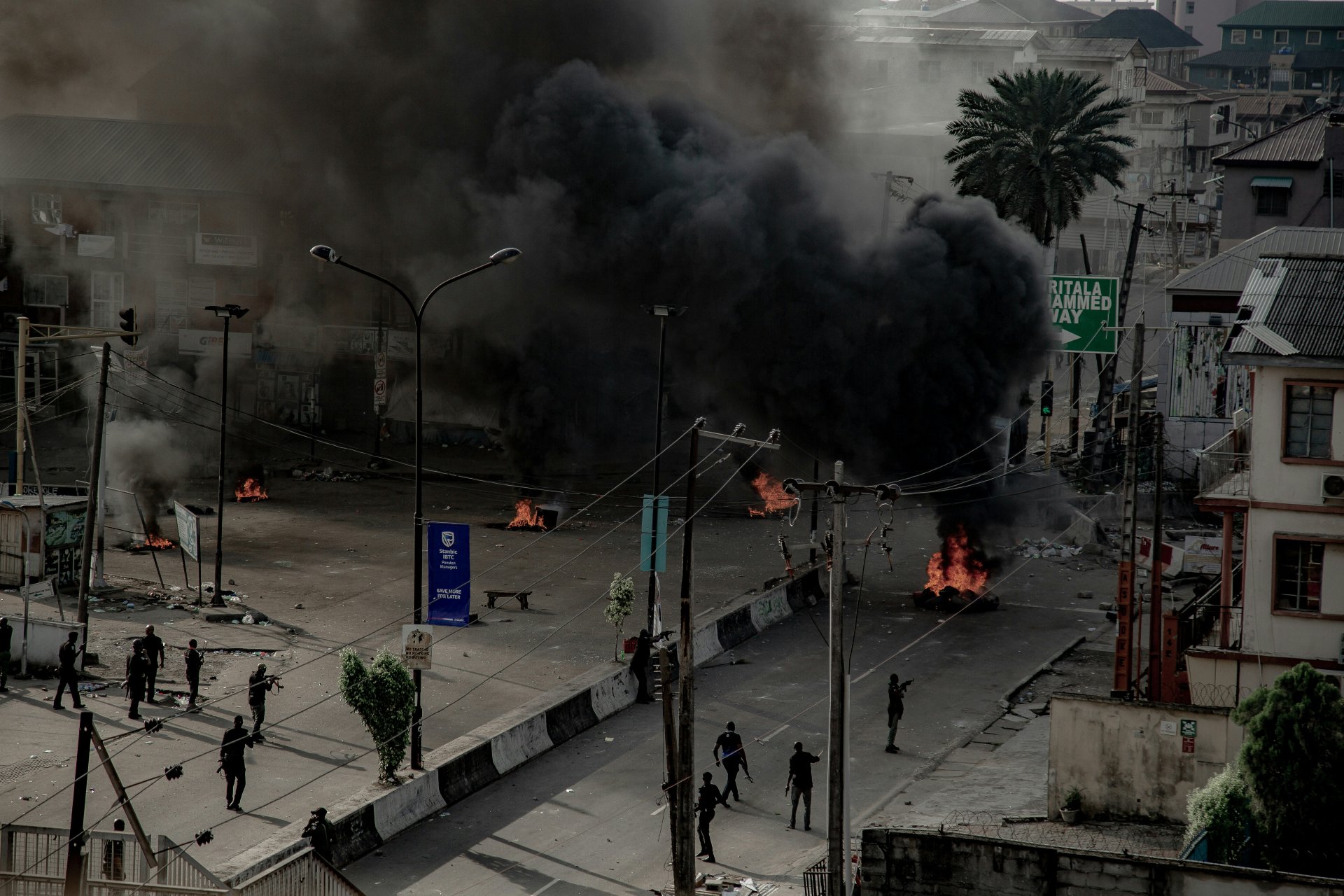
A lockdown is fundamentally different than a shelter-in-place. While a shelter-in-place order limits movement, a lockdown halts it completely. Used during violent crises such as active shooter events, armed conflict or explosive civil unrest, a lockdown assumes the threat is present, immediate and potentially lethal.

Key characteristics include:

  • Securing doors and access points.
  • Restricting all interior movement.
  • Seeking reinforced or hardened spaces.
  • Disabling normal operations instantly.
  • Police or military enforcement, including checkpoints and road closures.

Bush explains: “A lockdown is an unequivocal message: the threat is immediate and remaining exactly where you are, protected, out of sight and secured, is the safest course of action.”

During the recent Israel–Iran conflict, lockdowns kept residents inside as missiles flew overhead. In Madagascar and Nepal, violent protests triggered similar restrictions as governments moved to protect the public. Unlike shelter-in-place, which often offers flexibility and short-duration stability, a lockdown demands absolute compliance.


Instinct vs. Intelligence

Bush has seen people make the wrong decision in moments that matter most and the consequences firsthand. “I’ve seen civilians flee toward gunfire, attempt to drive through wildfire zones and unknowingly move into streets filled with violent crowds.”

Why does this happen? Several factors contribute:

1. Fight-or-flight instinct: The hard-wired desire to escape can override rational thinking, especially when threat levels are unclear.

2. Poor situational awareness: People often act on partial or incorrect information. Without real-time updates, a seemingly safe route may lead directly into danger.

3. Non-standard terminology: Emergency language varies widely between countries, cities and even organizations. A visitor in Tokyo may hear instructions framed differently than in New York, Nairobi or Oslo. One employer’s “secure-in-place” may match another organization’s “lockdown.”

These inconsistencies make preparation essential. Bush emphasizes that “clarity established in advance leads to decisiveness under pressure.”

Whether you are a traveler, a family member or a corporate decision-maker responsible for colleagues in unfamiliar settings, preparation is your advantage.


Preparation Basics

Identify safe areas and know the interior rooms with no windows, hard cover and limited access points. Establish communication plans by using group messaging tools, emergency contact protocols or traveler tracking services to ensure accountability during crises. Practice and rehearse both shelter-in-place and lockdown responses. The goal is muscle memory, not improvisation. During a crisis, monitor official instructions from local authorities, embassy or consular services, security professionals and trusted intelligence or alert providers.

The immediate crisis is only the first phase. “There is always a transition period — sometimes gradual, sometimes prolonged — during which conditions stabilize,” Bush said. Moving from crisis to recovery requires patience, communication and coordinated decision-making, especially when facing a potential evacuation.


Why Understanding the Difference Matters

The distinction between shelter-in-place and lockdown is a life-preserving skill. “Understanding the difference … is more than knowing a pair of terms; it’s understanding two distinct strategies for staying alive,” Bush said.

Emergencies never unfold neatly. They evolve. They escalate. They surprise even the trained experts. But the ability to interpret the threat and apply the right response, whether to pause, hide, move or evacuate, can save lives.

Travelers, families and organizations that invest in preparedness today gain an undeniable advantage when the unexpected arrives tomorrow.


The Global Rescue Connection

In a world where crises escalate quickly, and where the wrong move can turn danger into catastrophe, having expert guidance is indispensable. Whether you’re navigating civil unrest, a natural disaster, a violent security incident or an emergency requiring evacuation, Global Rescue provides the support that transforms panic into a plan.

A Global Rescue membership ensures access to:

  • Field rescue in remote or dangerous environments.
  • Medical evacuation to your home hospital of choice.
  • Medical advisory services available 24/7.
  • Security intelligence and guidance before, during and after a crisis.

When sheltering in place isn’t enough and a lockdown becomes untenable, Global Rescue helps travelers and organizations make the safest move possible, back to stability.

Categories:

Press Release
Share This:

Travelers Expect Greater Danger, Unpredictability in International Travel in 2026

(Lebanon, N H – January 20, 2026) – A majority of travelers believe international travel in 2026 will be either more dangerous or increasingly unpredictable compared to pre-2020 travel, underscoring persistent global security concerns and…

(Lebanon, N H – January 20, 2026) – A majority of travelers believe international travel in 2026 will be either more dangerous or increasingly unpredictable compared to pre-2020 travel, underscoring persistent global security concerns and heightened risk awareness, according to the Global Rescue Winter 2026 Traveler Sentiment and Safety Survey.

Overall, 38% of travelers say international travel danger in 2026 will be unpredictable, while 36% believe it will be more dangerous. Only 1% believe international travel will be less dangerous, and 21% say it will be neither more nor less dangerous than before 2020.

“Travelers are signaling that uncertainty, not just risk, is shaping their decisions,” said Dan Richards, CEO of The Global Rescue Companies and a member of the US Travel and Tourism Advisory Board at the US Department of Commerce. “Unpredictability is now viewed as the defining feature of international travel, and that has serious implications for preparedness and resilience.”

Men are more likely than women to view international travel as more dangerous, with 38% of men selecting that view compared to 30% of women. Women, however, are significantly more likely to describe international travel as unpredictable, at 49% versus 38% of men. Men are also more likely to believe conditions are neither better nor worse, at 26% compared to 19% of women.

Geographic differences highlight sharper concern among non-US travelers. Nearly half of non-US respondents (49%) say international travel danger in 2026 will be unpredictable, compared to 34% of US-based respondents. US travelers are more likely to believe travel will be more dangerous, at 38% versus 33% of non-US respondents.

Concerns about personal security risks are widespread, particularly around kidnapping, extortion and violent crime. Overall, 82% of travelers express some level of concern when traveling internationally, including 42% who are slightly concerned, 29% who are moderately concerned and 10% who are very concerned. Only 15% say they are not at all concerned.

“Kidnapping and extortion are no longer viewed as rare or isolated risks,” Richards said. “Travelers increasingly understand these threats can affect leisure, business and adventure travel alike.”

Women report slightly higher levels of concern than men. Twelve percent of women say they are very concerned about kidnapping or extortion, compared to 9% of men. Men are more likely to say they are not at all concerned (21%) versus 13% of women. US and non-US travelers show similar concern levels, though non-US travelers are more likely to be very concerned, at 13% compared to 10% of US travelers.

Expert warnings about ongoing conflict, organized crime and political instability in specific regions are strongly influencing traveler behavior and reinforcing perceptions that certain destinations will remain dangerous or high risk in 2026.

Nearly 67% of travelers say they would either avoid travel to Israel and neighboring states entirely or do not plan to travel there regardless of security conditions. Another 17% say they would postpone travel until conditions stabilize, while only 5% would travel as planned and accept the risk.

Mexico presents a more nuanced picture. While 25% say they would avoid travel to Mexico altogether, 36% would travel only to specific areas with added precautions. Another 23% say they are not interested in traveling to Mexico regardless of security risks, reflecting a cautious but differentiated approach.

Colombia faces similarly restrained interest. Thirty-six percent of travelers say they would avoid traveling to Colombia, while 42% say they have no plans or interest in traveling there regardless of security challenges. Only 5% say they would travel as normal and assume risks are manageable.

“These regional responses reinforce why travelers view the global risk environment as unstable,” Richards said. “People are not disengaging from international travel, but they are far more selective, informed and risk-aware.”

When asked to rate their overall international travel safety confidence on a scale of 1 to 10 (with 1 being “completely confident to travel boldly” and 10 being extremely concerned about personal travel safety) travelers clustered toward a “3 to 3.5”, indicating moderate unease.

“Travel in 2026 will reward preparation,” Richards said. “Those who understand the risks, plan accordingly and secure professional support will be best positioned to travel safely in an unpredictable world.”

###

About the Global Rescue Traveler Sentiment and Safety Survey

Global Rescue, the leading travel risk and crisis response provider, surveyed more than 1,300 current and former members between January 13 – 17, 2026. Respondents shared their attitudes, behaviors and preferences related to travel safety, technology and global mobility.

About Global Rescue

Global Rescue is the world’s leading provider of medical, security, evacuation and travel risk management services to enterprises, governments and individuals. Founded in 2004, Global Rescue maintains exclusive relationships with the Johns Hopkins Emergency Medicine Division of Special Operations and Elite Medical Group. The company has provided medical and security support during every major global crisis over the past two decades.

Categories:

Travel
Share This:

The Rewards and Risks of Ski Touring

Get essential safety tips for skinning and alpine touring missions.

Article Highlights:

  • Clear visibility and safety support make daytime ski touring ideal for beginners.
  • Nighttime skinning offers solitude but increases navigation, temperature and operational hazards.
  • Tree wells pose serious risks at any hour but become significantly more dangerous in the dark.
  • Both day and night touring require avalanche gear, partner protocols and adherence to resort uphill rules.
  • Advanced preparation and situational awareness define safe and rewarding alpine touring experiences.


Ski touring, skinning and alpine touring have grown into core pursuits for winter athletes who want to earn their turns, escape crowds and expand the boundaries of traditional resort skiing. From dawn patrol missions to headlamp-lit evening laps, the uphill movement culture has matured into a distinct discipline with its own skill sets, safety protocols and passionate community. Whether the goal is backcountry skiing far from ski area boundaries or training laps on a resort’s designated uphill route, understanding the differences between daytime and nighttime skinning is essential for doing it safely and sustainably.

The appeal is universal: a more intimate connection with terrain, a deeper sense of accomplishment and a physically demanding workout that draws athletes across ages and experience levels. But as the sport accelerates in popularity, it also brings greater awareness of risks that vary significantly depending on when and where you tour.

Day touring and night touring both offer stunning experiences, but they are fundamentally different activities that demand different preparation. Clear visibility, warm temperatures and safety support make daytime travel generally more suitable for beginners, while nighttime skinning is a specialized pursuit reserved for experienced alpine touring athletes who understand terrain, navigation, resort operations and risk management in low-light environments.

The following analysis breaks down the critical differences, benefits and hazards associated with each, including the additional threat of tree wells, a risk that persists regardless of time of day but becomes significantly more dangerous in low visibility conditions.


The Case for Daytime Ski Touring: Visibility, Access and Approachability

Daylight is the single biggest safety advantage in ski touring. For new and intermediate backcountry skiing participants, daytime visibility fundamentally changes the way hazards are identified, decisions are made and partners remain in contact.

Clear sightlines make it easier to understand terrain shapes, identify avalanche indicators like cracking or recent slides and spot hazards such as rocks, stumps, open creeks and resort operations equipment. At ski resorts, this visibility also helps you avoid winch cats and their long, nearly invisible cables, which pose lethal risks to uphill travelers.

Navigation is more intuitive during the day. Landmarks are identifiable, maps and GPS references align more naturally with what you see and it is easier to adjust your plan when something appears unsafe. Day touring also provides access to more people on the mountain. From ski patrol during resort hours to passing skiers who can assist in an emergency, the presence of others creates a safety net that does not exist at night.

Day touring also offers warmth and comfort. Although conditions can still be frigid, daytime temperatures typically make frostbite, hypothermia and equipment malfunctions less likely. This environment is ideal for honing skinning technique, practicing transitions and building cardiovascular fitness. The social component can be appealing as well, with opportunities to ascend in groups, meet other uphill travelers and enjoy long views from ridgelines and summits.

The downside is that daylight often brings more people, especially at resorts that welcome uphill access. Midday sun can deteriorate snow quality rapidly, transforming early-morning powder or firm snow into sticky, heavy conditions that slow progress and sap energy. Still, for most skiers entering the world of alpine touring, daytime is the safest and most adaptable environment.


Nighttime Skinning: A Specialized Pursuit With Elevated Risk and Unique Rewards

Night touring has a magnetic appeal: quiet trails, crisp snow, a glowing moon, reflective crystals embedded in the surface and solitude that feels rare in modern skiing. Many athletes use nighttime skinning for fitness, taking advantage of groomed corduroy after lifts close. Others use it to access remote backcountry terrain under starlight or to craft sunrise missions that begin hours before dawn.

But the risks escalate dramatically after sunset.

Visibility becomes the primary challenge. Even with a strong headlamp, depth perception declines, shadows distort terrain and obstacles appear with little warning. Winch cables, one of the most dangerous nighttime hazards at resorts, can be nearly invisible until you are dangerously close. Navigation becomes more technical, forcing reliance on GPS devices, offline maps and precise route memory. A missed turn or incorrect contour can quickly escalate into a dangerous situation.

Temperature is another factor. Nights in the mountains are colder, increasing risks of frostbite, hypothermia and battery failure for essential gear. Wind exposure becomes more severe when darkness limits your ability to assess ridgelines or storm movements.

Equipment requirements also change significantly. Night touring demands at least two reliable headlamps, spare batteries, reflective clothing, beacon-check protocols and additional layers. Many resorts prohibit uphill access after hours because of grooming and avalanche control operations, requiring skiers to understand and respect local rules before stepping onto a nighttime route.

Nighttime skinning is rewarding, but it is best reserved for athletes who deeply understand terrain, avalanche processes, route-finding and the responsibilities that come with traveling through operational ski areas in the dark.


Tree Wells: An Underestimated Risk at Any Hour, Intensified at Night

Tree wells represent one of the most misunderstood hazards in backcountry skiing and resort-adjacent touring. After a deep snowfall, unconsolidated snow accumulates around the base of evergreen trees, creating hidden voids. A skier who falls into a tree well can suffer Snow Immersion Suffocation, a lethal risk even with minor falls.

During the day, improved visibility gives uphill travelers a better chance of spotting wells or identifying clusters of trees that indicate potential hazards. The presence of other skiers also increases the likelihood of a fall being witnessed.

At night, the danger escalates sharply. Headlamps do little to reveal hidden voids, shadows obscure the terrain around trees and skiers are often more focused on following a beam of light than reading natural terrain cues. No ski patrol is present at night and partner visibility is significantly reduced. A partner may not witness a fall and immediate rescue is essential for survival.

Regardless of the time of day, several principles apply. Skinning with a partner and keeping them in constant visual or voice contact is critical. Wearing a whistle helps signal distress if you fall into a well. Avoiding tree zones after heavy snowfall is one of the simplest and most effective risk mitigation strategies. If a fall occurs, the affected skier must fight to stay upright, try to grab branches, create an air pocket and remain calm until help arrives.


Key Considerations for Both Day and Night Ski Touring

Although the experiences differ, certain core principles apply to any form of ski touring.

Resort rules matter. Many resorts publish defined uphill routes, time windows and safety protocols. Failure to follow these guidelines not only endangers the skier but can interfere with avalanche control and grooming operations.

Visibility gear is essential. During the day, bright clothing ensures you remain visible to snowcat operators or other downhill skiers. At night, headlamps are mandatory and redundancy is non-negotiable.

Avalanche preparedness sits at the heart of both disciplines. Backcountry skiing requires a beacon, shovel, probe, avalanche education and a consistent habit of checking the day’s forecast. Snowpack can change from morning to night and reading those changes is a core competency of alpine touring.


The Global Rescue Connection

Even the most disciplined ski touring athletes understand that mountain environments are inherently unpredictable. From navigation errors to injuries, frostbite, tree well incidents or avalanche involvement, backcountry and resort-adjacent terrain demand a level of preparedness that extends beyond gear.

A Global Rescue membership provides the comprehensive safety net ski tourers depend on when the mountains deliver the unexpected. If an injury, navigation error, avalanche incident or tree well fall prevents self-evacuation, Global Rescue deploys rescue teams to reach members wherever they are and coordinates medical evacuation to the appropriate facility. Members also receive on-demand medical advisory support, ensuring that critical decisions can be made with expert guidance even in remote alpine environments.

Because rescue teams must be able to locate an injured or stranded skier, carrying reliable emergency communication devices is essential. Satellite messengers, personal locator beacons and SATCOM-enabled tools help ensure a distress signal reaches responders regardless of cell coverage. Combined with these communication systems, a Global Rescue membership gives ski tourers the confidence to venture into the backcountry knowing they have professional support when it matters most.

Categories:

Travel
Share This:

Why Telehealthcare Like TotalCare Is Here To Stay

Learn how telemed rules changed, what’s permanent and why telehealthcare remains essential for travelers.

Article Highlights:

  • Telehealthcare usage surged during the pandemic and remains essential even as COVID-19 has abated.
  • Key mental and behavioral telemed benefits are now permanent under Medicare.
  • Most other Medicare telehealth flexibilities are extended only through January 30, 2026.
  • Private insurers continue to offer broad telemedicine coverage, easing access for many Americans.
  • Telehealth is evolving, not ending, with hybrid care and new legislative efforts shaping the future.


Telehealthcare was once considered a niche convenience. Useful for rural clinics, quick follow-ups or after-hours urgent care. But the pandemic catapulted telemed and telemedicine into the mainstream almost overnight. Millions of people experienced virtual care for the first time, discovering that many medical needs didn’t require a waiting room at all. What emerged was not a temporary workaround but a long-term shift in how patients expect to access healthcare.

Now, years later, telehealth is transitioning out of its emergency phase and into a more mature, structured system. Usage remains high, public demand is strong and private insurers continue to embrace virtual care. But Medicare’s temporary pandemic-era flexibilities are expiring or evolving, creating a new landscape, one where telehealthcare is still essential but more complex than it used to be. The key story today is how it will settle into its permanent role in modern medicine.


Telehealth: From Crisis Innovation to Everyday Healthcare

Before the pandemic, telemedicine existed in pockets: urgent care triage, rural consultations and niche specialty follow-ups. But between 2020 and 2022, usage skyrocketed to historic levels. Patients discovered how easy it was to access medical providers without leaving home, while clinicians saw firsthand how virtual care could improve follow-up rates, reduce no-shows and expand access.

Even as in-person visits returned, telehealthcare remained sticky. Behavioral health, dermatology, chronic disease management, post-operative check-ins and urgent care all found stable virtual roles. Many employers and insurers adopted telemed services as standard benefits and the public embraced it.

Yet regulatory authority is where the ground shifted most.


The Big Question: “Is Telehealth Going Away?”

No, telehealth is not ending. But the broad, pandemic-era rules that temporarily reshaped Medicare telemedicine expired or were scaled back between late 2024 and late 2025. These changes created confusion, frustration and what experts call a “telehealth policy cliff.”

Some of the most important telehealthcare services are here to stay and not just temporarily:

  • Mental and behavioral health services: This is the strongest pillar of permanent virtual care. Medicare allows telemed mental health services from home, including audio-only in certain cases. In-person visit requirements have been delayed by Congress several times because of overwhelming demand and access needs.
  • Substance use disorder care: Telemedicine prescribing and counseling for substance use treatment have strong bipartisan support.
  • Chronic condition management: Ongoing monitoring, especially for rural patients, remains supported.
  • FQHCs and RHCs as permanent distant sites: Federally Qualified Health Centers and Rural Health Clinics can permanently conduct virtual mental health visits.

Recent legislation temporarily extended many of the most popular Medicare telehealth flexibilities to January 30, 2026, including removal of geographic restrictions, permission for patients to receive telemedicine at home and expanded list of eligible telehealth providers.

These temporary rules run through the end of January 2026, unless Congress acts again. This means telehealth is accessible but not guaranteed in the long term under current law.

The pandemic allowed clinicians to prescribe controlled medications via telehealth. Those flexibilities remained in place until the end of 2025 while agencies and lawmakers debate permanent frameworks.


Is Telehealth More Confusing Now?

The complexity comes down to inconsistent timelines and political limbo. Because major telehealth provisions were tied to emergency waivers, Congress must pass legislation to preserve them. But much of the telemedicine landscape sits in short-term extensions attached to continuing resolutions rather than permanent healthcare reform.

The result?

  • Providers must constantly adjust workflows.
  • Patients worry their coverage will suddenly disappear.
  • Some services, like certain rehab and non-mental-health therapies, have already rolled back.
  • Telehealthcare access varies by state, insurer, service type and patient location.

In short: telehealth isn’t going anywhere, but accessing it is more complicated than it was during the pandemic.


Private Insurers and Medicare Advantage Take a Different Path

While Medicare faces political bottlenecks, private insurance and Medicare Advantage plans continue offering broad telemed coverage. Many discovered that virtual care reduces emergency-room strain, supports chronic care management and improves cost efficiency.

Employers have also expanded telehealthcare benefits, especially mental health, dermatology and after-hours medical advice lines. This divergence means many Americans experience more stability in telemedicine than those relying solely on traditional Medicare.

The pandemic’s telehealth boom created long-term structural changes:

1. The Rise of Behavioral Health Telemedicine: Mental health is the number-one use case. Remote appointments proved beneficial for patients with anxiety, mobility limitations, rural access challenges or tight schedules. Providers report fewer missed appointments and more consistent therapy engagement.

2. Hybrid Care Becomes the New Normal: Patients increasingly mix in-person and virtual visits depending on the reason for care: telehealth for triage, follow-ups, mental health and chronic care; in-person for diagnostics, physical exams and procedures. This hybrid model is efficient, patient-centered and almost certainly permanent.

3. Telehealthcare Technology Advances: The pandemic accelerated innovations in AI-supported diagnostics; remote patient monitoring devices; improved video platforms and smartphone-integrated health tools. Telehealth is no longer “just a video call”—it’s becoming a full ecosystem of digital care.

4. Travel-Relevant Telemedicine: For travelers and remote workers, telehealthcare became a lifeline in several ways, including: access to a clinician from any location; quick evaluation before deciding whether you need in-person care; medical guidance for symptoms, medications or minor injuries; and support when navigating foreign healthcare systems.

Organizations like Global Rescue built virtual care into large medical and travel protection programs because the pandemic proved how critical remote access is when travelers face uncertainty or lack local medical resources.


What’s Next?

Several major bills, including versions of the CONNECT for Health Act, aim to make pandemic-era telemedicine rules permanent. Advocacy groups like the American Telemedicine Association and the American Hospital Association are pushing for stability.

Experts expect continued growth in mental health telemed; more remote-monitoring reimbursement; long-term hybrid care adoption and renewed Congressional focus approaching the 2026 deadline.

The message is clear: telehealthcare is evolving, not disappearing.


The Global Rescue Connection

Telemedicine became essential during the pandemic and today it remains a critical tool for travelers, remote workers and anyone who needs fast access to qualified medical guidance. Global Rescue TotalCare℠ takes telehealthcare a step further by integrating it with worldwide field rescue, medical evacuation and on-demand medical advisory support. When you’re abroad, telehealth alone can’t always get you home, but TotalCare can.

Whether you’re dealing with sudden illness overseas, need help evaluating symptoms or require medical evacuation from a remote location, TotalCare ensures you have immediate access to board-certified physicians and rescue specialists. Telemedicine may guide the initial decision, but Global Rescue provides the operational muscle behind it, coordinating care, managing movement and keeping travelers safe when local resources fall short.

Telehealth changed healthcare forever, but for travelers, it’s only one part of a larger safety net. TotalCare delivers the full spectrum: digital medical advice, real-world rescue capability and global medical protection wherever you go.

Share This:

ETIAS and EES Explained

Learn how known traveler programs are changing in Europe.

Article Highlights:

  • Americans and Canadians traveling to Europe must enroll in their new EES (Entry/Exit) system, providing fingerprints and facial biometrics, while Europeans are exempt.
  • ETIAS (Europe Travel Information Authorization System) will soon be required for all visa-exempt North Americans traveling to Europe, acting as a pre-trip security screening.
  • Trusted traveler programs like Global Entry and NEXUS offer no special privileges under EES or ETIAS.
  • Europe, the US and Canada all use digital travel systems, but none have fully reciprocal known-traveler benefits.


Europe’s travel rules are undergoing their biggest transformation in decades. The long-familiar ritual of passport stamping is being replaced by digital checks, biometric enrollment and pre-travel authorizations that apply to millions of visitors. For Americans and Canadians, understanding the difference between the ETIAS and EES systems, and how these new requirements compare to what European travelers face, is essential for smooth trips in 2026 and beyond.

While many North American travelers rely on known-traveler programs like TSA PreCheck or NEXUS, reciprocal privileges abroad are far more limited, revealing a fragmented global security landscape that North Americans must navigate carefully.

This is the new frontier of travel: digital borders, biometric screening and rules that seem to change as quickly as flight prices.

EES: Europe’s New Biometric Entry/Exit System

The Entry/Exit System (EES) is the backbone of Europe’s modernized border strategy. Rolled out in late 2025 and operational across most land, sea and air checkpoints by 2026, EES replaces manual passport stamping with automated biometric verification.

For all non-EU travelers, including Americans, Canadians, Australians, Japanese and others, EES requires:

  • Facial capture (biometric photo)
  • Four fingerprints
  • Passport data registration
  • Electronic entry and exit logging

EES applies to visa-exempt travelers who visit the Schengen Area for short stays (up to 90 days within a 180-day window). Once enrolled, visitors’ biometric profiles remain valid for future trips, making subsequent border crossings significantly faster.

North Americans entering or exiting Europe will no longer have their passports stamped. Instead, they will use EES kiosks or be processed by border agents capturing biometrics digitally. While the first enrollment may cause longer wait times, later visits should be quicker — similar to using Global Entry kiosks before Trusted Traveler Programs became mainstream.

EES also tracks overstays automatically, offering authorities more precise tools for identifying travelers who exceed their lawful 90-day period.

EU citizens, Schengen residents and long-stay visa holders are not required to enroll in EES.

Europeans will continue to move using their national ID cards or passports without biometric enrollment under EES. In essence:

  • Americans/Canadians = EES required
  • Europeans = exempt from EES biometric capture

This creates a clear division in how the two groups navigate European borders.


ETIAS: Europe’s New Pre-Travel Authorization

If EES is the digital bookend to your trip, ETIAS is the front gate.

The European Travel Information and Authorization System (ETIAS) is a pre-travel screening system, similar to the US ESTA or Canada’s eTA, that checks travelers before they arrive.

  • Cost: €7
  • Validity: 3 years
  • Who Needs It: Visa-exempt non-EU nationals (including Americans and Canadians)
  • When Required: Expected full implementation in 2026

ETIAS is not a visa. It is an automated security clearance meant to identify risks before travelers board their flights.

  • EES = captures biometrics (fingerprints + face) and logs border crossings.
  • ETIAS = online pre-trip authorization (no fingerprints required).

Canadians, Americans and non-EU residents will need both for future travel, but ETIAS happens at home while EES occurs on arrival.


Are American or Canadian Trusted Traveler Programs Recognized?

North American travelers often assume that programs like TSA PreCheck, Global Entry, NEXUS, SENTRI or CANPASS will unlock faster security or immigration processing abroad. Unfortunately, the reality is mixed.

Only a handful of countries offer official benefits for US or Canadian trusted traveler members:

  • Global Entry Members:
    • Eligible for faster entry via kiosks in Germany, Panama, New Zealand and a few partner nations


  • NEXUS Members:
    • Benefits apply almost exclusively at US–Canada border crossings.


  • PreCheck:
    • Only applies at US airports and select foreign airports with US preclearance.

Neither ETIAS nor EES grants any special privileges for:

  • Global Entry
  • NEXUS
  • TSA PreCheck
  • CANPASS
  • SENTRI

Every North American traveler will be treated identically under EU rules, regardless of known traveler program membership at home.

Europeans traveling to North America see a similar patchwork:

  • The US ESTA is required for most European travelers.
  • Europeans do not receive TSA PreCheck unless they apply separately.
  • Global Entry is open only to select European nationalities (Germany, UK, Switzerland, the Netherlands) and requires additional vetting.

In other words: The US, Canada and EU all screen travelers digitally, but none shares a truly reciprocal known-traveler framework.


The Global Rescue Connection

Border systems are becoming increasingly automated, biometric, and complex. When something goes wrong abroad, travelers quickly discover that technology can’t solve every problem. A Global Rescue membership goes far beyond emergency medical evacuation. Members gain access to field rescue, worldwide medical evacuation, 24/7 medical advisory, and global security support, ensuring they are protected during the moments when a trip becomes a crisis.

But the value extends further. Today’s travelers face complicated visa rules, unfamiliar digital border systems, and fast-changing entry requirements. When a border crossing becomes a challenge — whether due to documentation issues, miscommunication, or EES/ETIAS confusion — Global Rescue can help coordinate legal resources, locate translation support, and guide members through the steps needed to resolve problems in unfamiliar bureaucratic environments.

Whether it’s arranging medical evacuation from a remote region, providing real-time intelligence during civil unrest, or helping navigate the complexities of international border procedures, Global Rescue ensures travelers are never alone. Wherever the journey leads, expert support is only one call away.

Categories:

Business TravelTravel
Share This:

How New Airline Rules Are Redefining Checked Luggage and Carry On Baggage Sizes

Learn the new 2026 carry-on standards and major airline baggage rules before your next trip.

Article Highlights:

  • Airlines are shifting toward a strict 22″ x 14″ x 9″ carry-on standard by 2026.
  • Stricter enforcement means many existing “carry-on” bags no longer qualify.
  • American Airlines is removing gate sizers, increasing gate-agent discretion.
  • Overhead bin size, not published rules, ultimately determines if a bag flies.
  • Travelers should measure their luggage and buy 2026-compliant bags now.


Air travelers have always had to navigate confusing baggage policies, but in 2026 the situation has reached a new level of complexity. Airlines are tightening luggage rules, enforcing old measurements more aggressively and preparing for a sweeping industry move toward a universal standard luggage size. What once seemed like a simple question — Will my bag fit? — is increasingly becoming a gamble. And with the world flying more than ever, the race to secure overhead bin space has sparked what many travelers are calling the “carry-on crunch.”

Airports report a rise in gate checks, boarding delays and inconsistent enforcement from airline to airline. Meanwhile, manufacturers continue selling “carry-on” bags that no longer meet shrinking standards once wheels, handles, bumpers and corner guards are included. Add in regional jets with smaller bins, faster turnaround demands and aggressive boarding procedures and the result is a modern, rapidly evolving baggage landscape that every traveler must understand.


The New Reality of Luggage Size Limits

Airline luggage size limits are changing. Not because of a newly adopted global rule, but due to stricter enforcement and the industry’s move toward a universal standard luggage size of 22 x 14 x 9 inches in 2026. This new carry-on requirement, which now must include wheels and handles in measurements, means many of today’s so-called “carry on luggage” options will suddenly become oversized.

Airlines are tightening procedures in different ways. American Airlines, for example, is removing traditional gate sizers to speed up boarding. But that increases reliance on gate-agent discretion, often resulting in more surprise gate-checks. Meanwhile, tighter cabin designs and more regional jets mean that even bags technically within policy may not fit in smaller overhead bins. In practice, the real deciding factor is whether the bag physically fits, not what the manufacturer claims or what the traveler believes is acceptable. As enforcement becomes more consistent and measurements become standardized, passengers may discover that their trusted luggage no longer meets the new norms.

Travelers now have to be far more proactive.

Experts recommend measuring all current bags, including wheels, handles, protective corners and bumpers, to determine whether they meet the upcoming standard. Because every airline’s rules differ, flyers must check their specific carrier’s website before each trip. This is especially true for major carriers like Delta, American, Southwest, JetBlue, British Airways, KLM, Virgin Atlantic, Emirates, Qatar, Qantas, Air Canada and Turkish Airlines, all of which maintain unique definitions for carry-on dimensions, personal item allowances and checked-bag limits.

With airlines tightening enforcement and a universal 2026 standard on the horizon, the smartest approach is to look for new bags clearly marketed as compliant with the 22 x 14 x 9 requirement. By staying informed and investing early in updated luggage, travelers can avoid costly last-minute gate-checks, unexpected fees or the frustration of being separated from their belongings in transit.


Checked Luggage Rules Largely Unchanged

Checked luggage rules remain fairly stable across the airline industry, but travelers still need to pay attention to variations that can lead to unexpected fees. While there is no new universal standard, most major US carriers continue to follow the long-established 62 linear inches (length + width + height) limit for a standard checked bag and a 50-pound weight limit for economy passengers.

Some airlines apply their own twists to this baseline: United Airlines, for example, lists a specific dimension requirement of 30 x 20 x 12 inches, and low-cost carriers like Allegiant allow checked bags up to 80 linear inches, though typically with higher fees. Premium cabin customers on many airlines, including Delta, American and JetBlue, often receive a more generous 70-pound limit, while budget carriers rigidly enforce weight restrictions to capture revenue from overweight bags.

What’s changing isn’t the size standard itself but how airlines enforce, package, and price the rules. Many now adjust baggage allowances based on destination, aircraft type, season, fare class and loyalty status. Oversize and overweight fees have increased sharply, making it more important than ever to check current policies directly on your carrier’s website before traveling.

Some routes — even within the same airline — feature unique restrictions due to aircraft capacity or regional regulations. In short, although the “62-inch rule” remains the industry anchor, the fine print varies widely. Verifying your specific airline’s latest checked-baggage limits is the best way to avoid surprise charges, delays at the counter, or the scramble to repack at the airport.


Airline-by-Airline Luggage Rules

Below is a complete overview of both carry-on luggage and checked bag rules for the world’s most popular airlines. Dimensions can vary by aircraft type, route and fare class, but these represent core standards.

Delta Air Lines

  • Carry-On: 22″ x 14″ x 9″
  • Checked: Standard delta checked bag limit: 50 lbs., 62 linear inches
  • Policies: One carry-on and one personal item permitted under the Delta Airlines baggage policy and baggage rules for Delta Airlines.


American Airlines

  • Carry-On: 22″ x 14″ x 9″
  • Personal Item: Must fit underneath seat
  • Checked Bags: 50 lbs. for economy


Southwest Airlines

  • Carry-On: 24″ x 16″ x 10″
  • Checked Bags: Two free checked bags, up to 50 lbs. each


JetBlue Airways

  • Carry-On: 22″ x 14″ x 9″
  • Blue Basic: No carry-on allowed on many routes


British Airways

  • Carry-On: 22″ x 18″ x 10″
  • Checked Bags: 50–70 lbs. depending on cabin


KLM Royal Dutch Airlines

  • Carry-On: 21.5″ x 13.5″ x 10″
  • Checked: 50 lbs.


Virgin Atlantic

  • Carry-On: 22″ x 14″ x 9″
  • Checked Bags: 50–70 lbs. depending on class


Emirates

  • Carry-On: 22″ x 15″ x 8″
  • Checked Bags: 50–70 lbs. depending on route and fare


Qatar Airways

  • Carry-On: 20″ x 15″ x 10″
  • Checked Bags: 50–70 lbs. depending on zone


Qantas Airways

  • Carry-On: 22″ x 14″ x 9″
  • Checked Bags: 50 lbs.


Air Canada

  • Carry-On: 21.5″ x 15.5″ x 9″
  • Checked: 50 lbs., 62 linear inches


Turkish Airlines

  • Carry-On: 22″ x 15″ x 9″
  • Checked Bags: 50 lbs. (weight system) or 62 inches (piece system)


The Global Rescue Connection

Airlines tightening their baggage policies may be a headache, but it’s manageable. What’s far more unpredictable are the emergencies that can threaten a trip: medical crises, natural disasters, political unrest or injuries far from home. When the unexpected happens, no baggage rule matters more than having reliable help.

A Global Rescue membership provides that safety net. With access to field rescue, medical evacuation, worldwide medical advisory and security support, travelers are never left to navigate a crisis alone. Whether you’re stranded in a remote region, injured abroad or facing a sudden emergency, Global Rescue ensures you can get home safely, no matter where in the world you travel.

Categories:

Press Release
Share This:

Travelers’ Distrust of Agentic AI Runs Deep; Most Reject AI Trip Planning But Welcome Help With…

(Lebanon, NH – January 12, 2026) – While artificial intelligence continues to transform industries, most of the world’s most experienced travelers remain reluctant to let “Agentic AI” — autonomous digital assistants that plan, book and…

(Lebanon, NH – January 12, 2026) – While artificial intelligence continues to transform industries, most of the world’s most experienced travelers remain reluctant to let “Agentic AI” — autonomous digital assistants that plan, book and manage trips — take charge of their journeys, according to the latest Global Rescue Fall 2025 Traveler Sentiment and Safety Survey.

When asked if they would consider using Agentic AI for their next international trip, just over one in five (22%) said yes. Men (24%) were more open than women (19%) and US travelers (23%) were slightly more receptive than non-US travelers (20%). Nearly four in ten (40%) said they would not use it and another 38% were unsure.

“Travelers are curious but cautious,” said Dan Richards, CEO of The Global Rescue Companies and a member of the US Travel and Tourism Advisory Board at the US Department of Commerce. “They want to understand how these emerging AI systems make decisions before they’re comfortable handing over control.”

Only 18% of respondents said they had heard of Agentic AI before the survey. Awareness was slightly higher among men (19%) and non-US travelers (20%) than among women (14%) and US respondents (17%).

Comfort levels dropped sharply when travelers were asked how they’d feel about letting Agentic AI make autonomous decisions. Only 20% said they would feel comfortable letting AI design a complete trip itinerary based on their preferences. Women and international travelers were the most hesitant.

Discomfort grew when the scenario involved Agentic AI booking flights, hotels or activities without traveler approval. Nearly eight in ten (79%) said they would feel uncomfortable with that level of control. Women were especially skeptical, with 83% reporting unease compared to 77% of men.

When asked about allowing AI to automatically rebook disrupted flights or hotels, acceptance rose slightly — about 22% said they would feel comfortable, while roughly 60% said they would not. Americans were marginally more open than international travelers, but women again showed greater caution.

The one area where travelers showed stronger acceptance was AI-driven cost savings. About 38% said they would be comfortable letting AI apply promo codes or adjust bookings to find better deals. Men (40%) and US travelers (39%) were more open to this than women (38%) or non-US respondents (35%).

“These results show a clear boundary between curiosity and trust,” Richards said. “Travelers may welcome AI tools that save them money, but they’re not yet ready to let those tools make major decisions on their behalf.”

###

About the Global Rescue Traveler Sentiment and Safety Survey

Global Rescue, the leading travel risk and crisis response provider, surveyed more than 1,600 current and former members between October 7–13, 2025. Respondents shared their attitudes, behaviors and preferences related to travel safety, technology and global mobility.

About Global Rescue

Global Rescue is the world’s leading provider of medical, security, evacuation and travel risk management services to enterprises, governments and individuals. Founded in 2004, Global Rescue maintains exclusive relationships with the Johns Hopkins Emergency Medicine Division of Special Operations and Elite Medical Group. The company has provided medical and security support during every major global crisis over the past two decades.
For more information, visit www.globalrescue.com.

Share This:

A Navy SEAL Examination of Digital Detox for Travelers

See why remaining connected is the smartest way to stay safe.

Article Highlights:

  • The travel industry’s digital detox trend can increase danger, confusion and vulnerability abroad.
  • Experts, including former Navy SEALs, warn that smartphones are essential safety tools during international travel.
  • Travelers who disconnect often get lost, stranded or unable to call for help when emergencies strike.
  • Staying connected prevents scams, crime and navigation mistakes while enabling lifesaving communication.
  • You can reduce distractions without sacrificing safety by disabling social apps while maintaining communication tools.


For years, the travel industry has marketed the digital detox as a salve for modern anxiety: ditch your phone, toss it into a hotel safe, wander aimlessly and live in the moment. It’s a seductive pitch, one that taps into traveler guilt, nostalgia and the fantasy of escaping FOMO (Fear of Missing Out) for some blissful JOMO (Joy of Missing Out).

The problem? For the average traveler, entirely abandoning your phone while abroad isn’t wellness. It’s recklessness.

In reality, your smartphone is less of a distraction and more of a digital safety net. It’s your wayfinding tool, your translator, your security device, your weather radar, your SOS beacon and your fastest connection to help when the unexpected happens. Disconnecting entirely may feel virtuous, but experts warn it often increases vulnerability, amplifies confusion and leaves travelers stranded, lost or unable to call for help when danger closes in.

The world hasn’t become safer simply because you want a break from notifications. And according to former military and elite security professionals, it’s time to rethink whether digital detox culture is doing travelers more harm than good.


The Reality of “Phone-Free Travel”

The travel industry often glamorizes the idea of going offline: no maps, no translation apps, no international calling plan, no SATCOM backup. But for most travelers, especially those visiting busy cities or remote regions for the first time, unplugging is potentially hazardous.

Harding Bush, Global Rescue’s associate director of security and a former Navy SEAL, says the advice to abandon your phone is misguided. “Your phone is a powerful safety device. Don’t discard it during international travel. Turn off the distractions, but keep it ready for emergencies and the unexpected.”

The digital detox trend assumes that safety infrastructure abroad mirrors what travelers rely on at home. It doesn’t. Getting lost in a maze of unfamiliar streets, misreading public transit routes, misinterpreting foreign language warning signs or accidentally entering a high-risk neighborhood because you wanted a “more authentic experience” can easily escalate into a crisis faster than most people imagine.

Without your phone, you lose your lifeline, literally and figuratively.


Do Travelers Regret Disconnecting?

Every year, international travel assistance providers hear from travelers who tried to disconnect and then realized too late that their devices were exactly what would have saved them.

Travelers who left their phones in a hotel safe to “live in the moment” report:

  • Getting hopelessly lost in a city with no street grid.
  • Being unable to call for help after an accident.
  • Missing weather alerts and walking straight into dangerous storms.
  • Failing to translate urgent messages or safety warnings.
  • Being unable to navigate transportation systems.
  • Having no way to share their location with friends or family.
  • Being stranded after a rideshare drop-off in an isolated area.

Bush says these experiences aren’t rare. “Staying connected is one of the simplest ways to protect yourself while traveling. Keep your phone charged, on you and accessible so a small problem doesn’t escalate into a crisis.”

What travelers want — fewer distractions — is valid. What the digital detox movement promotes — total disconnection — is not.


Your Smartphone Is a Safety Toolkit

The push to avoid phones misses what modern devices really are: essential survival tools. Bush underscores this point clearly: “Travel apps like weather, translation and navigation tools are safety tools that keep you aware of your surroundings wherever you go.”

Examples include:

  • Maps to prevent getting lost in unfamiliar or unsafe areas
  • Translation apps that help you read warnings, ask for help or understand instructions
  • Weather alerts that warn of flash floods, severe storms or extreme heat
  • Ride-hailing apps that eliminate the risk of rogue taxis
  • Emergency SOS features that contact local authorities at the tap of a button
  • Location-sharing tools that let trusted contacts know exactly where you are

Bush also warns against making unnecessary changes to your mobile setup abroad: “Avoid swapping your physical SIM card. Changing your number can block access to important data and prevent the people you rely on from reaching you when it matters.”

Instead, he recommends using an eSIM or international plan, something digital detox rhetoric rarely mentions.

Even more importantly, Bush says travelers must protect their phone number. “Treat your personal phone number as protected information when traveling. It’s a gateway to personal data that criminals can exploit.”

Digital detox advocates rarely acknowledge these risks.


Does Unplugging Make Travelers a Soft Target

When you’re not connected, you stand out, and not in a good way. Travelers wandering without situational awareness attract the attention of opportunistic criminals who look for easy victims.

Pickpockets, scam artists, extortion groups and even taxi fraud rings target travelers who:

  • Look lost.
  • Can’t translate what’s happening.
  • Aren’t receiving alerts about high-risk zones.
  • Have no backup communication device.
  • Can’t call or message someone on the spot.

According to security experts, the absence of a smartphone doesn’t project mindfulness; it projects vulnerability.

Being connected is strategic.

How To Reduce Distractions Safely

Digital detox culture offers a black and white choice: either be glued to your phone or abandon it altogether. But smart travelers know there is a safe middle ground.

Bush puts it simply: “You can still unplug by shutting off social media, but don’t disconnect from safety.” You can turn off notifications, delete or silence distracting apps, use airplane mode when resting, keep your phone on silent, limit screen time and leave your device in a pocket rather than your hand.

What you shouldn’t do is cut yourself off from emergency communication. Technology should support your wellbeing, not diminish it.

As Bush emphasizes, “Know how to share your location with others. When something goes wrong, knowing exactly where you are is one of the biggest advantages you can have.”

You don’t have to choose between being present and being prepared. You can enjoy your trip without jeopardizing your safety.


The Digital Detox Reality Check

While wellness influencers, minimalist travel bloggers and lifestyle brands may idealize the idea of digital separation, real-world travel experts see the consequences. They know the risks because they’ve responded to them.

Former military operators, private security specialists and travel risk managers all say the same thing: total digital detoxing during international travel is a dangerous misconception.

Travel can be transformative, inspiring and freeing. But it’s still unpredictable. In unfamiliar environments, connectivity is personal security.

Smartphones save lives. That may not be as trendy as a wooden-bowl breakfast on a Bali detox retreat, but it’s the truth.


The Global Rescue Connection

Staying connected is your first line of defense when things go wrong. But even with a phone in your pocket, emergencies abroad can escalate fast. That’s when expert support matters most.

A Global Rescue membership gives travelers access to field rescue, medical evacuation, medical advisory and global security support no matter where they are or how far they’ve traveled. Whether you face a medical crisis, become stranded or need urgent evacuation, Global Rescue’s teams, which include former military, intelligence and rescue professionals, are ready to help.

Because unplugging shouldn’t mean becoming unprotected.