Categories:
NewsOctober 28, 2022
Categories:
Press ReleaseOctober 28, 2022
Lebanon, N.H. – October 28, 2022 – Superstar mountaineer Kristin Harila, who was on the cusp of breaking one of the greatest climbing speed records ever set, announced she is joining the leadership of Global Rescue’s Mountain Advisory Council. Global Rescue, the leading provider of medical, security, evacuation and travel risk management services, has been successfully rescuing mountaineers from the highest peaks around the world for nearly two decades since its founding in 2004.
“Outdoor activity worldwide is reaching unprecedented levels of participation among beginners, experts and everyone in between. We are honored to have Kristin Harila join the Global Rescue Mountain Advisory Council. The additional depth and breadth of advice and guidance from a world-class expert like Harila will be a benefit to our members and clients,” said Global Rescue CEO Dan Richards, and a member of the U.S. Department of Commerce U.S. Travel and Tourism Advisory Board.
World-renowned high-climber and Mountain Advisory Council member Nirmal “Nims” Purja, who climbed all 14 of the world’s 8,000+ meter peaks in the record time of six months and six days, said mountaineering improves when the best climbers share their experiences.
“We recognized an increasing need for the contribution of valuable expertise from elite mountaineering experts to improve the safety and excitement of the sport, and to cultivate and foster the knowledge, wisdom and experience of the leading authorities in the field,” Purja said.
Legendary mountaineer and Global Rescue Mountain Advisory Council member Ed Viesturs said Harila is a welcome addition. “Harila’s record-breaking climbing abilities, global reputation, and unsurpassed passion for the sport is a beacon for others to follow,” said Viesturs who is the only American to have climbed all 14 of the world’s 8,000+ meter peaks and the fifth person to do so without using supplemental oxygen.
As for Harila, she was a Global Rescue member before joining the Mountain Advisory Council. “I chose Global Rescue membership even before I joined the Mountain Advisory Council team. It is the best protection for mountaineers,” she said before departing Norway for the Himalayas to attempt summiting the final peaks in her quest to best the record set by fellow Mountain Advisory Council member Nims Purja.
Unfortunately, Hirila’s endeavor ended after Chinese officials refused to grant her a climbing permit for the final two mountains needed for her quest. “It’s been a rollercoaster. We have been trying so hard. I am so disappointed and heartbroken to say that we got a final no from China. It’s still very hard to believe that we got so close, but it’s over for now. I am going to try again next year,” she said.
In addition to Viesturs, Purja and Harila the Mountain Advisory Council members include:
- Outdoor adventure safety expert and longtime mountaineering author Jed Williamson
- Wilderness and altitude sickness expert Dr. Eric Johnson, Global Rescue associate medical director, past president of the Wilderness Medical Society and member of the Board of Directors of the Himalaya Rescue Association
- Special operations and critical planning authority Scott Hume, Global Rescue vice president of operations and former Chief Operations Officer of the 3rd Brigade 25th Infantry Division
- Former combat medic with the Singapore Armed Forces David Koo, Global Rescue senior manager of operations and past operations manager of the Khoo Teck Puat Hospital in Singapore.
- Global Rescue operations manager Dan Stretch who is based in Nepal during the Mount Everest climbing seasons. He has coordinated hundreds of evacuations and crisis response operations.
- Former Navy SEAL and associate manager of Global Rescue Security Operations Harding Bush has extensive mountain and cold weather operations expertise. He has developed multiple training programs for ski mountaineering and cold weather survival. He is a graduate of several U.S. and NATO Mountaineering courses including the Slovenian Mountain Warfare School.”
About Global Rescue
Global Rescue is the world’s leading provider of medical, security, evacuation and travel risk management services to enterprises, governments and individuals. Founded in 2004, Global Rescue has exclusive relationships with the Johns Hopkins Emergency Medicine Division of Special Operations and Elite Medical Group. Global Rescue provides best-in-class services that identify, monitor and respond to client medical and security crises. Global Rescue has provided medical and security support to its clients, including Fortune 500 companies, governments and academic institutions, during every globally significant crisis of the last two decades. For more information, visit www.globalrescue.com.
Categories:
Health & SafetyPlaces & PartnersTravelOctober 27, 2022

The world’s oldest grave — a 78,000-year-old burial site of a 2- to 3-year-old child — is located in the mouth of the Panga ya Saidi cave in Kenya, Africa. It’s no surprise the graveyard with the most celebrities, Hollywood Forever Cemetery, can be found in Los Angeles, California. Cairo, Egypt is known as the City of the Dead — a necropolis with half a million living residents filling the gaps around the final resting places of 7th century Egyptians.
Visiting cemeteries across the globe may sound macabre, but tombstone tourists are learning history of the city and learning about the lives of its residents with each visit. You can find reviews of cemeteries on Tripadvisor, online courses to decode the stories in gravestones, and weekend tours highlighting the architecture and art of these marble orchards. Creating a gravestone rubbing is a history activity of many middle school-age students in the United States and graves are often the foundation of genealogical research.
Although Halloween is around the corner, you can tour cemeteries any time of the year. Or, if you’re planning a dark travel trip (a trip to a destination with a tragic history), be sure to visit a cemetery in your destination as well.
“Before you visit, research how to be culturally appropriate as cemeteries are sacred grounds. If you can, consult a local if certain practices or rituals are needed before you step into these places,” said Jerich Eusebio, RN, medical specialist in the operations department at Global Rescue. “We don’t want to disrespect anyone — both the living and dead.”
Here is a round-up of some of the more famous cemeteries across the globe, as well as safety tips for taking a tour through a graveyard.
London, England

London in the 1800s had a growing population — but no land to bury the dead. Bodies were wrapped in cheap material and buried a few feet deep, wherever there was space. An act of Parliament changed all that and seven new private cemeteries were built: Kensal Green in 1833, West Norwood in 1836, Highgate in 1839, Abney Park in 1840, Brompton in 1840, Nunhead in 1840 and Tower Hamlets in 1841.
Built at an elevation that overlooks London, Highgate Cemetery is one of the world’s most famous cemeteries. Its popularity is in part because of its famous residents — Karl Marx, George Eliot and Douglas Adams (author of Hitchhiker’s Guide to the Galaxy) — and the beautifully landscaped grounds that bloom in the spring.
Paris, France

A visit to the Paris Catacombs is not for the fainthearted. Walk 131 steps down and you’re in a former underground quarry, 20 meters below the streets of Paris. You’ll be following winding tunnels for 1.5 kilometers through tight, uncomfortable spaces with a backdrop of bones: millions of bones stacked into walls, pillars and statues. The ossuary — a room with the bones of dead people — was created in the late 18th century when major health problems in above-ground cemeteries forced the city to transfer contents underground. It opened to the public in 1809 after Héricart de Thury organized and built the site to educate visitors about religion, minerology, pathology and death.
Above ground, Père-Lachaise is the most visited cemetery in the world. The 110-acre park, located on the northeast side of the city, contains more than 70,000 tombs. People travel across the globe to see the cemetery’s “Gothic graves, Haussmanian burial chambers, ancient mausoleums” and the final resting places of Jim Morrison, Oscar Wilde and Edith Piaf.
Oaxaca, Mexico

Many travel to Oaxaca to experience Day of the Dead (Día de los Muertos), an annual tradition to remember and honor deceased family members. Overnight vigils — with food stalls, music, flowers, candles and plenty of Mezcal — take place on the grounds of Panteón Antiguo de Xoxocotlán, a cemetery dating back to the 16th century. Tourists are invited to participate in the celebrations, which are typically held on October 31 and November 1.
Saint Andrews, Scotland

Saint Andrews Cathedral, built in 1158, was Scotland’s largest church until about 1561, when it was left abandoned after Catholic Mass was outlawed during the Scottish Reformation. As the church fell into ruins, the site was turned into a burial ground in the 1600s. Today, inside the still-standing precinct walls, 1,700 graves surround the ruins of this medieval church with 50 of the oldest stones housed in the museum. The site is often visited by families searching for their ancestors, locals on their daily walk, and golf aficionados seeking gravestones linked to golf, such as Young Tom Morris (the pioneer of the sport), Allan Robertson (golf’s first professional) and Sir Hugh Lyon Playfair (founder of the Royal and Ancient Golf Club).
Mount Koya, Japan

Kobo Daishi, the founder of Shingon Buddhism, rests in eternal meditation in his mausoleum in Okunoin Cemetery. While he awaits the Buddha of the Future, he provides relief to those who ask for salvation, making it one of the most sacred places in Japan and a popular pilgrimage site. It is also the largest graveyard in Japan, 2 kilometers and 12,000 years old, with the graves of more than 20,000 monks. Night cemetery tours, led by local monks, are available.
Jerusalem, Israel

The Mount of Olives Jewish Cemetery rests on the side of the Mount of Olives, offering incredible views of Jerusalem’s Old City. It is one of the oldest cemeteries in Jerusalem and considered to be one of the holiest cemeteries on earth. It is the final resting place of Jews from all over the world, who came to Mount of Olives to be buried in its holy soil, as well as many famous figures from Jewish history. There are 12 burial sites, including burial caves on the slopes and above-ground graves dating from the 16th century.
Safety Tips for Cemetery Visits
Depending on the country, cemeteries might not be a safe haven for the dead — or the living. According to USAToday, criminals are known to hide between tombs and monuments to rob unsuspecting tourists. Older, larger cemeteries in urban areas may be subject to vandalism, a popular spot for drug dealers, and a private location for late-night partiers. Litter, like beer bottles, is an indicator.
While many cemeteries are open to the public, Global Rescue recommends visiting with a group of four or more people, particularly a guided group. Sign up for a cemetery tour with a reputable guide, who will provide navigation expertise, local knowledge and safety in numbers.
- It is best to visit during the day. If you do take a night cemetery tour with a guide, have an extra flashlight or headlamp and dress warmly.
- Wear appropriate shoes. The ground in a cemetery is often uneven, with sinking earth, tree roots and stone markers set close to the ground.
- Do not take valuable items with you. Do bring a charged cell phone for emergency communication.
- Some cemeteries allow vehicles to enter. Cambridge, Massachusetts’ Mount Auburn Cemetery, the first garden cemetery in the United States, offers a printed map at the entrance gate and an extensive system of roads for cars to park. Park on any road with a green line, and you’ll be able to walk to the memorial of poet Henry Wadsworth Longfellow or the Asa Gray Garden. For safety purposes, park your car so you have easy access (walkable distance).
- Watch out for underground insect nests, bats, spiders or snakes. Most cemeteries have a flourishing ecosystem.
- Share your visit with someone else: day, time and length of visit. Ask them to call you after the trip, or set up a check-in time.
- Traveling for Halloween? Have a travel protection membership as your dark travel safety net. Slips, trips and falls can happen anywhere, and you’ll want to have field rescue or medical evacuation services available, just in case.
Categories:
Missions & Member TestimonialsTravelOctober 25, 2022
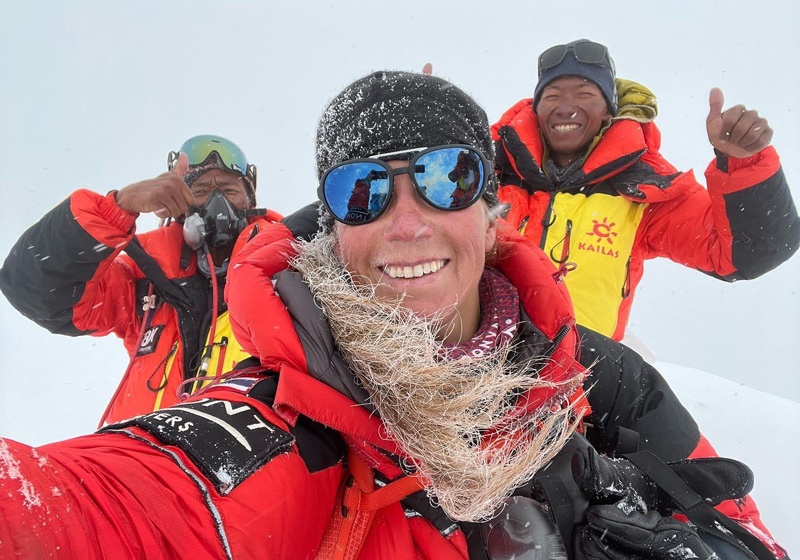
Kristin Harila is a former cross-country skier from Norway. She’s new to mountaineering but has already broken climbing records. In the spring of 2022, she summited six 8,000+ meter peaks in 29 days, breaking the speed record set three years ago by Nimral “Nims” Purja, a member of the Global Rescue Mountain Advisory Council. We caught up with Harila a few days before her trip to the Himalaya where she will attempt to summit the remaining three peaks by November 3rd to beat another record set by Nims.
Q: Why do you want to break climbing records?
Harila: The records are important to show that women are just as capable as men when it comes to mountaineering. For me personally, not so important.
Q: How do women compare to men when it comes to mountaineering 8,000+ meter mountains?
Harila: I think we are just as capable as men, no difference there. I am faster than most people and I am carrying just as much, if not more, than others. Women have a tendency to let men go first in the tracks, even though some of us are faster and have to queue higher up with the male group who can’t keep up with us. Some expedition companies treat their male customers with more respect than women.
Q: Who are the Sherpas you climb with and what is your relationship with them?
Harila: Pasdawa Sherpa and is uncle Dawa Ongju Sherpa. I climbed with Pasdawa last year when summiting Everest. They are like a family for me.

Q: What have you learned about yourself during your most recent climbs?
Harila: You can always do more, even after ten hours in deep snow, you still can go on for 15 hours.
Q: Have you ever decided to turn back before summiting? What was your decision-making process?
Harila: No, but sometimes, when we were looking for the ropes in total darkness, I began thinking that maybe it is a better idea to return to camp, resting and waiting for daylight to try again.
Q: Will you attempt to repeat your accomplishments without the use of supplemental oxygen?
Harila: No. Some sherpas could probably do all 14 peaks without, but I am never going to try.
Q: What are your next speed climbing goals?
Harila: I am considering to go Everest/Lhotse/Nuptse next year. It is supposed to be very difficult.
Q: What was the biggest challenge you faced on your recent summits?
Harila: Logistics are much harder in Pakistan compared to Nepal. In Nepal, it is much easier to get from basecamp to basecamp with cheaper and easier access to helicopters. We had to be careful because of falling of rocks, even small rock falls can be fatal. I was hit by a rock in my thigh near Nanga Parbat basecamp, crushing my phone, leaving me limping for several days.

Q: What was easier than you thought it would be?
Harila: K2 was easier than expected. Good tracks all the way, we went fast – if I knew it was going to be so easy, I could have tried without oxygen.
Q: Why are you a Global Rescue member? Does the medical emergency evacuation protection give you peace of mind?
Harila: I did choose Global Rescue even before I joined the team. It is the best membership for mountaineers. I know if I should need assistance, I am confident that Global Rescue will give all the help possible.
Q: What mistakes do mountaineers make when attempting to summit 8,000+ meter mountains?
Harila: Many underestimate the physical and mental challenges. It is surprisingly hard and demanding.
Q: Do you believe an authentic summit means returning to base camp without a helicopter evacuation?
Harila: Well, in principle, yes. But you should not hesitate to be evacuated by helicopter if you are in trouble after summiting. It is more important to save your life and limbs.
Q: Do you have a music playlist that inspires you on summit day?
Harila: Yes. Usually Norwegian music, like Halvdan Sivertsen and Sondre Justad. Quiet and easy listening pop music.
Q: Did you have mountaineers who inspired you when you were growing up?
Harila: No, I did not know about any mountaineers when I grew up, maybe Cecilie Skog when I was a little older, she is well-known in Norway.
Q: You’re an inspiration to kids, and especially girls, worldwide. What would you say to that little girl who’s with her parents struggling up the trail of a mountain that’s maybe a little bit too big for her?
Harila: Keep climbing, you will do it!

Categories:
Health & SafetyPlaces & PartnersTravelOctober 20, 2022
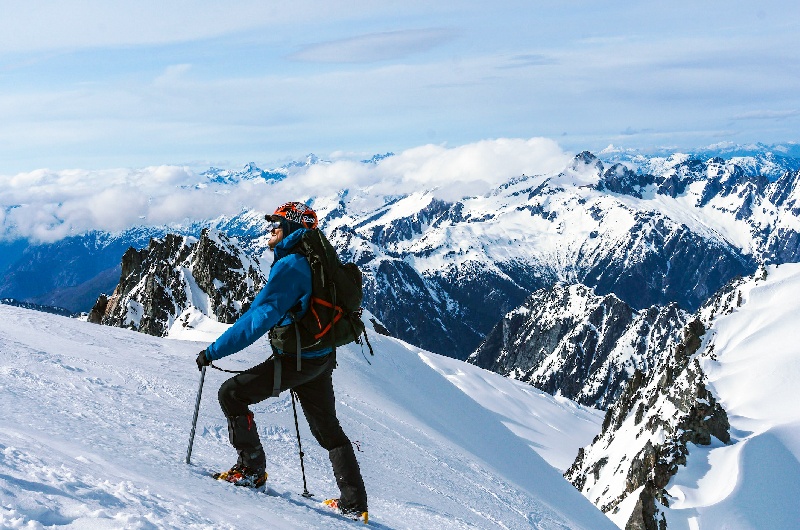
Dale Remsberg certainly comes with an impressive list of climbing creds. He’s the technical director for the American Mountain Guides Association (AMGA), a Global Rescue Safe Travel partner and a major trainer of mountain guides certifying hundreds of guides a year. He’s also an Internationally Licensed Mountain Guide (IFMGA) with extensive experience on major peaks across Canada, Mexico, Ecuador, Peru, Spain, Italy, France and Switzerland. He’s known for being an all-around accomplished climber with high-end skills covering all disciplines: sport, traditional, mixed, ice and, of course, alpine. When he’s not training young guides, he’s guiding clients 120 days a year around the world, including custom yearly trips to Switzerland to mountains like the Matterhorn and the Eiger.
If you’re an avid hiker who has toyed with the idea of getting started in mountaineering, there are few who can help you accomplish that first dream climb than Boulder, Colorado-based Remsberg. Here are his essential mountaineering basics to master before you attempt to claim your first major summit.
Set a Goal Mountain
The key here is not to be overly ambitious. And, if you do have dreams of one day conquering Everest, this certainly should not be the peak you pick for your first outing. It’s wise to gain experience on smaller, less-technical mountains first.
“It’s okay to set long-term goals, but you need to set your starting plans,” Remsberg suggested. “Don’t get too caught up in elevation. The goal is to start building endurance and stamina in the mountains.”
A few to consider? Lonely Planet suggests these 10 best peaks for beginner mountaineers.
Start Training

“You can have all the best gear in the world and a perfect summit plan, but if you get out there and simply get turned around by fatigue, it’s not going to be a sport you see through,” he said.
[Related Reading: 5 Mountaineering Training Tips for Beginners]
While there’s no one-size-fits-all fitness training plan, one of the most important training components is to consistently go for long hikes. “We’re talking up to 12 hours, eventually. The mountains you train on don’t have to be technical, they just need long enough routes,” Remsberg said. Being able to climb at a steady rate you can aerobically maintain without stopping, plus having enough energy and strength to descend safely, will be key in your mountaineering training plan.
Take a Mountaineering Course (or Several) or Hire a Guide
“While it can be time-consuming, it is extremely advantageous to go through a mountaineering school,” he said. A mountaineering course is the best way to gain new skills quickly, not to mention learn route planning, navigation, safe travel, rock climbing and logistics like weather analysis and mountain rescue, he said
Following are a handful of Global Rescue’s Safe Travel Partners who offer mountaineering courses:
Another option is hiring a guide and attempting a route together, which will give you on-the-spot feedback and crucial personal experience in the mountains. Look for a guide with AMGA certification, which is the highest level of credential attainable by a professional mountain guide. There are approximately 200 certified guides in the United States.
“The main benefit of getting a guide is reducing your risk as a beginner,” Remsberg said. You will need to train either way but working with a guide can make your training more efficient.
 also a way to put yourself on a fast track to conquering that first goal summit. Sure,, but if you want to get it done right and in a realistic time frame, contracting a guide is a good way to go.”
Join a Club/Find Mentors
“Find friends and mentors to take you under their wing, particularly for asking questions and gaining a lot of second-hand knowledge and perspectives,” he said. A quick Google search in your area should turn up some results.
Start Acquiring Essential Gear

While you can rent most of your gear (ice axe, crampons, climbing helmet), Remsberg says there are two essential pieces of gear worth personal investment.
- Emergency Communication – “You should always have the ability to stay in touch, especially in case of an emergency,” he said. Potential devices include SPOT X, Bivy Stick and Zoleo. In particular, Global Rescue recommends buying a device with two-way communication, so, if an emergency arises, rescuers can ask you specific questions to help them assemble the right resources to get to you.
- Custom-fitted Boots – “For me, footwear is essential,” Remsberg said. Mountaineering boots and hiking boots are different. Make certain you get boots appropriate to the terrain you intend to tackle. “But do your research to make sure you have the right kind of boot for the objective. And go to a reputable boot fitter – you need to ensure they’ll be comfortable and not result in you getting blistered up.”
Read, Read and Read More
The “mountain bible” first published in 1960, The Freedom of the Hills is a good place to start as it’s something of the standard textbook for mountaineering. It’s the doctrine Remsberg began with when he started teaching himself how to climb in high school. But with the advent of the internet, your mountaineering resources are limitless.
“Start following an organization like AMGA and check out their resources,” Remsberg suggested, pointing to their regularly updated series of online skill-building videos. Mountain Bureau LLC, another Global Rescue Safe Travel Partner, maintains a blog tackling everything from “How to Prepare Your Alpine-Mountaineering Tent for Optimal Performance” to “An Ice Climber’s Repair Kit.”
Then, of course, there’s the vast repository of YouTube. Ian Taylor Trekking, another Global Rescue Safe Travel Partner, shares training videos (i.e., Training for the Inca Trail to Machu Picchu), how to pack for expeditions to particular peaks (i.e., Packing for Aconcagua), and common gear questions (i.e., Do You Have the Correct Down Jacket?)
Become a Master Planner and Mapper

All mountain enthusiasts should know how to use a map and compass, so, in case they get lost, they can navigate back. Good route–finding and navigation should start before you even set foot on the mountain. Former Navy SEAL and manager of security operations for Global Rescue, Harding Bush, agrees. No matter how well you know the area or terrain, mistakes can be made. “GPS and smartphone navigation apps are a good idea, but batteries die and machines break. Know how to use a map and compass. Review the map and your location before setting out,” Bush said.
“You need to gather as much information as you can about the route through guidebooks to develop a picture of what the route looks like, so you can be as prepared as possible,” Remsberg said. Websites, like SummitPost.org, are also good places for descriptions of routes.
Get Global Rescue
Global Rescue is the leading provider of advisory, rescue and evacuation services to climbers and trekkers worldwide. When you head into the mountains, a Global Rescue membership is a must. We’re the only organization with deployed personnel and operating capability in key locations, including the Himalayas, Karakorum and Andes regions. From Everest to Aconcagua, we boast a long history of successful mountain, wilderness and backcountry rescues. Our Mountain Advisory Council and members — including Ed Viesturs, Kristin Harila, Yandy Nuñez Martinez and Satyarup Siddhanta — will attest to that.
Categories:
Health & SafetySecurity & IntelligenceTravelOctober 18, 2022
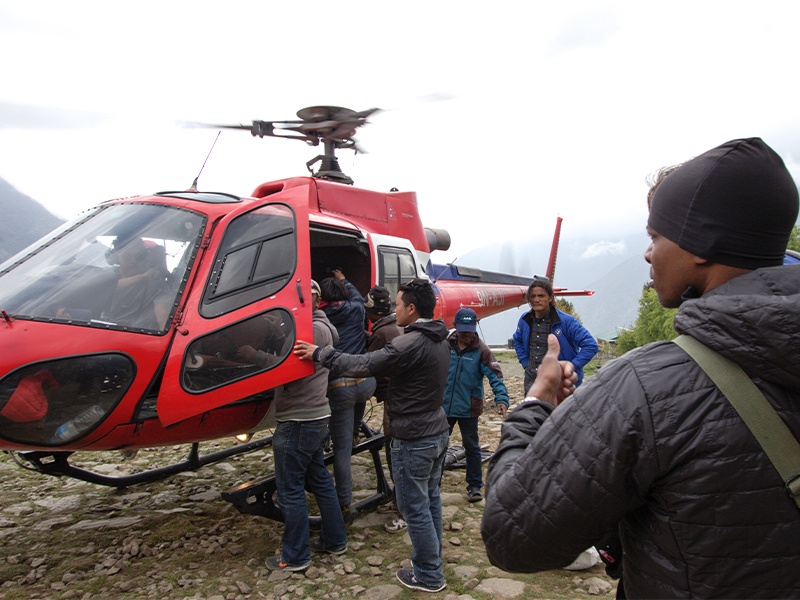
Several of Global Rescue’s blogs educate travelers and outdoor enthusiasts on the importance of being able to communicate at all times — even in the backcountry. A two-way communication device is essential if you have an emergency when you are off the grid.
But what do you say when you’re using the device to contact Global Rescue? What information needs to be shared with rescue operation professional in that phone call or e-mail?
ONE: Share Your Plans
Harding Bush, manager of operations at Global Rescue, stresses the importance of setting up a contingency plan before your trip.
“It’s something you do all the time: Hey, I’m going to the store. I’ll be back in an hour,” he said. “But if you’re going into a remote, austere or backcountry environment with a little more risk, this information has to be more specific.”

TWO: Provide Details
Share more than your destination with your emergency contact: friend, family member or colleague. Give specific details.
“Instead of ‘I’m going hiking in Enfield’, say, ‘I’m going hiking in the Enfield Forest on the north side of Route 12, south of Mascoma Lake.’ Include coordinates, if known, and distance and direction from known land features,” Bush said. “Write it down and hand it to them. If you need to be rescued, that information is going to make the haystack smaller and the needle bigger.”
If you are traveling with Joe, Bob and Phil, also write down their full names and their contact information. Driving? Provide a description of the vehicles and where you plan to park.

THREE: Be Specific
You’re also going to provide a departure time and an estimated return time. “Most folks think that’s enough, but you should add what the person who has the plan should do if they don’t hear from you,” Bush said.
This includes setting up a check-in time with your emergency contact.
“Tell them: if you don’t hear from me, call me at this number. If I don’t answer call Joe, Bob and Phil,” Bush said. “No answer? Call the Enfield Forest park rangers at this number and let them know all the information I’ve given you in the contingency plan.”
And reminding your emergency contact to pick up the phone — even if they don’t recognize the number — during the time window of your trip.
“You could lose your phone or it could break, and you may be calling from someone else’s phone,” Bush said.
Step one to three should sound familiar: it’s called GOTWA, a brief outlining your essential travel details: going where (G), others going with you (O), time span you will be gone (T), what to do if you do not return in that timely manner (W) and final actions to take if you do not return (A).
FOUR: Info for Rescuers
The more details rescue operation professionals have related to your situation, the better they can facilitate the most appropriate rescue assets for you. Without these details, your rescue can take much longer or be more complicated, or both.
“You are injured and you have to call Global Rescue,” Bush said. “What are the critical pieces of information you need?”
Name. Don’t worry about your membership number or phone number. Global Rescue needs your full name and we’ll confirm your membership by asking for your birthday.
Location and description. “The location should, ideally, be a grid coordinate, latitude or longitude. Most times you can find that on your cell phone or watch,” Bush said. “If you can’t get it, you want to provide a description of your location. I’m in the Enfield State Forest. I’m four miles north of the Roaring Brook Trailhead.”
Situation. Tell the rescue professionals what happened: I broke my leg and I can’t move.
Requirements. Tell rescue professionals what you need: I can’t walk. I need someone to come and get me.
Intentions. Share your plans: We have plenty of food and water; we can stay the night, if necessary. Or I broke my leg but my friend is going to build a litter and drag me down the hill. “They may tell you, no you’re not. You’re going to stay right there and we’ll come get you,” Bush said.

“This information — name, location, what happened, what you need and what you plan to do — makes your rescue more efficient,” Bush said.
He notes sharing the on-the-ground weather and terrain conditions helps tremendously.
“Our rescue operations team has access to global weather monitoring information and topography maps but gleaning the additional perspective from the individual on the ground is abundantly useful,” Bush said.
Bush also recommends bringing a notebook.
“It’s one of the most important devices you can take with you into the field. Your phone might be at 10% and you don’t have much time to talk. Or it’s dark, you’re scared and nervous,” Bush said. “Write it down and rehearse it before you (or your fellow traveler) get on the phone or radio.”
This notebook will hold all your important phone numbers. “We keep all our contacts in our phones now, so make sure you have your important numbers written down. It’s one of those little inconveniences, combined with other factors, that can creep in and cause a catastrophe,” Bush said.
Bring Global Rescue With You
Besides a two-way communication device, what is also essential for off-the-grid travel? A Global Rescue membership. Not only can we pluck you from whatever precarious situation you find yourself unable to get out of on your own — and do so fast — but because, without us, a medical evacuation for illness or injury could cost you thousands of dollars. Under our membership, you never see a bill.
Categories:
Press ReleaseOctober 17, 2022
The world’s leading travel medical, security and crisis management firm nabs two gold and two silver travel risk awards.
Lebanon, NH – October 17, 2022 – Travel Weekly, the most influential B2B travel industry news resource, awarded Global Rescue, the world’s leading provider of medical, security, evacuation and travel risk management services, four 2022 Magellan Awards for its travel services.
“The 2022 Magellan Awards received entries from top travel organizations and professionals worldwide and the quality of the work was outstanding. Being selected a Magellan Award Winner is a tremendous achievement and proves you represent a high standard of excellence within the travel industry,” said Kara Cleary, manager of Travel Weekly Magellan Awards.
- The Global Rescue GRIDSM Medical and Security Mobile App won Magellan Gold. The GRIDSM mobile app places critical medical, security and other essential travel intelligence at travelers’ fingertips. “In recent months the Global Rescue GRIDSM system was used to coordinate evacuations of travelers from war-torn Ukraine, help students and faculty get out of Russia, and provide security advisory for foreign news correspondents working for several major U.S. news outlets,” said Michael Holmes, marketing vice president at Global Rescue.
- Global Rescue won a gold award for its Travel Intelligence Center, a traveler-friendly online resource curated by the Global Rescue Intelligence Team. “Our intelligence team continually monitors global events, tracks worldwide travel risk, health and safety information, all day, every day and shares the information with everyone,” Holmes said.
- A silver Magellan was awarded to Global Rescue for its “Better than Travel Insurance” online paid media campaign highlighting the distinction between traditional travel insurance and medical evacuation travel protection. “The pandemic raised awareness of the limitations of traditional travel insurance and the value of a medical and security evacuation safety net,” notes Dan Richards, CEO of Global Rescue.
- Global Rescue won a silver award for its Social Media Initiative to increase travel-oriented followers and promote deeper engagement across the major social media platforms.
“It’s gratifying to be recognized for so many Global Rescue programs that support and encourage people to travel boldly and see all that the world has to offer with the peace of mind that comes with knowing we will rescue you from the point of illness or injury anytime, anywhere,” Holmes said.
About the Magellan Awards
From design to marketing to services, the Travel Weekly Magellan Awards honors the best in travel and salutes the outstanding travel professionals behind it all. Travel Weekly is the most influential provider of news, research, opinion and analysis to the North American travel trade marketplace.
About Global Rescue
Global Rescue is the world’s leading provider of medical, security, evacuation and travel risk management services to enterprises, governments and individuals. Founded in 2004, Global Rescue has exclusive relationships with the Johns Hopkins Emergency Medicine Division of Special Operations and Elite Medical Group. Global Rescue provides best-in-class services that identify, monitor and respond to client medical and security crises. Global Rescue has provided medical and security support to its clients, including Fortune 500 companies, governments and academic institutions, during every globally significant crisis of the last two decades. For more information, visit www.globalrescue.com.
Categories:
Business TravelPlaces & PartnersTravelOctober 13, 2022
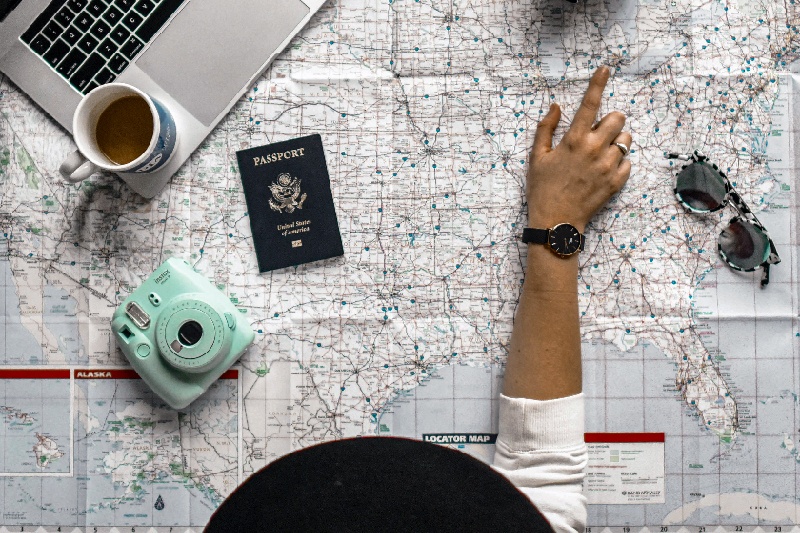
The news headlines make a business trip or a vacation sound like an impossible undertaking: “Another Pain Point in a Summer of Travel Woes: Getting a Passport”, “The Worst Flight Delays at the World’s Busiest Airports: See the List”, and “CDC adds 3 places to its ‘high’ risk list for Covid-19.”
Really, it’s not as bad as it sounds out there — but pre-travel planning will pay off in spades.
“Know the risks and plan ahead,” said Adam Bardwell, medical operations supervisor at Global Rescue.
Global Rescue travel experts and Safe Travel Partners share six travel planning tips to ensure the best possible travel scenario today.
ONE: Evaluate Your Health

According to Mass General Brigham, 30 million travelers visited limited-resource countries overseas, but only 25 to 30% seek medical advice before they go.
Global Rescue recommends a pre-travel health consultation with a doctor with global travel experience, like Global Rescue Safe Travel Partner Passport Health, a firm specializing in pre-travel health screening. Bring your itinerary, medical records of any pre-existing conditions and a medications list. Discuss any health concerns you may have and ask for ways to decrease the risk.
“Certain health conditions and medications can increase your health risks during travel and these risks will vary by destination, activities and mode of travel,” said Jeff Weinstein, medical operations supervisor at Global Rescue.
[Related Reading: How To Get the Most Out of a Travel Health Consultation]
TWO: Assess the Destination’s Medical Care

According to the Merck Manuals, when it comes to foreign travel, about 1 in 30 people traveling abroad require emergency care.
What will your experience be as a traveler, injured or ill, seeking care at a foreign hospital? It’s hard to predict.
“Hospital layouts differ. The medication might not look the same. Some hospitals use IVs with glass bottles instead of plastic bags. Triage may be done differently than it is in the United States,” Weinstein said. Global Rescue provides destination reports covering everything from currency and common scams to travel health and personal security advice 215 countries and principalities worldwide.
In today’s travel landscape, you may not want to travel to any destination where the level of medical care isn’t up to your personal standards. When Global Rescue member Dolly Webster tested positive for COVID while in fly fishing in the Bahamas, the small clinic on Great Inagua Island was treating patients outside and sharing a small oxygen cylinder between patients. It was incapable of providing the medical care Webster needed and Global Rescue provided transport to a facility with a higher level of care.
“Every hour counts. I was desperate to get off that island and get early treatment,” Webster said.
THREE: Research COVID Travel Requirements

States, cities and counties in the United States have largely eased or ended mandates, but the CDC recommends wearing a mask if there is a high number of COVID cases in your community and always wearing a mask during travel.
Internationally, countries have their own rules and regulations. For example, the United States and the United Kingdom no longer have mask mandates on airlines — but Asia does and Australia is somewhere in between, allowing travelers to depart without a mask but return wearing one.
“It has been disappointing to see the lack of fiduciary responsibility across the travel industry as the world opens up for travel. It is almost as if people are pretending COVID didn’t happen and doesn’t exist,” said Kimberly Franke, director of Kanna Travel Services, a full-service travel agency in Montana and a Global Rescue Safe Travel partner. “This is a real disservice to our customers and the larger industry. We need to more realistic about the realities of traveling post COVID.”
Most travelers agree with mask mandates, locally and abroad. When masks were no longer required on flights, brawls broke out over COVID safety concerns. According to a Pew Research Center survey, 57% of Americans say masks should be required on airplanes and public transportation. Globally, two in five (40%) consumers say they want to see staff and employees in airports, airlines and hotels wear masks.
“While travelling, you should take every precaution to keep you and your family safe. Follow CDC guidelines and your own comfort level, staying current on the protocols and procedures in the country/territory you are traveling,” said Carlene Merola, senior specialist in the medical operations department at Global Rescue. “Be prepared for the potential of being quarantined for an extended period and have enough of your medications on hand for such an emergency.” Travelers can check the Global Rescue’s COVID-19 services and resources here.
Even though you may not ever wear it, keep a mask handy in your carry on, wallet or purse.
[Related Reading: How to Manage a Medical Emergency Abroad]
FOUR: Expect Visa Wait Times

A visa defines the purpose of your trip — tourist, student or work — and can often dictate the amount of time you may remain in a certain country. A single entry visa may be valid for up to 90 days or multiple entries and exits over an extended period of time. Some countries require a transit visa to land and change planes.
A formidable barrier, according to Skift, has emerged: exploding visa appointment wait times for visitor visa interviews because of a labor shortage and some still-unopened embassies.
Visa processing times used to vary from a few hours to several weeks. As of May 2022, one-third (33%) of consulates in the top 10 visa-requiring markets face wait times exceeding one year.
If you travel frequently, consider getting a duplicate passport, if possible.
“Some countries require that you send your passport in as part of the visa process. This will allow a person to continue their international travel plans without delays or having to wait for their passport,” Bardwell.
FIVE: Plan for Airline Disruptions

Airline disruptions — which includes canceled flights, delayed flights, oversold flights, increased tarmac time and mishandled baggage — might be the norm for a while.
According to AFAR, 88,161 U.S. domestic flights were canceled between January and May 2022, according to the Bureau of Transportation Statistics data. The bulk of airline cancellations came from U.S. legacy carriers — American, Delta and United — which also fly the highest number of passengers in the United States.
New survey data reveals roughly two in five (39%) recent air travelers in the U.S. experienced a delay or cancellation this year. That includes more than a third (35%) of air travelers with a recent flight was delayed and 4% who said their flight was outright cancelled. Delays and cancellations are also happening around the world; FlightAware provides daily delay and cancellation information online for origin and destination airports.
“We have heard stories of families taking a four-day break and it ending up being six days because they were delayed with flights on the outbound and return flights,” Franke said. “In general, most airlines and airports are trying to catch up from laying off staff during COVID, and are struggling to meet the demand of travel. Security lines and airport amenities are also struggling to keep up.”
Franke provides an example.
“I recently traveled internationally and got stuck in the airport due to a delay. Due to the facilities at the airport being closed because of COVID, I wasn’t able to purchase any food,” she said. “It was surprising the amount of restaurants that were either closed permanently, or had shorter operating hours. Thankfully I was traveling with snacks so I was able to eat something.”
SIX: Always Have Travel Protection

You should hope for the best travel scenario — but prepare for the worst case by purchasing a travel protection membership and travel insurance.
The two services fulfill different travel needs. Travel insurance is designed to provide financial reimbursement for trip interruption and medical insurance coverage. A travel protection membership, like Global Rescue, provides emergency field rescue, medical evacuation and transport, and medical advisory services at no additional cost.
When combined together, you can be confident knowing you’re traveling with the ultimate safety net: emergency field rescue from the point of illness or injury, evacuation services, travel advisory and financial protection. That’s why Global Rescue works with leading insurance providers to connect you to a travel insurance policy that includes Cancel for Any Reason (CFAR) benefits, based on your home location.
Categories:
Health & SafetyTravelOctober 11, 2022
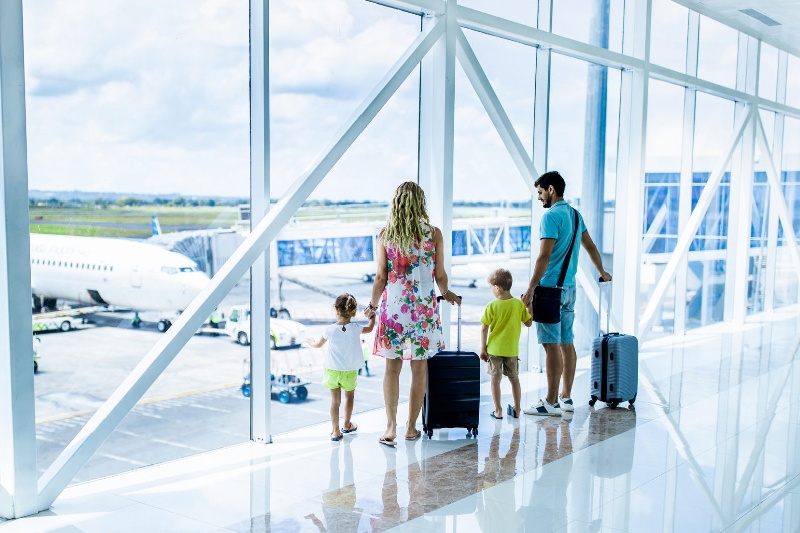
If you are a parent, traveling with kids for your first time can be daunting. The meltdowns, the sleepless nights. Will it be worth it? Where do you begin?
We’re here to tell you that yes, it will be worth it. We’ve been helping families have epic trips for nearly 20 years. And we’ve done quite a few of them ourselves.
Where to begin? Right here, with some of our best tips for traveling with kids.
Let’s start with your destination.
Choosing a location
When choosing a location, Rainer Jenss, founder of the Family Travel Association, has two main pieces of advice:
- Involve your children: if you get them involved with planning, they are going to be more engaged and excited from the start. “If you make the choices for them, they are going to be less engaged,” Jenss said.
- Ask yourselves what you want to do, not where you want to go. This opens you up to the many destinations around the world where you can do that particular thing. “When you become a parent, the travel opportunities don’t have to shrink,” he said. “They can broaden. It’s a matter of exploring the options as you research, finding places based on what you want to do.”
Of course, traveling with kids adds a dimension of responsibility for parents, and everyone’s risk tolerance should be taken into account.
“Any time you’re traveling, especially with family, you must fully understand the potential risks and hazards of the location where you are going—both the medical and security risks,” said Jeff Weinstein, operations supervisor at Global Rescue.
Weinstein recommends researching the following, for starters:
- Is there a hospital at your destination? Would you feel comfortable taking your family there?
- What are the security risks of your destination? Are petty crimes like pick-pocketing prevalent? Could there be a risk of something more serious like political unrest?
Are my kids old enough to travel?
According to Rainer Jenss, the sweet spot is 6 to 12. “This is when they are still really curious. They may not remember everything, but it will stoke that childhood wonder that they have in spades at that age.”
Getting there
Your destination is decided. How will you travel there?
If you are within driving distance, ask yourself if driving is still something you want to do with children. It might save money, but a long drive could mean showing up to your vacation tired and irritable. Another travel mode might be worth the extra money.
If you’re flying, especially for long distances, consider a layover for working out energy in young children around the airport, rather than up and down the aisle of the plane.
Finally, purchase TSA PreCheck or another trusted traveler program (i.e. Global Entry, SENTRI, NEXUS, or FAST) designed to facilitate the entry of pre-approved travelers. You won’t have to wait as long, and you won’t have to take off their shoes either—helpful with small kids. If you’re traveling internationally, purchasing Global Entry will speed up the process of entering the United States (and it includes domestic TSA PreCheck).
What to pack

Deciding what to pack requires more than just looking at the weather.
First, get your documents in order. This can take a bit of research and time, so start gathering these as soon as possible.
- Make sure passports are up-to-date and current for both departure and return; it can take a while to secure new ones if yours are expired are close to expiration.
- Make copies of all passports to keep in your luggage and have a picture of them on your phone in case something happens to your passport.
- Make sure your vaccine card is up to date. Some countries require vaccines for entry. Check the CDC’s Traveler’s Health website to see what is required.
- If you are traveling alone with minor children, or with children who are not your own, Family Travel Forum advises carrying some specific verification documents:
- A minor consent to travel form, signed by the child’s other parent.
- A medical treatment authorization letter will allow the adult to be responsible for the child’s care if an emergency happens.
- Birth certificate to verify a child’s relationship to you.
- Copies of your travel insurance.
Now that your documents are in order, let’s talk about clothing, medicine and toys. Here are some things to consider when packing for a family trip.
- Give your children their own rolling luggage bag (ages 5 and up).
- Make peace with over packing. With kids, being prepared is better than packing light. Think through the potential for accidents (you might need extra clothes) or scrapes (you might need a first-aid kit).
- Research the weather and pack accordingly.
- Consider the modesty standards of your destination. In some countries or certain historic sites, clothes below the knees and shirts with sleeves are required.
- If you are bringing prescription medicine on your trip, research what the laws are before you enter the country, as some medications might be illegal.
- Pack an activity bag that includes books, coloring supplies and lightweight games, to help occupy kids during unexpected downtime. But don’t be afraid of boredom; it can inspire some of the best memories of the trip.
How to Travel Safely
These tips can help mitigate the risks all parents fear, like losing a child or getting sick or injured.
- Get smart about getting lost: Global Rescue experts share five tips to help prevent and respond to a lost child, including establishing a rallying point, tasking an adult to keep an eye on the kids, putting your information on your children, knowing what your children are wearing and staying calm if you do get separated.
- Be aware of your body language. “Don’t look like a target,” Weinstein said. “If you are distracted, on your phone, or walking with your head down, you look vulnerable. Instead, scan your environment, be aware of what is around you, and walk with your shoulders up.”
- Research illnesses before you go. “Understand water and insect-borne illnesses before you go and bring the appropriate prophylaxis or get the vaccines,” Weinstein said. “Consult a travel doctor before you leave. Global Rescue can conduct your travel consultation via telemedicine from the safety and comfort of your own home.”
- Invest in membership services. Global Rescue offers family memberships, which include both parents and up to six kids under the age of 26. Every family member will have access to our security, medical and evacuation services, which can go a long way from alleviating stress in situations from a lost passport to an unexpected illness or injury.
“Having a resource like Global Rescue is so important because people usually don’t have the level of expertise to get the medical care their family needs or to plan the logistics for a potential evacuation,” Weinstein said. “A service like Global Rescue should be part of your mitigation strategy in case something happens.”
You have your destination, your itinerary, your paperwork ready and your bags packed. You and your children know how to travel safely. You’ve got this. Go have fun, and make those forever memories.
Categories:
Business TravelPlaces & PartnersTravelOctober 6, 2022

After more than two years of cancellations, international study programs are picking up again—almost everywhere.
“College study abroad programs that existed in the past are being re-established, and students are very excited to go abroad again,” said John Morris, director of account management at Global Rescue. “People are champing at the bit to get back.”
It makes sense, after so many dreams and educational opportunities were put on hold since the pandemic started, students are looking to return to the best international studies programs.
According to The Open Doors Report on International Education Exchange, there was a 53% decrease in students studying abroad from the United States in 2020. 867 institutions reported that more than 55,000 U.S. students who studied abroad in 2019/2020 returned home early due to the pandemic. Students coming to the U.S. to study were also impacted: 99 percent of Intensive English Programs said that COVID-19 affected their program in 2020.
But now things are bouncing back for colleges with international study programs. In the U.S., there has been an 83 percent uptick in study abroad numbers compared to last year, according to a study released by the Institute for International Education (IIE). For students coming into the U.S. for education, the report reveals that 65 percent of institutions have seen an increase in applications from international students.
Europe’s Erasmus+ program has seen its highest numbers of enrollment ever.
Who’s left out? Russia and China—two major hosts of study abroad programs in the past.
Russia and China fall behind

“Russia study abroad programs have closed indefinitely due to the war with Ukraine,” Morris said.
In response, some universities are finding Russian language learning opportunities in nearby countries. Middlebury College recently launched its Russian language program in Kazakhstan, which is accepting applications for spring 2023.
“This approach can also be difficult as tensions related to the war escalate across the surrounding region,” Morris said.
In China, things are slowly—very slowly—opening back up. Before the pandemic nearly half a million foreign students were studying in China, 60 percent of them from Asian countries, according to China’s Ministry of Education. Since the pandemic hit, almost all programs have come to a halt, except for NYU Shanghai, students from South Korea, Tianjin Juilliard, some Schwarzman Scholarship students and 30 scholarship recipients from Nicaragua, according to an article in Study International.
NYU Shanghai experienced a flood of applicants to its program, according to The PIE News, with the overall applicants increasing by 12 percent and the number of applicants outside the U.S. increasing by 53 percent—thousands of people competing to get across China’s border as one of 500 students with the program.
This narrow group of programs has caused much consternation for those desiring to continue their education in China. According to Quartz, medical students who were studying in China or who planned to are now uncertain where they will complete their degrees, as China’s programs were relatively affordable.
Yet, China has recently indicated that it will allow more students into its borders to study. Richard Coward, founder and CEO of higher education consultancy China Admissions, urged caution in a recent Inside Higher Ed article.
“‘It’s a very positive sign, but we still need to be cautious,’ with students needing permission to return from their university and embassy, and mobility levels as yet ‘far from pre-COVID levels.’”
In the meantime, as in Russia, students are looking to other countries for their education. For example, Taiwan has become a popular destination for those who want to learn Mandarin.
COVID-19 Restrictions Remain

For those studying abroad, things will look a little different as the world determines how to operate now that COVID-19 is endemic. There may be vaccine, testing or quarantine requirements. Nearly 81 percent of institutions surveyed by IIE shared that they will require vaccination for participation in the program, a large increase from last year when most institutions were considering a vaccine mandate but hadn’t put it in place. Whether or not students will be required to get the vaccine or participate in other restrictions depends on the policies of the sending university, study abroad partners or the country receiving the students.
If you plan to study abroad, consider Global Rescue’s discounted student membership, which starts at $275/year. If you’re a parent sending your child to study abroad, why not buy it as a parting gift?
They will have access to updates on restrictions, quarantines and hotspots; experts who can provide immediate information regarding appropriate nearby health care facilities all over the world, and emergency medical evacuation services to a hospital of choice.
You will have peace of mind.