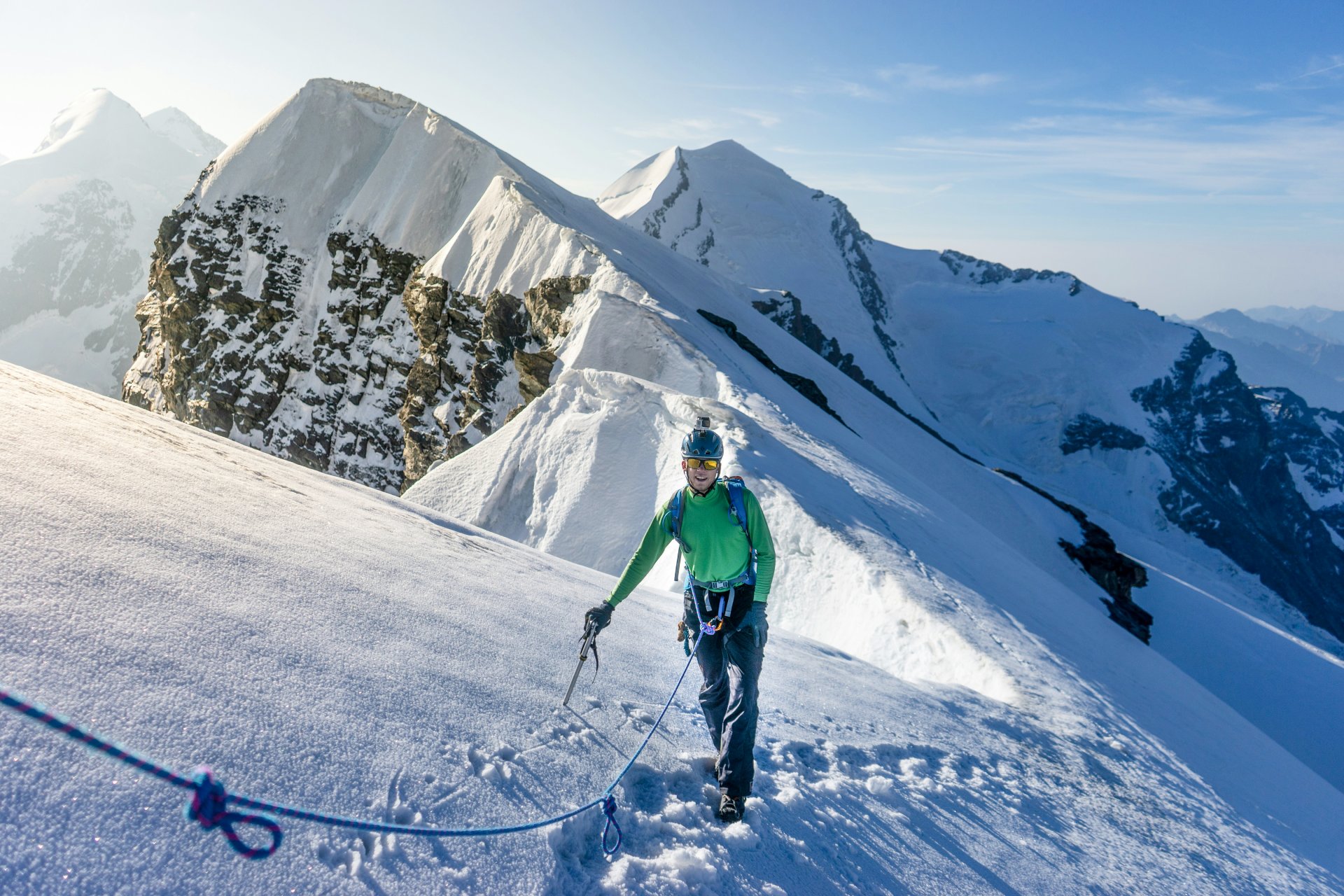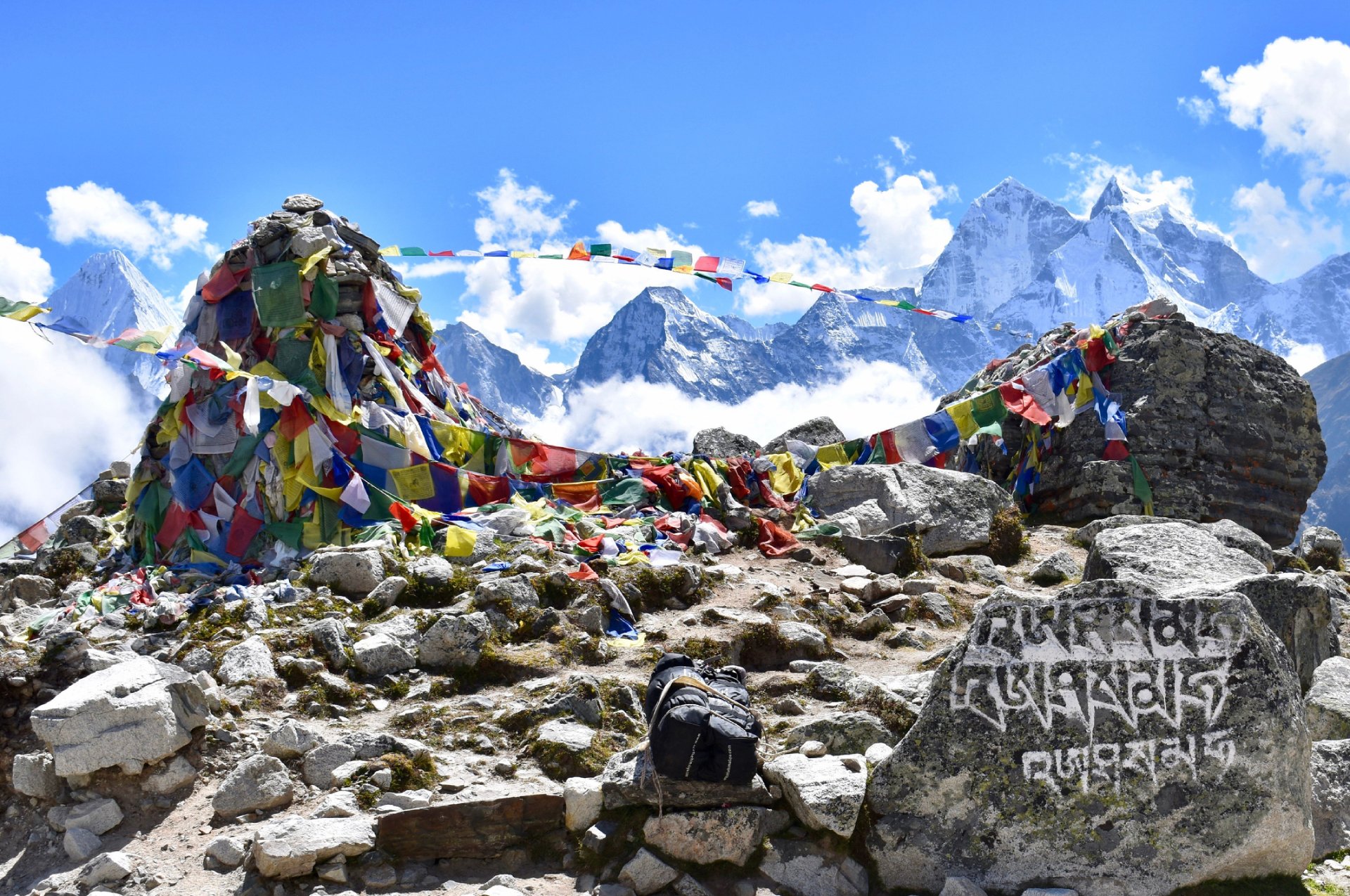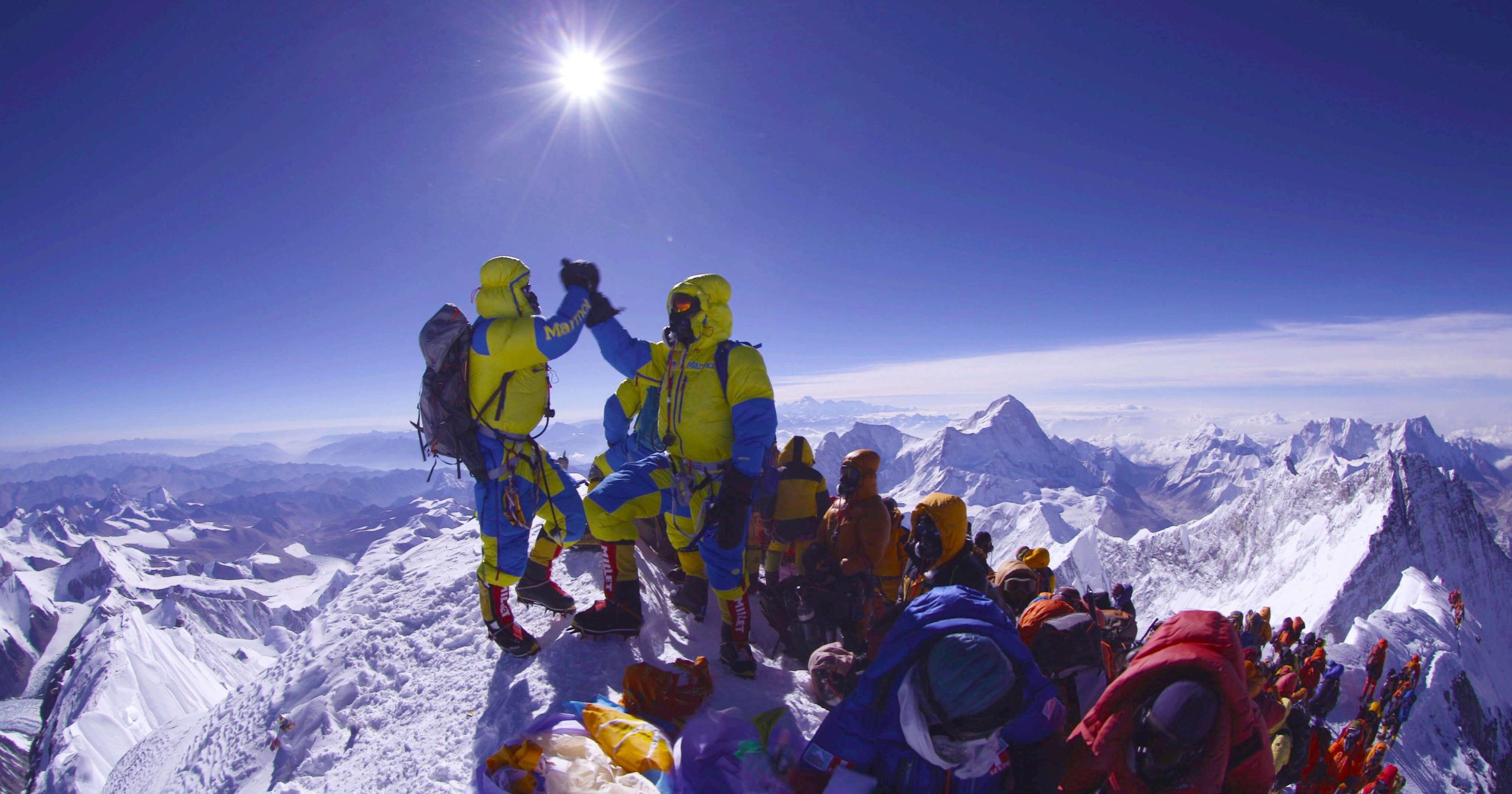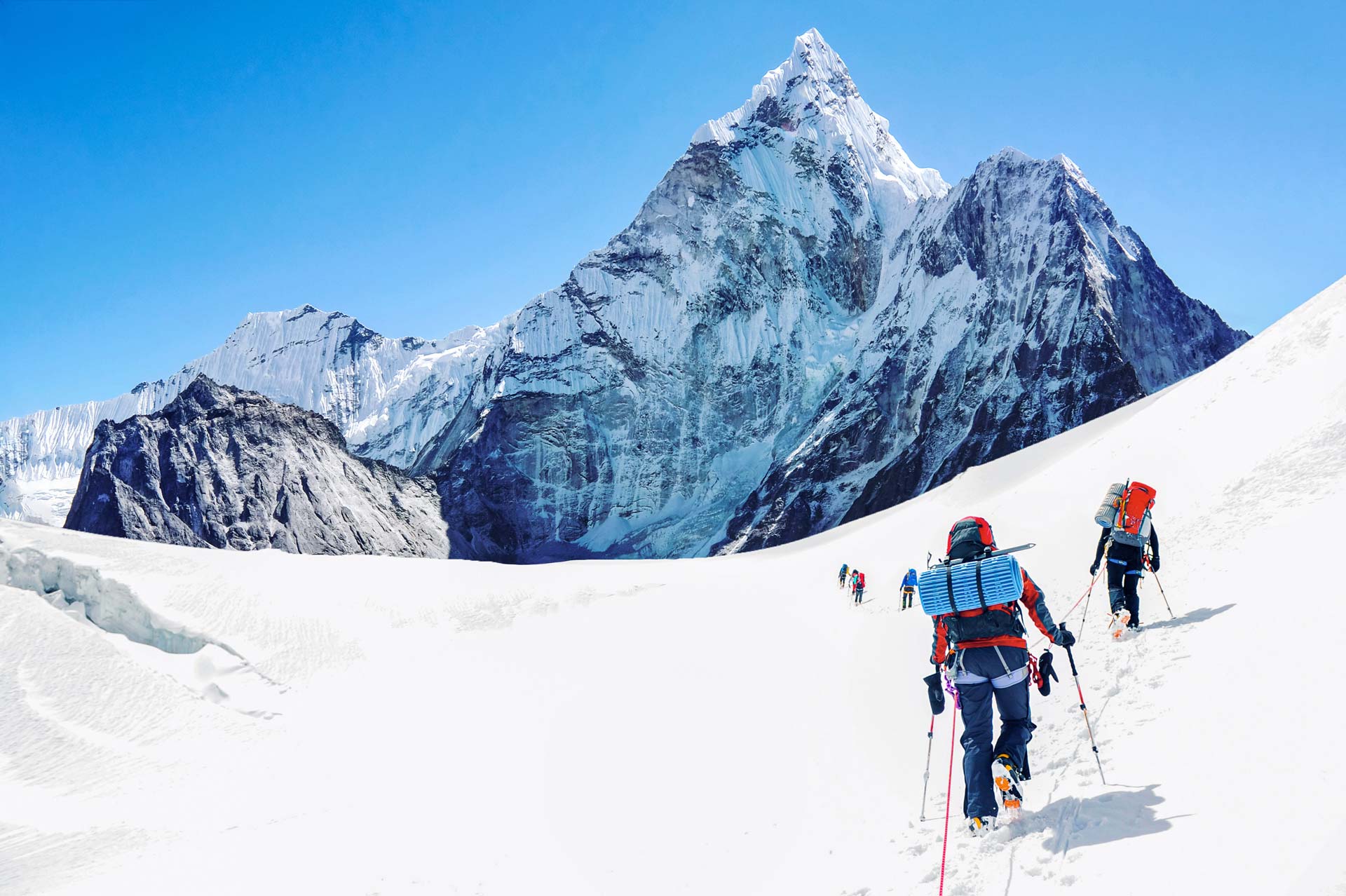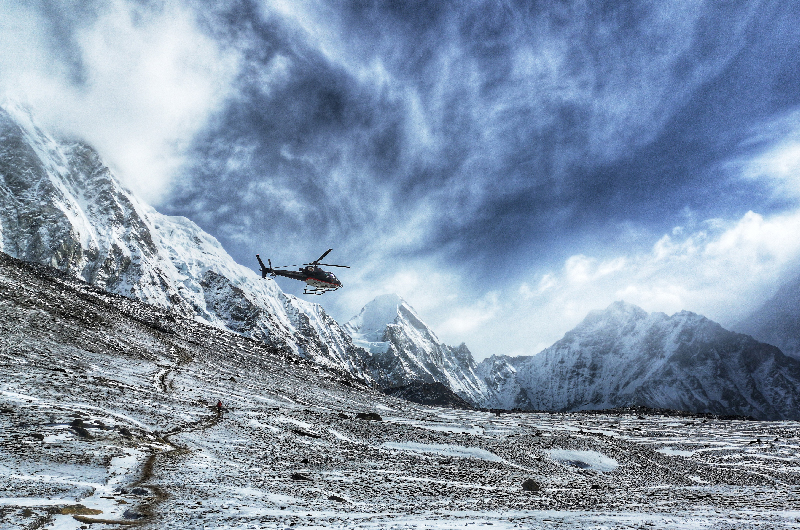
Lebanon, N.H. – March 14, 2023 – Global Rescue, the world’s leading provider of medical, security, evacuation and travel risk management services, will deploy a team of specialists to Nepal to perform rescue operations during the Mount Everest 2023 spring climbing season where a record number of rescues are expected.
“During the two-month 2023 Mount Everest spring climbing season, there will usually be several rescue operations performed each day, keeping the deployment team busy from before dawn until nearly midnight. The busiest time is the two-week Mount Everest summit window when the medical and rescue operations team performs up to 25 rescues a day,” said Dan Stretch, a Global Rescue operations manager based in Nepal during the Mount Everest climbing season who has performed more than 500 evacuations and crisis response operations in the Himalayas.
Recovering climbers and trekkers is much more than a high-altitude mountain chopper rescue. Performing a rescue includes helicopter and ambulance transports, hospital admissions and looking after individuals admitted to a hospital for care. “The deployment team members are located in multiple areas to support individuals throughout their rescue, transport, recovery and safe return home,” Stretch said.
Ignoring symptoms of altitude sickness during climbs is one of the major avoidable blunders mountaineers and trekkers make during this time, according to Stretch. “Ascending higher with symptoms of altitude sickness in the hopes of getting better is unwise. Generally, you won’t get better. Everyone needs to heed the warning signs. It can mean the difference between a successful summit and cutting your expedition in half and potentially ending up hospitalized,” he said.
Avalanches are a dangerous reality in the snowy high mountains, and so is the brutal weather. Preparing for them is a key element of the deployment team’s activity. “Avalanche risk is a factor when we determine the safety of ground rescue. We monitor the weather and receive daily reports from our team. There are times when adverse weather can prevent or delay helicopter rescue. At these times we rely on ground rescue or have members shelter in place until the weather clears,” he said.
Last year, there were a record-breaking number of climbing permits issued, and Global Rescue conducted a record-breaking number of rescue operations. The 2023 spring climbing season will set new records.
“There will be more people in the region adventuring, partly from the COVID backlog but also due to increased demand to go trekking and climbing,” said legendary mountaineer and a member of the Global Rescue Mountain Advisory Council Ed Viesturs.
###
Contact Bill McIntyre at bmcintyre@globalrescue.com or 202.560.1195 (phone/text) for more information.
About Global Rescue
Global Rescue is the world’s leading provider of medical, security, evacuation and travel risk management services to enterprises, governments and individuals. Founded in 2004, Global Rescue has exclusive relationships with the Johns Hopkins Emergency Medicine Division of Special Operations and Elite Medical Group. Global Rescue provides best-in-class services that identify, monitor and respond to client medical and security crises. Global Rescue has provided medical and security support to its clients, including Fortune 500 companies, governments and academic institutions, during every globally significant crisis of the last two decades. For more information, visit www.globalrescue.com.
March 14, 2023
Steeped in history, culture, and religion, Israel is a country of stark contrast and complexity. It’s a land where faiths collide and diverge, where ancient ruins stand next to modern skyscrapers, and where the spiritual is tangible. Nowhere is this more apparent than in Jerusalem. But is Jerusalem safe?
One of the oldest and holiest cities in the world, Jerusalem attracts roughly 1.5 million Jews, Muslims, and Christians combined each spring, whose pilgrimage during the Passover, Ramadan, and Easter holidays, accounts for a 55% increase in the city’s year-round population of 970,000 residents.
If you plan to join the hundreds of thousands in Jerusalem who will flock to the Western Wall, the Church of the Holy Sepulchre, the Dome of the Rock, Temple Mount, or elsewhere throughout the city during these religious holidays this spring, you may ask yourself: Is Jerusalem safe? As you get ready for the trip of a lifetime be sure to know the risks you need to consider before going. Here are five:
- Crowds
By far, the biggest risk of traveling to Jerusalem during the spring holidays is the sheer number of people. There’s no avoiding them; they’re just part of the deal. Avoid them when you can, embrace them when you can’t, with caution.
“Like any other place teeming with people, crowds can make it challenging to move around the city,” says Kent Webber, Senior Manager, Intelligence Products & Services at Global Rescue. “They also increase the risk of pickpocketing, car theft, identity theft, and other crimes.”
[Related Reading: Tips to Keep Kids Safe In Crowds]
To mitigate the risk, start with the simplest things, like visiting popular attractions during off-peak hours.

To thwart would-be pickpockets, Harding Bush, Senior Manager of Security Operations at Global Rescue, advises travelers to wear clothing with zippered pockets or pockets on the inside, like a vest or a sport coat, that make it difficult to snatch a wallet. Also, leave that expensive watch back home. To foil identity thieves, travelers should hide things with their names, phone numbers and addresses on them. No exposed luggage tags.
Basically, “try not to be the ‘easiest’ target,” says Bush. “Criminals do surveillance. Travelers should pay attention, and not let down their guard.”
- Security Risks
You’ll be exploring one of the most deeply divided and contested areas in the world, with heightened religious tensions and crowds during the spring holidays. Understand that there are risks of violent incidents and terrorist attacks. “Violence can occur in Israel, the West Bank and Gaza without warning,” according to the U.S. Department of State. Escalating violence in Jerusalem and the West Bank has been reported in recent weeks.
So, what do you do? Visitors should stay informed about current situations in several ways. First, keep that cell phone charged and frequently check your “My Global Rescue App” for up-to-date information on developing situations in your area. Keep an ear tuned to local media as well. You can download the My Global Rescue App here for Apple and here for Google Play.
Travelers should also register with their country’s embassy and sign up for alerts and advisories. American citizens in Israel, for example, should join the Smart Traveler Enrollment Program (STEP) to receive emails and text messages from the United States Embassy in the event of emergencies in the area.
And as alarming as it seems, it’s a good idea to familiarize yourself with the various warning sirens Israel sounds and where to seek shelter immediately in the event of mortar or rocket fire.
- Road Closures and Traffic
Pack in an extra 1.5 million tourists and pilgrims to an already dense population center and you’re going to have some serious traffic. Expect delays and, perhaps, the inability to access certain areas.
Hiring a local professional driver will help streamline your adventures and get you around some of the congestion. “Driving a vehicle in a foreign country is a high-risk activity. Always hire a local driver who knows the area. Being unaware or confused by directions can bring you to a vulnerable location or make you an obvious target for attack,” said Bush.
- Availability of Services
Just because you’re there, doesn’t mean the locals need to be, too. Stores and markets may not be fully operational, or open at all, during the holidays, which means you need to have an alternate plan for food, water and transportation should you need it while out and about.
Medical services in Israel are modern and generally of high quality, but treatment can be expensive. Some hospitals may require payment up front or in cash, however, most facilities will accept credit cards. Ask the staff at the hotel for a list and a map of these services and make sure they’re open. Local knowledge is the key here.
- Religious and Cultural Sensitivities
You can find parts of the city that resemble New Orleans nightlife, but Jerusalem during the spring holidays is not Mardi Gras. Remember, the influx of travelers in the city during this period are there either on religious pilgrimage or religious tourism. This means specific customs and practices abound.
Visitors should be respectful of these traditions and avoid behavior that may be seen as discourteous or, worse, profane. If you expect to party hardy, consider going another time of the year.
COVID-19 Requirements
As of the time of this writing, Israel still enforces strict entry requirements for all visitors to help prevent the spread of COVID-19. Travelers must:
- Be fully vaccinated with a vaccine recognized by the Israeli Health Ministry (Pfizer, Moderna, AstraZeneca, and Johnson & Johnson).
- Present a negative PCR test taken no more than 72 hours before departure to Israel. Rapid antigen tests aren’t accepted.
- Complete a health declaration form before boarding their flight to Israel.
Some travelers may still be required to quarantine upon arrival, depending on their country of origin, vaccination status and test results. And very important: all travelers must have travel insurance that includes coverage of COVID-related medical expenses and quarantine costs.
Overall, Israel is a reasonably safe place to travel. From a health perspective, it’s one of the safest in this part of the world, with a “low” risk rating from Global Rescue’s health assessment. At the same time, it receives a “moderate” security risk rating owing to the persistent possibilities of a terrorist attack and ongoing political violence.
Travel Protection and Safety Information at Your Fingertips
If Jerusalem during the spring holidays is on your travel bucket list, it’s thoughtful planning, monitoring, and diligence that will help make the trip a success. Adding a Global Rescue membership provides access to worldwide intelligence about travel, health and safety risks and information. When you’re ready to travel, get peace of mind with a Global Rescue membership for everything from destination reports and event alerts to emergency field rescue and medical evacuation.
LEBANON, N.H. (March 11, 2023) – U.S. Alpine Ski Team athlete Mikaela Shiffrin secured her 87th World Cup in Sweden today becoming the winningest alpine skier in history. Shiffrin’s win broke the tie of 86 wins set by Ingemar Stenmark in 1989.
“Congratulations to the Greatest Of All Time, Mikaela Shiffrin. Her history of hard work, perseverance, learning, studying, sacrifice, talent and love of skiing is an example for all of us. She is an exceptionally gifted, focused and indomitable athlete in a highly competitive global sport. Winning her 87th World Cup race and surpassing all other skiers is an astonishing achievement,” said Dan Richards, the CEO of Global Rescue, which has provided travel risk management and crisis support since 2006 for the U.S. Ski & Snowboard teams.
Shiffrin’s win elevates her past Stenmark’s record of 86 World Cup wins.
“It is truly magnificent to be able to watch Mikaela Shiffrin write her name into history,” said U.S. Ski & Snowboard President & CEO Sophie Goldschmidt. “She is the definition of a champion, both inside and out, and the Stifel U.S. Alpine Ski Team couldn’t be happier to celebrate this massive achievement with her. We can’t wait to watch Mikaela win even more in the future!”
Shiffrin credited her team, family and friends for her success and for helping her remain strong, focused, and positive and having the right goals. “It’s been incredible to be part of that. I’m just really thankful.”
She added that she still has a strong desire to compete. “It’s not over yet, which is even more ridiculous! I still had the same feeling at the start of this run that I have every race—I shouldn’t feel pressure, but somehow I feel something in my heartbeat. That’s the anticipation we want to feel as ski racers and I have it—it’s stronger than ever. I’m just getting started.”.
###
For more information contact Bill McIntyre at bmcintyre@globalrescue.com or +1 (202) 560.1195.
About Global Rescue
Global Rescue is the world’s leading provider of medical, security, evacuation and travel risk management services to enterprises, governments and individuals. Founded in 2004, Global Rescue has exclusive relationships with the Johns Hopkins Emergency Medicine Division of Special Operations and Elite Medical Group. Global Rescue provides best-in-class services that identify, monitor and respond to client medical and security crises. Global Rescue has provided medical and security support to its clients, including Fortune 500 companies, governments and academic institutions, during every globally significant crisis of the last two decades. For more information, visit www.globalrescue.com.
March 9, 2023
The latest Global Rescue survey of the world’s most experienced travelers reveals how they manage higher travel costs, tourism crowds in 2023 and security and personal health concerns. The Global Rescue Traveler Sentiment and Safety Survey was conducted between January 30 and February 4, 2023, collecting more than 2,000 responses from current and former members. Respondents exposed a range of behaviors, attitudes and preferences regarding international and domestic travel.
Following more than two years of pandemic-related travel restrictions to mitigate the spread of COVID-19, travel experts predict travelers will re-engage in 2023 and boost global tourism by 30%. Will the diminishing coronavirus health threat lead to increased purchases of medical evacuation protection, travel health insurance and trip protection? Will the past two years of pandemic disruption leave lasting lessons for international travelers? The answers are mixed.

More than half (54%) of the world’s most experienced travelers surveyed by Global Rescue said they obtain a pre-travel health consultation with a physician to discuss their itinerary, pre-existing conditions, a medications list and any health concerns they may have to decrease medical risks during travel.
That’s nearly two times better than the average, according to Mass General Brigham that reported 30 million travelers visited countries overseas, but only 25 to 30% sought medical advice before they went.
“Certain health conditions and medications can increase your health risks during travel and these risks will vary by destination, activities and mode of travel,” said Jeff Weinstein, medical operations associate manager at Global Rescue.
Checking the medical and healthcare capabilities of foreign destinations is an essential travel-planning step that many travelers don’t do. The Global Rescue survey exposed that one-out-of-four international travelers needs hospitalization or medical attention during travel but only 38% researched the quality of medical care at their destination before traveling abroad. The balance (62%) did not do any research in advance.
“In today’s travel landscape, you may not want to travel to any destination where the level of medical care isn’t up to your standards unless you have medical evacuation services. It puts you, your health and your trip at risk,” said Dan Richards, CEO of Global Rescue.
“Hospital layouts differ. The medication might not look the same. Some hospitals use IVs with glass bottles instead of plastic bags. Triage may be done differently than it is in the United States,” Weinstein said.
“Travelers should obtain destination reports covering everything from travel health and personal security advice to currency and common scams before taking a trip, especially to a foreign country,” Richards added.
Expert Travel Tips, Secrets and Mistakes Revealed
The rise in global tourism is coinciding with higher-travel costs, inflation and above-average flight disruptions. The Global Rescue survey brought to light several travel tips, tricks and secrets on how to manage higher costs, potential travel disruptions and crowded destinations during the upcoming busy travel year.

The majority of travelers (41%) are planning trips further in advance to lock in reservations and prices. Another 18% said they plan to travel during off-peak seasons. Thirteen percent said they will seek undiscovered destinations or locales that are off-the-beaten path, 11% said they would avoid traveling on weekends and holidays to avoid crowds and nearly 5% revealed they would skip international travel and take trips domestically only. About 1-in-10 said they would not do anything differently.
The predicted rise in travel coincides with higher travel-related costs. Nearly half of the surveyed travelers (45%) are planning to absorb the higher travel costs without skimping. The other half will look for less expensive destinations (13%), reserve less costly lodging (8%), shorten trips (6%), find destinations that have an advantageous currency exchange with their home country currency (5%), do less shopping (5%), dine out less (4%) and do more bleisure travel combining work-related travel with leisure trips (3%).
Recurring news about airline staff shortages, disrupted flights, and jumps in cancellations are forcing travelers to protect their trips. More Americans are cautious after a spike in flight cancellations at the end of 2022, according to a Reuters report.
“As travel returns to pre-pandemic levels, the traveler mindset has permanently reconciled that emergency rescue and evacuation services are essential, whether it’s due to COVID, a natural disaster, civil unrest or simply needing emergency help when you’re traveling. Travel protection for emergency medical services and evacuation is no longer optional; it’s obligatory,” Richards said.
Scheduling nonstop flights (35%) whenever possible is one of the leading travel tips respondents will use to manage potential flight disruptions and staff shortages, followed by purchasing travel protection (30%) for delayed or canceled flights, lost luggage and trip cancellation, according to the Global Rescue survey. Eleven percent of travelers said they will avoid checking luggage and opt for carry-on baggage and 7% said they would travel during off-peak days and times.
As travelers plan trips for 2023, respondents revealed a shift in the types of travel they want compared to responses from spring 2022. The biggest change is a 40% dip in respondents who are planning to travel to visit family and friends. Another change is the 21% decline in surveyed travelers who are preparing for outdoor adventure trips.
Despite the shift, outdoor adventure travel led all types of international travel planning followed by a bucket list trip (26%), a culture exploration trip (24%), visiting friends and family, a dream trip (15%) and a wellness trip (5%). A fifth of respondents reported the international trips planned for 2023 were work-related or bleisure.
The survey revealed 7-out-of-10 of the world’s most experienced travelers are members of a Trusted Traveler Program, like TSA PreCheck or Global Entry, compared to only 22% of American flyers, according to a survey reported in Yahoo! Finance.
As travel returns following the easing of pandemic restrictions, many travelers are re-learning how to travel. According to the Global Rescue survey, even the most well-traveled individuals make mistakes. Survey respondents admitted that over-packing (28%) was the biggest travel mistake since returning to travel, distantly followed by overly ambitious travel itineraries (9%).
Travel mistakes like forgetting an international plug adapter, failing to change your phone data plan, drinking unsafe water or forgetting to notify your bank you would be out of the country each accounted for 4% or fewer responses. Letting your passport or Trusted Traveler Program membership expire, tipping inappropriately, forgetting your prescription medicine, or medical security protection each accounted for fewer than 2% of responses.
Shifting Traveler Fears
Traveler fears of COVID continue to plummet while concerns over civil unrest increase. The Global Rescue survey revealed the greatest anxiety among the world’s most experienced travelers about international travel is having an injury or illness unrelated to COVID. The survey further uncovered a major shift in traveler worries about civil unrest and terrorism in international destinations.
Since August 2022, apprehension about COVID dramatically dropped at a rate of 61%, down to 13% compared to 33% in late summer, according to the results of the quarterly surveys. While COVID fears continue to plunge, other traveler reservations are rising. Traveler concerns about civil unrest and terrorism nearly doubled in the last six months, jumping to 14% in the latest survey from 8% in late summer 2022.
Today, more than a third of travelers (37%) said their biggest fear is suffering a non-COVID illness or injury, followed by civil unrest (14%), trip cancellation (12%), being robbed (4%), natural disasters (3%) and nuclear attack (less than 1%).
When it comes to traveling internationally there are other concerns travelers have that, while less severe than illness or injury, are nevertheless worrisome, especially as travel returns to pre-pandemic levels but staffing shortages within the travel industry persist.
Nearly a quarter (23%) of survey respondents said hotel and lodging safety was most important, while 10% worry about car service and taxi safety. Some want to know if the destination is safe for families (15%) or women (11%) to travel. Ten percent want to know if they’ll need physical protection. Identity theft and cyber security remain important concerns with 9% of respondents. Less than 3% worry about automobile rental safety or environmental safety.
“Traveler confidence is skyrocketing, and they are mitigating their worries by safeguarding their trips and safety with more protections like medical evacuation, trip protection and travel health insurance,” Richards said. “Whether it’s flight disruptions, war, natural disaster, or a pandemic, the new normal for travelers includes travel protection for emergency medical services and evacuation. Travel protection services are no longer a take-it-or-leave-it option. We are forecasting significant increases in demand for travel protection services,” Richards said.
Lebanon, N.H. – March 6, 2023 – One-out-of-four international travelers needs hospitalization or medical attention during travel but nearly half of them do not obtain a pre-travel health screening, and fewer do any research about the quality of medical care at their destination beforehand, according to the Global Rescue Winter 2023 Traveler Sentiment and Safety Survey.
According to the Merck Manuals, when it comes to foreign travel, about 1 in 30 people traveling abroad require emergency care. That percentage is higher among the world’s most experienced travelers. According to the survey, one out of four (24%) revealed that they needed hospitalization or medical attention during travel.
Unfortunately, only about a third (38%) of surveyed travelers researched the quality of medical care at their destination before traveling abroad. The balance (62%) did not do any research in advance.
“In today’s travel landscape, you may not want to travel to any destination where the level of medical care isn’t up to your standards unless you have medical evacuation services. It puts you, your health and your trip at risk,” said Dan Richards, CEO of Global Rescue.
“Hospital layouts differ. The medication might not look the same. Some hospitals use IVs with glass bottles instead of plastic bags. Triage may be done differently than it is in the United States,” said Jeff Weinstein, medical operations associate manager at Global Rescue.
“Travelers should obtain destination reports covering everything from travel health and personal security advice to currency and common scams before taking a trip, especially to a foreign country,” Richards added.
More than half (54%) of the world’s most experienced travelers surveyed by Global Rescue said they obtain a pre-travel health consultation with a physician to discuss their itinerary, pre-existing conditions, a medications list and any health concerns they may have to decrease medical risks during travel.
That’s nearly two times better than the average, according to Mass General Brigham that reported 30 million travelers visited limited-resource countries overseas, but only 25 to 30% sought medical advice before they went.
“Certain health conditions and medications can increase your health risks during travel and these risks will vary by destination, activities and mode of travel,” Weinstein said.
###
Contact Bill McIntyre at bmcintyre@globalrescue.com or 202.560.1195 (phone/text) for more information.
About the Global Rescue Traveler Sentiment and Safety Survey
Global Rescue, the leading travel risk and crisis response provider, conducted a survey of more than 2,000 of its current and former members between January 30 and February 4, 2023. The respondents exposed a range of behaviors, attitudes and preferences regarding international and domestic travel.
About Global Rescue
Global Rescue is the world’s leading provider of medical, security, evacuation and travel risk management services to enterprises, governments and individuals. Founded in 2004, Global Rescue has exclusive relationships with the Johns Hopkins Emergency Medicine Division of Special Operations and Elite Medical Group. Global Rescue provides best-in-class services that identify, monitor and respond to client medical and security crises. Global Rescue has provided medical and security support to its clients, including Fortune 500 companies, governments and academic institutions, during every globally significant crisis of the last two decades. For more information, visit www.globalrescue.com.
March 7, 2023
Mountaineers and trekkers are heading to the Himalayas for the 2023 spring Mount Everest climbing season, a two-month window from April to May when conditions are generally as good as possible to climb the tallest mountain in the world, and many others in the region. Last year, there were a record number of climbing permits issued and Global Rescue conducted a record number of rescue operations.
Will 2023 be another record-breaker? In all likelihood, yes.
“I expect a similar year again, where a number of records are broken,” said Dan Stretch, a Global Rescue Operations Manager who is based in Nepal during the climbing season and has coordinated hundreds of evacuations and crisis response operations.

Other experts agree.
“I expect a busy season on Everest’s south side with no permit limit,” said Lukas Furtenbach, owner of Furtenbach Adventures based in Innsbruck, Austria, and a Global Rescue Safe Travel Partner.
Climbing expert Alan Arnette points to some of the busyness coming from high-altitude peak baggers. “The current fad seems to be collecting 8000-meter peaks, so look for people to try and summit multiple mountains in the same season,” he said.
A big difference this year is the easing of official COVID restrictions. Legendary mountaineer and a member of the Global Rescue Mountain Advisory Council Ed Viesturs, said things are getting back to normal.
“It seems that it’s almost business as usual. There are some individuals still taking certain precautions regarding masking. General sanitation has taken a step up, in a good way,” he said.
Still, travelers entering Nepal from abroad must submit a certificate of full vaccination against COVID-19, according to officials. “Most countries lifted their COVID restrictions, and there are only a few COVID measures still in place in Nepal,” Furtenbach said, adding that his expedition company will maintain their standard safety and hygiene measures for the upcoming climbing season.
Gordon Janow, the director of programs for Alpine Ascents, leads expeditions worldwide and requires his clients to be vaccinated and more. “We ask climbers to bring test kits, too.”
Stretch points out that there are no official rules regarding how individual expedition companies operate, test or handle COVID cases. “Climbers should ask their expedition organizers what measures would be taken to limit COVID exposure risks,” he said.
Rising Costs? Not A Problem.
Travelers are shrugging off inflation, according to the results of a Global Rescue survey. Despite price increases and the rising cost to travel, the majority of travelers (70%) have not canceled or postponed an international or domestic trip. Inflation is not curbing most traveler spending behavior either. Even though energy prices are up 17% and food prices have increased by 10%, nearly half (47%) of travelers are not making any spending changes while on travel.
Similar behavior is taking place in the climbing areas in Nepal. Wages are up, insurance costs are climbing and permit fees are higher. These increases are not deterring the robust demand from climbers and trekkers. “There is an insatiable demand to climb the world’s highest mountain,” Arnette said.
Furtenbach said expedition costs have jumped up, too, between 5% and 15%, depending on the guide company. Janow agrees. “Costs have gone up in Nepal and our Everest Base Camp trek cost has gone up.”
Despite expeditions’ rising costs, a record number of climbers expect to climb. “Most people pay between $40,000 and $50,000, and some will pay as much as $160,000. But the prices are rising, and I don’t know where it will stop,” he said.

Will China Open?
One of the biggest questions is whether China will open routes to Mount Everest, Cho Oyu and Shishapangma. The prevailing belief is yes, partially.
Stretch reported that the approach to summit Mount Everest from the Tibet side (China) will be open in 2023 but that Cho Oyu and Shishapangma are effectively closed. “Individuals can try the permitting process but it’s recently become very difficult and requires significant effort. I don’t think we will see any commercial climbs on Cho Oyu or Shishapangma from the Tibet side in the near future unless something significant changes with the Chinese authorities,” he said.
Furtenbach concurred. “My guess is that if they open, then it will be for Mount Everest only.” Janow is less confident. “We are hoping they open by the fall season, it’s unlikely for spring.”
Excitement, Anticipation and Changes
As pandemic fears and restrictions fade, mountaineer and trekker excitement grows. Viesturs said optimism is high. “Things will be very close to normal,” he said.
Furtenbach agreed. “In 2022, everything was almost back to normal and most people were able to climb, train and travel. I expect fit, well-prepared and highly motivated climbers this year. Everyone is excited.”
Rising superstar mountaineer, Kristin Harila, said excitement is growing based on rumors that Mount Everest will open from the north (Tibet) side. “It’s uncertain if this is confirmed, but the rumors get everyone excited,” said Harila, a member of the Global Rescue Mountain Advisory Council.
But with the excitement comes a shift, especially among the more experienced climbers. Stretch believes that serious mountaineers are increasingly shying away from Mount Everest. “It’s become the playground of the less experienced, people who are looking more at the achievement of climbing the world’s tallest mountain rather than the pure mountaineering feat,” he said.
Arnette agreed more people are shifting to other climbing regions, like Ecuador and Argentina. But he added that the climbing skills are much lower, which elevates risks and the need for more medical and rescue resources. “Aconcagua was silly crowded with many injuries, frostbite and AMS cases. It seems that the expected experience level has been lowered and the guiding community can’t keep up,” he said.
Global Rescue Deployment
Providing nonstop, 24/7 medical emergency support for a massive number of people taking part in extreme, high-altitude activities is not for the faint of heart. The Global Rescue deployment team remains on-site for the duration of the two-month climbing season. The days are long, often lasting up to 16 hours.
“We are active from sunrise to sundown. If there are no ongoing rescues, that’s when we follow up with rescued members, check on their care, complete administrative requirements and rest up. Each deployed team member has at least one day a week to chill out, get a massage, go sightseeing, do anything to rest, recuperate and prepare for the next few days,” said David Koo, associate director of operations at Global Rescue.
Global Rescue is the leading worldwide rescue resource for mountaineers, climbers and those who love the mountains. The Global Rescue Mountain Advisory Council provides guidance and resources from some of the world’s preeminent mountaineers and crisis response personnel. Global Rescue’s Mountain Advisory Council is led by: mountaineering legend Ed Viesturs; world-famous high-altitude climber Nirmal “Nims” Purja; rising superstar mountaineer, Kristin Harila; outdoor adventure safety expert and longtime mountaineering author Jed Williamson. Other members of the Mountain Advisory Council are: Wilderness and altitude sickness expert Dr. Eric Johnson; Global Rescue Vice President of Operations Scott Hume; Global Rescue Senior Manager of Operations David Koo; Global Rescue Operations Manager Dan Stretch; and Global Rescue Security Operations Senior Manager Harding Bush.
Categories:
Missions & Member TestimonialsPlaces & PartnersMarch 1, 2023
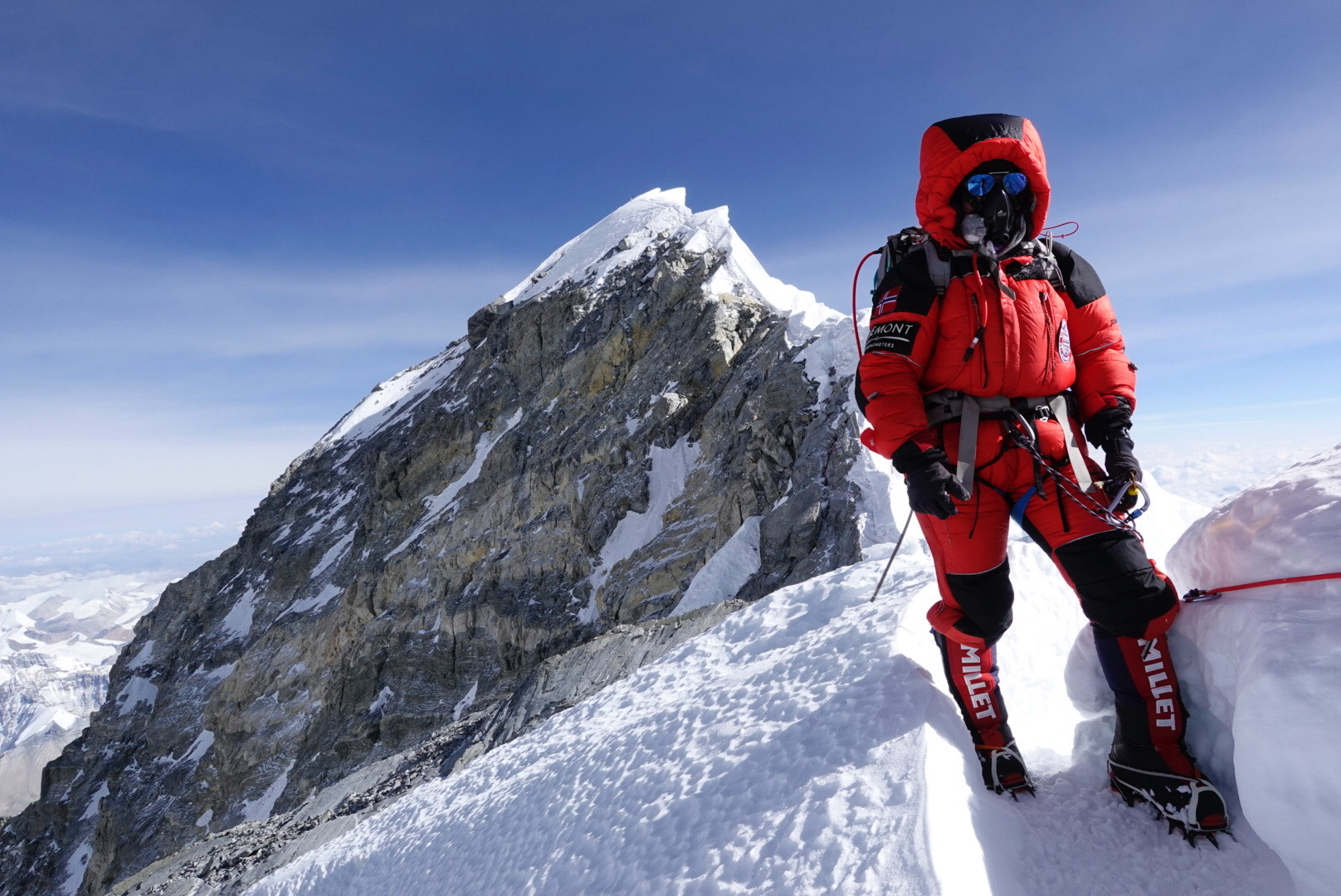
Kristin Harila was six months in and two summits away from making history when powers beyond her control forced her to stop.
“In the end, it was COVID.”
Not because she contracted the virus, but because the Chinese government’s strict zero-COVID policy meant it would be very difficult for visitors like Harila to enter the country.
In spring of 2022, the 36-year-old Norwegian XC skier-turned-mountaineer extraordinaire and Global Rescue Mountain Advisory Council member had set out to break the record for fastest time to climb all of the world’s 8,000 meter (26,247 feet) and higher peaks. There are 14 of them. Pandemic restrictions kept her short by only two.
“The Chinese government refused the entry permits that my team and I needed to get into Tibet to climb Cho Oyu and Shishapangma in time,” she said. “We made every effort, including working with the Chinese Ambassador to Norway to try to get a Visa and the necessary permits to climb, but in the end, time ran out.” Game over.
Or maybe not. After months of planning, climbing and traveling, only to come so close to achieving the goal, most people would roll up their down suits, stash away their carabiners and take in the views from 8,000-plus meters from the relative comforts of an airliner’s window seat. But Kristin Harila isn’t most people.
“When I got the phone call from home to tell me that my attempt was over, I told myself right away that I was doing it again.”
Doing Things a Little Differently This Time
If climbing close to 150,000 vertical feet in six months on some of the planet’s most treacherous terrain will teach you anything, it’s how to do it more safely and efficiently for the next attempt.
“First of all, I’m going to use a helmet this time,” laughs Kristin, “because there have been some close calls.”

Like when she was hit in the leg by a falling rock while descending Nanga Parbat, the world’s ninth tallest mountain at 26,660 feet (8,125 meters). Luckily, the rock only caused some bruising and a couple of recovery days thanks, in part, to a fortuitously placed smartphone which took the brunt of the impact.
But perhaps her most surprising tweak is that she plans to summit all of the mountains without supplemental oxygen.
“I know this is stupid to say,” she confesses, “but I didn’t feel challenged enough. The mountains and climbing are challenging in the moment, but I want to try something else. It’s the challenge that keeps me motivated.”
Despite her unaided inhalation aspirations, Harila says she will bring oxygen with her just in case bad weather rolls in and she needs to move more quickly in order to take advantage of a climbing window or avoid a potentially dangerous situation.
There are some changes to logistics, too. For starters, she’ll start this year’s attempt in Tibet to mitigate the risk of a repeat of last year’s issues with the Chinese government. She’ll also partner with a commercial climbing operator that will shuttle her via helicopter to the start of each successive climb. This means that if all goes to plan, Harila, who was only able to scale six mountains during last year’s early climbing season, will be able to climb 11 mountains in the spring alone, putting her well within reach to summit all 14 8,000-plus meter peaks in four months.
And then there are a few videographers who, depending on what mountain she’s scaling, will climb with her to capture the story on camera, the goal to produce a docuseries to showcase the attempt.
Scaling Spires To Inspire
Despite mountaineering’s precarious and sometimes calamitous public image, Harila isn’t into climbing for the thrill. Instead, she climbs because she enjoys the simple process of it all, of taking one step at a time, surrounded by the mountains in which she feels most at home. Ironically, the higher she goes the more grounded she feels.
Lately, however, Harila, who is a recent newcomer to the sport, also draws motivation from a role she’s made for herself as an ambassador to growing women’s climbing.
“Women can climb, too, and are often better at it than the men are,” says Harila. “I’m proof of that. It’s very important that we have some role models for young girls to see that it’s possible for women to climb these mountains, too.”

She’s become quite the public figure over the past year. Several institutions have invited her to share her story, and she’s also involved in a project with a Norwegian climbing brand to produce equipment specifically made for women. Once this year’s attempt at the world record is over and she has time, she plans on tackling these projects the same way she does her climbs.
Speaking of time, only it can tell if she’ll break the world record for fastest time to climb the world’s 14 tallest mountains. But after talking with Harila, it’s easy to sense that she measures success not by summiting mountains, but by setting goals and going after them.
“It’s good to show you have big goals,” she says. “Sometimes you don’t achieve them, but it’s important to realize it’s possible to come back and try again.”
For Harila, the process is the reward.
Categories:
NewsFebruary 28, 2023
Categories:
Health & SafetyPlaces & PartnersTravelFebruary 28, 2023
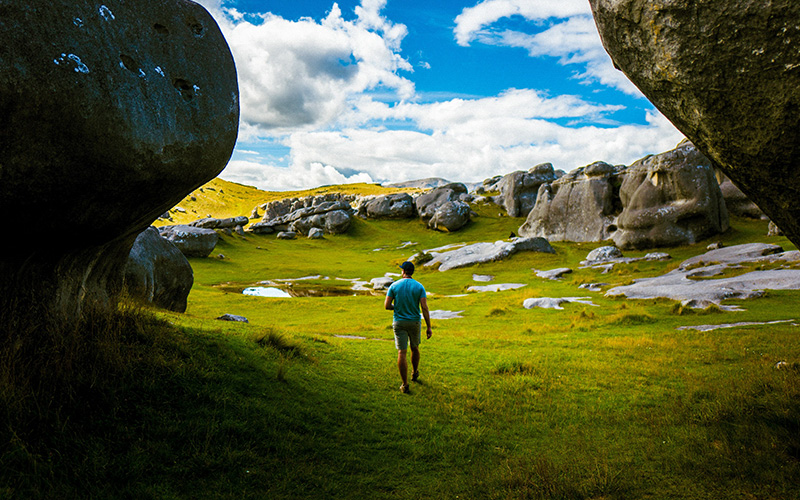
Welcome to 2023! A new year full of new experiences to have, memories to make and places to explore. Time to start dreaming about what your 2023 bucket list might include whether you’re a thrill-seeker, an explorer, a soloist or a friends and family traveler.
To help kick off your planning, we’ve identified three buckets of travel experiences that might describe you: extreme adventure, family and destination travel.
Whichever bucket you’re in, we have ideas to inspire.
The Extreme Adventure Bucket
Looking for new thrills in 2023? National Geographic has released its top five adventures for 2023.

In light of the post-COVID travel boom, National Geographic’s list goes off the beaten track to where the crowds are few but the thrills are many:
- Paddleboarding the Colorado River. Utah’s parks get a lot of foot traffic. To help preserve the terrain, Utah is promoting new outdoor adventure initiatives in the state, like paddle boarding the Colorado River in Moab, Utah.
- Choquequirao, Peru. Is Machu Picchu on your bucket list? Probably, but guess what: it’s also on the list of hundreds of thousands of people who will travel there this year (1.5 million before the pandemic!). Stick out from the crowd and visit Choquequirao, instead. Accessible only by foot, Machu Picchu’s sister city is for extreme adventurers like you.
- Austrian Alps. If extreme winter sports are your thing, give the mountaineering villages (or Bergsteigerdörfer) of the Austrian Alps a try. To promote their small towns while protecting the surrounding environment, the Bergsteigerdörfer rejects “large-scale tourist projects like sprawling ski lodges and peak-scaling cable cars [and] puts greater emphasis on green or sustainable mountain tourism.”
- Revillagigedo National Park, Mexico. “Revillagigedo National Park…is North America’s largest fully protected underwater park. It offers sanctuary to the continent’s greatest concentration of tropical marine megafauna.” It also might be the only place on earth where you can have such close interactions with aquatic species, like the bottlenose dolphin, marine biologist and underwater filmmaker Erick Higuera shared with National Geographic.
- New Zealand. A beloved adventure destination is back from the pandemic, open to international travelers and boasting exciting new activities for thrill-seekers—especially cyclists. For the more adventurous cyclist (like you) check out the 31-mile Coronet Loop Trail, which will take you on adventures into the backcountry.
Need more inspiration? Don’t miss National Geographic’s complete Best of the World List here.
The Family Bucket
When traveling with family, choose the experience you want before the location. You don’t need to travel to Fiji to experience a beautiful beach. Using your list of goals to inform your travel destination can help you stay within budget and avoid longer trips, which can add stress, especially with family. (Read tips for traveling with your family here.)

Rather than recommending specific locations, we’ve provided goals you might not have considered to kick off your dreaming:
- Visit a place that is special to your family’s history. Did your family members march during the Civil Rights Movement? Did your grandfather or great-grandfather fight on the beaches of Normandy? Take a step back into your family’s history, and visit the cities and towns at the center of your family’s history.
- Seek out a spiritual experience. If your children are teenagers, they’re likely becoming open and interested in learning about the meaning of life. Consider taking a spiritual retreat or going on a pilgrimage. Christopher Elliott, a travel writer, wrote about the benefits of Spiritual Tourism for USAToday here.
- Give back together. Consider a humanitarian aid trip with your family to grow your bond through service to those in need. GoAbroad.com compiled a list of 7 Meaningful Family Volunteer Vacations here.
- Unplug together. Do you feel like your family just can’t get off the screen? Pursue a vacation outdoors, like camping, where the internet is unavailable. Family Vacation Critic suggests 13 different family-friendly unplugged vacation destinations.
- Learn something new together. Introduce a new sport, like snow skiing or mountain biking. Learn how to cook a new cuisine or a new language. Trips to Discover keeps a list of the 16 Best Places to Learn a New Skill on Vacation.
The Destination Bucket
Are you a destination junkie? Is your passport cluttered with international stamps? Do you plan your travel based on an overwhelming desire to see new places? The top bucket list destinations are still off-the-beaten-path sandy beaches and metropolises with famous landmarks.

Does your travel bucket list criteria include travel for food, culture, adventure and natural beauty? The New York Times‘ top 52 bucket list destinations for 2023 offer some familiar locations that meet those measures – like London, Cuba and New Zealand – but introduce unusual locales like Kangaroo Island in Australia, Vjosa River in Albania and the Burgundy Beer Trail in France.
Vogue shared the 12 Best Places to Travel in 2023, according to travel experts. If you’re itching to visit Asia again after COVID-19 lockdowns stopped travel, check out Singapore and Japan. If luxury hotels are your thing, Guatemala beckons with its “intimate” Villa Bokeh. Chile, Spain, Portugal, Italy and Scotland also offer stunning hotels to give you an enchanting place to relax when you’re not seeing the sites.
Are you looking beyond the so-called tried and true destinations? Check out Make Time To See The World’s recommendations for out-of-the-way places like Nunavut in Arctic Canada, Christmas Island in Australia, Olomouc in the Czech Republic, Kyrgyzstan and many others.
Finally, one of the trends alluded to in National Geographic and echoed in Vogue is that people are craving solitude after the frenetic post-pandemic return to travel of 2022. Iceland and Greenland are the perfect places to receive the peace of solitude while enjoying such sites as the Northern Lights.
Global Rescue for Any Bucket
Whichever bucket you fall into, don’t forget to grab your Global Rescue membership before you travel. Whether at home or abroad, we’ve been helping people complete their bucket lists for more than 20. Let us give you the peace of mind you need to complete yours in 2023.
The world’s most experienced travelers expose how to manage inflation, potential airline disruptions and a very busy forecast for global tourism in 2023
Lebanon, N.H. – February 27, 2023 – Global tourism is expected to rise by 30% in 2023, according to reports and the world’s most experienced travelers have revealed their secrets, and mistakes, on how to manage the upcoming busy travel year, crowded destinations, higher costs and potential travel disruptions.
The majority of travelers (41%) are planning trips further in advance to lock in reservations and prices, according to the Global Rescue Winter 2023 Traveler Sentiment and Safety Survey. Another 18% said they plan to travel during off-peak seasons. Thirteen percent said they will seek undiscovered destinations or locales that are off-the-beaten path, 11% said they would avoid traveling on weekends and holidays to avoid crowds, and nearly 5% revealed they would skip international travel and take trips domestically only. About 1-in-10 said they would not do anything differently.
The predicted rise in travel coincides with higher travel-related costs. Nearly half of the surveyed travelers (45%) are planning to absorb the higher travel costs without skimping. The other half will look for less expensive destinations (13%), reserve less costly lodging (8%), shorten trips (6%), find destinations that have an advantageous currency exchange with their home country currency (5%), do less shopping (5%), dine out less (4%) and do more bleisure travel combining work-related travel with leisure trips (3%).
Recurring news about airline staff shortages, disrupted flights, and jumps in cancellations are forcing travelers to protect their trips. More Americans are cautious after a spike in flight cancellations at the end of 2022, according to a Reuters report.
“As travel returns to pre-pandemic levels, more travelers than ever believe emergency rescue and evacuation services are essential, whether it’s due to COVID, a natural disaster, civil unrest or simply to help assist with more complicated travel logistics. Travel protection for emergency medical services and evacuation is no longer optional; it’s obligatory,” said Dan Richards, CEO of Global Rescue, the world’s leading provider of medical, security, evacuation and travel risk management services and a member of the U.S. Travel and Tourism Advisory Board at the U.S. Department of Commerce.
Scheduling nonstop flights (35%) whenever possible is the leading way survey respondents will manage potential flight disruptions and staff shortages followed by purchasing travel protection (30%) for delayed or canceled flights, lost luggage, and trip cancellation, according to the Global Rescue survey. Eleven percent of travelers said they will avoid checking luggage and opt for carry-on baggage and 7% said they would travel during off-peak days and times.
As travelers plan trips for 2023, respondents revealed a shift in the types of travel they want compared to responses from spring 2022. The biggest change is a 40% dip in respondents who are planning to travel to visit family and friends. Another change is the 21% decline in surveyed travelers who are preparing for outdoor adventure trips.
Despite the shift, outdoor adventure travel led all types of international travel planning followed by a bucket list trip (26%), a culture exploration trip (24%), visiting friends and family, a dream trip (15%) and a wellness trip (5%). A fifth of respondents reported the international trips planned for 2023 were work-related or bleisure.
The survey revealed 7-out-of-10 of the world’s most experienced travelers are members of a Trusted Traveler Program, like TSA PreCheck or Global Entry, compared to only 22% of American flyers, according to a survey reported in Yahoo! Finance.
As travel returns following the easing of pandemic restrictions, many travelers are readjusting to travel. According to the Global Rescue survey, even the most well-traveled individuals make mistakes following a travel layoff. Survey respondents admitted that over-packing (28%) was the biggest travel mistake since returning to travel, distantly followed by overly ambitious travel itineraries (9%).
Travel mistakes like forgetting an international plug adapter, failing to change your phone data plan, drinking unsafe water or forgetting to notify your bank you would be out of the country each accounted for 4% or fewer responses. Letting your passport or Trusted Traveler Program membership expire, tipping inappropriately, forgetting your prescription medicine, or medical security protection each accounted for fewer than 2% of responses.
###
Contact Bill McIntyre at bmcintyre@globalrescue.com or 202.560.1195 (phone/text) for more information.
About the Global Rescue Traveler Sentiment and Safety Survey
Global Rescue, the leading travel risk and crisis response provider, conducted a survey of more than 2,000 of its current and former members between January 30 and February 4, 2023. The respondents exposed a range of behaviors, attitudes and preferences regarding international and domestic travel.
About Global Rescue
Global Rescue is the world’s leading provider of medical, security, evacuation and travel risk management services to enterprises, governments and individuals. Founded in 2004, Global Rescue has exclusive relationships with the Johns Hopkins Emergency Medicine Division of Special Operations and Elite Medical Group. Global Rescue provides best-in-class services that identify, monitor and respond to client medical and security crises. Global Rescue has provided medical and security support to its clients, including Fortune 500 companies, governments and academic institutions, during every globally significant crisis of the last two decades. For more information, visit www.globalrescue.com.
Categories:
Business TravelPlaces & PartnersTravelFebruary 23, 2023
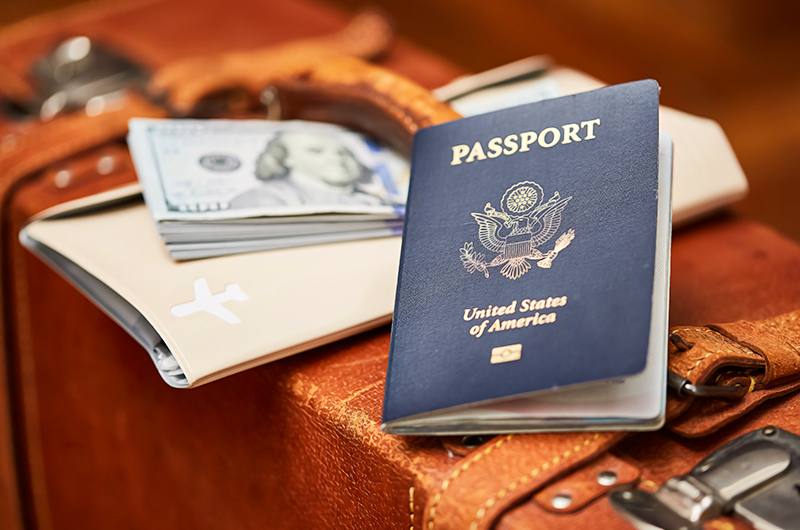
In the midst of the many economic woes of today—inflation, rising energy prices, high unemployment—there’s one bright spot for Americans. The dollar is the strongest it’s been in two decades. With a little research, now could—surprisingly—be the best time to travel to places where the dollar is strong.
It all depends on where you go…and where you’re from.
If you’re an American, now is a great time to travel, especially to countries like Europe, China and Japan where your dollar might not have stretched as much before.
Europe
The dollar is strong against the Euro and the pound, making now a great time to book that dream trip to Paris or enjoy shopping in London.
“Flight searches for winter travel to Paris are up 85% compared to last year, and London is also hot, with searches up 40%” according to Expedia, as reported in Money.
Turkey
Your bang for buck might go the furthest in Turkey, according to a study from Travel Lens, as reported in
Yahoo.
“Turkey is the country where the value of $1,000 has increased the most since before the pandemic: up
227.55% versus the local Turkish lira.”
Japan
Bloomberg reports that the weak Japanese Yen combined with low inflation and the loosening of pandemic restrictions have made it an ideal time to travel to Japan, especially for tourists from the U.S.
Budget even better
If you’ve been a budget traveler before, the strong dollar makes budget travel even more advantageous. The low-cost destinations you loved before are cheaper than ever. Trips to Discover has a list of 20 destinations to visit while the USD is strong—most were already quite affordable but tourists will find it even easier to stretch their dollars these days.
Where you’ll see the savings
Unfortunately, tourists everywhere can’t escape the rising costs of transportation. Flights are running high due to inflation, so most travelers won’t realize any deals until they’re on the ground.
“The savings is in the ancillary spending like ground transportation and sightseeing tours,” James Ferrara, president of InteleTravel, told Forbes. “The big win is in shopping and dining where conversion rates can mean savings in the hundreds and thousands. Meals in London feel like 50% of New York costs. The same with buying designer clothes or even having them made.”
The New York Times helps us break down the savings further:
“A 5-euro glass of wine in Rome in 2008 might have cost about $8, compared to $5.20 today. A 100-euro rental apartment in Paris that is $104 this summer might have been $158 when the euro peaked. And a 60-pound ticket to London’s hit revival of “Cabaret” costs $73 now, while a similarly priced show last summer would have cost $85.”
Leigh Rowan, the founder of Savanti Travel in San Francisco shared these three tips in the article to help you maximize the exchange rate:
- Pay with a credit card with no foreign transaction fees (determine this by calling your bank);
- Withdraw cash abroad, if needed, via an A.T.M. in the local currency (and skip the currency exchanges at airports, which offer poorer rates);
- Always select the local currency on a credit card purchase if offered a choice between it and U.S. dollars.

Tourists coming to the US: a different story
If your main currency is not the USD, you may want to avoid trips to the United States for now. The strong dollar combined with inflation is making travel to the U.S. very expensive.
British tourists are especially hard hit by the combinations of a weak pound and high inflation, Reuters reports.
“Everything is pretty expensive for us,” said Valerie, a 47-year old university administrator speaking with Reuters about her trip to San Francisco. “We’ve been buying food from grocery stores rather than having sit-down meals because when you change it to the British amount, it doesn’t seem worth it. It’s really a lot of money.”
If you’re not from the U.S. but still want the benefit of a lower exchange rate, consider Argentina. The Argentine government created a new, lower, exchange rate for tourists last fall that makes it even cheaper to visit, while hopefully helping reduce robberies, Afar reports. The exchange rate is available to tourists who use credit and debit cards, rather than cash. Argentina hopes this will discourage robberies of tourists and improve the economy.
More Savings with Global Rescue
Ready to take advantage of the strong dollar with some 2023 travel? Expand your cost savings with a Global Rescue membership—the world’s leading travel protection. Starting at just $129, our services give you the peace of mind to travel the world, knowing that you’re protected if a crisis occurs. That’s a small price to pay compared to the unexpected expenses that come with injury, illness or emergency evacuation overseas. Read more about our memberships here.