
Share This:

Travel Stories: How Women Travel

At Global Rescue, one of the best parts of our work is getting to know our inspiring members. Many go to the ends of the earth, to its highest peaks and greatest depths to feed…

At Global Rescue, one of the best parts of our work is getting to know our inspiring members. Many go to the ends of the earth, to its highest peaks and greatest depths to feed their insatiable hunger for adventure.  


The following female trio, a mother, a veteran and a missionary, epitomize the growing force of how women travel, which is especially important since women are the fastest-rising demographic in the travel industry. “Consider tourism and travel, where experts agree that women are fueling an explosive growth, making 80% of decisions and expected to spend more than $125 billion this year,” according to Forbes. 


Dianette Wells: mother, extreme adventure athlete, house flipper 


Dianette Wells was 16 years old when she first saw Mount Whitney. She was driving north from Los Angeles on California’s scenic Highway 395 and looked to the left. There it was: California’s highest peak.  


“I was immediately drawn to it,” she said.  


Seventeen years later, she climbed the mountain for the first time. And it changed her life forever.  


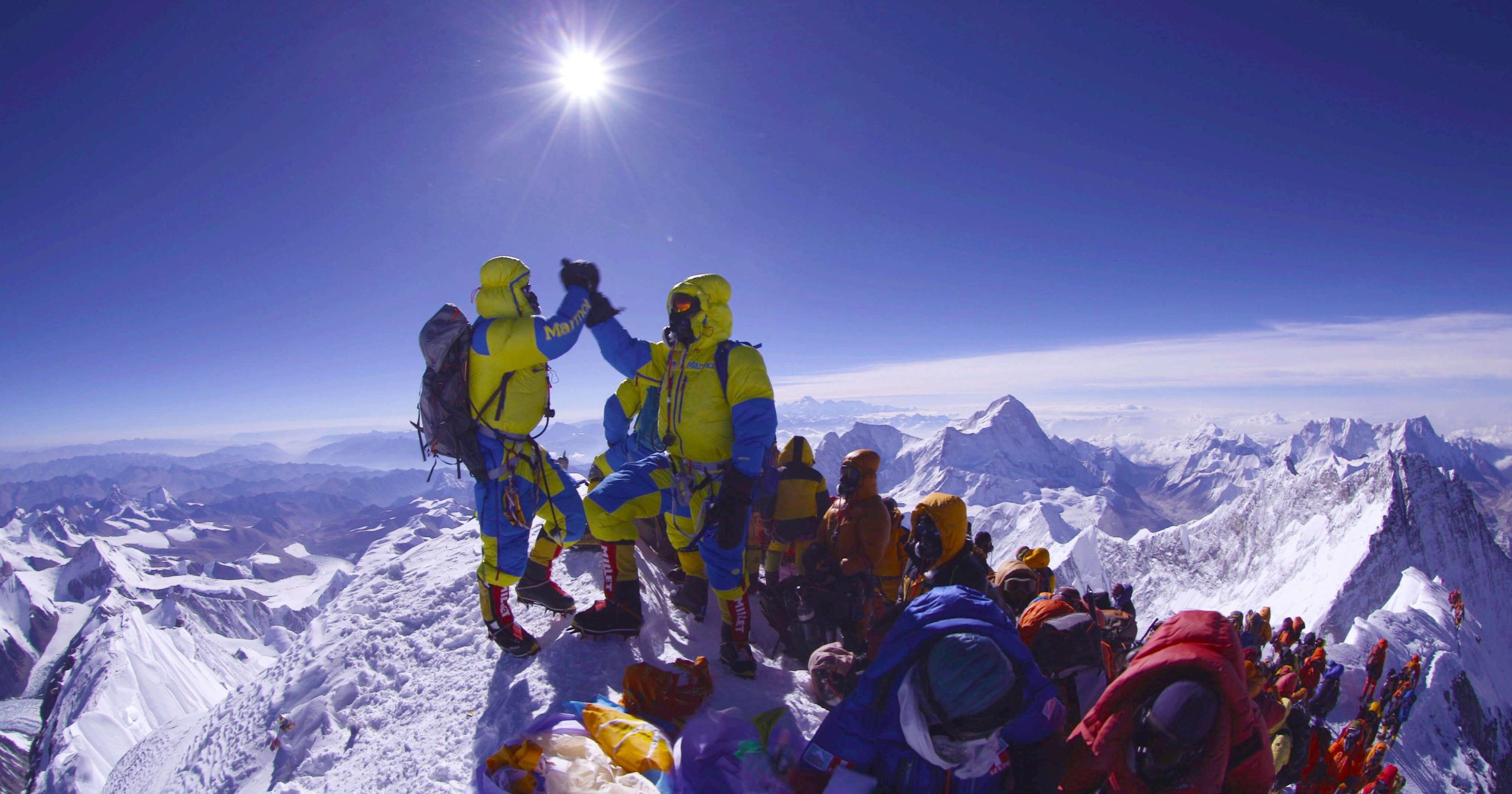
That was 1998. Since then, she has been unstoppable: summiting Mount Whitney 10 times, the Grand Tetons four times, reaching the peaks of the Seven Summits of the world, including seven climbs of Mount Kilimanjaro. She has completed several adventure races and international ultramarathons.  


This practice of adventure sports helped her through one of the hardest periods of her life: the death of her 23-year-old son Johnny who was wingsuiting in Switzerland.  


Wells is 56 years old and still scaling mountains and making a difference in the world along the way. Every time she summits, she takes a picture of Johnny’s name, which is tattooed on her wrist. She often holds up the same signs he held when he summited mountains, to raise awareness around issues like Parkinson’s disease.  


Wells is a longtime Global Rescue member, often purchasing memberships for family members as gifts.  


She relied on Global Rescue services after contracting a serious infection in Fiji that required medical evacuation to New Zealand for treatment during her hospitalization before returning home to the U.S. You can read her harrowing story here.


Amanda Burrill: global storyteller, outdoor adventurist, chef, traumatic brain injury advocate, Navy veteran 


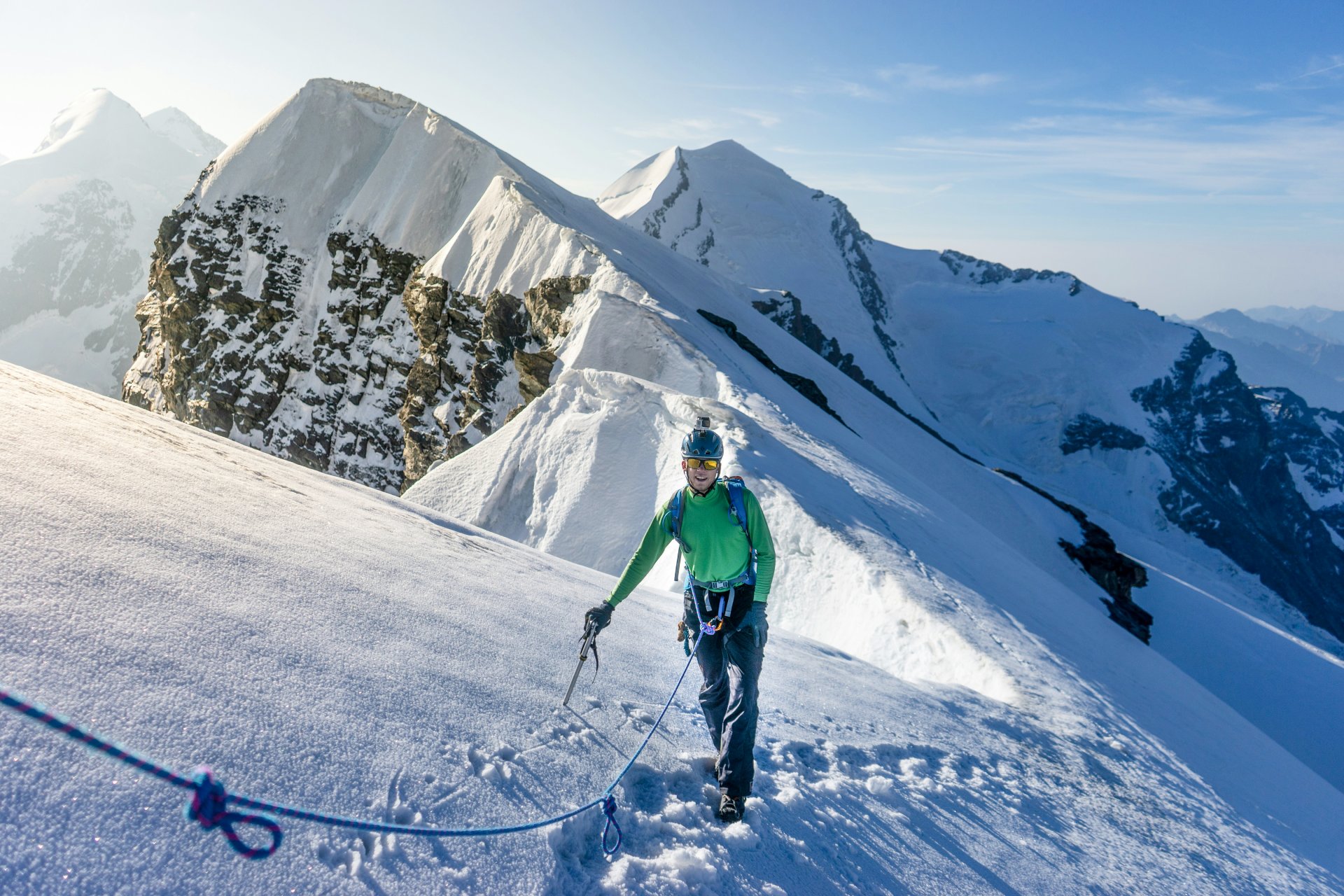
When it comes to women’s adventure travel, Amanda Burrill forges new paths. When she gets above a tree line, emotion overcomes her. The peace, the beauty, the solitude.  


“I am more free than ever at that moment,” she said. “It’s the only place I have an escape from the things in the world that burden my mind and exhaust me.” 


Burrill lives every day in the aftermath of two traumatic brain injuries—the first sustained while serving with the military in Iraq, the second after losing her balance and falling down a flight of stairs, across a landing and into a wall.  


Outwardly, it’s hard to tell she is struggling at all. She’s a passionate adventure climber, chef and journalist. But inwardly, she has been on a nearly 20-year journey to diagnose and understand how her injuries have impacted her brain and her everyday life.  


For Burrill, new experiences have become the path toward healing her brain, and she relies on Global Rescue the whole way to come to her aid if necessary.  


“Though I haven’t had to use them yet, there have been many times I’ve been extremely grateful to know that Global Rescue is there,” she said. 


Cassidy Cann: wife, mother, missionary in remote Papua New Guinea 


Cassidy Cann’s life is quite different from the “American Dream.” She’s given it up for something she believes is greater and more rewarding.  


In 2014 she and her husband, Zach, moved from Phoenix, Arizona, to a remote, jungle village in Papua New Guinea with their two young boys.  


Cann and her husband spent two years preparing for their move to Papua New Guinea. Preparation was rigorous and meant learning a foreign language, studying cross-cultural living and learning Greek and Hebrew languages to help them better understand, and teach, the texts of their Christian faith.  


When they left their home, Cann knew that they would be trading the comforts of life in America for what she calls a “difficult but beautiful” life in Papua New Guinea. Her experience there over the past eight years has proven this to be true over and over again.  


“It’s humbling because we get to see the impact we’re having on the people in the village,” she said. “Those who are born here have little access to education, especially the women. In our time since moving here, we have created a literacy program to teach any willing person to read and write in their local dialect.” 


Having a membership with Global Rescue has not just given them peace of mind while living in a remote location, but became a great help to them when their son broke his jaw <video as well?> after a bicycle accident.  


“We felt inadequate to handle it on our own,” Cann said. “It was a comfort to have Global Rescue handle all the logistics of getting us to a safe place.” 


The perfect gift for the intrepid female traveler 


Are the women in your life also inspiring, intrepid travelers? Consider giving your mother, sister, wife, daughter or friend a membership with Global Rescue this holiday season.  


“Global rescue is embedded in our travel,” Wells said. “I think people are taking a huge risk without it. You could be shopping in Spain and trip and fall and hurt yourself. If you don’t have Global Rescue, getting home is just abhorrently expensive.” 

Share This:

US Commerce Secretary Re-Appoints Global Rescue CEO to Travel and Tourism Board 

Lebanon, NH – January 12, 2023 – U.S. Secretary of Commerce Gina Raimondo announced the re-appointment of Dan Richards, CEO of Global Rescue, the leading provider of medical, security, evacuation and travel risk management services…

Lebanon, NH – January 12, 2023 – U.S. Secretary of Commerce Gina Raimondo announced the re-appointment of Dan Richards, CEO of Global Rescue, the leading provider of medical, security, evacuation and travel risk management services to an additional two-year term on the U.S. Travel and Tourism Advisory Board (TTAB).

“[Richards’] experience will be important as the Board provides me with advice and counsel on issues and concerns that affect the U.S. travel and tourism industry. I appreciate your willingness to devote your time and efforts to the Board,” said Secretary Raimondo.

“I look forward to sharing my knowledge and recommendations with Secretary Raimondo and the Board to help the travel and tourism industry recover from the devastating impacts of the pandemic and work to shield the industry from future threats,” Richards said.

The board is comprised of 32 leaders from businesses and organizations in the domestic travel and tourism industry. Participating leadership includes Brian Chesky, the CEO of Airbnb, Bill Hornbuckle, the CEO of MGM Resorts and Matt Goldberg, the CEO of Trip Advisor, among others. Members advise the Secretary of Commerce on how government policies and programs affect the travel and tourism industry and offer counsel on current and emerging issues to support sustainable growth of the travel and tourism industry as our nation’s economic engine.

“Travel and tourism returned with force in 2022 as we opened up our country once again to visitors from around the globe,” said Secretary Raimondo. “The U.S. Travel and Tourism Advisory Board plays a vital role in providing expert recommendations and industry insight to optimize the American travel experience,” she said.

###

Contact Bill McIntyre at bmcintyre@globalrescue.com  or 202.560.1195 (phone/text) for more information.

About Global Rescue

Global Rescue is the world’s leading provider of medical, security, evacuation and travel risk management services to enterprises, governments and individuals. Founded in 2004, Global Rescue has exclusive relationships with the Johns Hopkins Emergency Medicine Division of Special Operations and Elite Medical Group. Global Rescue provides best-in-class services that identify, monitor and respond to client medical and security crises. Global Rescue has provided medical and security support to its clients, including Fortune 500 companies, governments and academic institutions, during every globally significant crisis of the last two decades. For more information, visit www.globalrescue.com. 

Categories:

News
Share This:

Are You Rescue Ready

Share This:

Travel Stories: Americans Not Taking Paid Vacations

When was the last time you used all your paid time off? Have you always used all your paid vacation days and paid holidays? If you are an American, chances are 50/50 it was far…

When was the last time you used all your paid time off? Have you always used all your paid vacation days and paid holidays? If you are an American, chances are 50/50 it was far too long ago, if ever.  


Americans’ vacations have drawn a lot of attention in the past few years for one simple reason: Americans are not taking vacations.  


The “No-Vacation Nation” 


Back in 2019, before the pandemic, The Center for Economic Policy and Research (CEPR) analyzed paid vacations in America compared to many countries in the rest of the world. Their conclusion?  


There was “a significant disparity between the United States and the rest of the world’s rich countries. The United States is the only advanced economy that does not mandate any paid vacation time for workers, and it is one of the only countries that does not require employers to offer at least some paid holidays.” 


As a result, one in four working Americans does not receive any time off, the study reported.  


Yet even when Americans do receive vacation, they find it difficult to take all the time off. According to a study by the U.S. Travel Association, more than half of Americans did not use all their time off in 2019, resulting in 768 million days left unused—236 million of those days could not be rolled over to the next year.  


Why? 


Why would Americans leave vacation unused? A study by the Journal of Occupational Health Psychology showed that Americans who struggle to take time off, often do so because they have trouble disconnecting from work, don’t think the vacation will go well and anticipate being stressed from things like finances.  


According to the USTA’s study, 80 percent of Americans thought it was important to travel during their time off but don’t for similar reasons: too hard to get away from work, financial stress and frustrations around air travel.  


Has the Pandemic Changed Anything? 


A lot has happened in the world since CEPR’s study in 2019. Most notably, the pandemic changed the way many in the world work: offline to online, in the office to working from home.  


Has this improved our ability to take a vacation? 


“In many ways, yes,” says Global Rescue’s Stephanie Diamond, vice president of human capital management. “All of a sudden, people were spending more time with their families and being reminded of what is most important in life. And with the increase of remote work, people felt they could travel more often.” 


Indeed, since the pandemic, there has been a significant rise in bleisure travel, and many employers offer it as a benefit to attract new hires.  


Yet, for some, the rise of remote work has blurred the lines between work and time off more than ever.  


Ed Zitron shared in The Atlantic about his struggles detaching from work, before and during the pandemic. As the CEO of the technology public relations firm, EZPR and the author of the tech and culture newsletter, Where’s Your Ed At, the responsibilities felt too overwhelming to escape. Yet, his experience contracting COVID-19 showed him that working from home had become a “productivity trap” that he needed to address, for himself and his employees.  


“I’m slowly learning that a few hours, or a day, or even a week away won’t bring the world to an end and that those emails will be waiting for me when I’m done relaxing,” he writes. 


Diamond agrees that the practice of taking time off is something that must be learned in American culture.  


“Because it’s not in our country’s culture, it is certainly a shift for employers and employees,” Diamond says. “Leaders almost have to tell people how to unplug, and then employees have to take responsibility for doing so.” 


Global Rescue Membership Helps 


Global Rescue gives thousands of people the peace of mind they need to travel every year. Our members know they can travel domestically or internationally—even going completely off the grid. If something goes awry, we’ll be there to help them with our field rescue, medical evacuation and advisory services.  


It’s not surprising that current and former Global Rescue members are more likely than the average American to take all of their vacation time. According to the Global Rescue Traveler Safety and Sentiment Survey [LINK TO SURVEY], most travelers (68%) have taken all their available paid time off from work. Of the 32% who have not, fear of falling behind and coming back to a mountain of work and the inability to disconnect from work are the leading reasons for relinquishing paid leave time. 


“At Global Rescue, we offer a service that will help you thrive,” Diamond said. “You’ll have the confidence to take that vacation. To get out and enjoy life.” 

Categories:

News
Share This:

Do I need travel insurance for my 2023 vacation?

Share This:

Kilauea Volcano Erupts in Hawaii; A Possible Threat For Travelers, Residents

Rescue and medical evacuation teams are standing by to assist travelers who may need field rescue, medical evacuation or medical advisory. Lebanon, NH – January 6, 2023 – Global Rescue operations experts are standing by…

Rescue and medical evacuation teams are standing by
to assist travelers who may need field rescue, medical evacuation or medical advisory.

Lebanon, NH – January 6, 2023 – Global Rescue operations experts are standing by to assist travelers who may need field rescue, medical evacuation or medical advisory due to the volcanic activity reported within Halemaʻumaʻu crater in Kīlauea’s summit caldera within Hawaii Volcanoes National Park.

According to the U.S. Geological Service Volcano Notification Service (USGS VNS), the Kīlauea volcano began erupting at approximately 4:34 p.m. HST on January 5, 2023, when the USGS Hawaiian Volcano Observatory detected a glow in Kīlauea summit webcam images indicating that the eruption had resumed.

“Global Rescue’s intelligence and operations teams are monitoring the event and will report unsafe sulfur dioxide levels in the area in case air quality decreases,” said Dan Richards, CEO of Global Rescue, the leading provider of medical, security, evacuation and travel risk management services. “Travelers are advised to monitor developments as conditions can change rapidly and with little notice.”

The opening phases of eruptions are dynamic, according to information from USGS. “Webcam imagery shows fissures at the base of Halemaʻumaʻu crater generating lava flows on the surface of the crater floor.”

The USGS Hawaiian Volcano Observatory elevate Kīlauea’s volcano alert level to WARNING and its aviation color code to RED as this eruption and associated hazards are evaluated.

“Flight disruptions or evacuations may be ordered if the situation escalates. Travelers should be prepared to utilize any means necessary to exit the affected region, including air, sea and land travel. Monitor local media, government alerts and airport notices to stay informed as the situation develops,” said Harding Bush, a former Navy SEAL and senior manager of security for Global Rescue.

“Travelers should check with the airlines and see if they are still able to fly to their destinations. Volcanic ash is a dangerous element of a volcanic eruption. The ash can damage aviation equipment, it’s very fine and can damage jet engines. Ground vehicle transportation may be affected, too, for the same reasons,” Bush said.

Volcanic ash near a flight path shuts down all aviation. In 2010 a volcano eruption in Iceland shut down air travel in Europe for a significant time.

“Travelers have learned that anything can happen during a trip, especially since the pandemic. Their mindset has made a tectonic shift, moving travel protection for emergency evacuation from ‘optional’ to ‘obligatory’. Travelers learned that emergency rescue and evacuation services are often essential, whether it’s due to COVID-19, a natural disaster, civil unrest or simply needing emergency help when you’re traveling,” Richards said.

###

Contact Bill McIntyre at bmcintyre@globalrescue.com or 202.560.1195 (phone/text) for more information.

About Global Rescue

Global Rescue is the world’s leading provider of medical, security, evacuation and travel risk management services to enterprises, governments and individuals. Founded in 2004, Global Rescue has exclusive relationships with the Johns Hopkins Emergency Medicine Division of Special Operations and Elite Medical Group. Global Rescue provides best-in-class services that identify, monitor and respond to client medical and security crises. Global Rescue has provided medical and security support to its clients, including Fortune 500 companies, governments and academic institutions, during every globally significant crisis of the last two decades. For more information, visit www.globalrescue.com.

Share This:

Snowbirds Have a New Look

Snowbird Snowbirds South for the winter People that go south for the winter

Snowbirds – the people relocating to a different location for several months to avoid cold, snowy weather – are changing. They’re more financially constrained, more mobile and younger than before.  


Every year, millions of people from Canada and the northern states fly south for the winter, exchanging the snowy chill of their hometowns for the warm sunshine of places like Florida and Arizona.  


While this migration pattern took a significant hit during the pandemic, snowbirds are back and eager to resume their past life. But things look a little different in 2022 than they did in 2019. Some are encountering surprising changes and constraints—brought on not just by the pandemic but the struggling economy and natural disasters—forcing them to rethink how and where they winter.  


Others became unexpected snowbirds when the rise in remote work gave them the freedom to travel—or even make permanent moves—to southern locations.  


Inflation, Hurricane Ian and rising heating costs  

In the face of rising inflation and a weak Canadian dollar, many Canadians are rethinking their winter months in the south, BNN Bloomberg reports.  


Stephen Fine, president of Snowbird Advisor, told the publication that despite the challenges, he expects that snowbirds will still flock south, adjusting their spending to rising prices: “people may try to save by shortening their stay, while others may change their destination entirely.” 


For those Canadians traveling to Florida, inflation won’t be the only challenge. Hurricane Ian wreaked havoc on many of the communities where they rent or own winter homes.  


Fort Myers, Fla., has been a hot spot for snowbirds each year, yet it was one of the places hardest hit by the hurricane. Snowbirds like Gary Wilson and his wife, recently interviewed by the Toronto Star, will return to damaged homes and communities. This year, rather than a vacation, the Wilsons will spend their winter months assessing the damage on their property.  


“Thermal Tourism” beckons snowbirds in Europe 

While many retired Europeans enjoy life in southern Europe during the winter months, the shaky economy and European energy crisis are forcing others to consider migrating south to lessen their financial stress. And they have an appealing invitation: southern countries like Greece, Spain and the Canary Islands have launched targeted campaigns to beckon those in colder climates to join them in the sun. Read more about the “thermal tourism” campaigns offering warm refuge in The Guardian.  


Remote work inspires a new breed of snowbirds  

The increase in remote work during the pandemic has given people in their 30s and 40s early wings. With the freedom to work anywhere, the younger set of Americans see flying south for the winter as a legitimate option for the first time, GQ reports.  


“Snowbirds used to be synonymous with retirees,” Minette Schwartz, a real estate agent with Compass in Miami, told Money. “But now, young professionals are migrating during the winter too.”  


Schwarz estimates these new snowbirds “make up about 25% of the market’s total selling and buying activity [in Miami].” 


Some even bring their families. During the pandemic, Trenton Hogg, a Redfin agent in Chanhassen, Minnesota, told Money he noticed an increase in families moving south because they were no longer tied to a physical school but were doing virtual classes or had decided to homeschool. 


He’s also seen an increase in “Sunbirds”—people coming from sweltering states like Florida and Arizona to spend their summers in the milder midwestern climate.  


The next snowbird? 


What will the next type of snowbird look like? Only time will tell. What we do know is that remote work has made our world more transient, and people can move to climates that suit them with unprecedented ease.  


Snowbirding is no longer just for retirees. It has become a more dynamic group than ever before, encompassing young and old, employed and retired, and motivated by complex factors: the shifting and shaping economy, natural disasters and the availability of remote work. Much like the factors that have shaped the snowbirds of today, tomorrow’s snowbirds are likely to be more of a response to the realities of the moment, than the once predictable flight patterns of retirees. 

Managing your health and safety as a snowbird is different compared to vacationers who travel generally for a couple of weeks or less. There are at least two types of health and safety protections snowbirds should consider. 


One is health care insurance. Your domestic health insurance plan may not provide coverage outside your home country, or even within your home country but outside your state or region. It is important to check before you travel since a favorable answer could save you a lot of money.  

The other type of protection is for travel crises and medical evacuation. If you get sick or injured anywhere in the world, snowbirds will need field rescue services that will come get you from the point of illness or injury, and medical evacuation if you need continued treatment or hospitalization in your home country. 

Categories:

News
Share This:

You’re trapped in a blizzard. Do you know what to do next to survive?

Share This:

How to Stay Safe During a Blizzard

Navy SEAL cold weather expert shares pro tips for blizzard safety for commuters and travelers.  Lebanon, N.H. – December 22, 2022 – A seasonal blizzard is moving across the U.S. with heavy snow and extremely…

Navy SEAL cold weather expert shares pro tips for blizzard safety for commuters and travelers. 

Lebanon, N.H. – December 22, 2022 – A seasonal blizzard is moving across the U.S. with heavy snow and extremely cold temperatures forecast. Extreme weather expert and former Navy SEAL Harding Bush knows staying safe during is blizzard can be tricky when you’re at home, and more challenging when you are traveling.  

“Prepare ahead of the storm whenever possible. You could be snowed in for a few days,” said Bush, the manager of operations at Global Rescue and a former Navy SEAL with extensive mountain and cold weather operations expertise. He has developed multiple training programs for ski mountaineering and cold-weather survival. 

Bush lists his top pro tips to remain safe during a blizzard.  

The Top 5 Blizzard Safety Tips  

  1. Stay Inside – If possible, avoid driving and other travel until conditions have improved. Listen to NOAA Weather Radio for updated emergency information. 
  1. Stay Charged – Charge your cell phone, laptop and any backup power sources. Have extra batteries on hand for radios and flashlights.   
  1. Dress Appropriately – Wear the right clothing, with multiple layers and proper footwear, to keep you warm and dry. Do your research before purchasing outerwear; garments should be tightly woven and water-repellent. If anything gets wet or sweaty, change clothing to prevent loss of body heat.   
  1. Pack Your Car – Commuter pro tip. There’s usually enough warning for a blizzard, but if you missed the weather forecast, make sure your car has an emergency kit for snow situations. A lot of people commute to work and are not dressed for winter. Keep extra layers in your car. It doesn’t take much to throw a parka, wool hat, warm waterproof mittens and winter boots in the back seat or trunk of your car. If you have a longer commute, keep hand and foot warmers in the glove box and a sleeping bag or blanket, a shovel, jumper cables and a tow strap, in addition to a brush and ice scraper in the trunk.  
  1. Know the Signs – Know how your body loses heat and know what to do to stay warm. Also, learn the early signs of frostbite and hypothermia, how to prevent it and how to treat it. 

Bonus Top 8 Backcountry Tips  

If you’re trapped by a blizzard while hiking, skiing, climbing, snowboarding or camping in the backcountry, it’s a different story. There’s no way to limit your time outside, but there are ways to ensure survival. Keep these eight blizzard survival tips in mind if you’re traveling in snowy destinations: 

  1. Stay calm. Stop and think about what resources you have, observe your surroundings and orient yourself with landmarks and plan. Field & Stream offers a snow survival quiz.    
  1. Stay hydrated to ensure your extremities are receiving warm, oxygenated blood. Learn more about frostbite and hypothermia and the warning signs here.   
  1. Cover your mouth to protect your lungs from sub-zero temperature air. If you have a pre-existing condition, like asthma or bronchitis, the cold, dry air may irritate your airways. If you do not have a scarf, breathe in through your nose and out through your mouth. 
  1. Wiggle your fingers and toes, clap your hands and flex your arms. These small movements and stretches will keep circulation moving. Try not to break a sweat as wet clothes absorb body heat. 
  1. Build a shelter if you can’t hike (or ski) to safety. Use snow or whatever materials are available to build a shelter or make a lean-to. Even huddling under the low-hanging branches of a tree will provide some protection from the elements. 
  1. Insulate yourself from the cold ground. Always pack an insulated ground pad. Sit on your backpack if you don’t have a pad. Sitting or sleeping directly on the snowy ground will also rob you of body heat.  
  1. Melt snow before eating it. Eating un-melted snow will reduce your core temperature and put you at risk for hypothermia. Use a portable stove and small pot for melting snow or boiling water in the backcountry during winter. You should also have the ability to start a small fire for warming, melting snow and signaling for help. 
  1. FEMA offers additional advice on how to plan for a blizzard on their website, including this Winter Storm Info Sheet. 

“Being proactive and preparing for a forecasted blizzard could mean the difference between a safe experience or being trapped in a dangerous situation out of your control,” Bush said. 

### 

For more information contact Bill McIntyre at bmcintyre@globalrescue.com or +1 (202) 560-1195. 

About Global Rescue    

Global Rescue is the world’s leading provider of medical, security, evacuation and travel risk management services to enterprises, governments and individuals. Founded in 2004, Global Rescue has exclusive relationships with the Johns Hopkins Emergency Medicine Division of Special Operations and Elite Medical Group. Global Rescue provides best-in-class services that identify, monitor and respond to client medical and security crises. Global Rescue has provided medical and security support to its clients, including Fortune 500 companies, governments and academic institutions, during every globally significant crisis of the last two decades. For more information, visit www.globalrescue.com.  

Share This:

Mission Briefs: October 2022

Mission Briefs: October 2022 For the first time since the pandemic onset, traveler fears about COVID have dramatically subsided. Travelers are now saying their biggest fear or concern about travel abroad is having an injury…

Mission Briefs: October 2022

For the first time since the pandemic onset, traveler fears about COVID have dramatically subsided. Travelers are now saying their biggest fear or concern about travel abroad is having an injury or illness – but not a COVID-related illness. Since August 2022, apprehension about COVID dramatically dropped at a rate of 39%, down to 20% compared to 33% in late summer. A third of travelers (33%) said their biggest fear is suffering a non-COVID illness or injury followed by trip cancellation (13%), civil unrest (11%), being robbed (5%), natural disasters (3%) and nuclear attack (less than 1%).  

As COVID-19 fears subside and traveler confidence surges, people are returning to travel and Global Rescue is answering the service needs of travelers here and abroad without any disruptions. During an average month, Global Rescue executes hundreds of operations in dozens of countries and principalities.

Below are highlights from some of our most recent operations in various locations.

Horseback Riding Accident in Idaho

A Maryland member required field rescue and medical evacuation following a horseback riding accident on a ranch in Idaho. Global Rescue was contacted and the member was transported by helicopter to a regional trauma center in Boise and admitted for evaluation and treatment of multiple injuries including a broken leg, rib and sternum fractures. The member needed surgery to repair a broken left leg by placing a titanium rod in his left femur. Several days later the member was deemed fit to fly. Global Rescue arranged for the member’s commercial air and ground transport as well as his medical escort. He successfully arrived home safely where he continues his recovery.

Paragliding Crash in Italy

A U.S. member needed Global Rescue medical evacuation following a paragliding accident in Italy. She was transported by local emergency support to a nearby hospital where an examination determined she had fractured two vertebrae and would require immobilization and possibly surgery. Her plight was further complicated after she tested positive for COVID and required quarantine for a minimum of 7 days per local law and policies. Global Rescue deployed a medical operations senior specialist to provide bedside advocacy on behalf of the member to ensure quality care during the medically required two-week immobilization orders for her back injuries. Once deemed fit to fly via commercial airline, Global Rescue provided business class seating and a medical escort. The member arrived safely home in the U.S. where she continues her recovery.

Frostbite on Mount Manaslu

An Argentine member climber needed airborne evacuation from Mount Manaslu showing debilitating symptoms including blurred vision, signs of frostbite, severe lethargy, inability to walk, and a dangerously low oxygen saturation level of 60% while using supplemental oxygen. Global Rescue initiated a helicopter field rescue and transport to a hospital in Kathmandu. Further medical examination diagnosed the member with grade 4 frostbite on all five right-hand fingers and grade 3 frostbite on one of his toes. The member was hospitalized for five days for frostbite treatment. During that time his other symptoms, including snow blindness, recovered. Cleared fit-to-fly, Global Rescue arranged for the member’s successful flights home.

Dengue Fever in Nepal

A Nepalese member was suffering from a high fever for several days when Global Rescue was alerted with a request for a field rescue from the Yak territory. The member reported his fever came and went but was accompanied by a headache, muscular pain and fatigued. He noted that his condition was not relieved with pain relievers. Considering the possibility of dengue fever, Global Rescue initiated a helicopter field rescue and transport to a Kathmandu hospital where the member was examined and diagnosed with Dengue Fever following confirmation through blood test results. He was ordered to continue managing his fever and pain with acetaminophen, keep up his fluids and rest. During a scheduled follow-up visit with his doctor several days later his recovery was progressing successfully and ordered to take another week’s rest.

Broken Hip in Rome

Following hospitalization for a broken hip and the subsequent surgery in Rome, a 68-year-old member was cleared fit-to-fly commercial with a medical escort by her physician. Global Rescue medical operations doctor concurred and arranged for a medical evacuation with business class airline seating and ground transportation to return to the member’s home of record in Florida for further care. The member arrived safely to continue her recovery.

Dangerous Deep Sea Fishing

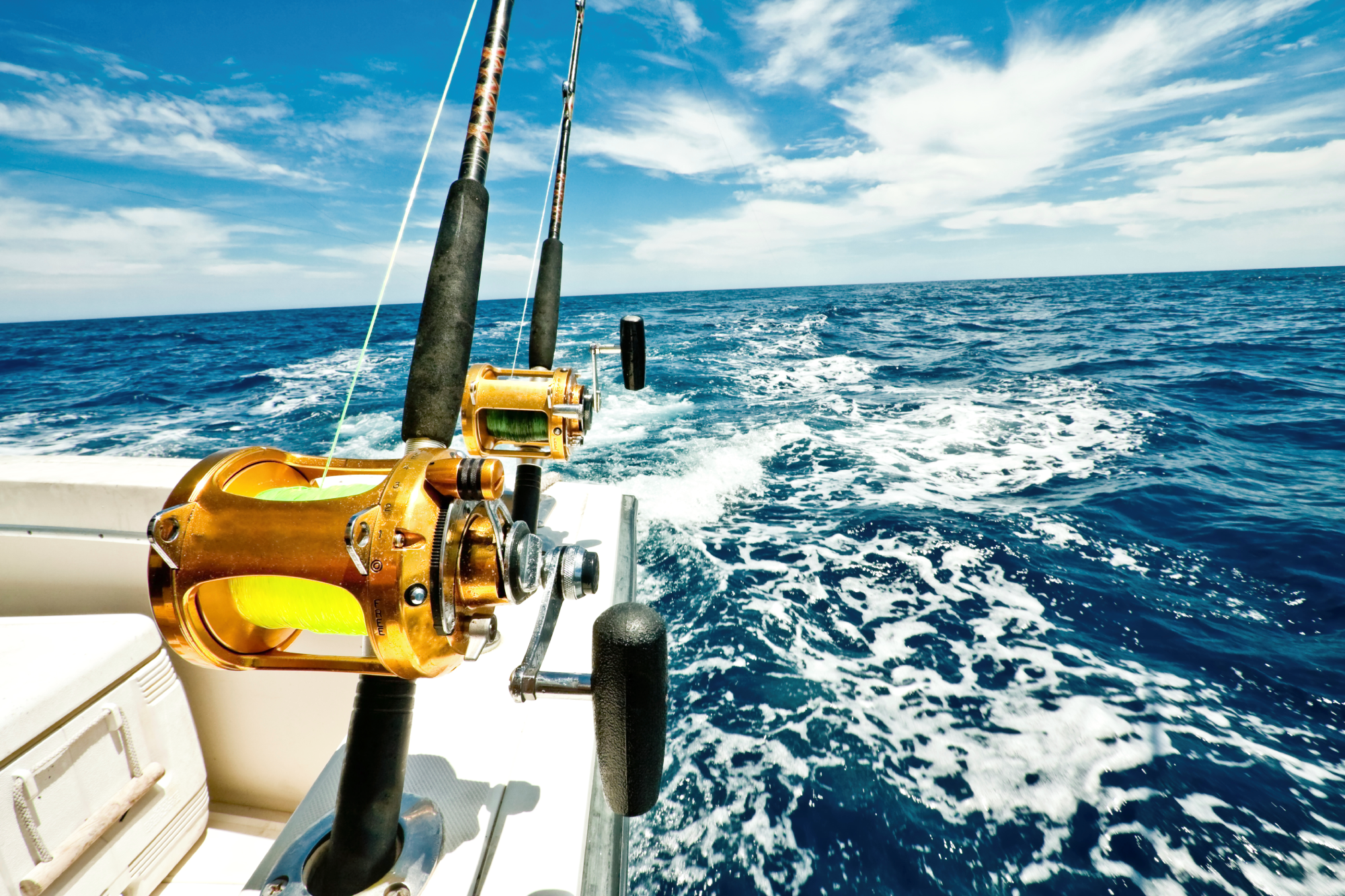
A U.S. member was deep-sea fishing in Costa Rica when he suffered a back injury. He was examined and the treating physician diagnosed three rib fractures and compressed vertebrae. Global Rescue medical operations determined that the initial medical center was not equipped to manage the member’s medical imaging and treatment requirements. A medical evacuation was recommended and the member was transferred to a hospital in San Jose, Costa Rica capable of performing CT and MRI scans so he could continue his recovery.

Motorcycle Accident in Tunisia

An Australian member suffered an injury to his elbow following a motorcycle accident while traveling in Tunisia. X-ray imaging revealed his right elbow was broken, dislocated and would require surgery. Global Rescue medical operations reviewed the reports and recommended the member visit an orthopedic physician for further evaluation. While no concerns were identified, Global Rescue doctors initiated a medical evacuation via a commercial flight to the member’s home to follow up with an orthopedic surgeon for further evaluation. The member arrived in Melbourne, Australia safely where he continues his recovery.

Categories:

News
Share This:

Forbes “Here Are The Best Travel Memberships Of 2023”

Categories:

Health & SafetyTravel
Share This:

Driving in Snow Tips

Are you going to be driving in the snow? Depending on where you live, work and play, driving in snowy conditions may be unavoidable More than 70 percent of roads in the United States are…

Are you going to be driving in the snow? Depending on where you live, work and play, driving in snowy conditions may be unavoidable

More than 70 percent of roads in the United States are located in regions with frequent snowfall, according to the Federal Highway Administration (FHA). And nearly 70 percent of the population live in these areas. That’s a lot of people on the road each snow season, and the numbers reflect the danger:

Each year, 24 percent of weather-related vehicle crashes occur on snowy, slushy or icy pavement and 15 percent happen during snowfall or sleet, according to the FHA.

“Don’t drive in the snow if you can avoid it,” says Harding Bush, security operations manager at Global Rescue. “Especially if you do not have the experience.”

Yet, for many, driving on roads that are wet or snowy is unavoidable. Here are some tips for driving in the snow, and how you can prepare.

  1. Check the weather. “Blizzards are predictable,” Bush says. “When you hear about bad weather coming, pay close attention. You do not want to get caught in one of these storms.”
  2. Always have a full tank of gas. “What would usually take 15 minutes could take 2 – 3 hours if there is snow,” he says. “Always make sure you have a full tank of gas.”
  3. Pack your car with emergency supplies. Bush packs his car with warm clothing, including a pair of winter boots, a warm parka, a wool hat and waterproof mittens; hand and foot warmers; a sleeping bag; a small shovel to clear out the exhaust pipe, if needed; a ready-made snow safety kit. Bush says to make sure you know what is in it and how to use each item. Read more tips here.
  4. Prepare your car for winter travel with snow tires and more. Replace your tires with snow tires and consider tire siping, too, they have treads designed to improve traction on snow. Top off your antifreeze and your windshield wiper fluid. Bush says you’re likely to use a lot of it in a snowstorm and suggests keeping two extra gallons of it in your car.

AWD vs 4WD vs FWD vs RWD

Are you driving a car equipped with all-wheel-drive (AWD), four-wheel-drive (4WD), front-wheel-drive (FWD), or rear-wheel drive (RWD)? Each drive system has its pros and cons and you need to know what capabilities it has on the road. Here’s how to look at the different drives and their capabilities, according to US News & World Report.

FWD vehicles provide superior traction compared to RWD cars in rainy and snowy conditions but they can lose grip easier than AWD vehicles. AWD vehicles have better traction than front-wheel-drive vehicles since every wheel gets power. If one tire begins to slip, three others can work to regain traction.

Not all AWD systems work the same way. Some systems deliver power to all four wheels at all times, other AWD systems are considered part-time since the rear wheels only get power when necessary.

AWD cars and SUVs are ideal for driving over snow-covered roads and in various off-road conditions, but not on slick ice.

4WD systems send equal amounts of power to all four wheels at the same time and are generally much more robust than AWD systems.

Snow Tires, Studded Tires, Siping, and Snow Chains

Snow tires, also called winter tires, have a tread design with larger gaps than those on conventional tires, increasing traction on snow and ice. Tire siping – cutting thin slits across the surface of a tire – is a process to improve traction for driving in snowy, wet or icy conditions.

Bush recommends using your all-season tires for everyday driving in less harsh conditions but to use snow tires in winter for potential travel on snow-covered roads. Even if you have an all-wheel-drive or four-wheel-drive winter tires can be essential.

“If the tires are heavily worn or of a type that is not suitable for snowy/icy/extremely cold conditions, even the best AWD or 4WD systems won’t be able to overcome the traction limitations posed by the tires,” Bridgestone Tire says. “That’s why, if you must drive in severe winter weather, installing a set of winter snow tires can dramatically improve vehicle control regardless of the drive system.”

Should you use studded snow tires? Studded tires have metal studs inserted into the tread to increase grip on ice, making it easier to start and stop on the least friendly road surfaces imaginable, according to Michelin, one of the largest tire manufacturers in the world.

Studded tires provide the best traction you can get, even when you’re encountering ice or packed snow, according to Les Schwab Tires, a private tire retailer with nearly 500 locations in the Western U.S. “They help break through packed snow and ice-covered roads to give you better traction.”

Studded winter tires are always permitted in some states – like New Hampshire and Colorado, restricted in others – like Connecticut and California, and not allowed in a few – like Texas and Michigan. Check your state here.

Consider snow chains. “Whether you put on snow chains or not depends on where you live and what the conditions are,” Bush said. “You will not see many cars with snow chains on the Eastern side of the U.S., but when you get to the Rockies, having them on hand for driving in some areas is essential.”

Slow Down

Even if you have all you need to be prepared, and your car is in top shape, remember to drive at the speed at which you can safely control your vehicle.

“No matter what your experience level, everything is going to take longer,” Bush says. “Your reactions will be slower, turning the wheel will take more time, braking distances will be longer, and you won’t be able to do lane changes as fast as you usually can. Drive further behind people, and drive slowly.”

Travel Prepared

Whether you’re seeking outdoor advice, like snow driving safety tips, or immediate medical or security assistance, Global Rescue operations centers are staffed 24/7/365 to assist members. Click here to contact us about the benefits of membership.

No request is too small. We want you to call with questions. Asking early about destination conditions, a symptom or an injury is an important preventative step, and it’s always good to get in front of an issue before it becomes a crisis.

Unlike other companies, the medical, security, and intelligence expertise is all in-house at Global Rescue. The operations centers are staffed by experienced nurses, paramedics, and military special operations veterans. Experts have experience with hazardous environments, peacekeeping operations, Himalayan expeditions, protection services as well as wilderness skills, and crisis response training. Global Rescue members can tap into this wealth of knowledge with every phone call.