Categories:
NewsFebruary 14, 2022
Categories:
Health & SafetyMissions & Member TestimonialsFebruary 11, 2022

Traveling overseas, especially during a pandemic, triggers most travelers to consider medical evacuation protection.
Rarely do travelers think about those same risks when their itinerary is domestic.
That was Sandy Rodgers’ mindset. “I’ve been a member for several years because I travel a lot and I always have Global Rescue,” she said.
But she changed her mind after leaving New Hampshire for a quick trip with her son to Washington, D.C. during the winter holidays.
“I’ve been a member for several years. I assumed that being in the United States, it would be a piece of cake to get out of trouble or be transported for medical reasons. I soon found out differently. When I got hurt in Washington, D.C. it was impossible to leave without Global Rescue’s help,” Rodgers said.
A Badly Damaged Femur While on Local Holiday
Rodgers had flown from New Hampshire to Philadelphia to pick up her son before the pair drove to Washington, D.C. during the Christmas Holiday.
“We checked in to a really nice hotel and went about our business for a couple of days visiting the Smithsonian museums, doing some sightseeing, and enjoying the restaurants,” she said.
After dinner on Christmas Eve, Rodgers returned to her hotel and went to bed around 10 p.m. She got up in the middle of the night to use the restroom and accidentally fell, landing badly on her leg and hitting her head.
“When I fell, I tried to get a hold of my son who was in another room on an upper floor. He was out like a light and didn’t answer. I called 9-1-1. The next thing I knew, I had four gorgeous firefighters looking out for me,” she joked.
The local first responders transported Rodgers to a nearby hospital where physicians examined her. She underwent surgical care for a right femur (thighbone) fracture. Following two weeks of recovery at the hospital, it was time for Rodgers to receive physical and occupational therapy post-femur surgery and for her to enter physical therapy. Hospital officials suggested she conduct her rehabilitation in D.C.
“I thought that might be the way to go. Do the rehab in D.C. and then go home to New Hampshire,” Rodgers said.
But her D.C. medical team soon discovered her injury didn’t meet the requirements for rehabilitation at the suggested facility. Rodgers needed to switch her follow-up recovery convalescence to a facility in New Hampshire. Unfortunately, there was no provision available to transport her.
She wondered, “How am I going to get out of here? And then I thought of Global Rescue.”
Global Rescue Gets Her Home

Rodgers called Global Rescue and, without any delay, she was on her way out of D.C.
She was able to comfortably sit up for several hours and stand with some assistance. Her D.C. treating physician cleared Rodgers to fly commercial with a medical escort. Global Rescue’s physician staff agreed, initiating the transport and deploying a medical escort to oversee Rodgers’ ground and air transport.
“They were really nice and efficient. I couldn’t believe how good they were,” she said.
Rodgers was transported by ambulance from the hospital to the D.C. airport. After landing in Boston, the Global Rescue team escorted Rodgers by SUV to the rehab facility in Manchester, New Hampshire.
“I never saw a bill, a plane ticket, nothing. The Global Rescue team took care of everything.”
Rodgers plans to tell all her friends and family to get Global Rescue whether they’re traveling globally or locally.
“I’ve got lots of friends who go nowhere overseas and they should know the value of a Global Rescue membership when they’re traveling locally,” she said. “People know Global Rescue can get you off of a mountain. People need to know they can get you to safety locally, too.”
Categories:
Health & SafetyPlaces & PartnersFebruary 7, 2022

Providing emergency medical and security protection for the U.S. Ski & Snowboard team at the Winter Olympics is an ongoing, and ever-changing, operation.
The 2022 Winter Olympics in Beijing, China will be unlike any other because of COVID-19. While the U.S. Ski & Snowboard team set out for the celebrated international competition, Global Rescue is poised to provide emergency support in the event of illness or injury among any of the team members.
“As we have for the past five Winter Games, we have emergency action plans in place for the U.S. Ski & Snowboard team,” said Dan Richards, Global Rescue CEO.
COVID-19 Is Top of Mind
Global Rescue’s role during the Olympics in China is focused largely on medical emergencies and evacuation, especially for COVID-19. This is in stark contrast to the safety and security concerns during the 2016 Winter Olympics in Sochi when threats from terrorism were looming. But both concerns require similar action.
“A threat is a threat, so there really is no difference in the need to leave a situation at a moment’s notice, whether it is an accident, medical emergency or pandemic. Getting out quickly and efficiently is the key,” said Tom Horrocks, U.S. Ski & Snowboard spokesman.
Chinese officials have implemented a closed-loop policy to protect against the spread of the disease.
“Global Rescue medical and security experts will not be allowed on site, but members of the U.S. Ski & Snowboard team will have access to Global Rescue’s on-staff medical experts for real-time consultations with U.S.-based medical professionals who will help sort out any injuries or illnesses, including COVID-19,” Richards said.
What Happens in an Emergency
In the event of a major injury or illness — like a head injury or serious COVID-19 case— U.S. Ski & Snowboard members will be able to supplement on-site diagnoses and treatment with Global Rescue on-staff medical experts.
“With hotline access to medical advisory and a host of other services, the Global Rescue safety net provides an additional layer of protection beyond the closed-loop Chinese officials have installed. Global Rescue medical experts can assess the team member’s circumstance, provide additional medical guidance and arrange for their medical evacuation back to their home hospital of choice in the United States, if necessary,” Richards said.
Official Chinese resources will handle the ground and air transports for local medical evacuations within China. “Any emergency medical situation that requires outside, non-Chinese support will be handled on a case-by-case basis by international government and medical officials. It’s all quite unprecedented,” Richards said.
Global Rescue has helped protect the health and safety of U.S. Ski & Snowboard members since 2006.
“Global Rescue provides valuable travel protection, security and medical resource services for U.S. Ski & Snowboard athletes and staff as they travel abroad to compete on the world stage,” said Sophie Goldschmidt, president and CEO, U.S. Ski & Snowboard.
Global Rescue Membership: Not Just for Medical Evacuations
Travel protection membership is not only for dramatic airborne medical evacuations or rescues, many of our members take advantage of our in-house medical advisory services.
[Related Reading:
The Ultimate World Travel Safety Kit]
“We have a lot of calls about altitude and acute mountain sickness, ski injuries, sinusitis and sinus infections, and traveler’s diarrhea,” said Jeff Weinstein, medical operations supervisor at Global Rescue. Members with medical questions are immediately connected to the Global Rescue Medical Operations team of critical care paramedics, nurses, and physicians. The on-site team is supported by the Elite Medical Group, the Johns Hopkins Emergency Medicine Division of Special Operations, and Partners HealthCare.
Global Rescue’s Intelligence Team monitors travel risk and health safety information around the clock following hundreds of news outlets, social media feeds, government alerts, newsletters, global organizations, podcasts, broadcasts and blogs. This risk information includes COVID-19 hotspots, border closings and new testing requirements.
“Our intelligence group analyzes and publishes destination reports for 219 countries, and Global Rescue members can access this information online or with a phone call,” said Harding Busch, manager of security operations for Global Rescue. “It takes a highly trained team to keep up with what is happening in the world today and the constant ebb and flow of travel alerts require continuous monitoring. Travelers should enroll to receive travel alerts so they can enjoy their time abroad.”
Unlike other companies, the medical, security and intelligence expertise is all in-house at Global Rescue.
Categories:
NewsFebruary 4, 2022
Categories:
Health & SafetyPlaces & PartnersTravelFebruary 4, 2022
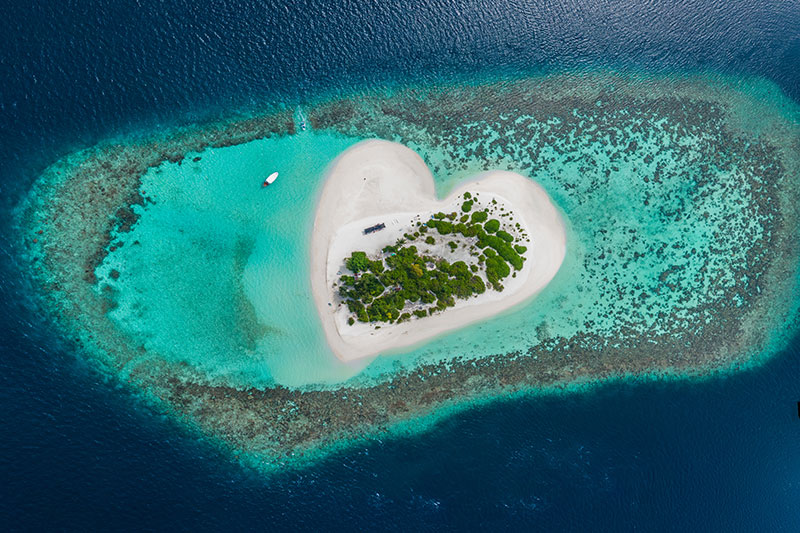
Couples massages and poolside cocktails are nice. But if you’re part of a pair who crave a little adrenaline in addition to your chilled champagne and rose-petal-strewn bed, look no further than this collection of adventure getaways curated by those who know best: Global Rescue Safe Travel Partners.
Heli-Skiing and Sky Gazing in Northern Iceland
Eleven Experience is known for its collection of luxury boutique properties set in far-flung locales with in-house guides who handcraft the ultimate adventure itineraries — everything from fishing in the glacier-carved river valleys of Chile to mountain biking in the Gunnison Valley of Colorado.
[Related Reading:
7 Off-Beat Travel Adventure Alternatives]
But the property that best blends romance and adventure? Deplar Farm, located on a converted sheep farm in the Fljót Valley in northern Iceland. This 12-room Nordic-inspired lodge — decked out in sheepskin, Moroccan wools and textured walls — serves as the launching point to more than 1,500-square-miles of untouched skiable mountain terrain via helicopter from two on-site helipads. That means unrivaled access to rolling descents and steep couloirs with runs averaging around 3,000 vertical feet — some all the way to the ocean. Afterward, treat tired muscles to an evening spent soaking in the lodge’s open-air geothermal pool while the Northern Lights seductively dance overhead.
A Romantic Road in Southern Germany

It’ll be difficult not to fall in love all over again while touring the 285-mile (460-kilometer) scenic byway through Bavaria, known as the “Romantic Road.” Serving up scenes of castle-studded valleys, rolling vineyards and quaint cobblestone villages lined with half-timbered homes, the romantic adventure is the closest thing to driving through a fairytale.
The key is to not rush it; rather, rent a car and plan a thoughtful three- to five-day trip, starting in the northernmost point of the route: the stately baroque town of Würzburg. From there, head south, through the small vineyards of the Tauber Valley to Rothenburg ob der Tauber, which has managed to maintain a late medieval appearance thanks to a still-standing town wall with more than 40 towers. Other stops to hit further south: Nördlingen, populated by snug rows of buildings with red-orange sloping roofs; Augsburg, with its fountains and revered guild houses; and Steingaden, best known for its oval rococo church with a resplendent trompe-l’oeil ceiling. The route culminates in the town of Füssen, at the foothills of the Alps and home to the elaborate Neuschwanstein Castle (if it looks familiar, it’s because it served as the real-life inspiration for Walt Disney’s Sleeping Beauty palace).
A Personal Climbing Route in Southcentral Alaska
Mimi Lichtenstein of Truvay Travel, a Virtuoso-endorsed travel advisor, has done via ferratas before, but she says nothing better caters to a couple’s sense of adventure than the one recently installed in the Alaskan wilderness by Tordrillo Mountain Lodge. (Not sure what a via ferrata is? It’s a fixed steel-cable, protected climbing route that makes scaling a mountain accessible to beginner climbers).
Reachable only by a 10-minute helicopter ride from the lodge, this first and only via ferrata in the state allows climbers (led by a guide) to scale the route’s 900 vertical feet overlooking the Triumvirate Glacier and Tordrillo Mountains. “It’s hard to describe what it feels like once you reach the top of the mountain,” said Lichtenstein. “It’s just you two and the vast wilderness, glaciers, bluebird sky and mountains.”
After scrawling your names in the book among the others who have completed the climb, the helicopter whisks you back to the lodge for a celebratory meal. Think: Alaskan river-to-table dining, starring fresh local halibut, white king salmon and black cod, plus a wine cellar stocked with more than 500 bottles to boot.
Safari and Spa in the Serengeti

Photos courtesy of Singita
Romantic safari lodges are plentiful in Africa. Still, it’s rare to find a place that goes as above and beyond for adventurous couples quite like the Hillside Suite at Singita Sasakwa Lodge in Tanzania. Set in the western corridor of the Serengeti on a hillside in a secluded location away from the main lodge, this private villa for two comes decked in polished parquet floors, vintage collectibles and Persian carpets. More importantly, it’s the ultimate launch point for wildlife viewing — not just because of its sweeping views through floor-to-ceiling walls of windows, two outdoor decks and an infinity-edge pool, but because couples also receive their own private game vehicle and field guide. That means the pace of each day is set according to the guests’ interests and frame of mind, allowing total flexibility over mealtimes and activities.
[Related Reading:
6 Simple Ways to Travel More Consciously]
After a day spent exploring the surrounding 350,000 acres of Serengeti savannah — of which this location is known for lion, leopard and cheetah — return to the butler-serviced suite for an in-room meal, followed by a couple’s massage on the pool deck while the sun sets over the abundant grasslands. It’s the ideal place to find a profound connection with nature as well as each other.
Dining Adventures in the Maldives
What’s more memorable than a romantic dinner for two during your getaway? A romantic dinner set in an out-of-this-world atmosphere — of which two locations in the Maldives more than deliver. Hurawalhi Island Resort, set in Lhaviyani Atoll, and Soneva Fushi, located in the neighboring Baa Atoll.
“Soneva Fushi has been on my personal bucket list ever since I saw their bungalows with slides going into the sea,” said Lichtenstein of Truvay Travel. But in late 2021, it brought luxury to new adventurous heights with the world’s first-ever fine-dining zip-line experience. You read that right: Couples zip through the resort’s thick jungle, indulging in a series of hors d’oeuvres at each platform, before removing their harnesses and tucking into the final six-course meal in the open-concept treetop kitchen.
Prefer to stay lower to the ground? How about the ocean floor? “Hurawalhi Island Resort is a 90-villa adults-only luxury resort offering the world’s largest panoramic underwater restaurant that is unlike anything else,” said Lichtenstein. Located 19 feet below sea level, the intimate restaurant is housed in an all-glass, dome-shaped structure. With virtually no obstruction to the sea, diners aren’t just treated to dinner, but a surrounding show of fluttering marine life as far as the eye can see.
A Double-Dose of Remote Romance in Belize

Photos courtesy of Choose Belize
“Belize’s Gladden Island and Valley Stream are about as secluded as anything can get,” said Polly Alford of Choose Belize, a booking site and travel company specializing in personalized, luxury beach, island and jungle vacations. “By doing a combo-stay — four nights at Gladden, then four nights at Valley Stream — you get to experience the best of both Belize’s natural settings: the barrier reef and the jungle rainforest.”
Located on a caye 20 miles northeast of Placencia near the widest section of the Belize Barrier Reef, Gladden Island has been hailed time and time again as “the most private island resort in the world.” There’s even a “privacy meter” installed on-site to indicate if you’re alone or if a staff member is visiting the island at your request (the staff resides unseen on another neighboring island). While couples can snorkel, scuba, spearfish and more, one of Alford’s suggested pastimes is simply taking in unobstructed views of the Caribbean Sea from the villa. “You can open the walls of windows up for an open-air tub experience or take your dinner on the rooftop with an up-close-and-personal view of the reef.”
After a 30-minute helicopter flight over the ocean and the mainland’s Maya Mountains, sister resort Valley Stream offers the same unparalleled level of solitude, perched 500-feet up on a cliffside in the middle of the remote jungle. “You feel like you’re staying in a tree,” said Alford. “There’s nothing like sitting in that infinity-edge hot tub and pool in the warm rain looking out to the 200 acres of surrounding rainforest.”
A Walk to Remember in the Czech Republic
When it comes to romance, the city of Prague will always be special for Shane Jones and Barbara Haight, founders of Worldwide Adventure Guides. It’s not only where they first fell in love (they traveled there together as friends, returned as something more), but it’s where Jones proposed to Haight, where they had their wedding in 2008 and where they’ve celebrated subsequent anniversaries.
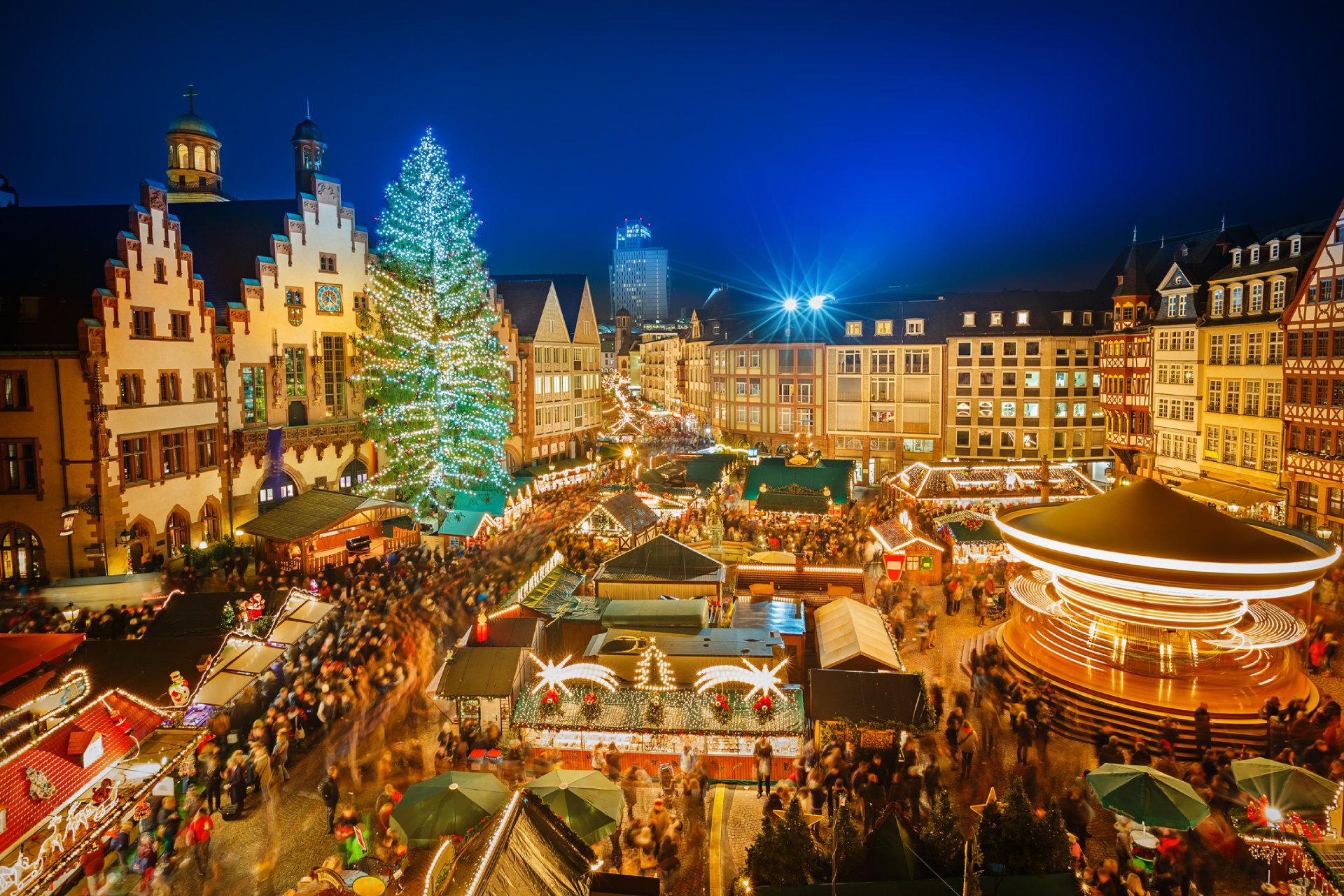
“One of the most romantic ways to spend a day is simply walking through the stunning city,” said Jones. Specifically, he suggests meeting under the centuries-old Astronomical Clock in the Old Town Square, then buying a hot mulled wine (known as “gluhwein”) from a street vendor. From there, stroll along the charming winding streets and alleyways — stopping at any of the cafes, shops or pubs that catch your eye — to the famous Charles Bridge. Continue making your way up to Prague Castle to get a stunning view of the city from high above it. “Everyone should do this stroll at least once in their life,” said Jones. “We do it every time we visit Prague.”
Travel Protection for You and Your Sweetheart
We all want to protect the ones we love. Whatever your romantic couples adventure entails, be certain to include protection — Global Rescue medical emergency and evacuation protection. Whether sick (even with COVID-19), injured or simply looking for medical advice during your travels, a Global Rescue family membership is like having a team of medical and security experts right in your back pocket. Not to mention, you don’t have to be married to qualify for a family membership (like some other providers do) — cohabitation and living at the same address is sufficient.
Get a price estimate
Estimate
$0.00
Please answer all questions for estimate.
Categories:
NewsFebruary 3, 2022
Categories:
NewsFebruary 2, 2022
Categories:
Press ReleaseFebruary 1, 2022
Lebanon, N.H. – February 1, 2022 – The 2022 Winter Olympics in Beijing, China will be unlike any other because of the COVID-19 threat. While the U.S. Ski & Snowboard team prepares for the celebrated international competition, Global Rescue is poised to provide emergency support in the event of illness or injury among any of the team members, as the company did during the 2006, 2010, 2014, 2016 and 2018 Winter Games. “As we have for the past five Winter Games, we have emergency action plans in place for the U.S. Ski and Snowboard team,” said Dan Richards, Global Rescue CEO.
“Chinese officials have implemented a closed-loop policy to protect against the spread of the disease. Global Rescue medical and security experts will not be allowed on-site, but members of the U.S. Ski & Snowboard team will have access to Global Rescue’s on-staff medical experts for real-time consultations with U.S.-based medical professionals who will help sort out any injuries or illnesses, including COVID-19,” Richards said.
Global Rescue has helped protect the health and safety of U.S. Ski & Snowboard members since 2006. “Global Rescue provides valuable travel protection, security and medical resource services for U.S. Ski & Snowboard athletes and staff as they travel abroad to compete on the world stage,” said Sophie Goldschmidt, President and CEO, U.S. Ski & Snowboard.
In the event of a major injury or illness — like a head injury or COVID-19 — U.S. Ski & Snowboard members will be able to supplement on-site diagnoses and treatment with Global Rescue on-staff medical experts.
“With hotline access to medical advisory and a host of other services, the Global Rescue safety net provides an additional layer of protection beyond the closed loop Chinese officials have installed. Global Rescue medical experts can assess the team member’s circumstance, provide additional medical guidance and arrange for their medical evacuation back to their home hospital of choice in the United States, if necessary,” Richards said.
Official Chinese resources will handle ground and air transports for medical evacuations. “Any emergency medical situation arising that requires outside, non-Chinese support will be handled on a case-by-case basis by international government and medical officials. It’s all quite unprecedented,” Richards said.
“U.S. Ski & Snowboard athletes, coaches and staff are introduced to Global Rescue throughout many membership area touchpoints, including information contained in membership and sport education emails and through the benefits platform at my.usskiandsnowboard.org,” said Tom Horrocks, U.S. Ski & Snowboard.
Global Rescue’s medical emergency and evacuation role during the Olympics in China is the larger focus compared to the safety and security concerns during the 2016 Winter Olympics in Sochi when threats from terrorism were looming. But both concerns require similar action.
“A threat is a threat, so there really is no difference in the need to leave a situation at a moment’s notice, whether it is an accident, medical emergency, or pandemic. Getting out quickly and efficiently is the key,” Horrocks said.
Contact Bill McIntyre at bmcintyre@globalrescue.com or 202.560.1195 (phone/text) for more information.
About Global Rescue
Global Rescue is the world’s leading provider of medical, security, evacuation and travel risk management services to enterprises, governments and individuals. Founded in 2004, Global Rescue has exclusive relationships with the Johns Hopkins Emergency Medicine Division of Special Operations and Elite Medical Group. Global Rescue provides best-in-class services that identify, monitor and respond to client medical and security crises. Global Rescue has provided medical and security support to its clients, including Fortune 500 companies, governments and academic institutions, during every globally significant crisis of the last decade. For more information, visit www.globalrescue.com.
February 1, 2022
Not every Global Rescue member needs an emergency evacuation. Some are confidently pursuing their dreams knowing they have a Global Rescue membership. Take, for example, this unlikely mountaineer from Mumbai who summited Mount Everest in 2021 after beating COVID-19 a few days before summiting. He also completed the trek using only eco-friendly means.
Harshvardhan Joshi may be one of the most talked-about mountaineers to summit Everest in 2021. Google his name and the headlines populate the proof: “25-yr-old conquers Everest, days after recovering from Covid-19,” and “Indian climber Harshvardhan Joshi claims historic ‘green summit’ of Everest.” In the last year alone, he’s delivered 17 motivational speeches, including a recent TEDx Talk about the power of grit. He even has his own Wikipedia page.
So, it’s hard to believe the soft-spoken 26-year-old native of Vasai, India (located on the outskirts of Mumbai), is also the unlikeliest of mountaineers. He’ll be the first to admit it, too.
“If you had told me at 15, 16, 17 years old that I would have done this, I wouldn’t have believed it either,” said Joshi, who goes by the nickname “Harsh.” “Back then, I hadn’t ever run a full 100 yards in my life.”
That’s what makes the story of 26-year-old Joshi — a Global Rescue member since 2019 — so fascinating. How did this IT engineer, who long preferred academia to the outdoors, become a renowned endurance athlete, having summited major peaks like Stok Kangri (6,153 meters/20,187 feet), Lobuche East (6,119 meters/20,075 feet) and, now, Mount Everest (8,848 meters/29,032 feet)? Global Rescue sat down with him to find out.
Joshi’s Journey to Mountaineering

“A lot of people who see me now, especially on social media, think I was always this outdoorsy person,” said Joshi. But, given his humble background in a lower-middle-class family, he was always more concerned with excelling in school in order to secure a solid living. At age 15 — just after he completed 10th grade — he had already started his own business, assembling and selling computers, while pursuing a degree in IT engineering.
“There were a group of doctors who became my clients, then my friends,” said Joshi. “They were also avid trekkers and, one day, took me on a hike to a nearby sanctuary.”
That first visit to the 85-square-kilometer Tungareshwar Wildlife Sanctuary — where he still regularly trains today — was what began his love affair with the outdoors. He started training and learning about wilderness survival and, after borrowing his doctor friends’ gear, completed his first Himalayan trek in 2014. By age 18, he had made it his goal to climb Everest. He wasn’t sure when it would happen; he just knew he couldn’t do it if he went for his MBA in the U.S. like he had originally planned.
“I would rather work toward climbing Everest. I knew it would teach me more about life,” he said. “I realized adventure travel is a much richer and better learning experience.”
He decided, before furthering any career plans, Everest would come first.
Mission Mount Everest Starts…Then Stalls
Over the next several years — between 2014 and 2019 — he completed nine separate month-long courses in outdoors and mountaineering, developed and committed to a rigorous training regime, honed his skills on other challenging Himalayan mountains and also worked as a mountaineering guide in Ladakh. He began fundraising and set his Everest expedition — which he named Sangharsh Mission Mount Everest (“sangharsh” translating to “challenges” in Sanskrit) — for the 2020 spring climbing season.
Unfortunately, it would be canceled on account of the pandemic.
[Related Reading:
What You Need to Know About the 2022 Climbing Season]
“For two months in lockdown, I couldn’t run or go outside,” said Joshi. “I thought, ‘Oh no, what if I have an existential crisis?’”
What helped was channeling his energy into a different goal: training for, self-organizing and completing his first triathlon. On October 10 — a date he selected because it was World Mental Health Day — he completed the 70.3-mile venture from Palghar within eight hours.
Conquering Everest Despite Another COVID Curveball
Flash-forward to spring of 2021 and Joshi’s Everest expedition was back on. But, on May 8, after a month of patiently waiting at base camp and mere hours of setting off for the summit, he tested positive for COVID-19 (confirmed by two rapid antigen tests).
“I thought ‘I cannot give up right away and go down: I am acclimated to this altitude, Katmandu is in a bad state, I have extra supplemental oxygen,” he said.
Asymptomatic and fully vaccinated, he elected to isolate in his tent for 11 days, reminding those who questioned him that he had Global Rescue, and, if he had even the smallest complication, he wouldn’t hesitate to utilize the emergency rescue.
After 10 days of isolation, he was testing negative and the emergency care unit at base camp that had been monitoring his breathing cleared him to continue his expedition. The weather window came on May 19, and, that night, he and his two high-altitude guides, Furte Sherpa and Anup Rai, set off for the summit.
His original plans were to scale Everest, then Lhotse — which would make him the first Indian to complete that traverse — but the team decided to switch the order since Everest’s neighbor would have fewer climbers. By May 21, he had reached Camp 3. This would have been where he went for Lhotse, but with the weather window closing due to a second cyclone, he had to make the tough decision to scrap Lhotse altogether and simply go for Everest.
[Related Reading:
A Mount Everest Evacuation for “The Cuban Mountaineer]
Despite 50-mile-per-hour winds, on May 22 at 9:40 p.m., the team made their way from Camp 4 to the summit. “It was very uncomfortable,” said Joshi. “It felt like we were in a blender that was on the moon.”
At 6:40 a.m. the next day, they reached the summit. While the celebration was short — only 15 minutes as the weather was worsening and Joshi was growing more sleep-deprived by the minute — he was grateful for getting his chance and making it.
“We were on a time bomb this year,” he said. “Many good people had to retreat. I’m thankful I didn’t have to.”
Scaling Mountains Sustainably to Promote Solar Power

The other feature setting Joshi’s Everest mission apart was the way in which he did it: powered completely by solar energy to bring attention to clean, renewable energy. It’s a cause he can relate to: He’s seen the effects of climate change firsthand during his time in Ladakh, as well as witnessed how many remote villages in the Himalayas lack electricity.
“Without electricity, these people lose at least 12 hours of their life a day. It deprives them of education, health care and communication, keeping them in poverty,” said Joshi.
“Solar, renewable energy can solve problems not just related to climate change but also on a socio-economic front.”
During his Everest expedition, he took three 40-watt solar panels with a battery system to power base camp; a smaller, portable system, which he hoofed up to Camp 2 (6,400 meters/21,000 feet); then, finally, he carried a solar-charged power bank until the final camp in the “death zone” at 8,000 meters.
After he reached the summit, Joshi donated the solar panels used during the expedition to local Nepalese villages that do not have electricity. He was also able to give additional donated panels to power 10 homes in some of the most remote regions of the Himalayas: Turtuk and Ladakh in India, the Makalu region in Nepal and a school in the village of Dharharwa in Bihar.
“The message I want to spread: If we can stay solar for two months in one of the most hostile environments on Earth, imagine where else we can bring this technology and what wonders it can do?”
What’s Next for the Mountaineer from Mumbai
While his Everest expedition is complete, Joshi is hardly resting on his laurels. He’s currently working on a book, studying for the GMAT, spending as much time in his local outdoors as he can and forming plans to move to the U.S., which he calls his next “Everest.” There’s also a documentary about him in the works which should premiere sometime in spring of 2022 (see the trailer here).
Of course, he’s still chasing new mountaineering goals, including promoting mountain climbing among people of color and attempting two more big Himalayan mountains in the fall of 2022 (as for which ones, he is keeping that under wraps for now).
“My long-term goal is to create awareness about safety in the mountains, making adventure sports more accessible and sustainable,” he said. “I’m happy to have come across organizations like Global Rescue who share in that same mission.”
January 28, 2022
Windy Corner on Mount Denali’s West Buttress route in June of 2021. | Photo © Michael Moss, a Global Rescue 2021 Photo Contest submission
Alpha, Delta, Omicron. For more than two years, the coronavirus pandemic has disrupted international mountaineering, closing or limiting access to popular, challenging mountains worldwide. Where high-climbers were permitted to go, they faced tough COVID-19 protocols to prevent spreading the disease in the region and within their climbing group. Often, those precautions worked, but not always.
A Look Back at 2021
The pandemic climbing experience has taught a few lessons to guides and climbers alike. Lukas Furtenbach owns Furtenbach Adventures and says he shouldn`t have run expeditions on Mount Everest last spring when few people were vaccinated. “Now, with all staff and clients vaccinated I have less concerns,” he said.
Harshvardhan Joshi, a 26-year-old IT engineer and native of Vasai, India, may be one of the most talked-about mountaineers to summit Everest in 2021 because he did so a few days after recovering from COVID-19.
A month of patiently waiting at Mount Everest Base Camp and a few hours before setting off for the summit attempt, Joshi tested positive for COVID-19. He didn’t want to give up. “I am acclimated to this altitude. I have extra supplemental oxygen,” he said.
Asymptomatic and fully vaccinated, he elected to isolate in his tent for 11 days, reminding those who questioned him that he had Global Rescue, and, if he had even the smallest complication, he wouldn’t hesitate to initiate an emergency rescue. He eventually tested negative and was cleared to continue his expedition. On May 23, he reached the summit.
Looking Forward to the Upcoming Season

Mera Peak in Nepal at 6,440 meters (21,130 feet). | Photo © Santosh Khatelsal, a Global Rescue 2021 Photo Contest submission
It’s unclear what COVID-19 or its variants will mean for the upcoming spring climbing season. But experts are making predictions based on their experience and observations.
“Like most things, high-climbs in the Himalayas are still unclear,” said Dan Stretch, operations manager for Global Rescue who is regularly based in Nepal during the Mount Everest climbing seasons. “Last year Mount Everest hit record permit numbers but it happened very late. Climbing rules relating to COVID-19 were unclear and responsible expedition organizers took it upon themselves to research and follow best practices for their groups – social distancing, hygiene, vaccinations for staff,” he said.
Stretch says the COVID-19 infection numbers were high among climbers. “There aren’t any official numbers as reporting was unorganized and discouraged but there were large groups where all climbers got COVID-19,” he said.
Stretch expects much of the same for Nepal in 2022. “Responsible expedition organizers will take precautions and enforce rules to protect their climbers and the local community. Some low-cost operators will not,” he said.
Mark Gunlogson, Mountain Madness, predicts everything is a moving target due to travel restrictions and spikes in COVID-19 cases. “The only real thing to expect is to be ready for the unexpected. Where we have had climbers go on international trips we’ve had good results with our trips and people not getting COVID-19,” he said.
Gordon Janow, Alpine Ascents, agrees that climbers and trekkers should expect an everchanging set of rules and entry requirements. “We really haven’t seen much in the way of COVID-19-related evacuations this winter, so perhaps the stringent guidelines helped. I think for those whom travel is a lifestyle, they will continue to do so. Those who can sit back and push a climb like Mount Everest off another year will likely do that,” he said.
In South America, Lukas Furtenbach, Furtenback Adventures, says Aconcagua National Park will be open for a short window through mid-February but Argentina is still closed to international tourists. “Carstensz has the same situation. Mount Elbrus and Mount Kilimanjaro are open. Denali is open for U.S. citizens only. Trips are selling out so climbers are hopeful. I give it a 50% chance,” he said.
COVID-19 Protocols of Which To Be Aware

After testing positive for COVID-19 at Everest Base Camp during the 2021 spring season, Harshvardhan Joshi isolated himself in a solo tent for 11 days. | Photo courtesy of Harshvardhan Joshi
Legendary mountaineer and member of Global Rescue’s Mountain Advisory Council, Ed Viesturs, says the COVID-19 protocols are a challenge but seem to be working. “I just came off of the Antarctic continent from climbing Vinson. It’s been an interesting journey to get to Chile. It’s one of the strictest countries to allow incoming international travel. They require vaccinations plus a PCR test once you arrive,” he said.
Viesturs noted that the expedition outfitter also employed tough COVID-19 protocols. “Everyone had to add an additional 5 days of travel simply to deal with the required testing. It’s a hassle for sure, but it ensures that once here we can maintain a sort of COVID-19-free bubble,” he said.
Stretch advises climbers to vaccinate for Nepal. “It makes the entry requirements far easier. Nepal currently requires unvaccinated travelers to quarantine for 10 days on arrival, negative test and will need prior approval to travel. Vaccinated climbers can obtain a visa on arrival, along with negative test 72 hours prior to departure. Travelers need to keep a close eye on these rules because they frequently change at short notice,” he said.
Stretch predicts that 2022 will be wide open on Mount Everest. “If 2021 is anything to go by, there won’t be any limitations on group size. Expect record permits distributed with no enforced rules. Climbers should go with expedition organizers who take COVID-19 precautions seriously,” he said.
Gunlogson expects the past year’s experience will streamline things for the 2022 spring season. “Travel restrictions by host countries have generally dictated what is required and that takes the pressure off guide companies to make some hard decisions. With the increasing availability of testing kits, smaller groups, staying places where there are reduced capacity accommodations all makes it is possible to navigate the obstacles posed by COVID-19,” he said.
Janow agrees that testing is essential. “Self-tests are good for climbers to carry, and expedition operators should have them as well. These were effective for us last year when we had no clients test positive all season,” he said.
Furtenbach’s outfit has mandatory, vaccination requirements for all members and staff, plus additional PCR tests as needed.
“Climbing by its nature is socially distanced and if climbers and organizers take precautions seriously, then it can be done safely,” Stretch said.
Gunlogson advises all guide companies to have flexible cancellation policies, and climbers should have robust travel protection. “Now, more than any time I can recall, travel insurance and medical evacuation protection are essential for people to avoid losing money if their trip is disrupted due to COVID-19 or unwillingness to risk traveling,” he said.
Viesturs is keeping his eyes open. “It’ll be interesting to see what countries like Nepal, Pakistan and China require for entry this spring. Outfitters will instigate their own protocols to protect their clients as well as their business operations,” he said.
Categories:
Health & SafetyMissions & Member TestimonialsJanuary 25, 2022
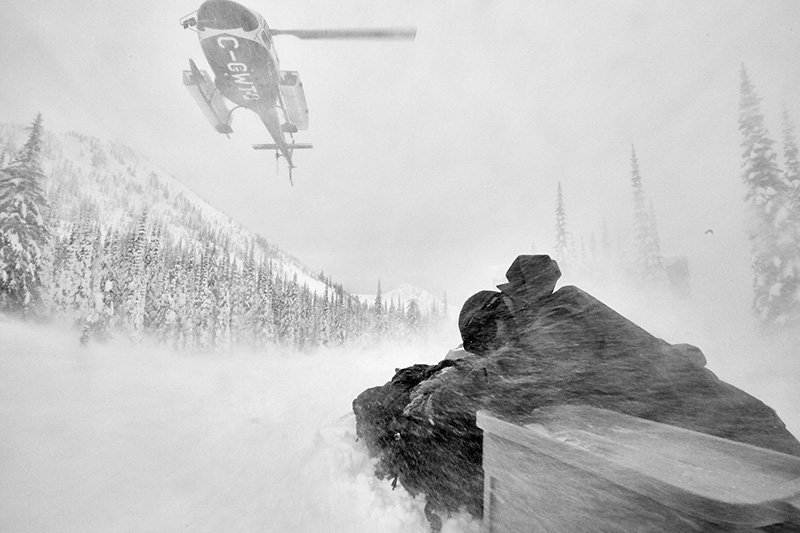
Photo © Har Rai Khalsa, a winner of the Global Rescue 2021 Photo Contest
Alpha, delta and omicron — the coronavirus variants are making news media headlines spurring new and renewed travel restrictions by governments and health authorities. Nevertheless, travel through the winter holiday months of November and December climbed compared to the year before. As COVID-19 trepidations ebb and flow, pent-up desire to travel led to more people returning to travel. Global Rescue continues to answer the service needs of travelers, including for COVID-19, here and abroad without any disruptions. In a typical one-month period, Global Rescue completes hundreds of operations in dozens of countries and principalities. Below are highlights from some of our most recent operations in various locations.
Frostbite in Mount Himlung, Nepal
Suffering from frostbite on his face and hands after being stranded above 19,685 feet/6,000 meters in a snowstorm on Mount Himlung, a Global Rescue member needed rescue from Camp 2. Unable to walk and his vision blurred from snow blindness, the Global Rescue medical operations team initiated a helicopter evacuation. The member was safely transported to a hospital in Kathmandu where he was evaluated and given care. His vision was restored with no permanent damage to his eyes. He was released from the hospital with instructions to follow up for further surgical treatment of his frostbite.
Machete Cut Hiking in Ecuador

A 43-year-old Global Rescue member was hiking in Llanganates National Park in Ecuador when he accidentally cut his right knee with a machete while clearing a path. His hiking partner performed first aid to stop the bleeding and contacted Global Rescue for help. Due to the rough terrain, there was no suitable helicopter landing site. Global Rescue medical operations arranged for a long-line rescue with a medical escort and ground transport from Llanganates National Park to Quito, Ecuador. The member was successfully evacuated and transported to a medical facility. His wound was treated and stitched closed and he is continuing his recovery from home.
Medical Evacuation From Eritrea
Suffering from thrombocytopenia — a condition in which you have a low blood platelet count — a Global Rescue member in the northeast African country of Eritrea needed medical evacuation. The member was in a local hospital with limited resources in Amara, Eritrea, where she received a blood transfusion and a colonoscopy to rule out the cause of the bleeding. After 10 days in the medical facility, her treating physician recommended she receive further care in her home country hospital of choice. The Global Rescue medical operations team arranged the member’s return flight and that of her non-medical escort’s travel. The transport was successful and the member has remained stable.
Motorcycle Mishap in Mexico
A 57-year-old Global Rescue member sustained a severe leg injury as a result of a motorcycle accident in Santa Rosalia, Baja Sur. He was transferred to a local hospital where an X-ray revealed a fracture of the distal third, left femur. The local treating physician recommended surgery and transfer to a higher level of care facility. Global Rescue medical operations doctors agreed and the member was successfully evacuated by jet to his home country hospital of choice in Austin, Texas.
Snow Blindness, Exhaustion Triggers Long Line Rescue

Ama Dablam is one of the toughest Himalayan mountains to summit, and getting sick or injured at Camp 3 requires a long-line helicopter rescue. That was the case for an exhausted 36-year-old Global Rescue member who had successfully summited the mountain but began suffering from snow blindness in the left eye and shortness of breath during her descent. Global Rescue medical operations team members initiated the successful long line helicopter rescue. The member was evaluated and treated in a nearby hospital where she was diagnosed with left eye photokeratitis.
Chest Pains on Mera Peak
Mera Peak is a mountain in the Barun sub-section of the Himalaya and, reaching 21,247 feet/6,476 meters, is considered one of the highest trekking peaks in the world. The conditions proved to be a challenge for a Global Rescue member who experienced dizziness, chest pains and shortness of breath during his summit attempt. With the help of his guide, the member descended to a lower altitude to help improve his symptoms. Despite some improvement, his oxygen saturation was dangerously low. After a night of rest, hydration, Ibuprofen and Diamox, his symptoms did not improve. The Global Rescue operations team commenced a helicopter field rescue. The member was successfully evacuated to a local hospital where he was evaluated and treated for mild high-altitude pulmonary edema (HAPE). He was subsequently discharged the same day with prescriptions for cetirizine and cough medicine.
Motorcycle Crash in Peru

A Global Rescue member lost consciousness and suffered memory loss and mild neck soreness after an accident when his motorcycle went off the roadway into a ditch in Peru. The member was transported to a local clinic for initial evaluation. Global Rescue medical operations arranged for the member to have a bedside advocate while he was in the hospital. Treating physicians recommended moving the member to a Lima, Peru medical facility with a higher level of care. The member was initially diagnosed with CVA hemorrhage and was admitted to the ICU. After a few days, his condition improved, and he was deemed fit to fly back to his home country hospital of choice.
Long Line Rescue on Ama Dablam
Experiencing severe difficulty breathing, headache and dizziness while in Camp 2, Ama Dablam in Nepal a Global Rescue member collapsed while he was receiving oxygen. Due to the steep terrain, a ground rescue was ruled out and a long line helicopter rescue was initiated by Global Rescue medical operations. The transport was successful and the member was evaluated and stabilized at a local medical facility before transport to a Kathmandu hospital with a higher level of care. The member was diagnosed with high-altitude pulmonary edema (HAPE) with pneumonitis and was admitted overnight for observation and treatment. The member remained stable overnight and was discharged the following day.
Shoulder Injury After Falling Off A Motorcycle
Falling off a motorcycle is never ideal, even if the two-wheeler is at a full stop. That’s what happened to a Global Rescue member who injured her left shoulder after rolling off a stopped motorcycle on an uneven road on Chachapoyas, Amazonas in Peru. She was taken to a medical facility where she was diagnosed with a fracture of her left humerus. Needing specialized surgical care, Global Rescue medical operations recommended evacuation to the member’s home country hospital of choice in Arizona, U.S.
Gastrointestinal Emergency in Liberia

After being hospitalized in Monrovia, Liberia due to gastrointestinal perforation and bleeding, a 64-year-old Global Rescue member needed medical evacuation for further care. Global Rescue medical operations initiated an aeromedical transport for the member to a higher level of care hospital in Paris, France, where she was admitted for further care. An endoscopy showed two bleeding ulcers which were cauterized successfully. A few days later, the member was discharged and arrived at her home in the U.S. safely.
Horseback Riding Accident in Idaho
Global Rescue medical operations responded to a member following a horseback riding accident that caused back and hip pain. The member was transported to the regional trauma center in Boise, Idaho, where he was evaluated and treated for his injuries. The member underwent surgery where the medical team placed a titanium rod in his left femur. He also sustained rib fractures and damage to his sternum. The member was certified fit-to-fly with a medical escort provided by Global Rescue and arrived safely in his home in Maryland.
Bad Ski Landing in Austria
A bad landing while skiing during a training trip in Austria led to a badly damaged knee for a Global Rescue member. An MRI at a nearby orthopedic clinic and further evaluation by Global Rescue medical doctors revealed a severely broken knee, specifically a posterior edge fracture of the dorsolateral tibial plateau and a delicate impression fracture of the lateral one femoral condyle. There were also cartilage lesions on the lateral femoral condyle and an interstitial tear of the posterior horn of the medial meniscus. With his knee in an immobilizer, the Global Rescue medical operations team recommended an upgraded flight to his home country hospital of choice to provide ample legroom to elevate his leg during the flight. The member was successfully transported to San Diego, California.