
Share This:

False Positive COVID Testing in Broad Peak Mountain

Coronavirus symptoms can look like the flu, a cold, allergies, even acute mountain sickness. What should climbers know about false positive rapid COVID tests at high altitudes?

Coronavirus symptoms can look like the flu, a cold, allergies, even acute mountain sickness. What should climbers know about false positive rapid COVID tests at high altitudes?


COVID has given us a lot to think about. We learned coronavirus symptoms look like the flu, a cold or even allergies. But, now, we are learning about COVID tests and the questions they raise.  

[Related Reading: Not All Symptoms Lead to Coronavirus]

It was thought all COVID tests were created equal. Later, we learned that proctored tests were better for travel and home tests were acceptable for employment or school, sometimes. And now, following the mountain climbing season in the Himalaya and Karakoram ranges, which include Mount Everest, Broad Peak Mountain and K2, we are discovering cold weather can lead to false positives for COVID-19.  

Mountaineers needing medical assistance are — sometimes testing positive for COVID-19 while at high altitudes in cold weather. But later, these same mountaineers test negative for the disease when they arrive at a medical facility and receive a PCR test.  

“There were several COVID cases during the spring 2022 climbing season in the Himalaya and Karakoram regions. Some were true COVID cases, while others were acute mountain sickness, HAPE, HACE or the flu,” said David Koo, the associate director of operations for Global Rescue and a former combat medic and emergency nurse who was deployed to Nepal for the climbing season.  

COVID Symptoms for a German Mountaineer

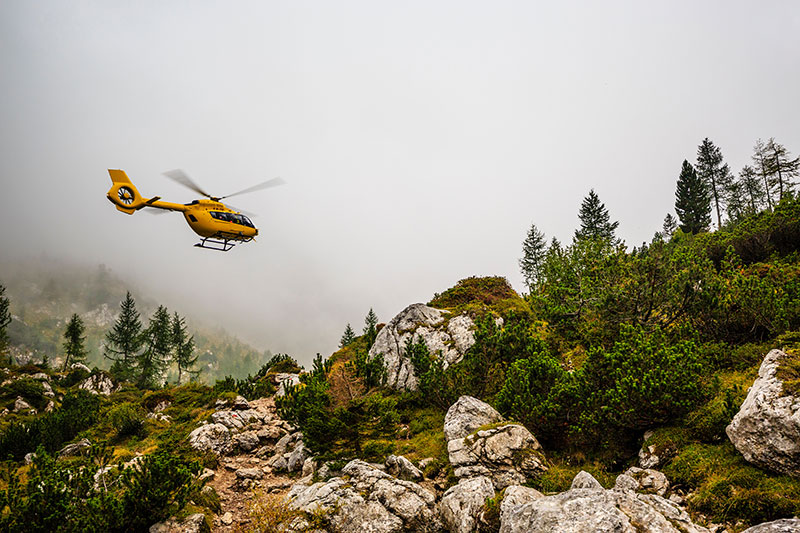
A German Global Rescue member who was mountain climbing needed a helicopter field rescue from Broad Peak, the 12th-highest mountain in the world, located in the Karakoram on the border of Pakistan and China. It rises 26,414 feet/8,051 meters above sea level. Broad Peak is a challenging, steep climb with dangerous upper sections and a summit ridge that has turned back some of the best mountaineers, according to climbing expert Alan Arnette. “It is not an easy mountain,” he said.  

During an ascent from 13,779 feet/4,200 meters to 16,404 feet/5,000 meters, the member declared he was weakening, but pushed forward, according to the expedition leader. Unfortunately, his condition worsened. By the middle of the section trek, he felt frail and could not walk. He was placed on a donkey until they reached the Broad Peak base camp at 16,404 feet/5,000 meters.  

By then, the member had a severe cough, a fever of 102.56° F/39.2° C, an oxygen saturation level of 75% and was unable to fully sleep or eat well. He tested positive for COVID-19 using an antigen kit. The expedition leader contacted Global Rescue and an airborne medical evacuation was initiated.  

The member was transported to a hospital in Skardu, where he was evaluated and diagnosed with acute mountain sickness and given antibiotics, IV fluids, nebulization and medication for the fluid in the lungs while at the hospital. He was re-tested for COVID-19 using a PCR test, which was negative, unlike the result given to him at more than 16,000 feet/5,000 meters on Broad Peak Mountain where the temperatures dip well below freezing (1° F/-17° C) and even lower with the wind chill factor (-15° F/-26° C). 

Why False Positive?

positive-covid-test

What causes a false positive rapid COVID test? Does altitude affect the efficacy of a COVID-19 test? Does cold weather do the same?  

“Most of the at-home tests authorized by the Food and Drug Administration (FDA) should be stored at 35° F (1.6° C) or above. Below that temperature, the testing liquid can freeze, potentially decreasing its effectiveness,” according to a report in VeryWellHealth. 

COVID-19 test makers account for weather changes, according to the FDA. The tests should be performed in temperatures around 59–86° F (15–30° C).  

“Since shipping conditions may vary, test developers perform stability testing to ensure that the test performance will remain stable when tests are stored at various temperatures, including shipping during the summer in very hot regions and the winter in very cold regions,” according to the FDA 

For example, BinaxNow tests recommend storing the tests at 35.6–86° F (2–30° C). Ellume advises users to keep their tests at 59–95° F (15–35° C). Both must be used at room temperature, generally 70° F (21° C). 

Tests kept outside in cold temperatures are likely to lose some effectiveness. If it’s cold out, let the unopened test sit inside for at least two hours until it reaches room temperature, according to the FDA.  

“If a test kit is exposed to extreme temperatures, if you’re in the Rockies or the Himalayas for example — anywhere it’s below freezing — the results may not be reliable.  You may want to repeat the test and also monitor yourself for symptoms. As a guide, we do not rely only on test results to determine your medical condition.  A medical professional will review the result with accompanying signs and symptoms,” Koo said.  

Some rapid antigen tests are delivered and left outside someone’s home or workplace before the owner can pick them up. If the weather is cold, will your test kit be damaged? Probably not.  

“If you’re in a part of the world where the temperature dipped to 35° F (2° C) after the carrier dropped it off and [it] didn’t get colder, just let it warm up to room temperature and there really shouldn’t be any issues with it,” according to Michael Blaivas, MD, FACEP, FAIUM, an emergency physician and chief medical officer at Anavasi Diagnostic. 

Unlike in cold temperatures, rapid antigen COVID tests do not fare well in extreme heat and may be irreversibly damaged. “Storing at higher temperatures means proteins in the tests can be denatured — permanent changes to protein structure, just like when you cook an egg,” according to a report 

When In Doubt, Call Us

operations-phone

So far, there is no evidence that high altitude decreases the efficacy of an antigen test. But heat can permanently ruin a test kit. Cold weather can diminish a test’s accuracy but letting the kit contents warm up to room temperature should restore its efficacy.  

[Related Reading: Mission Briefs April The Himalayas Special Edition] 

Not certain about your COVID test? Medical advisory services are included with every Global Rescue travel protection services membership. Global Rescue’s member services team is available 24/7/365 triaging calls and getting medical questions immediately to the Global Rescue medical operations team.  

“Global Rescue’s medical advisory service is here to answer questions and provide guidance for our members’ concerns,” said Garret Dejong, senior specialist in medical operations at Global Rescue. “No request is too small. Call us whenever you have a medical question during your travels. Ask immediately to protect against things getting worse.” 

Categories:

News
Share This:

The four crucial policies every risk manager needs

Categories:

News
Share This:

The Tectonic Shifts in Travel Attitudes and Behaviors

Share This:

Mission Briefs: June and July 2022

Every day, Global Rescue personnel are involved in medical, security and travel operations worldwide. Here are highlights from some of our June and July operations in various locations.

The return to travel world has had the “ups” of more countries welcoming visitors, fewer COVID protocols and fewer hospitalizations and the “downs” of the BA.5 variant, airline disruptions and the rising cost of travel. Travelers weighing the ups and downs are overwhelmingly moving ahead and forging plans to overcome travel barriers. According to the recent Global Rescue Traveler Sentiment and Safety Survey, 68% of respondents have already traveled internationally since the pandemic. The balance of trip takers expects to travel abroad by the end of the year (16%) or in the first three months of 2023 (9%).

The biggest international travel fear is testing positive for COVID and being stranded away from home. The good news is this fear is declining. A third of respondents (33%) listed COVID as the most concerning but it represents a 37% decrease from early 2022.

Further, travel fears aren’t leading to travel cancelations. Despite reports of the latest COVID-19 variant, BA.5, generating waves of reinfections and single-digit increases in U.S. hospitalizations, nearly 80% of respondents say the threat of a new COVID variant is unlikely to make them cancel or postpone international travel this year.

Global Rescue continues to answer the needs of travelers at home and abroad without any disruption of service. In a typical 30-day period, Global Rescue executes hundreds of operations in dozens of countries and principalities. Below are highlights from some of our most recent operations in various locations.

COVID Positive on Broad Peak

COVID-Positive-on-Broad-Peak-

A German mountaineering member needed a helicopter field rescue from Broad Peak, the 12th highest mountain in the world, located in the Karakoram range on the border of Pakistan and China. During an ascent from 13,800 feet/4,200 meters to 16,400 feet/5,000 meters, the member declared he was weakening, but pushed forward, according to the expedition leader.

Unfortunately, his condition worsened. By the middle of the trek, he felt frail and could not walk. He was placed on a donkey until they reached the Broad Peak base camp at 16,404 feet/5,000 meters. By then, the member had a severe cough, a fever of 102.56° F/39.2° C, an oxygen saturation level of 75% and was unable to fully sleep or eat well. He tested positive for COVID-19 using an antigen kit.

The expedition leader contacted Global Rescue and an airborne medical evacuation was initiated. The member was transported to a hospital in Skardu, where he was evaluated and diagnosed with Acute Mountain Sickness and given antibiotics, IV fluids, nebulization and medication for the fluid in his lungs while at the hospital. He was re-tested for COVID using a PCR test, which was negative, unlike the result given to him at more than 16,000 feet/5,000 meters on Broad Peak Mountain where the temperatures dip well below freezing (1° F/-17° C) and even lower with the wind chill factor (-15° F/-26° C). The member recovered and was released from the hospital.

Mountain Slip and Fall 

A 49-year-old United Kingdom member slipped, fell and injured his right shoulder on his way to Broad Peak base camp in Pakistan. Experiencing swelling, pain and limited range of motion, the member showed signs of Acute Mountain Sickness (AMS) upon arrival at base camp. Symptoms included nausea, vomiting, diarrhea, shortness of breath and headache. He followed medical advice and slowly descended to a lower elevation. Unfortunately, his symptoms did not improve. Global Rescue conferred with physicians and agreed an emergency medical evacuation was needed. The member was safely evacuated and arrived at a hospital in Skardu where his condition improved following a day of recovery. After evaluation, the member was discharged and continues to recuperate.

Cardiac Incident in the Great Bear Rainforest

Cardiac-in-Bella-Coola,-BC

Bella Coola is located in the heart of the Great Bear Rainforest on the central coast of Canada’s British Columbia. It is a popular summer destination for fishing, hiking, river drifting, wildlife watching and much more. Unfortunately, a 56-year-old U.S. member arrived at the Bella Coola lodge suffering chest pains. The member was quickly evacuated by helicopter for a 45-minute transport to a nearby hospital.

Global Rescue medical operations personnel monitored developments and conferred with hospital staff and the attending medical team. While many advanced capabilities were available at the facility, services like coronary interventions were not available and coronary angiogram, PCI and open-heart surgery were only available at a hospital 12 hours away by ambulance.

Global Rescue physicians and hospital doctors agreed medical transport to a medical facility with higher levels of care was warranted due to unstable ACS symptoms and limited medical capabilities locally. The member was immediately transported by fixed wing air ambulance to a center of excellence in Seattle and directly admitted to the catheterization lab in the Interventional Cardiac Recovery Unit. The member underwent an angiogram and was treated for his condition.

Bad Break in Tanzania

A 71-year-old U.S. member slipped on steps and fell while in Tanzania with her husband. A local doctor provided Ibuprofen and an injectable painkiller but the injury to the member’s knee appeared to worsen. She and her husband flew out of Serengeti and checked in at a hospital in Arusha where X-rays and CT scans were taken. The attending doctor provided a working diagnosis of a left proximal tibia fracture and placed the member’s knee in an immobilizer. Global Rescue physicians concurred with the medical report and recommendation for commercial transport with a business class upgrade to permit the patient to elevate her leg and allow for full extension with a knee brace. Wheelchair assistance throughout the transport was provided and ground transportation was arranged. Unfortunately, the member’s pain and weakness didn’t abate during the flight and she was immediately brought to a hospital in Texas via ambulance where the member was admitted for scheduled surgery.

Airborne Evacuation from Canada

Airborne-Evac-from-Canada

A U.S. member fell and hit her head while in her cabin in Manitoba, Canada. She sustained a laceration on her lip, swelling on the side of her face and slurred speech. Although the member was alert and conscious, Global Rescue was contacted and it was determined that the nearest medical facility was 230 miles away and accessible only by charter plane. Medical operations physicians recommended emergent neuroimaging and a non-medical charter evacuation. The member was successfully transported to a medical facility capable of a higher level of care where she was diagnosed with an orbital fracture, hyponatremia, facial swelling and laceration secondary to the fall. She was treated and released within a day.

Septuagenarian Exhaustion on K2

Although the summit of Mount Everest is at a higher altitude, K2 – the second highest summit in the world – is considered a more difficult and dangerous climb, due in part to its more inclement weather. A 74-year-old U.S. member on K2 this summer complained of severe body weakness, diarrhea, vomiting, reduced appetite and an inability to continue his descent while at Khorburtse Camp (12,467 feet/3,800 meters). The member had been immobile for three days and was not fit for a three-day horseback ride for the descent. Global Rescue was contacted and, after reviewing the case, a helicopter evacuation was recommended. The member was successfully evacuated to a hospital in Skardu where he was evaluated, treated and discharged with a medical escort to assist the member’s return to the U.S.

Mononucleosis In Zimbabwe

Mononucleosis-in-Zimbabwe

A U.S. member with his family in a remote area of Zimbabwe contacted Global Rescue reporting that his daughter had been experiencing cold-like symptoms including severe nasal congestion, fever, sore throat and difficulty swallowing for several days. The conditions continued to worsen despite antibiotics. Global Rescue medical operations physicians recommended a medical evacuation due to the remote location and no medical facilities available in Zimbabwe. The member’s daughter was safely evacuated to an appropriate medical facility in Johannesburg, South Africa, and admitted. She was examined and diagnosed with infectious mononucleosis with secondary infection. The member was discharged after five days and cleared for a commercial flight with assistance from her father. The member safely arrived at her home in the U.S. where she continued her recovery.

Bad Infection on K2

An abrasion on the right hip of a member from the Cayman Islands hobbled his ability to walk while at Baltoro Glacier, located below the La Concordia camp on K2. The member ultimately collapsed whereupon expedition leaders and medical staff noticed the injury had become infected and the skin ruptured with foul-smelling discharge. The group attempted to bring the member to safety by horse but the injury prevented his ability to safely sit on horseback due to the rough, steep terrain. Global Rescue physicians recommended an airborne medical evacuation to reduce the risk of sepsis. The member was successfully transported to a hospital in Skardu where he was admitted for two days to the Intensive Care Unit. The member was subsequently discharged with antibiotics and was able to arrange his care and recovery moving forward.

Share This:

How To Send an SOS: Two-way Communication Success

A Global Rescue expert weighs in on properly setting up and using a satellite phone to ensure reliable emergency communication.

Article Highlights:

The three most important steps to take when setting up your satellite phone:

  1. Familiarize Yourself with Your Device: Practice using your satellite phone or messaging device before your trip, including making calls, sending texts, and using the SOS feature. Understand how the SOS feature works, who receives the message and what they will do. Coordinate a test message with them.
  2. Program Essential Contacts: Pre-load critical contacts, including Global Rescue’s phone number and email, into your device for easy access in emergencies. It is important that key points of contact know how to contact you on the satellite phone or device. Have them complete practice calls or messages.
  3. Understand Device Limitations and Legalities: Be aware of your device’s functionality, such as the requirement for a clear view of the sky for signal, and know the legal restrictions on satellite devices in your destination country.

(more…)

Categories:

Press Release
Share This:

Global Rescue Wins International Stevie® Award For Most Valuable Corporate Response To The Pandemic

Lebanon, NH – August 29, 2022 – The International Business Awards named Global Rescue a Silver Stevie® winner for Most Valuable Corporate Response To The Pandemic. The category honors exemplary responses by companies to the…

Lebanon, NH – August 29, 2022 – The International Business Awards named Global Rescue a Silver Stevie® winner for Most Valuable Corporate Response To The Pandemic. The category honors exemplary responses by companies to the pandemic to ensure the well-being of their employees, customers and communities.

“It’s gratifying to be recognized for supplying unparalleled resources to address the increasingly challenging and complex world in which we live,” said Global Rescue CEO Dan Richards who is a member of the U.S. Department of Commerce U.S. Travel and Tourism Advisory Board.

Global Rescue provides travelers a better way to get help when they experience a medical or security emergency while away from home. When the pandemic started, travelers and expats found themselves trapped in an escalating series of government directives and medical orders to contain the sweep of the virus. Soon government authorities and public health officials restricted nearly all flights.

“From the first day of the pandemic, our mission expanded to include COVID-19 medical rescue and transport services,” Richards said. “The unprecedented circumstances made efforts to return travelers to their homes more challenging, but didn’t prevent Global Rescue’s experienced security and intelligence teams from conducting thousands of operations helping return individuals home,” he said.

Stevie® Award Judges’ comments praised the “complete plan to support the pandemic through great strategy” and called Global Rescue’s service “a shining light in the darkness during times of need.” Stevie® Awards president Maggie Miller called this year’s class of honorees “as innovative, adventuresome, persistent, and successful as we’ve ever had.”

Global Rescue’s pioneering methods and model have secured its reputation as the most forward-thinking service of its kind.   

More than 3,700 nominations from organizations of all sizes and in virtually every industry were submitted this year for consideration. Stevie® Award winners were determined by the average scores of more than 300 executives worldwide who participated in the judging process in June and July.


For more information contact: Bill McIntyre at bmcintyre@globalrescue.com or +1 (202) 560-1195.


About Global Rescue   

Global Rescue is the world’s leading provider of medical, security, evacuation and travel risk management services to enterprises, governments and individuals. Founded in 2004, Global Rescue has exclusive relationships with the Johns Hopkins Emergency Medicine Division of Special Operations and Elite Medical Group. Global Rescue provides best-in-class services that identify, monitor and respond to client medical and security crises, including COVID-19. Global Rescue has provided medical and security support to its clients, including Fortune 500 companies, governments and academic institutions, during every globally significant crisis of the last two decades. For more information, visit www.globalrescue.com.  

About the Stevie Awards and the International Business Awards

Stevie Awards competitions receive more than 12,000 nominations each year from organizations in more than 70 nations. Honoring organizations of all types and sizes and the people behind them, the Stevies recognize outstanding performances in the workplace worldwide. Learn more at www.StevieAwards.com. The International Business Awards are the world’s premier business awards program. All individuals and organizations worldwide – public and private, for-profit and non-profit, large and small – are eligible to submit nominations. The 2022 IBAs received entries from organizations in 67 nations and territories.

Share This:

Survey Says: Travel No Matter What

Global Rescue members — the world’s most experienced travelers — have definite ideas about their travel and are forging ahead with their plans. Here’s a roundup of the results from the Global Rescue Summer 2022…

Global Rescue members — the world’s most experienced travelers — have definite ideas about their travel and are forging ahead with their plans. Here’s a roundup of the results from the Global Rescue Summer 2022 Traveler Safety and Sentiment Survey.  


The return to the travel world has been a roller coaster. There are the ups of more countries welcoming visitors, fewer COVID protocols and fewer hospitalizations – and the downs of the BA.5 variant, airline disruptions and the rising cost of travel.

But Global Rescue members — the world’s most experienced travelers — have definite ideas about their 2022-2023 travel and are moving ahead and forging plans to overcome travel barriers. Here’s a roundup of 2,100 responses from the world’s most experienced travelers who shared their answers about travel in the Global Rescue Summer 2022 Traveler Safety and Sentiment Survey.

Travel Inflation

Inflation is having a minimal impact on travel: 79% report inflation won’t cause them to cancel their travel plans.

In fact, 21% plan to spend more time and money on trips to make up for curtailed travel due to the pandemic.

“Travelers are sending a clear message. They are eager to return to family vacations, adventure travels and business trips,” said Dan Richards, CEO of Global Rescue and a member of the U.S. Travel and Tourism Advisory Board at the U.S. Department of Commerce. “By overwhelming margins, they are pressing forward with international and domestic travel despite rising costs and airline staff shortages. They are confident they’ll be able to travel and return home.”

[Related Reading: How to Beat Travel Inflation]

Travel Is Happening

Sixty-eight percent of survey respondents have already traveled internationally since the pandemic. The balance expects to travel abroad by the end of the year (16%) or in the first three months of 2023 (9%).

The numbers have been rising consistently for more than a year. The Spring 2022 Global Rescue Traveler Safety and Sentiment Survey found more than half of the respondents (56%) have traveled internationally since the pandemic, a 33% increase compared to the Winter 2021 survey.

Global Rescue member Nate Bennett and his wife made multiple international trips; two to Costa Rica in the summer of 2021 and another trip to Botswana in 2022.

“We are vaccinated and happy to wear a mask,” he said. “Costa Rica is very careful, especially in the tourist industry, and you live basically 24×7 outdoors. It felt safe there — which is why we went back a second time just two months later.”

Industry Challenges

Staff shortages among pilots, flight attendants, gate agents and ground crews — a new challenge disrupting summer travel — are affecting travel schedules, but the majority of our survey respondents (58%) have not been touched by it.

Cruising Returns

Cruises are back on the travel list, too. Forty percent of respondents have already taken a cruise since the pandemic started or, if they haven’t, they plan to this year. Nearly a quarter (23%) of respondents feel much safer or safe enough to cruise compared to only 19% of respondents earlier this year.

COVID Concerns

After two years of pandemic-related travel restrictions, a third of survey respondents continue to experience “re-entry” to travel anxiety with worries about where to go, or when to get back to travel.

The biggest international travel fear is testing positive for COVID and being stranded away from home. The good news is that fear is declining. A third of respondents (33%) listed this fear as the most concerning but it represents a 37% decrease from early 2022.

“‘What if I get COVID?’ is a top question we get when fielding inquiries,” said Jenna Chase, director of operations for Ubuntu Travel, a travel agency specializing in luxury, bespoke African safari tours. “Travelers want to know what to expect and what they need to do if it happens to them.”

But fear isn’t cancelling travel plans. Despite reports of the latest COVID-19 variant, BA.5, generating waves of reinfections and single-digit increases in U.S. hospitalizations, nearly 80% say the threat of a new COVID variant is unlikely to make them cancel or postpone international travel this year.

“Whether it is revenge travel or responsible travel following vaccination — or a combination of both —travelers feel safe enough to plan trips and vacations because they’re vaccinated, borders are open and they have confidence they’ll be able to get home if the worst happens,” Richards said.

Impact of the Russia-Ukraine Conflict

Other travel concerns include:

  • Having an accident (24%)
  • Trip cancellation (21%)
  • Civil unrest/terrorism (8%)
  • Being robbed, war, natural disasters and difficulty finding a COVID-19 testing facility (2% each)

The majority of travelers (60%) report some level of concern about international travel since the beginning of the Russia-Ukraine war. While 90% have not changed their travel plans due to the war, more than a third are buying security evacuation protection as an additional precaution.

But for trips to Eastern Europe, the opposite is happening. More than half of travelers (58%) who planned or were planning a trip to Russia, Ukraine or any other country in Eastern Europe report the Russia-Ukraine conflict caused them to cancel or postpone travel to those areas. The data represents a 28% jump in the share of travelers canceling or postponing trips to the region compared to survey responses collected early this year.

[Related Reading: Is It Safe to Travel to Europe Now?]

Making Travel Possible

The pandemic has generated a tectonic shift in the traveler mindset. The majority of travelers (64%) say medical evacuation services are more important than Cancel For Any Reason (18%) insurance or traditional travel insurance (15%).

“Travelers learned emergency rescue and evacuation services are essential, whether it’s due to COVID, a natural disaster, civil unrest or simply needing emergency help when you’re traveling. Travel protection for emergency medical services and evacuation is no longer optional; it’s obligatory,” Richards said.

Share This:

How to Avoid Six Common Travel Illnesses

From traveler’s diarrhea to an itchy rash to dental pain, we’ve all had (or heard) our fair share of travel horror stories. A recent Global Rescue survey confirms six common travel illnesses — and our…

From traveler’s diarrhea to an itchy rash to dental pain, we’ve all had (or heard) our fair share of travel horror stories. A recent Global Rescue survey confirms six common travel illnesses — and our experts explain how you can avoid them.


It’s not uncommon to hear a cringe-worthy travel story when chatting with a fellow traveler, while scanning Reddit Travel or during travel. Travel nightmares — from traveler’s diarrhea to dental pain to migraines — have happened to most of us. But you don’t have to suffer alone — or at all.

In the summer 2022 Travel Safety and Sentiment Survey, we asked Global Rescue members — some of the most experienced travelers in the world — what illnesses have ever happened to them during a trip? The survey confirmed six common travel illnesses, and our experts explain how you can avoid them.

Number One: Traveler’s Diarrhea

It’s no surprise to hear 60% of travelers have had a diarrhea horror story, according to the Global Rescue survey. It is the most common illness in travelers, states Johns Hopkins Medicine, and the Centers for Disease Control and Prevention confirms traveler’s diarrhea strikes 30 to 70% of travelers. 

Because traveler’s diarrhea is caused by drinking water or eating food that has bacteria, viruses or parasites, your best bet is to watch what you eat and drink while on the road. Your second-best option: bring along doctor-approved medications when you travel to high-risk locations.

In general, you may want to curb your adventurous eating unless you have an iron-clad stomach.

“Spit-roasted cuy (guinea pig) is a delicacy in the Ecuadorian highlands. My brother and I ate a cuy in Quito and it was delicious,” said Adam Aronson, owner of travelhelix and a Global Rescue Safe Travel Partner. “But unless you were raised in a Quichua village, it’s perfectly normal to not want to eat a grilled guinea pig. In some parts of the world, you may find yourself less likely to take certain risks due to the quality of or access to medical care.”

Number Two: Cold and Flu Symptoms

cold-and-flu

Adults get an average of two to three colds a year. Children have six to ten colds a year, and people older than age 60 usually have one cold annually. Odds are you may suffer cold or flu symptoms during travel, like 47% of our survey respondents.

“The risk of illness is very large in a foreign country. There is a surfeit of illnesses in foreign countries not found within the United States. It is completely appropriate to ask your primary care physician for prescription medications to take with you — with instructions — just in case you are overcome with an illness,” said Ian Pierce, senior specialist in medical operations at Global Rescue.

It’s important to eat well, stay hydrated, wash your hands frequently and get enough sleep.

[Related Reading: How to Avoid Illness When Traveling]

Number Three: Vomiting

According to our survey, 22% of travelers have thrown up. Motion sickness? Flu? Food poisoning? We didn’t ask, but we can assume there are several culprits at play.

The best thing to do, once you are able, is stay hydrated. “Start by sipping a clear liquid, like bottled water or broth,” said Carlene Merola, senior specialist in medical operations at Global Rescue. “If liquids are staying down, eat bland foods, like crackers or bread.”

“A good street tactic for water-borne illness: drink a warm bottle of Coca-Cola if you find your stomach a little unsettled. Follow this up with plenty of bottled/filtered water and you may fix the problem rather easily,” Pierce said. “Please see a doctor if you are experiencing stomach illness, which includes severe diarrhea and excessive vomiting.”

Number Four: Rashes and Skin Irritations

Global Rescue members (17%) list dermatologic problems as their number four. The Centers for Disease Control and Prevention lists it as the number one traveler complaint.

“While traveling your skin is exposed to lots of new potential irritants that can cause itchiness and irritation,” said Garret DeJong, senior specialist in medical operations at Global Rescue. “Rashes can be caused by many things including viruses, bacteria, fungi, insects, plants, chemicals or medical conditions.”

Want to avoid skin issues while traveling? Here is advice from Global Rescue:

  • If walking in the woods or forest, do your best to stay on trails and do not touch or eat things you are not sure are safe.
  • Make sure that you wear properly fitted clothing appropriate to your planned activities. Proper clothing allows freedom of movement without pinching, binding or rubbing.
  • Keep clothing as clean and dry as possible. Make sure that you change out of wet or dirty clothing as rapidly as possible.
  • Use an appropriate insect spray and sunscreen to protect your skin from rashes caused by insect stings or sun exposure.
  • Make sure you are up to date on all of your vaccines including measles and chickenpox (varicella-zoster), as rash is a major symptom.
  • If you notice your skin red, itchy or irritated, wash it with soap and water.
  • Wash any wound with clean water and soap immediately, then use an antibiotic ointment and place a bandage over the wound to prevent rashes caused by infection.
  • If you have sensitive skin, bring body care products that work well for you.

“Members can call Global Rescue and our operations center can monitor symptoms and rash and provide advice on how to manage, what over-the-counter meds to use and when/where to go for an in-person evaluation,” DeJong said.

Number Five: Severe Headaches or Migraines

Why do 14% of travelers get headaches or migraines?

“Stress, lack of sleep, dehydration, pressure/altitude/climate changes, increased or decreased levels of caffeine, usage changes in alcohol and nicotine, decreased or increased exercise, motion sickness and new or different stimuli can all be contributing to getting a headache/migraine while traveling,” Merola said.

severe-headaches-and-migraines

Fortunately, there are many ways to keep your head from hurting:

  • Making a travel plan can help mitigate some of the stress of travel.
  • Make sure you are well hydrated several days before travel and during long legs of travel.
  • Try your best to get a good night’s sleep before travel.
  • If you are a coffee drinker, plan to have access to caffeine or bring some with you. If you know you won’t have any on hand, take a few weeks to wean yourself off before travel. Try to avoid substituting caffeine for lack of sleep.
  • Carry a water bottle with you and make sure you drink lots of water. “Drink more if you’re active, in hot climates or high-altitude environments. Dehydration is a major trigger for many people,” Merola said.
  • Try not to overindulge in alcohol and sweets, which can increase your risk of getting a headache.
  • Pay attention to what seems to trigger you and make a plan to avoid or reduce exposure. For example, motion sickness while being on a bumpy road or on a boat can also trigger headaches. “Bright lights or loud noise can also trigger headaches and migraines,” Merola said. “Pack sunglasses, sleep masks, earplugs and noise canceling headphones.”

It may also help to practice mindfulness.

“When travelling we are often tempted to fit every activity in during our stay,” Merola said. “Make sure to take time to relax and be in the moment. Try not to overdo any activity and space out the fun.”

Number Six: Dental Pain

Causes of dental pain can include a cavity, infection of the gums, injury to the teeth or gums, loss of a dental cap, crown, bridgework, filling or poorly fitting dentures. And 13% of survey respondents report having some type of dental pain during travel.

“Our operations center had a case in Mexico City where the member lost a dental cap. Ops was able to locate a suitable material used in Wilderness First Aid in a local pharmacy to replace lost dental caps or fillings for the member,” DeJong said. “Another member was traveling in New York City and required root canal surgery urgently. Global Rescue located a periodontist able to see him in a timely manner.”

Travel Sickness Safety Net

Before every trip, Global Rescue recommends getting a pre-travel consultation with a health professional to equip and prepare yourself with the necessary preventive measures and medications.

Then, sign up for a Global Rescue membership, which provides 24/7/365 medical advisory services. You’ll speak to an in-house Global Rescue expert on the first call if one of the common travel illnesses happens during travel.

Categories:

Press Release
Share This:

Wartime Travel Remains a Concern But 9-Out-Of-10 Travelers Are Not Canceling Trips; One Third Are…

Lebanon, NH – August 22, 2022 – The majority of travelers (60%) report some level of concern about international travel since the beginning of the war in Ukraine, and while 90% have not changed their…

Lebanon, NH – August 22, 2022 – The majority of travelers (60%) report some level of concern about international travel since the beginning of the war in Ukraine, and while 90% have not changed their travel plans due to the war more than a third are buying security evacuation protection, according to the Global Rescue Summer 2022 Traveler Safety and Sentiment Survey.

“International trip takers are gaining comfort with wartime travel. Close to half of travelers (42%) are keeping their itineraries for European travel that does not include Russia, Ukraine or other countries in Eastern Europe. That’s a 14% increase compared to earlier this year,” said Dan Richards, CEO of Global Rescue, the world’s leading provider of medical, security, evacuation and travel risk management services and a member of the U.S. Travel and Tourism Advisory Board at the U.S. Department of Commerce.

But for trips to Eastern Europe, the opposite is happening. More than half of travelers (58%) who planned or were planning a trip to Russia, Ukraine or any other country in Eastern Europe report the war caused them to cancel or postpone a trip, according to the latest survey. The data represents a 28% jump in the share of travelers canceling or postponing trips to the region compared to survey responses collected early this year.

A third of travelers (36%) say the war in Eastern Europe between Russia and Ukraine makes them more likely to obtain travel security services that provide evacuation and advisory services when they are in danger due to things like insurgent attacks, civil unrest and unpredictable natural disasters.

“Travel uncertainty generally increases traveler demand for emergency medical and security services. Between the war and the pandemic, travelers want medical and emergency response services more than ever,” Richards said.

Contact Bill McIntyre at bmcintyre@globalrescue.com or 202.560.1195 (phone/text) for more information.  


About the Global Rescue Traveler Sentiment and Safety Survey   

Global Rescue, the leading travel risk and crisis response provider, conducted a survey of more than 2,100 of its current and former members between July 12 and 16, 2022. The respondents exposed a range of behaviors, attitudes and preferences regarding international and domestic travel. 


About Global Rescue   

Global Rescue is the world’s leading provider of medical, security, evacuation and travel risk management services to enterprises, governments and individuals. Founded in 2004, Global Rescue has exclusive relationships with the Johns Hopkins Emergency Medicine Division of Special Operations and Elite Medical Group. Global Rescue provides best-in-class services that identify, monitor and respond to client medical and security crises. Global Rescue has provided medical and security support to its clients, including Fortune 500 companies, governments and academic institutions, during every globally significant crisis of the last two decades. For more information, visit www.globalrescue.com. 

Share This:

A Travel Story: A Lifeline for a World Traveler

Perhaps the COVID test result was a false negative but world Traveler Donna Lamp-Helffrich didn’t want to get on another cruise without conducting her due diligence and completed an exam with a physician. She called…

Perhaps the COVID test result was a false negative but world Traveler Donna Lamp-Helffrich didn’t want to get on another cruise without conducting her due diligence and completed an exam with a physician. She called Global Rescue. Here is her travel story.


Cruises in Northern Europe feature rugged landscapes and cutting-edge cities, epic history and distinct wildlife, diverse cultures and cuisine from the Scandanavian Peninsula. The grandeur and expanse of the region host more than 60 million people annually, including Florida resident Donna Lamp-Helffrich who wrapped up one cruise and prepared for a second one after a few days in Denmark.

“I had been on a cruise for a week; it ended in Copenhagen on a Friday morning,” she said. “We were scheduled for another cruise on Sunday, a couple of days later.”

Helffrich knew the coronavirus protocols required cruise ship crew and guests to be fully vaccinated against COVID-19 at least two weeks before embarking on the vessel. She also knew that pre-embarkation testing requirements meant “fully vaccinated guests must hold proof of a valid Antigen or PCR negative test result performed within two-to-three days of embarkation,” according to the cruise line.

john-cameron-pAYpAGDUv80-unsplash

“I took the Binax COVID-19 nasal swab test on Friday,” she said. “It was negative.”

Unfortunately, by Saturday things started to change.

“I had a little sore throat, so I stayed in my hotel room for the day and rested. We had been running a lot the week before on the previous cruise so I thought I was just run down a bit. The following day the sore throat was gone but I had a sinus headache with lots of sinus pressure,” Helffrich said.

Could It Be COVID-19?

The Centers for Disease Control and Prevention listed the symptoms for coronavirus including: sore throat, congestion, fatigue, coughing, shortness of breath, fever, muscle or body aches, headache, new loss of taste or smell, runny nose, nausea or vomiting and diarrhea. Some of these symptoms can be attributed to different conditions, like a cold, the flu or allergies.

[Related Reading: Not All Symptoms Lead to COVID-19]

Perhaps the COVID test result was a false negative. According to the test manufacturer, the test correctly identified more than 80% of positive specimens and just over 98% of negative specimens. “Based on this information, negative results may require additional testing to confirm your result,” according to the test-maker.

Helffrich was concerned. She didn’t want to get on another cruise without conducting her due diligence and completed an exam with a physician.

“It was the weekend so my doctor at home was not working.  I tried the international number for my health care provider hoping to get a telemedicine appointment. But I had no luck getting through,” she said.  

Helffrich tried downloading a telehealth app on her phone but that didn’t work either.

“Then I remembered we signed up for Worldwide Lifeline provided by Global Rescue. I called right away and got through immediately,” she said.  

Glad to Have Global Rescue

Helffrich knew that membership benefits with Worldwide Lifeline provided by Global Rescue included 24/7/365 medical advisory services from nurses and paramedics trained for any medical situation as well as direct traveler assistance to help with local health care systems.

“Within 30 minutes they did all the research, gave me directions on how to proceed, talked to the front desk at the hotel, and coordinated with them to get me a doctor’s appointment,” she said.

Helffrich was impressed with the speed and effectiveness of the service.

“I saw the doctor within a couple of hours. He diagnosed me with a sinus infection, gave me a prescription for an antibiotic, and sent me on my way. All within a few hours,” she said.

It’s almost impossible to plan for the unknown. Whether it’s an emergency due to a head wound, heat exhaustion, heart attack, COVID or a minor problem like a twisted ankle, upset stomach or a snake bite, that’s when a Worldwide Lifeline membership is essential for peace of mind. Helffrich agreed.

“It was most comforting and appreciated to be able to reach out to Worldwide Lifeline’s Global Rescue medical operations team and get the help I couldn’t find anywhere else,” she said.

Share This:

Birding for Beginners (Plus the Best Birding Destinations in the World)

Birding has experienced quite the boom in the last few years, taking flight among those who wish to seek out rare and unusual species in remote corners of the globe. A couple of our Safe…

The pandemic prompted the partaking in many new hobbies to pass the time during lockdown. One of the many to take wing: birdwatching — the passive act of watching birds as they come to you, usually in your own backyard. So much so, businesses that sell birdfeed and backyard feeders reported sales increases up to 50% and a great deal of birding apps saw increased downloads (the popular Cornell-produced bird identification app, Merlin ID, shot up 102% in 2020 over 2019).

Now, as travel continues to return, those same birdwatchers are becoming birders — people traveling to locations to pursue the sighting of a particular bird. And it brings them to some of the most remote corners of the world — the rainforests of Belize; the Congo basin in west-central Africa; the long, thin spine of mountains on the Antarctic Peninsula; to name a few.

“Birds are plentiful, colorful, social and easy to interact with,” said Jim Kimball, owner of Tranquilo Bay, an eco-adventure lodge based on the Caribbean side of northern Panama and a Safe Travel Partner. “And with 10,000 bird species in the world, you could spend your lifetime pursuing them.”

And there’s something undeniably thrilling about the opportunity to spy a rare or uncommonly seen species.

“I am not necessarily what is known in birding terms as a ‘twitcher’ — someone who chases a rarity or specific species or is driven by growing my personal numbers of birds seen,” said Richard Anderson of Anderson Expeditions, a Safe Travel Partner and travel company arranging tailor-made, private safaris and expeditions throughout Africa and South America. “Having said that, it is always great to see a new bird or a rarity.”

Here’s are six essential tips from Kimball and Anderson on how to become a better birder, plus some of their favorite international bird-spotting locations and bird types.

1. Walk This Way

Obviously, the key is to stay still and quiet as sudden movements and sounds can startle a bird, causing it to take flight. “The first thing you need to do is slow down: Walk half the speed you would when going on a normal hike,” said Kimball, whose family-owned lodge boasts a range of outdoor adventures with 40% of business coming directly from birding excursions. “Then, instead of walking heel to toe, try to walk more on the balls of your feet. Humans have a tendency to roll their feet when they walk, which, on a forest floor, causes leaves and twigs to pop and crackle.”

Not only does it spook birds, but it doesn’t allow you the opportunity to hear the surrounding bird species. “The best birders listen harder than they’re looking,” Kimball said.

“Bird calls are a brilliant way to be alerted to the presence of a bird, and can obviously help with identification,” Anderson added.

owl

2. Spot Something? Stop, Observe, Then Edge Closer

“One thing many people get wrong is to immediately try and get closer or a better view after spotting a bird,” Anderson said. “First, get your binoculars onto the bird and get as much detail and appreciation before trying to get closer. Then, edge closer while stopping whenever you have a different or improved view to get another look in the binoculars, trying to get more detail on the bird in the process.”

If you’re in a group, make sure everyone gets a chance to scope out the bird before edging closer. “It’s considered poor etiquette to jump out and try to move closer if everyone hasn’t had a chance to look yet,” Kimball said.

3. Study Up and Try the Sit-and-Wait Technique

“Like with many animals, the best scenario is always for the bird to come closer to you — often sitting and waiting at a bird’s preferred habitat (i.e., a waterhole), which will get you the best and closest views,” Anderson said.

That means you need to know your habitats for families of birds, of course. “For example, lanceolated monklets like swampy forested habitat, wood warblers like oak, pine siskin like pine,” Kimball said. “You’ll need to know these habitats if these are your targeted birds.”

4. Get a Good Pair of Binoculars

What are the best binoculars for bird watching? Birders all have their preferred brands, but one thing they agree upon: Just any old, standard binoculars are not going to cut it; you should try to get the best binoculars you can afford from brands like Swarovski, Leica, Zeiss or Kowa.

Kowa binoculars are my favorite because they are high quality (made just for bird spotting), plus they’re a great price point, starting at as low as $500,” said Kimball.

Anderson is partial to his 20-year-old 10×42 Swarovskis purchased with the money saved as a young safari guide. “Those binoculars have been dropped in Amazon rivers, covered in dust in the Namib, Sahara and Atacama deserts, banged about on rough safari roads, lathered in insect repellent, sunscreen, coffee and beer — and yet they remain crystal clear, perfect. They are the best example I have of buying something high quality and lasting a long time.”

5. The Benefit of Birding Apps

“Nothing beats a bird book for identification,” Anderson said. “But, in tandem with a book, I also love using apps for the region I am birding. It covers me when I am out and about without the book and it also offers cool functionality like allowing you to actually listen to calls.”

While there are dozens of birding apps out there, Kimball suggests Merlin Bird ID, created and managed by Cornell Lab of Ornithology. Available on six continents, the app asks you five questions about the bird you saw, then draws upon more than 750 million observations to show you the most likely species at your location and time of year. He also suggests Xeno-canto.org, an online database providing access to sound recordings of wild birds from around the world uploaded by a growing community of thousands of amateur and professional birders alike.

6. Go with a Local Guide

Kimball and Anderson underscore the importance of going with someone with local knowledge.

“A birder or guide who is leading you in their backyard is a priceless companion,” Anderson said.

“Birding is like a chess game,” Kimball said. “You have to make certain moves at certain times. It’s the local guides who know these habitats and what times birds arrive and when they move on.”

birder taking notes

4 Best Birding Destinations in the World

  • Peru. “Peru is one of the world’s premier birding destinations,” Anderson said. “It has around 1,800 species, which, for a single country, is phenomenal. The diversity is extraordinary and numerous standout families and species include hummingbirds, tanagers, trogons and Andean Condors. Birding in the rainforest can be very challenging though.”
  • South Africa. “For the most part, birding is accessible and also takes you into excellent areas for mammals, so you can spot elephants, lions, leopards and giraffes at the same time while birding a river system,” Anderson said. “Also, this region has a high level of endemism, so you’re likely to see a number of species that occur nowhere else.”
  • Panama. “The closer you get to the equator, the diversity increases,” Kimball said. “Here, in Panama, we have every life zone known to the tropics, resulting in birds that are flashy — meaning they’re colorful and like to be seen. Two of my favorites: the golden collared manakin, for the way they snap their wings behind their back, and the three-wattled bellbird, with males that have three wattles hanging off their bill and their unique metallic-sounding call.”
  • The Congo Basin. “Birdwatching here is one of the major drawcards (along with tracking gorillas, forest elephants and chimpanzees),” Anderson said. “Gabon and Republic of Congo are the prime spots where you can view birds in savannah, rainforest, lagoons and estuaries and along the Atlantic coast. The bee-eater family of brightly colored species is one of the standouts as are the African river martin, fishing owls like Pel’s and Vermiculated, diverse hornbills and birds of prey.”

[Related Reading: A Bad Bump while Birdwatching]

Birding Takes You Off-The-Beaten Path

“Sure, back in my younger years, I would go birding by myself into the deep, deep forest,” Kimball said. “I’ve gotten lost. I almost had an accident. That’s another reason why it’s good to go with a guide and group.”

It’s also good to go with Global Rescue, especially when you travel to hard-to-reach locations. With a long history of successful mountain, wilderness and backcountry rescues, our ability to perform a field rescue — no matter how remote — and evacuate a member to safety is unmatched. Help is no more than a (bird) call away.

Categories:

Press Release
Share This:

CDC Relaxes COVID Recommendations; Experts Predict Increased Confidence Among Travelers 

Lebanon, NH – August 16, 2022 – The Centers for Disease Control and Prevention (CDC) relaxed COVID-19 recommendations saying there is significantly less risk of severe illness, hospitalization and death compared to earlier in the…

Lebanon, NH – August 16, 2022 – The Centers for Disease Control and Prevention (CDC) relaxed COVID-19 recommendations saying there is significantly less risk of severe illness, hospitalization and death compared to earlier in the pandemic. “The current conditions of this pandemic are very different from those of the last two years,” said the CDC’s Greta Massetti.

“The decision by the CDC to ease its COVID-19 guidelines is a welcome step toward recognizing the decreasing severity of the disease, the urgent need to restore confidence for travelers, and support for an industry badly damaged by the pandemic,” said Dan Richards, CEO of Global Rescue and a member of the U.S. Travel and Tourism Advisory Board at the U.S. Department of Commerce.  

The CDC’s updated guidelines include ending quarantine recommendations after exposure to COVID-19 and replacing it with a recommendation to mask for 10 days and get tested on the fifth day. The announcement also reduces the isolation period for people who test positive for COVID-19 but are asymptomatic or have quickly improved symptoms.

Richards said the changes will mean more confidence among travelers pointing to Global Rescue’s latest survey of the world’s most experienced travelers who revealed their biggest international travel fear is testing positive for COVID and being stranded away from home.

“The CDC announcement is a much-needed improvement and will contribute further to travelers’ peace of mind when planning trips and vacations. Traveler confidence has been increasing markedly since the beginning of the year and this will help the trend to continue,” Richards said.  


Contact Bill McIntyre at bmcIntyre@globalrescue.com or 202.560.1195 (phone/text) for more information. 


About Global Rescue  

Global Rescue is the world’s leading provider of medical, security, evacuation and travel risk management services to enterprises, governments and individuals. Founded in 2004, Global Rescue has exclusive relationships with the Johns Hopkins Emergency Medicine Division of Special Operations and Elite Medical Group. Global Rescue provides best-in-class services that identify, monitor and respond to client medical and security crises. Global Rescue has provided medical and security support to its clients, including Fortune 500 companies, governments and academic institutions, during every globally significant crisis of the last two decades. For more information, visit www.globalrescue.com .