Article Highlights:

  • Verdun and Normandy remain the most powerful battlefield destinations in Europe, offering unforgettable perspectives on the world wars.
  • Belleau Wood and the Meuse-Argonne region provide some of the most important American military history experiences outside the United States.
  • Remote sites such as Peleliu and the Hürtgen Forest preserve battlefields largely unchanged since World War II.
  • Military tourism often combines history, culture and stunning landscapes, from Monte Cassino’s mountaintop monastery to Portugal’s Lines of Torres Vedras.
  • Travelers should plan carefully, hire local guides when appropriate and remain aware of unexploded ordnance risks in former combat zones.


For many travelers, history becomes far more meaningful when experienced in the places where it unfolded. Standing on a battlefield transforms names, dates and statistics into something tangible. The terrain, distances, weather and geography reveal realities that books and documentaries can never fully capture.

International battlefield and military tourism continue to grow as travelers seek deeper, more educational experiences. Shattered landscapes of World War I France. Remote Pacific islands where relics remain exactly where they fell. These destinations provide a powerful connection to the people and events that shaped the modern world.

While famous battlefields such as Normandy deserve their legendary status, some of the most memorable military tourism experiences are found at lesser-known locations where crowds are sparse and history feels remarkably intact.


Must-See and Hidden Gems for History Buffs

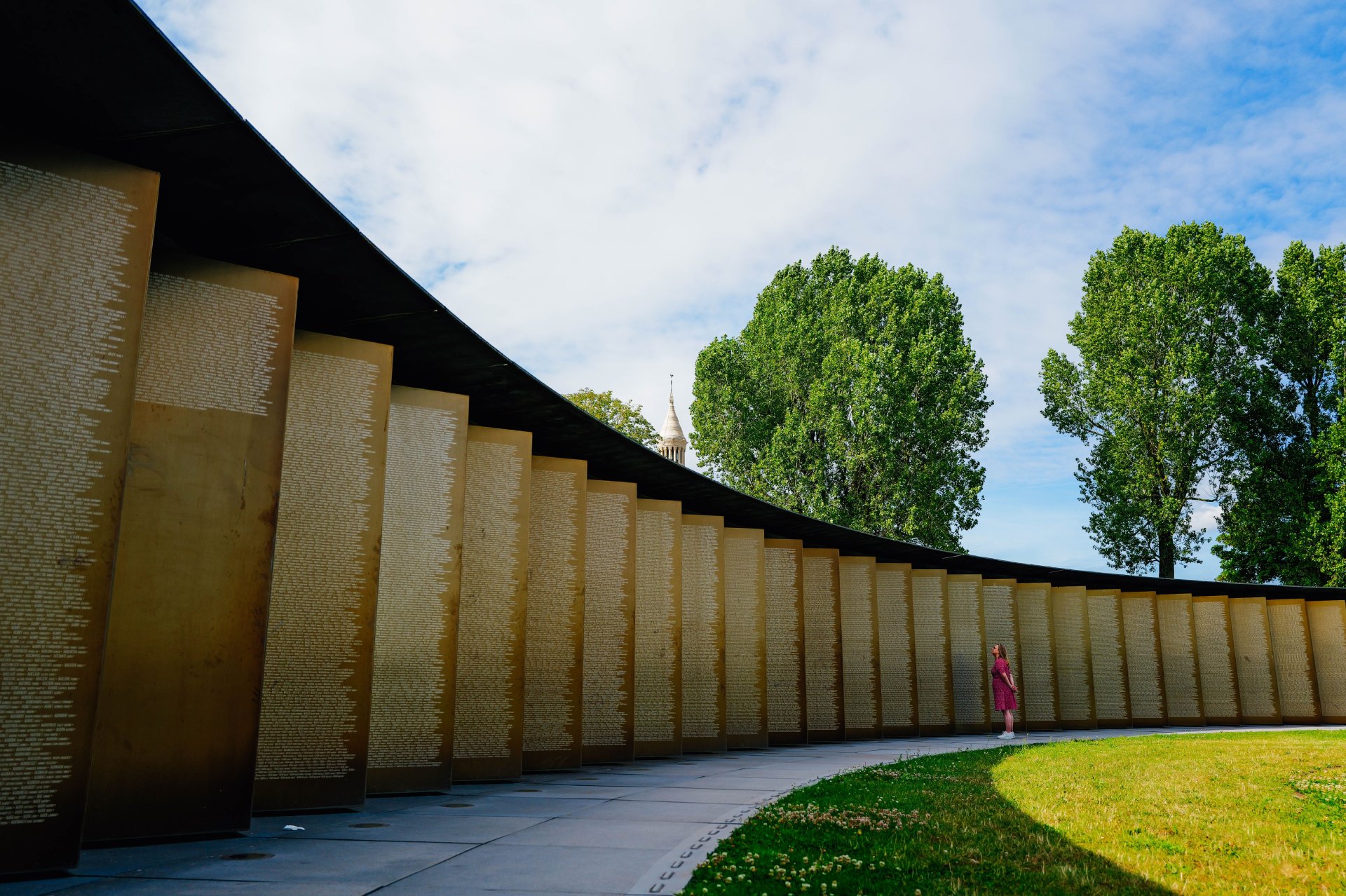
No battlefield better captures the scale and horror of World War I than Verdun in northeastern France. The Battle of Verdun lasted for most of 1916 and became one of the longest and most devastating battles in human history. More than 700,000 casualties were suffered during the campaign, leaving scars on both the land and the national consciousness of France.

The centerpiece of any visit is the Douaumont Ossuary, which contains the remains of more than 130,000 unidentified French and German soldiers. The atmosphere is profoundly moving, especially when combined with nearby cemeteries and memorials.

Perhaps even more striking is the surrounding landscape. Vast sections of the former battlefield remain permanently altered by artillery bombardment. Forests and fields are still pockmarked with shell craters, creating an almost lunar terrain known as the Zone Rouge, or Red Zone. More than a century later, nature has never fully reclaimed the battlefield.


Belleau Wood and Meuse-Argonne: A Forgotten World War I Legacy

Many Americans visit Normandy but never make the journey to Belleau Wood or the Meuse-Argonne region. That is a mistake for anyone interested in U.S. military history. Belleau Wood occupies a special place in Marine Corps lore. During the summer of 1918, US Marines fought a brutal series of engagements against German forces in terrain that remains surprisingly recognizable today. The battle helped establish the reputation of the modern Marine Corps and became one of the defining moments of American participation in World War I.

Visitors can walk through portions of the forest, see preserved trenches and discover remnants of wartime fortifications hidden among the trees. The nearby Devil Dog Fountain commemorates the fierce fighting associated with the legendary “Devil Dogs” nickname.

A short distance away lies the Meuse-Argonne American Cemetery, the largest American military cemetery in Europe. Thousands of U.S. service members rest here, yet the site receives only a fraction of the visitors who travel to Normandy.


Normandy: The Ultimate World War II Pilgrimage

For military tourism, Normandy remains the gold standard. The beaches where Allied forces landed on June 6, 1944, continue to attract visitors from around the world. Yet even with its popularity, the experience remains deeply emotional. Walking Omaha Beach at low tide offers a sobering perspective on the challenges faced by American troops. The distance between the shoreline and the bluffs appears daunting even today.

Nearby, the Normandy American Cemetery at Colleville-sur-Mer stands as one of the most moving military memorials in the world. Thousands of white crosses and Stars of David overlook the English Channel, honoring those who never returned home.

Pointe du Hoc provides another unforgettable experience. Here, U.S. Army Rangers scaled steep cliffs under enemy fire to eliminate German artillery positions. The massive bomb craters that still dominate the landscape vividly demonstrate the intensity of the fighting.


Hürtgen Forest: America’s Forgotten Battle

While Normandy and the Battle of the Bulge dominate popular memory, the Battle of Hürtgen Forest remains one of the most overlooked campaigns involving American forces. Fought along the German-Belgian border, the battle became one of the longest and costliest engagements ever fought by the US Army.

The forest itself contributes to the experience. Dense pine trees, steep terrain and limited visibility help visitors understand why the battle became such a nightmare for Allied troops. Hiking trails around Vossenack and Schmidt reveal moss-covered Dragon’s Teeth anti-tank obstacles, abandoned bunkers and remnants of Germany’s Siegfried Line. Many features remain largely untouched, creating one of Europe’s most immersive battlefield experiences.


Monte Cassino and the Forgotten Beachhead at Paestum

Italy offers some of the most dramatic battlefield scenery anywhere in the world. Monte Cassino sits atop a mountain overlooking a strategic valley that Allied forces desperately needed to break through during the Italian Campaign. The imposing Benedictine monastery dominates the landscape and serves as a reminder of one of the war’s most controversial battles. The nearby military cemeteries are equally impressive, particularly the Polish and Commonwealth cemeteries that highlight the multinational nature of the Allied effort.

Less well known is the Operation Avalanche landing area near Paestum. In September 1943, American forces landed on these beaches as part of the Allied invasion of mainland Italy. Today, visitors can stand on the same shoreline while also exploring one of the world’s finest collections of ancient Greek temples. The juxtaposition is remarkable. Few destinations allow travelers to experience both classical antiquity and modern military history in a single afternoon.


Corregidor Island: America’s Last Stand in the Philippines

Located at the entrance to Manila Bay, Corregidor Island played a central role during the opening months of the Pacific War. Following the Japanese invasion of the Philippines, American and Filipino forces mounted a desperate defense before ultimately surrendering in 1942.

Today, Corregidor feels like a tropical military museum frozen in time. Visitors can explore bomb-damaged barracks, artillery batteries and defensive positions scattered across the island. The highlight is Malinta Tunnel, the underground headquarters used by General Douglas MacArthur and later by Japanese forces. The island’s preservation makes it one of the most accessible and informative Pacific War sites for American travelers.


Peleliu: The Most Untouched Battlefield in the Pacific

For serious military history enthusiasts, Peleliu in Palau may represent the ultimate hidden gem. The battle was expected to last only a few days but evolved into a brutal campaign of cave warfare that continued for more than two months. Because Peleliu remains remote and lightly visited, the battlefield has changed very little since 1944.

Visitors encounter rusting amphibious vehicles, aircraft wreckage, artillery positions and cave systems scattered throughout the island. The jungle has reclaimed much of the landscape, creating an atmosphere unlike any conventional museum. Peleliu offers one of the closest experiences possible to stepping directly into World War II history.


Waterloo and the Lines of Torres Vedras

Military tourism extends far beyond the world wars. Belgium’s Waterloo battlefield remains one of the most famous military sites in history. From atop the Lion’s Mound, visitors can survey the terrain where Napoleon’s final defeat reshaped Europe. The restored Hougoumont Farm and excellent visitor center help bring the campaign vividly to life.

For a lesser-known experience, Portugal’s Lines of Torres Vedras provide a fascinating glimpse into Napoleonic warfare. Constructed secretly to defend Lisbon, these extensive fortifications successfully halted French ambitions in the Iberian Peninsula.

Today, travelers can explore remarkably preserved forts, trenches and military roads while enjoying beautiful Portuguese countryside largely free from tourist crowds.


The Global Rescue Connection

Battlefield tourism often takes travelers far beyond traditional tourist infrastructure and into rugged environments that still reflect the realities of war. The same terrain that once provided tactical advantages, i.e. steep cliffs, dense forests, remote islands, cave systems and defensive fortifications – can present serious risks for modern visitors.

Many medical emergencies on historic battlefields involve common orthopedic injuries rather than dramatic wartime hazards. Uneven ground, hidden shell craters, slippery trails and deteriorating bunkers can quickly lead to fractures, sprains and lacerations. At sites such as Pointe du Hoc, Verdun, the Hürtgen Forest and the Lines of Torres Vedras, visitors often become absorbed in the historical experience and overlook the hazards beneath their feet. Remote Pacific battlefields such as Peleliu add additional challenges, including extreme heat, dehydration, difficult terrain and limited access to medical care.

Even today, former battlefields can present unique dangers. Rusted metal, collapsed structures, hidden barbed wire and other remnants of war remain scattered throughout many historic sites. In some regions, unexploded ordnance from World War I and World War II continues to surface through erosion and weathering. Travelers should always stay on designated paths, avoid entering unstable structures and never touch suspicious military relics or munitions.

A Global Rescue membership provides an important layer of protection for travelers exploring these historic destinations. Members have access to 24/7 medical advisory services, field rescue capabilities and medical evacuation to the hospital of their choice if a serious illness or injury occurs. Global Rescue also provides destination reports and expert guidance to help travelers understand local conditions before departure.

For travelers visiting remote battlefields, isolated islands or rugged military sites, Global Rescue’s security and medical teams provide experienced support when local resources are limited. Membership benefits include field rescue, medical evacuation, 24/7 medical advisory services and security support during major disruptions or emergencies.

History may be the reason for the journey, but preparation remains essential. Whether exploring Verdun’s cratered forests, hiking through the Hürtgen Forest, descending into Corregidor’s tunnels or trekking across Peleliu’s jungle-covered ridges, Global Rescue helps ensure travelers can focus on the past without facing modern emergencies alone.