Article Highlights:

  • Travelers surrender thousands of perfectly good items every day because they overlook TSA security rules.
  • Liquids over 3.4 ounces remain the single most common reason personal items are discarded.
  • Everyday objects such as pocket knives, sports equipment and pepper spray frequently surprise travelers at airport checkpoints.
  • Most confiscations are entirely preventable with smarter packing and better preparation.
  • Knowing TSA rules before leaving home saves time, money and unnecessary travel stress.


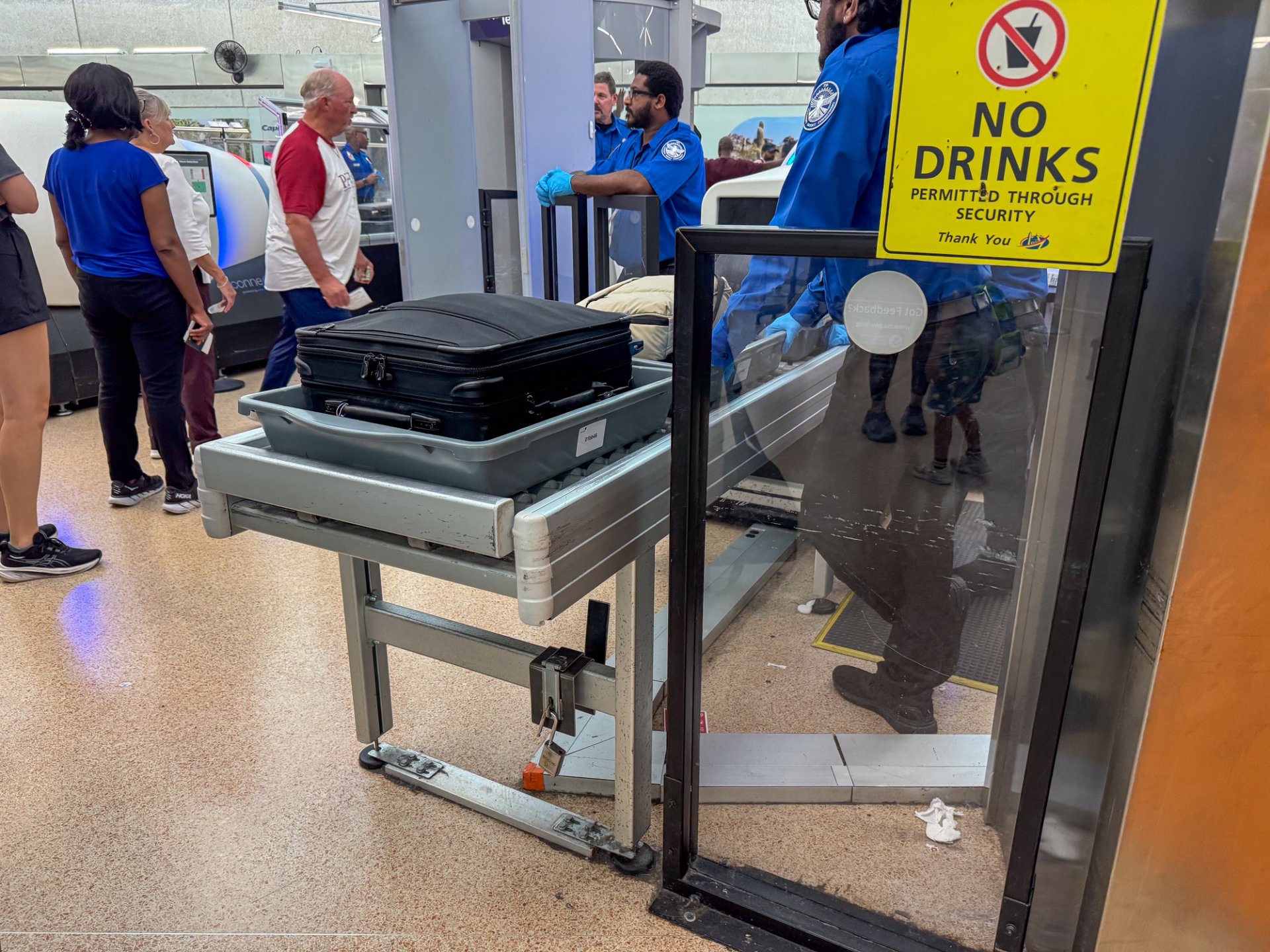
Every day, travelers across the United States arrive at airport security checkpoints only to discover that something in their carry-on bag cannot continue with them. The result is a familiar scene: overflowing collection bins filled with water bottles, oversized sunscreen, expensive toiletries, pocket knives, sporting equipment and other personal belongings that must be abandoned before passengers can proceed to their gates.

While some travelers choose to return prohibited items to their vehicles or check them with their airline, countless others simply throw them away. Collectively, these discarded items represent thousands of dollars in unnecessary losses every day, and nearly all of them are avoidable.

Most confiscated items aren’t dangerous in everyday life. They’re simply packed in the wrong place or exceed Transportation Security Administration (TSA) regulations designed to keep commercial flights safe. Understanding these rules before arriving at the airport can save travelers time, money and the frustration of starting a trip on the wrong foot.


Why Travelers Keep Making the Same Mistakes

Airport security officers see the same prohibited items day after day, even among experienced travelers.

The problem usually isn’t intentional rule-breaking. Instead, travelers are often distracted by flight schedules, family logistics, hotel reservations or work responsibilities. A pocket knife that’s been riding in a backpack for months or a bottle of sunscreen tossed into a carry-on at the last minute can easily go unnoticed until it reaches the X-ray machine.

“People seem to forget some of the more common and routine steps that they need to take when packing for a flight or when they are going through a checkpoint, perhaps because they’re focused on being at their destination and not focusing on what needs to happen before getting there,” said TSA Officer Christopher Kirchein of John F. Kennedy International Airport.

Developing a consistent pre-travel packing routine dramatically reduces these mistakes and helps keep security lines moving efficiently for everyone.


Oversized Liquids Still Top the List

The most commonly surrendered items remain liquids, gels and aerosols that exceed TSA’s long-standing 3-1-1 rule.

Under current regulations, travelers may carry liquids only in containers of 3.4 ounces (100 milliliters) or less, all of which must fit inside a single quart-sized, clear plastic bag. Larger containers, even if they’re only partially full, must be packed in checked baggage unless they qualify for a medical or other TSA exception.

Oversized liquids and gels remain the most commonly surrendered items at airport security. These include water bottles, coffee, soft drinks, sports drinks, shampoo, conditioner, sunscreen, lotion, toothpaste, hair styling products, melted ice packs and reusable insulated drink containers that still contain liquid. Any container larger than 3.4 ounces (100 milliliters) must be packed in checked baggage unless it qualifies for a TSA exception.

Fortunately, travelers may carry an empty reusable water bottle through security and fill it after reaching the secure side of the airport, a simple habit that saves both money and plastic waste.


Could the 3-1-1 Rule Finally Change?

There is growing speculation that the TSA’s nearly two-decade-old liquids rule could eventually be updated. As airports install advanced computed tomography (CT) scanners capable of producing much more detailed three-dimensional images of carry-on baggage, TSA officials have acknowledged that future screening technology may allow larger liquid containers to pass through security. Several airports have already deployed these scanners as part of a gradual modernization effort.

The rule, however, has not changed. Until TSA officially announces broader nationwide revisions, travelers should continue following the existing 3-1-1 requirements. Assuming the rules have already been relaxed remains one of the easiest ways to lose expensive toiletries, cosmetics or beverages at the checkpoint.


Pocket Knives Continue To Catch Travelers by Surprise

Pocket knives consistently rank among the most commonly confiscated prohibited items. Because many people carry them every day for opening packages, camping, fishing or general utility, they often become “invisible” to their owners. Travelers may use the same backpack for work, hiking and travel without realizing a folding knife remains tucked inside a pocket.

Weapons and sharp objects are another frequent surprise for travelers. Pocket knives consistently top the list of confiscated items, followed by box cutters, utility knives, scissors with blades longer than four inches and multi-tools that contain blades. Pepper spray, although commonly carried for personal protection, is generally prohibited in carry-on luggage and is subject to strict restrictions even in checked baggage.

Fortunately, most of these items may be transported safely inside checked baggage when packed properly. The problem isn’t necessarily possessing them, it’s attempting to carry them into the aircraft cabin.


Sporting Equipment Belongs in Checked Baggage

Travelers heading to golf resorts, ski destinations or outdoor adventures are frequently surprised when security officers stop their carry-on bags.

Sporting goods also routinely end up at the checkpoint. Baseball bats, golf clubs, hiking poles, ski poles and similar equipment cannot be carried into the aircraft cabin because they could potentially be used as weapons. Travelers who accidentally bring these items typically have the option of checking them with the airline, returning them to their vehicle or surrendering them to TSA.

Planning ahead is especially important when traveling with specialized gear. Reviewing airline baggage policies before arriving at the airport can prevent last-minute surprises and additional baggage fees.


Recreational Hazards and Hazardous Materials

Some prohibited items are far less common, but they present obvious safety risks aboard an aircraft.

Recreational hazards and hazardous materials are prohibited because they present fire or explosion risks during flight. Fireworks, flare guns, lighter fluid, fuels and other combustible or explosive materials are not permitted through security and, in many cases, cannot be transported on commercial aircraft at all. Travelers returning from camping trips, holiday celebrations or outdoor excursions are especially prone to forgetting these items remain tucked inside backpacks or luggage.


Don’t Forget Your Pockets

Not every checkpoint delay involves prohibited items. One of the most common reasons travelers require additional screening is failing to empty their pockets before entering the body scanner.

Loose pocket contents, while not prohibited, frequently slow the screening process and sometimes end up in airport trash bins. Travelers are often reminded to remove everything from their pockets before entering the body scanner, including non-metallic items such as tissues, lip balm, breath mints, receipts, earbuds and loose change. Emptying pockets completely before reaching the scanner helps avoid delays and secondary screening.

Airport security involves much more than prohibited items. One surprisingly common mistake is arriving without acceptable identification. Travelers should verify that they have a valid driver’s license, passport or another approved form of identification before leaving home. Those flying domestically should also ensure their identification complies with current REAL ID requirements.


Rx Permission, and More?

Medication is another area that causes confusion. Unlike ordinary liquids, medically necessary liquid medications are permitted in quantities larger than 3.4 ounces. Travelers simply need to declare these items to TSA officers before screening so they can receive separate inspection.

Checked baggage also deserves attention. TSA recommends using TSA-compatible locks, allowing officers to inspect luggage without damaging the lock if additional screening is required.

Families traveling with children should also familiarize themselves with TSA PreCheck policies. Children ages 12 and younger traveling with an enrolled parent may accompany them through TSA PreCheck lanes, while older children may qualify under certain reservation conditions. Even so, PreCheck does not exempt travelers from prohibited item restrictions. Liquids, weapons and other banned items remain subject to the same security rules.

Nearly every item surrendered at airport security shares one thing in common: it could have been avoided.

Experienced travelers often develop a simple pre-departure checklist. Before leaving for the airport, they inspect every compartment of their carry-on bag, empty reusable water bottles, verify that toiletries comply with the 3-1-1 rule, remove forgotten pocket knives from backpacks, separate medications, confirm identification is packed and ensure sporting equipment is checked instead of carried aboard.

Airport security is designed to protect passengers, not inconvenience them. Understanding the rules before arriving at the checkpoint allows travelers to spend less time throwing away belongings and more time looking forward to their destination.


The Global Rescue Connection

Preparing for airport security is one of the simplest ways to avoid unnecessary travel disruptions, but it’s only the beginning of a successful international journey. Once abroad, travelers may face medical emergencies, civil unrest, severe weather, transportation disruptions or other unexpected events that no packing checklist can prevent.

A Global Rescue membership complements smart travel planning by providing members with 24/7 access to experienced medical and security professionals before, during and after travel. Members receive medical advisory services, field rescue, medical evacuation, security extraction and destination intelligence when conditions deteriorate or local resources are inadequate. Clearing the TSA checkpoint gets your trip started, but having expert support available throughout your journey provides confidence that you’re prepared for whatever lies ahead.